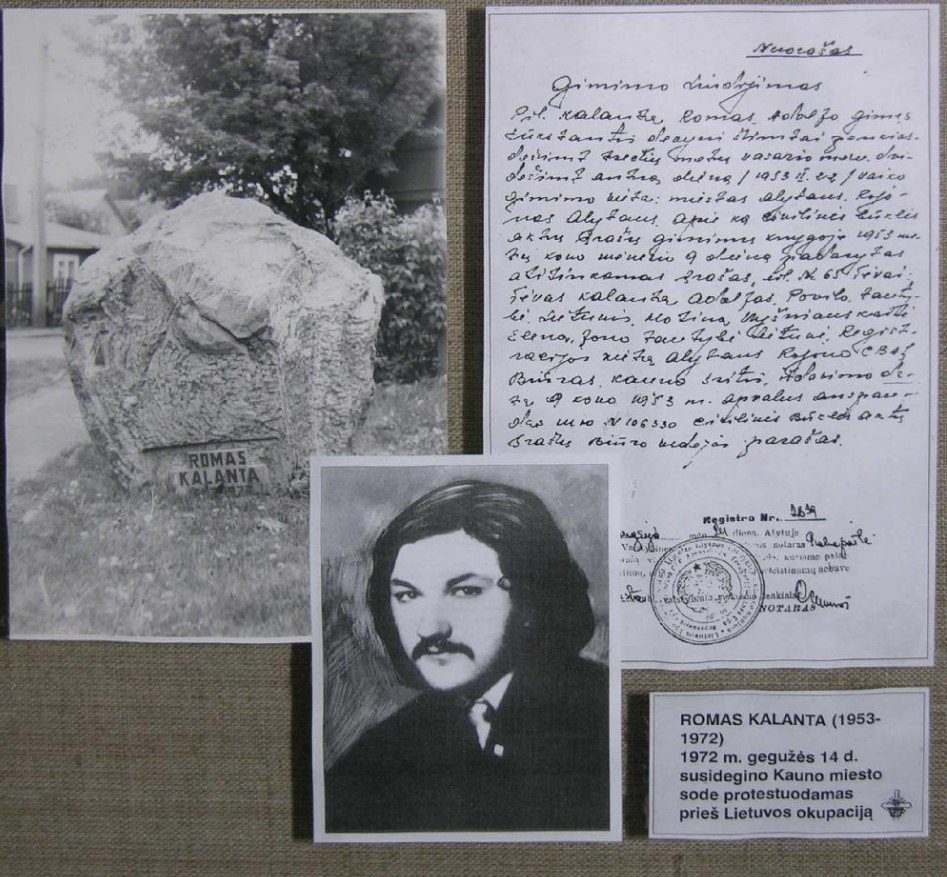
On May 14, 1972, a 19-year-old high school student set himself on fire in the center of the Lithuanian city of Kaunas in protest of the Soviet occupation.
Don’t blame anyone for my death. I knew that sooner or later I had to do it. I hate the socialist system. I am useless. What is it for me to live? To kill this system? I better kill myself … there will never be freedom here. They forbade even this word … “freedom” …
These are the last words in the diary of a 19-year-old young man from Lithuania, left by the fountain on the Alley of Freedom in the center of the Lithuanian city of Kaunas. Meters away, Romas Calanta’s severely burned body writhes in agony.
The dark-eyed and black-haired high school student poured 3 liters of gasoline and scratched his stick, shouting “Freedom for Lithuania”. The year is 1972, and the date is May 14. Opposite, the windows of the building housing the Soviet authorities in Kaunas are tightly closed. There are many people near the fountain of the Musical Theater. This is a favorite meeting place for young people in the city. Seeing the living torch, many of them rush to help. Romas was taken to the city hospital, but with 90 percent burns. 14 hours later, in the early morning of May 15, the young man died.
Romas
On February 22, 1953, Adolfas and Elena Calanta became the parents of a boy. Romas was born in the city of Alytus in southern Lithuania. Father Adolfas is a World War II veteran, communist and supporter of the Soviet regime. However, the mother Elena is a believing woman and raises her son in the spirit of Catholicism. In 1963, the family moved to Kaunas, where Romas attended high school. The awake young man impresses his peers – he reads a lot, writes poetry, plays the guitar and loves to paint.
However, in 1971, Romas Calanta’s participation in a historical seminar criticizing Marxism led to his expulsion from the Communist Youth Union and from school. Thus, Romas fails to finish with his peers and get a high school diploma. This forced the 18-year-old boy to enroll in evening high school and start working in a local factory.
“Long live independent Lithuania”
Romas’ funeral is scheduled for May 18, 1972. However, KGB agents in Kaunas forced his parents to say goodbye to their son two hours before the scheduled time for worship. They also forbade the family to place a tombstone.
Their actions provoked outrage among hundreds of young people who failed to attend the funeral. Anger drew thousands of protesters to the streets of Kaunas and neighboring towns and villages to protest against Soviet rule. On May 18 and 19, Kaunas resounds with the chants “Freedom for Lithuania!”, “Long live independent Lithuania!” and “Long live May 18!”.
The regime is sending 7,000 police officers to the Lithuanian city to crack down on the riot. Hundreds were detained, and dozens were convicted and jailed for hooliganism.
In his report to Moscow, the first secretary of the Lithuanian Communist Party, Antanas Sniečkus, tried to convince the leadership that what was happening was a minor manifestation of local hooligans. In support of his claims, the entire communist apparatus in Kaunas was harnessed.
A statement from the prosecutor’s office was published in the local press on May 20 and 21: “Regarding the suicide committed on May 14 in front of the Kaunas Musical Theater, the city prosecutor’s office said the accident was being investigated. forensic and forensic psychiatric “.
A month later, a specially formed psychiatric commission announced that based on the letters, pictures and diary entries in Romas Calanta’s diary, as well as interviews with his parents, teachers and friends, they concluded that the young man suffered from a mental illness – schizophrenia. . Proof of this was his suicide in a strange way, as well as the fact that Romas had long hair and in a school essay claimed that Lithuania would one day be free.
Kalanta was declared an enemy of the people, but in the same month a metal cross was erected on the road near Kaunas with the inscription “Romas Kalanta, who sacrifices himself for Lithuania”. A report from the KGB department in Vilnius from the end of 1972 testified that in the months after the death of the 19-year-old, 12 more people set themselves on fire in protest against the Soviet government in Lithuania.
To this day, the sacrifice of Romas Kalanta is not forgotten and he is considered a national hero in Lithuania. In 1989, a new special commission of psychiatrists categorically rejected the conclusions of the previous one and declared that the young man from Kaunas was absolutely healthy and had sacrificed his life with a clear conscience.
On July 4, 2000, Romas Kalanta was posthumously awarded by the Lithuanian President, and two years later the Seimas declared May 14 the Day of Civil Resistance in memory of the “burning herald of freedom”.
Photo: Museum of Exile and Resistance, Kaunas, Lithuania
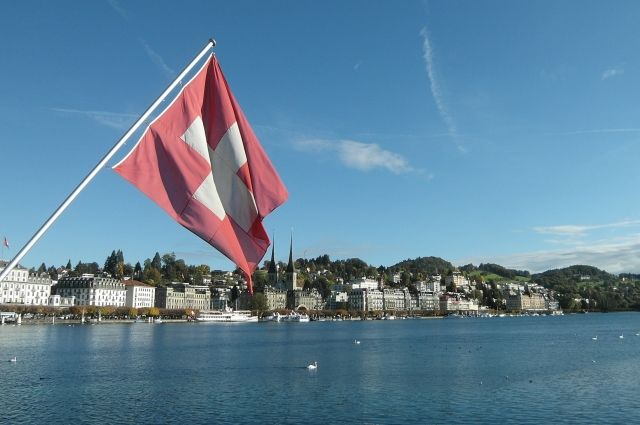
Erwin Bollinger, a spokesman for the Swiss State Secretariat for Economic Affairs, said that the country’s authorities had withdrawn $3.4 billion of Russian assets that had previously been frozen as a preventive measure from restrictions, Reuters reports.
“We cannot freeze funds if we do not have sufficient grounds. Funds must be released unless there is evidence that the assets are directly owned or controlled by the person under sanctions,” he said.
It is noted that the volume of Russian assets currently frozen by Switzerland is about $6.3 billion.
Earlier, Russian Foreign Minister Sergei Lavrov called the initiative of the head of European diplomacy Josep Borrell to transfer blocked Russian assets to the Ukrainian authorities “theft”. “Theft, which they don’t even try to hide,” RIA Novosti quotes him as saying.
During a press conference following his visit to Algeria, Sergei Lavrov said that the European Union is under the influence of the United States and “practically does not have its own foreign policy.” Therefore, the minister did not rule out, soon “the position of the chief diplomat of the European Union will be liquidated.”
Recall that earlier Josep Borrell advocated the idea of withdrawing Russia’s frozen reserves in favor of Ukraine.
Deputy Foreign Minister of the Russian Federation Alexander Grushko, in turn, called the proposal of the head of European diplomacy on the transfer of Russian reserves for the restoration of Ukraine “lawlessness”. Grushko said that this EU initiative undermines confidence in Europe.
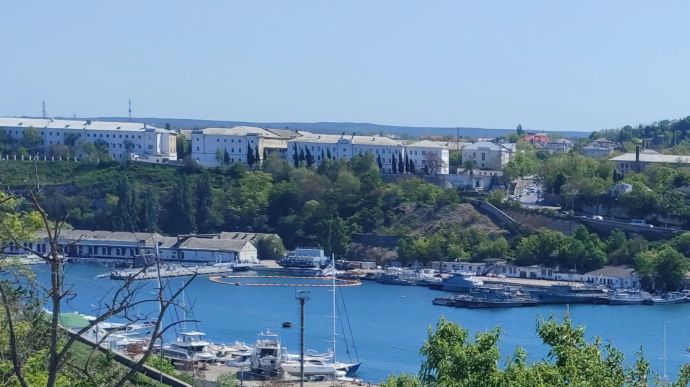
All active submarines of the Russian Black Sea Fleet have gone to sea, from which the Russian Federation can launch missiles at Ukraine.
Details: On the afternoon of May 13, in the South Bay of Sevastopol, the berths where submarines usually dock were empty.
In total, the Black Sea Fleet of Russia has six submarines of the Varshavyanka project: B-261 Novorossiysk, B-237 Rostov-on-Don, B-262 Stary Oskol, B-265 Krasnodar, B-268 ” Veliky Novgorod” and B-271 “Kolpino”.
Project 636 Varshavyanka submarines (according to NATO codification – Improved Kilo) – a type of multi-purpose diesel-electric submarines. Range – up to 7500 miles. Autonomy is 45 days. Crew – 52 people, including 12 officers.
In addition to mine-torpedo armament, Varshavyanka-class submarines carry Kalibr-type cruise missiles, which are used in various modifications against sea and land targets. Each submarine is armed with four such missiles.
Russia is launching missile strikes on Ukraine from its submarines, Andrey Ryzhenko, an expert at the Center for Defense Strategies, captain of the 1st rank of the reserve of the Armed Forces of Ukraine, said earlier.
The Black Sea Fleet also includes the Project 877 Halibut B-871 Alrosa submarine, but since May 2019 it has been under repair at the 13th shipyard in Kilen Bay. “Alrosa” is allegedly preparing to enter sea trials after repairs.
Meanwhile, a large landing ship of the Black Sea Fleet of the Russian Federation, damaged in Berdyansk, stood up for repairs in Sevastopol. According to Krym Realiya, the port side of the ship is damaged, large dents are visible, gray paint is missing in some places, in its place there are large red spots – this is the color of the primer, which is applied before painting.
Do you suffer from paraskavedecatriaphobia or frigategriscaidecaphobia?
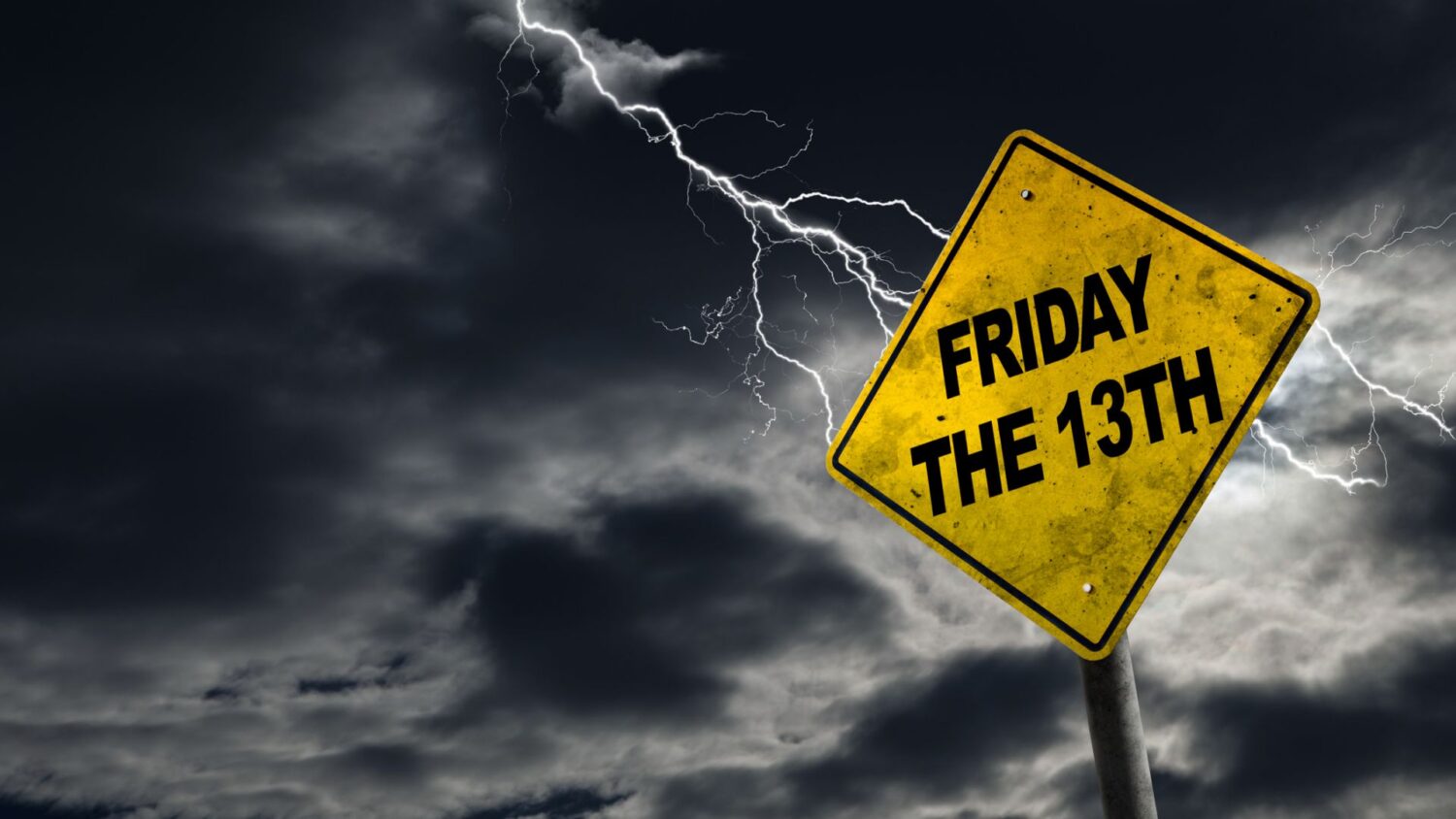
Today is Friday the 13th – a date often associated with bad luck. During the day, millions of superstitious people avoid meeting black cats, stay away from mirrors for fear of breaking them, and eat tasteless dishes, worried that they may spill the salt. Others refuse to drive or board a plane. For people who associate day and date with misery and bad luck, it will probably be somewhat comforting that today is the only Friday the 13th for 2022.
There is at least one Friday the 13th of each calendar year. For the last time, the day and date coincided only once last year. The next “lonely” Friday the 13th will be in June 2025.
In the next two years we will have two Fridays on the 13th – in January and October 2023 and September and December 2024.
In some years, to the horror of superstitious people, there are three Friday the 13th. The last time such a coincidence was observed was in 2015. Three Fridays on the 13th – in February, March and November, will come to us again in 2026.
The “fatal” date may raise fears among superstitious people, but some important events have taken place.
January 13 marks the patron saint’s day of St. Mungo, patron and supposed founder of the Scottish city of Glasgow, who died on that date in 614.
On this date in 888 the Frankish emperor Charles the Fat died, and in 1128 Pope Honorius II issued a decree declaring the Knights Templar to be God’s army.
On January 13, 1404, the ruler of England, King Henry IV, signed a law forbidding alchemists from converting base metals to gold, and just over 200 years later, on January 13, 1610, Galileo Galilei discovered Callisto, the fourth companion. of Jupiter.
On this date, in 1854, Anthony Faas of Philadelphia patented the accordion, and in 1942, Henry Ford patented the world’s first plastic car, known as the Soy Car.
On January 13, 1929, the famous Sheriff Wyatt Earp died at the age of 80.
According to the calendar of the TV show “Sesame Street” from 1973, January 13 is the birthday of the Rubber Duck. This date in the United States marks the Day of the popular rubber toy.
There is a term for the fear of Friday the 13th – paraskavedekatriaphobia or frigateriskaidekaphobia. A study conducted in the UK shows that 30 percent of the island’s population suffers from this phobia. About 43 percent of respondents identify as superstitious. Some people go so far as to change their plans for the day so that they do not have to leave their homes and eventually have misfortune.
The fear of the number 13, which plagues an impressive 70 percent of Britons, is known as triscaidecaphobia. According to a survey, 72 percent of the island’s residents have experienced bad luck on the “fatal” date. But is it all a figment of their imagination? Judging by some facts, people have reason to fear, because on this date some terrible events have happened or are about to happen.
In August 2010, a 13-year-old boy was struck by lightning in Suffolk, UK. Unbelievable as it may sound, it happened at 13 hours and 13 minutes. Fortunately, the boy escaped with only minor burns.
In a 1993 publication entitled “Is Friday the 13th Harmful to Health?”, Researchers analyzed road accidents and hospital admissions on that date compared to other Fridays. The analysis shows that although fewer people are behind the wheel on Friday the 13th, hospital admissions have increased by 52 percent.
The most sinister plane crash, recorded on Friday the 13th, occurred in October 1972, when a plane crashed in the Andes. Twelve people died on the spot, others died in an avalanche. Before being helped 72 days later, the survivors were forced to eat corpses. The incident was turned into the movie “Alive”.
The end of the world is expected on this date. According to forecasts, on Friday the 13th in 2029, the asteroid 99942 Apophis with a diameter of 320 meters will pass dangerously close to Earth. According to NASA scientists, it is large enough to survive passing through Earth’s atmosphere. If it lands, the asteroid could devastate a Texas-sized region. If it falls into the ocean, it could cause a tsunami.
Friday the 13th is indeed a day of bad luck for drivers, according to traffic statistics. An analysis of the six Fridays of the 13th, which occurred between 2002 and 2006, conducted by the Norwich Union insurance company, shows that claims for compensation on that day were 13 percent higher than on other days.
During World War II in September 1940, on the 13th, the Nazis bombed Buckingham Palace.
On November 13, 1970, a cyclone claimed the lives of 500,000 people in Bangladesh in one of the most catastrophic natural disasters humanity has ever witnessed.
In 2012, on this date, the cruise ship Costa Concordia partially sank. More than 30 people died.
The cash loss every Friday the 13th is estimated at about $ 900 million, as many people are afraid to work and travel on that date.
One of the most famous and brutal murders in New York takes place on this date. On Friday the 13th of March 1964, bar manager Kitty Genovese was attacked, mistreated and raped by an unknown maniac, later identified as Winston Moseley. According to a New York Times publication, 38 people witnessed the attack, but no one called police. The tragic case lies in psychology courses as an illustration of the “bystander effect” or “Kitty Genovese syndrome”, when people do not react in a situation, assuming that someone else will.
More murders are committed on this date. One of the most famous of these is the murder of 25-year-old prostitute Francis Coles on February 13, 1891, who became the last victim of Jack the Ripper.
Friday, September 13, 1996, is a black day for hip-hop – rapper Tupac Shakur died at a hospital in Los Angeles from injuries sustained in a shooting on September 7.
The “fatal” date has not only a scary but also a curious aspect.
It is not clear when and why Friday the 13th is associated with bad luck. The association may be biblical – 13 are guests of the Last Supper when Jesus was betrayed. He was crucified the next day – Friday.
Whatever the reason, the fear of Friday the 13th is very common. That’s why hotels and hospitals often skip the 13th floor, and airports skip the 13th exit.
If you’re worried it’s Friday the 13th, be glad you’re not a 14th century Knight Templar. On October 13, 1307, officers of King Philip IV of France raided the homes of thousands of Templars and arrested them on charges of illegal activity. Although the allegations have not been proven, many are dying from brutal torture.
Psychological thriller director Alfred Hitchcock was born on Friday the 13th. Fidel Castro was also born on Friday the 13th in August 1926.
Why are the superstitions about Friday the 13th so deeply ingrained in our country? According to Thomas Gilovic, dean of the Department of Psychology at Cornell University, our brains are too good at associations.
For the Gentiles, 13 is a lucky number corresponding to the number of full moons in a year.
President Franklin Roosevelt did not travel on Friday the 13th, nor did he give dinners for 13 people. Napoleon and President Herbert Hoover also suffered from a painful fear of the number 13.
Mark Twain was once the 13th invited to dinner. A friend warned him not to go. “It was really bad luck,” the writer later told him. “They only had food for 12 people.” In France, if there are 13 guests, it is customary to invite 14, and sometimes even resort to a professional.
?
Today is Friday the 13th – a date often associated with bad luck. During the day, millions of superstitious people avoid meeting black cats, stay away from mirrors for fear of breaking them, and eat tasteless dishes, worried that they may spill the salt. Others refuse to drive or board a plane. For people who associate day and date with misery and bad luck, it will probably be somewhat comforting that today is the only Friday the 13th for 2022.
There is at least one Friday the 13th of each calendar year. For the last time, the day and date coincided only once last year. The next “lonely” Friday the 13th will be in June 2025.
In the next two years we will have two Fridays on the 13th – in January and October 2023 and September and December 2024.
In some years, to the horror of superstitious people, there are three Friday the 13th. The last time such a coincidence was observed was in 2015. Three Fridays on the 13th – in February, March and November, will come to us again in 2026.
The “fatal” date may raise fears among superstitious people, but some important events have taken place.
January 13 marks the patron saint’s day of St. Mungo, patron and supposed founder of the Scottish city of Glasgow, who died on that date in 614.
On this date in 888 the Frankish emperor Charles the Fat died, and in 1128 Pope Honorius II issued a decree declaring the Knights Templar to be God’s army.
On January 13, 1404, the ruler of England, King Henry IV, signed a law forbidding alchemists from converting base metals to gold, and just over 200 years later, on January 13, 1610, Galileo Galilei discovered Callisto, the fourth companion. of Jupiter.
On this date, in 1854, Anthony Faas of Philadelphia patented the accordion, and in 1942, Henry Ford patented the world’s first plastic car, known as the Soy Car.
On January 13, 1929, the famous Sheriff Wyatt Earp died at the age of 80.
According to the calendar of the TV show “Sesame Street” from 1973, January 13 is the birthday of the Rubber Duck. This date in the United States marks the Day of the popular rubber toy.
There is a term for the fear of Friday the 13th – paraskavedekatriaphobia or frigateriskaidekaphobia. A study conducted in the UK shows that 30 percent of the island’s population suffers from this phobia. About 43 percent of respondents identify as superstitious. Some people go so far as to change their plans for the day so that they do not have to leave their homes and eventually have misfortune.
The fear of the number 13, which plagues an impressive 70 percent of Britons, is known as triscaidecaphobia. According to a survey, 72 percent of the island’s residents have experienced bad luck on the “fatal” date. But is it all a figment of their imagination? Judging by some facts, people have reason to fear, because on this date some terrible events have happened or are about to happen.
In August 2010, a 13-year-old boy was struck by lightning in Suffolk, UK. Unbelievable as it may sound, it happened at 13 hours and 13 minutes. Fortunately, the boy escaped with only minor burns.
In a 1993 publication entitled “Is Friday the 13th Harmful to Health?”, Researchers analyzed road accidents and hospital admissions on that date compared to other Fridays. The analysis shows that although fewer people are behind the wheel on Friday the 13th, hospital admissions have increased by 52 percent.
The most sinister plane crash, recorded on Friday the 13th, occurred in October 1972, when a plane crashed in the Andes. Twelve people died on the spot, others died in an avalanche. Before being helped 72 days later, the survivors were forced to eat corpses. The incident was turned into the movie “Alive”.
The end of the world is expected on this date. According to forecasts, on Friday the 13th in 2029, the asteroid 99942 Apophis with a diameter of 320 meters will pass dangerously close to Earth. According to NASA scientists, it is large enough to survive passing through Earth’s atmosphere. If it lands, the asteroid could devastate a Texas-sized region. If it falls into the ocean, it could cause a tsunami.
Friday the 13th is indeed a day of bad luck for drivers, according to traffic statistics. An analysis of the six Fridays of the 13th, which occurred between 2002 and 2006, conducted by the Norwich Union insurance company, shows that claims for compensation on that day were 13 percent higher than on other days.
During World War II in September 1940, on the 13th, the Nazis bombed Buckingham Palace.
On November 13, 1970, a cyclone claimed the lives of 500,000 people in Bangladesh in one of the most catastrophic natural disasters humanity has ever witnessed.
In 2012, on this date, the cruise ship Costa Concordia partially sank. More than 30 people died.
The cash loss every Friday the 13th is estimated at about $ 900 million, as many people are afraid to work and travel on that date.
One of the most famous and brutal murders in New York takes place on this date. On Friday the 13th of March 1964, bar manager Kitty Genovese was attacked, mistreated and raped by an unknown maniac, later identified as Winston Moseley. According to a New York Times publication, 38 people witnessed the attack, but no one called police. The tragic case lies in psychology courses as an illustration of the “bystander effect” or “Kitty Genovese syndrome”, when people do not react in a situation, assuming that someone else will.
More murders are committed on this date. One of the most famous of these is the murder of 25-year-old prostitute Francis Coles on February 13, 1891, who became the last victim of Jack the Ripper.
Friday, September 13, 1996, is a black day for hip-hop – rapper Tupac Shakur died at a hospital in Los Angeles from injuries sustained in a shooting on September 7.
The “fatal” date has not only a scary but also a curious aspect.
It is not clear when and why Friday the 13th is associated with bad luck. The association may be biblical – 13 are guests of the Last Supper when Jesus was betrayed. He was crucified the next day – Friday.
Whatever the reason, the fear of Friday the 13th is very common. That’s why hotels and hospitals often skip the 13th floor, and airports skip the 13th exit.
If you’re worried it’s Friday the 13th, be glad you’re not a 14th century Knight Templar. On October 13, 1307, officers of King Philip IV of France raided the homes of thousands of Templars and arrested them on charges of illegal activity. Although the allegations have not been proven, many are dying from brutal torture.
Psychological thriller director Alfred Hitchcock was born on Friday the 13th. Fidel Castro was also born on Friday the 13th in August 1926.
Why are the superstitions about Friday the 13th so deeply ingrained in our country? According to Thomas Gilovic, dean of the Department of Psychology at Cornell University, our brains are too good at associations.
For the Gentiles, 13 is a lucky number corresponding to the number of full moons in a year.
President Franklin Roosevelt did not travel on Friday the 13th, nor did he give dinners for 13 people. Napoleon and President Herbert Hoover also suffered from a painful fear of the number 13.
Mark Twain was once the 13th invited to dinner. A friend warned him not to go. “It was really bad luck,” the writer later told him. “They only had food for 12 people.” In France, if there are 13 guests, it is customary to invite 14, and sometimes even resort to a professional.
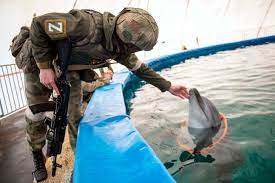
More than 100 dolphins have been dumped off Turkey’s coast since February, an extremely high death toll from previous years, said Ugur Ozsandikci, a leading researcher on marine life at Sinop University in Turkey’s southern Crimea. Dolphins have been observed to be unusual in other Black Sea countries. Local marine biologists suspect that the main cause of death of dolphins is noise pollution from warships in the north, BGNES reported. 360p geselecteerd als afspeelkwaliteit Low-frequency sonar of warships and submarines directly interferes with dolphin echolocation, said Pavel Goldin, a marine biologist who specializes in dolphin studies at the Institute of Zoology in Ukraine. Unable to orient themselves, dolphins cannot identify their prey and therefore cannot hunt. The sonar confuses them and they panic, reluctantly hitting rocks or going to the beach. Some also hit sea mines.
It can take months or years to fully investigate the causes and extent of recent dolphin deaths, with much of the coastline inaccessible to researchers due to the war. However, these deaths and the like, caused directly by the war in Ukraine, could create a “biodiversity crisis,” the Turkish Marine Research Foundation has warned. Noise pollution can also disrupt fish populations and force them to migrate far away, Goldin warns. This disrupts the local ecosystem. Dolphins are at the forefront of the Black Sea’s food system, and their death could threaten entire subpopulations and could take many years before their populations resume.
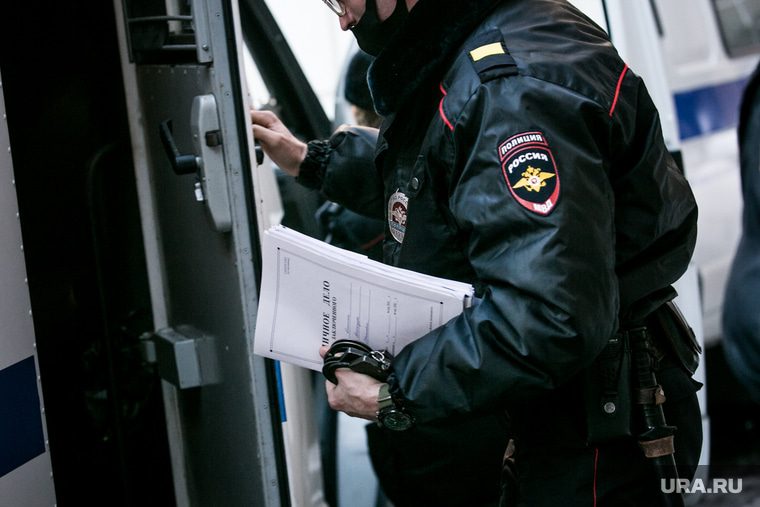
The military court sent former FSB officer Dmitry Kazakov to a colony for 13 years, according to Darya Ryabova from the URA.RU telegram channel. He passed secret information to foreign intelligence, TASS reports, citing a law enforcement source.
“The court sentenced FSB reserve lieutenant colonel Dmitry Kazakov to 13 years in a strict regime colony. He was found guilty of passing them to foreign intelligence using secret information known in his service, ”said the source of the agency.
It is specified that the ex-FSB officer worked for foreign intelligence for a fee. By his actions, he caused significant damage to the interests of Russia.
Earlier, the court sentenced Dmitry Shtyblikov, a resident of Sevastopol, to 19.5 years in prison for treason. His accomplice, an officer of the Russian armed forces Alexander Oblog, was sent to a colony for 13 years for cooperation with the special services of Ukraine, writes RT. On March 14, the Lefortovo Court of Moscow, for the first time since the start of a special operation in Ukraine, arrested a Russian citizen on suspicion of treason. He faces up to 20 years in prison.
Chinese Foreign Ministry spokesman Zhao Lijiang said
Chinese Foreign Ministry spokesman Zhao Lijiang said today that the UN Human Rights Council’s decision to launch an investigation into alleged human rights abuses by Russian troops has shaken members’ confidence in the body, Reuters reported.
The resolution of the Human Rights Council to launch the investigation was adopted by a large majority on Thursday, with 33 members voting in favor and two against China and Eritrea against.
Zhao told a news briefing today that China’s objection was due to the UN’s failure to consider some warring countries while choosing to target others.
The breakaway region of South Ossetia will hold a referendum on joining Russia, AFP reported. The leader of the breakaway region has set July 17 as the date for the poll. “Anatoly Bibilov signed a decree to hold a referendum in the Republic of South Ossetia,” Bibilov’s press service said in a statement. The statement cited the “historical aspirations” of his people to join Russia. The announcement comes on the 79th day of Russia’s military invasion of Ukraine, with thousands killed and more than six million fleeing their homes.
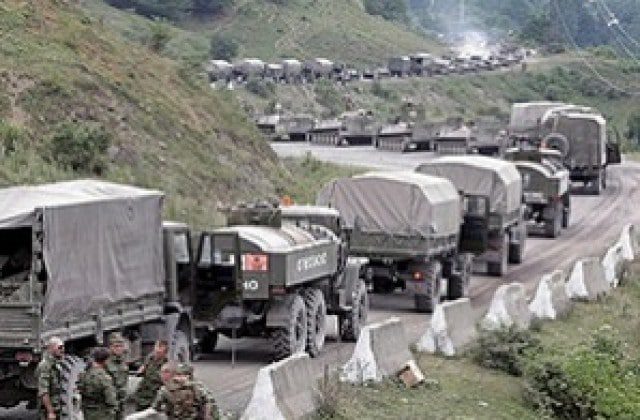
The separatist regions of Ukraine, Donetsk and Luhansk, have also demanded accession to Russia. Georgia has condemned the full-scale war against Ukraine. The country called South Ossetia’s plans to hold a referendum on joining Russia “unacceptable”. In August 2008, Russia launched an attack on Georgia, which was fighting pro-Russian militias in South Ossetia after shelling Georgian villages. The fighting ended five days later with an EU-brokered truce, but at the cost of 700 lives and the resettlement of tens of thousands of ethnic Georgians.
300 soldiers from South Ossetia refused to fight in Ukraine and returned home, Ossetian blogger Alik Puhati said on April 1. About 300 servicemen (mostly ethnic Ossetians) from the Russian military base returned to South Ossetia of their own accord, saying they had been left to die in the war in Ukraine. There are no official figures on the number of troops, but the very fact of the return has been confirmed by former President Edward Kokoity. He emphasized that “no one has the right to condemn them”.
“We are all concerned about the situation around our soldiers who have returned home to Ossetia from the war zone. No one has the right to condemn these boys or accuse them of cowardice. It is necessary to understand the main reasons for what happened and to understand how their participation is organized, “he said.
Kokoity added that the authorities would “deal with the case in the most serious way” and noted that soldiers who had left the battlefield could return to Ukraine and continue to fight “if they saw fit”. At the same time, he emphasized that “the organization of their participation” must be approached “with the utmost responsibility”. “We have a duty to protect every life,” Kokoity said. He also called on all South Ossetians, especially military relatives, to “refrain from protests” to which someone allegedly “provoked” them. The Telegram channel “Eavesdropped on the police” published photos of the returned soldiers with the message that they had returned home “hitchhiking”.
Earlier, South Ossetian President Anatoly Bibilov said that troops from Russia’s 4th military base were fighting in Ukraine. “I am told that our boys are dying. No! No – they are going to win! And now we are going to Donbass, to Meriupol, to Melitopol just to defeat the enemy! ”Bibilov wrote in his Telegram profile. He clarified that it was a victory over “neo-fascists who turned Ukraine into a reserve of Nazism.” Bibilov says the “Ossetian has no choice and no other solution” than to take part in Putin’s “special operation”. “Those who are now trying to convince our people to write a report and refuse to take part in the special operation are honest and safe for the contract soldier, these people are lying. “Those who make us doubt Russia’s actions are enemies!” The South Ossetian president continued. On March 17, Bibilov published a post from the funeral of Andrei Bakaev, a soldier in the 58th Russian Army, a native of South Ossetia. Bibilov said that he “died heroically defending the people of Donbass.”
Even then, the referendum was planned to take place probably “in April-May”. According to Putin’s spokesman Dmitry Peskov, the Kremlin will treat the results “with respect”. At the same time, he clarified that Moscow has not yet taken legal action to include South Ossetia in Russia. In Georgia, talks on the republic’s accession to Russia were called unacceptable. They recalled that the territory was “occupied”, according to the Russian service of The Moskow Times.
Let us recall that at the end of 2019, Patriarch Kirill inspired a new scandal between Russia and Georgia. The media published a letter from the Moscow Patriarchate’s Training Commission to the rectors of higher theological institutions in Russia, which caused new tensions in relations between the Moscow and Georgian patriarchates. The letter says that by decision of Moscow Patriarch Kirill, all high school graduates who have a sacred rank can be assigned to Russian military bases outside Russia as chaplains. In return, after the end of the “business trip”, the young clergy will be enrolled in the Moscow or St. Petersburg diocese.
The following Russian military bases abroad were mentioned – “in Abkhazia, South Ossetia, Kyrgyzstan and in the garrisons of the Arctic region”. The letter was signed by priest Maxim Kozlov, chairman of the Training Commission at the Ministry of Justice, Dveri recalls. On this occasion, the official website of the Georgian Patriarchate published an address by Patriarch Elijah to Patriarch Kirill, which reads: “Extremely negative impression was created by the information that you want to send high school graduates to help military commanders in Russian military units located in Abkhazia, in the region of Tskhinvali, Kyrgyzstan and the Arctic.The Russian Church has always recognized and recognizes the jurisdiction of the Georgian Church in both Abkhazia and Tskhinvali, so it is incomprehensible to us such statements that put us all in In conclusion, the Georgian Patriarch expressed hope that Father Kiril “would take measures to normalize relations between our countries, peoples and churches, if possible.” The letter also expressed concern about the arrest (“kidnapping”) of people in The Tskhinvali border area, which is already “permanent”. draws people from the border area, which has already become permanent. But this time we are even more concerned about the detention of the famous doctor Vaji Gaprindashvili in the Tskhinvali prison. This situation is causing just discontent and protests in our society, “the message said. The Georgian doctor is the president of the Georgian Association of Traumatologists and lives in Tbilisi. He was arrested by Russian forces in the area of the village of Orchosani (in South Ossetia), where he was with a patient. He was accused of “violating state borders” and sentenced by unrecognized South Ossetian authorities to two months in prison.
World Nurses Day has been officially celebrated on May 12, 1974, at the initiative of the International Council of Nurses. The day is associated with the name of Florence Nightingale – the world’s first nurse.
She established a system for the training of middle and junior nurses in Britain in 1855 and trained nurses during the Crimean War.
Nightingale is considered to be the founder of the modern profession of nurse, she even wrote an oath (similar to the Hippocratic one), with which nurses solemnly promise to care for patients without commercial purposes.
Florence was born into a wealthy English family. Proof of the great potential of her parents is the fact that for their honeymoon they can afford a long trip around Europe. Their two daughters were created during this journey. In fact, Florence (who is the younger of two sisters) was born on May 12, 1820 and was named after the Italian city where she was born, namely Florence, which is no coincidence that on May 12 we celebrate the International Day of the Nurse).
When the family finally returned to England after the long journey, Mrs. Nightingale made a full commitment to her daughters’ education. In a homely atmosphere, under her mother’s watchful eye, Florence began studying Greek and Latin, mathematics, science, ancient and modern literature, and classical German, French, and Italian. At first glance, it seems that the girl will follow the traditional path assigned to a woman of the upper class of the Victorian era, which in practice means that she will marry a man of noble birth and many quiet evenings spent with children by the family hearth.
Florence Nightingale chose the profession of nurse
Much to the chagrin of his parents, however, Nightingale chose to take a different path and follow his own dreams. Although always surrounded by countless wealthy suitors, the British woman flatly rejects any idea of marriage and tells her mother and father that she has chosen a radically different vocation, namely – to serve society and humanity in general, by devoting herself. of care for the sick and weak.
Initially, her parents were shocked and frankly frightened by her intention to take care of nursing, as this activity is extremely unsuitable for a lady of her rank. After all, after many “family wars”, in 1849 they still decided to release her for a two-week period at the Kaiserswerther Diakonie Institute in Germany. During this, albeit short, stay, the young woman acquires valuable medical knowledge and is even more inspired to pursue her goals to the end. In 1851 he managed to return to Kaiserwert, this time for a longer period – for three months. And when she sets foot on English soil again, she is already convinced which way to go.
In 1853, Florence was appointed manager of Upper Harley Street Hospital in London, a small hospital for elderly women with noble health problems and financial difficulties. where he is fortunate enough to learn in detail about medical practice at a Paris Catholic charity. She later volunteered and worked as a nurse at Middlesex (a county in England that existed until 1965) during the cholera epidemic.
The Crimean War broke out in 1854, and Florence was horrified to learn that in the course of hostilities, the death toll in the ranks of British troops was as high as 41%. More shocking to her, however, is the fact that most British soldiers die more often from disease and infection than from their wounds on the battlefield. The lack of nursing care in the British army is obvious – by comparison, French soldiers in hospitals are cared for by a large number of nurses and there is much lower mortality.
Using her political influence, Nightingale received permission, along with a group of several women, like her, high-class members, to travel to the Crimea and take care of the sick. Believing that mud, or rather the pathogenic microorganisms contained in it, are the cause of many of the diseases that take the lives of soldiers, the British woman organized a large-scale campaign to clean and ventilate hospitals and barracks. In just a few months, the number of deaths has dropped dramatically. Nightingale, who, thanks to her father, has studied the basic principles of statistics, carefully documents all the results achieved and uses them for further innovations in the practice of nursing. In other words, with all her achievements she lays the foundations of the modern notion of nursing care.
The “Lady with the Lamp” is considered the first professional nurse
When she returned to England, Florence was deservedly greeted as a heroine by the British people. In 1860, Nightingale established the first school of its kind for nurses at St. Thomas’ Hospital in London. Students in it receive both theoretical knowledge and preparation for work on clinical research. Curiously, the school was opened entirely with the British woman’s personal funds. Subsequently, many of those who graduated from it began to establish similar educational institutions in other hospitals.
Florence Nightingale died at the age of 90 and bequeathed a wealth of knowledge and skills to future generations of nurses. The “lady with the lamp”, as she is often called, because of her habit of wandering around the beds of the sick at night, is undoubtedly a person about whom much can be said. It is no coincidence that there are several museums around the world that store objects and written documents related to her life.
Anti-Russian sanctions will undermine the well-being of at least five resort countries in Europe. Thus, the absence of Russian tourists, who traditionally spend a lot of money, has already created widespread problems in the Mediterranean, not allowing the tourism industry of Cyprus to get out of the “pandemic” crisis, but Italy, France, Montenegro and the Czech Republic will also suffer greatly this summer. This assessment of the situation was voiced in the British The Telegraph.
Columnist for the publication Nick Squires, in particular, notes that Cyprus will have the worst. The tourism industry there makes up about a quarter of the economy, and the Russian market has been in first or second place for many years, it is no coincidence that Cyprus quickly opened up to Russian tourists during the pandemic. The island will be visited by 800 thousand tourists less than planned. According to the expert, losses could reach up to $520 million. To avoid them, the Cyprus Hotel Association is trying to attract tourists from alternative markets, in particular from the UK, France, Germany and Israel.
The situation is similar in Montenegro, where the Russians own a large part of the real estate, and our rich tourists also supported yacht tourism in the country. Other victims include Italy, France and the Czech Republic.
As a result, according to the British observer, the tourism industry “does not have hopes for the restoration of tourism in Europe this summer.” Despite all efforts, she will not be able to get out of the coronavirus crisis.