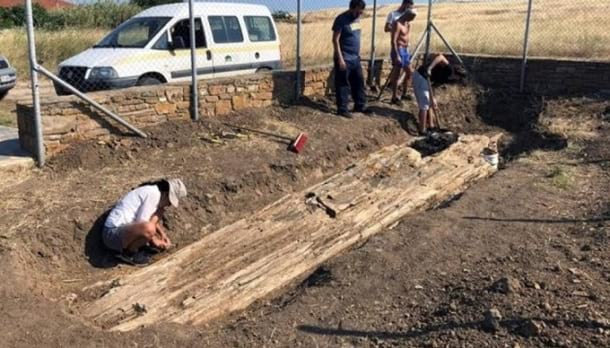
The remains of a Roman-era mercenary and his decapitated victim have been discovered at an archaeological site in the Welsh Vale of Glamorgan.
Mark Collard, an archaeologist and head of the Rubicon Heritage excavation project, told Live Science that the mercenary had a “highly unusual” burial.
He added: “It is in the middle of a field near a Roman villa overlooking the valley and the sea. It’s a great place to be buried.”
The man, who is 5ft 9in and about 20 years old, appeared to be suffering from a middle ear infection that could have spread to his skull and could have caused his death.
He was buried face down in a nailed wooden coffin, which also contained boots made of hammered nails, a long iron sword, and a silver crossbow brooch.
The last two artifacts link the man to the Roman military forces of the late fourth and early fifth centuries AD.
During this period of time, as Roman control in Britain began to wane, the empire hired mercenaries to fight the invaders.
Based on his brooch, which bears a resemblance to those found in mainland Europe, the team believes the man was recruited in this way, although he could also have been an invader. The team hopes that genetic analysis will clarify the situation.
The apparent victim of this man was also about 20 years old, and he was buried with a severed head placed at his feet in a coffin or on a wooden board with a shroud draped over it.
Beheadings were not uncommon in the Roman period—accounting for two to three percent of all burials—and are believed to be associated with executions.
Perhaps, Mr. Collard said, beheading was thought to separate the soul from the body or prevent the resurrection of the deceased.
Putin bans Russian companies from participating in foreign exchanges
Russian business plans to pay off foreign investors to avoid bankruptcy
Sanctioned or not, Russian billionaires face new obstacles after President Vladimir Putin ended an era of foreign action.
Putin signed legal amendments on April 16 requiring Russian companies to delist their foreign shares, ending a process that accelerated with the annexation of Crimea in 2014, Bloomberg reports.
This could force tycoons such as Russia’s richest man, Vladimir Potanin, as well as steel billionaires Vladimir Lisin and Alexei Mordashov, to reconfigure the ownership structure of companies they own – in part – through shares abroad that pay dividends abroad. currency.
“Most companies – and their major shareholders – that have been listed or have depositary receipts abroad have benefited greatly from financial freedoms and economic ties with the West,” said Anton Zatolokin, head of research at Discovery Broker. “By destroying what took 30 years to build, they are taking a direct and indirect blow.”
Few things in the late 1990s and 2000s showed Russia’s growing economic influence and global financial integration better than the country’s largest companies, such as Norilsk Nickel and Lukoil, which registered depository receipt programs in New York, London and Frankfurt.
Russia’s initial public offerings abroad peaked at $ 17 billion in 2007 and have declined in recent years, according to data collected by Bloomberg. Such announcements have raised a total of just $ 6 billion since Russia’s annexation of Crimea in 2014, when international sanctions showed how vulnerable companies are in foreign markets when geopolitics deteriorates.
Some tycoons took advantage of the fall in the share price of their companies to increase their positions. Lukoil Chairman Vagit Alekperov has regularly bought depository receipts from the market over the years, according to Bloomberg calculations.
Following the invasion of Ukraine on February 24, trading in depository receipts of Russian companies was frozen by foreign exchanges. The international sanctions that followed targeted tycoons, banks and even the country’s foreign reserves, while devaluing the shares of the country’s listed companies to cents and pennies in a matter of days.
According to the amendments signed by Putin, trading in depository receipts on foreign exchanges must stop 10 days after the bill was published. At the same time, the laws allow special exceptions if companies request permission to continue trading.
So far, no one has done so, and even before the bill went into effect, JPMorgan & Chase began allowing holders of depository receipts in Russian companies to cancel them, Reuters reported, citing its sources. Citigroup Inc. has opened an account for the cancellation of depository receipts for En + Group, one of the largest shareholders in which is the billionaire Oleg Deripaska, according to company documentation.
“The rights of shareholders who believe in Russia and have invested in the Russian market for many years and who cannot hold Russian shares directly have been violated,” steel tycoon Lisin said in an interview with Kommersant this month, commenting on the law. “They have nothing to do with politics and there is a risk that their property rights will simply be lost.”
The business is planning how not to fail
A lobby group of Russian big business has unveiled a plan to protect bond payments to prevent companies from defaulting as some of the country’s largest corporations try to pay back foreign investors.
Companies, including steel company Severstal and Russian Railways, missed coupons on their foreign debt after international banks delayed processing money for fear of violating international sanctions over Russia’s invasion of Ukraine.
To avoid a wave of cross-default and the freezing of foreign assets, the Union of Industrialists and Entrepreneurs has proposed introducing the role of payment agent and bond register. The work will be assigned to the Moscow-based National Settlement Depository by a vote of bondholders, the union said in letters to Bank of Russia Governor Elvira Nabiulina and Prime Minister Mikhail Mishustin.
The aim would be to avoid a situation where foreign creditors could declare default if their payments are delayed, and to demand a freeze on assets abroad against a company. There is a risk that “far exceeds the amount of the debt, not to mention the coupons due and interest payments on it,” the union said.
People without Russian citizenship can too receive payments for bonds on special accounts in foreign currency in Russian banks along with the right to sell securities to the Ministry of Finance or its agent, the union suggested in a letter seen by Bloomberg and first reported by the newspaper “Kommersant”.
It is unclear whether the proposals will be accepted. Representatives of the government and the Bank of Russia said the letters had been received and would be reviewed.
“All companies want to pay local investors, the question is what to do with foreigners,” said Dmitry Dorofeev, a portfolio manager at Alfa-Capital Management Company in Moscow, with about $ 4 billion in assets under management. “Many exporters face the risk of cross-default and asset freezes.”
Regarding changing debt conditions by voting for bondholders, “each case will be unique” because each bond has a different threshold, he said.
“For many loans, the share of Russian holders is over 50%,” Dorofeev said. “There are many companies that will be able to make the changes and do everything legally.”
Putin’s meeting with business
President Putin will meet with executives and owners of big business on Wednesday, according to Bloomberg sources.
No agenda has been announced for the meeting.
Kremlin spokesman Dmitry Peskov said Putin would continue to hold meetings with various industries. On Monday, Putin told senior officials that the West’s “economic blitzkrieg” was not working and sanctions had failed.
Putin convened a meeting of senior Russian business officials on February 24, the day the invasion of Ukraine began. The televised meeting was later cited by the European Union as an excuse for sanctions against several individuals because it showed they were members of an “inner circle of oligarchs” close to the president.
Nowhere has Russian culture been rejected and persecuted more than at home
Complaints that Russian culture has been rejected and unjustly banned in Europe and the United States have become more frequent in recent months. It is true that the contracts of several famous Russian performers in American and European theaters have been canceled, as well as tours of the Bolshoi Theater. In several other places, concerts with music by classical composers such as Tchaikovsky were temporarily postponed.
On the other hand, in Russia itself, banning and persecuting one’s own cultural luminaries is an old and immortal tradition. Its victims have become and are becoming world musicians, ballet dancers, directors and perhaps most of all – writers. Of the five Nobel laureates in Russian literature, only one has not been persecuted, accused or repressed. The sixth is the journalist Dmitry Muratov, whose Nobel Peace Prize – his publication was stopped, and he himself – attacked and flooded with red paint a few days ago. Artists also suffer from rejection. Two historical paintings by the greatest Russian mariner Ivan Aivazovsky were banned at the end of the 19th century and remain undesirable to this day.
There are pages in Russia’s history that the authorities are trying to hide. But, as they say, you can’t throw away a line from the song … Historically, it happens that the Russian people often starve, and not because there was not enough grain, but because those in power peeled the people’s skins in the name for their own benefit. One of these banned pages is the famine that engulfed the south and the Volga region in 1891-1892. And as a result – humanitarian aid collected by the American people and sent to Russia by five steamers, recalls the site Kulturologia.ru.
“Unexpected” disaster in Russia
No matter how much the authorities tried to shift the blame for the famine of 1891-1892 to adverse weather conditions, the main problem was the state’s grain policy. By replenishing the treasury at the expense of agricultural resources, Russia annually exports wheat. Thus, in the first year of famine, 3.5 million tons of grain were exported from the country. The following year, when fierce famines and epidemics raged in the empire, the Russian government and entrepreneurs sold 6.6 million tons of grain in Europe, almost twice as much as the previous year. The facts are simply shocking. Monarch Alexander III commented on the food situation as follows: “I have no starving people, only victims of the poor harvest.”
Leo Tolstoy describes the situation in the villages at that time: “People and cattle really die. But they do not writhe in the squares in tragic convulsions, but quietly, with weak moans, get sick and die in huts and yards … Before our eyes is a trial. impoverishment of the rich, poverty of the poor and destruction of the poorest … In moral terms we see spiritual decline and development of all the worst human traits: theft, malice, envy, begging and irritability, further supported by measures, prohibiting resettlement “.
Americans are collecting humanitarian aid
This movement was organized and led by philanthropist William Edgar, who in the summer of 1891 published articles in his journal North Western Miller about the famine in Russia. He also sent about 5,000 letters to grain traders in the northern states asking for help.
Edgar reminds his fellow citizens that during the Civil War of 1862-1863, the Russian navy provided invaluable assistance to their country by sending two military squadrons. At that time there was a real threat that England and France would come to the aid of the southerners. However, the Russian flotilla remained close to the American coast for seven months – and the British and French did not dare to provoke a conflict with Russia. This is helping the northerners win the civil war.
The calls of the American activist find a response in the hearts of his fellow citizens and the collection of donations begins everywhere. The work is done informally and on a voluntary basis, as the US government does not approve of the gesture of friendly assistance, but it cannot ban it.
In the early spring of 1892, steamers with valuable cargo arrived in the Baltic. One of them is the organizer of the food collection – William Edgar. From the beginning of spring to the middle of summer, five steamers with a total of over 10,000 tons of humanitarian cargo, valued at $ 1 million (today’s $ 32 million), docked in Russia.
Aivazovsky – an eyewitness to the historical event
The first Indiana and Missouri transport ships, the so-called “starving fleet”, arrived in the ports of Libava and Riga. Ivan Konstantinovich Aivazovski personally witnessed the meeting of the long-awaited cargo, which helps to overcome the catastrophic situation in the country. In the Baltic ports, ships were greeted with orchestras, food wagons set off, decorated with American and Russian flags. This event impressed the artist so much that he reflected it in two of his paintings: “Ship of Aid” and “Distribution of Food”.
Particularly impressive is the second picture, in which we see a racing Russian trio laden with food. In the sleigh, a peasant proudly waves the American flag. In response, villagers happily waved handkerchiefs and hats, and some who fell by the roadside prayed to God and thanked America.
Aivazovsky’s paintings are strictly forbidden for public display in Russia. The emperor took them as a reminder of his futility and failure, which threw the country into the abyss of hunger.
Aivazovsky in America
At the end of 1892-1893, Aivazovsky left for the United States and took with him paintings unwanted by the Russian authorities. As a token of gratitude for the help, the artist donated his work to the Corcoran Gallery in Washington. From 1961 to 1964, the paintings were exhibited in the White House at the initiative of Jacqueline Kennedy. In 1979, they found their way into a private collection in Pennsylvania and were not publicly available for many years. In 2008, at Sotheby’s, the two historical paintings sold for $ 2.4 million, and one of the patrons returned them to the Corcoran Gallery.
These paintings, painted in 1892, were not allowed for public display in Russia. Who knows, if Aivazovsky’s paintings had remained at home in the late 19th century, perhaps more Russians would have maintained friendly feelings and gratitude to the Americans.
The investigation, launched in 2019, focused on the alleged leader – a 36-year-old man
Four Bulgarians in France have been charged with pimping and human trafficking after being arrested in mid-April in an unauthorized camp near Bordeaux, southwestern France, where they ran a prostitution network. This was reported by AFP, citing the prosecutor’s office and a source close to the investigation.
According to the source, these people persuaded young women in Bulgaria to come to France. The girls were later forced into prostitution on Bordeaux boulevards or truck parking lots. If they resisted, they were threatened and raped, and kept “in a state of material dependence,” he told AFP.
The investigation, launched in 2019, focused on the alleged leader of the network – a 36-year-old man arrested along with his wife and two other men – his “deputies”. According to the same source, the man continued to lead the network while he was in prison in Bulgaria in 2020, giving orders to his wife.
Since 2019, the accused have crossed the border many times, staying in France, Bulgaria, Germany or Italy, where the leader of the network was already known in connection with such cases. Cash and an “expensive German car” were seized during the arrest of the four.
Seventeen people from a Bulgarian pimp network were sentenced to up to 8 years in France, local media reported in mid-July 2021.
The pimps recruited young women to Bulgaria and accommodated them in Germany, from where they were taken daily to the French border town of Strasbourg to work as prostitutes.
The network also operated in the area of the resort town of Annecy, department of Haute-Savoie, to the south also in eastern France.
The court in Nancy handed down the sentences, and 16 of the 17 Bulgarians were finally banned from entering France.
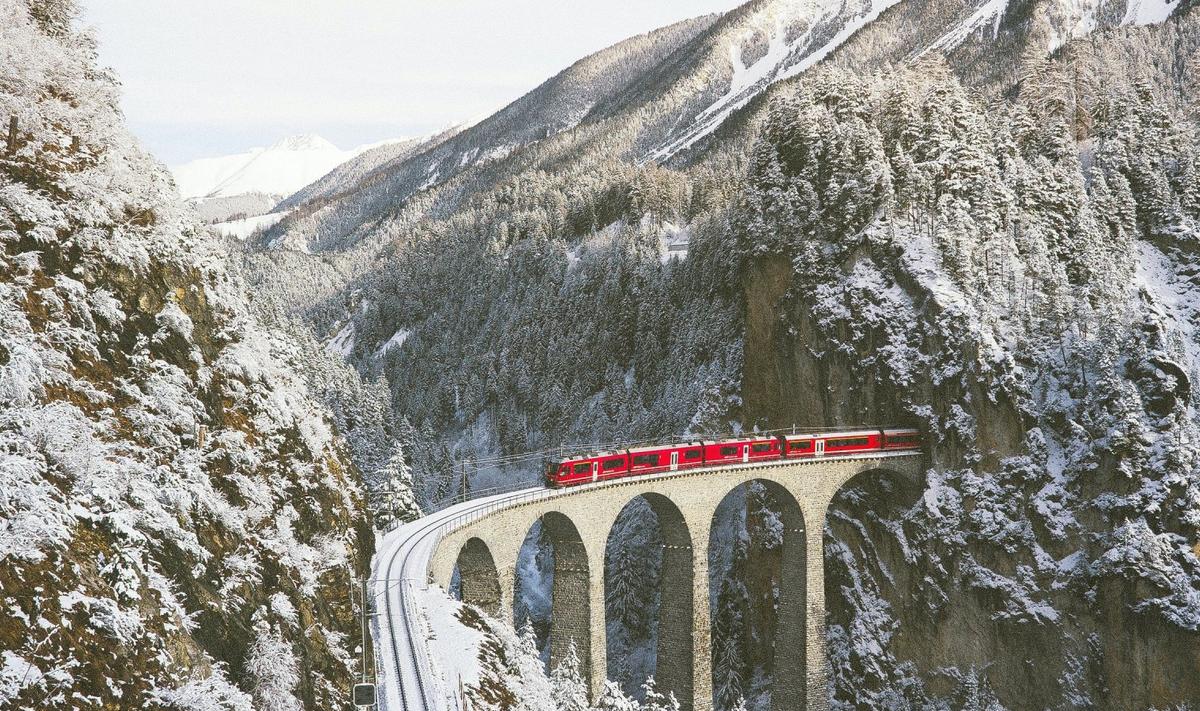
Quiet, clean and prosperous Switzerland with its idyllic landscapes and personalized chocolate has repeatedly topped the ranking of the happiest countries in the world. The locals go skiing almost in infancy, eat healthy foods and equally respect the rights of people and animals. How the Swiss came to such a life and is everything perfect in Wonderland, the portal “Subtleties of Tourism” tells.
1. Accuracy and punctuality
More than half of the Swiss speak dialects of the German language, and they also borrowed some features of the mentality from their punctual neighbors. It is not customary here to be late either for business meetings or for friendly parties, and the speed limit on the roads is observed with maniacal accuracy: if there is a limit of 60 km / h on the sign, then you need to drive at a speed of 59 km / h – no more, but not smaller.
And don’t even try to put the garbage bag outside at 6:50 instead of 7:00 – the neighbors will be very outraged!
2. Scheduled laundry
The private life of the Swiss is subordinated to the interests of society, and even such a personal matter as washing is consistent with others. In the basements and attics of the houses there are shared laundries, and the use of washing machines should be scheduled, reserving your day in advance. Before leaving, you need to wash everything and leave it clean – so as not to get out of the schedule and not to annoy the neighbors. It is believed that such a strict regulation helps to save water and electricity.
3. Home bomb shelters
Switzerland is one of the ten safest countries in the world, and there is a solution even in the event of a nuclear war: bomb shelters equipped in houses can accommodate the entire population of the country. Previously, such shelters were built in every residential building, and although this norm was abolished long ago, there are now 300,000 private and 5,000 public bunkers in Switzerland.
These are rooms protected by powerful reinforced concrete blocks up to 30 cm thick. Inside there is an autonomous ventilation system, as well as a supply of water, food and medicine. If something happens, every Swiss knows where to run: usually the entrance to the bomb shelter is located in the basement, next to the laundry.
4. Restraint
The Swiss are quiet and cautious people who prefer not to let strangers into their personal space. They will not share the details of their biography at the first meeting and do not expect stories about the family and children from their interlocutors. Private and work life are clearly separated, all conversations at work are reduced to a discussion of professional issues.
5. Cleanliness and order
The Swiss have brought the pan-European tradition of waste sorting to perfection, to put it mildly. Not only do they practice separate collection of glass, paper, plastic and organics – there are even containers for fish bones, containers for jars of cream and coffee cups. Paper must first be bundled, glass and aluminum must be taken to recycling points, and plastic bottles and coffee capsules must be returned to the store. Everything that is not sorted can only be thrown away in special paid bags, so every Swiss gives 2-4 CHF for every kilo of garbage.
But the country recycles up to 90% of waste, and its inhabitants can breathe clean air and drink water from any stream. “This is a tribute to the amazing nature among which we live,” the Swiss themselves say.
6. Voice of the people
Switzerland is a country of victorious democracy: local residents vote at least 4 times a year, and every citizen can introduce a bill or an amendment to the Constitution, collecting votes in support of his initiative. Local self-government bodies have more powers than federal ones, and all vital issues are resolved locally, at the will of the voters. The Swiss themselves regulate the level of taxes in their cantons and set the maximum amount of income for top managers.
They also voted against anti-tobacco restrictions and decided not to host another Olympics in their country.
Leandro Neumann Ciuffo, CC BY 2.0 , via Wikimedia Commons
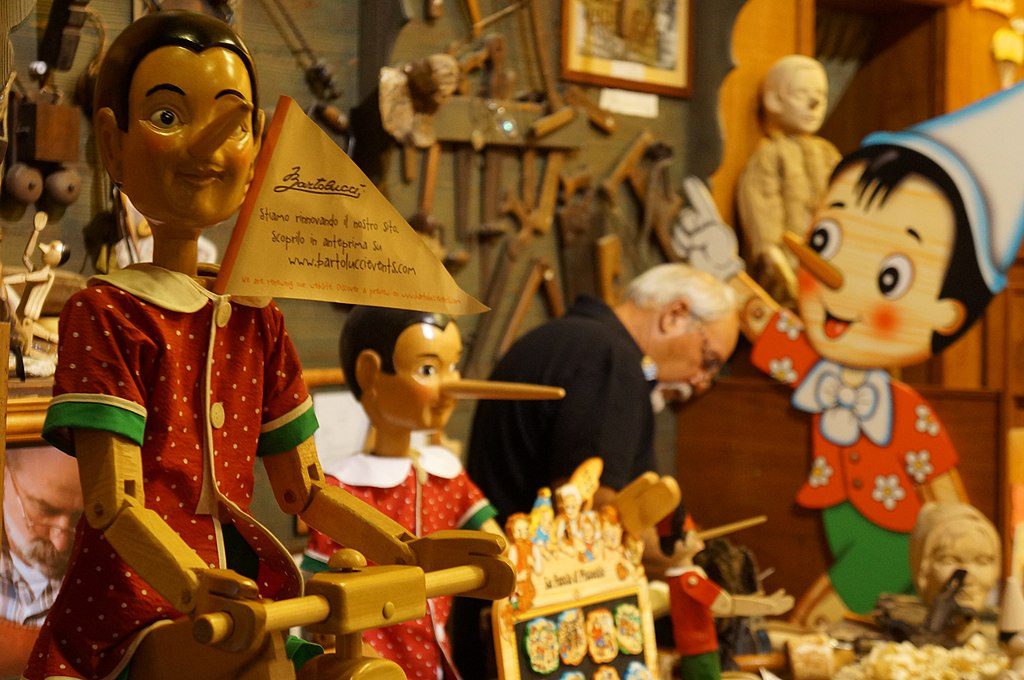
No matter when it is told, however, a lie is a lie. In different cultures it is considered an immoral duty or a sin, and for modern man it is more an insult to the individual. Sometimes it can be a signal of a person’s inability to control the responsibility that follows from actions.
And now see 10 interesting facts about the lie and its “essence”:
The eyes of the liar
One of the most common claims about liars is that their eyes are constantly streaked and do not hold their gaze while telling a lie. However, it turns out that we cannot rely on this method. A group of psychologists conducted a study in which they monitored two groups of people – those who tell the truth and those who lie. They came to the conclusion that there is not much difference in the colour of the eyes in the two groups.
Lie “detector”
The lie detector measures the level of stress and anxiety. The data on the device is based on a person’s heart rate and blood pressure, but there are people who can mislead him. However, only 4% are those who manage to deceive modern polygraphs. It is, regardless the trust some authorities put into it, not trustable at all, as the machine is not able to differentiate between a lie or the stress a person has when wrongly accused or when the person has a trauma with a related issue capable of making him nervous, therefore, not only useless but a misleading and not scientific.
To lie to yourself
Often liars are able to believe their own lies. Research shows that copyists during the exam are more likely to overestimate themselves, no matter that they did not use their own knowledge.
A lie from lack of time
Researchers from the University of Amsterdam conducted a study, according to which most of the lies are provoked by the lack of sufficient time. People who have time to think when making decisions are less likely to lie.
The most lying country in the world
A survey of 15 countries found China to be the most false country. The Chinese tend to lie to gain financial gain. As for the number of lies told – the Turks turned out to be the leaders.
Children and lies
Children learn to lie almost at the same time as they talk. In most cases, this is not a deliberate lie, but dictated by answering a pattern of similar questions. Also, children’s imagination makes them believe their own lies.
Lying and evolution
Lying is one of the main factors in human evolution (as well as of problems and unhappiness). According to psychologist Robert Wright, the more developed the communication system, the more people lie in society [hard to believe, since truth makes people free].
Men, women and lies
Men lie much more often than women. After a study, Professor Karen Payne concluded that men tell almost twice as many lies a year as women. Also, women regret the lies told in 80% of cases. This applies only to 70% of the stronger sex.
Mythomania or Munchausen’s Syndrome
It is a disease in which a person has a constant need to lie. With the help of lies, he creates his own reality and even sincerely believes in his lies.
Spontaneous and planned lie
Lies can be spontaneous and planned. The spontaneous deceiver can be recognized by his posture or gestures, while the professional in lies can easily deceive us.
ADVICEABOUT TRUTH AND LIES
Despite all the above, there is nothing more rewarding than being a trustable person, true to yourself and others, without attempting to hurt others with “truth”.
Charte européenne de la jeunesse et de la démocratie
In times when the resilience of our common European project is put to the test by several crises, the need to act to defend and promote our European values is now more pressing than ever before.
The CoR has launched an online map of activities and experiences constituting a first concrete step towards a community of best practices at local and regional level to promote European values through education and culture.
With more than 100 examples and contributions provided by the CoR’s elected local and regional representatives and partners, its aim is to serve as an inspiration for further valuable ideas and projects, while also providing various opportunities to share experiences, exchange knowledge and start cooperation.
Already in 2017, on the occasion of the Social Summit in Gothenburg, it was underlined that “Education, culture and sport have a pivotal role in promoting active citizenship and common values amongst the youngest generations“. But an imperative call to action became evident during the CoR plenary debates with Margaritis Schinas, Commission Vice-President for Promoting our European Way of Life (in June 2021) and French President Emmanuel Macron (in December 2021) on European values and the renewal of democracy.
On these occasions, VP Schinas welcomed the fact that “the Commission together with the European Committee of the Regions will be joining forces and call on regions and cities across the Union to make pledges for the development of European classrooms“, while President Macron underlined that regional elected representatives are the heart of European democracy and he spoke of the need to build a ‘European demos’ with local and regional authorities.
Indeed, the local and regional leaders are responsible for empowering young people to understand the importance of these values and of the European Union, which promotes and secures peace and prosperity. Considering the particularly favourable context of the Conference on the Future of Europe, encouraged by the support from CoR members, and building on the existing examples from many regions, the President of the CoR and the Chair of SEDEC commission suggested that a community of best practice be set up, to facilitate dialogue and the exchange of these good practices.
The CoR President Tzitzikostas summarized the purpose of the project during the June debate: “It is our responsibility – as parents and leaders – to offer our young generations the tools to realise that the EU made possible today’s peace and unity. This is what we must do today, if we want to have a tomorrow. Together […] we want to launch a pilot project to promote our common European values in classrooms. This will be done on voluntary basis and in full respect of subsidiarity, while using the momentum of the Conference on the Future of Europe.”
The project is also part of the Joint Action Plan between the European Committee of the Regions and the European Commission Directorate General for Education and Culture, Directorate General for Research and Innovation, and the Joint Research Centre, signed in November 2020 by Commissioner Gabriel, the CoR President Tzitzikostas, and the SEDEC Chair Karjalainen.
You can visit the new map online via desktop or mobile following this link: https://cor.europa.eu/European_values.go
Sleeping people react to noise from wind turbines and traffic, but in most cases it does not wake them up, according to a study by Flinders University in Australia, quoted by “MedicalExpress”.
The researchers analyzed electroencephalograms of the brain waves of 23 young healthy people under the influence of three-minute recordings of noise from wind turbines and street traffic, reproduced at different volumes (33, 38 and 43 decibels). The results are published in the “Journal of Sleep Research”.
“Noting the changes in brainwaves, we found that volunteers reacted similarly to wind turbines and street noise, especially when the sound was louder. During light sleep, we noticed that low noise levels from wind turbines caused more brain activity than traffic noise at the same volume, “said study leader Claire Dunbar of the University Medical Research Center.
However, the effects of the sounds were short-lived, with the brain waves of most subjects returning to their main activity, sleep, about thirty seconds after the onset of each noise, and few of the study participants woke up.
Good sleep is extremely important for our health – as much as healthy eating and exercise. Unfortunately, there are many factors that can hinder it.
Here are some reasons why it is so important:
1. Poor sleep is associated with higher body weight
Poor sleep is associated with weight gain. People who have a short sleep duration are more likely to gain weight than those who get enough sleep. Short sleep is actually one of the strongest risk factors for obesity.
This can happen to both adults and children. If you are trying to lose weight, quality sleep is a must.
2. People with good sleep tend to eat fewer calories a day
Studies show that people who do not get enough sleep have a greater appetite and tend to eat more calories. Poor sleep affects the hormones that regulate appetite. These include higher levels of the hormone ghrelin, which plays an important role in the feeling of hunger, and lower levels of the hormone leptin, which suppresses it.
3. Good sleep can improve concentration and productivity
Sleep is important for various aspects of brain function. Without it, our concentration and productivity during the day becomes lower. Research among medical trainees provides a good example of this. Trainees with extended working hours over 24 hours make 36% more serious medical mistakes than those who allow themselves more sleep. Good sleep has been shown to improve problem-solving skills and improve memory in both children and adults.
4. Poor sleep is associated with depression
Mental health problems, such as depression, are strongly associated with poor sleep quality and sleep disorders. It is estimated that 90% of people with depression complain of insomnia, which is even associated with an increased risk of death by suicide.
5. Sleep affects glucose and the risk of type 2 diabetes
Experimental sleep restriction affects blood sugar and reduces insulin sensitivity. In a study involving healthy and young men, restricting sleep to 4 hours for 6 consecutive nights caused symptoms of pre-diabetes. However, they can disappear in a week if the duration of sleep increases. Many studies have shown a strong link between short sleep duration and type 2 diabetes.
Vienna (Austria), 22 April 2022 – An organization in Turkey is partnering with a local university to reach young people with training and activities to reinforce resiliency against addiction. Youth in Peru are strengthening their knowledge, skills, and leadership to become agents of change, helping their peers abstain from drug use.
Around the world, young people are cooperating with their local communities and decision-makers on public drug policies, spurred on by a grant programme made available from youth, to youth, for youth.
Since 1994, the Drug Abuse Prevention Center (DAPC) in Japan has been supporting civil society and non-governmental organizations (NGOs) in implementing drug prevention activities in low- and middle-income countries. Since 1994 the DAPC has disbursed a grant managed by the United Nations Office on Drugs and Crime (UNODC) to prevent drug use in such countries through drug prevention projects, with a particular focus on empowering youth to take active roles in supporting the health and well-being of their peers. The funds are raised by youth volunteering for the DAPC, mobilizing their communities in Japan.
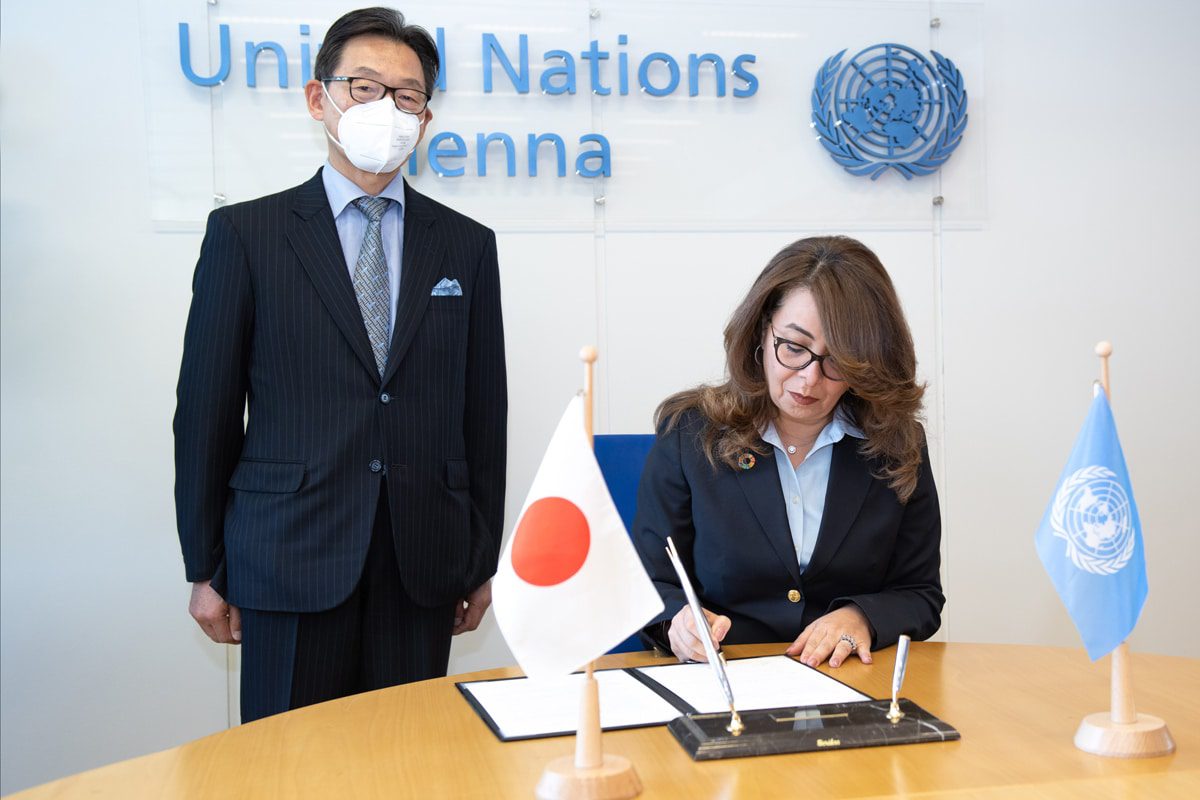
Since 2012, 134 grants in 55 countries had benefitted from the DAPC grant. Today, through a signing ceremony held in Vienna, the Government of Japan reaffirmed its support to the DAPC grant scheme through a pledge of around US$ 94,000. UNODC’s role is to identify candidates, award annual grants to selected NGOs, and provide technical support for the funded projects. Applications submitted under the recent call for proposals 2022 are under evaluation to select potential grantees. The next call for proposals will be announced in early 2023.
At the signing ceremony, UNODC Executive Director Ghada Waly thanked the Government of Japan for its support through the DAPC’s long-term partnership with UNODC, which is producing real impacts on the ground. She reaffirmed UNODC’s commitment to using this funding opportunity to encourage low- and middle-income countries to implement evidence-based substance use prevention, and meaningfully engage youth in these efforts. She also noted that the increased number of grant applications from NGOs, to more than 650, was clear recognition of communities’ awareness and visibility of this important issue.
Also present at the ceremony was Permanent Representative of Japan to the United Nations in Vienna, Ambassador Takeshi Hikihara, who said that the DAPC contribution was made possible thanks to youth-led fundraising efforts for drug misuse prevention and awareness-raising around the world, as well as in Japan. He also expressed confidence in UNODC’s work in this area through partnerships with NGOs, which have continued for nearly three decades.
The DAPC grant is managed as part of UNODC’s Youth Initiative, which celebrates its first decade of action in 2022. The UNODC Youth Initiative continues to encourage young people to reflect on the potential impact of substance use in their schools and communities, and to start taking effective and evidence-based action to prevent substance use by becoming active youth leaders in their communities.
Furthermore, at this year’s 66th session of the Commission on Narcotic Drugs (CND), Member States reaffirmed efforts to promote evidence-based early prevention to protect children and youth from, and help prevent adverse consequences of, exposure to the non-medical use of drugs.
Among social platforms, Twitter is the most resistant to conspiracy theories. This is the conclusion of a new European study with lead researcher Yannis Theocharis, professor of digital management at the Technical University of Munich. The study analyzed data from 16 European countries and one from the Middle East – Israel in the period before and during the pandemic of COVID-19. Researchers have examined the role of various social media (Facebook, Twitter, YouTube, etc.), as well as applications such as WhatsApp in terms of the distribution of so-called. conspiracy theories, according to the Greek City Times.
The results show that, in general, conspiracy theories are most common in Eastern and Central Europe, and in Israel the “conspiracy index” is above average. Conversely, in the Scandinavian countries they are least represented, while the Mediterranean countries (France, Italy, Spain) are in the middle. Of the 17 countries surveyed, Romania holds the first place, Poland and Hungary are second and third, respectively, and Greece and Israel share fourth place. Bulgaria is not represented in the study, which was published in the journal New Media and Society.