Brian Evans new single “I’m A Traveler,” produced by Narada Michael Walden, known for producing Whiteney Houston, Aretha Franklin and more will be released on iTunes April 20th.
Narada Michael Walden produced “I’m A Traveler” for Brian Evans. The song will be released April 20th.
LOS ANGELES, CA, USA, April 17, 2022 /EINPresswire.com/ — Brian Evans, the crooner who has opened for numerous stars such as Bob Saget, Joan Rivers, Social Distortion, Louie Anderson, David Spade, and the list goes on, will release his single “I’m A Traveler” to adult contemporary radio and smooth jazz stations across the nation on April 20th through ESW Management.The song, “I’m A Traveler,” which Evans wrote, is produced by Narada Michael Walden, the legendary producer behind Whitney Houston, Aretha Franklin, George Michael, and others known the world over.
Evans has performed in Las Vegas for many years, and has also written several novels including “Horrorscope,” “The Funny Robbers,” “Savannah,” and has seen the first novel adapted by Westwind Comics recently into a graphic novel.
His rendition of “New York, New York” has received over 500 million streams on the social media network TikTok, and with his combined music videos on YouTube, Evans videos “At Fenway” featuring William Shatner, a song about the Boston Red Sox, “A Beautiful Game” featuring Lou Diamond Phillips and “Breaking Bad” star RJ Mitte honoring the sport of soccer, and his Halloween themed song “Creature at The Bates Motel” among other videos have garnered him more than 50 million views on YouTube. His version of “Witchcraft” alone, performed during a live concert on Maui, where he founded and produced The Maui Celebrity Series, has received more than 6 million views alone.
Evans took to writing books for the last eight years following the unexpected loss of his mother, Helen, following knee surgery and had not performed for several years.
“There’s a combination between his “Horrorscope” project and a live concert special on a streaming network.”
Evans named as one of the most relevant crooners by Grammy Magazine of his generation, is starting to sing again, and “I’m A Traveler” is what he considers to be his own personal anthem. He is considering performing in Las Vegas again.
“I’m opening for people right now, but I’m getting there.”
Walden will continue producing Evans, as does Vegas producer Gary Anderson occasionally, also a Grammy winner.
NETHERLANDS, April 15 – The Invictus Games are an international sporting event for service personnel and veterans who have been physically or mentally injured in the line of duty. Despite their disabilities, they are eager and able to compete at a high level. The Invictus Games use the power of sport to inspire recovery, support rehabilitation and generate a wider understanding and respect for those who serve their country.
The first event took place in London in 2014, followed by Orlando, Toronto, Sydney and now The Hague. The Duke of Sussex (Prince Harry), who served two tours of duty in Afghanistan, founded the Invictus Games and will be in attendance.
According to the mayor of The Hague Jan van Zanen, this initiative is consistent with Dutch values:
‘The Invictus Games are a tribute to all veterans who have dedicated themselves to the values that we hold dear in The Hague: peace and justice. At this time, it is especially fitting that we show our appreciation and gratitude.’
Unconquered
The word ‘invictus’ means ‘unconquered’ and embodies the fighting spirit and positive approach to life of physically and mentally injured service personnel. It personifies what these men and women can accomplish in spite of their injuries. It’s not about winning medals but about achieving personal goals.
The Invictus Games are about much more than just sport. They capture hearts, challenge minds and change lives. The athletes are heroes who have paid a high price for their commitment to peace and security. They each have their own story about their physical injury or mental illness. But they have all found the strength to carry on and the motivation to push their boundaries. The Invictus Games are a tribute to the veterans who have served the cause of peace and justice in the world.
Self-confidence
Teams from Afghanistan, Belgium, Canada, Iraq and other countries will take part in ten different sports in The Hague. Dutch service personnel will also be participating. Although the Games are now finally getting under way after a two-year delay due to the pandemic, the war in Ukraine – one of the participating countries – is casting a shadow over the event. The Ukrainian team recently lost one of its members in the war.
The injuries that service personnel suffer are not always visible. There are also competitors who have sustained mental injuries in the line of duty. As the COVID-19 pandemic took hold, people realised how quickly their lives can be turned upside down, causing the things we all take for granted to disappear. This kind of upheaval can have a negative impact on people’s mental health, but sport offers a way to rebuild confidence in the future.
The Invictus Games are about inspiring recovery and growth among the competitors. It is also important to create acceptance and support in the world. The Invictus Games offer an opportunity to show what sport can mean to wounded servicemen and women. The Games are well-known among veterans and service personnel but the event is also gaining in popularity among the general public. Friends and relatives of the athletes attend the Games too. Their role in recovery process after an injury or illness deserves recognition.
As heavy fighting and missile strikes continue to destroy critical civilian infrastructure, humanitarian needs in Ukraine remain extremely high. Despite access and security constraints, EU humanitarian aid partners are providing assistance to vulnerable people in different regions of Ukraine.
The EU is allocating a further €50 million in humanitarian funding to support the people affected by Russia’s war on Ukraine, including €45 million for humanitarian projects in Ukraine and €5 million for Moldova. This brings the EU’s total humanitarian aid funding in response to the war to €143 million. This funding is part of the €1 billion support package pledged by the European Commission at last week’s global pledging event ‘Stand Up For Ukraine’.
This new funding will address the most pressing humanitarian needs by providing emergency medical services, access to safe drinking water and hygiene, shelter and protection, cash assistance, and support against gender-based violence.
Commissioner for Crisis Management, Janez Lenarčič, said “With millions of people on the move or trapped in active war zones, the needs in Ukraine are already massive. Now, we need to be prepared for a further increase in Russia’s ruthless attacks on Ukraine, notably in the east. With this additional €50 million the EU continues to rapidly make available humanitarian funding to its partners in order to further scale-up the assistance. It will help people in hard-to-reach areas who are cut off from access to healthcare, water and electricity, and those, who have been forced to flee and leave everything behind. Ukraine, we are with you.”
Background
Following an invasion by Russia on 24 February, the humanitarian needs in Ukraine have risen to unprecedented levels. The ongoing hostilities endanger the lives of civilians and cause severe damage to housing, water and electricity supply, heating, but also public infrastructure such as schools, and health facilities. Many people have no access to basic needs. The population is exposed to shelling, armed violence, mines, family separation, looting or eviction, and human trafficking. There are high risks of gender-based violence against women and girls.
On 28 February, the European Commission announced €90 million for humanitarian aid programmes to help civilians affected by the war in Ukraine. This included respectively €85 million for Ukraine and €5 million for Moldova. On 10 March, the European Commission allocated further humanitarian funding of €3 million to Moldova to support those fleeing Ukraine.
The European Commission is also coordinating its largest ever civil protection operation to assist affected people both in Ukraine and its neighbouring countries. To date, more than 19 000 tonnes of assistance have been delivered to Ukraine from the EU’s logistics hubs in Poland, Slovakia and Romania. The assistance coordinated via the EU Civil Protection Mechanism includes essential supplies like medicines, food, power generators and shelter equipment.
Six weeks ago, life was easy for Yuliia, her husband Valerii, and their small son Artemko.They had just moved into a new apartment in a quiet, green part of Bucha. She had a job as a hairdresser and loved nothing more than when a client left her salon looking beautiful and confident.
Everything changed one awful morning at the end of February. War – violent, loud and terrifying – roared from the north. With her neighbourhood in flames, Yuliia made the decision to flee.
She and her family, including her mother Zinaida, joined over 7.1 million (as of 1 April 2022) internally displaced persons (IDPs) across Europe’s largest country.
A mass grave in Bucha, Ukraine.
Violence ‘impossible to comprehend’
After four weeks on the road, they arrived in the western province of Zakarpattia, hundreds of kilometres from her shattered hometown.
When Yuliia saw the horrific pictures and videos of the slaughter and destruction in Bucha, she instantly burst into tears and remained speechless for a while. “This level of violence is impossible to comprehend,” she finally said. “That is not something you would wish on the enemy, but this is something that will never be forgiven nor forgotten.”
From her neighbours, Yuliia learned that after her family had left, their flat was taken over, and their belongings were looted. The factory where Yuliia’s mother worked was destroyed by bombs.
Even though Ukrainian authorities have regained control, people are still not allowed to come back home due to risks of mines, and other explosive remnants of war.
A destroyed tank in Bucha, on the outskirts of Kyiv, Ukraine.
‘This is our home now’
Here in Zakarpattia, they can finally catch a break. Together with a hundred other IDPs, they found a temporary shelter in a school in the small town of Bushtyno. Volunteers from Germany, Poland and the Czech Republic have done their best to turn impersonal classrooms into cosy bedrooms. The sports hall has become a central warehouse for all the necessities of daily life.
“So here we are. This is our home now. We have everything we need, and kind people are helping us in every way they can,” says Yuliia. “Even though we are sleeping on mattresses on the floor now, missiles are not flying over our heads and my child is safe. This is the only thing that matters now.”
She hopes that her son will not have any memories of those terrifying weeks of fear and flight. “We do not have many personal belongings but what really breaks my heart is that we were not able to take any toys for Artemko. He loves cars and, at home, he had a lot of car toys, which he misses very much, and asks all the time when he can come back home to play with them again.
I want him just to be a child, play games and spend time with other kids. If he could have some toys or a bike, he would be really happy. And it would make me happy too.”
The UN migration agency (IOM) has been on the ground providing essential humanitarian assistance to displaced people like Yuliia and her family.
IOM response includes food, non-food and hygiene items, cash, mental health and psychosocial support, as well as prevention of human trafficking and sexual exploitation and abuse.
Over 50,000 people have received practical humanitarian help from IOM in Ukraine since the start of the war.
Pope Francis attended the Easter Vigil on Holy Saturday evening in St. Peter’s Basilica, filled with 5,500 pilgrims. This celebration is the most solemn and noblest of all Solemnities.
Cardinal Giovanni Battista Re, Dean of the College of Cardinals, presided over the celebration, while Pope Francis delivered his homily and baptised seven catechumens. The Pope has suffered from knee pain in recent months, something he also mentioned when speaking to journalists recently after his pastoral journey to Malta.
Closeness to Ukraine
Present at the celebration were members of a small delegation from Ukraine, made up of representatives of the local government and the country’s parliament, whom the Pope met with just before the liturgy began.
The delegation included the mayor of Melitopol, Ivan Fedorov, now an exile. The Pope greeted him in particular during the celebration.
“In this darkness that you are living, Mr. Mayor, Parliamentarians, the thick darkness of war, of cruelty, we are all praying, praying with you and for you this night. We are praying for all the suffering. We can only give you our company, our prayer and say to you: “Courage! We are accompanying you!” And also to say to you the greatest thing we are celebrating today: Christòs voskrés! Christ is risen!”
Delivering his homily seated, the Pope recalled how many writers have evoked the beauty of starlit nights, whereas nights of war are marked by streams of light portending death.
From bewilderment to joy
Reflecting on this Easter night, he encouraged everyone to see the hopeful light of dawn as experienced by the women of the Gospel who discovered the empty tomb of Jesus. They show us “the first rays of the dawn of God’s life rising in the darkness of our world.”
Easter Vigil in St. Peter’s Basilica
The Pope recalled how the women who went early in the morning to annoint the body of Jesus were startled to find it empty while meeting two figures in dazzling garments telling them Jesus was risen.
“They saw, they heard, they proclaimed” – three aspects of their experience we also can gain from when remembering the Lord’s passover from death to life.
The women saw
The first news of the resurrection marked “a sign to be contemplated,” the Pope observed, as it totally overturned expectations and came as an amazing and surprising hope.
Sometimes radically good news many not “find a place in our hearts,” the Pope added, and like the women in the Gospel we can initially react with doubts and especially fear, as the Gospel narrative describes their reaction.
Easter Vigil in St. Peter’s Basilica
We can sometimes keep looking at life and reality with a downcast persepctive, the Pope went on to say, and even write off the future, believe things will never change or improve, burying “the joy of living.”
Yet, the Easter hope we proclaim today is a call by the Lord to see life with different eyes, and make the jump to really believing that “fear, pain and death will not have the last word over us.”
While death can fill us with fear and sadness, he said, we must remember that “the Lord is risen!”
“Let us lift up our gaze, remove the veil of sadness and sorrow from our eyes, and open our hearts to the hope that God brings!”
The women heard
Recalling the two men in dazzling garments who spoke to women, saying “Why do you look for the living among the dead? He is not here, but has risen,” the Pope said we do well to hear and repeat their words “He is not here!”
This response can be for us too when we think we have understood everything about God and allow our own ideas and perspectives to contain Him, or we only seek the Lord in times of need and forget Him the rest of our daily lives, or when we neglect the Lord present in our brothers and sister who need our help.
Easter Vigil in St. Peter’s Basilica
The Pope added that we need to break free of moribund ways of thinking and behaving, where we can become prisoners of the past, lacking courage to to let ourselves be forgiven by God, to opt in favour for Jesus and his love.
We need to accept and encounter the living God who desires to change us and to change our world.
“Yet the Lord is risen! Let us not tarry among the tombs, but run to find him, the Living One! Nor may we be afraid to seek him also in the faces of our brothers and sisters, in the stories of those who hope and dream, in the pain of those who we suffer: God is there!”
The women proclaimed
The final verb the Pope underscored is how the women proclaimed the joy of the resurrection, opening “hearts to the extraordinary message of God’s triumph over evil and death.”
This joy was not just a happy consolation, but animated them to generate missionary disciples who “bring to all the Gospel of the risen Christ.”
The Pope said after the women saw and heard, they were overcome with a drive and the exhilaration to tell this good news, even if people thought they were crazy or would not believe it.
Easter Vigil in St. Peter’s Basilica
Joy of the Gospel
The Pope expressed his wish for a Church that can proclaim in the same way, with the same fervour, the joy of the Gospel, what all Christians are called to do “to experience the risen Christ and to share the experience with others” and the joy it brings.
Easter Vigil baptism of catechumens
“Let us make Jesus, the Living One, rise again from all those tombs in which we have sealed him…Let us bring him into our everyday lives: through gestures of peace in these days marked by the horrors of war, through acts of reconciliation amid broken relationships, acts of compassion towards those in need, acts of justice amid situations of inequality and of truth in the midst of lies. And above all, through works of love and fraternity.”
Hope has a name: the name of Jesus
In conclusion, Pope Francis recalled how Jesus entered “the tomb of our sin” and “bore the weight of our burdens” restoring us to life.
“Let us celebrate Easter with Christ! He is alive! Today, too, he walks in our midst, changes us and sets us free…For with Jesus, the Risen Lord, no night will last forever; and even in the darkest night, the morning star continues to shine.”
By Nathan Morley – Palestinian youths clashed with Israeli police in Jerusalem’s Al Aqsa Mosque compound on Friday.
This site in Jerusalem’s Old City saw frenzied scenes as 150 Palestinians were wounded in clashes with Israeli riot police after dawn prayers.
The Palestinian news media reported many were injured by rubber-coated bullets; stun grenades, and beatings with truncheons.
After the clashes, the Israeli police said that they moved into the mosque to disperse a crowd of Palestinians who had been hurling firecrackers and rocks.
At least three police officers were hurt, according to security services, whilst hundreds of Palestinians were detained.
The police and army in Israel have been on high alert after a series of deadly Arab street attacks throughout the country over the past fortnight.
Tensions this year have increased in part by Ramadan coinciding with the Jewish celebration of Passover.
The holy site – which sits in the heart of old Jerusalem – is revered by Jews as the holiest site in Judaism, and known to Muslims as one of the three holiest sites in Islam.
In a message to the press, the Palestinian Authority condemned the Israeli actions, and the Jordanian news agency, Petra, reported authorities in Amman described it as a ‘flagrant violation’.
Late on Friday, a large group gathered outside a mosque near the Israeli embassy in Jordan to show their solidarity with Palestinian people.
Violence has flared at this site dozens of times of the past few years.
Separately, Washington says is deeply concerned by violence. In a statement, spokesperson Ned Price called on all sides to exercise restraint, avoid provocative actions and rhetoric, and ‘preserve the historic status quo on the Haram al-Sharif/Temple Mount’.
Psychiatry medicalizes problems that are actually social
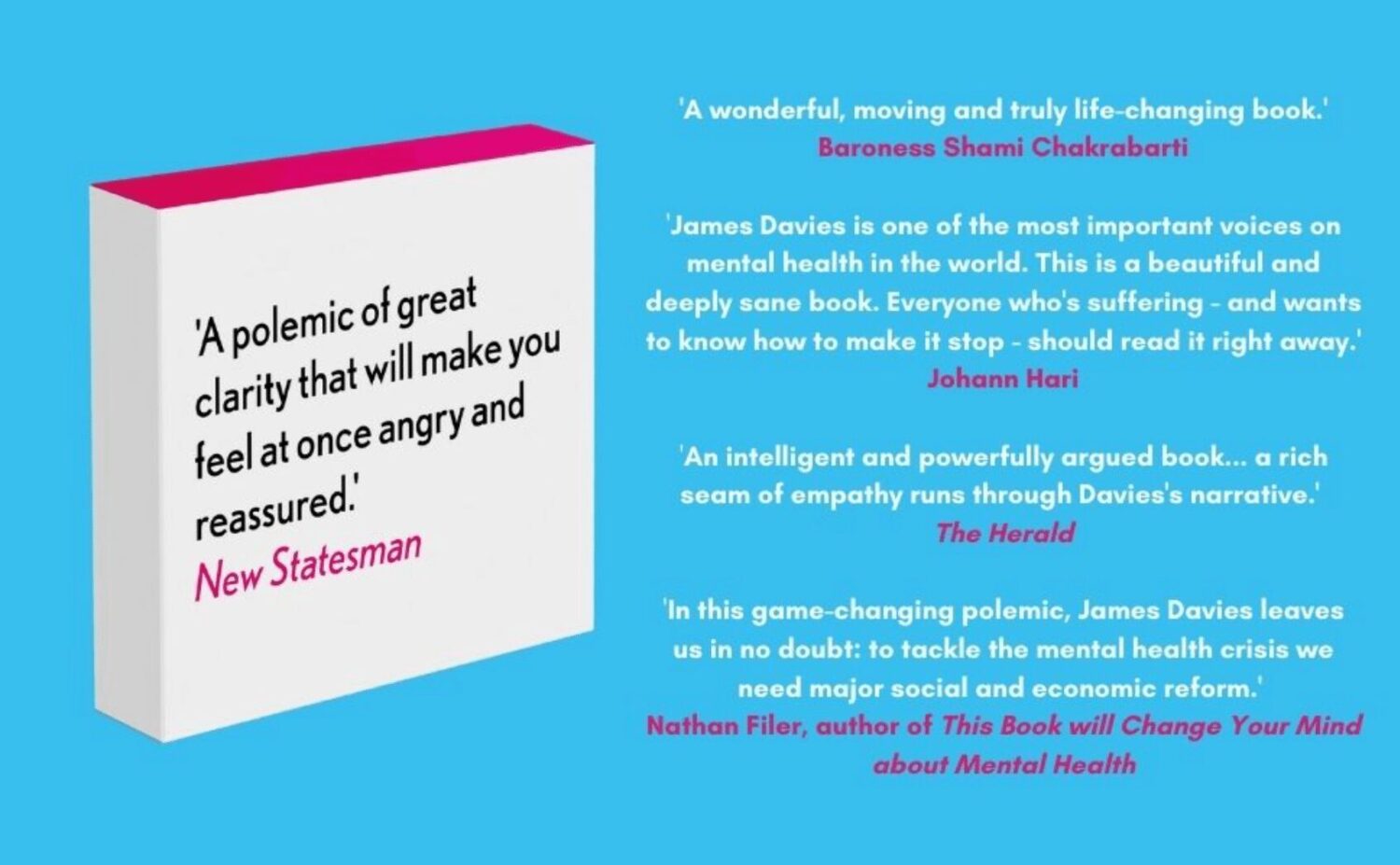
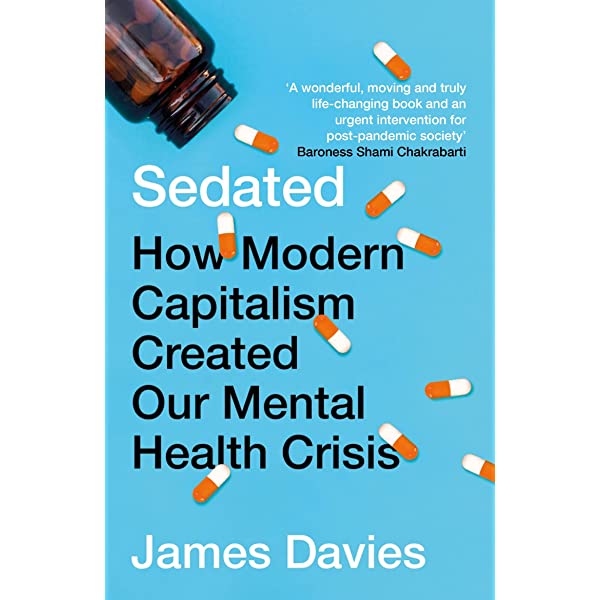
How Modern Capitalism Created our Mental Health Crisis. A provocative and shocking look at how western society is misunderstanding and mistreating mental illness. Perfect for fans of Empire of Pain and Dope Sick. In Britain alone, more than 20% of the adult population take a psychiatric drug in any one year.
Last April 9th, 2022, Irene Hernandez Velasco a reporter for Spanish newspaper El Mundo, published an astonishing interview with Dr. James Davies, author of “Cracked: Why Psychiatry is Doing More Harm Than Good“. For those who don’t speak Spanish, we offer here a translation, but its original can be found in the this link.
James Davies, Professor of Anthropology and Psychotherapy at the University of Roehampton (UK). In “Sedated: How Modern Capitalism Created our Mental Health Crisis” he reveals what is wrong so that, despite the enormous increase in the consumption of psychotropic drugs, mental illnesses do not stop rising.
Psychiatric prescriptions have increased in the UK by 500% since 1980, with all Western countries registering a huge rise. However, mental health problems have not only not diminished but have grown. How is it possible?
I think fundamentally it is because we have taken the wrong approach, an approach that medicalizes and over-medicates understandable human reactions to the difficult circumstances we often face.
Is it a coincidence that this increase in the consumption of psychiatric drugs began in the 1980s?
No, it is not by chance. Since the 1980s the mental health sector has evolved to serve the interests of today’s capitalism, neoliberalism, at the expense of people in need. And that explains why mental health outcomes haven’t improved over that time period: because it’s not about helping individuals, it’s about helping the economy.
Can you give us an example of that link between psychiatry and neoliberalism to which you allude?
From the point of view of neoliberalism, the current over-medicalization approach works for several reasons: first, because it depoliticizes suffering, it conceptualizes suffering in a way that shields economics from criticism. We see an example in the dissatisfaction of many workers. But that dissatisfaction, instead of giving rise to a debate about the poor conditions of modern working life, is addressed as something that is wrong within the worker, something that needs to be confronted and changed. And I could give you many other examples.
Is it then about turning a social problem into an individual problem?
Yes. It is about reducing suffering to an internal dysfunction, to something that is wrong within us, instead of seeing it as a reaction of our organism before the bad things that are happening in the world and that need our attention and care.
The data show that people with the worst economic conditions, those most affected by unemployment and poverty, are the ones who are prescribed the most psychoactive drugs. Does that also have something to do with the economy?
-Absolutely. Just look at what has happened during the pandemic. Single mothers living in large city blocks were three times more likely to suffer from depression and anxiety than people with a house in the country with a large garden. The circumstances one finds oneself in determine one’s state of mind. But instead of focusing on those circumstances through political reforms, what we do is medicalize the problem and think that we can treat it in clinics and health centers. That has been the main problem for the last 40 years, the arrogant idea that through a pill we can solve problems that are not rooted in neurochemistry, but in the world. And, ultimately, it is political reforms that we have to think about if we want to solve that problem.
And do you think that approach to psychiatry in line with neoliberalism is deliberate?
Well, there have been powerful industrial interests that have supported the over-medicalization of everyday life. That has been very good for the pharmaceutical industry, because the more people that can be classified as mentally ill or mentally disturbed, the bigger the market for products that seem to solve the problem. The pharmaceutical industry has absolutely promoted that idea in a very calculated way for the last 30 years. On the other hand, when it comes to governments I don’t think they have necessarily been colluding with the pharmaceutical industry. I think that it has rather had to do with ideologies and ideas that seem to fit with their own, and in this way they have privileged ways of intervening and thinking about stress and anguish that fit with their criteria. In that sense, the depoliticizing narrative is good from a political point of view. This mutual alliance between the pharmaceutical industry and political powers has been evolving slowly for 40 years and is what has led us to the situation in which we now find ourselves. I don’t think that alliance was necessarily calculated, it was simply the inevitable result of both finding some kind of support in each other.
Isn’t neoliberalism then just an economic paradigm?
No. We know from social history that the dominant economic paradigm at a time shapes social institutions, molds them to fit that system. So all social institutions, to one degree or another, change to serve that larger superstructure. We have seen it in schools, in universities, in hospitals… Why shouldn’t it also happen in the field of mental health? Of course it happens.
In the end, is psychiatry doing more harm than good?
I believe that if psychiatry does not recognize to what extent it is an accomplice of a system that harms, it is itself harming. Psychiatry can evolve, see to what extent it is complicit and can change. Psychiatry is a social institution that by nature is not harmful, it all depends on how it operates as a social institution. And at this time as a social institution, and given what it privileges, I would say that in many cases it is doing more harm than good. The data I provide in my book on the long-term prescription of psychoactive drugs I think illustrates this very well. These data show that these drugs are not only not generating the results that we would expect from an effective service, but that they are also harming many people who are negatively affected by these long-term treatments. And third, those drugs are costing an enormous amount of money. Putting all this together, I believe that psychiatry as a social institution is not acting as it should at this time.
He says that psychiatry is hyper-medicating many patients… But I guess there are people who really need medication, right?
Yes I agree. I am not anti-drugs or anti-psychiatry. Psychiatry plays a role in society, psychiatric medication plays a role for seriously distressed people. In fact, research shows that prescribing short-term psychotropic medications can be very helpful and advantageous. What I criticize is the overextension of a system that is now approaching a quarter of our adult population being prescribed some one type of psychiatric medication a year. That system is completely out of control. It is this excess that I criticize, the medicalization of problems that are actually social and psychological and therefore should be addressed with social and psychological interventions. Yes, there is a role for psychiatry in society, but not the one it currently represents.
When you talk about psychological interventions, do you mean doing therapy?
I think there are different ways to proceed. I think therapy plays a role, but I think we also need to recognize that therapy in the past has been responsible for reducing problems to internal dysfunction, family dynamics, or past incidents. We must understand that families are inserted into larger social systems. Suffering cannot be reduced to the family, because the family is often an expression of something else. A father who comes home in a foul mood may do so because he is depressed with his job, because he is in danger of his job, or because his salary is not enough. Those are factors that can make family life very difficult, and if therapists aren’t aware of that, it’s a big problem. I believe that therapy that takes political and social issues into consideration can be very supportive in raising awareness not only of immediate issues, but also of broader structures and how these affect health. That kind of therapy is very valuable. There are many psychological interventions that can be very helpful, but I don’t think we should stop there.
What else should be done?
I think we should also recognize that there are very serious and real social determinants of distress, and the only way to address them is through social policies. We need to think more about what kind of policies should be put in place to solve the current crisis we find ourselves in. Political reforms must be the central pillar of any mental health reform.
And do you think it will be done?
If history is any guide, we know that economic paradigms rise and fall. We have seen this over the last 200 years, and I suspect that many people are thinking that neoliberalism as an economic paradigm is coming to an end. As for what comes after neoliberalism, I hope it will be something with a more humanistic style, a kind of mixed economy capitalism. I believe that this could fit in with a vision of mental health that privileges political, social and psychological interventions over psychotropic drugs, knowing of course that there is a space for psychotropic drugs, but less than the one they occupy now. It is very difficult to know for sure where we are going to be, but I believe that there will be no mental health reform until there are political and economic reforms.
How have psychiatrists reacted to your book?
So far the reaction has been pretty good. I have friends who are psychiatrists, I don’t see psychiatrists or primary care doctors as enemies in any way. They are good people trying to do a good job under very, very difficult circumstances, and they are often victims of a larger structural system, as are the people who come to them for help. The psychiatrists I have talked to are interested in the analysis that I do, an analysis in which I try to go beyond blaming a psychiatrist or a hospital and in which I examine the structural reasons that have led us to this situation. And I think that’s interesting for a lot of psychiatrists. They may agree or disagree with my argument, but most seem to me to be sympathetic to the analysis and its intent. Besides,
Has the pandemic made it more evident that we need a paradigm shift?
I think so. I think that the pandemic has shown the extent to which circumstances, relationships and situations affect mental health, and that narrative has been reinforced because the entire population has had a change in circumstances that for many people has had a strong impact on the way they feel and function. The social model of anxiety and stress has gained credibility as a result of what we have seen. And we’ve also seen more people acknowledge that medicalizing distress not only doesn’t solve the problem, it’s not feasible. In the UK, for example, there has been a strong push to demedicalise distress and stress because the health service is unable to deal with it. For the first time in 40 years, major bodies like England’s Public Health said: ” Your anguish and stress are not medical problems. Don’t come to us, our hands are tied. We have too many people right now, it’s a social problem. It’s just the opposite of what we’ve been told for a long time. More credence is being given to new narratives now, let’s see how that evolves.
Today the National Assembly of Bulgaria holds an “Open House” on the occasion of April 16 – Day of the Bulgarian Constitution and the celebration of 143 years since the adoption of the first Bulgarian Basic Law, as well as the celebration of the legal profession.
Visitors will be able to see the building from 10 am.
The originals of the Tarnovo Constitution and the Silver Constitution are being exhibited, as well as liturgical items of the Chairman of the Constituent Assembly Exarch Antim the First.
The Speaker of the National Assembly Nikola Minchev welcomed the first visitors to the official entrance.
On the occasion of the Constitution Day, President Rumen Radev stated in a special address that today’s Constitution regulates a stable institutional framework of representative democracy, and protects equality and fundamental rights of citizens.
Radev wishes all Bulgarian lawyers determination in defending the basic constitutional principles.
On the private sector, the Chairman of the Notary Chamber of the Republic of Bulgaria, Dr. Krassimir Katrandzhiev, issued a statement that reads as follows:
Dear colleagues,
On April 16 we celebrate the Day of the Bulgarian Constitution and the lawyer. The Basic Law of the Republic of Bulgaria is a symbol of the rule of law, a pillar and defender of the fundamental rights and freedoms of every Bulgarian citizen.
As Bulgarians and lawyers, we pay a well-deserved tribute to the great Revival minds, participants in the Constituent Assembly, held in Veliko Tarnovo in the distant 1879, which give life to the Bulgarian Constitution. The Basic Law of the Principality of Bulgaria marks the beginning of the parliamentary existence of our liberated homeland and becomes a prerequisite for the subsequent social, economic and cultural rise of a young European country with a centuries-old history.
For 136 years now, the Republic of Bulgaria has been proud of its Constitution, which reflects the spirit of its time, but at the same time is distinguished by its democracy and progress. The Bulgarian Constitution is the embodiment of a sovereign, independent and democratic Bulgaria.
The Notary Chamber of the Republic of Bulgaria expresses its warmest congratulations on the occasion of the Day of the Bulgarian Constitution and the lawyer, wishing you – the Bulgarian notaries, good health, reaching professional and personal heights, satisfaction and pride in our cause and aspiration to preserve of the rights and legitimate interests of the society, affirmation of our positions as a significant and highly authoritative guild, which monitors the protection of morals and the law in the service of Bulgarian citizens and civil turnover!
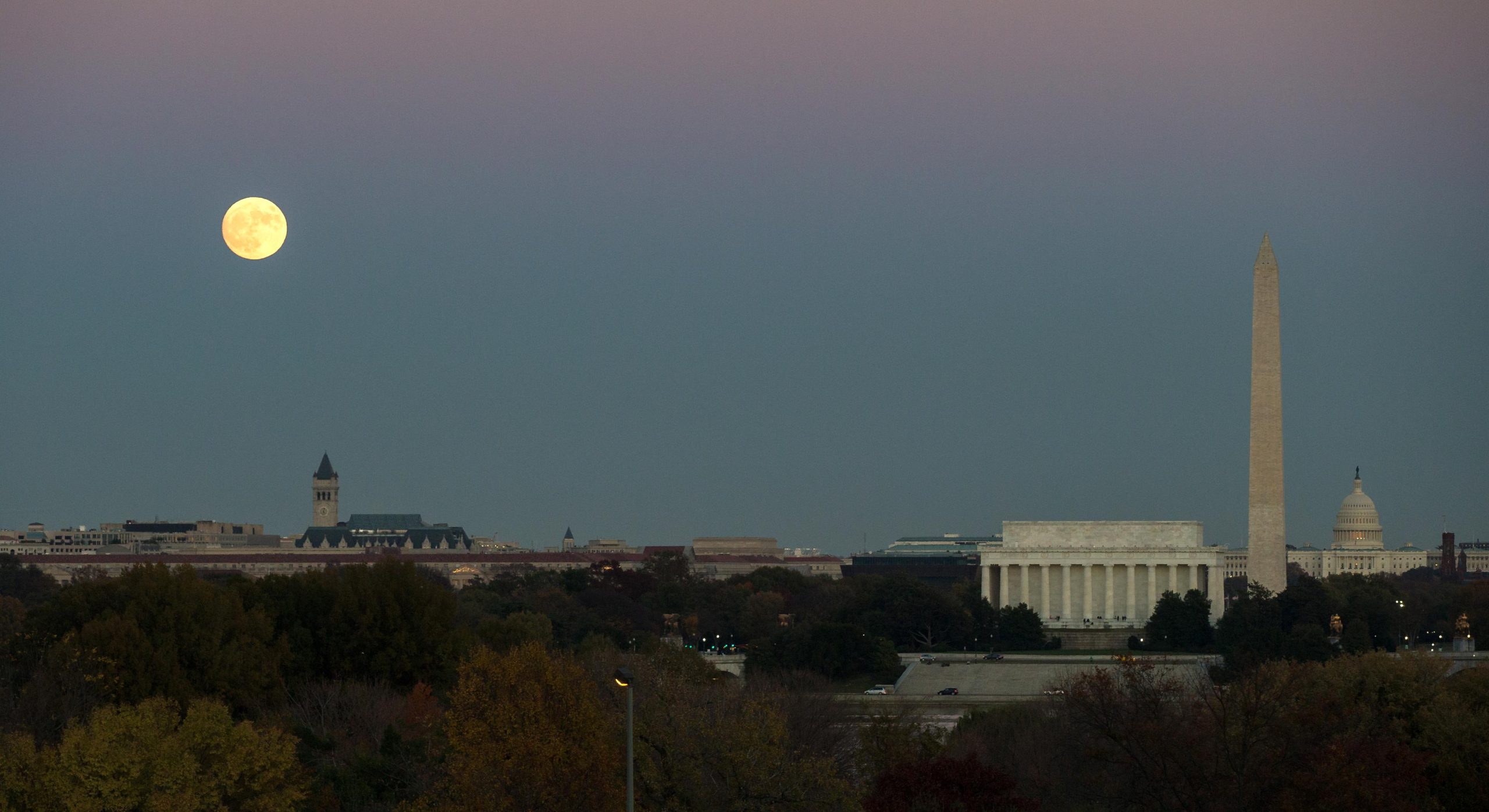
The next full moon is the Pink Moon, the Sprouting Grass, Egg, or Fish Moon; the Pesach, Passover, or Paschal Moon; the Hanuman Jayanti Festival Moon; and Bak Poya.
The next full moon will be on Saturday afternoon, April 16, 2022, appearing opposite the Sun in Earth-based longitude at 2:55 p.m. EDT. This will be on Sunday morning from the India Standard Time Zone eastward across the rest of Asia, Australia, and the Pacific Ocean to the International Date Line. The Moon will appear full for about three days centered on this time, from early Friday morning through early Monday morning, making this a full moon weekend.
One Moon, Many Names
In the 1930s the Maine Farmer’s Almanac began publishing Native American names for the Moon each month of the year. According to this almanac – as the full moon in April – this is the Pink Moon, named after the herb moss pink, also known as creeping phlox, moss phlox, or mountain phlox, a plant native to the eastern U.S. that is one of the earliest widespread flowers of spring. Other names for this Moon include the Sprouting Grass Moon, the Egg Moon, and among coastal tribes the Fish Moon, as this was when the shad swam upstream to spawn.
This is also the Pesach or Passover Moon. Pesach or Passover begins at sundown on Friday, April 15, and ends at nightfall on Saturday, April 23, 2022. The Seder feasts are on the first two evenings of Passover.
In the Christian ecclesiastical calendar, this is the Paschal Moon, from which the date of Easter is calculated. Paschal is the Latinized version of Pesach. Generally, the Christian holiday of Easter, also called Pascha, is celebrated on the first Sunday after the first full moon of spring. However, there are differences between the times of these astronomical events and the calendars used by the Eastern and Western churches. This is one of the years where these differences matter. Western Christianity will be celebrating Easter on Sunday, April 17, 2022, the Sunday after this first full moon of spring. Eastern Christianity will celebrate Eastern Orthodox Easter a week later on Sunday, April 24.
For Hindus, this full moon corresponds with Hanuman Jayanti, the celebration of the birth of Lord Hanuman, celebrated in most areas on the full moon day of the Hindu lunar month of Chaitra.
For Buddhists, especially in Sri Lanka, this full moon is Bak Poya, commemorating when the Buddha visited Sri Lanka and settled a dispute between chiefs, avoiding a war.
The Moon and Calendars
In many traditional lunisolar calendars, the months change with the new moon and full moons fall in the middle of the lunar months. This full moon is in the middle of the third month of the Chinese calendar.
In the Islamic calendar, the months start with the first sighting of the waxing crescent moon shortly after the new moon. This full moon is near the middle of the holy month of Ramadan. Ramadan is honored as the month in which the Quran was revealed. Observing this annual month of charitable acts, prayer, and fasting from dawn to sunset is one of the Five Pillars of Islam.
As usual, the wearing of suitably celebratory celestial attire is encouraged in honor of the full moon. Enjoy the spring flowers, consider acts of charity, leave an extra seat at the table, and try to avoid starting any wars.
Summary of Celestial Events
Here’s a summary of other celestial events between now and the full moon after next (with specific times and angles based on the location of NASA Headquarters in Washington, D.C.):
As spring begins, the daily periods of sunlight continue to lengthen, having changed at their fastest around the spring equinox on March 20. On Saturday, April 16, 2022 (the day of the full moon), morning twilight will begin at 5:30 a.m. EDT, sunrise will be at 6:30 a.m., solar noon will be at 1:07:49 p.m. when the Sun will reach its maximum altitude of 61.42 degrees, sunset will be at 7:46 p.m., and evening twilight will end at 8:47 p.m. By Monday, May 16 (the day of the full moon after next), morning twilight will begin at 4:48 a.m., sunrise will be at 5:55 a.m., solar noon will be at 1:04:27 p.m. when the Sun will reach its maximum altitude of 70.33 degrees, sunset will be at 8:15 p.m., and evening twilight will end at 9:22 p.m.
Chance to See a Comet
There is a slight chance that Comet C/2021 O3 (PANSTARRS) will be visible in the evening sky in early May. Falling toward the Sun from the coldest reaches of the solar system, this comet is expected to make its first and last pass by the Sun – passing well within the orbit of Mercury – on April 21, 2022, after which it will speed on its way out of the solar system forever, passing closest to Earth on May 8. The last observations used to make this prediction are from early February, as this comet is now too close to the Sun to observe.
We don’t know if this comet will survive passing close to the Sun without breaking up (many similar comets have broken up under similar conditions). If it does survive, it is unclear how much gas and dust it will be giving off in early May. If it doesn’t break up and is giving off lots of gas or dust, then we might be able to see it (probably requiring a backyard telescope or binoculars). Most likely, we will not be able to see it at all, but pay attention to the news, as it may surprise us!
Brief Window to See a Meteor Shower
The Eta-Aquariids (031 ETA) will peak early on the morning of May 6, 2022. This meteor shower gets its name from the constellation Aquarius, as the meteors appear to radiate out from a point (called the radiant) in this constellation (for much the same reason that snowflakes appear to radiate out from one point when you are driving in a snowstorm). The higher in the sky the radiant is, the more meteors you should be able to see. Since the radiant for this meteor shower only rises a few hours before dawn, there will be a fairly short window to look for these meteors.
For the Washington, D.C.-area, the radiant will rise above the eastern horizon around 2:40 a.m. EDT, the predicted peak meteor rate for this year will be around 4 a.m., and the first hints of dawn will start interfering with seeing these meteors after about 4:30 a.m.
For locations farther north, the window for viewing these meteors shortens or vanishes altogether, as this shower is best viewed from the Southern Hemisphere. The International Meteor Organization’s 2022 Meteor Shower Calendar shows that the observed peak rates have been trending down in recent years, from 85 visible meteors per hour in 2008 to 45 visible meteors per hour last year, so it’s hard to predict what the peak rate will be this year. According to the IMO Calendar, in past years this shower has shown a fairly broad peak, with rates near 30 visible meteors per hour (under ideal conditions) for several mornings around the peak, so if you’re out in the early mornings around this date, you might catch a meteor or two. These meteors are caused by debris from Halley’s Comet entering our atmosphere at 148,000 miles per hour (66 kilometers per second).
Ideal conditions for viewing these meteors would be if the weather is clear with no clouds or high hazes, after moonset but before any sign of dawn interferes. Go to a place far from any light sources or urban light pollution, and find a clear view of a wide expanse of the sky. Be sure to give your eyes plenty of time to adapt to the dark. The rod cells in your eyes are more sensitive to low light levels but play little role in color vision. Your color-sensing cone cells are concentrated near the center of your view with more of the rod cells on the edge of your view. Since some meteors are faint, you will tend to see more meteors from the “corner of your eye” (which is why you need a view of a large part of the sky). Your color vision (cone cells) will adapt to darkness in about 10 minutes, but your more sensitive night vision rod cells will continue to improve for an hour or more (with most of the improvement in the first 35 to 45 minutes). The more sensitive your eyes are, the more chance you have of seeing meteors. Even a short exposure to light (from passing car headlights, etc.) will start the adaptation over again so no turning on a light or your cell phone to check what time it is!
Several other meteor showers will peak during this lunar cycle but are not well suited for viewing from our more urban Northern Hemisphere locations this year, so I’ve not put them in my detailed listing below. If you’re interested in these meteor showers, you can search by name or look up the International Meteor Organization’s 2022 Meteor Shower Calendar. Here are the names: The Lyrids (006 LYR) are expected to peak on the morning of April 22 when moonlight will interfere. The Pi-Puppids (137 PPU) will peak the next morning but are best viewed from the Southern Hemisphere, have an uncertain peak rate, and also will have interference from moonlight. The Eta-Lyrids (145 ELY) will peak on the morning of May 10 but are only expected to produce about 3 meteors per hour.
Total Lunar Eclipse in May
With the full moon after next, we will have a total eclipse of the Moon, peaking early on Monday morning, May 16, 2022. The Moon will begin entering the partial shadow of Earth at 9:32 p.m. EDT on Sunday night, May 15, but the slight darkening of the Moon will not stand out until the Moon starts entering the full shadow of the Earth at 10:28 p.m. It will take until 11:29 p.m. for the full shadow of Earth to cover the Moon. The peak of the eclipse will be at 12:11 a.m. on Monday morning, May 16. The Moon will begin emerging from the full shadow of the Earth at 12:54 a.m. and finish emerging from the full shadow at 1:55 a.m. The Moon will finish exiting the partial shadow at 2:51 a.m., but the subtle shading from this last part of the eclipse will be difficult to notice.
Evening Sky Highlights
On the evening of Saturday, April 16, 2022 – the day of the full moon – as evening twilight ends at 8:47 p.m. EDT, the full moon will appear about 9 degrees above the east-southeastern horizon with the bright star Spica about 9 degrees to the upper right of the Moon. The bright planet Mercury will appear only 2 degrees above the west-northwestern horizon. The bright stars of the local arm of our home galaxy will appear spread along the west-southwestern horizon. Sirius, the brightest of the stars in our night sky, will appear 24 degrees above the southwestern horizon. The bright star appearing nearest overhead will be Pollux (the brighter of the twin stars in the constellation Gemini) at 68 degrees above the west-southwestern horizon. Pollux is an orange-tinted star about 34 lightyears from Earth. It is not quite twice the mass of our Sun but about 9 times the diameter and 33 times the brightness.
As the lunar cycle progresses the background of stars will appear to shift westward each evening, although it is actually the Earth that is moving around the Sun toward the East. The planet Mercury will appear to shift in the opposite direction, appearing higher above the west-northwestern horizon each evening until April 28, after which it will start shifting toward the horizon. May 11 will be the last evening that Mercury will appear above the horizon as evening twilight ends, although Mercury may remain visible in the glow of dusk before evening twilight ends until around the evening of the full moon after next. The waxing moon will appear to the upper left of Mercury on May 2 (with the bright star Aldebaran about 7 degrees to the left of the Moon), to the lower left of the bright star Pollux on May 6, above the bright star Regulus on May 9, and to the upper left of the bright star Spica on May 13.
By the evening of Monday, May 16, 2022 – the day of the full moon after next – as evening twilight ends at 8:47 p.m. EDT – the full moon will just be rising above the east-southeastern horizon, and the bright star Antares will rise to the lower right of the Moon about 10 minutes later. The constellation Ursa Major, also known as the Great Bear or the Big Dipper, will appear nearly overhead in the northern sky. No particularly bright star will appear near to directly overhead, the highest being Regulus at 54 degrees above the southwestern horizon, with Arcturus a close second at 53 degrees above the east-southeastern horizon.
Morning Sky Highlights
On the morning of Saturday, April 16, 2022 (the day of the full moon), as morning twilight begins at 5:30 a.m. EDT, four of the five visible planets will appear in a line above the east-southeastern horizon, with Saturn to the upper right at 15 degrees above the southeastern horizon, Mars at 12 degrees above the east-southeastern horizon, Venus at 8 degrees above the east-southeastern horizon, and Jupiter to the lower left at 2 degrees above the eastern horizon. The full moon will appear 11 degrees above the west-southwestern horizon with the bright star Spica to the lower left of the Moon. The bright star appearing closest to overhead will be Vega at 83 degrees above the eastern horizon. Vega is the 5th brightest star in our night sky and the brightest of the three stars in the Summer Triangle. Vega is about twice as massive as our Sun, 40 times brighter, and about 25 light-years from us.
As the lunar cycle progresses, the background of stars along with Jupiter and Saturn will appear to shift westward each morning, while Venus and Mars will appear to shift the opposite way. The waning gibbous moon will appear near the bright star Antares on the morning of April 19, 2022. The Moon will join the lineup of planets in the morning sky on April 23, and will shift along this line, appearing near the planet Saturn on April 25, Mars on April 26, and Venus and Jupiter on April 27. The two brightest of the planets, Venus and Jupiter, will appear only half a degree apart on the mornings of April 30 and May 1, visible about 7 degrees above the eastern horizon as morning twilight begins. May 1 and 2 will be the mornings when the bright star Vega will appear almost exactly overhead as morning twilight begins (for the Washington, D.C. area and similar latitudes). As mentioned above, the Eta-Aquariids (031 ETA) will peak early on the morning of May 6, with the radiant for this meteor shower rising around 2:40 a.m. and the first hints of dawn interfering sometime after 4:30 a.m.
By the morning of Monday, May 16, 2022 (the day of the full moon after next), as morning twilight begins at 4:48 a.m. EDT, four visible planets will appear in a line above the east-southeastern horizon, with Saturn to the upper right at 26 degrees above the southeastern horizon, Mars at 16 degrees above the east-southeastern horizon, Jupiter at 13 degrees above the east-southeastern horizon, and Venus to the lower left at 6 degrees above the eastern horizon. The full moon will appear 12 degrees above the southwestern horizon. The “Summer Triangle” will appear directly overhead, with the bright star Vega appearing closest to overhead at 83 degrees above the western horizon.
Detailed Daily Guide
Here is a more detailed, day-by-day listing of celestial events between now and the full moon after next. The times and angles I give are based on the location of NASA Headquarters in Washington, D.C., and some of these details may differ for your location.
April 12
Beginning the morning of Tuesday, April 12, 2022, the planet Jupiter will join Venus, Saturn, and Mars above the eastern horizon as morning twilight begins, giving us a view of four of the five visible planets!
April 13
On Tuesday evening into Wednesday morning, April 12 to 13, 2022, the bright star Regulus will appear to the right of the waxing gibbous moon. They will appear about 8 degrees apart as evening twilight ends Tuesday at 8:42 p.m. EDT, the Moon will reach its highest in the sky for the night less than 2 hours later at 10:24 p.m., and the Moon will set Wednesday morning (at 5:17 AM) about 10 minutes before morning twilight begins.
April 14
Beginning Thursday evening, April 14, 2022, Mercury will begin appearing above the west-northwestern horizon as evening twilight ends.
April 15-16
On Friday evening into Saturday morning, April 15 to 16, 2022, the bright star Spica will appear below the full moon. They will appear about 9 degrees apart as evening twilight ends and will shift closer together as the night progresses.
April 16: The Next Full Moon
As mentioned above, the next full moon will be Saturday afternoon, April 16, 2022, at 2:55 p.m. EDT. The Moon will appear full for about three days centered on this time, from early Friday morning through early Monday morning, making this a full moon weekend.
April 19
Tuesday morning, April 19, 2022, the bright star Antares will appear below the waning gibbous moon. As Antares rises above the southeastern horizon (Monday night at 11:25 p.m. EDT) it will be about 10 degrees below the Moon. Antares will be about 8 degrees to the lower left of the Moon as the Moon reaches its highest in the sky Tuesday morning at 3:22 a.m. Antares will be about 6 degrees to the left of the Moon as morning twilight begins at 5:25 a.m.
Tuesday, April 19, 2022, at 11:14 a.m. EDT, the Moon will be at perigee, its closest to the Earth for this orbit.
April 20
By Tuesday night into Wednesday morning, April 19 to 20, 2022, the waning gibbous Moon will have shifted to appear on the opposite side of the bright star Antares. As the Moon rises above the east-southeastern horizon (Tuesday at 11:39 p.m. EDT) Antares will appear about 8 degrees to the upper right of the Moon, and the pair will appear to separate as Tuesday night progresses into Wednesday morning.
April 23
Saturday morning, April 23, 2022, the waning half-moon will join the morning lineup of planets (Saturn, Mars, Venus, and Jupiter) along the southeastern horizon. The Moon will appear half-full, as it will reach its last quarter at 7:56 a.m. EDT. The Moon will shift along this line of planets on subsequent mornings.
April 25
On Monday morning, April 25, 2022, the planet Saturn will appear about 8 degrees to the upper right of the waning crescent moon, with the Moon about 11 degrees above the east-southeastern horizon as morning twilight begins at 5:15 a.m. EDT.
April 26
On Tuesday morning, April 26, 2022, the planet Mars will appear about 7 degrees to the upper right of the waning crescent Moon, with the Moon about 7 degrees above the east-southeastern horizon as morning twilight begins at 5:14 a.m. EDT.
April 27
On Wednesday morning, April 27, 2022, the bright planets Venus and Jupiter will form a triangle with the thin, waning crescent Moon. Venus will appear about 5 degrees above the Moon and Jupiter to the left about 4 degrees above the Moon. The Moon will rise last above the eastern horizon, rising at 4:58 a.m. EDT, only about 14 minutes before morning twilight begins. The Moon will be only about 2 degrees above the horizon as twilight begins at 5:12 a.m. EDT.
April 28
Thursday evening, April 28, 2022, will be the evening when the planet Mercury will appear highest above the west-northwestern horizon as evening twilight ends for this apparition.
April 29
Friday morning, April 29, 2022, will be when the planet Mercury reaches its greatest angular separation from the Sun as seen from the Earth for this apparition (called greatest elongation), appearing half-lit through a large enough telescope.
On Friday evening, April 29, 2022, the planet Mercury will appear less than 2 degrees to the left of the Pleiades star cluster above the west-northwestern horizon.
April 30
On the mornings of Saturday, April 30, and Sunday, May 1, 2022, the two brightest planets, Venus and Jupiter, will appear only half a degree apart, visible about 7 degrees above the eastern horizon as morning twilight begins. Two other planets, Mars and Saturn, will appear farther to the upper right of Venus and Jupiter. The close pairing of the two brightest planets is unusual and should be a worthwhile site to see!
Saturday afternoon, April 30, 2022, at 4:28 p.m. EDT, will be the new moon, when the Moon passes between the Earth and the Sun and is usually not visible from the Earth. However, if you happen to be in the southeastern Pacific Ocean or the southern part of South America, you might be able to see the silhouette of the Moon as it blocks part of the Sun in a partial solar eclipse.
May 1
Sunday, May 1, 2022, will be May Day. We currently divide the year into four seasons based upon the solstices and equinoxes, with summer starting with the summer solstice in June. This approximates summer as the quarter of the year with the warmest temperatures. Much of pre-Christian northern Europe celebrated “cross-quarter days” halfway between the solstices and equinoxes, dividing the seasons on these days. Using this older definition, summer was the quarter of the year with the longest daily periods of daylight, starting on Beltane, traditionally celebrated on May 1 (the middle of our spring). Many of the European May Day traditions trace back to these earlier celebrations of the start of summer under the old calendar.
The day of or the day after the new moon marks the start of the new month for most lunisolar calendars. The fourth month of the Chinese calendar starts on Sunday, May 1, 2022 (at midnight in China’s time zone, which is 12 hours ahead of EDT). Sundown on Sunday, May 1, marks the start of Iyar in the Hebrew calendar.
In the Islamic calendar, the months traditionally start with the first sighting of the waxing crescent Moon. Many Muslim communities now follow the Umm al-Qura Calendar of Saudi Arabia, which uses astronomical calculations to predict the start of the months. This calendar predicts the holy month of Ramadan will end and Shawwal will begin with sunset on Sunday evening, May 1, 2022. Because of the religious significance of the end of Ramadan, Shawwal is one of 4 months in the Islamic year where the start of the month is updated in the Umm al-Qura calendar based upon the actual sighting of the crescent Moon. Some of the other websites I’ve checked predict Shawwal will begin the evening of May 2. Starting with the sighting of the crescent Moon (whether on May 1 or May 2), the end of the Ramadan fast will be celebrated with Eid al-Fitr (the Feast of Breaking the Fast), lasting from one to three days.
The mornings of Sunday and Monday, May 1 and 2, 2022, will be the mornings when the bright star Vega will appear almost exactly overhead as morning twilight begins (for the Washington, D.C.-area and similar latitudes).
May 2
On Monday evening, May 2, 2022, the planet Mercury will appear about 5 degrees to the lower right of the thin, waxing crescent moon, with the bright star Aldebaran about 7 degrees to the left of the Moon.
Pay attention to the news in early May, in case the comet C/2021 O3 (PANSTARRS) survives its pass by the Sun and is giving off enough gas or dust to be visible as it passes by the Earth on its way out of the solar system.
May 5
Thursday morning, May 5, 2022, at 8:47 a.m. EDT, the Moon will be at apogee, its farthest from the Earth for this orbit.
May 6
As described in more detail earlier in this post, the Eta-Aquariids (031 ETA) meteor shower will peak early on the morning of Friday, May 6, 2022. For the Washington, D.C.-area, there will be a short window for viewing these meteors, as the radiant for this shower will rise around 2:40 a.m. EDT and the first hints of dawn will begin interfering sometime after 4:30 a.m.. The viewing for these meteors will be better for more southern latitudes (and worse for more northern latitudes).
On Friday evening, May 6, 2022, the bright star Pollux (the brighter of the twins in the constellation Gemini) will appear near the waxing crescent moon. The Moon will be about 47 degrees above the western horizon as evening twilight ends at 9:11 p.m. EDT with Pollux about 3 degrees to the upper right. The Moon will set first on the west-northwestern horizon Saturday morning at 1:38 a.m. with Pollux about 4 degrees to the right.
May 8
On Sunday evening, May 8, 2022, the waxing moon will appear half-full as it reaches its first quarter at 8:21 p.m. EDT.
May 9
Monday night into Tuesday morning, May 9 to 10, 2022, the bright star Regulus will appear below the waxing gibbous moon. The Moon will appear 63 degrees above the south-southwestern horizon as evening twilight ends at 9:14 p.m. EDT with Regulus about 5 degrees below the Moon. Regulus will set first on the west-northwestern horizon Tuesday morning at 2:47 a.m.
May 11
Wednesday evening, May 11, 2022, will be the last evening that Mercury will appear above the horizon as evening twilight ends, although Mercury may remain visible in the glow of dusk before evening twilight ends until around the evening of the full moon after next.
May 13-14
Friday evening into Saturday morning, May 13 to 14, 2022, the bright star Spica will appear to the lower right of the waxing gibbous moon. They will appear about 5 degrees apart as evening twilight ends, the Moon will reach its highest in the sky at 11:20 p.m., and Spica will set first on the west-southwestern horizon on Saturday morning about 20 minutes before morning twilight begins.
May 15-16: Full Moon and Total Lunar Eclipse
On Sunday night into Monday morning, May 15 to 16, 2022, we will have both a full moon and a total eclipse of the Moon, peaking early on Monday morning, May 16. The Moon will begin entering the partial shadow of the Earth at 9:32 PM EDT on Sunday night, May 15, but the slight darkening of the Moon will not stand out until the Moon starts entering the full shadow of the Earth at 10:28 PM. It will take until 11:29 PM for the full shadow to cover the Moon.
The peak of the eclipse will be at 12:11 AM on Monday morning, May 16. The Moon will begin emerging from the full shadow at 12:54 AM and finish emerging from the full shadow at 1:55 AM. The Moon will not finish exiting the partial shadow until 2:51 AM, but the subtle shading of this last part of the eclipse will be difficult to notice.?
Relative to other countries in the WHO European Region, Kazakhstan has low levels of childhood overweight and obesity. However, recent WHO surveillance data show that these levels may be increasing, especially among boys. This new finding formed the basis of the new factsheet “Results of surveillance of childhood obesity, nutrition and physical activity 2020”, prepared by WHO and Kazakhstan’s Ministry of Health.
Latest country data: more sugary drinks and more screen time
According to the latest WHO data, 21% of children aged 6–9 years in Kazakhstan are living with overweight or obesity.
For 8-year-old girls, this rate is around 18%, and has remained almost stable since 2015. For boys, the trend is more worrying. From 2015 until 2020, overweight and obesity levels among 8-year-old boys increased by more than 5%, reaching 24%.
“In Kazakhstan, we can see a gradual shift towards consumption of more sugary drinks and more sedentary leisure time spent with gadgets. But at the same time, we see more positive trends. Prevalence of daily physical activity (60 minutes and above) has increased by more than 15% and reached 86%,” explained Dr Zhanar Kalmakova, acting Board Chair at the National Center of Public Health of the Ministry of Health.
Overweight and obesity among school-aged children are major challenges in the WHO European Region. Even after childhood, these conditions are major risk factors for developing several noncommunicable diseases, including cardiovascular diseases and type 2 diabetes.
According to data from the same study, around 5% of children in Kazakhstan are thin, which can also lead to health problems later in life.
Parents under-evaluate their children’s weight
“There is an old saying, ‘We value what we measure’,” said Dr Caroline Clarinval, WHO Representative to Kazakhstan. “When we measure childhood obesity, we are better equipped to ensure that we are giving our children a healthy future. The results from this survey show that levels of overweight and obesity in Kazakhstan are low, relative to levels in other parts of the Region. But they also indicate that there are areas where we need to remain vigilant, including children’s exposure to screen time, to ensure that levels of overweight and obesity do not rise to the levels we see in other parts of the Region.”
Dr Clarinval added, “One of the strengths of the WHO European Childhood Obesity Surveillance Initiative (COSI) is that it enables decision-makers to examine the factors that have an influence on weight: from gender and dietary behaviours to geographical differences to multiple social factors that indirectly impact obesity and overweight issues.”
For instance, the WHO data show that parents in Kazakhstan tend to under-evaluate the weight of their children. Parents of 77.6% of surveyed children with overweight or obesity stated that their children fell into an average weight category. As parents play an important role in developing dietary patterns and exercise habits for their children, this challenge should be considered when developing an effective policy approach.
The new data come from the nationwide survey carried out jointly in 2020 by Kazakhstan’s Ministry of Health (through its National Center for Public Health) and COSI, and with support from the United Nations Children’s Fund (UNICEF).
Fighting obesity: WHO recommendations
Population-based policies to tackle childhood obesity and overweight include:
broad fiscal policies to reduce affordability and accessibility of foods and beverages high in sugar, salt and fats;
policies to increase access to healthy foods such as fruits, vegetables and whole grains, including within schools;
restrictions on the advertising (including digital advertising) of foods and beverages high in sugar, salt and fats;
policies to promote exclusive breastfeeding for the first 6 months of life and continued breastfeeding up to 2 years and beyond; and
policies to advance universal health coverage and strengthen health systems to ensure that every child living with overweight or obesity has access to high-quality weight management services.
Special consideration should be given to the ways that socioeconomic factors may influence obesity risk. Efforts must be made to ensure that everyone, regardless of their socioeconomic status, has access to healthy foods and opportunities for physical activity.
The recommendations reflect the core principles of the European Programme of Work 2020–2025, which appeals to Member States for united action to eliminate health inequities and strive for better well-being across the WHO European Region.