Sunday, September 20, 2026
Home Blog Page 1112

Emotional Intelligence: How Cameras Prey on Our Reactions and Smiles

0

Joy, sadness, puzzlement, fatigue – this is not the whole range of sensations subject to video analytics. Gartner experts promise that in 2022 every tenth gadget will support emotion recognition technology. Not only technology giants, but also small startups are investing in this area, finding new applications for it. Zaur Abutalimov, Executive Director of the Ivideon cloud video surveillance service, tells Hi-Tech how emotional AI appeared and why it catches our smiles.

When cameras learned to recognize emotions and how it works now

Scientists began studying emotion markers long before the advent of artificial intelligence, in the 1970s. Of course, then there was no talk of the connection of emotions with neural networks. Emotions were the subject of scientific interest of psychologists: scientists Paul Ekman and Wallace Friesen collected all possible variants of facial movements into a single system, with the help of which any facial expression could be broken down into separate components. A certain set of mimic units corresponded to any emotion.

Modern algorithms are arranged in a similar way: the system processes streaming images, and then artificial intelligence limits the areas of the eyes, lips, nose, and eyebrows with points. Then the neural network analyzes the position of these points and matches them with the emotion template. Ultimately, the neural network remembers that rounded eyes correspond to surprise, a half-open mouth to fear, and lowered corners of the lips to fatigue or sadness.

The ability of neural networks to work with emotions was seriously discussed already in the “zero”, when it became clear that the future was with face recognition systems. And although teaching a computer to scan emotions is more difficult than just looking for a face, in a couple of decades, the direction of Facial Emotion Recognition has taken a big step forward. Already in 2020, Mordor Intelligence analysts estimated the emotion recognition market at $19.9 million.

At the same time, most of the FER market will be in North America due to the presence of countries such as the United States and Canada on the continent. It is in them that the largest retail markets with high demand for such solutions are located.

What is it for

The first solutions based on the emotion recognition system originated in the entertainment industry. For example, in 2015, Microsoft developed an application that guessed a person’s mood: the user “feeded” photos to him, and the program analyzed the emotion based on facial microexpressions in the image. The algorithm analyzed eight basic states – contempt, anger, disgust, fear, happiness, sadness, surprise or calmness, and then distributed conditional scores between them.

Now the scope of such solutions is much wider than you might imagine. In retail, devices with facial recognition can assess not only the gender, age and ethnicity of the buyer, but also his emotions at the time of purchase. In 2017, world leader Walmart took advantage of this by installing smart cameras at the checkout lines to monitor the mood of visitors. If the system found an upset customer, the store manager immediately learned about it from notifications.

Emotion recognition is a service that is used not only by industry giants like Walmart. Ivideon cooperates with more than 1,000 retailers, including small supermarkets and brick and mortar stores. About 15% of them, without high revenue figures and multi-faceted marketing campaigns, still show interest in the Facial Emotion Recognition feature in order to better understand the client.

In retail, facial recognition devices can assess not only the gender, age, and ethnicity of a shopper, but also their emotions at the time of purchase.

recruiting

Another area in which emotion detection technology has proven to be in demand is recruiting. Large companies are implementing artificial intelligence to control the behavior and psychological state of employees. Cameras with video analytics modules installed in the office can detect signs of stress in employees and warn personnel departments about it. For example, the Chinese company Taigusys has developed a program that analyzes facial expressions of a person and, based on the data obtained, creates detailed reports about his mental state. Such solutions are also being developed today by Limeaid, VirginPulse, Glint, Ultimate Software and other companies.

FER-technologies also allow corporations to evaluate the effectiveness of television advertising. The American company Affectiva has created an application that scans videos of people and forms an idea of ​​their emotions at the time of broadcasting a commercial. With the help of artificial intelligence, you can evaluate the reaction to any product. For example, Disney uses machine learning algorithms to understand whether viewers like the cartoons the company creates.

Medical institutions also use FER to determine the emotions of patients in the waiting rooms. This helps doctors prioritize those patients who feel worse and call them for an appointment earlier. But there are more experimental ways to implement developments. In 2018, scientists using emotion recognition technology discovered a new therapy for children with autism. With the help of Google Glass augmented reality glasses and a special application for a smartphone, a sick child could find out what feelings others are experiencing.

In schools and other educational institutions, “emotional” technologies are being introduced to control the psychological health of students and can serve as a basis for preventing acts of violence and bullying. At customs at airports, such systems help intelligence officers to identify a person with a high level of anxiety and nervousness, which often indicates his involvement in smuggling. In 2019, China actively began to introduce intelligent systems for these purposes.

Medical institutions also use FER to determine the emotions of patients in waiting rooms.

Reads not only in the eyes: can AI scan a person’s thoughts

Despite the fact that the cameras seem to be an all-seeing eye, there are things that they still cannot do. For example, cameras cannot read minds and detect hidden emotions. But there is good news: you can recognize hidden discontent and disappointment by the voice. Several programs already process audio information and analyze paralinguistic signals, intonation, tempo and timbre of the speaker’s speech. Then artificial intelligence translates the data into the language of emotions. Such solutions are already being used by major brands in marketing research.

The mind-reading device is also a very real technology. So far, such devices are not widely used, but scientific developments are already underway in this area. The Meta (Facebook) company has advanced in this direction, which last year, together with the University of California at San Francisco (UCSF), presented a brain-computer interface (BCI) that recognizes words and whole phrases that a person wanted to say: electrodes connected to the brain read signals and convert them to text.

In 2019, Neuralink, along with Elon Musk, presented a similar Link device. This microgadget, the size of a small coin, is supposed to be “sewn” into the human brain with the help of tiny wires thinner than a human hair. It is expected that the device will transmit information about the activity of the centers of the brain and translate a person’s thoughts into text that can be broadcast to a computer or phone. The mind-reading device is also a very real technology.

Feelings and reason: can artificial intelligence gain empathy

So far, smart devices only work with other people’s emotions. But already with might and main they say that the day is near when the robots themselves will experience feelings. True, in this case we are not talking about love and hate, but about empathy – the ability to sympathize and empathize.

Of course, at the biochemical level, this is impossible, since artificial intelligence is devoid of sense organs. However, it is quite possible to train robots to respond to the psychological state of a person. Modern technology proves that machines can understand emotions using numbers even better than people themselves.

UNESCO bolsters protection for Ukrainian heritage under fire

0
UNESCO bolsters protection for Ukrainian heritage under fire
The UN Educational, Scientific and Cultural Organization, UNESCO, has said that it is taking measures as best it can, to try and protect some of Ukraine’s priceless heritage from destruction in the face of the Russian invasion, noting that the international community also has a duty to help protect and preserve the country’s historic buildings, and other treasures.
Since the beginning of the crisis in Ukraine, UNESCO has acted within the framework of its mandate, in particular to protect culture. The agency released its latest progress report on Tuesday.


Heritage for peace

Although the most pressing priority is the protection of civilian life as the Russian advance continues, Audrey Azoulay, UNESCO Director-General, said in a statement that cultural heritage “must be safeguarded as a testimony of the past, but also as a catalyst for peace and cohesion for the future, which the international community has a duty to protect and preserve”.

The agency is in regular contact with all relevant institutions, as well as with Ukrainian cultural professionals, to assess the situation and to reinforce the protection of cultural properties.

Designated for protection

“The first challenge is to mark cultural heritage sites and monuments, and recall their special status as protected areas under international law”, Ms. Azoulay continued.

According to the press release, the agency is in contact with Ukrainian authorities to mark cultural sites and monuments with the distinctive “Blue Shield” emblem of the 1954 Hague Convention for the Protection of Cultural Property in the Event of Armed Conflict, to avoid deliberate or accidental damages.

World Heritage List

Properties inscribed on World Heritage list, such as Kyiv’s Saint-Sophia Cathedral and Related Monastic Buildings, and Kyiv-Pechersk Lavra, are considered a priority.

The marking process started last weekend at the site of L’viv’s Historic City Centre, in western Ukraine, where many have fled to following the fighting further east.

Respect international humanitarian law

At the beginning of the conflict the UN cultural agency had called for respect of international humanitarian law – notably the 1954 Hague Convention, and its two Protocols, “to ensure the prevention of damage to cultural heritage in all its forms”.

This includes the obligations under Security Council Resolution 2222 on the protection of journalists, media professionals and associated personnel in situations of conflict, to promote free, independent and impartial media as one of the essential foundations of a democratic society, and which can contribute to the protection of civilians.

The looting and destruction of cultural heritage has been a feature of armed conflict, UNESCO noted, for almost as long as the history of warfare itself.

Monitoring the damage

In partnership with the UN Institute for Training and Research, UNITAR, UNESCO is also analysing satellite imagery for priority sites, which are endangered or already impacted, in order to assess damage.

© UNSPLASH/ Fatmagul B.


The Saint Sophia’s Cathedral in Kyiv, one of the Unesco world heritage site in Ukraine.

“As of today, a dozen priority sites are already covered by this monitoring system, including World Heritage Sites”, said Lazare Eloundou Assomo, Director of the UNESCO World Heritage Centre.

Furthermore, the agency has also contacted civil society specialists, “living heritage” professionals and practitioners, regarding the impact of the crisis on the situation of artists and cultural institutions.

Supporting the custodians of heritage

UNESCO is meeting on Wednesday and Thursday with Ukrainian cultural professionals, including World Heritage Site managers and museum directors, in order to determine what technical or financial assistance can be offered.

To address urgent needs, UNESCO will then mobilize international partners during an emergency response coordination meeting with UNITAR, the International Centre for the Study of the Preservation and Restoration of Cultural Property (ICCROM), Blue Shield International, the International Council of Museums (ICOM), the International Council on Monuments and Sites (ICOMOS) and ALIPH, among others.

EU must prepare better to fight off foreign interference and disinformation

0
EU must prepare better to fight off foreign interference and disinformation | News | European Parliament
The EU’s lack of awareness and counter-measures makes interference an attractive tactic for malicious foreign actors and endangers democracy, say MEPs.

Parliament’s inquiry into mapping how malicious foreign powers manipulate information and interfere in the EU to undermine democratic processes concluded that malicious actors can, without fear of consequences, influence elections, carry out cyber-attacks, recruit former senior politicians and advance polarisation in public debate.

The report by the Special Committee on Foreign Interference in all Democratic Processes in the European Union, including Disinformation (INGE) says that a general lack of awareness of the severity of foreign interference and information manipulation, overwhelmingly carried out by Russia and China, is exacerbated by loopholes in legislation and insufficient coordination between EU countries.

In the ongoing war of aggression against Ukraine, the Russian government has demonstrated that “even information can be weaponised” as Russia spreads “disinformation of an unparalleled malice and magnitude” to deceive its citizens and the international community about the war.. Parliament welcomes the recently-introduced EU-wide ban on Russian propaganda outlets such as Sputnik TV and RT.

Counteraction

It urges the EU to create a common strategy to face the challenge of disinformation, including by putting in place specific sanctions related to foreign interference and disinformation campaigns . MEPs also insist on involving civil society organisations in raising public awareness and spreading general information, as seen for example in the best practice example of Taiwan, and they underline the need for global action with like-minded partners.

In addition, Parliament recommends the following measures:

  • broadly distributed, pluralistic, independent media, journalists, fact checkers and researchers should receive public funding;
  • consideration given to revoking the licenses of organisations distributing foreign state propaganda;
  • forcing social media platforms, which serve as vehicles for foreign interference, to stop boosting inauthentic accounts that drive the spread of harmful foreign interference, including in languages other than English;
  • European universities should reconsider their cooperation with Confucius Institutes, which are Chinese lobby platforms;
  • seek clarification on “highly inappropriate” relations between certain European political parties and Russia;
  • ban foreign funding of European and national political parties;
  • urgently improve cybersecurity, list surveillance software such as Pegasus as illegal; and
  • make it harder for foreign actors to recruit former top politicians after they have left their job.

The report was adopted with 552 votes, 81 against and 60 abstentions. For more detailed recommendations, click here.

Quote

“While the war is ongoing in Ukraine, online platforms and tech companies need to take a stand by suspending accounts that deny, glorify or justify aggression, war crimes and crimes against humanity. In the long term, we need a clear strategy from the European Commission and truly binding EU rules on accountability and transparency for online platforms. Resilience must be our protective shield – we should invest massively in supporting independent quality media, including in the EU’s neighbourhood”, Rapporteur Sandra Kalniete (EPP, LV) said.

“For twenty years, fed by the myth of the End of History, convinced that they no longer have enemies, European elites have shown a puzzling naivety and culpable flippancy. This committee, set up to end this indolence, has worked to wake Europe up so that our democracies learn to defend themselves”, said Chair Raphaël Glucksmann (S&D, FR).

Background

The Special Committee on Foreign Interference in all Democratic Processes in the European Union, including Disinformation (INGE) was set up in June 2020. After roughly 50 hearings with around 130 experts, the committee’s one-and-a-half-year mandate lapses on 23 March.

Break the link between illicit drugs and social media: UN-backed report

0
Break the link between illicit drugs and social media: UN-backed report
The International Narcotics Control Board (INCB), an independent, UN-backed body, is calling on governments to do more to regulate social media platforms that glamourize drug-related negative behaviour and boost sales of controlled substances.

In its annual report, released on Thursday, the INCB notes increasing evidence of a link between exposure to social media and drug use, which disproportionately affects young people, the main users of social media platforms, and an age group with relatively high rates of drug abuse.

The report also calls on the private sector to moderate and self-regulate their platforms and limit the advertisement and promotion of the non-medical use of drugs. 

As well as social media platforms, criminals are exploiting many other digital tools, such as digital currencies, mobile payments and e-wallet services, which make the international transfer of funds easier and faster, and allow them to hide the origins of illegal funds and maximize profits. 

Societies undermined by drug trade

Organized crime rings continue to rake in millions of dollars from drug trafficking, warns the INCB report, with negative consequences for societies and economic development, ranging from corruption and bribery, to increased organized crime, violence, poverty, and inequality.

To counter the negative effects and human cost of the trade, the organization recommends that governments address all stages of drug trafficking – from production and cultivation, to sale, and concealment of illegal profits – and share intelligence on organized crime at an international level.

“INCB considered illicit financial flows worthy of special attention and scrutiny because drug trafficking is a highly lucrative industry for organized criminal groups”, said INCB President, Jagjit Pavadia. “These groups rely on illicit financial flows to expand and sustain their criminal activities”.

© UNICEF/John Vink


In Cambodia, cannabis is often laced with heroin and smoked by addicts. (file 2014)

Developing countries hit hardest

These flows divert resources away from initiatives to reduce poverty and promote social and economic development, which is having a disproportionate effect on developing countries, where there is the greatest need for funds to promote economic growth and reduce inequality.

In African countries, for example, the cost of organized crime is especially high: an estimated $88.6 billion, roughly 3.7 per cent of the continent’s gross domestic product – and nearly the same amount as the combined annual inflows of official development assistance and foreign direct investment – is lost to illicit financial flows every year. 

This results in a drain on public resources and undermines efforts to mobilize funds for development.
Wholesale cannabis legalization ‘contravenes drug conventions’

The decriminalization and depenalization of cannabis in many countries is flagged by the INCB as a cause for concern, with Ms. Pavadia insisting that “the legalization of the non-medical use of cannabis contravenes the drug control conventions”.

In the report, the Narcotics Board highlights the need for a collective understanding of the concepts of legalization, decriminalization, and depenalization in line with the drug control conventions, and emphasizes the importance of a balanced and proportionate response to drug-related offences as a guiding principle in criminal justice matters, with respect for human rights and public welfare.

An 18-year-old girl sleeps next to her newborn baby at a shelter for women with addiction problem in Bishkek, Kyrgyzstan. © UNICEF/Shehzad Noorani


An 18-year-old girl sleeps next to her newborn baby at a shelter for women with addiction problem in Bishkek, Kyrgyzstan.

‘Significant shortcomings’

Criminals continue to have easy access, on the legal market, to precursors, the chemicals needed to make illicit drugs.

The INCB urges improved controls and regulations governing the sale of precursors, citing a survey the organization conducted in 2021, which showed significant shortcomings in controls over the domestic manufacture, trade and distribution of the chemicals. 

Crash in family incomes during COVID will increase inequality for generations

0
Crash in family incomes during COVID will increase inequality for generations
At least two-thirds of households with children have lost income since the COVID-19 pandemic hit two years ago, according to a joint report published on Wednesday by the UN children’s agency (UNICEF) and World Bank.
The report, Impact of COVID-19 on the welfare of households with children, presents findings from data collected in 35 countries, and notes that households with three or more children were most likely to have come up short, with more than three-quarters experiencing a reduction in earnings.

Going without food

“Families cannot afford food or essential healthcare services. They cannot afford housing. It is a dire picture, and the poorest households are being pushed even deeper in poverty,” said Sanjay Wijesekera, UNICEF Director of Programme Group.

According to the joint press release, the lost earnings have left adults in a quarter of all households, in the position where children are going a day or more, without food.

© UNICEF/Antoine Raab

A young girl with her mother at a health centre in Ratanakiri province, Cambodia.

Moreover, adults in nearly half of households with children, reported that they themselves were skipping a meal due to a lack of money.

Around a quarter of adults in households with or without children, reported finding themselves out of work, during the course of the pandemic so far, the report says.

“The modest progress made in reducing child poverty in recent years risks being reversed in all parts of the world. Families have experienced loss at a staggering scale. While last year, inflation reached its highest level in years, more than two thirds of households with children brought in less money”, Mr. Wijesekera added.

Preventing a lost decade

According to recent data, the economic crisis generated by COVID-19 threatens to hit children and families the hardest. 

The number of children living in multidimensional poverty – without access to education, health, housing, nutrition, sanitation or water – soared to approximately 1.2 billion in 2020, while an estimated additional 100 million children were projected to have fallen into multidimensional poverty in 2021. 

Basic deprivation

As explained in the report, with children in 40 per cent of households not engaging in any form of educational activities while their schools were closed, children were being deprived of the basics.

“The disruptions to education and healthcare for children, coupled with catastrophic out-of-pocket health expenses which affect more than one billion people, could put the brakes on the development of human capital – the levels of education, health and well-being people need to become productive members of society,” said Carolina Sánchez-Páramo, Global Director of Poverty and Equity for the World Bank.

Generations of inequality

The report also notes that prior to COVID-19, one in six children worldwide – or 356 million – experienced extreme poverty, where household members struggled to survive on less than $1.90 a day.

More than 40 per cent of children lived in moderate poverty. And nearly one billion children lived in multidimensional poverty in developing countries, a figure that has since increased by 10 per cent as a result of the pandemic.

Speaking on the lack of development of human capital, Ms. Sánchez-Páramo added that the current situation “could lock in increases in inequality for generations to come, making it less likely that children will do better than their parents or grandparents.”

© UNICEF/Tiatemjen Jamir

A seventeen-year-old girl stands in her classroom at school in Nagaland, India.

More social protection

Although households with three or more children were the most likely to experience a loss of income, they were also most likely to receive government assistance, with 25 per cent accessing this support, compared to 10 per cent of households with no children, the report advanced.

Furthermore, this helped to mitigate the adverse impact of the crisis on households who received support.

In their joint call, UNICEF and the World Bank, are urging a rapid expansion of social protection systems for children and their families.

Support should include the delivery of cash transfers and the universalization of child benefits, seen as critical investments that can help lift families out of economic distress and help them prepare for future shocks.

According to the World Bank, since the start of the pandemic, more than 200 countries or territories have introduced thousands of social protection measures, and the Organization has supported countries with approximately $12.5 billion to implement such measures, reaching nearly one billion individuals worldwide.

What to wear in the winter of the future?

0

A battery-powered coat and a temperature-controlled sweater…

Smart clothes are an extension of the gadgets that we carry around with us everywhere, like phones, watches and headphones. In this sense, smart clothes have their advantages over ordinary ones, they have a large area, so more devices and sensors can be placed. Hi-tech understands when we will wear a high-tech down jacket in winter.

The world’s lightest insulation, phase change materials and self-heating elements – this is what the winter clothing of the future will consist of.

The latest heaters

One of the first revolutionary heaters was Polartec Alpha. This is a fleece that has long fibers located in the layer of the inner fabric, and on both sides there is a layer that protects against moisture and wind.

The competitor of Polartec Alpha was the Thermoball insulation – it contains many synthetic balls that replicate the structure of goose down. Separate particles retain heat better than a single material, the company notes.

Later, Primaloft, which invented ThermoBall, created Gold Insulation Aerogel. This is an airgel or synthetic fiber, 98% of which is air. The remaining 2% is a gel-like polymer that envelops many air capsules. Airgel is considered the lightest solid in existence, and it also has the lowest thermal conductivity.

Thermoregulated sweater

NASA placed an order for a technology for thermal management materials called Outlast. The agency wanted to use such materials for space suits so that astronauts do not feel discomfort during temperature changes.

During development, scientists used PCM (Phase Change Materials) – stands for “phase change materials”. These are substances that are able to change their state from solid to liquid and vice versa at certain temperatures.

The phase-change materials were decomposed into microcapsules: the resulting substance was called Thermocules. If a person freezes, the capsules emit heat, and when heated, on the contrary, they absorb.

Using Outlast technology, they created a sweater that proved to be successful in the space environment. Now, sportswear, thermal underwear and everyday goods are created using a similar technique.

The phase-change materials were decomposed into microcapsules: the resulting substance was called Thermocules. If a person freezes, the capsules emit heat, and when it heats up, on the contrary, they absorb

Fabric that releases and absorbs heat

Similar work was carried out by researchers from the United States and China. They developed a fabric that changes with changes in body temperature. If it gets hot, the fibers shrink. When the temperature drops, the material, on the contrary, becomes more fluffy.

When creating their fabric, the authors were inspired by birds: the latter use feathers to adapt to the temperature. Fluff them up when it’s cold or make them smooth when it gets hot.

Asymmetric thermoregulation

Physicists from Belgium have created a fabric that can become warm or very light: the state changes depending on the side on which it is worn. Scientists have achieved this effect, since different sides of the fabric have different radiant properties. Clothing made from a material with asymmetric thermoregulation will be comfortable to wear at 11.3-24.4 ° C.

For the reflective layer, the authors proposed to make them from metal, and for the absorbing layer, from a dielectric. During the work, scientists analyzed the reflective and absorbing properties. As a result, they found that the characteristics of the fabric are superior to many known materials with dual thermoregulation.

Self-heating clothing

One of the most famous companies that creates clothes with heating elements is Loomia. It develops smart fabrics using modern technology and uses blockchain to protect user data.

Most of the company’s products are based on the LOOMIA Electronic layer or LEL element. This is a soft, light and flexible circuit that captures and analyzes changes in the external environment. It also detects air temperature and is sensitive to touch. The circuit can heat up, feel touches like a sensor and analyze how comfortable the user is – hot or cold. This information is then sent to the blockchain platform.

This is how the Emel+Aris self-heating coat came about. This is a smart coat that works by infrared radiation. Ceramic panels are installed in it: they collect heat and give it to the user.

Most of the company’s products are based on the LOOMIA Electronic layer or LEL element. This is a soft, lightweight and flexible circuit that captures and analyzes changes in the external environment, it also determines the air temperature and is sensitive to touch.

____________________________________________

Now high technologies are successfully coming into fashion and becoming household wardrobe items. The initiative comes from large companies that offer expensive goods to a small circle of people, but the mass market quickly perceives trends and adapts them to a wider range of customers.

Coconut oil against hair loss!

0

Coconut oil has many uses. It is especially effective when it comes to hair care. It is one of the few substances that gets directly into the hair follicles. It penetrates the inside of the hair and directly solves many health problems. It works in a really special way. Find out how coconut oil can help you take care of your hair and prevent unwanted hair loss!

1. Coconut oil strengthens hair. This is because it penetrates deep into the hair structure. Coconut oil is deposited as a valuable protein. Due to this, it acts much stronger than hair conditioner, which settles only on the surface of the hair.

2. Coconut oil prevents dandruff. Coconut oil is the best conditioner for hair, but let’s explain how it helps you avoid dandruff. This is due to the fatty acid content of coconut oil. The beneficial composition of coconut oil provides balance to the hair and prevents dandruff.

3. Coconut oil mimics the natural substances contained in hair.

Try applying coconut oil on your hair and you will see how quickly it absorbs into your hair. Most likely your hair was “thirsty”. Coconut oil restores damaged hair, strengthens and protects it from falling out. This is because it mimics our natural sebum. Sebum is a substance produced by the glands of the scalp. It is a protective mantle and maintains the hydrolipid balance of the skin and hair. That is why our own sebum is better and more natural than most hair conditioners on the market.

4. Coconut oil prevents cracking of the edges. Coconut oil, especially when combined with almond oil, can be rubbed into the ends of your hair to prevent split ends. We will certainly save money from visits to the hairdresser.

5. Coconut oil prevents hair loss.

Sometimes alopecia is a hereditary disease and cannot be avoided. However, when fighting periodic hair loss, coconut oil will be the best medicine. This is because it penetrates deep into the hair structure and provides the hair with a supply of vitamins.

6. Coconut oil accelerates hair growth. In addition to helping against hair loss, coconut oil is the best preparation for hair growth. Moderation in everything is the key to healthy hair and a healthy body. However, coconut oil is so versatile that it can be safely used as a hair mask, as a protective cosmetic for daily hair care or as an additive to shampoo. Then we can be sure that our hair will be strong, healthy and will grow quickly and most importantly – will not fall out! Let’s just remember that the most important thing is regularity.

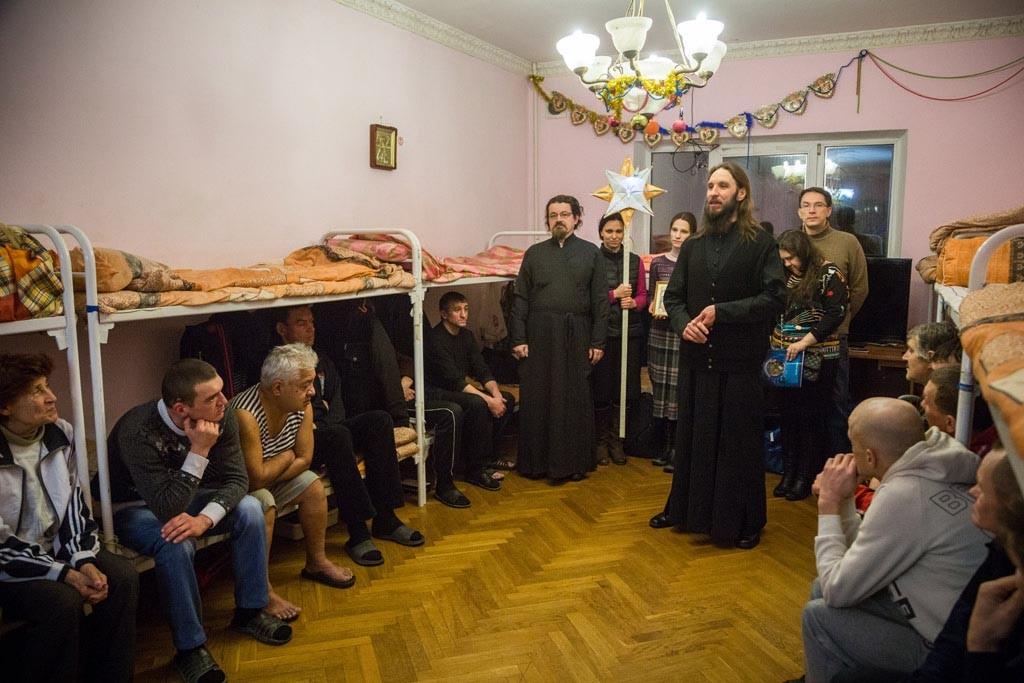
Church as social security

0

Helping the sick and the poor is a liturgical act, but there should be no imbalances.

In the Orthodox Church, great emphasis is placed on mysticism, on spirituality. A person’s relationship with God is built when he prays, comes to church, takes communion, confesses. On the one hand, this is really the most important thing.

On the other hand, it is impossible to dissect, separate a person’s life from his prayer, from his behavior in the church. Because it is obvious that if you believe, this belief must be proved by deeds.

Now it sometimes seems that in church life we ​​are working not for the Lord God, not for our own salvation, but for some departments – for the department of social service, the department of prison wards, and so on. It is clear that in any structure there must be some kind of divisions and responsibilities. But when we call helping our neighbors social work and separating it from the ordinary life of the Church and spiritual life, it seems to me that we are not doing quite the right thing.

After all, this is also a certain liturgical action, when a person renders help to someone, goes, for example, as a volunteer to hospitals …

This is all the same work that leads a person to salvation, that which bears great fruits in the spiritual life.

In search of strength

But, again, a developed liturgical life, voluminous, extended in time, focuses on itself all the attention and we, priests, already have little attention and strength left for large-scale social work.

If services in the temple are almost every day, you serve two hours in the morning and another two hours in the evening. Between services – services, you are still trying to somehow come to your senses, have lunch.

Much has been said about the need for priests to have helpers. And social work as well. But not every parish can afford this helper to pay a salary. Basically, the priest, saving finances, takes care of all this and, of course, cannot cope with all the responsibilities in full.

Sometimes all the work turns out to be formal, in the form of reports. We drank tea, sat, organized some kind of conversation, went to some of the parishioners, helped the sick person, brought food. And – reported. That’s all social work.

For regular social work, a material base is needed, and many parishes simply do not have it.

If social activity will greatly distract from the liturgical life, then we will completely and completely turn into social security. There should be no distortions in one direction or the other. As usual, the truth is somewhere in between.

Of course, social work is very important. Yes, any priest is engaged in it. Any priest provides material assistance to people who come and ask for help in some difficult life situations. Many parishes now have distribution points for things and clothes. Here, among other things, they bring clothes, we put them in order, wash them, see what condition they are, and give them out to those in need. In many parishes, people in need are fed free of charge.

Justification before the state

Sometimes social work looks like a kind of justification for the existence of the Church in front of the state. That is, the state sometimes does not understand why this Church is needed, what is the use of it. Here the hierarchs are trying to explain: “Well, of course, we are engaged in social work, we have almshouses, shelters and so on.”

The main thing is not that a person can do many things at once. It is important that a person can do better than all other people. And this needs to be developed. And the Church is the same. The Church is engaged in social work, it is in her nature. However, whatever one may say, the state is most effectively engaged in this, because it collects taxes from its citizens for this social work: helping the poor, sick and so on.

The church is also involved in education. Well, again, globally, education should still be dealt with by the school. And the Church can do what neither the state nor the school can do. That is, to take upon oneself precisely spiritual activity: preaching the Gospel, teaching people the commandments of Christ, worship. And, of course, it should still be the main thing. Although, I repeat, it is difficult to imagine the Church without social activity.

Iconostasis or helping others

When we go to a temple in a big city or a manastir, we are surprised to see the gilded iconostases, salaries – he knows how much everything costs.

No, of course, the decoration of the temple is necessary. But sometimes we spend too much on it. It seems to me that more money should be spent – parish and diocesan – on charitable and social projects.

And it seems to me that there will be more benefits from this. And it is pleasing to God, and as a sermon it is effective.

Many people donate something to the Church, and if all funds go only for gilding the iconostases, then, in the end, no one will want to donate. And if people see that the money is being spent on some kind of assistance, on social work, then, I think, there will be even more funds.

But, I repeat, they are engaged in social work in one way or another in any church, and it is obvious to everyone that if you only pray without helping anyone, then this will only be an outer shell …

Lack of money increases risk of death for the elderly people

0
Cropped shot of a senior woman holding a cane in a retirement home

Scientists advise to pay attention to the financial condition of patients

Financial problems and the strain they cause increase the risk of death in older people who have been hospitalized for a heart attack, according to a study by Yale University experts, quoted by the online publication “Juricalart”.

Severe money problems – the lack of sufficient funds to meet their monthly needs, are associated with these people with a 60 percent higher risk of death within six months after discharge from hospital.

“We have found that strong financial tensions are associated with an increased risk of mortality. This is a call to the clinical world that we need to pay attention to the financial situation of patients, “explains the co-author of the study, Dr. Alexandra Hajduk.

For the study, patients aged 75 and over who were hospitalized with a heart attack in hospitals across the United States between 2012 and 2016 were asked about their financial status. It turns out that 7.2 percent of those who say they have enough money to pay their bills die within six months of being discharged from the hospital. Half a year after their stay in the clinic, the outcome was fatal for 9 percent of patients who said they only had “enough” money to make ends meet. Of those who reported having too little money, 16.8 percent died within the same period.

Yale researchers are adjusting the data to take into account factors other than a recent heart attack that may, however, affect the risk of death, such as other medical problems and age-related conditions. The researchers then concluded that patients who reported severe financial stress were 61 percent more likely to die within six months of hospitalization than others.

The results show that talks about the financial situation of elderly people admitted to the hospital with heart attacks could be an indicator of those at higher risk of death after discharge, Hajduk said. In these cases, social workers could intervene and refer older people to departments and organizations for help.

The study was published in the Journal of the American Medical Association.

Invasion of Ukraine: Neighbours struggle with refugee influx; UN expresses ‘horror’ at Mariupol hospital attack

0
Invasion of Ukraine: Neighbours struggle with refugee influx; UN expresses 'horror' at Mariupol hospital attack

To date, more than 2.2 million people have fled Ukraine according to UN refugee agency UNHCR; most have found shelter in Poland and more than 200,000 have reached Hungary.

Slovakia has taken in more than 150,000 people from its embattled neighbour since 24 February, when Russian forces began shelling and bombarding Ukrainian cities.

Guterres praises ‘generosity and solidarity’

In a phone call with Polish President, Andrzej Duda, UN Secretary-General António Guterres said he appreciated the welcome extended there, to more than one million refugees from Ukraine.

The UN chief “told the President that he will do everything possible to mobilize the whole of the UN system, in coordination with UNHCR, to support Poland’s generosity”, UN Spokesperson Stéphane Dujarric told reporters in New York.

He said Mr. Guterres was thankful for the “immense generosity and solidarity shown by all countries” bordering Ukraine.

As part of his overall mediation efforts to try and end the fighting in Ukraine, the UN chief also spoke on Wednesday afternoon with German Chancellor Olaf Schultz, and Josep Borrell, the European Union’s foreign and security policy High Representative.

Latest estimates from UN aid agencies suggest that four million refugees are likely by the end of the war, which represents about 10 per cent of Ukraine’s population.

Horror over maternity hospital attack

The development follows news alerts on Wednesday that a Russian strike on a children’s hospital and maternity ward in the stricken city of Mariupol, had left children buried under the rubble, according to Ukrainian officials.

The bombing has not been independently verified, but Mr. Dujarric said the UN was urgently investigating the “shocking” reports.

He reiterated the UN’s call for an immediate halt to attacks on healthcare, hospitals, health-workers and ambulances, reminding that “none of these, should ever be a target.”

Any attacks on healthcare, are a clear violation of International Humanitarian Law.

In a tweet, Mr. Guterres described reports of the attack as “horrific”, noting that civilians were paying “the highest price, for a war that has nothing to do with them. This senseless violence must stop.”

In a statementUNICEF chief, Catherine Russell, said she was “horrified by the reported attack…an attack which reportedly left young children and women in labour, buried beneath the rubble of destroyed buildings. We do not yet know the number of casualties but fear the worst.”

Horrific toll on children

“This attack, if confirmed, underscores the horrific toll this war is exacting on Ukraine’s children and families” she added. “In less than two weeks, at least 37 children have been killed and 50 injured, while more than one million children have fled Ukraine to neighbouring countries.

This attack, if confirmed, underscores the horrific toll this war is exacting on Ukraine’s children and families – UNICEF head

“Attacks against civilians and civilian infrastructure – including hospitals, water and sanitation systems and schools – are unconscionable and must stop immediately”, she added.

“UNICEF renews its call for an immediate ceasefire and urges all parties to respect their obligations under international humanitarian law to protect children from harm, and to ensure that humanitarian actors can safely and quickly reach children in need.”

Multiple attacks

Briefing journalists in Geneva, World Health Organization chief, Tedros Adhanom Ghebreyesus said that so far, WHO has verified 18 attacks on health facilities, health workers and ambulances amidst Russia’s invasion of Ukraine, including 10 deaths and 16 injuries. 

“These attacks deprive whole communities of health care”, he said. 

So far, WHO has delivered 81 metric tons of supplies, and WHO is establishing a pipeline of supplies for health facilities throughout Ukraine, especially in the most affected areas, Tedros added. 

© UNICEF/Evgeniy Maloletka

A woman looks at her damaged house after shelling in Mariupol, in southeastern Ukraine.

“Yesterday, we delivered five metric tons of medical supplies to Kyiv to support surgical care for 150 trauma patients, and other supplies to manage a range of health conditions for 45,000 people for a month. More supplies will be distributed today, and we have 400 cubic metres of supplies waiting to be transported to Ukraine, from our logistics hub in Dubai.”

The UN health agency chief said some of the main health challenges beyond surviving airstrikes and bombings, were hypothermia and frostbite, respiratory diseases, lack of treatment for cardiovascular diseases, and cancer, and mental health issues. 

WHO personnel have been deployed to neighbouring countries to provide mental health and psychosocial support. 

“WHO continues to call on the Russian Federation to commit to a peaceful resolution to this crisis, and to allow safe, unimpeded access to humanitarian assistance for those in need”, said Tedros.

IOM helps nationals return home

The International Organization for Migration (IOM) said on Wednesday it has helped almost 100 so-called Third Country Nationals (TCNs), stranded in Ukraine during the Russian attack, to return home.

They include 77 Tunisians, forced to flee to Romania and Poland; three Lebanese nationals, and 17 Ghanaian students. Seven other students leave for Ghana on Thursday.

IOM said that around 109,000 TCNs have fled Ukraine since the war began, as the agency collaborates with States, embassies, border authorities, and other partners, to help them return.

In addition to supporting returns, IOM provided pre-departure medical assistance, food, COVID-19 testing, Personal Protective Equipment and much-needed ground transportation to the points of departure. 
IOM is providing TCNs – some of whom have faced discrimination and xenophobic attacks during their journeys – help to liaise with their home authorities, and has created a network of Hotlines in Ukraine, Poland, Romania, Slovakia and Lithuania providing information to all those forced to leave Ukraine.