Sunday, September 20, 2026
Home Blog Page 115

World news in brief: Cuba’s blockade hits health care, Haiti’s ‘vortex of violence’ and Djibouti’s deadly shipwreck

0
World news in brief: Cuba’s blockade hits health care, Haiti’s ‘vortex of violence’ and Djibouti’s deadly shipwreck

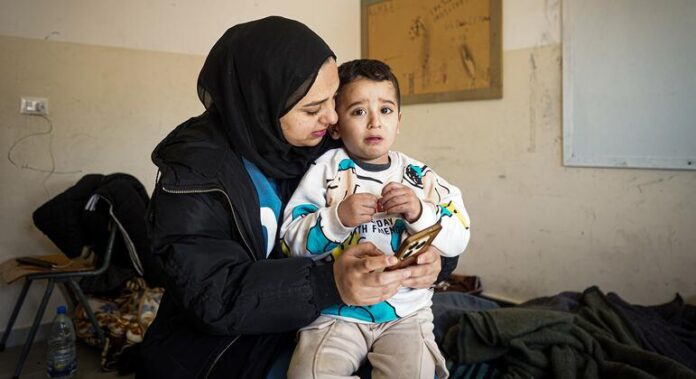
World news in brief: Cuba's blockade hits health care, Haiti's 'vortex of violence' and Djibouti's deadly shipwreckIn an alert, the United Nations World Health Organization warned that Cuban hospitals were struggling to maintain their emergency and intensive care services. “Thousands of surgeries have been postponed over the past month and people in need of care… have been put at risk” […]

Originally published at Almouwatin.com

Masked T‑cell engagers: cancer immunotherapies for the future?

0


A new immunotherapy drug has demonstrated early promise in a recent prostate cancer clinical trial. The drug, called

Source link

Myanmar: WFP reports fragile recovery, one year after deadly earthquake

0
Myanmar: WFP reports fragile recovery, one year after deadly earthquake

Myanmar: WFP reports fragile recovery, one year after deadly earthquakeThe World Food Program (WFP) latest monitoring shows a fragile recovery from the disaster. In the affected regions of Sagaing and Mandalay, one in six households continues to face moderate to severe food insecurity, while half of all families remain only marginally food secure, leaving them […]

Originally published at Almouwatin.com

MIDDLE EAST LIVE 27 March: Humanitarian crisis deepens across the region

0
MIDDLE EAST LIVE 27 March: Humanitarian crisis deepens across the region

The war in the Middle East continues, with attacks causing further terror and suffering, deepening the humanitarian crisis across the region. The UN announced the launch of a task force to meet the immense needs.  In Geneva, diplomats at the Human Rights Council have been discussing the school strike in Iran’s Minab that killed more than 100 children. Stay with us for live updates on this and from UN agencies providing relief. App users can follow coverage here.

Source link

أوكرانيا: بعد أن أسكتتها الحرب، وجدت صوتًا جديدًا على المسرح

0
أوكرانيا: بعد أن أسكتتها الحرب، وجدت صوتًا جديدًا على المسرح

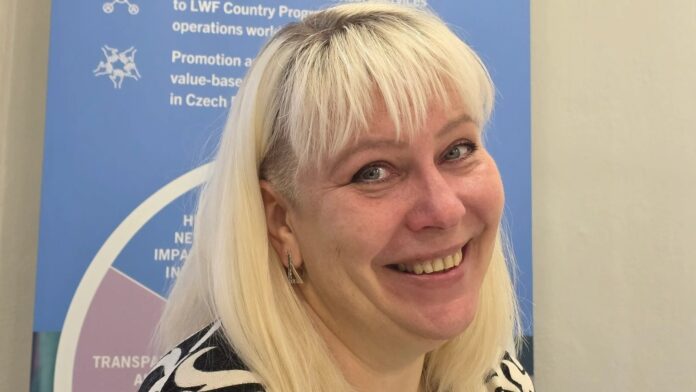
أوكرانيا: بعد أن أسكتتها الحرب، وجدت صوتًا جديدًا على المسرحتيتيانا بيلوكا تحتفل بالمرونة في بلد جديد بعد تغير كل شيء في أوكرانيا (LWI) – تيتيانا بيلوكا هي معلمة للرياضيات وعلوم الكمبيوتر. وهي أيضًا ممثلة. عندما وصلت إلى براغ قادمة من أوكرانيا، لم تكن تتخيل أن يصبح المسرح جزءًا من حياتها، ناهيك عن أن يكون مصدرًا للشفاء ثقة والانتماء. لكنها اليوم، وهي تقف على خشبة […]

Originally published at Almouwatin.com

Kidnapped and tortured on infamous migration route to Saudi Arabia

0
Kidnapped and tortured on infamous migration route to Saudi Arabia

Kidnapped and tortured on infamous migration route to Saudi ArabiaWhen Jamal, an Ethiopian in his thirties, set out on what is now known as the Eastern Road, he wasn’t looking for work, wealth or status. He was looking for his sixteen-year-old nephew, who disappeared while trying to reach Saudi Arabia via one of the most common migration corridors. […]

Originally published at Almouwatin.com

Middle East war: Attacks on vital healthcare, evacuation strike fears

0
Middle East war: Attacks on vital healthcare, evacuation strike fears

In a rare piece of good news, though, the UN World Health Organization (WHO) said that aid shipments are getting “back on track” from Dubai, one of its key relief hubs, after major disruption to flights and other shipments caused by Iranian attacks throughout the Gulf.

“I would say the first two weeks of the crisis really set us back. But we’re now receiving bookings for commercially scheduled cargo, and we’re able to begin moving supplies out as we were in the past,” said Robert Blanchard, WHO Emergency Operations Team Lead at the Dubai Logistics Hub.

After a “significant reduction” in air freight across the region after war erupted on 28 February, most airlines in the Gulf “are now back to around 50 or 60 per cent of their capacity”, he explained, noting that more charter flights will accelerate the delivery of supplies, in addition to an Egypt-bound convoy carrying lifesaving medicines for Gaza.

Buried under rubble in Iran

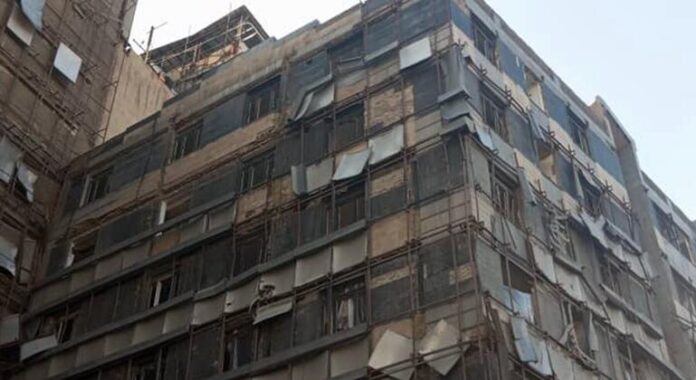
From Iran, meanwhile, UN partner the International Federation of Red Cross and Red Crescent Societies highlighted the “rapidly deteriorating” impact of strikes in the capital, Tehran, “a city of roughly nine million people [that] feels completely empty”. 

“While Tehran still maintains some basic services, some cities in the south are facing water and electricity cuts. Not to mention the fact that we have a nationwide internet blackout since 28 February,” said Maria Martinez, IFRC Head of Delegation in Iran.

The humanitarian official described how one IFRC search and rescue responder “discovered the bodies of his own family beneath the rubble”.

Moreover, “In Qom, another first responder recovered his aunt and her husband alongside a young child. This is the reality humanitarian workers are facing saving lives while carrying unimaginable personal loss.”

According to WHO’s healthcare attacks monitor, there have been 21 attacks on health workers and facilities in Iran since the war began. Ms. Martinez noted that 17 Red Crescent centres have been struck and nearly 100 ambulances damaged or destroyed. “These are not just vehicles. They are often the only hope people have when the bombs fall.”

Lebanon evacuation terror

From Lebanon, UN teams highlighted how civilians endure “intensified Israeli strikes” on targets linked to Hezbollah militants, who have continued to fire rockets at Israel since the war began.

Frequently, there is little warning about impending attacks.

“The attack in Bashura in central Beirut last week, there was a warning issued, but maybe less than an hour before the strike hit and it was very early in the morning,” said Karolina Lindholm Billing, UNHCR Representative in Lebanon.

She added that a second strike “close to several collective shelters hosting displaced (people), gave “no warning, it was a direct target…as far as I’m aware, there have been no sites designated as safe where civilians have been advised to go to.”

Echoing those concerns, the UN Children’s Fund (UNICEF)’s Marcoluigi Corsi, Country Representative in Lebanon insisted that “there is no safe space” for people to go – including the capital, Beirut. “Although the evaluation order has been issued for the southern part of Beirut…the strikes actually happen also in other parts of Beirut” too, he said.

More than one million people have now fled their homes in Lebanon in just a few weeks, UN aid teams say, highlighting the trauma of the upheaval.

“I have met women and girls forced to make devastating choices, fleeing their homes at night without clear destination, losing their families’ entire livelihoods and leaving behind their sense of safety and everything that is familiar,” said Gielan El Messiri, UN Women Representative in Lebanon.

Bridges blown

The destruction of bridges in southern Lebanon by the Israeli military has created serious safety and humanitarian concerns.

“Access…is also becoming increasingly difficult because the destruction of key bridges in the south has cut off entire districts and isolating over 150,000 people and severely limiting humanitarian access with essential items to reach them,” UNHCR’s Ms. Billing added.

She said that from 2-23 March, well over 15 humanitarian operations have brought essential relief items to people still in the south. “But there have also been some of these convoys where the notification was not approved. So, we were not able then to proceed with it because of the security risks. One, for example, last week was not approved and then it could proceed a couple of days later.”


Source link

EEA and Eionet welcome Moldova as a cooperating country

0

The European Environment Agency (EEA) and its European Environment Information and Observation Network (Eionet) today welcomed the Republic of Moldova as a cooperating country, extending the EEA’s country network to 32 member and 7 cooperating countries across Europe. The EEA is one of the first EU agencies to integrate Moldova into its regular activities and operational structures.

The EEA Management Board formally endorsed Moldova today as a cooperating country of the organisation. With the Management Board’s endorsement today, Moldova becomes the seventh cooperating country of the EEA, joining the Western Balkan partners Albania, Bosnia and Herzegovina, North Macedonia, Montenegro, Serbia and Kosovo¹.

Moldova’s landscapes and ecosystems form part of wider European ecological systems, and its environmental challenges often mirror those faced across the region. An oil spill, caused by Russian attack on a Ukrainian hydropower complex located on the Dniester River close to the border with Moldova, is currently affecting the wider river basin, including the Moldovan territory. Such incidents show that environment and climate challenges do not stop at national borders.

As Moldova has declared a state of environmental alert due to the oil spill, the Moldovan delegation was prevented from participating in the EEA Management Board meeting. Nevertheless, the moment has been marked by the messages sent by Jessika Roswall, EU Commissioner for Environment, Water Resilience and a Competitive Circular Economy, Gheorghe Hajder, Moldovan minister for the Environment, Leena Ylä-Mononen, EEA’s Executive Director and André Weidenhaupt, EEA chair of the Management Board.

Moldova’s cooperation with the European Environment Agency marks an important moment in its European integration journey. It is a concrete step both for Moldova and for the European Union, as we strengthen our cooperation and joint commitment to a healthy and sustainable environment that can strengthen our preparedness, security and resilience.


European Commissioner for Environment, Water Resilience and a Competitive Circular Economy

The Republic of Moldova welcomes this new stage of cooperation with the European Environment Agency and its Eionet network. Joining this community of partners strengthens our capacity to develop evidence-based environmental policies, improve environmental data systems, and align our practices with European standards. At a time when Moldova is advancing important reforms of its environmental institutions, including the strengthening of the Environmental Agency, the experience and expertise of the EEA and the Eionet network will be invaluable. Access to reliable and comparable environmental data will allow us to better understand environmental challenges and design effective public policies. This cooperation will support our efforts to modernise environmental governance, improve data quality and transparency, and accelerate our alignment with the EU environmental acquis as part of Moldova’s European integration path.


Republic of Moldova’s Minister of Environment

We are very happy to announce that the Republic of Moldova is joining the European Environment Agency as a cooperating country and becoming part of our network. Environmental challenges know no borders and cooperation is essential to address them effectively. We have already been working very constructively with Moldovan colleagues under the ongoing Energy Community project, and before that, as part of the ENI SEIS II East project. We look forward to further expanding this cooperation. Incidents such as the oil spill on the river Dniester are a testimony not only to common challenges we face, including those caused by war, but also to the solutions we can develop together. 


On behalf of all the other 38 countries, I welcome Moldova as the 39th country in our Eionet family. Eionet connects people and expertise from across Europe, facilitating not only data flows but also knowledge exchange, allowing us to achieve our shared ambitions for a more sustainable Europe.


Chair of EEA Management Board

Roadmap for integration to the EEA

The European Environment Agency’s cooperation framework allows cooperating countries to engage in the Agency’s activities and become part of Eionet. Cooperating countries contribute to and benefit from shared environmental data, assessments and capacity‑building activities, supporting improved environmental governance and evidence‑based policymaking across Europe. Eionet consists of the EEA’s member and cooperating countries. The 32 member countries include the 27 European Union Member States, Iceland, Liechtenstein, Norway, Switzerland and Türkiye.

Cooperation with the EEA forms part of the Republic of Moldova’s broader commitment to European integration. This was reaffirmed at the highest political level in the Joint Declaration following the first EU–Moldova Summit in July 2025, which references Moldova’s participation in selected EU agencies, including the EEA.

Moldova applied for European Union membership in March 2022 and was officially recognised as an EU membership candidate in June 2022 and began accession negotiations in June 2024. 

Cooperation between the EEA and Moldova will begin with a dedicated onboarding and diagnostic phase (2026 – 2028). The goals of this phase are to:

  • Support Moldova in building the institutional and technical foundations for future gradual Eionet integration. 
  • Provide a clear roadmap for environmental data reporting to EEA in line with the approximation to the EU environmental acquis. 
  • Facilitate Moldova’s progressive participation in EEA systems, networks, and knowledge platforms. 

The cooperation is supported by the European Union through its external cooperation programmes.

Note 1: This designation is without prejudice to positions on status, and is in line with UNSCR 1244/1999 and the ICJ opinion on the Kosovo declaration of independence.

Source link

EEA and Eionet welcome Moldova as a cooperating country | Press releases

0

The European Environment Agency (EEA) and its European Environment Information and Observation Network (Eionet) today welcomed the Republic of Moldova as a cooperating country, extending the EEA’s country network to 32 member and 7 cooperating countries across Europe. The EEA is one of the first EU agencies to integrate Moldova into its regular activities and operational structures.

The EEA Management Board formally endorsed Moldova today as a cooperating country of the organisation. With the Management Board’s endorsement today, Moldova becomes the seventh cooperating country of the EEA, joining the Western Balkan partners Albania, Bosnia and Herzegovina, North Macedonia, Montenegro, Serbia and Kosovo¹.

Moldova’s landscapes and ecosystems form part of wider European ecological systems, and its environmental challenges often mirror those faced across the region. An oil spill, caused by Russian attack on a Ukrainian hydropower complex located on the Dniester River close to the border with Moldova, is currently affecting the wider river basin, including the Moldovan territory. Such incidents show that environment and climate challenges do not stop at national borders.

As Moldova has declared a state of environmental alert due to the oil spill, the Moldovan delegation was prevented from participating in the EEA Management Board meeting. Nevertheless, the moment has been marked by the messages sent by Jessika Roswall, EU Commissioner for Environment, Water Resilience and a Competitive Circular Economy, Gheorghe Hajder, Moldovan minister for the Environment, Leena Ylä-Mononen, EEA’s Executive Director and André Weidenhaupt, EEA chair of the Management Board.