Wednesday, September 30, 2026
Home Blog Page 1163

France redraws the rules for religious associations under new Republic principles law

0
France redraws the rules for religious associations under new Republic principles law
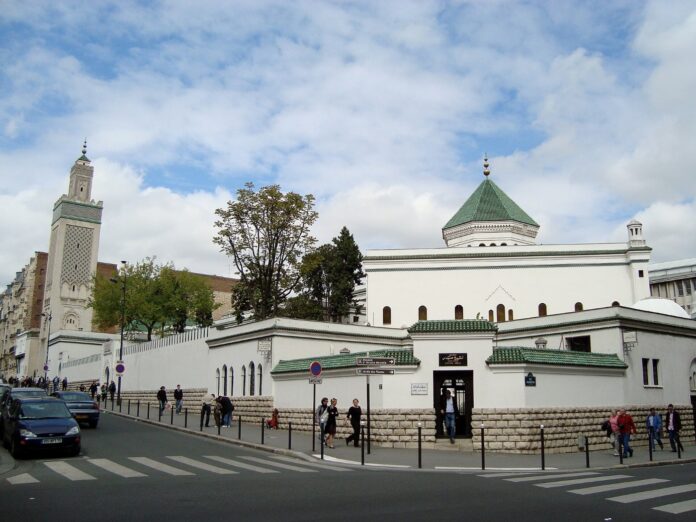
The Grande Mosquée de Paris, in the 5th arrondissement. LPLT / Wikimedia Commons (CC BY-SA 3.0)

PARIS — Religious associations in France woke up this week to a thicker rulebook. The law of 24 August 2021, published in the Journal officiel, is meant to reinforce respect for what the government calls the principles of the Republic. The text ranges well beyond religion, but a large share of it rewrites the rules for associations involved in worship and widens the administration’s powers to look over their shoulder.

The political argument around the law has been loud. For the thousands of congregations that will actually live under it, the consequences are quieter and, quite possibly, longer-lasting: statutes, accounts, declarations, governance charts.

To see why, it helps to remember how French religious life is organised. The system rests on laïcité and, for most of the country, on the 1905 law separating churches and the State, which created the specific legal vehicle known as the association cultuelle. The new legislation rewrites several of the rules around these structures. Deliberative bodies must exist and take the important decisions. Financial and administrative management has to be laid before members at regular intervals. Groups that want the advantages attached to cultuelle status must now declare that status to the representative of the State in the department, and the administration gets a bigger role in checking that the conditions for it are still being met. The detail is in the official legislation.

What makes this more than a technical adjustment is the shape of religious France: thousands of small local bodies rather than a few large national institutions. For a neighbourhood mosque, an evangelical church, a Buddhist centre, compliance will mean sitting down with the statutes, working out who is actually allowed to sign what, keeping cleaner accounts and learning which declarations go to the prefecture and when.

Money gets particular attention, especially money from abroad. Some of the procedures still depend on implementing regulations, but the direction is unmistakable: the State wants to see how organisations that carry on religious activity are run and financed.

Not every religious body will feel the law in the same way. Much depends on the legal form a group has chosen, on regional exceptions, and on the line French law draws between cultural, charitable and strictly religious activity. That line is where smaller organisations will have to be careful. A single community may run worship services, language classes, food aid and youth work — sometimes inside one association, sometimes through several. Sorting those activities out without confusing categories the law treats differently will be one of the reform’s real tests.

The political framing — separatism, radicalisation, the place of Islam in French society — is absent from the operative text, which works through general categories of association and religious activity rather than naming any faith.

A worshipper attending Friday prayers or Sunday mass may notice nothing at all. The people who will notice are the treasurers, trustees, religious ministers and association presidents, who are about to discover a considerably more demanding administrative environment.

That, in the end, may be the reform’s most tangible legacy: a national argument about republican principles, translated into statutes and account books at thousands of local places of worship across France.
Moscow caps OSCE observers, OSCE cancels mission: Russia’s Duma vote will go unwatched

0
Moscow caps OSCE observers, OSCE cancels mission: Russia’s Duma vote will go unwatched
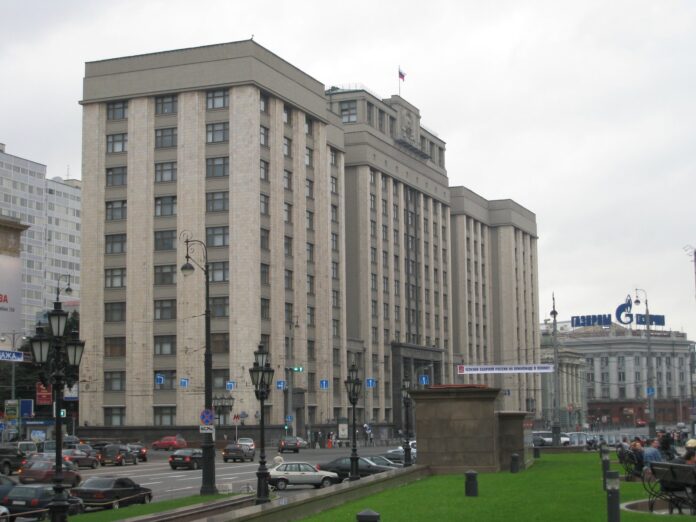
The State Duma building in Moscow.

Warsaw — The OSCE’s election observation office has cancelled its mission to Russia’s parliamentary elections next month, after Moscow imposed restrictions on the number of observers and the length of their stay that the office says make meaningful monitoring impossible.

ODIHR had planned to send a full mission for the 17–19 September State Duma vote, as it has for Russian elections for two decades. But the Russian foreign ministry informed the office that, citing pandemic rules, it would accept no more than 60 observers — a fraction of the several hundred ODIHR considered necessary for a country of Russia’s size — and would limit how long they could remain in the country.

“It has become clear that the Russian authorities are not willing to receive an election observation mission in line with the usual requirements,” said Matteo Mecacci, ODIHR’s director. He added that the conditions imposed would not allow observers to work independently or to cover the country adequately, and that sending a shrunken mission under those terms would only lend undeserved credibility to the process.

Moscow rejected the criticism, insisting the limits reflect sanitary requirements rather than politics, and noting that observers from other international organisations and bilateral partners remain welcome. The OSCE Parliamentary Assembly has also indicated its delegation cannot participate under the conditions set.

The cancellation leaves September’s vote without international observation from the body Russia itself helped build — the first Duma election since 1999, barring a 2008 dispute with a similar ending, that ODIHR will not watch. It comes as the Russian authorities designate independent media and monitoring groups as ‘foreign agents’, including the country’s best-known domestic election watchdog.

For ODIHR, the principle at stake is that governments do not get to choose how closely they are watched. For Moscow, observers suggested in Vienna this week, the calculation may be simpler: a mission it cannot control is worth less to it than a mission it does not have.


Media-Society.com is a press network association based in Spain, founded in 2020. More at www.media-society.com.

High-tech eyes and ears to boost speed and safety for first responder teams

0
High-tech eyes and ears to boost speed and safety for first responder teams

Emergencies can unfold quickly in unpredictable, high-pressure environments. For first responders such as firefighters, paramedics and rescue teams, every second counts – with each decision potentially meaning the difference between life and death.

Coordinated by researchers at the Technical University of Madrid (UPM) and led by Federico Alvarez, the RESCUER team worked closely with partners across Europe, including emergency services and technical departments from nine countries. The goal was to boost both the safety and operational speed of first responders – and make cutting-edge tech such as artificial intelligence (AI) and the internet of things (IoT) more accessible to those on the front lines.

Smarter tools, faster rescues

Among RESCUER’s most striking innovations is a smart helmet that gives first responders augmented vision. Equipped with thermal imaging and AI-driven object recognition, the helmet allows rescuers to navigate smoke-filled or structurally unstable environments and locate survivors in real time.

“With thermal cameras and AI, responders can distinguish between animals, inanimate objects and human victims even when visibility is near zero,” explains Alvarez. Unlike traditional thermal displays, the helmet’s system identifies and classifies targets, helping responders make quicker, better-informed decisions.

The smart helmet also integrates bio-signal monitoring, tracking stress and cognitive load to help manage first responder safety. If a rescuer’s stress levels spike dangerously or cognitive overload is detected, the system can alert other teams before it escalates into a critical situation. Augmented hearing capabilities further cut through environmental noise, amplifying critical sounds such as cries for help or structural warnings – potentially buying crucial minutes for those in danger.

A second device, the Sign of Life radar, detects minute movements such as human breathing behind walls or debris. Compact enough to attach to a belt, the sensor increases the odds of locating survivors in collapsed structures. Early field trials suggest the radar could dramatically speed up rescue operations in earthquake-hit areas, forests and urban disaster zones.

No network, no problem

Disaster zones often lack the communication infrastructure that modern technology depends on. Recognising this, RESCUER also prioritised infrastructure-free operation. The smart helmet, radar and other tools work without relying on mobile networks – an essential advantage in mountains, tunnels or remote areas where connectivity is minimal or non-existent.

RESCUER’s methodology also sets it apart. Rather than engineering technologies in isolation, the team collaborated closely with first responders across nine countries. Exercises such as ‘Live My Life’ put the entire research team in real-world rescue scenarios, wearing full gear and undergoing the same training as their end users, giving them a first-hand insight into the physical and mental demands of emergency work.

This approach helped refine the tools into practical, lightweight devices able to withstand the physical and psychological stresses of an emergency response. “We moved away from a traditional technology-push model,” says Alvarez, “toward one driven by actual field use and user needs.”

Path to market

Several of RESCUER’s technologies, including the smart helmet, are now moving towards commercialisation, with interest from industries beyond emergency services, such as mining, construction and defence. Theon International, one of the project’s partners, is guiding the development for wider applications, with first products expected to reach the market within the year.

A number of first responder organisations across Europe are already evaluating prototypes in the field. The feedback will shape final refinements before full-scale deployment.

RESCUER has yielded tangible, real-world tools likely to save lives and reduce risks for the people who put themselves in danger to help others. As Alvarez puts it: “It’s about applying taxpayer-funded technology for when it matters most.”

Source link

Tirana Ministerial: OSCE fills its empty chairs at last, and names a 2023 chair

0
Tirana Ministerial: OSCE fills its empty chairs at last, and names a 2023 chair
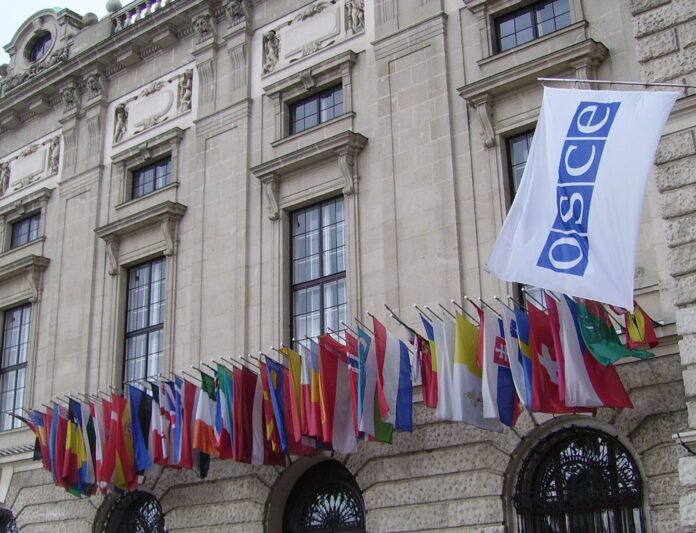
Flags of OSCE participating states outside the organisation's Vienna headquarters.

Tirana — The OSCE closed its twenty-seventh Ministerial Council on Friday with the appointment it had been unable to make for months: new leadership for the organisation’s four top posts, ending a vacancy crisis that had left the institution rudderless through one of the most turbulent years in its history.

Meeting online under Albania’s chairmanship because of the pandemic, the fifty-seven participating states confirmed Helga Maria Schmid, a senior German diplomat and former deputy EU foreign policy chief, as the new Secretary General. Matteo Mecacci, an Italian former parliamentarian and UN official, takes over ODIHR, the Warsaw-based election and human rights office; Kairat Abdrakhmanov of Kazakhstan becomes High Commissioner on National Minorities; and Teresa Ribeiro of Portugal becomes Representative on Freedom of the Media.

The four posts had been empty since July, when the mandates of the previous office-holders expired and a handful of states blocked their renewal. The standoff paralysed the organisation’s senior management through the Belarus crisis, the Nagorno-Karabakh war and a contested American election — precisely the moment, as more than one minister noted, when the OSCE could least afford it.

Ministers also settled the longer-term question of who steers the body next: Sweden takes the chair in 2021 as planned, followed by Poland in 2022 and — in a decision taken this week — North Macedonia in 2023. Chairmanships are usually agreed years in advance; the Skopje appointment restores a pipeline that had begun to fray under the same consensus disputes that emptied the top jobs.

What Tirana could not produce was much else. The meeting, Albania’s only ministerial as chair, ended without consensus on the major political files — Ukraine, the arms control vacuum, the frozen conflicts — and with the organisation’s budget still hostage to linked disputes. A leadership team, at least, now exists to inherit them.

Schmid takes office this month facing a familiar paradox: an organisation whose field missions, election observers and mediators are trusted precisely because its political decision-making is weak, and whose 57 states include several that would rather it did less. Her first job will be internal — persuading all of them that the OSCE is still worth paying for.


Media-Society.com is a press network association based in Spain, founded in 2020. More at www.media-society.com.

Moscow Mechanism on Belarus: a 90-page catalogue of torture, and a demand for new elections

0
Moscow Mechanism on Belarus: a 90-page catalogue of torture, and a demand for new elections
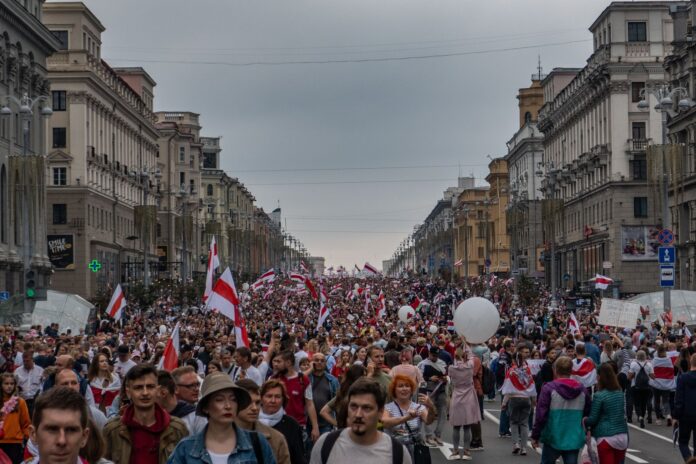
Mass protests in Minsk in August 2020 after the disputed presidential election.

Vienna — An independent expert report commissioned under the OSCE’s Moscow Mechanism has concluded that Belarus committed massive and systematic human rights violations around its disputed presidential election, and recommended that the vote be annulled and new elections held under international supervision.

The report, published on 5 November, was written by Professor Wolfgang Benedek of the University of Graz after seventeen OSCE participating states invoked the mechanism in September. It documents torture and ill-treatment in detention on a scale, the author writes, that has not been seen in Europe in decades — including at the notorious Okrestina detention centre in Minsk, where thousands were held after the 9 August vote.

Benedek’s findings are blunt. The election itself was neither transparent nor impartial; the official result giving Alexander Lukashenko eighty per cent of the vote is not credible; and the state’s response to the peaceful protests that followed — mass arrests, beatings, torture, enforced disappearances and at least several deaths — amounts to a systematic attack on the population.

The Moscow Mechanism is one of the OSCE’s sharpest instruments: it allows a group of states to appoint an expert rapporteur to investigate human rights in another participating state even without that state’s consent. Minsk refused to cooperate with the mission and has rejected its conclusions as politically motivated interference.

Among the report’s recommendations are new elections, an end to violence against protesters, the release of political prisoners, investigations into torture, and international monitoring of the human rights situation. Benedek also urges OSCE states to use universal jurisdiction to prosecute those responsible for the gravest abuses.

Whether any of this reaches the people still being detained in Minsk each weekend is another matter. The report lands as Belarus enters its thirteenth consecutive week of protests, with the authorities escalating from mass arrests to stun grenades and live ammunition warnings. A catalogue of crimes, however thorough, is not yet accountability — but in the OSCE’s architecture, it is the strongest paper instrument that exists.


Media-Society.com is a press network association based in Spain, founded in 2020. More at www.media-society.com.

OSCE observers on the US vote: ‘baseless allegations’ of fraud are harming public trust

0
OSCE observers on the US vote: ‘baseless allegations’ of fraud are harming public trust
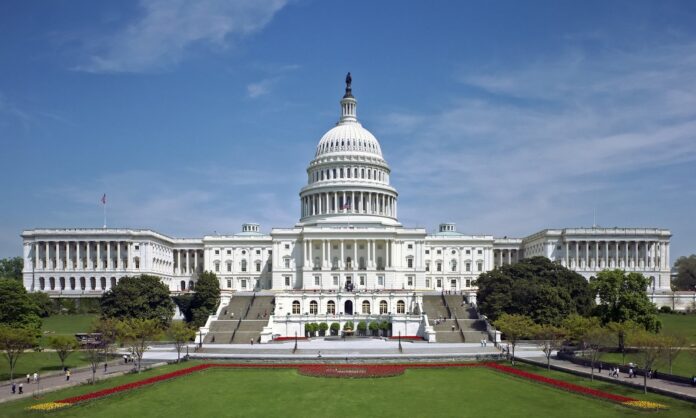
The west front of the United States Capitol in Washington.

Washington — The head of the international observation mission to the United States election has delivered an unusual rebuke to a sitting American president, saying that baseless allegations of systematic fraud — in particular by the incumbent — are damaging public trust in democratic institutions.

Michael Georg Link, the German diplomat leading the OSCE Office for Democratic Institutions and Human Rights mission, presented preliminary findings on Wednesday as counting continued in several states. The vote itself, he said, was competitive and well managed despite the enormous challenges of the COVID-19 pandemic and an unprecedented volume of postal ballots.

“Baseless allegations of systematic deficiencies, notably by the incumbent president, including on election night, harm public trust in democratic institutions,” Link told reporters in Washington — a statement without real precedent in three decades of OSCE observation of American elections.

The mission, which deployed observers across some thirty states, noted the election came amid deep polarisation, a raging pandemic and protests over racial justice. It praised election officials for administering the vote under extreme pressure, while repeating long-standing recommendations on campaign finance, voting rights for felons and residents of Washington D.C. and the territories, and the politicisation of election administration.

The observers also recorded the scale of legal challenges launched around the vote, and the campaign rhetoric questioning the integrity of mail-in ballots months before election day. Their report carefully separates administrative problems — real, and listed — from claims of systematic fraud, for which it found no evidence.

For an organisation more accustomed to monitoring elections in Chișinău or Bishkek, the Washington assignment has become its most-watched in years. The irony was not lost on diplomats in Vienna: the country that pushed hardest to create OSCE election observation is now receiving the kind of language it once helped write for others.


Media-Society.com is a press network association based in Spain, founded in 2020. More at www.media-society.com.

Innovation helps to ensure European foods don’t cost the earth

0
Innovation helps to ensure European foods don’t cost the earth

Europe’s agri-food systems need to evolve in a world that is being transformed by technological innovation. At the same time, these vital sectors are faced with local and global challenges arising from climate change, environmental decline and a scarcity of resources. 

“These trends are challenging for all value chain actors, but particularly for farmers, as they are constrained by low margins, geography and weak bargaining power,” says Inés Echeverría, CO-FRESH project coordinator and R&D&I director at CNTA in Spain.

In the CO-FRESH project, Echeverría coordinated a broad consortium of partners across the EU with the goal of adapting Europe’s agri-food systems to become more socially, economically and environmentally sustainable and better prepared for the future.

In seven case studies, CO-FRESH redesigned and piloted new systemic approaches to agri-food production by developing new techniques, tools and insights, and aimed to take these innovations Europe-wide. 

Specifically, the project explored more efficient use of resources across fruit and vegetable (F&V) value chains, along with cutting the amount of plastic and food waste, while also aiming to increase the shelf life of minimally processed foods such as bagged salads.

“The success of CO-FRESH is based on the holistic approach to F&V value chains, helping actors along the chain to work together more effectively,” adds Echeverría. “The seven pilot cases remain a living example of how to apply innovations.” 

Transforming challenges into opportunities 

CO-FRESH brought about better cooperation between many partners in Europe’s F&V value chain, and held a series of meetings which brought together industry professionals to harness a broad range of knowledge and ideas. 

Through these workshops, the potential impact, feasibility and level of innovation of over 200 proposed innovations were discussed, before a shortlist of 19 were selected to be used across the 7 pilot cases. 

“The co-creation methodology allowed the active participation of representatives from the entire supply chain of each of the seven pilot cases,” explains Echeverría. These pilot cases were run in France, Hungary, Italy, the Netherlands, Poland and Spain, covering a range of farms producing fruit, salads, mushrooms, legumes and pork. 

Implementing innovation

Innovative approaches that the project successfully implemented include:

  • using intelligent internet of things systems to reduce water consumption in small farms by optimising irrigation;
  • developing low-processed plant-based foods from local crops;
  • reducing plastic waste through the use of compostable bioplastics for food packaging. 

The team developed a new certification scheme to raise awareness and reduce the production of microplastics in the F&V supply chain, as well as a governance tool to integrate and coordinate stakeholders along short value chains. 

To spread their findings across Europe’s agri-food sector, CO-FRESH created over 20 videos available on YouTube, along with a final project video shown at an event in Brussels. The team gave presentations at over 120 fairs, conferences, workshops and meetings, and reached a broad spectrum of agri-food stakeholders.

Alongside this, the project led to over 100 published articles, CO-FRESH newsletters and short communications. Results from the project were also presented at several scientific conferences and meetings, with 10 open access scientific articles currently published and 4 more under review. 

Continued evolution 

The pilot studies will continue to implement the most successful innovations, some of which are already undergoing test phases with large markets to validate their real-world feasibility. The work will also continue through the strong community built by those working in the agri-food industry. 

CO-FRESH was also invited to participate in the 10th edition of the European Commission’s prestigious Innovation Radar Prize.

“Networking with sister projects (Ploutos, FAIRCHAIN, LOWINFOOD and FOODRUS) and participating in several joint events with decision makers and public authorities has strengthened our message, learnings and conclusions,” says Echeverría. “This collaboration will continue after the project by means of CO-FRESH partners participating in networks, projects and dissemination events.” 

Source link

Karabakh in flames: Trump, Putin and Macron issue joint plea as fighting enters fifth day

0
Karabakh in flames: Trump, Putin and Macron issue joint plea as fighting enters fifth day
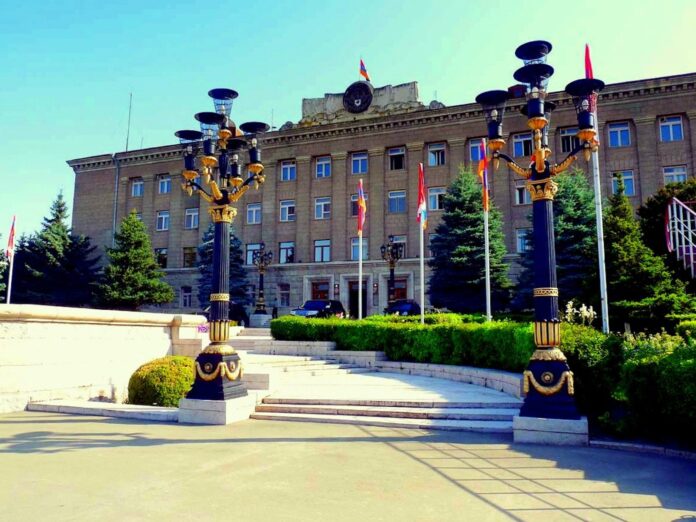
Stepanakert, the main city of Nagorno-Karabakh.

Geneva — The presidents of the United States, Russia and France issued a rare joint statement on Thursday calling for an immediate ceasefire in Nagorno-Karabakh, as the heaviest fighting between Armenian and Azerbaijani forces in a quarter of a century stretched into a fifth day with no sign of abating.

Donald Trump, Vladimir Putin and Emmanuel Macron — leaders of the three countries that co-chair the OSCE Minsk Group, the body’s long-dormant format for settling the conflict — condemned in the strongest terms the escalation of violence along the line of contact and beyond, and called on the sides to resume substantive negotiations without preconditions.

The statement is notable less for what it demands than for who signed it. Washington, Moscow and Paris agree on little these days, and their ability to produce a common text within days of the outbreak testifies to how seriously the three capitals take the risk of a wider war between Armenia and Azerbaijan — one that could pull in Turkey, which has openly backed Baku, and Russia, which has a defence pact with Yerevan.

The fighting, which erupted on 27 September, is the worst since the 1994 ceasefire that froze the conflict without resolving it. Both sides claim to have inflicted heavy casualties; both accuse the other of shelling civilian areas, including Stepanakert and towns well outside the disputed territory. Confirmed figures are scarce, but each capital already speaks of hundreds of dead.

The OSCE itself is largely a spectator in its own process. Its small monitoring presence on the ground ended years ago, and the Minsk Group co-chairs have not held a meeting of the parties in over a year. The joint statement urges the foreign ministers of Armenia and Azerbaijan to come to the table — but offers no new mechanism, no deadline and no consequences.

What the statement does restore is the principle that this conflict belongs to a multilateral format, not to whichever regional power moves fastest. Whether Ankara and Moscow honour that principle, and whether Baku — sensing a rare military opportunity — will pause while it is winning, are questions the three presidents left politely unanswered.


Media-Society.com is a press network association based in Spain, founded in 2020. More at www.media-society.com.

Reimagining wastewater as a valuable resource

0
Reimagining wastewater as a valuable resource

At the heart of the ULTIMATE project is a clear vision: to transform how Europe manages its water resources and encourage the idea that wastewater is a valuable asset. The goal is less environmental contamination from wastewater, alongside increased savings and revenue for industries including petrochemicals, pharmaceuticals, distilleries and food processing. The idea is crucial for building a truly circular economy, reducing the need to extract natural resources.

As Gerard van den Berg, innovation and valorisation manager at the KWR Water Research Institute and coordinator of the project, explains: “Our main goal is to reuse and recover water, energy and valuable materials that can be extracted from wastewater, such as nutrients for use in agriculture.” 

The project team demonstrated the practical impact of this through nine high-profile industrial use cases in Europe and beyond. With these pilots, new techniques were developed to reduce groundwater usage, clean wastewater and use wastewater as a source of bioenergy and useful nutrients. “We selected use cases based on their potential for investment in full-scale applications,” van den Berg explains. At a whisky distillery in the United Kingdom, the project team showcased a process that makes it possible to recycle water and recover energy and raw materials. 

Over 20 technologies were developed and tested during the project. A standout innovation is the Electrostimulated Anaerobic Reactor (ELSAR™), a bioelectrical process that combines anaerobic digestion with wastewater treatment. Piloted at the Mahou San Miguel brewery in Spain, ELSAR™ offers an effective way to treat wastewater with high organic loads, reducing its environmental impact.

Another key technology is the SubCritical Water Extraction (SCWE) process, designed to recover high-value compounds such as antioxidants from wastewater. Demonstrated at food processing plants in Greece and Israel, this technology showcases the potential for wastewater to provide both economic and environmental benefits.

Innovation and collaboration 

The ULTIMATE project brought together diverse groups, including industrial partners, water utilities, policymakers and the general public. Van den Berg describes this engagement model as essential to success: “ULTIMATE developed living labs, communities of practice and co-creation methods throughout the project.” By using these platforms, ULTIMATE ensured that the process was collaborative at each stage, from problem definition to solution development and implementation.

A unique tool that ULTIMATE used was the “immersive narrative experience,” designed to engage local people in the project’s case study locations. This method of communication helped to “stimulate the needs and interest of citizens,” demonstrating the project’s relevance to local communities as well as industry experts. Such inclusive practices have increased understanding and acceptance of water-smart industrial symbiosis’ (WSIS) as a viable, long-term solution for industries and municipalities alike.

The project is being carried out in close connection with policymakers as well, says van den Berg, “to ensure that the latest insights and experiences may be included in new policy and guidance documents.”

A blueprint for the future

ULTIMATE has now laid the groundwork for the widespread adoption of WSIS technologies and models. One key platform for disseminating the project’s results is the Water Europe Marketplace and Technology Evidence Base. This digital repository collects data from ULTIMATE and other circular economy projects, providing resources, case studies and technological solutions for future initiatives.

The long-term benefits of ULTIMATE extend beyond the life of the project. Partnerships formed during the project are already leading to new projects, such as BOOST-IN and CIRSEAU, aimed at accelerating Europe’s transition to a circular economy. As van den Berg highlights: “Several commercial partners have already started to commercialise products developed within ULTIMATE, such as ELSAR™ and the SCWE process.”

By bridging the gap between water utilities and industries, ULTIMATE demonstrates how symbiotic relationships can drive sustainability, reduce resource use and enhance Europe’s environmental resilience.

Source link

A pandemic of censorship fears: OSCE media watchdog sounds alarm over Hungary’s emergency law

0
A pandemic of censorship fears: OSCE media watchdog sounds alarm over Hungary’s emergency law
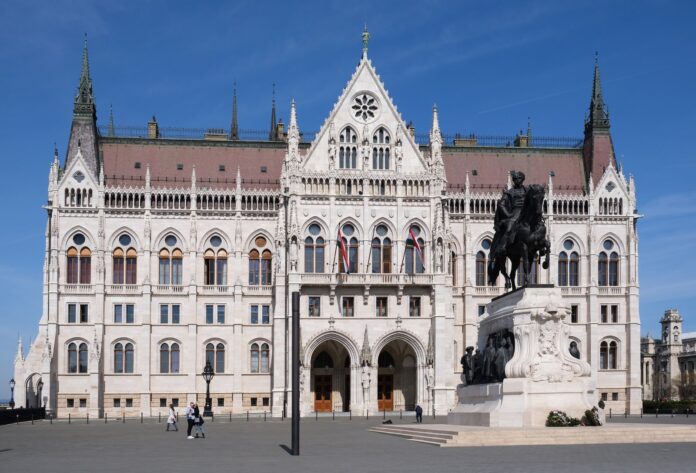
The Hungarian Parliament Building on the Danube in Budapest.

Vienna — The OSCE’s media freedom watchdog has warned that emergency powers adopted in Hungary to fight the coronavirus could be turned against journalists, in one of the sharpest interventions yet over governments using the pandemic to squeeze the press.

Harlem Désir, the OSCE Representative on Freedom of the Media, wrote to Budapest this week after the Hungarian parliament handed Prime Minister Viktor Orbán the power to rule by decree with no time limit. The law, passed on 30 March, also creates a new criminal offence: spreading false or distorted information about the virus or government measures, punishable by up to five years in prison.

Désir said he recognised the exceptional circumstances created by COVID-19, but argued that vaguely worded provisions on ‘false’ information risk criminalising legitimate journalism and critical reporting at precisely the moment the public needs independent scrutiny most. A state of emergency, he cautioned, must not become a state of permanent exception for the media.

Hungary is not alone in attracting the Representative’s attention. In the three weeks since the pandemic was declared, his office has issued statements on restrictions in several OSCE participating states, from limits on journalists’ access to officials and health facilities to prosecutions over coronavirus reporting. A running tracker of government measures affecting media freedom is being compiled by his office.

The Hungarian government has dismissed the criticism as politically motivated, insisting the law is temporary in effect if not in wording and that other European states have adopted comparable measures. Government officials note that the parliament, where the ruling party holds a two-thirds majority, can revoke the special powers at any time.

For the Vienna-based organisation, the episode is an early test of a question likely to define this year: whether the public health emergency becomes a pretext for durable restrictions on rights the OSCE was created to defend. Désir’s answer, in his letter to Budapest, is that free and independent media are not an obstacle to fighting the virus but part of the fight — a line that many governments in the region appear in no hurry to endorse.


Media-Society.com is a press network association based in Spain, founded in 2020. More at www.media-society.com.