Wednesday, September 30, 2026
Home Blog Page 1168

Bayern Munich win the strangest Champions League: a closed-door final in Lisbon crowns a perfect run

0
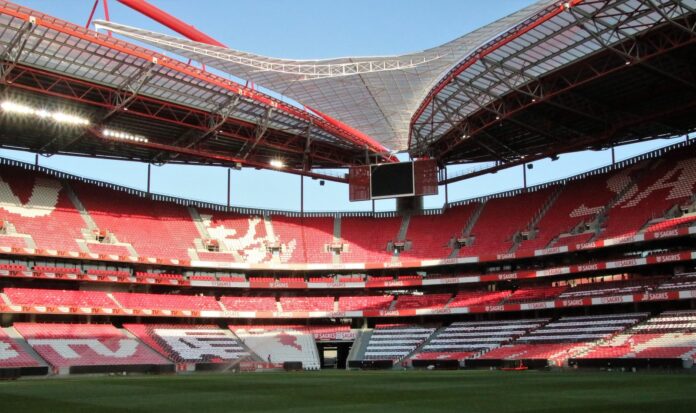
Estadio da Luz in Lisbon

LISBON — The most unusual season in the history of the European Cup has ended with a familiar name on the trophy. Bayern Munich beat Paris Saint-Germain 1-0 in Lisbon on Sunday night to win their sixth Champions League title, completing the competition’s first ever closed-door final tournament.

The decisive goal came in the 59th minute, and it carried its own story: Kingsley Coman, a Parisian who left PSG as a teenager, headed in Joshua Kimmich’s cross against the club that let him go. Bayern have won every match they have played in this season’s competition — eleven victories from eleven games, a record no champion has managed before.

For PSG, the defeat extends a painful pattern. The French club, transformed by Qatari ownership since 2011, were playing in their first final and had their chances, with Neymar and Kylian Mbappé both denied by goalkeeper Manuel Neuer. Nine years of investment have produced domestic dominance but not the European crown the project was built to win.

The final was the centrepiece of an improvised solution. When the pandemic halted the season in March, UEFA compressed the last rounds into a twelve-day mini-tournament in Lisbon, with single-leg quarter-finals and no spectators. Organisers are already calling it a template they hope never to need again.

Bayern’s victory also seals a treble — Bundesliga, German Cup and Champions League — for the second time in seven years. It was won, fittingly for this strangest of seasons, in front of empty seats.


Media-Society.com is a press network association based in Spain, founded in 2020. More at www.media-society.com.

Reimagining wastewater as a valuable resource

0
Reimagining wastewater as a valuable resource

At the heart of the ULTIMATE project is a clear vision: to transform how Europe manages its water resources and encourage the idea that wastewater is a valuable asset. The goal is less environmental contamination from wastewater, alongside increased savings and revenue for industries including petrochemicals, pharmaceuticals, distilleries and food processing. The idea is crucial for building a truly circular economy, reducing the need to extract natural resources.

As Gerard van den Berg, innovation and valorisation manager at the KWR Water Research Institute and coordinator of the project, explains: “Our main goal is to reuse and recover water, energy and valuable materials that can be extracted from wastewater, such as nutrients for use in agriculture.” 

The project team demonstrated the practical impact of this through nine high-profile industrial use cases in Europe and beyond. With these pilots, new techniques were developed to reduce groundwater usage, clean wastewater and use wastewater as a source of bioenergy and useful nutrients. “We selected use cases based on their potential for investment in full-scale applications,” van den Berg explains. At a whisky distillery in the United Kingdom, the project team showcased a process that makes it possible to recycle water and recover energy and raw materials. 

Over 20 technologies were developed and tested during the project. A standout innovation is the Electrostimulated Anaerobic Reactor (ELSAR™), a bioelectrical process that combines anaerobic digestion with wastewater treatment. Piloted at the Mahou San Miguel brewery in Spain, ELSAR™ offers an effective way to treat wastewater with high organic loads, reducing its environmental impact.

Another key technology is the SubCritical Water Extraction (SCWE) process, designed to recover high-value compounds such as antioxidants from wastewater. Demonstrated at food processing plants in Greece and Israel, this technology showcases the potential for wastewater to provide both economic and environmental benefits.

Innovation and collaboration 

The ULTIMATE project brought together diverse groups, including industrial partners, water utilities, policymakers and the general public. Van den Berg describes this engagement model as essential to success: “ULTIMATE developed living labs, communities of practice and co-creation methods throughout the project.” By using these platforms, ULTIMATE ensured that the process was collaborative at each stage, from problem definition to solution development and implementation.

A unique tool that ULTIMATE used was the “immersive narrative experience,” designed to engage local people in the project’s case study locations. This method of communication helped to “stimulate the needs and interest of citizens,” demonstrating the project’s relevance to local communities as well as industry experts. Such inclusive practices have increased understanding and acceptance of water-smart industrial symbiosis’ (WSIS) as a viable, long-term solution for industries and municipalities alike.

The project is being carried out in close connection with policymakers as well, says van den Berg, “to ensure that the latest insights and experiences may be included in new policy and guidance documents.”

A blueprint for the future

ULTIMATE has now laid the groundwork for the widespread adoption of WSIS technologies and models. One key platform for disseminating the project’s results is the Water Europe Marketplace and Technology Evidence Base. This digital repository collects data from ULTIMATE and other circular economy projects, providing resources, case studies and technological solutions for future initiatives.

The long-term benefits of ULTIMATE extend beyond the life of the project. Partnerships formed during the project are already leading to new projects, such as BOOST-IN and CIRSEAU, aimed at accelerating Europe’s transition to a circular economy. As van den Berg highlights: “Several commercial partners have already started to commercialise products developed within ULTIMATE, such as ELSAR™ and the SCWE process.”

By bridging the gap between water utilities and industries, ULTIMATE demonstrates how symbiotic relationships can drive sustainability, reduce resource use and enhance Europe’s environmental resilience.

Source link

Football returns without fans: the Bundesliga becomes the first major league back

0
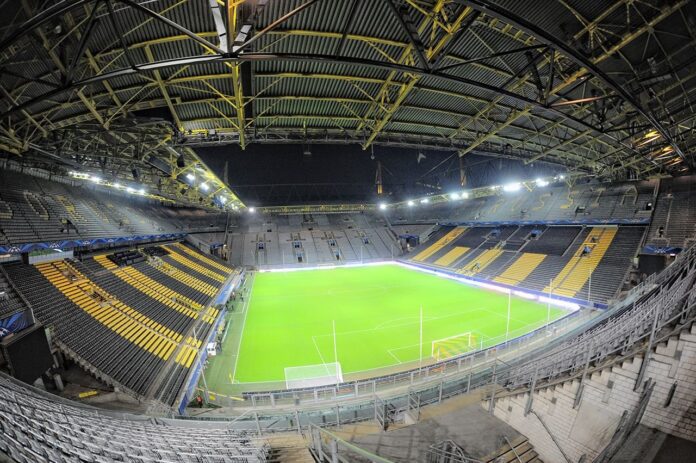
Empty interior of Signal Iduna Park, Dortmund

BERLIN — At 3:30 on Saturday afternoon, in an empty stadium in Dortmund that normally holds more than 80,000 people, professional football came back. The Bundesliga’s return makes Germany the first of Europe’s major leagues to resume after the coronavirus shutdown, and the world is watching to see whether it can work.

The matches are being played behind closed doors, in what Germans call Geisterspiele — ghost games. Players arrive in several buses, are tested regularly, and celebrate goals at a distance. Borussia Dortmund’s 4-0 win over Schalke in the Ruhr derby, normally one of the loudest fixtures in European football, was played out against a backdrop of silence and tarpaulins covering the famous Yellow Wall.

The restart follows weeks of negotiation between the league, the clubs and regional governments, and it comes with a detailed hygiene protocol that other competitions are already studying. England’s Premier League, Spain’s La Liga and Italy’s Serie A all hope to follow in June.

Not everyone is convinced. Polls have shown many Germans uneasy about football returning while restrictions govern daily life, and several clubs have had to isolate players after positive tests. League officials argue the alternative — abandoning the season — would bankrupt clubs across the country.

Whatever the reservations, the experiment matters beyond Germany. If nine rounds of matches can be completed safely in empty stadiums, the Bundesliga will have written the manual for how elite sport lives with the virus. If not, the ghost games may be remembered as a cautionary tale.


Media-Society.com is a press network association based in Spain, founded in 2020. More at www.media-society.com.

A pandemic of censorship fears: OSCE media watchdog sounds alarm over Hungary’s emergency law

0
A pandemic of censorship fears: OSCE media watchdog sounds alarm over Hungary’s emergency law
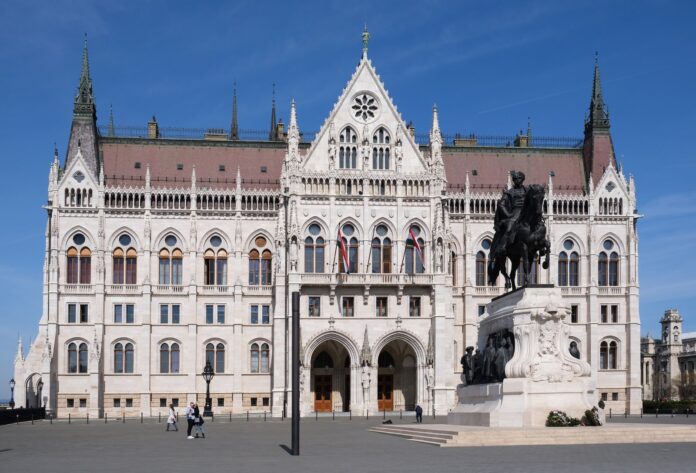
The Hungarian Parliament Building on the Danube in Budapest.

Vienna — The OSCE’s media freedom watchdog has warned that emergency powers adopted in Hungary to fight the coronavirus could be turned against journalists, in one of the sharpest interventions yet over governments using the pandemic to squeeze the press.

Harlem Désir, the OSCE Representative on Freedom of the Media, wrote to Budapest this week after the Hungarian parliament handed Prime Minister Viktor Orbán the power to rule by decree with no time limit. The law, passed on 30 March, also creates a new criminal offence: spreading false or distorted information about the virus or government measures, punishable by up to five years in prison.

Désir said he recognised the exceptional circumstances created by COVID-19, but argued that vaguely worded provisions on ‘false’ information risk criminalising legitimate journalism and critical reporting at precisely the moment the public needs independent scrutiny most. A state of emergency, he cautioned, must not become a state of permanent exception for the media.

Hungary is not alone in attracting the Representative’s attention. In the three weeks since the pandemic was declared, his office has issued statements on restrictions in several OSCE participating states, from limits on journalists’ access to officials and health facilities to prosecutions over coronavirus reporting. A running tracker of government measures affecting media freedom is being compiled by his office.

The Hungarian government has dismissed the criticism as politically motivated, insisting the law is temporary in effect if not in wording and that other European states have adopted comparable measures. Government officials note that the parliament, where the ruling party holds a two-thirds majority, can revoke the special powers at any time.

For the Vienna-based organisation, the episode is an early test of a question likely to define this year: whether the public health emergency becomes a pretext for durable restrictions on rights the OSCE was created to defend. Désir’s answer, in his letter to Budapest, is that free and independent media are not an obstacle to fighting the virus but part of the fight — a line that many governments in the region appear in no hurry to endorse.


Media-Society.com is a press network association based in Spain, founded in 2020. More at www.media-society.com.

Tokyo 2020 becomes the first Olympics postponed in peacetime: the Games move to 2021

0
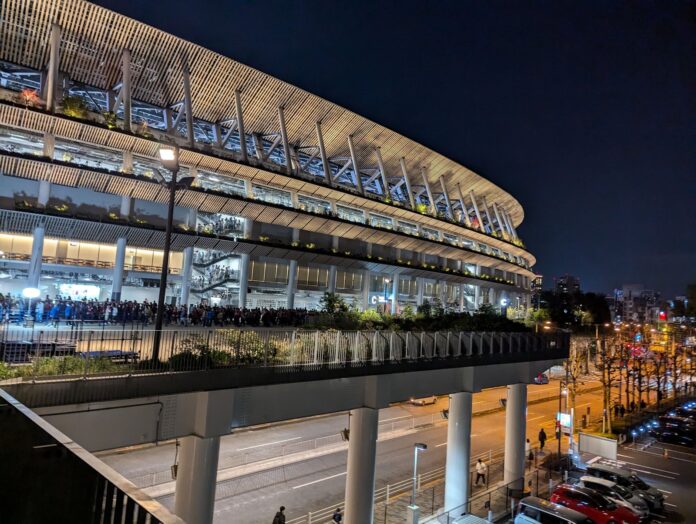
Japan National Stadium in Tokyo

TOKYO — The Olympic Games have been cancelled in wartime, boycotted in the Cold War and shaken by scandal, but never before moved for a virus. On Tuesday, after a telephone call between Japan’s prime minister Shinzo Abe and International Olympic Committee president Thomas Bach, Tokyo 2020 became the first Olympics in history to be postponed in peacetime.

The decision pushes the Games to the summer of 2021, with the Paralympics to follow. In a joint statement, the IOC and the Tokyo organising committee said the event would be rescheduled “to a date beyond 2020 but not later than summer 2021”, and that the Games would keep the name Tokyo 2020 even when held a year late.

The postponement ends weeks of mounting pressure. Australia and Canada had already said they would not send athletes to a 2020 Games, and national federations from swimming to track and field had publicly asked for a delay, arguing that athletes could not train while much of the world was in lockdown.

For Japan, the cost is considerable. The country has spent years and billions of dollars preparing, and organisers must now hold together venues, volunteers and sponsorship contracts for another twelve months. The Olympic flame, which arrived from Greece only days ago, will remain in Japan as what officials called a symbol of hope.

More than 11,000 athletes from over 200 countries had been expected this July. They will now aim for a Games that, whenever it happens, will carry a meaning its planners never intended: a test of whether the world’s largest sporting gathering can outlast a pandemic.


Media-Society.com is a press network association based in Spain, founded in 2020. More at www.media-society.com.

Eurovision cancels for the first time in 65 years: the 2020 contest falls to the virus

0
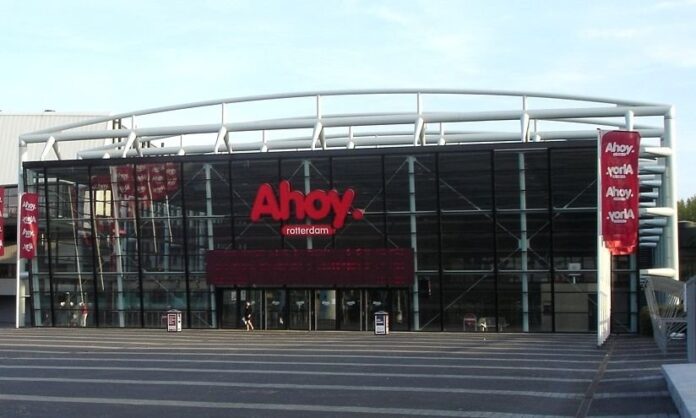
Rotterdam Ahoy arena

GENEVA — It survived the Cold War, oil crises and Balkan wars, but it will not survive the coronavirus. The Eurovision Song Contest 2020 has been cancelled, the European Broadcasting Union announced on Wednesday — the first time the contest has been called off since it began in 1956.

The 65th edition was to have taken place in Rotterdam in May, after the Netherlands’ victory last year with Duncan Laurence’s “Arcade”. Forty-one countries had selected songs. Organisers had explored a stripped-down version without an audience, but concluded that even that could not be done safely or fairly, with delegations unable to travel and rehearse.

The EBU said it would work with Dutch broadcasters on whether Rotterdam can host in 2021. What happens to this year’s songs is unclear; the contest’s rules would bar them from competing again next year, though broadcasters are lobbying for an exception.

The cancellation is, in cultural terms, among the largest the pandemic has yet caused in Europe. Eurovision draws an annual television audience of around 180 million — more than the Super Bowl — and has become, for many smaller countries, a rare night at the centre of the continental map.

The organisers promised a replacement broadcast, “Eurovision: Europe Shine a Light”, to air on the night the final should have happened. It will honour the 41 songs that will now never compete. The phrase the contest needed least this year was the one it got: nul points.


Media-Society.com is a press network association based in Spain, founded in 2020. More at www.media-society.com.

Hilary Mantel’s ‘The Mirror and the Light’ closes the Cromwell trilogy: the publishing event of the year arrives

0
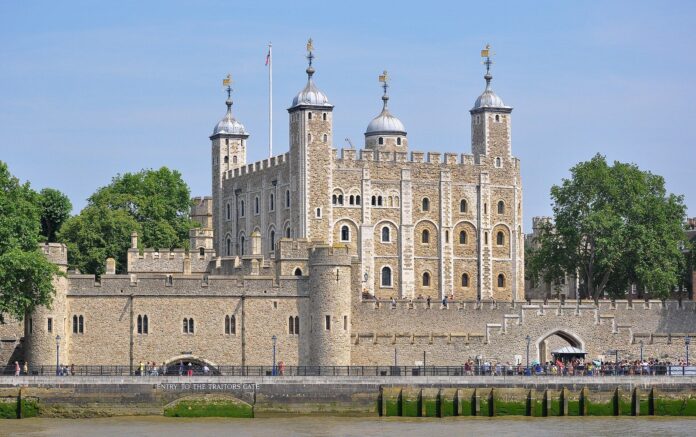
Tower of London seen from the River Thames

LONDON — Eight years after “Bring Up the Bodies”, and with the ending never in doubt — Thomas Cromwell’s head falls in 1540 — Hilary Mantel’s “The Mirror and the Light” was published on Thursday, closing the trilogy that redrew the rules of historical fiction. Bookshops opened early, queues formed, and the novel is expected to be the year’s biggest literary seller.

The book runs to nearly 900 pages and covers the last four years of Cromwell’s life: the fall of Anne Boleyn, the rise and collapse of his own fortunes, and his walk to the block at Tower Hill. Mantel has said she was determined to finish it before adapting it, conscious that readers had waited long enough.

The trilogy’s scale defies summary. “Wolf Hall” (2009) and “Bring Up the Bodies” (2012) both won the Booker Prize — making Mantel the first British writer and the first woman to win it twice — and together have sold millions of copies in dozens of languages. The television adaptation with Mark Rylance became a national event in Britain.

What Mantel did, critics agree, was to take the Tudor court — the most over-written territory in English historical fiction — and render it strange again, seen from inside the mind of the blacksmith’s son who ran it. Her present-tense, close-third-person Cromwell has influenced a generation of novelists.

The new novel’s arrival is shadowed by coincidence: it lands as a virus begins to close public life across Europe. Mantel, 67, has joked that Cromwell survived worse. The book trade, facing a difficult spring, will be grateful for the biggest title it has had in years.


Media-Society.com is a press network association based in Spain, founded in 2020. More at www.media-society.com.

‘Parasite’ makes Oscar history: a Korean film with subtitles wins Best Picture

0
Director Bong Joon Ho

LOS ANGELES — The statuettes had been handed out for 91 years before this happened: on Sunday night, a film not in the English language won the Academy Award for Best Picture. Bong Joon-ho’s “Parasite”, a black comedy about a poor family conning its way into a rich household, took four Oscars, including Best Director and Best International Feature, and left Hollywood applauding its own surprise.

The victory was not a fluke of the night. “Parasite” had won the Palme d’Or at Cannes last May, the first Korean film to do so, and swept through the season collecting prizes from critics’ groups and guilds. Still, the Academy had never before given its top award to a subtitled film, and most forecasters expected the safer war epic “1917”.

Bong, accepting his directing award, paid tribute to his fellow nominee Martin Scorsese — a gesture that brought the room to its feet — and joked that he would drink until morning. The film’s win for Best Original Screenplay had already signalled that the night might bend towards history.

The result will be read as a verdict on the Academy’s effort to internationalise its membership after years of criticism over homogeneity. It is also, more simply, a win for a film that crossed language and class lines to become a genuine popular success, grossing more than any subtitled film in the United States in years.

“Once you overcome the one-inch-tall barrier of subtitles,” Bong said at the Golden Globes last month, “you will be introduced to so many more amazing films.” On Sunday, the Academy crossed the inch.


Media-Society.com is a press network association based in Spain, founded in 2020. More at www.media-society.com.

Co-creating healthy corridors for Europe’s biggest cities

0
Co-creating healthy corridors for Europe’s biggest cities

Social housing neighbourhoods, often located on the outskirts of urban areas, are frequently disconnected from the cities they belong to. Typically built following the destruction of the Second World War, these areas were designed without integration into the broader urban landscape, leaving residents feeling isolated.

“When we spoke to people in these areas, they often said, ‘I’m going into Porto’ or ‘I’m going into Sofia’,” says Isabel Ferreira, URBiNAT co-coordinator. “This revealed a lack of connection to the city as a whole, even though they felt a strong sense of belonging to their immediate neighbourhood.”

To tackle this, the project focused on reconnecting these areas through both physical infrastructure and social-cultural initiatives, addressing fragmentation in a way that encouraged inclusivity and strengthened a sense of belonging.

Connection and belonging

The project brought together seven European cities – Porto, Nantes, Sofia, Siena, Nova Gorica, Brussels and Høje-Taastrup – alongside experts in urban planning, human rights, geography, social sciences and humanities – to develop a collaborative, inclusive methodology and expand the meaning of nature-based solutions.

“We needed to address urban planning while integrating participation, alternative economies and human rights,” explains project co-coordinator Gonçalo Canto Moniz. “By combining these perspectives, we created an approach that was holistic and grounded in real-world challenges.”

At the heart of the project was the concept of ‘healthy corridors’ – nature-based solutions that went beyond traditional parks and green infrastructure. These corridors combined physical improvements, such as greenery and pathways, with community-driven activities that enhanced social cohesion. 

URBiNAT’s approach was to rethink nature-based solutions with a focus on their human aspect. By making participation a central element, people were able to co-create their spaces, transforming both the environment, and their relationships with one another.

The project then developed a flexible and extensive catalogue of nature-based solutions, including participatory workshops, social currencies, shared gardening and cultural events, which each city could adapt to their unique needs. These included a social and solidarity market in Porto, an open-air auditorium in Sofia and an urban garden in Nantes.

These corridors reconnected neighbourhoods to the urban fabric while adding a sense of identity and community pride.

Central to the project’s success was its commitment to co-creation through co-governance. Residents, policymakers, practitioners, academics and businesses were involved from the earliest stages, ensuring that decisions reflected the needs and aspirations of the entire community.

“Involving all multiple stakeholders from the beginning made a huge difference,” adds Beatriz Caitana, one of the project’s co-coordinators. “Even the selection of intervention areas was done collaboratively, giving residents a real sense of ownership.”

This also created a strong community of practice across the seven cities, bringing together local associations, researchers and international experts to exchange knowledge and share best practices.

Transformative impact

The healthy corridors have already delivered significant results to the participating pilots. For example, in Porto, an informal, muddy crossing was transformed into a safe, well-lit corridor with greenery and pathways, significantly improving residents’ daily lives.

In Sofia, an underused area was transformed into a vibrant public space, bringing together residents of all ages through events, sport and workshops. These solutions also improved physical mobility and safety, especially for vulnerable groups.

And the corridors strengthened community bonds as well. Associations that had never collaborated before began working together, encouraging a stronger sense of belonging and shared purpose.

The project’s outcomes also go beyond physical changes. The development of an open access Nature-Based Solutions Catalogue has allowed other cities and organisations to replicate URBiNAT’s methods, while the URBiNAT Observatory monitors the social, economic and urban impacts of these interventions, ensuring their long-term sustainability.

Future models

URBiNAT’s healthy corridors offer a sustainable model for inclusive urban regeneration. Integrating nature-based solutions, co-creation and solidarity, it has shown that even the most fragile communities can come together to create change.

And looking ahead, the tools and methodologies developed are being implemented in new initiatives and replicated through workshops, publications and an international network of partners, namely EU-funded projects TRANS-Lighthouses and GreenInCities.

“We’ve shown that urban regeneration isn’t just about infrastructure,” concludes Ferreira. “It’s about people, their connections and their sense of belonging. That’s where real transformation begins.”

Source link

​The EBA consults on Guidelines on authorisation of third country branches under the Capital Requirements Directive

0

​The European Banking Authority (EBA) today launched a public consultation on Guidelines on authorisation of third-country branches (TCBs) under the Capital Requirements Directive (CRD). The Guidelines are another piece of regulation implementing the new EU framework applicable to TCBs, contributing to the harmonised access to the EU market and to the consistent application of such a new regime. The consultation runs until 3 February 2026. 

​The draft Guidelines cover the content, the assessment, the relevant templates and forms concerning the application for authorisation, as well as the applicable process. They are addressed to competent authorities and to the third country head undertakings submitting the application for authorisation. A non-opposition statement from the third country competent authority of the head undertaking is included in the application, with a view to ensuring the safety and soundness of the establishment of the TCB. ​

Consultation process

Responses to this consultation can be sent to the EBA by clicking on the “send your comments” button on the consultation page. Please note that the deadline for the submission of comments is 3 February 2026.

A public hearing will take place via conference call on Tuesday 10 December 2025 from 12:00 to 13:00 CET. The deadline for registration is 8 December 2025, at 16:00 CET. 

All contributions received will be published after the consultation closes, unless requested otherwise.

Legal basis, background and next steps 

The EBA has developed these draft Guidelines in accordance with Article 48c(8) of Directive 2013/36/EU, which mandates the Authority to lay down the list of information, the assessment and the process applicable to the application, as well as forms and template to be used in the context of the application. Furthermore, the Guidelines have to clarify the conditions under which information submitted by the applicant in prior authorisation procedures for the establishment of TCBs may be relied upon by the competent authority. 

Directive (EU) 2024/1619, amending Directive 2013/36/EU, introduces a new regime applicable to branches in the EU of third country credit institutions (third country branches or TCBs). It lays down a minimum harmonisation framework covering authorisation, prudential requirements – including booking arrangements, capital endowment, liquidity, internal governance, common reporting requirements – and supervisory practices.  

Source link