Friday, March 27, 2026
Home Blog Page 120

Eight in ten workers find a job thanks to support from EU fund

0
Eight in ten workers find a job thanks to support from EU fund

More than eight in ten dismissed workers have found a new job within 18 months of receiving European Globalisation Adjustment Fund support, according to a new report. This EU fund helps workers or the self-employed who lose their job due to restructuring get new skills and find a new job.

Source link

EU takes action to limit influx of small parcels

0
EU takes action to limit influx of small parcels

Parcels worth under €150 are currently exempt from customs duties in the EU. This leads to unfair competition for EU sellers and environmental concerns. The Council has now agreed to scrap this €150 threshold on small parcels, meaning all parcels will be subject to customs duties as of 2028.

Source link

Federal government debt at the end of October 2025

0

Press release from the Federal Debt Agency: Source link

Originally published at Almouwatin.com

Strike against synthetics: authorities seize tonnes of chemicals in Central and Eastern Europe – Emerging trends and strategies to combat synthetic drug trafficking were key topics at Europol’s annual Drugs Conference last week

0

Strike against synthetics: authorities seize tonnes of chemicals in Central and Eastern Europe – Emerging trends and strategies to combat synthetic drug trafficking were key topics at Europol’s annual Drugs Conference last week | Europol

You need to enable JavaScript to run this app.

Loading application.
Please wait.

Source link

Switzerland joins Marie Skłodowska-Curie Actions

0
Switzerland joins Marie Skłodowska-Curie Actions

Switzerland has become an associated country to Horizon Europe, including the Marie Skłodowska-Curie Actions (MSCA).

Organisations based in Switzerland can apply to all MSCA 2025 calls for proposals as well as all future calls under Horizon Europe 2021-2027. This includes all schemes under the Marie Skłodowska-Curie Actions.

Researchers from Switzerland continue to be able to participate in the programme, which is open to top researchers from all over the world.

Before the association, Switzerland has participated in MSCA calls under Horizon Europe as a non-associated country.

Between 2021 and 2024, nearly 190 Swiss organisations have participated in over 400 MSCA projects as associated partners. They have hosted 140 international MSCA researchers.  

Over 50 Swiss researchers have been supported in MSCA projects, taking part mainly in MSCA Doctoral Networks and Postdoctoral Fellowships.  

Background

Negotiations between Switzerland and the European Union on a broad package of agreements were concluded on 20 December 2024, including a specific agreement on Switzerland’s participation in Union programmes.  

On 10 November 2025, the European Union and Switzerland signed the association agreement enabling Swiss entities access to Horizon Europe, including the MSCA, Digital Europe, and the Euratom Research & Training programme.  

The agreement places Swiss researchers and organisations on the same footing as those in EU Member States: they may lead consortia, receive direct EU funding, and access all thematic pillars and instruments of the programmes.  

It opens new capacity for pooling talent, research infrastructures and industrial capabilities across borders, accelerating progress on climate solutions, digital transformation, advanced manufacturing, health innovation and energy security.

This step strengthens Europe’s position as a global centre for high-impact scientific and technological development.

Source link

Gaza: War has made children violent, sad and bereft

0
Gaza: War has made children violent, sad and bereft

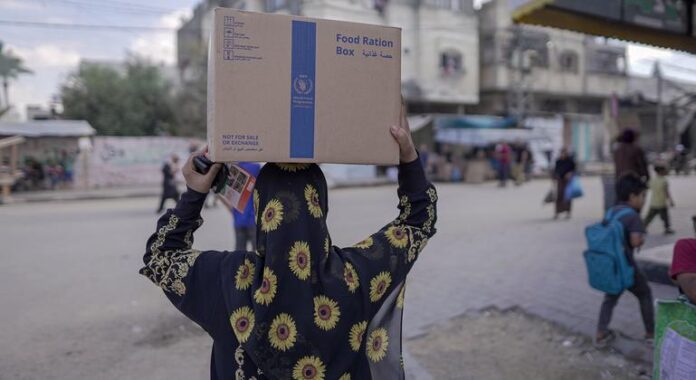
Issuing a warning that the children’s sense of stability and security has been eroded as key everyday services have collapsed, humanitarians insist that young Gazans will need “sustained, long-term efforts to recover”.

According to child safety partner assessments conducted in September, shared by the UN aid coordination office (OCHA), 93 per cent exhibited aggressive behaviour and 90 per cent were violent towards younger children.

Sadness and withdrawal are almost as common (86 per cent), along with disturbed sleep (79 per cent) and widespread refusal to study (69 per cent).

Violence every day

While a fragile ceasefire holds, the deadly violence and insecurity have not ended entirely, with Israeli military strikes near or east of the so-called “Yellow Line”.

This is where the Israeli military remains deployed, amounting to more than 50 per cent of the Gaza Strip, OCHA said.

In an update, the UN aid office noted that access to the sea remains prohibited; it also cited reports that Palestinian fishers continue to be detained at sea by Israeli forces.

“In areas beyond the ‘Yellow Line’…daily detonations of residential buildings continue to be reported and access to humanitarian assets, public infrastructure and agricultural land remains restricted or altogether barred,” the OCHA update states.

One million still homeless

Out of Gaza’s 2.1 million population, approximately a million live in 862 displacement sites today.

More than half of these sites are in the southernmost area of Khan Younis, 264 are in Deir al Balah, 180 are in Gaza and North Gaza governorates and eight are in Rafah.

Many camps are overcrowded, increasing the dangers for girls and children – particularly those with disabilities at risk from violence, neglect and dangerous access to water, sanitation and hygiene (WASH) facilities.

The UN Palestine relief agency, UNRWA, said that around 75,000 people are living in around 100 of its designated shelters and surrounding areas.

Rising anxiety

UN aid partners providing assistance to youngsters report that they suffer from heightened anxiety, behavioural changes and growing concern over the ongoing lack of safe spaces.

In the four weeks since an agreed pause in fighting, humanitarian partners have delivered child protection services to more than 132,000 across the Gaza Strip. This includes nearly 1,600 children with disabilities and 45,000 caregivers, OCHA said.

Assistance has included individual psychological consultations, group sessions, stress management activities, recreational psychosocial support and referrals for further help.

The aim is to reach more than 100,000 children each month to address the needs of nearly one million children in the Gaza Strip.

The development came as the Israeli authorities​​​​​​​ announced the reopening of Zikim crossing following an eight-week closure.

The crossing links Israel and northern Gaza and will reopen for humanitarian cargo, OCHA said. In recent weeks, the UN has been repairing the road leading to Zikim inside Gaza in preparation for the reopening and is now carrying out final checks – including for potential explosive hazards – to enable the resumption of cargo collection. 

Source link

10 years on: remembering the victims of the 13 November terrorist attack in Paris – Today, Europol commemorates the victims of the 13 November terrorist attack in Paris, and reaffirms its commitment to the fight against terrorism

0

10 years on: remembering the victims of the 13 November terrorist attack in Paris – Today, Europol commemorates the victims of the 13 November terrorist attack in Paris, and reaffirms its commitment to the fight against terrorism | Europol

You need to enable JavaScript to run this app.

Loading application.
Please wait.

Source link

From Haiti to Ethiopia: the voices of climate displacement at COP30

0

At COP30 in Belém, Brazil, the United Nations International Organization for Migration (IOM) is putting pressure on negotiators so that climate mobility is at the heart of adaptation plans.

“People and communities who choose to stay must be safe, and those who decide to move must have the opportunity to do so with dignity,” Ugochi Daniels, IOM Deputy Director General, said on Thursday.

In 80 countries, IOM runs projects that put local communities in charge of solutions. Ms Daniels hopes that COP30 will be “a turning point for placing human mobility as a key area of ​​climate action”, particularly in national adaptation plans and financing for loss and damage.

“Ten seconds that changed my life forever”

For Robert Montinard of Haiti, this debate is personal. The 2010 earthquake lasted only 10 seconds, but shattered lives for generations. In search of safety, he fled to Brazil as a refugee. Today he runs the Mawon association, helping others rebuild far from home.

At COP30, Robert insists on one thing: the voices of refugees must be heard.

“We want to be part of the solution. We want migrants and refugees to be heard. Those affected by the consequences of climate change – refugees, indigenous peoples, black communities, women – have the solutions,” he said.

This week, Robert delivered a proposal to the First Lady of Brazil, Rosangela Janja da Silva, and the Minister of the Environment, Marina Silva. It calls for the creation of city climate councils, action against environmental racism and community brigades to respond to disasters.

He describes the fate of Haiti as “climate injustice”. The same hurricanes that hit Florida, he said, leave behind destruction in his homeland — but while the United States is rapidly rebuilding, buildings destroyed in the 2010 Haiti earthquake still lie in rubble.

A crisis fueling the conflict in Ethiopia

From another corner of the South, Makebib Tadesse notes the same trend in Ethiopia, where climate pressures are intensifying conflicts over land and resources.

He described a “continuing cycle of violence and displacement” as food and water become scarce. In northern Ethiopia, where he was born, the impact of climate change now rivals – or even exceeds – the devastation of the 1974-1991 civil war.

“Climate change is pushing people out of Ethiopia like never before,” he said.

Robert and Makebib are both part of the United Nations refugee agency (UNHCR) at COP30, alongside Venezuelan indigenous leader Gardenia Warao.

“Brazil’s opening to refugees must be celebrated”

Alfonso Herrera, Mexican actor and Goodwill Ambassador for Latin America to UNHCR, formerly known as the United Nations High Commissioner for Refugees, carries their message.

“The voices of refugees have been silenced – and they must be heard,” he said. UN News.

Mr. Herrera traveled across the region – from Mexico to Venezuela, Honduras and El Salvador – to witness the human cost of climate displacement and the UN’s efforts to restore hope through education and legal support.

He believes that Brazil’s openness to welcoming refugees deserves to be recognized, especially “while so many other countries adopt a completely opposite attitude.”

As COP30 debates how to adapt to a changing planet, displaced people remind the world that climate action is not just about saving ecosystems: it is also about protecting lives, preserving dignity and ensuring that no one is left behind by the rising tide.

UN News East report from Belémgiving you front row coverage of everything happening at COP30.

Originally published at Almouwatin.com

In Sudan, families are ‘running out of time’ as hunger spreads

0

UN spokesperson Stéphane Dujarric took stock during the regular briefing to journalists in New York on Thursday.

The Sudanese Armed Forces (SAF) and the paramilitary group Rapid Support Forces (RSF) have been fighting for power since April 2023, creating one of the world’s worst humanitarian crises.

“Unimaginable violence” in El Fasher

Violence has intensified in recent weeks after the capture of El Fasher, the capital of North Darfur state, by RSF, after a siege of more than a year.

PAM Sudan tweeted that while families continue to flee the city, teams remain on the ground to provide immediate assistance.

We quickly deliver emergency food and nutrition products to hundreds of thousands of people. who are escaping unimaginable violence and hunger,” he said.

Access makes the difference

Mr. Dujarric recalled that famine was confirmed in El Fasher and Kadugli, capital of South Kordofan State, both largely cut off from aid.

“However, In nine other locations where WFP maintained constant access, famine-like conditions were reversed through sustained assistance“, he said.

“WFP highlights that where conflict has eased and humanitarian operations have expanded, hunger has decreased, demonstrating that consistent access makes the difference between starvation and actual recovery.”

Millions more may be affected

The UN agency is currently providing emergency food, cash and nutrition assistance each month to more than four million people in Sudan in previously hard-to-reach areas in four states: Darfur, Kordofan, Khartoum and Al Jazeera.

With more resources, WFP could double its reach to eight million people every month and further reduce the risk of famine spreading to the hardest-hit areas,” he said.

“But without additional support, this fragile progress could quickly be reversed. »

Mr. Dujarric urged the international community “to continue to step up efforts, with the support and funding needed to help the people in Sudan who so desperately need help.”

Families “lack time”

Furthermore, the United Nations refugee agency, UNHCRlaunched an urgent appeal on Thursday for Sudanese civilians who are “now running out of time” as communities are cut off from aid.

The agency highlighted the plight of families who fled the fighting and mass atrocities reported in El Fasher.

“Children are hungry, parents are desperate… They need protection, security and humanitarian access,” UNHCR said in its statement. a tweet.

“Hostilities must end”: Guterres

This comes a day after the UN Secretary-General expressed grave concern over reports of mass atrocities in El Fasher and worsening violence in Kordofan.

António Guterres was speaking to journalists at the end of the joint annual conference between the UN and the African Union (AU), which was held on Wednesday in New York.

“The flow of weapons and fighters from external parties must be stopped. The flow of humanitarian aid must be able to quickly reach civilians in need. Hostilities must cease,” he said. said.

The Secretary-General called on the warring parties to engage with his Personal Envoy for Sudan “and take rapid and tangible steps towards a negotiated settlement.”

Originally published at Almouwatin.com

World news in brief: Generation Typhoon, disability rights in Myanmar, new refugee-led climate fund

0

After hitting the island nation on November 9 with winds of around 185 kilometers per hour (or 115 miles per hour) killing at least six people, Super Typhoon Fung-wong battered homes, schools and access to health services in 16 areas. UNICEF reported Thursday.

The archipelago has already been exhausted this year by multiple climatic and geophysical shocks. Just a few days ago, more than 200 people died in the Typhoon Kalmaegi disaster.

From one crisis to another

“Children and their families barely emerge from one crisis before another hits, bringing them back to square one,” said Kyungsun Kim, UNICEF representative in the Philippines.

The agency conducts joint assessments with authorities and partners to determine the greatest needs.

In addition to providing lifesaving support, UNICEF prioritizes child-centered climate policies, climate-resilient social services and mobilizing climate finance to protect communities from natural shocks.

UN launches first refugee-led green fund to restore land and reduce carbon emissions

The United Nations refugee agency, UNHCRlaunched the Environmental Protection Fund for Refugeesthe first major refugee-led initiative using carbon finance to combat deforestation, promote clean energy and create green jobs.

The new fund will launch projects in Uganda and Rwanda, aiming to restore more than 100,000 hectares of land and provide access to clean energy to 1 million people over the next decade.

Sown in Uganda and Rwanda

In the Bidibidi and Kyangwali settlements in Uganda, activities will include reforestation, seedling production and the deployment of cleaner cooking technologies, which are expected to reduce more than 200,000 tonnes of CO₂ each year and create thousands of jobs for refugees and host communities.

In Kigeme camp in Rwanda, the project will rehabilitate degraded hillsides, promote safer cooking for 15,000 people, and support sustainable livelihoods through nursery management and soil conservation.

Revenue from verified carbon credits will be reinvested in local environmental projects, ensuring that communities share in the benefits.

“Refugees often live on the front lines of extreme weather,” said Siddhartha Sinha, UNHCR’s head of innovative financing. “This fund helps them protect the land they depend on. »

Expansion is already under consideration in Brazil and Bangladesh, linking environmental recovery to long-term community resilience.

Daily struggle for survival of people with disabilities in Myanmar

Soldiers loyal to Myanmar’s military junta have allegedly executed, tortured and sexually assaulted people with disabilities, trapping them in a daily struggle for survival, according to a report. new report published by the independent United Nations human rights expert for Myanmar.

Since taking power in 2021, Myanmar’s military has ruled by force, violently targeting the opposition, protests, ethnic minorities and particularly people with disabilities, said Special Rapporteur Tom Andrews THURSDAY.

Burned alive

“Dozens of disabled people were burned alive in their own homes as junta forces carried out massive arson campaigns across the country,” he added.

Deep-rooted religious and cultural beliefs continue to perpetuate the isolation and disenfranchisement of people with disabilities in Myanmar, leaving them trapped in a vicious cycle of repression and discrimination, the report said.

“The widely held belief that impairments result from wrongdoing in a past life not only fuels discrimination, but is also internalized by people with disabilities, leading many to withdraw from community life out of shame and erosion of personal dignity,” Andrews said.

Nevertheless, a remarkable network of organizations, many led by people with disabilities, continue to work against all odds to provide essential services and advocate for the rights of people with disabilities.

“As a distracted world focuses its attention on other crises and conflicts, the situation of people with disabilities in Myanmar has truly become a hidden crisis within a forgotten humanitarian catastrophe,” the independent expert said.

“It is essential that the world pays attention to this. »

Independent experts and special rapporteurs are appointed by the UN Human Rights Council report on specific human rights issues. They serve in their personal capacity and are not UN personnel.

Originally published at Almouwatin.com