Monday, September 21, 2026
Home Blog Page 154

Achaemenids, dynasty of Persian kings (2)

0
Achaemenids, dynasty of Persian kings (2)

Achaemenids, dynasty of Persian kings (2)By Father Dmitri Yurievitch Darius [Old Persian – preserving good; Hebrew: ; Greek: Ϫαρεῖος]name of three Persian kings of the Achaemenid dynasty, as well as a Mede mentioned in the book of Daniel. Darius I the Great (550-486 BC; Ezra 4:5, 24; 5:5-7; 6:1, 12-15; Hag 1:1, 15; 2:10 […]

Originally published at Almouwatin.com

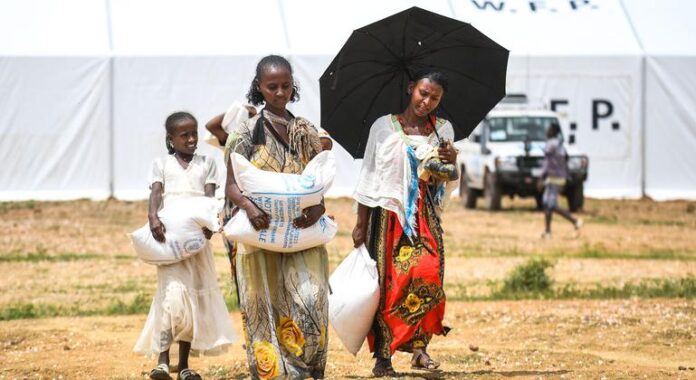
Ethiopia: Türk fears new crisis in Tigray amid renewed fighting

0
Ethiopia: Türk fears new crisis in Tigray amid renewed fighting

“The situation remains highly volatile and we fear it will further deteriorate, worsening the region’s already precarious human rights and humanitarian situation,” Mr. Türk said, following clashes in recent days between the Ethiopian army and regional forces.

The development comes against a backdrop of deadly conflict in Tigray from 2020 to 2022 between Government troops and separatist Tigray forces, following rising tensions between national and regional authorities.

That conflict – in which Eritrean soldiers reportedly participated – is believed to have killed tens of thousands and uprooted more than two million civilians, of whom one million remain internally displaced today.

Intensifying fighting  

According to the UN human rights office (OHCHR), the latest escalation saw clashes between the Ethiopian National Defence Forces (ENDF) and the regional Tigray Security Forces (TSF) intensify on 26 January, close to the Amhara border. The TSF withdrew from the Tselemti area on 1 February, OHCHR said.

“Drones, artillery and other powerful weapons were used by both sides,” Mr. Türk said in a statement. “Civilians are once again caught between escalating tensions, with both TSF and ENDF reportedly carrying out arrests for perceived affiliation with the opposing side. This must stop,” he insisted.

Meanwhile, in Tigray’s south and southeast near the Afar border, clashes between the TSF and the “Tigray Peace Forces”, a rival faction, continue unabated, the High Commissioner noted.

Both sides must step back from the brink and work to resolve their differences through political means,” he said. “Alleged serious violations or abuses must be promptly and independently investigated, irrespective of the perpetrators.”

Dire consequences

Briefing journalists in Geneva, the High Commissioner’s spokesperson, Ravina Shamdasani warned that new clashes could erupt “at any point” with dire consequences for civilians. She highlighted his call to all parties to recommit to the Pretoria Agreement calling for an end to hostilities, signed in 2022. 

The hostile parties should also ensure the return of internally displaced people to their homes, among other confidence-building measures, Ms. Shamdasani continued.

“This is something that was part of the agreement, but it hasn’t proceeded as smoothly as it should,” she noted.

The High Commissioner also warned that recent tensions between Ethiopia and neighbouring Eritrea risked worsening the already serious human rights and humanitarian challenges in both countries and across the wider Horn of Africa.

There have been reports regarding the presence of Eritrean troops and heightened tensions between those two countries,” Ms. Shamdasani said, pointing to “disagreements…particularly regarding the situation in Tigray”. 

She added: “We’re calling for these disagreements to be resolved through political dialogue and not resort to violence. We all saw what happened in 2020, 2021, when there was a full-blown conflict in the Tigray region, which led to we still don’t know how many deaths…We cannot afford a return to that.”

Source link

xAI Bleeds Co-Founders: Two Gone in 48 Hours as Musk’s AI Empire Wobbles

0


Elon Musk’s artificial intelligence company xAI is experiencing a notable talent drain. Influential researcher Jimmy Ba announced his

Source link

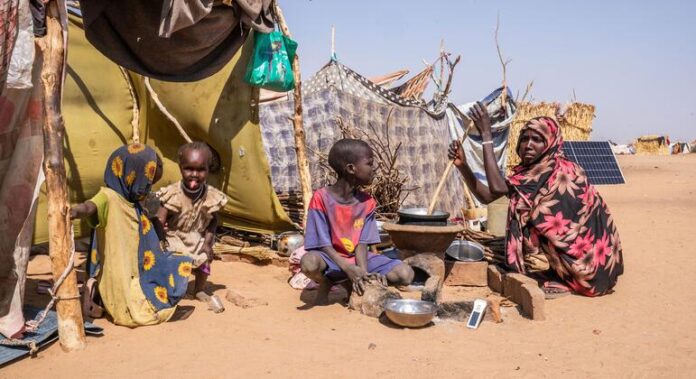
In Sudan, sick and starving children ‘wasting away’

0
In Sudan, sick and starving children ‘wasting away’

As heavy fighting continues between former allies the Sudanese Armed Forces and the paramilitary Rapid Support Forces and their allies, the UN Children’s Fund (UNICEF), said that in parts of North Darfur more than half of all children are acutely malnourished.

The warning follows the release of new data from the IPC, a UN-backed global food security monitoring system, from three localities there – Um Baru and Kernoi and At Tine – indicating “catastrophic” malnutrition rates.

“Extreme hunger and malnutrition come for children first, the youngest, the smallest, the most vulnerable,” said UNICEF spokesperson Ricardo Pires. “In Sudan, it’s spreading… These are children between six months and five years old, and they are running out of time.” 

Starvation spreading

The UN agency stressed that famine thresholds have been surpassed in locations not previously considered at risk, such as Um Baru and Kernoi. 

Conflict, mass displacement, the collapse of services and blocked access which have sparked starvation alerts for these localities exist “across vast swathes of Sudan”, Mr. Pires insisted. 

If famine is looming there, it can take hold anywhere,” he warned.

Mr. Pires also warned of the prevalence of disease as a further threat to children’s survival: 

“These children are not just hungry; nearly half of all children in At Tine had been sick in the previous two weeks. Fever, diarrhoea, respiratory infections, low vaccination coverage, unsafe water and a collapsing health system are turning treatable illnesses into death sentences for already malnourished children.”

He called on the world to “stop looking away” from Sudan’s children, warning that more than half of the youngsters in North Darfur’s Um Baru are “wasting away while we watch”. 

“That is not a statistic. Those are children with names and a future that are being stolen,” the UNICEF spokesperson said.

Nearly three years since war erupted between the once-allied Sudanese Armed Forces (SAF) and the Rapid Support Forces (RSF), 13.6 million people have fled their homes, including 9.1 million displaced within the country. 

Healthcare under attack

Dr Shible Sahbani, the UN World Health Organization (WHO)’s representative in Sudan, told reporters that while the displaced require “urgent” care, the health system has been “ravaged by attacks, loss and damage of equipment and supplies, a shortage of health workforce and operational funds”. 

Since the start of the war in April 2023, WHO has verified 205 attacks on health care that have led to 1,924 deaths and 529 injuries, Dr Sahbani said.

“Such attacks deprive communities of care for years to come, instilling terror in patients and health workers and creating unsurmountable barriers to life-saving treatment,” he added. Meanwhile, the country faces multiple disease outbreaks, including cholera, malaria, dengue and measles.

While WHO and partners are supporting the response to these outbreaks, Dr. Sahbani insisted on the need for greater access and protection of health workers and facilities, in line with international humanitarian law.

Patients and healthcare workers should not risk death while seeking and providing care,” he said. “Above all, we call for peace…Peace is long due for Sudan.”

His call echoed that of UN High Commissioner for Human Rights Volker Türk, who on Monday once again sounded the alarm over the deadly conflict in Sudan, briefing the Human Rights Council in Geneva on the “preventable human rights catastrophe” that took place in North Darfur’s capital El Fasher in October last year. 

Thousands of people were killed there in a matter of days after an 18-month-long siege of the city, multiple testimonies gathered by Mr. Türk’s office have indicated.

Kordofans could be next

The new danger is a possible repeat of these abuses in the Kordofan region, he said.

Responding to journalists’ questions in Geneva about the involvement of other countries in the conflict, the High Commissioner’s spokesperson, Ravina Shamdasani underscored his concerns – “whether they’re directly involved, whether there are mercenaries on the ground from different countries, whether they’re providing arms, intelligence, funding or other support, whether they’re involved in the political economy of the conflict in Sudan”.


Source link

New report warns fish fraud extends to a fifth of global catches

0
New report warns fish fraud extends to a fifth of global catches

New report warns fish fraud extends to a fifth of global catchesAlthough there are no official estimates of the scale of fraud in the $195 billion global fisheries and aquaculture sector, empirical studies suggest that 20 percent of trade may be subject to some type of fraud, according to FAO. Menu of misinformation Some studies suggest that […]


Originally published at Almouwatin.com

West Bank: New Israeli measures further erode prospects for two-State solution

0
West Bank: New Israeli measures further erode prospects for two-State solution

The measures would make it easier for Jewish settlers to take over Palestinian land, thus expanding Israel’s power in the territory, according to media reports. 

The UN chief warned that the current trajectory on the ground – including this decision – is eroding the prospect for the two-State solution, according to a statement issued by his Spokesperson. 

Settlements are illegal 

He reiterated that all Israeli settlements in the occupied West Bank, including East Jerusalem, and their associated regime and infrastructure, have no legal validity and constitute a flagrant violation of international law, including relevant UN resolutions. 

“Such actions, including Israel’s continued presence in the Occupied Palestinian Territory are not only destabilizing but – as recalled by the International Court of Justice – unlawful,” the statement said. 

 The Secretary-General called on Israel to reverse the measures. 

He also urged all parties “to preserve the only path to lasting peace, a negotiated two-State solution, in line with relevant Security Council resolutions and international law.” 

Heading off course 

UN Spokesperson Stéphane Dujarric was asked about the statement during his regular briefing to journalists in New York. 

“These decisions are not moving us in the right direction,” he said. 

“They are driving us further and further away from a two-State solution and from the ability of the Palestinian authority and the Palestinian people to control their own destiny.” 

Ongoing aid efforts in Gaza 

Meanwhile, humanitarians in the Gaza Strip continue to respond to the immense needs of the population despite impediments and a challenging operating environment. 

The UN and partners are serving hundreds of thousands of meals each day, in addition to providing digital cash and monthly rations, Mr. Dujarric said. 

Colleagues report that Gaza City continues to face a severe shortage of drinking and domestic water despite the recent re-opening of the valve on the Mekorot supply line there that connects Israel to Gaza for fresh water.  

Water and hygiene support 

Currently, only 6,000 cubic metres of water are reaching people in Gaza City every day, with significant losses in hard-to-reach areas.  

“To mitigate this shortfall, we and our partners have increased water production and trucked deliveries from groundwater wells and private sector desalination plants,” he said. 

Aid partners have distributed over 100,000 water jerry cans across the Gaza Strip since late January, he added. 

They have also provided over 700,000 bars of soap, over 25,000 hygiene kits, over 400 household latrines, and 250 anti-lice kits 

Explosive ordnance threat 

Since Wednesday, humanitarians working in mine action have conducted over 200 assessments of potential explosive hazards in support of the removal of debris. 

They reached over 10,000 children and adults last week with education warning them of the risks of explosive ordnance which remains a major threat.  

Thirty-three explosive ordnance incidents have been reported since the ceasefire came into effect last October, resulting in nine deaths and 65 injuries.  

Restrictions and limitations 

UN aid coordination office, OCHA, noted that humanitarians continue to be hampered by restrictions, including limitations on the entry of so-called “dual use” items and those listed as non-humanitarian in nature. 

This includes spare parts and certain shelter materials.  

Humanitarian operations are also being undermined by Israel’s de-registration of some international non-governmental organizations (NGOs) and restrictions imposed on the UN agency that assists Palestine refugees – UNRWA – and sister agencies. 

Source link

Sudan: UN human rights chief says worst is to come without international action

0
Sudan: UN human rights chief says worst is to come without international action

Sudan: UN human rights chief says worst is to come without international action“We can only expect the worst” Unless steps are taken to stop the bloodshed, Türk told member states at the Human Rights Council meeting in Geneva, where he reiterated his call for the extension of the arms embargo […]

Originally published at Almouwatin.com

Choosing 235/85R16 Tires for Off-Road and Touring

0


Are you an off-road enthusiast? If you enjoy dirt roads more than highways, you probably know how important

Source link

World news in brief: Floods in Syria, relief operations in Cuba under threat and an end to child labor

0
World news in brief: Floods in Syria, relief operations in Cuba under threat and an end to child labor

World news in brief: Floods in Syria, relief operations in Cuba under threat and an end to child laborAccording to the relief coordination office, OCHA, rains since Saturday have caused widespread flooding in parts of Idlib and northern Latakia, damaging around 1,800 tents and destroying at least 150 tents in camps housing displaced families. A local hospital was also forced to suspend operations, […]


Originally published at Almouwatin.com

Tiny particles, big impact: towards less invasive brain stimulation

0
Tiny particles, big impact: towards less invasive brain stimulation

Tiny particles, big impact: towards less invasive brain stimulationFor decades, treating serious brain disorders has often required making a difficult trade-off. Symptoms could be relieved, but usually at the cost of invasive surgery and implanted electrodes that remain in the body for life. “Having wires in your body is not ideal,” said neuroscientist Mavi Sanchez-Vives, lead […]

Originally published at Almouwatin.com