A new EU Pact for the Mediterranean will step up cooperation and economic connection across the Mediterranean Sea. It will help mobilise large-scale regional projects that create opportunities for people and businesses, with a particular focus on youth, women, and small businesses.
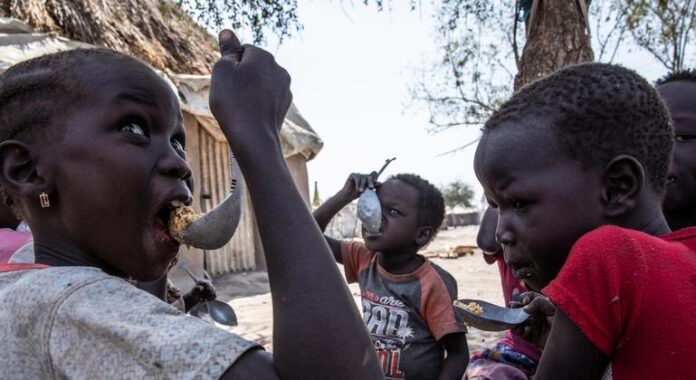
Amid the destruction of World War II, nations responded to the danger of hunger and malnutrition by establishing the Food and Agriculture Organization (FAO) on October 16, 1945. The UN agency celebrates this achievement each year as World Food Day, recognizing the work of all those committed to ensuring food for all. We’ll bring you live highlights from FAO throughout the day. UN News app users can follow the coverage here.
The severe risk of disease outbreak comes after a 6.3-magnitude earthquake hit a remote eastern area of Afghanistan on 31 August near the Pakistan border, destroying water, sanitation and hygiene infrastructure.
“The earthquake has flattened homes and taken too many lives, and now threatens to take even more through disease,” warned Dr. Tajudeen Oyewale, UNICEF’s representative in Afghanistan.
He said that child survivors of the earthquake are living in crowded displacement camps or makeshift shelters with no access to toilets or safe water.
“This is a perfect storm for a health catastrophe,” he added.
Acute watery diarrhoea is one of the three types of the debilitating disease, according to the World Health Organization (WHO). It can last several hours or days.
The disease is the third leading cause of death in children 1 to 59 months, and kills over 400,000 children under five every year.
WHO says that to a significant extent, clinical diarrhoea can be prevented through safe drinking water and adequate sanitation and hygiene – basic necessities that children in Afghanistan currently lack.
No access to safe water or soap
UNICEF reports that in Afghanistan, 132 water sources have been destroyed because of the earthquake, leaving families without access to safe water or handwashing facilities.
Four out of five communities are now practicing open defecation, since most latrines were shattered during the earthquake. Many survivors also lack access to essential hygiene items like soap, making conditions ripe for disease outbreak.
Acute watery diarrhoea is prevalent in the region and communities are at risk of other waterborne diseases as well. Health centres are also reporting an alarming increase in various kinds of skin rashes, dehydration, UNICEF says.
Emergency response underfunded
UNICEF provides WASH (water, sanitation and hygiene) services to over 60 countries, helping prevent infections and disease in homes, schools, healthcare facilities and public spaces.
The agency has installed temporary sanitation facilities in the quake affected areas, distributed hygiene kits and deployed temporary emergency water trucking while simultaneously repairing water supply systems.
Only half of UNICEF’s $21.6 million appeal for its emergency response is secured, however. The agency is calling for donors to urgently step up funding.
The World Food Programme is also facing a funding shortfall of $622 million over the next six months. The agency’s operation in Afghanistan is one of the six at risk, alongside those in Democratic Republic of the Congo (DRC), Haiti, Somalia, South Sudan, and Sudan. WFP assistance in the country now reaches less than 10 per cent of the millions of food insecure Afghans in need.
A girl washes her face at a camp for people displaced by the earthquake in Kunar province, Afghanistan.
EIB lends Lithuanian utility Vilniaus vandenys€50 million to upgrade water and wastewater networks in Vilnius region.
Smart meters and digital tools to improve services and reduce water losses.
EU-backed project aligned with European climate and environmental goals.
The European Investment Bank (EIB) is lending Lithuanian water utility Vilniaus vandenys €50 million to bolster infrastructure in the capital Vilnius. The company will use the EIB loan to upgrade water and wastewater operations by digitising, reinforcing and expanding them.
Planned works include an upgrade of the Viršuliškės water station, the expansion of infrastructure in the Gulbinai area and the reconstruction of the Šalčininkai water supply station and treatment facilities. The wastewater network will be enhanced through the construction of pressure pipelines from Baravyko Street to Sietyno Street and a balancing reservoir, improving services and environmental protection across the Vilnius region.
The project, which advances the urban-resilience goals of Vilniaus vandenys and of the European Union, is due to be completed by 2028.
“We continue to invest in reliable infrastructure that ensures a consistently high level of service both in the capital and in the regions while preparing for future challenges – from climate change to rising water demand,” said Vilniaus vandenysChief Executive Officer Saulius Savickas. “All these initiatives are being implemented while maintaining one of the lowest service tariffs in the country.” The EIB financing is backed by an InvestEU guarantee, which supports sustainable investment across the EU.
“Modern water infrastructure is essential for public health, environmental protection and climate resilience,” said EIB Vice-President Karl Nehammer. “This loan builds on the EIB’s longstanding partnership with Lithuania, where we continue to support strategic investments in clean water, sustainable transport and digital infrastructure. We are proud to back Vilniaus vandenys as it invests in smart technologies and renewable energy to modernise water and wastewater services – delivering tangible benefits to communities and helping Lithuania build a greener, more resilient future.”
The EIB loan aligns with key InvestEU policy objectives, advancing EU priorities and directing funds where they are most needed. The project also facilitates the implementation of EU water and environmental legislation.
The EIB loan, which has a maturity of 20 years, will form a significant part of Vilniaus vandenys’s financing mix, alongside its own funds, support from EU programmes.
“The planned investments require significant funding and will allow new neighbourhoods to connect, ensure reliable supply of high-quality water, improve wastewater management, and reduce environmental impact,” said Simonas Klimavičius, head of finance at Vilniaus vandenys. “Around half of the loan will be allocated to smart city solutions.”
Background information
About the EIB
The European Investment Bank (ElB) is the long-term lending institution of the European Union, owned by its Member States. We finance investments in eight core priorities that support EU policy objectives: climate action and the environment, digitalisation and technological innovation, security and defence, cohesion, agriculture and bioeconomy, social infrastructure, the capital markets union, and a stronger Europe in a more peaceful and prosperous world.
All projects financed by the EIB Group are aligned with the Paris Climate Agreement, as set out in our Climate Bank Roadmap. Almost 60% of the EIB Group’s annual financing supports projects that contribute directly to climate change mitigation, adaptation, and a healthier environment.
High-quality, up-to-date photos of our headquarters for media use are available here.
About Vilniaus vandenys
Vilniaus vandenys supplies drinking water and treats wastewater for over 600,000 residents in Vilnius and the Vilnius, Švenčionys, and Šalčininkai districts. The company’s shareholders are the municipalities of Vilnius City (87,05%), Vilnius District (5.10%), Švenčionys District (5.98%), and Šalčininkai District (1.87%). Every day, 99,000 cubic meters of drinking water are supplied – about a quarter of Lithuania’s total drinking water consumption – and 116,000 cubic meters of wastewater are treated, accounting for almost one-third of all wastewater treated in the country.
Over the past two years, Vilniaus vandenys has invested over €76 million in improving service quality, supply reliability, and environmental protection. The largest portion of these investments was allocated to the reconstruction of the Vilnius wastewater treatment plant and the smart water supply project.
Last week, the country’s International Crimes Tribunal (ICTY) filed formal charges in two cases related to alleged abuses within the Task Force for Interrogation Cell and the Joint Interrogation Cell, including accusations of crimes against humanity.
As part of this action, arrest warrants were issued against several former soldiers, including former directors general of the Directorate General of Forces Intelligence (DGFI), and former officials of the Rapid Action Battalion (RAB).
The Bangladesh military also announced it had arrested more than a dozen officers accused of serious crimes committed under the previous administration.
“This is the first time that formal charges have been brought for enforced disappearances in the country. This is an important moment for the victims and their families,» High Commissioner Türk said.
He urged the Bangladeshi authorities to ensure due process and fair trial guaranteesparticularly regarding detained officers. He also stressed the protection of victims and witnesses because “sensitive and significant cases must be guaranteed”.
Dealing with violations
Bangladesh’s ratification of Convention on Enforced Disappearances in August 2024, and the amendment of the International Crimes Tribunal Act, now officially recognize enforced disappearance as a crime under domestic law.
Nonetheless, Türk said ongoing cases – some dating back to the previous administration which was driven from power by massive youth-led protests last year – must also be addressed and those arbitrarily detained must be released.
She had been in power since January 2009, after ruling Bangladesh from 1996 to 2001.
The end of abuse
In his report, a OHCHR fact-finding investigation found credible evidence of torture, arbitrary detention and enforced disappearances which “could constitute crimes under international law”.
The central recommendation of this report – echoed again by High Commissioner Türk – was that Bangladesh ensure that those responsible for serious abuses, regardless of their rank, are brought to justice through fair and transparent procedures.
He also urged Bangladesh to end the use of the death penalty in all such proceedings, regardless of the charge, calling for “a global process of truth-telling, reparation, healing and justice» to start, so that the abuses of the past cannot be repeated.
Last week, the country’s International Crimes Tribunal (ICT) submitted formal charges in two cases connected to alleged abuses at the Task Force for Interrogation Cell and the Joint Interrogation Cell, including charges of crimes against humanity.
As part of the action, arrest warrants were issued for several former military officers, including ex-Directors-General of the Directorate General of Forces Intelligence (DGFI), and former officials of the Rapid Action Battalion (RAB).
The Bangladesh military also announced it had detained over a dozen officers accused of serious crimes committed under the previous administration.
“It marks the first time that formal charges have been brought for enforced disappearances in the country. It is a significant moment for victims and their families,” High Commissioner Türk said.
He urged the Bangladeshi authorities to ensure due process and fair trial guarantees, particularly regarding detained officers. He also emphasised the protection of victims and witnesses as “sensitive and significant cases must be ensured.”
Address violations
Bangladesh’s ratification of the Convention on Enforced Disappearances in August 2024, and amendment of the International Crimes Tribunal Act, now formally recognise enforced disappearance as a crime under domestic law.
Nevertheless, Mr. Türk said that pending cases – some dating back to the previous administration which was forced from power by massive youth-led protests last year – must also be addressed, and that those arbitrarily detained should be released.
She had been in power since January 2009, having earlier led Bangladesh from 1996 to 2001.
An end to abuses
In its report, an OHCHR fact-finding investigation found credible evidence of torture, arbitrary detention and enforced disappearances that “may amount to crimes under international law.”
That report’s central recommendation – echoed again by High Commissioner Türk – was for Bangladesh to ensure those responsible for grave abuses, regardless of rank, face justice through fair and transparent proceedings.
He also urged Bangladesh to halt the use of the death penalty in any of these proceedings, no matter the charge, calling for “a comprehensive process of truth-telling, reparation, healing and justice” to begin, so the abuses of the past cannot recur.
The serious outbreak risk comes after a 6.3 magnitude earthquake struck a remote region of eastern Afghanistan on August 31, near the Pakistan border, destroying water, sanitation and hygiene infrastructure.
“The earthquake razed homes and caused too many deaths, and now threatens to cause even more deaths from disease.“, warned Dr Tajudeen Oyewale, UNICEFAfghanistan’s representative in Afghanistan.
He said child survivors of the earthquake are living in overcrowded displacement camps or makeshift shelters, without access to toilets or clean water.
“It’s a perfect storm for a health disaster“, he added.
Acute watery diarrhea is one of three types of wasting illnesses, according to the World Health Organization (WHO). This may last several hours or days.
The disease is third major cause of deaths among children aged 1 to 59 months and kills more than 400,000 children under the age of five each year.
The WHO says that to a large extent, clinical diarrhea is preventable with clean water and adequate sanitation and hygiene – basic necessities currently lacking among Afghan children.
No access to drinking water or soap
UNICEF reports that in Afghanistan, 132 water sources were destroyed due to the earthquake, leaving families without access to clean water or hand-washing facilities.
Four out of five communities now practice open defecation, with most latrines destroyed in the earthquake. Many survivors also lack access to essential hygiene items like soap, creating conditions ripe for an outbreak.
Acute watery diarrhea is prevalent in the region and communities are also at risk of other waterborne diseases. Health centers are also reporting an alarming increase in various types of rashes and dehydration, according to UNICEF.
Underfunded emergency response
UNICEF provides WASH (water, sanitation and hygiene) services in more than 60 countries, helping to prevent infections and diseases in homes, schools, health facilities and public spaces.
The agency installed temporary sanitation facilities in earthquake-affected areas, distributed hygiene kits, and deployed temporary emergency water trucks while simultaneously repairing water supply systems.
However, only half of UNICEF’s $21.6 million appeal for its emergency response has been secured. Agency calls on donors to urgently increase funding.
The World Food Program also faces a funding gap of $622 million over the next six months. The agency’s operation in Afghanistan is one of six in dangeralongside those from the Democratic Republic of Congo (DRC), Haiti, Somalia, South Sudan and Sudan. PAM aid in the country now reaches less than 10 percent of millions of food-insecure Afghans in need.
A young girl washes her face at a camp for people displaced by the earthquake in Kunar province, Afghanistan.
In presenting his annual report to the Third Committee of the General Assembly, Volker Türk highlighted that surveys consistently show that people worldwide overwhelmingly support the values that underpin human rights, namely dignity, equality and justice.
He urged the international community to “build on this energy, at a time when disquiet, disenfranchisement, disillusionment, and disarray are spreading across the world.”
Mr. Türk noted that “several Governments are openly flouting the standards that bind us, and the universal values that define us”, and this is evident by the multiple conflicts occurring across the world.
Warring parties in Sudan “continue to show an utter disregard for international human rights and humanitarian law”, he said, while the situation in the besieged city of El Fasher in Darfur “is devastating and extremely alarming”.
“All countries need to respect the Security Council’s arms embargo. Protecting civilians, full humanitarian access, an end to the conflict and a return to civilian rule are the top priorities,” he said.
‘Deadlier’ phase in Ukraine conflict
Meanwhile, “the war in Ukraine has entered an even deadlier stage for civilians,” as schools, hospitals, and shelters face relentless bombardment.
The people of both Ukraine and Russia “urgently need peace, in line with the UN Charter, international law, and General Assembly resolutions,” he said.
He addressed the situation in Myanmar, where “civilians continue to suffer the cruellest toll.” The people “are calling for a viable future in which all communities can live in peace, free from discrimination.”
He also pointed to recent encouraging efforts towards peace in the Democratic Republic of the Congo which “need to be matched by a changing reality on the ground”, including a genuine ceasefire.
Gaza ceasefire and aid
Turning to Gaza, Mr. Türk welcomed the release of all hostages and many arbitrarily detained Palestinians as part of the first phase of the ceasefire.
“This needs to lead to a permanent ceasefire, with humanitarian aid flowing in at scale,” he said.
“Recovery efforts need to pursue accountability for the gross violations and abuses of international human rights law and serious violations of international humanitarian law.”
He stressed that “the goal must remain peace and security for Israelis and Palestinians, through the realization of the Palestinian people’s right to self-determination.”
Support human rights
The High Commissioner also reported on the work of his Office, which included support for efforts towards transitional justice in Syria and human rights monitoring training for civil society in Haiti.
He highlighted the “precarious financial situation” it faces as OHCHR is expecting a budget shortfall of $103 million this year which “represents a gap of almost 20 percent of the bare minimum needed to effectively implement our mandate.”
He warned that “without adequate funding, grave violations of human rights and international humanitarian law may stay hidden from the world,” effectively giving perpetrators “a free pass” and making the world less safe.
“Human rights – and the UN human rights office – need full-scale financial, political and strategic support,” he said.
In presenting his annual report to the Third Committee of the General Assembly, Volker Türk highlighted that surveys consistently show that people worldwide overwhelmingly support the values that underpin human rights, namely dignity, equality and justice.
He urged the international community to “build on this energy, at a time when disquiet, disenfranchisement, disillusionment, and disarray are spreading across the world.”
Mr. Türk noted that “several Governments are openly flouting the standards that bind us, and the universal values that define us”, and this is evident by the multiple conflicts occurring across the world.
Warring parties in Sudan “continue to show an utter disregard for international human rights and humanitarian law”, he said, while the situation in the besieged city of El Fasher in Darfur “is devastating and extremely alarming”.
“All countries need to respect the Security Council’s arms embargo. Protecting civilians, full humanitarian access, an end to the conflict and a return to civilian rule are the top priorities,” he said.
‘Deadlier’ phase in Ukraine conflict
Meanwhile, “the war in Ukraine has entered an even deadlier stage for civilians,” as schools, hospitals, and shelters face relentless bombardment.
The people of both Ukraine and Russia “urgently need peace, in line with the UN Charter, international law, and General Assembly resolutions,” he said.
He addressed the situation in Myanmar, where “civilians continue to suffer the cruellest toll.” The people “are calling for a viable future in which all communities can live in peace, free from discrimination.”
He also pointed to recent encouraging efforts towards peace in the Democratic Republic of the Congo which “need to be matched by a changing reality on the ground”, including a genuine ceasefire.
Gaza ceasefire and aid
Turning to Gaza, Mr. Türk welcomed the release of all hostages and many arbitrarily detained Palestinians as part of the first phase of the ceasefire.
“This needs to lead to a permanent ceasefire, with humanitarian aid flowing in at scale,” he said.
“Recovery efforts need to pursue accountability for the gross violations and abuses of international human rights law and serious violations of international humanitarian law.”
He stressed that “the goal must remain peace and security for Israelis and Palestinians, through the realization of the Palestinian people’s right to self-determination.”
Support human rights
The High Commissioner also reported on the work of his Office, which included support for efforts towards transitional justice in Syria and human rights monitoring training for civil society in Haiti.
He highlighted the “precarious financial situation” it faces as OHCHR is expecting a budget shortfall of $103 million this year which “represents a gap of almost 20 percent of the bare minimum needed to effectively implement our mandate.”
He warned that “without adequate funding, grave violations of human rights and international humanitarian law may stay hidden from the world,” effectively giving perpetrators “a free pass” and making the world less safe.
“Human rights – and the UN human rights office – need full-scale financial, political and strategic support,” he said.