
In an international study led by UCLA, researchers have shown that giredestrant, when given as an additional treatment
Novel breast cancer therapy reduces risk of recurrence for most common subtype of breast cancer
In Gaza, 800,000 people now live in dangerous locations prone to flooding
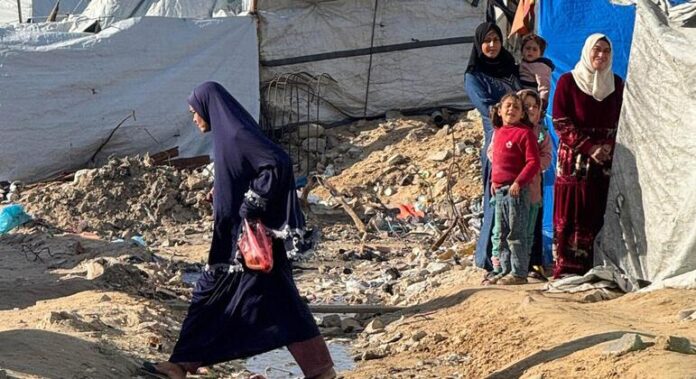
In her family’s shelter, the ground is soaked and her children cannot sleep.
“Our situation is extremely difficult, and we want someone to help us, at least by providing us with a tent that shelters us and is a proper tent,” Amina told the UN aid coordination office (OCHA) earlier this week.
Millions of others like Amina, who are threatened by rain, flooding and ongoing bombing need live-saving aid.
A recent Israeli ban of dozens of humanitarian groups, however, makes that assistance out of reach. A move which a group of independent UN human rights experts warned on Thursday is a violation of international law.
“This strategy will create conditions that force Palestinians into chronic deprivation, threatening their very survival as a group and further violating the Genocide Convention,” the experts said. “It must be stopped.”
Green light for US Gaza peace plan
Later on Thursday, in a statement released by his Spokesperson, Secretary-General António Guterres welcomed the launch of Phase Two of US President Donald Trump’s 20-point plan, announced Wednesday.
The plan includes the establishment of a transitional technocratic Palestinian administration in Gaza and the National Committee for the Administration of Gaza.
“Any initiative that contributes to alleviating the suffering of civilians, supporting recovery and reconstruction and advancing a credible political horizon is a positive development,” the statement read.
Mr. Guterres highlighted that the UN will continue to support all efforts to end the occupation and the conflict leading to the achievement of the two-State solution, in line with previous UN resolutions and international law.
‘Uninhabitable’ shelters
OCHA said that 800,000 people — nearly 40 per cent of the population — now live in sites prone to flooding, where winter storms and heavy rain have made shelters uninhabitable.
As of Tuesday, UN partners reported that hundreds of tents and makeshift shelters were blown away or severely damaged, leaving over 3,000 people exposed to severe weather, while more than 60 inhabited buildings in Gaza City could be at risk of collapse.
Prohibited waters
OCHA noted that the Israeli military is still deployed in more than half of the Gaza Strip, beyond the “Yellow Line”, where access is either restricted or banned to aid facilities, public infrastructure and agricultural land.
Detonations of residential buildings have continued, along with bulldozer activity, OCHA said, including near or east of the “Yellow Line”.
Additionally, access to the sea for Palestinians remains prohibited and there continue to be reports of Palestinian fishermen being killed or detained in the waters just off Gaza.
Millions worth of aid blocked
Announced as a national security measure on 30 December 2025, Israel’s new regulation bans 37 international non-governmental organizations (NGOs) from operating in Gaza and the West Bank.
As of 31 December, nearly $50 million in life-saving aid remained blocked amid repeated ceasefire violations, according to the group of Human Rights Council-appointed independent experts. They are not UN staff and receive no salary for their work.
In early December, UN agencies and NGOs were only able to deliver 14,600 tents for 85,000 people, leaving 1.3 million Palestinians without adequate winter shelter.
Several people, including six children have already died from hypothermia, drowning or cold-related injuries.
“There are no words left to describe what Gaza has become,” the experts said.
East Jerusalem: Forced shutdown of UN clinic signals escalating disregard for international law
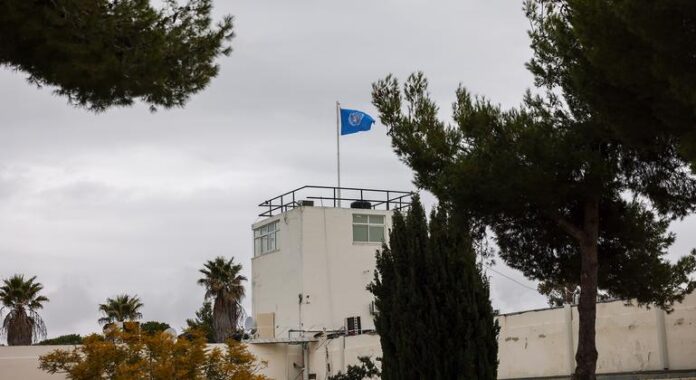
Israeli forces stormed the UNRWA-operated health centre on Monday and ordered it to close for 30 days. They also demanded the removal of UN signage.
Furthermore, water and electricity supply to multiple UNRWA facilities are scheduled to be cut off in the coming weeks, affecting schools, health centres and other critical buildings.
Legislative campaign
The development marks “a new step in a pattern of deliberate disregard for international law and the United Nations,” UNRWA Commissioner-General Philippe Lazzarini tweeted.
“This is a direct result of legislation passed by the Israeli parliament in December, which stepped up existing anti-UNRWA laws adopted in 2024,” he added.
The UNRWA Jerusalem Health Centre serves hundreds of Palestine refugee patients every day, agency spokesperson Jonathan Fowler told UN News.
“For most of them, it’s their only possibility of having access to primary healthcare,” he said. “So, there’s a right to health involved in this.”
He stressed that UNRWA facilities are United Nations premises, which are protected under international law, and this applies across the globe.
‘An anti-humanitarian gesture’
Mr. Fowler described the impending water and power shutdown as “kind of an anti-humanitarian gesture in many ways,” saying “it’s particularly shocking.”
He recalled that in October, the International Court of Justice (ICJ) “restated in crystal clear fashion that the State of Israel is obliged under international law to facilitate UNRWA’s operations, not hinder or prevent them. And yet this continues.”
He also warned of the potential wider consequences.
“These are disgraceful moves. And it’s very, very important that there be global awareness about what’s going on, because this is much more than directly in East Jerusalem,” he said.
“It goes beyond even UNRWA. This is something which potentially has global implications because of this pattern of disregard for international law.”
The monster hiding in plain sight: JWST reveals cosmic shapeshifter in the early universe
In a glimpse of the early universe, astronomers have observed a galaxy as it appeared just 800 million Source link
The monster hiding in plain sight: JWST reveals cosmic shapeshifter in the early universe
In a glimpse of the early universe, astronomers have observed a galaxy as it appeared just 800 million
Yemen’s fragile calm unravels as hunger and aid restrictions deepen crisis
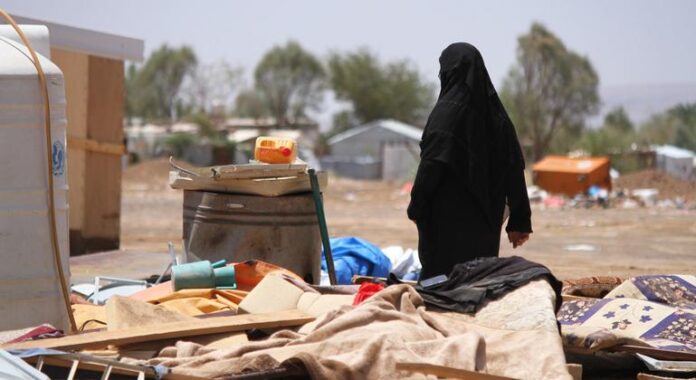
Briefing ambassadors, UN Special Envoy for Yemen Hans Grundberg said recent political and security developments – particularly in the south – underscored how quickly stability could unravel without a credible, inclusive political process.
“Absent a comprehensive approach that addresses Yemen’s many challenges in an integrated manner, rather than in isolation, the risk of recurrent and destabilising cycles will remain,” Mr. Grundberg said.
Tensions in the south
While military de-escalation has been achieved in recent days, he cautioned that the security situation remains fragile, especially following rival deployments in southern governorates.
In December, forces affiliated with the separatist Southern Transitional Council sought to expand their presence in Hadramout and Al Mahra, while government-aligned forces, backed by Saudi Arabia, moved in early January to reassert control over key infrastructure.
Mr. Grundberg said the future of southern Yemen could not be determined “by any single actor or through force,” urging Yemeni leaders to pursue dialogue.
He welcomed President Rashad al-Alimi’s proposal to convene talks with a broad range of leaders in the south, calling it a potential step toward rebuilding a Yemen-wide political process under UN auspices.
Years of conflict have left thousands across Yemen dependent on humanitarian assistance. Pictured here, a health volunteer walks in an IDP camp to check on malnourished children.
Instability preys on economy
Political uncertainty is being felt most sharply in Yemen’s economy, he added, with rising prices, unpaid salaries and faltering services eroding household resilience.
“Even short-lived political and security instability can trigger currency pressure, widen fiscal gaps, and stall reform efforts,” Mr. Grundberg warned.
The economic strain is being compounded by weak institutions and irregular salary payments, particularly for public sector workers.
Mr. Grundberg urged Yemeni authorities to shield economic institutions -including the Central Bank – from political disputes, warning that erosion of confidence could further destabilise the country.
Severe humanitarian consequences
Ramesh Rajasingham, Director of the Humanitarian Sector for the UN aid coordination office (OCHA), said Yemen’s crisis is worsening as needs rise, and humanitarian access has become more restricted amid funding shortfalls.
More than 18 million Yemenis – about half the population – will face acute food insecurity next month, while tens of thousands could fall into “catastrophic hunger,” facing famine-like conditions, he warned.
The health system is also collapsing. Over 450 facilities have already closed and thousands more are at risk of losing funding. Vaccination programmes are also under threat and only two thirds of Yemen’s children are fully immunised, largely due to lack of access in the north.
“As a result, millions of Yemeni children are vulnerable to deadly yet vaccine-preventable diseases, such as measles, diphtheria, cholera and polio,” Mr. Rajasingham said.
Aid efforts restricted
Humanitarian operations are further constrained by the continued detention of 73 UN staff by the Houthi de facto authorities, Mr. Rajasingham said, calling for their immediate release. The detentions have severely restricted aid delivery in areas home to around 70 per cent of humanitarian needs nationwide.
Despite the challenges, aid continues where access allows. UN partners reached 3.4 million people with food assistance late last year and delivered emergency support during floods and disease outbreaks. But gains are fragile.
“Humanitarian action saves lives,” Mr. Rajasingham said, “but when access is obstructed and funding falls away, those gains are quickly reversed.”
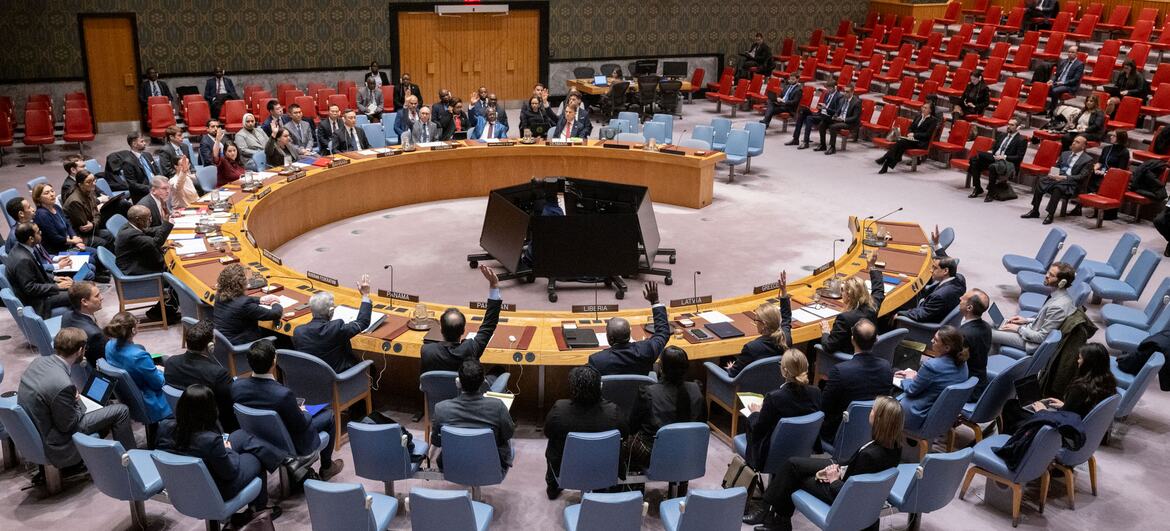
A wide view of Security Council as members vote on a draft resolution concerning the Red Sea reporting mandate established pursuant to resolution 2722 (2024).
Attacks in the Red Sea
Earlier on Wednesday, the Security Council also voted to extend for six months, the monthly reporting requirement on attacks by the Houthi armed group – which controls much of Yemen – against merchant and commercial vessels in the Red Sea.
The resolution was adopted with 13 votes in favour, while Russia and China abstained.
The mandate was established in January 2024 amid a surge in Houthi attacks on international shipping linked to the conflict in Gaza.
It tasked the UN Secretary-General to provide regular updates on maritime security incidents, their humanitarian and economic impact, and implications for regional stability.
Valencia Scientology Mission Highlights Volunteer Humanitarian Work in La Llum

New Year’s 2026 review cites community work in La Llum district and nearly 200 local volunteers supporting education and emergency response
KINGNEWSWIRE / PRESS RELEASE // VALENCIA, Spain—15 January 2026—A community outreach program led by the Church of Scientology Mission of Valencia was highlighted in the New Year’s Celebration 2026 annual review, which presented local initiatives combining introductory religious services with volunteer-run prevention and civic-education campaigns in the city’s west-side La Llum (La Luz) neighborhood.
The New Year’s review described Valencia residents as facing heightened concern about crime and public security and pointed to the local Mission as a venue for community support and volunteer action. Public safety statistics for Spain are tracked quarterly by the Ministry of the Interior’s crime statistics portal and are also contextualized by Valencia’s municipal statistics office through its city data publications.
As explained by the review, the Valencia Mission delivers Scientology services “from introductory levels to the State of Clear.” The concept of Clear is presented by the Church of Scientology as a milestone on its spiritual counselling pathway, while the Mission’s community work is carried out by volunteers advancing three Church-sponsored social programs: United for Human Rights, The Way to Happiness, and Drug-Free World.
Human rights education anchored in the Universal Declaration
In Valencia, volunteers use human-rights education materials that reference the Universal Declaration of Human Rights, adopted by the United Nations in 1948. The approach aligns with the core objective described by Youth for Human Rights International: improving awareness of the rights enumerated in the Declaration and encouraging respect, tolerance, and peaceful coexistence in daily life. Local volunteers say their outreach targets both residents and visitors, reflecting Valencia’s role as a major cultural and tourism center in Spain.
“The Way to Happiness” and community conduct
Volunteer teams also distribute and discuss The Way to Happiness, a secular moral code written by Scientology founder L. Ron Hubbard in 1980, structured around 21 precepts focused on personal integrity, responsibility, and respect for others. Organizers describe the booklet as a practical tool used in neighborhood settings—particularly where communities are seeking positive, non-confrontational ways to strengthen social cohesion.
Drug prevention in public spaces
Drug education was cited as a continuing focus, building on earlier local outreach activities. In a Valencia example previously reported in the Church’s newsroom, Mission volunteers ran the Truth About Drugs initiative in the Port of Valencia, presenting prevention materials intended to support informed decision-making, a campaign whose main materials are sponsored by the International Association of Scientology and supported by the UN ECOSOC-recognized Fundacion para la Mejora de la Vida, la Cultura y la Sociedad. The campaign’s broader educational framework is published by the Foundation for a Drug-Free World, which states it is sponsored by the Church of Scientology and Scientologists and distributes drug-awareness resources internationally.
Flood response and volunteer mobilisation
The New Year’s review also underscored emergency response efforts by Scientology Volunteer Ministers, describing their participation as “decisive” during Spain’s deadliest floods of the century. In late October and early November 2024, severe flooding in eastern Spain caused a death toll exceeding 200, prompting large-scale rescue, recovery, and humanitarian operations and being described by international media as among the most lethal natural disasters in Spain in this century (Associated Press report; Reuters video report; The Guardian feature). The Volunteer Minister response contributed to stabilizing community support systems in Valencia, and local authorities recognized the Mission’s contribution to strengthening the city’s social foundation.
Ivan Arjona, the Church of Scientology’s representative to the European Union, the OSCE, the Council of Europe and the United Nations, said the Valencia account reflects a wider European civic principle of neighbourhood responsibility.
“Across Europe, communities are strongest when citizens translate shared values—human dignity, solidarity, and responsibility—into practical action,” said Ivan Arjona. “What stands out in Valencia is the combination of education, prevention, and volunteer service operating in a local setting and doing so in ways that support the common good, and the Valencian Scientologists always set a good example of that.”
Scientology and its social programmes
Scientology is a contemporary religion founded by Mr. L. Ron Hubbard and currently steadily led by Mr. David Miscavige. Alongside its ecclesiastical services, the Church sponsors a number of social education programs—among them human rights awareness, drug prevention, and community ethics materials—often delivered locally by volunteers. The Volunteer Minister program is presented by the Church as a form of trained community response, providing practical assistance and what is described as “spiritual first aid” during crises (program overview).
In Valencia, the local model relies on sustained volunteer capacity—described in the New Year’s review as “nearly 200 volunteers” plus the 300 during the DANA response—and on regular outreach in public areas and community settings, with an emphasis on prevention education and civic resilience.
The Church of Scientology, its churches, missions, groups, and members are present across the European continent, supporting initiatives in education, prevention, and community betterment. The Church’s legal status and recognition continue to grow, with court and administrative decisions in a number of jurisdictions recognizing Scientology as a religion, including by the European Court of Human Rights; background documentation on recognitions is compiled in the Church’s reference materials on religious recognitions.
Scientology Valencia Mission Highlights Volunteer Humanitarian Work in La Llum

The 2026 review cites community work in the La Llum neighborhood and nearly 200 local volunteers supporting education and emergency response
KINGNEWSWIRE / PRESS RELEASE // VALENCIA, Spain — January 15, 2026 — A community action program led by the Mission of the Church of Scientology of Valencia was highlighted in the annual report of the New Year celebration 2026which presented local initiatives combining religious initiation services and prevention and civic education campaigns led by volunteers in the neighborhood La Llum (La Luz)located to the west of the city.
The New Year’s report describes Valencia residents as facing growing concern about crime and public safety, and presents the Local Mission as a place for community support and volunteer action. Public security statistics in Spain are monitored quarterly by the portal of the Ministry of the Interior dedicated to crime statisticsand are also contextualized by the Municipal Statistics Office of Valencia in its city data publications.
As the review explains, the Valencia Mission provides Scientology services “from introductory levels through Clear.” The concept of “ clear ” is touted by the Church of Scientology as an important step in its spiritual counseling journey, while the Mission’s community work is carried out by volunteers who advance three Church-sponsored social programs: ” United for human rights “, ” The path to happiness ” And ” A world without drugs “.
Human rights education anchored in the Universal Declaration
In Valencia, volunteers use educational materials on human rights that refer to Universal Declaration of Human Rightsadopted by the United Nations in 1948. This approach aligns with the main objective described by Youth for Human Rights International: to improve knowledge of the human rights set out in the Declaration and to encourage respect, tolerance and peaceful coexistence in daily life. Local volunteers say their action is aimed at both residents and visitors, reflecting Valencia’s role as a major cultural and tourist center in Spain.
“The path to happiness” and community leadership
Volunteer teams also distribute and discuss the book The path to happinessa secular moral code written by the founder of Scientology, L. Ron Hubbardin 1980, structured around 21 precepts focused on personal integrity, responsibility and respect for others. Organizers describe the booklet as a practical tool used in neighborhoods, particularly when communities are looking for positive, non-confrontational ways to build social cohesion.
Prevention of drug abuse in public spaces
Drug education was cited as a priority area, building on previous local awareness activities. In an example in Valencia previously reported in the Church newsroom, Mission volunteers led the initiative “ The truth about drugs” in the port of Valenciafeaturing prevention materials intended to support informed decision-making, a campaign whose primary materials are sponsored by the International Association of Scientology and supported by the Fundación para la Mejora de la Vida, la Cultura y la Sociedadrecognized by the United Nations ECOSOC. The broader educational framework for the campaign is published by the Foundation for a Drug-Free Worldwhich claims to be sponsored by the Church of Scientology and Scientologists and distributes drug awareness resources internationally.
Flood response and volunteer mobilization
The new year’s review also highlighted the emergency response efforts of volunteer ministers of Scientology, describing their participation as “decisive” during the deadliest floods of the century in Spain.
In late October and early November 2024, severe flooding in eastern Spain left more than 200 people dead, leading to large-scale rescue, relief and humanitarian aid operations. International media described them as one of the deadliest natural disasters in Spain since the turn of the century (Associated Press report ; Reuters video report ; Guardian article). The intervention of the Volunteer Ministers helped stabilize community support systems in Valencia, and local authorities recognized the Mission’s contribution to strengthening the social foundations of the city.
Ivan Arjona, representative of the Church of Scientology to the European Union, OSCE, Council of Europe and United Nations, said Valencia’s narrative reflects a broader European civic principle of neighborly responsibility.
“Across Europe, communities are stronger when citizens translate their shared values – human dignity, solidarity and responsibility – into concrete actions,” said Ivan Arjona. “What stands out in Valencia is the combination of education, prevention and volunteer service that operates in a local setting and does so in a way that supports the common good, and the Valencian Scientologists are always a good example of this. »
Scientology and its social programs
Scientology is a contemporary religion founded by ML Ron Hubbard and currently led by Mr. David Miscavige. Along with its ecclesiastical services, the Church sponsors a number of social education programs, including human rights awareness, drug prevention, and community ethics materials, often delivered locally by volunteers. The Volunteer Ministers program is touted by the Church as a form of skilled community intervention, providing practical help and what is described as “spiritual first aid” in times of crisis (overview of program).
In Valencia, the local model relies on sustained volunteer capacity – described in the new year’s report as “nearly 200 volunteers” plus the 300 during the DANA intervention – and on regular action in public places and community settings, with an emphasis on prevention education and civic resilience.
The Church of Scientology, its churches, missions, groups and members have a presence throughout the European continent, supporting initiatives in the areas of education, prevention and community improvement. The legal status and recognition of the Church continues to grow, with judicial and administrative rulings in several jurisdictions recognizing Scientology as a religion, including by the European Court of Human Rights; reference material on acknowledgments is compiled in the Church reference documents on religious recognitions.
Originally published at Almouwatin.com
World News in Brief: Escalating fighting in Sudan, displacement in Syria’s Aleppo, $1.5 billion appeal for South Sudan
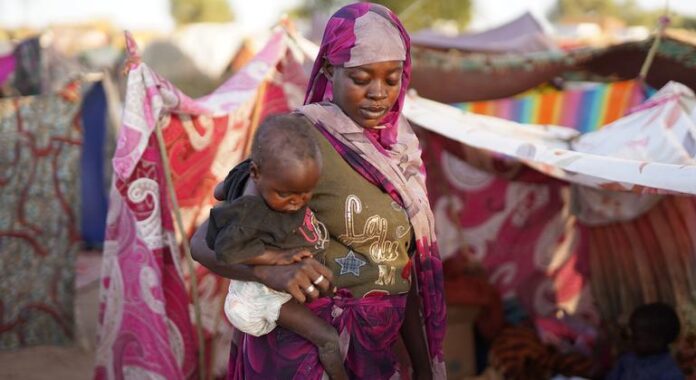
This comes a day after at least 19 civilians were killed during a ground assault in the Jarjira area of North Darfur state, according to local reports.
Another 10 civilians also were reportedly killed and nine injured in a drone attack that same day in Sinja, capital of Sennar state.
The Sudanese Armed Forces (SAF) and military rivals the Rapid Support Forces (RSF) have been at war since April 2023, and people continue to flee their homes due to the violence.
The International Organization for Migration estimated that on Friday, more than 8,000 people were displaced from villages in the locality of Kernoi, North Darfur state, with some fleeing within the state and others crossing into Chad.
Since Sunday, 125 people were displaced from Kadugli, capital of South Kordofan state, while nearly 300 people fled Dilling due to heightened insecurity.
Nutrition emergency in North Darfur state
At the same time, a deepening nutrition emergency is unfolding in North Darfur state. UN child rights agency UNICEF and partners conducted a survey last month in three localities.
It showed acute malnutrition levels far exceeding the 15 per cent emergency threshold set by the World Health Organization (WHO), with one location, Um Baru, having the highest global acute malnutrition rate of 53 per cent.
OCHA reiterated its call on all parties to protect civilians and civilian infrastructure, respect international humanitarian law, and enable humanitarian access.
Donors are being urged to scale up funding to deliver life-saving assistance.
Syria: Thousands still displaced in Aleppo following recent clashes
In other humanitarian news:
Nearly 120,000 people remain displaced following recent hostilities in the Syrian city of Aleppo, while roughly 29,000 have returned to their homes.
Deadly clashes resumed last week between troops from the transitional government and the mainly Kurdish Syrian Democratic Forces (SDF) following a brief pause after the ceasefire announced in late December 2025.
Access to the neighbourhoods of Ashrafiyeh and Ash-Sheik Maqsoud is gradually improving but is limited by the continued operations to clear explosive remnants, OCHA said.
Public services, including the restoration of the water supply to approximately three million people following the reactivation of the Babiri water station, are gradually resuming.
Schools still shut
However, schools remain closed for an additional 15 days, and flights to and from Aleppo continue to be suspended.
Humanitarians on the ground continue to provide shelter, health, nutrition, food and other aid while closely monitoring population movements.
OCHA and partners also remain on standby to adjust and scale up response as required, amid ongoing access constraints and other challenges.
$1.5 billion humanitarian appeal for South Sudan
Humanitarians are seeking $1.5 billion to support 4.3 million people in South Sudan this year.
The UN and partners launched the appeal, together with the Government, in the capital Juba on Tuesday.
The priority is to raise $1 billion fast, to reach 4 million people.
South Sudan is one of the most complex humanitarian crises in the world as conflict, climate shocks, disease outbreaks, deepening economic challenges – and the spillover from the war in neighbouring Sudan – continue to drive needs.
It is estimated that 10 million people, roughly two-thirds of the population, will need humanitarian aid in 2026, with over 600,000 refugees among them.
More than 7.5 million people are projected to face food insecurity during the lean season from April to July.
In Haiti’s storm-hit south, food vouchers restore choice and dignity for families
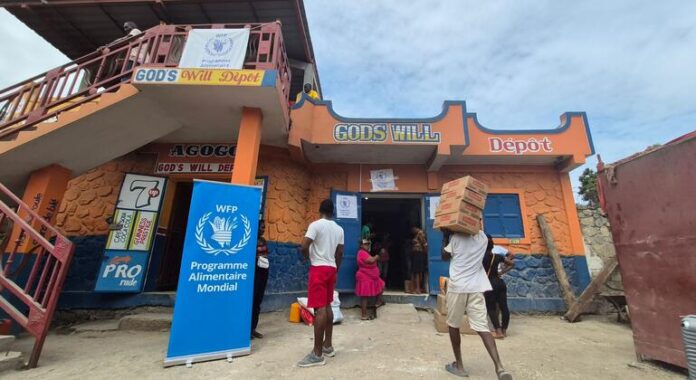
Ketia and her husband are both teachers. Before Hurricane Melissa swept through the Caribbean this past October, they were able to support their three children. However, when, the storm struck, their coastal community of Petit Goâve was among the most affected.
“I lost everything I owned: my furniture, my car, everything I had in my home,” lamented Ketia.
Ketia and her family are among approximately 225,000 people receiving assistance from the UN World Food Programme (WFP) in the wake of the storm. She is receiving assistance from a voucher system which allows families to purchase goods from selected retailers – a programme which supports those affected by the storm while also helping stimulate the local economy.
“The shop is using an electronic system which records the transactions which are happening, and WFP pays the retailer,” explained Channon Hachandi, Head of Supply Chain for WFP Haiti. “It’s a good method to support affected families, because instead of going to receive assistance at a distribution, the recipient is acting like a normal shopper, going to the market.”
Even before Hurricane Melissa, more than half of the residents in the most affected regions were already facing acute food insecurity, an indication of the acute humanitarian crisis that Haiti has been facing for many years.
It is a good method to support affected families – instead of receiving assistance at a distribution, they are like a normal shopper at a market
– Channon Hachandi, WFP
The storm killed more than 40 Haitians, and many others lost their homes, businesses and belongings. In a region highly dependent on small-scale agriculture, there was widespread damage to farmland and a near total loss of harvests.
WFP provided assistance before, during and after the hurricane. Together with the government, the agency sent 3.5 million early warning text messages via cellphones, and provided cash payments to people to help them prepare and mitigate the effect of the hurricane.
During the storm itself families who relocated in temporary shelters were provided with rations. Immediately after, as families assessed the devastation, food rations for 15 days were distributed.
To help the community rebound, the response has evolved, through provision of cash and vouchers thus giving families what WFP described as “the dignity of choice.”
Right now, approximately 10 per cent of Haitians receiving assistance after Hurricane Melissa are benefitting from the voucher programme- an approach WFP aims to expand.
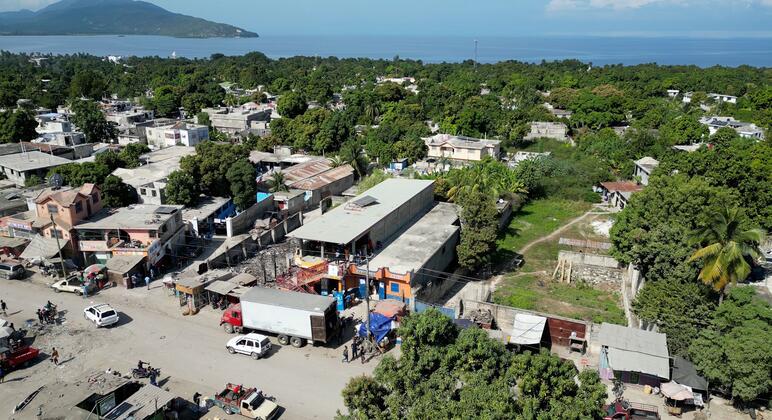
Wilfred Nkwambi, Head of Programmes at WFP in Haiti, emphasized that vouchers are more than simply a means of feeding people — they are a breath of fresh air for the local economy.
“In this shop alone, the owner employs eight additional people for these distributions. In this part of Petit Goâve, there are five other shops, employing a total of 40 people, mostly women and young people. Not only is it good for the recipients, but also for the city’s merchants and local producers,” explained Mr. Nkwambi.
At the same time, WFP employs day labourers for logistics, generating additional income for local families. This approach benefits everyone, transforming aid into an engine for economic recovery.
Placing dignity and choice at the heart of intervention demonstrates humanitarian assistance can be synonymous with resilience for the Haitian people, according to WFP.
“Thanks to the food voucher distribution, we won’t go hungry in the coming weeks, and we have the chance to start rebuilding our lives,” said Ketia, as she loaded her groceries onto a motorcycle taxi and headed back to her family.
