Tuesday, September 22, 2026
Home Blog Page 195

Your EU – Your projects in Hungary: speeding up sustainable transport

0
Your EU – Your projects in Hungary: speeding up sustainable transport

Sustainable transport is central to Europe’s efforts to cut emissions, reduce congestion and ensure reliable connections for people and businesses. The EU supports infrastructure upgrades, innovation and cross-border cooperation so that mobility becomes safer, cleaner and more inclusive. 

Hungary’s central location makes it a key transport hub, but bottlenecks and capacity constraints, particularly around the capital, Budapest, present an ongoing challenge. Through major investments in modern infrastructure and innovative mobility solutions, including projects managed by CINEA, the EU is helping Hungary move towards a more sustainable transport future. 

Below we explore three EU-supported initiatives that illustrate how ambition is being turned into reality. 

Kelenföld – Százhalombatta – Pusztaszabolcs railway upgrade: removing bottlenecks 

With almost €370 million from the EU’s Connecting Europe Facility (CEF Transport), nearly 50 km of double-track railway on the Kelenföld – Százhalombatta – Pusztaszabolcs section has been modernised. The works included full track reconstruction and the deployment of trackside ERTMS (European Rail Traffic Management System). 

As part of the wider Budapest–Kelenföld–Croatian border corridor upgrade, this project removed a major bottleneck along the Mediterranean Core Network Corridor – an EU priority route linking Spain to Hungary and a vital east-west route for freight and passenger traffic. 

This has resulted in increased capacity and supported a shift from road to rail, while contributing to regional and national economic development. The modernised line improves safety, efficiency, reliability and quality of rail services.  

UPPER: strengthening cooperation to modernise public transport 

Public transport is essential for sustainable urban mobility. Backed by €20 million from the Horizon Europe research programme, the UPPER project helps cities and regions make public transport more attractive and user-friendly. Budapest’s public transport authority (BKK) is one of the partners.

Within UPPER, Budapest is enhancing its BudapestGO journey planner with predictive travel planning in direct response to customer requests. This will also generate data to inform the future design of integrated multimodal mobility services. To improve reliability, the city is rethinking public transport prioritisation, including enhanced bus and tram priority lanes and updated traffic-light programmes.

“UPPER is helping cities and regions learn from one another and adopt solutions that can be scaled across Europe. Measures now being tested by BKK can make public transport an even more competitive and attractive option, not only in Budapest but across Europe,” explains Mircea Steriu, UITP, UPPER Coordinator.

STARGATE: greening airport operations in Budapest

Aviation also plays a key role in Europe’s mobility system, and airports are under increasing pressure to reduce emissions and boost operational efficiency. Budapest International Airport participates in the EU-funded STARGATE project – led by Brussels Airport – which tests practical solutions for cleaner and smarter airport operations. The project’s results are shared widely so other airports can benefit from the same approaches.

In Budapest, one of the activities underway is the development of an airport-specific navigation app. It will provide precise route planning for service vehicles and improve situational awareness on aircraft movement areas. Covering the airport’s complex 1,500-hectare layout, the tool will enhance safety for up to 1,000 users and is set to launch in 2026.

“As a ‘fellow airport’, we are drawing inspiration from the digital tools and innovations being tested as part of the STARGATE project. The solutions will allow Budapest Airport to become more competitive and sustainable, supporting our decarbonisation goals,” said Sarolta Katona, Head of Sustainability, Budapest Airport. 

Cleaner, more resilient and better connected 

Together, these projects – from major rail upgrades and smarter public transport to greener, digitally enhanced airport operations – show how EU support is helping Hungary build a transport system that is cleaner, more resilient and better connected for everyone.

Your EU – Your projects: where EU support makes a difference

These examples show how EU programmes managed by CINEA translate European ambitions into concrete results and impact. By combining funding with expert advice and cross-border cooperation, the EU helps innovative projects scale up, deliver benefits for citizens and businesses, and support a more sustainable, resilient Europe. Discover more stories in other countries.

More information about the projects

Source link

Info session: AI Continent (DIGITAL-2026-EDIH-AC-09) – Materials available

0
Info session: AI Continent (DIGITAL-2026-EDIH-AC-09) – Materials available

On 16 December 2025, HaDEA organised an info session on the call AI Continent (DIGITAL-2026-EDIH-AC-09), funded under the Digital Europe Programme.

The session focused on call topics and the application process, and was followed by Q&A sessions.

All presentations and the recording from the session are now available below for your reference.

Presentations:

Submitting a successful proposal via Funding & Tenders Portal

default file icon Info session: AI Continent (DIGITAL-2026-EDIH-AC-09) - Materials available

Digital Transformation Accelerator

default file icon Info session: AI Continent (DIGITAL-2026-EDIH-AC-09) - Materials available

Legal validation Financial capacity assessment

default file icon Info session: AI Continent (DIGITAL-2026-EDIH-AC-09) - Materials available

Strategic Technologies for Europe Platform

default file icon Info session: AI Continent (DIGITAL-2026-EDIH-AC-09) - Materials available

Recording:


Source link

2024 EU4Health Work Programme: Three newly awarded grants on European Union Reference Laboratories (EURLs) on human pathogens

0
2024 EU4Health Work Programme: Three newly awarded grants on European Union Reference Laboratories (EURLs) on human pathogens

Today’s cross-border public health risks call for continued strengthening of the capacities for disease detection, information exchange and joint efforts to strengthen public health preparedness and response within the EU. 

The European Commission designates and funds EU Reference Laboratories (EURLs) in public health to support national reference laboratories in improving diagnostics, testing methods and surveillance of serious cross-border health threats. The purpose is to facilitate data comparability and promote good practice and alignment on diagnostic testing methods and uniformity of disease surveillance, notification and disease reporting across EU countries.  

To strengthen EU-wide health threat preparedness and response, the European Commission has recently established three new EURLs for public health, specialising on:  

  • Food- and water-borne viruses (e.g. Hepatitis A and E);
  • Food- and waterborne bacteria (e.g. Salmonella spp., Shiga toxin-producing E. coli, Listeria monocytogenes, Campylobacter spp., Shigella spp);
  • Food-, water- and vector-borne helminths and protozoa (e.g. Echinococcus spp., Toxoplasma gondii, Trichinella spp., and Plasmodium spp).  

EURL on food- and water-borne viruses (EURL-PH-FWDV) 

The EU population is largely susceptible to hepatitis A virus (HAV) and there is a constant risk of hepatitis A virus (HAV) being introduced in the EU from countries where this virus is much more common. HAV cases must be reported to public authorities. While diagnostics and typing of HAV are well established, there are areas for improvement, for instance, in the techniques used to identify the different HAV strands (“HAV typing methods”).  

On the other hand, hepatitis E virus (HEV) is the most common cause of acute hepatitis in the EU. However, the infection often remains undetected since testing methods are not sufficiently standardised. Another issue is under-reporting of HEV and inconsistent HEV data sharing. This prevents timely detection and effective response to HEV outbreaks across the EU. Therefore, this novel EURL-PH-FWDV tool will:  

  • Improve diagnostic techniques and capabilities of EU countries’ laboratories, for example, through training, workshops, scientific advice, use of standardised protocols, quality assessment schemes for hepatitis A and E viruses and collaboration;
  • Provide robust reference diagnostics including molecular typing, i.e. analyses of the genetic material of pathogens to identify differences and classify them into specific strains or types;
  • Serve as a ‘central hub’ to the disease network on HAV and HEV reference diagnostics, technical support and standardised protocols and data sharing and analysis, e.g. by gathering and integrating genome sequencing data for hepatitis A and E. This boosts HAV and HEV surveillance and outbreak detection across the Union. 

EURL-PH-FWDV also provides the European Centre for Disease Control services on outbreak investigation, risk assessments and bioinformatics pipelines for genomic data analysis, all contributing to improved public health response and data management. 

EURL for food- and waterborne bacteria (EURL-PH-FWDB) 

Over 200 diseases are caused by eating food contaminated with bacteria, viruses, parasites or chemical substances, according to the World Health Organisation. Moreover, contaminated water and poor sanitation expose individuals to preventable health risks. This growing public health challenge causes considerable strains on healthcare and contributes significantly to the global burden of disease and mortality.   

Supporting laboratories in the food- and waterborne disease network, the new EURL focused on bacteria will:  

  • Enhance diagnostic accuracy and consistency;
  • Strengthen collaboration between network laboratories to enhance knowledge sharing, standardise testing and improve surveillance and outbreak response;
  • Align laboratories with international standards by providing training and technical support, while fostering global collaboration through a One Health approach to address zoonotic diseases, antimicrobial resistance (AMR) and climate-related health risks.  

Focusing on parasitic pathogens, the EURL for food-, water- and vector-borne helminths and protozoa (EURL-PH-HP) will:  

  • Develop and validate diagnostic methods;
  • Establish harmonised and uniform testing for helminths (Echinococcus spp and Trichinella spp) and protozoa (Toxoplasma spp and Plasmodium spp) that cause disease in humans;
  • Support existing networks on diagnostics, testing methods and use of tests, allowing for uniform disease surveillance, notification and reporting across the EU.  


Background   

EU4Health is the fourth and largest of the EU health programmes. The EU4Health programme goes beyond an ambitious response to the COVID-19 crisis to address the resilience of European healthcare systems. The programme provides funding to national authorities, health organisations and other bodies through grants and public procurement, contributing to a healthier Europe. HaDEA manages the vast majority of the total EU4Health budget and implements the programme by managing calls for proposals and calls for tenders from 2021 to 2027.  

Source link

Aid agencies warn Gaza response at breaking point as Israel urged to lift new restrictions

0
Aid agencies warn Gaza response at breaking point as Israel urged to lift new restrictions

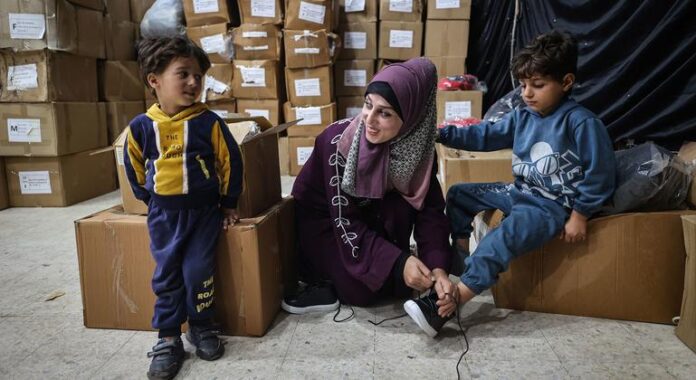
In a sharply worded statement issued on Tuesday, the Humanitarian Country Team – which brings together senior UN officials and more than 200 local and international aid groups – called on the international community to press Israeli authorities to reverse measures that are choking humanitarian work, particularly in the Gaza Strip.

At the centre of concern is a new registration system for international non-governmental organisations, introduced earlier this year. 

Flawed Israeli system

Aid groups say the process is vague, politicised and impossible to meet without breaching humanitarian principles. 

Under the current rules, dozens of organisations face deregistration by the end of December, followed by the forced closure of their operations within weeks.

“These organisations are not optional extras,” the statement said. “If they are pushed out, the humanitarian response will not survive.”

International NGOs, working alongside UN agencies and Palestinian partners, deliver around one billion dollars’ worth of assistance each year across the territory. 

Yet millions of dollars’ worth of food, medicines, hygiene supplies and shelter materials are now stuck outside Gaza, unable to reach families in need.

The warning comes as winter deepens and amid fears that further restrictions could destabilise a fragile ceasefire. 

Impossible loss

Aid agencies stressed that the impact of losing international NGOs could not be absorbed by the UN or local groups, especially after Israeli limits on Palestine refugee relief agency, UNRWA, have already stretched the response to breaking point.

According to the Humanitarian Country Team, international NGOs support or run much of Gaza’s basic infrastructure for survival. 

They underpin field hospitals and primary health clinics, provide clean water and sanitation, distribute emergency shelter, and treat children suffering from severe malnutrition. 

Health facilities will close

If they are forced to leave, one in three health facilities in Gaza would close almost immediately, cutting off care for tens of thousands of patients.

Aid leaders said they had repeatedly raised these concerns with Israeli authorities and sought workable solutions to keep operations running. 

“There has been no adjustment,” the statement said, warning that the dismantling of NGO operations now appears imminent.

Humanitarian access, the agencies insisted, is a legal obligation, not a political choice. 

Lifesaving assistance must be allowed to reach Palestinians without further delay,” the statement concluded, urging Israel to allow rapid and unimpeded aid deliveries and to ensure that humanitarian organisations can operate independently and safely.

Without swift action, the team warned, the consequences for civilians in Gaza would be catastrophic. 

Source link

EU to provide €90 billion in support for Ukraine in 2026 and 2027

0

EU leaders decided to provide a loan of €90 billion to Ukraine, based on EU borrowing, to address the country’s urgent financing needs for the next two years. They also discussed the next long-term EU budget, EU enlargement and geoeconomics. Source link

Source link

EU to provide €90 billion in support for Ukraine in 2026 and 2027

0
EU to provide €90 billion in support for Ukraine in 2026 and 2027

EU leaders decided to provide a loan of €90 billion to Ukraine, based on EU borrowing, to address the country’s urgent financing needs for the next two years. They also discussed the next long-term EU budget, EU enlargement and geoeconomics.

Source link

Syria’s humanitarian needs remain high despite reduced violence, UN warns

0
Syria’s humanitarian needs remain high despite reduced violence, UN warns

Briefing ambassadors in the Security Council, Rosemary DiCarlo, head of UN political affairs, and Joyce Msuya, Deputy Emergency Relief Coordinator, said Syrians have made tangible progress over the past year.

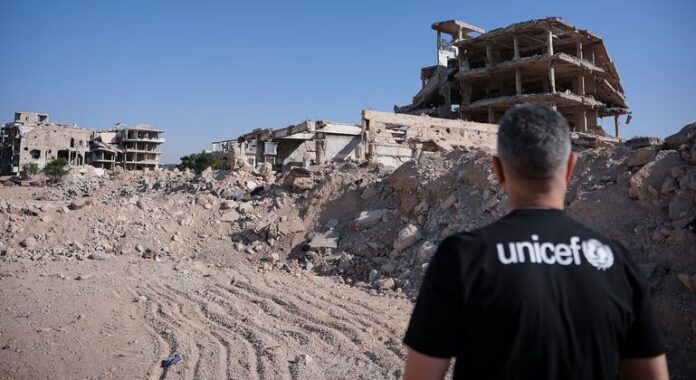
However, the country’s recovery – following the fall of the Assad regime in December 2024 – remains fragile and uneven, requiring sustained international support.

Millions returning, millions more in need

One of the clearest signs of change, UN officials said, has been the large-scale return of displaced Syrians. More than two million people displaced inside the country have gone back to their areas of origin, while over 1.3 million refugees have returned from neighbouring countries.

Two million people displaced within Syria have returned – many after living for years in camps, in precarious conditions,” Ms. Msuya said.

But many returnees are coming back to damaged or destroyed homes, with limited access to electricity, water, healthcare or jobs. Millions more remain displaced, with many families hesitant to return due to the lack of housing and services, especially during the winter months.

As a result, humanitarian assistance remains critical, even as the UN seeks to gradually reduce one of its largest aid operations worldwide.

Aid operations under pressure

Ms. Msuya said the UN has been able to streamline its humanitarian response over the past year, reaching about 3.4 million people per month – 25 per cent more than last year – despite lower funding.

However, she warned that the humanitarian appeal for 2025 is only about 30 per cent funded, forcing difficult prioritisation decisions and leaving millions without assistance.

With the scale of the needs and the time required for development efforts to take hold, we also need support to sustain and expand humanitarian assistance in the near term,” she said.

She noted that the easing of sanctions by several countries has helped facilitate procurement and financial transactions for aid operations and could support Syria’s longer-term recovery if sustained.

Under-Secretary-General Rosemary DiCarlo briefs the Security Council on the situation in Syria.

Political progress, but fragile security

On the political front, Ms. DiCarlo said Syria has taken significant steps, including restoring state institutions, forming a new cabinet, issuing a constitutional declaration and holding indirect legislative elections in October.

Violence levels have declined notably, she said, but warned that inter-communal tensions remain high after years of conflict and repression.

“Tragically, these tensions have boiled over in the past year,” she said, citing deadly violence in coastal areas in March, a terrorist attack on a church in Damascus in June and clashes in Druze-majority Sweida in July that displaced more than 155,000 people.

Israeli airstrikes and incursions in southern Syria have further aggravated the security situation, UN officials said, including a late November operation that killed 13 people and forced families to flee.

Ms. DiCarlo reiterated the UN Secretary-General’s call on Israel to respect Syria’s sovereignty and urged all parties to uphold the 1974 Disengagement of Forces Agreement.

Justice, reconciliation and the road ahead

Both officials stressed that long-term stability would depend on accountability, reconciliation and inclusive governance.

The shadows of the past continue to haunt the Syrian people,” Ms. DiCarlo said, calling for a full reckoning with past abuses, including addressing the fate of missing persons and ensuring accountability for grave crimes.

She emphasised that inclusive dialogue – including the meaningful participation of women – alongside sanctions relief and sustained international engagement, will be essential to rebuilding trust, restoring investor confidence and laying the groundwork for reconstruction.

Ms. Msuya echoed that message through the story of Rawaa, a single mother who returned from Türkiye to her village in Hama with her two children, hoping to start a small business.

“We owe it to them to give them that chance,” she said, urging the international community to seize what she described as a rare moment to help Syria turn hope into lasting recovery.

Source link

Remarks by President António Costa at the press conference following the European Council meeting of 18-19 December 2025

0
Remarks by President António Costa at the press conference following the European Council meeting of 18-19 December 2025

During the press conference held at the end of the European Council meeting of 18-19 December 2025, President António Costa presented the main results of the discussions.

Source link

Gaza: access to food is improving but living conditions remain dire

0
Gaza: access to food is improving but living conditions remain dire

Speaking from Gaza to journalists in New York, Antoine Renard said that two months after the ceasefire, access to food has improved significantly but Gazans continue to face serious difficulties.

This update comes a day after the UN and its partners released a statement calling on the international community to put pressure on Israel to remove obstacles to humanitarian aid.

More than a million fed

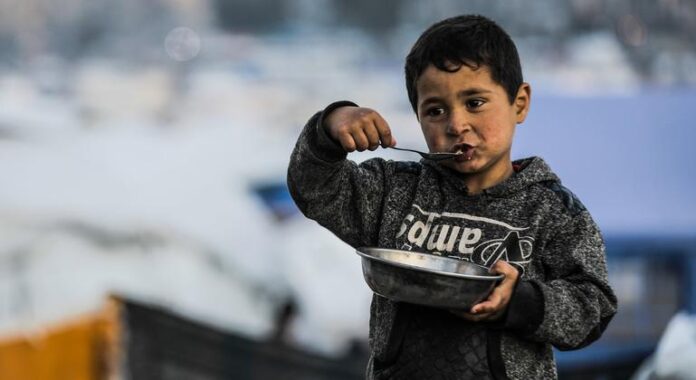
PAM managed to distribute food boxes and wheat flour to more than a million people, Mr. Renard said.

With UNICEFThe agency provides more than 300,000 people with preventive nutrition designed to prevent malnutrition and help those who are already malnourished recover.

Additionally, the agency is supporting temporary learning spaces with 190,000 kits containing high-energy cookies and fortified protein bars.

Mr. Renard confirmed that people eat on average two meals a day, compared to one meal a day in July. The Integrated Food Security Phase Classification (IPC), providing additional information on nutritional status, will be released on Friday.

Access to food “not enough”

“Access to food itself is not enough,” he said. “Living conditions remain very dire in the Gaza Strip. »

Winter rain and humidity create terrible conditions for vulnerable people. Mr. Renard gave the example of a mother of five children who lived in a tent, soaked.

“This woman was saved by the fact that she was not in the water because they managed to lift the mattress,” he said.

Meanwhile, most people use waste and wood to cook their food.

Overcoming obstacles

In order to provide food, WFP must go further into areas where the Israel Defense Forces (IDF) are present on the ground, such as Jabalia and Beit Lahia in the north. The agency managed to open a distribution point in Beit Lahia last week.

At the regular UN press briefing, deputy spokesperson Farhan Haq said Wednesday’s statement warned that Israel’s new policies – including a new registration system for international NGOs that relies on “vague and politicized criteria – are undermining relief efforts and risking the collapse of the humanitarian response.”

Originally published at Almouwatin.com

Gaza: Access to food improves but living conditions remain dire

0
Gaza: Access to food improves but living conditions remain dire

Speaking from Gaza to journalists in New York, Antoine Renard said that two months into the ceasefire, food access has significantly improved but Gazans continue to face severe hardship.  

The update comes a day after the UN and partners issued a statement calling on the international community to press Israel to lift impediments to humanitarian aid.

Over one million fed  

WFP has managed to reach more than one million people with food boxes and wheat flour, Mr. Renard said.  

Together with UNICEF, the agency is providing over 300,000 people with preventive nutrition designed to prevent malnutrition and help those already malnourished to recover.  

Additionally, the agency is supporting temporary learning spaces with 190,000 kits which are being served with high energy biscuits and fortified protein bars.

Mr. Renard confirmed that people are having two meals per day on average, compared to the one meal per day they were having in July. The Integrated Food Security Phase Classification (IPC) providing further information on the state of nutrition will be released on Friday.

Access to food ‘not enough’  

“Access to food itself is not enough,” he said. “The living conditions continue to be very dire in the Gaza Strip.”

The rain and humidity of the winter period are creating terrible circumstances for the vulnerable. Mr. Renard brought up the example of a mother of five who was living in a tent, soaked.  

“That woman was actually saved by the fact that she was not in water because they managed to lift up the mattress,” he said.

Meanwhile, most people are using trash and wood to cook their food.

Overcoming impediments  

In order to provide food, WFP needs to go further into areas where the Israeli Defense Forces (IDF) are on the ground, like Jabalia and Beit Lahia in the north.  The agency managed to open a distribution point in Beit Lahia last week.  

At the regular UN media briefing, Deputy Spokesperson Farhan Haq said that Wednesday’s statement gave warning that Israel’s new policies – including a new registration system for international NGOs that relies on “vague and politicized criteria – are undermining relief efforts and risk the collapse of the humanitarian response.” 

Source link