
A good personal trainer has to do a lot more than just work out with clients. To grow
UN rights chief: AI misuse and corporate influence present ‘clear and present’ challenge

Opening the 14th UN Forum on Business and Human Rights in Geneva on Monday, he said that corporate power has become increasingly influential in terms of social change.
He warned that without proper checks in place, new tools like generative artificial intelligence – or AI – could easily be misused.
“When powerful tech giants introduce new technologies, such as generative artificial intelligence, human rights can be the first casualty,” he said. “Generative AI holds tremendous promise, but its exploitation for purely political or economic benefit can manipulate, distort and distract.”
He stressed that rules, safeguards and independent oversight must keep pace with innovation.
Concerns over worker exploitation
Mr. Türk also highlighted the struggles facing workers across many sectors. Migrant workers, women and people in informal jobs, remain among the most exposed to abuse.
He noted that some governments are rolling back laws that require companies to respect human rights in their operations, calling the trend “worrying” and urging States to reverse course.
He said attacks on human rights defenders who document corporate abuses are unacceptable and must end.
Climate responsibility
Turning to the climate crisis, Mr. Türk said fossil fuel companies continue to post large profits while the world’s poorest communities face rising environmental damage and displacement.
He pointed to the mixed outcome of COP30 in Belém, where many countries and activists expressed frustration at slow progress on cutting emissions.
He warned that future generations may judge inaction on climate change as a grave failure.
Courts and lawmakers pushing for stronger standards
The human rights chief noted that courts in several countries – including Brazil, the United Kingdom, the United States, Thailand and Colombia – have recently found that companies can be held accountable for human rights abuses linked to their operations, supply chains or environmental practices.
These cases show that respecting human rights is no longer optional for businesses and is increasingly backed by legal obligations.
Helpdesk initiative
To support governments, companies and civil society, the High Commissioner announced a new OHCHR Helpdesk on Business and Human Rights, which will offer guidance on implementing new UN-backed principles.
He also reaffirmed support for ongoing negotiations toward a legally binding agreement on business and human rights.
Future at stake
Mr. Türk closed with a call for stronger global cooperation at a time he described as “an exceptionally difficult moment” for human rights systems.
He said his office needs more resources and broader backing and encouraged the creation of a Global Alliance for human rights to help keep rights at the centre of public life.
“Human rights are about – and for – all of us,” he said. “We need to make sure they guide the decisions shaping our future.”
From organic farms to AI chips with noses: UN summit outlines solutions to transform the Global South
The “Green Revolution” is believed to have saved millions of lives in India during the 20th century, by introducing new scientific techniques that led to increased yields, thereby providing food and livelihoods.
But the use of synthetic fertilizers and pesticides has come at a huge cost, both to the environment and to health, leading to growing interest in organic farming – combining the latest scientific knowledge with traditional techniques to produce nutritious food without harming the soil.
“It’s a win-win,” says Amit Singh, head of sustainability at Nature Bio Foods, referring to a business model that sees thousands of Indian farmers producing high-quality, sustainable food for consumers, while being paid well for it.
The winners
On Sunday, the company, an Indian social enterprise, won a ONE World Innovation Awardin recognition of its farm-to-table approach to sustainability, which involves ensuring that every aspect of food production – from planting to harvesting, processing and transportation – is as sustainable as possible.
“In the last three years alone, we have reduced our carbon emissions by introducing various innovations and scientific solutions such as solar energy and methods to reduce methane emissions from rice production,” Mr. Singh said.
The company helps nearly 100,000 small farmers access the market and profits are reinvested in initiatives that benefit the community, such as clean water and school funding.
Find the ideal partner
This success would not be possible without the partnerships that Nature Bio Foods has established within the private and public sectors.
The company works closely with the Indian government and, as it seeks to expand its operations, the United Nations International Development Organization (UNIDO), helps them in terms of technological know-how and investment.
Mr. Singh was speaking on the occasion of the Partnership and Investment Day of the Global Industry Summit, the UNIDO General Conference, which was held in Riyadh between 23 and 27 November.
The Day showcased pioneering initiatives and cutting-edge digital solutions with the potential to transform industry in developing countries.
Fittingly, Mr Singh had to interrupt his chat with UN News in order to meet some of the many investors invited to the event, an example of the matchmaking taking place throughout the week.
An AI-enabled humanoid robot walks the halls of the UNIDO Global Industry Summit 2025 in Riyadh, Saudi Arabia.
How does AI smell without a nose?
The common thread throughout many of the Partnership Day sessions was the use of AI to help different partners find sustainable solutions.
“It’s not about ChatGPT, CoPilot or Deep Seek. It’s about how AI can solve real-world problems we face on the ground,” says Jason Slater, head of AI and innovation at UNIDO, as he took a brief break between sessions.
His job is to find ways to access technology to support countries in the Global South. “For example, we are working with a startup that has developed an AI chip that can smell food: it learns what it is and identifies where the waste is so that the company can change its production process and become more efficient.
According to Slater, AI also has a crucial role to play in bringing together development stakeholders such as the private sector, the UN, government and academia, helping them more easily define problems, connect the dots and find solutions.
“Whether it’s shrimp farming in Vietnam or smart manufacturing in Tunisia, the UN is a trusted partner in a world where new technologies are rapidly emerging. Member States know that as technology rapidly comes to market, we follow ethical principles, ensuring that no one is left behind and that safeguards are in place.
Originally published at Almouwatin.com
Clean Hydrogen Partnership celebrates Europe’s hydrogen leaders

The Clean Hydrogen Partnership honoured Europe’s top hydrogen innovators at the 2025 Awards ceremony in Brussels on 24 November. The event spotlighted outstanding achievements in hydrogen research and innovation, recognising projects and individuals driving the continent’s clean energy transition.
The 2025 Awards, now at their 5th edition, celebrated excellence in five categories: Best Success Story, Best Innovation, Best Outreach, European H2 Valley of the Year, and Women in H2 Innovation Award.
Best Success Story – HELIOS and FLEX4H2
HELIOS and FLEX4H2 shared the Best Success Story Award for their breakthroughs in hydrogen combustion technology. HELIOS developed a retrofittable hydrogen gas turbine using the FlameSheet™ platform, achieving 100% hydrogen operation. FLEX4H2 created a fuel-flexible combustor capable of handling up to 100% hydrogen in natural gas, enabling clean, dispatchable power generation.
“Hydrogen deployment in gas turbines will be a key enabler for clean electricity production and future grid stability. This achievement reflects the strength of a committed team that brings together scientific, technical, and industrial expertise” said Andrea Ciani, Project Coordinator FLEX4H2, Hydrogen Combustion Technology Manager Ansaldo Energia.
“The award affirms that we are on the right track in the race to deliver innovative solutions for a sustainable future energy system”, added Roy Hermann, Project Coordinator HELIOS, Eindhoven University of Technology
Best Innovation – HyP3D
HyP3D won the Best Innovation Award for its use of 3D printing to create advanced solid oxide electrolysis cells (SOCs). These cells improve efficiency and durability, featuring corrugated electrolytes and embedded gas channels for lighter, simpler designs.
“Disruptive technologies like 3D printing can advance efficient hydrogen solutions such as high-temperature electrolysis. Thank you for believing in our vision for a cleaner and more innovative future” said Albert Tarancón Rubio, Professor & Head of Department, Catalonia Institute for Energy Research-IREC
Best Outreach – COSMHYC Project Series
From innovation, the ceremony shifted focus to the crucial role of communication and public engagement. The COSMHYC Project Series earned the Best Outreach Award for its innovative hydrogen compression solution, validated at a public refuelling station. The project’s dissemination efforts boosted visibility and supported the commercialisation of thermochemical compressors.
“This award recognizes the long-term vision of the COSMHYC project series not only to develop a new technology, but to also implement it in real-world industrial use-cases; communication supported the early steps towards commercialisation and industrialisation;” underlined Rami Chahrouri, COSMHYC’s Project Coordinator from EIFER.
European H2 Valley of the Year – BalticSeaH2
BalticSeaH2 received the European H2 Valley of the Year Award for its ambitious hydrogen ecosystem spanning southern Finland and Estonia. With 40 partners from nine countries, the initiative aims to create one of Europe’s largest interregional hydrogen networks.
Europe’s hydrogen economy will be cross-border – like BalticSeaH2.”
— Jatta Jussila, CEO of CLIC Innovation, Project Coordinator BalticSeaH2
Women in H2 Innovation Award – Julie Mougin
Julie Mougin, Deputy Director for Hydrogen Technologies at CEA, was recognised with the Women in H2 Innovation Award for her 20-year contribution to hydrogen and fuel cell technologies, including advancements in high-temperature electrolysis.
“I can see the many achievements obtained since the beginning, on this technology of course but more generally in the field of hydrogen. I am very happy and proud to be part of this ecosystem, and to see that many women are acting at various levels to develop and deploy these technologies everywhere in the world” said Julie Mougin.
Hydrogen Europe Research – Young Scientist Award 2025
Hydrogen Europe Research have presented their Young Scientist Award 2025 rewarding young researchers who have personally contributed to hydrogen-related projects. This competition revolves around four pillars, reflecting the structure of the Clean Hydrogen Partnership. To discover more about this year’s and past winners, please visit the Hydrogen Europea Research website.
For more information about the awards, please visit the Clean Hydrogen Partnership website.
Safer and more sustainable roads with recycled materials: the future of urban planning
MSCA Fellow of the Month
This month, we spotlight Christina Makoundou, an MSCA postdoctoral fellow at the University of Antwerp in Belgium, who is dedicated to making cities greener and safer.
Her research focuses on developing paving materials for roads from bio-based and recycled sources, designed to be stronger and last longer, that can promote more sustainable and resilient urban environments.
I study how we can turn waste, like old tyres, used oils, or plant leftovers, into useful materials for roads and sometimes other applications. This helps save natural resources while having a positive impact on our environment.
I also care about people who are often overlooked in city planning, pedestrians, and older adults.
My research looks for ways to make streets safer and more welcoming for everyone, while giving a second life to things we normally throw away.
From waste to pavement: tackling two challenges at once
Christina’s research addresses two urban challenges: construction waste and road safety. Traditional roads rely on resource-intensive materials, while pedestrians and cyclists face high risks from hard surfaces. Her work combines waste reuse with safety design.
During her PhD, she developed rubberised, impact-absorbing pavements that cushion falls like safety mats. Now, through BioROAD², she is advancing this idea with biobased and recycled materials to build pavements that are both safer and more sustainable, combining waste reuse with safety design.
What drew Christina to this field was recognising how urban planning often overlooks environmental concerns and certain people simultaneously. Cities are frequently designed primarily for cars, leaving pedestrians and cyclists vulnerable and material circularity is still limited in some regions. By integrating her chemistry background with a focus on real-world impact, she developed an innovative approach to address both environmental sustainability and social equity.
Growing through international collaboration and communication
Christina’s journey through three MSCA fellowships has taken her across Europe — from France to Italy, Sweden, and now Belgium. After her PhD at the University of Bologna, she continued her research at the Research Institutes of Sweden (RISE), focusing on advanced binders and coatings.
In 2024, she joined the YUFE4PostDocs programme before beginning her current postdoctoral fellowship.
As an MSCA fellow, I have had the unique opportunity to learn from and collaborate with diverse international teams, make lasting relationships, and contribute to innovative solutions for the sustainability of materials.
The fellowship has expanded my perspective on how research can address real-world challenges.
It has been a transformative experience, fostering my growth as both a researcher and a communicator, while allowing me to engage with broader audiences and promote meaningful change in my field.
This international experience has not only advanced Christina´s technical expertise but also shaped her approach to research communication. She is deeply committed to bringing research beyond the laboratory, having participated in the Falling Walls Lab MSCA and the Three Minute Thesis competition at the University of Bologna.
She also contributed to the Horizon Results Booster with a SAFERUP! success story, participated in the European Researchers’ Night and engaged with local municipalities and stakeholders.
An active voice in the MCAA community
Christina discovered the Marie Curie Alumni Association (MCAA) during her MSCA journey and has been an active member since 2020. She currently contributes to the MCAA Communication Working Group, assisting in the production of the IRRADIUM magazine and the MCAA Newsletter.
Additionally, she engages with several regional Chapters, including the BeNeLux and France Chapters, and has been actively involved in the Mediterranean Researchers’ Night (MEDNIGHT) project.
Christina values the diversity of profiles and backgrounds within the MCAA and the opportunity to learn from the people she has met. The Association provides access to various opportunities such as international and local events, training activities, consulting roles in projects and expert calls, as well as initiatives led by Chapters and Working Groups.
When asked how fellows can make the most of their MCAA experience, Christina said:
I believe the ideal approach is to join at least the Chapter of the region of the fellowship and/or origin, while being part of a Working Group adds valuable benefits. This provides a clear overview of the possibilities and opportunities available within the MCAA. It is also perfectly acceptable to move between groups if needed.
The General Assembly and Annual Conference are great opportunities to know more about the MCAA and network, and connect with people we might never meet without the Association. Attending as often as possible helps strengthen relationships and discover new areas where we still need to grow.
More information
End violence against women

One in three women in Europe have experienced gender-based violence. Today the EU joins the wider international community in marking the International Day for the Elimination of Violence Against Women, renewing its commitment to women and girls and standing in solidarity with victims and survivors.
Sudan: UN’s gradual move back to Khartoum ‘an important step’
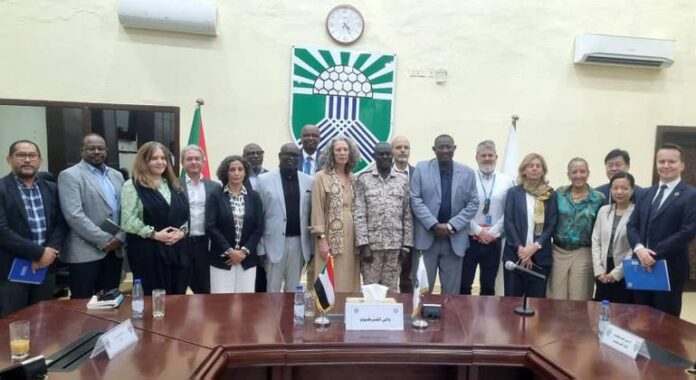
The 28 agencies, funds and programmes have maintained their presence and operations from the coastal city of Port Sudan amid the brutal fighting between the Sudanese Armed Forces (SAF) and the paramilitary Rapid Support Forces (RSF).
“This gradual move back to the capital marks an important step, signaling strengthened UN coordination and engagement on the ground,” the Secretary-General’s Spokesman, Stéphane Dujarric, said in New York.
Supporting displaced people
Meanwhile, the humanitarian situation in Sudan remains dire, particularly for people displaced by the violence.
The UN refugee agency, UNHCR, and partners continue to respond to displacement from El Fasher in Darfur, as well as Kordofan.
“In Tawila and Dabbah, teams are conducting in-person protection monitoring to identify urgent needs and refer cases of sexual violence survivors, separated children, and others requiring specialized support,” he said.
Immediate priorities include psychosocial support, family tracing and reunification, food assistance, non-food items, and identity documents.
End the hostilities
The UN also continues to provide assistance to people who have fled across the border to Chad.
Mr. Dujarric said that “site development, extensions, and infrastructure construction are ongoing in camps, integrated zones, and relocation sites.”
He warned, however, that “reception sites continue to face critical shortages of shelters and latrines, increasing vulnerability and requiring urgent action to ensure dignified conditions and reduce exposure to the weather.”
The Spokesman reiterated the UN’s call for an end to the hostilities in Sudan “so that civilians can receive the respite and protection they urgently need.”
Commission and High Representative/Vice-President call for increased efforts to end all forms of sexual and gender-based violence

Commission and High Representative/Vice-President call for increased efforts to end all forms of sexual and gender-based violence
Press release – MEPs push for “military Schengen” to withstand potential Russian aggression
Transport and Defence MEPs call urgently for easier movement of troops and military equipment across the EU by removing internal borders and upgrading infrastructure.Committee on Security and DefenceCommittee on Transport and Tourism Source : © European Union, 2025 – EP
Security Council LIVE: Spotlight on Gaza, the West Bank and Lebanon
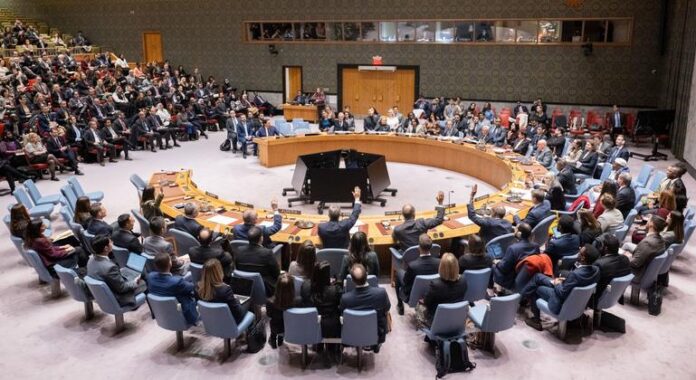
The Security Council is meeting against the backdrop of Gaza’s fragile ceasefire, with ambassadors expected to urge Israel and Hamas to stick to their commitments amid renewed violence and deepening humanitarian needs. The session is likely to focus on safeguarding the truce, easing aid access restrictions and sustaining political momentum. With tensions also rising in the occupied West Bank and southern Lebanon, the meeting will test whether the Council can help stabilise the situation and keep alive a credible path towards Palestinian self-determination. Follow live below and UN News app users can click here. For in-depth meetings coverage, go here.
