Wednesday, September 23, 2026
Home Blog Page 227

Industry at the heart of global solutions: a global summit opens in Riyadh

0
Industry at the heart of global solutions: a global summit opens in Riyadh

“Industrial development is essential for strengthening economies, fighting poverty and creating jobs and prosperity,” the UN said. Secretary-General António Guterres in his message on the occasion of the event, delivered by the senior UN official in Saudi Arabia, Mohamed El-Zarkani.

Ease the burden of poverty

Delegates from governments, the private sector and civil society arrived in the Saudi capital for the week-long event at a delicate time for struggling economies: several rich countries have cut their development aid spending. The COP30 climate conference, which concluded on Saturday, laid bare the scale of the climate crisis, which poses an existential threat to some countries, including small island developing states.

Mr. Guterres urged governments and businesses to join forces to ease these burdens by scaling up sustainable industrialization (adopting cleaner, resource-efficient technologies, upgrading infrastructure, and ensuring that industrial development does not result in excessive social or environmental costs), an important recommendation of the Pact for the futurethe UN plan for international cooperation, peace and development.

The summit serves as the 21st General Conference of the United Nations Industrial Development Organization (UNIDO), which is dedicated to promoting inclusive and sustainable industrial development that reduces poverty, improves economic competitiveness and supports environmental sustainability in developing countries.

Discussions at this year’s conference, UNIDO’s highest decision-making body, will focus on three main themes: how to reduce emissions and support renewable energy; eliminate hunger through agro-industrial innovation to improve food security; and sustainable supply chains that ensure trade benefits workers, communities and the environment.

It’s time for a “fair new global deal”

Addressing delegates on Sunday, UNIDO Director-General Gerd Müller, who was re-elected for a second four-year term, called on the developed world to do more to combat inequality: “The rich nations, the industrialized countries, the oil states, we have to live up to our global responsibilities,” he said, clearly asking why, 30 years after promising to devote 0.7 percent of their annual development aid budget to abroad, they have still not reached this figure.

It is time, Mr. Müller continued, to establish a “New Global Fair Deal”, in which developing countries would have better access to the global financial system and – with reference to recent US policies – tariff-free access to markets.

Budget cuts are ‘nothing less than a death sentence’

On the other side of the world, in South Africa, leaders of the world’s major economies are meeting at the annual G20 summit. Mr. Müller directly called on them to reverse significant funding cuts, of up to 40 percent, to UN aid agencies, including the World Food Program (PAM) and the World Health Organization (WHO).

“This is nothing short of a death sentence for millions of children, refugees and people living in crisis zones around the world who depend on humanitarian aid,” the UNIDO chief warned.

Originally published at Almouwatin.com

Press release – COP30 outcome: slow progress, but insufficient to meet climate crisis urgency

0
Press release – COP30 outcome: slow progress, but insufficient to meet climate crisis urgency

Following the end of the 2025 climate negotiations, the MEPs leading Parliament’s delegation reacted to the outcome of the COP30.Committee on the Environment, Public Health and Food Safety Source : © European Union, 2025 – EP

Source link

Pecking with power: How tiny woodpeckers deliver devastating strikes to drill into wood

0


A new study reveals how woodpeckers combine breathing and whole-body coordination to drill into trees with extraordinary force.

Source link

Seventh Round of the European Union-Pakistan Strategic Dialogue on 21 November 2025

0
Press release – COP30 outcome: slow progress, but insufficient to meet climate crisis urgency

Seventh Round of the European Union-Pakistan Strategic Dialogue on 21 November 2025

Source link

Remarks by President António Costa at G20 Session II: "A resilient world"

0
Press release – COP30 outcome: slow progress, but insufficient to meet climate crisis urgency

President António Costa attended the G20 summit in Johannesburg. He spoke at Session II: “A resilient world”, on 22 November 2025.

Source link

Ending violence against women ‘a matter of dignity, equality and human rights’

0
Ending violence against women ‘a matter of dignity, equality and human rights’

Instead, she found herself tied to a man who “changed from being kind to being a monster.” He would beat her “with his bare hands,” she said recently.

The young mother from Yemen is among the roughly 840 million women worldwide – nearly one in three – who have faced physical or sexual violence at the hands of an intimate partner, such as a former or current husband.

Even worse, this figure has barely changed since the year 2000, with a paltry 0.2 per cent annual decline over the past two decades.

In the last 12 months alone, 11 per cent of women aged 15 or older, some 316 million, were subjected to physical or sexual violence by an intimate partner

A ‘pervasive’ injustice

“Violence against women is one of humanity’s oldest and most pervasive injustices, yet still one of the least acted upon,” said Tedros Adhanom Ghebreyesus, Director-General of the World Health Organization (WHO).

The lack of progress is documented in a report published on Wednesday by WHO and other UN agencies.  

It analyses data from 168 countries, covering the period from 2000 to 2023, revealing “a stark picture of a deeply neglected crisis and critically underfunded response.”

For the first time, national and regional estimates of sexual violence by someone other than a partner – a male relative or friend, for example – are included.  

Findings show that 263 million women have experienced non-partner sexual violence since age 15, a figure experts caution is significantly under-reported due to stigma and fear.

Funding shortfall persists

WHO noted that despite mounting evidence of effective strategies for the prevention of violence against women, financial support continues to be slashed.

In 2022, only 0.2 per cent of global development aid went to these programmes, and funding has fallen further. 

This is happening at a time when humanitarian emergencies, rising inequality and other challenges are putting millions of women and girls at risk. 

Violence begins early

Women subjected to violence face unintended pregnancies, a higher risk of acquiring sexually transmitted infections and experiencing depression, according to the report.

Furthermore, violence against women begins early, and risks persist throughout life. In the past 12 months alone, 12.5 million young women aged 15-19 have experienced physical and/or sexual violence from an intimate partner.

“The data shows that many women first experience violence from a partner when they are adolescents. And many children grow up watching their mothers being pushed, hit or humiliated, with violence a part of daily life,” said Catherine Russell, Executive Director of the child rights agency UNICEF

The key is to break this pattern, she added. 

Action, support and investment

The report was released ahead of the International Day for the Elimination of Violence against Women and Girls, observed annually on 25 November.

It calls for decisive government action and funding to scale-up evidenced-based prevention programmes and to strengthen health, legal and social services for survivors.

Countries must also invest in data systems to track progress and reach those groups most at risk, in addition to enforcing laws and policies that empower women and girls.

No society can call itself fair, safe or healthy while half its population lives in fear,” said Tedros. 

“Ending this violence is not only a matter of policy; it is a matter of dignity, equality and human rights.”

Salma’s dream

Salma* is now back at school, after a judge eventually released her to her parents. 

She was also referred to safe space supported by the UN reproductive agency, UNFPA, where she learned about her rights, and stands firm in her dream to become a doctor.

“We must act urgently together to end this violence and ensure that every woman and girl, in all her diversity, can exercise her rights, realize her potential and contribute fully to more just, equal and prosperous societies,” said Diene Keita, UNFPA Executive Director. 

*Name changed for protection.

Source link

When Google’s Gemini 3 Time-Traveled to 2025 and Lost Its Mind

0


Andrej Karpathy received early access to Google’s newest AI model on November 17, one day before its public

Source link

From silence to strength: Women leaders speak out in South Sudan

0
From silence to strength: Women leaders speak out in South Sudan

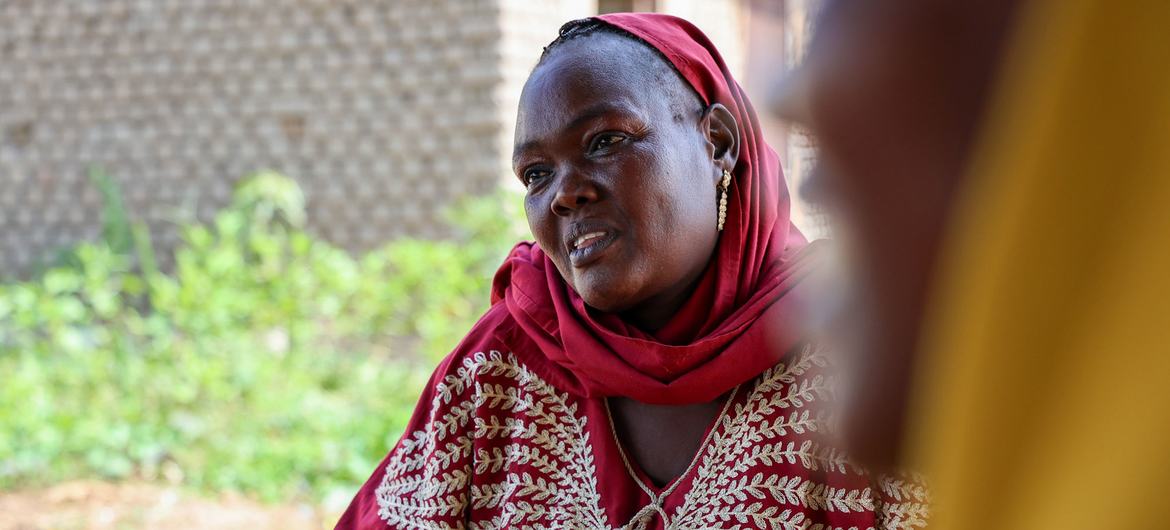
She knows what it’s like to be silenced.

Born into a family that didn’t believe in educating girls, she had to stay home while her brothers went to school. Only when she moved to Khartoum with her uncle did she get a chance to study, though not for long.

“I was forced into marriage at 14,” Awrelia said. “Even before then, some relatives scolded me just for going to school. I fought to finish primary school, but I couldn’t go any further.” 

Even so, she never gave up on the value of education – especially for her daughters. “I hope they grow up to be responsible and successful women leaders. Something has to change for girls.”

Awrelia at home in Wau.

Widowed mother of eight

In South Sudan, where conflict and deeply entrenched gender norms have shaped life for generations, change comes slowly – yet women like Awrelia are leading it with courage and determination.

A widowed mother of eight, she has spent years raising her children alone, often under difficult and uncertain conditions. 

“Their father died when they were very young. My eldest was still in primary school,” Awrelia recounts. “I’ve been raising them alone ever since.” 

In her daily life, Awrelia constantly navigates complex family dynamics, scarcity, and stigma, but she keeps going. “People expect us to endure silently. Even when women try to seek help, no one responds.” 

In public spaces, the challenges are even greater. Speaking ahead of the International Day for the Elimination of Violence Against Women marked annually on 25 November, Awrelia described how women are often dismissed or ignored. “They say we’re just women, as if our voices don’t matter,” she said. “I kept quiet for years because I was afraid to speak up.” 

Nearly 1,400 women across South Sudan have benefitted from leadership training.

Nearly 1,400 women across South Sudan have benefitted from leadership training.

Transformative training

But even before she spoke out, Awrelia was leading in her own way – fighting for her children’s education and holding her family together. That strength deepened when she joined a women’s leadership training organized by the International Organization for Migration (IOM) in Wau. 

The training is included in IOM’s gender-transformative recovery programme – part of a broader, locally led effort to strengthen women’s leadership and ensure their participation in community decisions.

Across South Sudan, women’s groups and grassroots movements have long been laying the groundwork for change. The five-day course builds on that momentum, offering women a safe space to reflect, learn, and grow together. 

I learned that being a leader means treating others fairly and solving problems with patience. The training gave me courage to stand up for myself. Now I know I can lead.

“I learned that being a leader means treating others fairly and solving problems with patience,” she said. “The training gave me courage to stand up for myself. Now I know I can lead.” 

Back in her community, she put her new confidence into action. Her local women’s group had nearly collapsed, but she brought it back together. Now they meet regularly to support one another and share their challenges. 

Though they lack funding for income-generating activities like sewing or catering, the group offers something equally powerful: solidarity.

Women run households

In many displacement-affected areas of South Sudan, women head up to 80 per cent of households.

In Wau, Bentiu, Malakal, and other areas where IOM runs the programme, more women are stepping forward. Those who once stayed silent now speak up at meetings, support survivors of violence, and build networks to share experiences and grow together. 

Awrelia has noticed a change in how she is perceived. “People recognize me now,” she said. “During a meeting with chiefs and women leaders, they mentioned my name and honoured me in front of everyone. It made me feel proud. The women I lead respect me, and I respect them.” 

From homes to community halls, women like Awrelia are finding their voices and reshaping what the future can look like – for their daughters, their families, and their country. 

Source link

G20 Johannesburg Leaders’ Declaration

0
Press release – COP30 outcome: slow progress, but insufficient to meet climate crisis urgency

G20 leaders met in Johannesburg, South Africa, on 22-23 November 2025 and agreed on a joint declaration.

Source link

Remarks by President António Costa at G20 Session I: "Inclusive and sustainable economic growth – leaving no one behind"

0
Press release – COP30 outcome: slow progress, but insufficient to meet climate crisis urgency

President António Costa attended the G20 summit in Johannesburg. He spoke at Session I: “Inclusive and sustainable economic growth – leaving no one behind”, on 22 November 2025.

Source link