Wednesday, September 23, 2026
Home Blog Page 231

Cities are now home to almost half of humanity (UN report)

0
Cities are now home to almost half of humanity (UN report)

In 1950, the world population was 2.5 billion, of which only 20% were urban dwellers. By 2050, two-thirds of global growth is expected to occur in cities and the rest in cities.

Furthermore, “megacities” – metropolitan areas of 10 million or more people – will continue to expand while rural areas will continue to decline, except in sub-Saharan Africa.

“A determining force”

These are among the conclusions of the Global Urbanization Outlook 2025: Summary of Findingsreleased Tuesday by the United Nations Department of Economic and Social Affairs (UNDESA).

This comes as countries negotiate their climate action commitments at COP30 in Belém, Brazil, and highlights the central role of urbanization in achieving sustainable development and climate resilience.

“Urbanization is a defining force of our time. When managed inclusively and strategically, it can pave the way for transformations for climate action, economic growth and social equity.“, said Li Junhua, head of UNDESA.

“To achieve balanced territorial development, countries must adopt integrated national policies that align housing, land use planning, mobility and public services in urban and rural areas. »

Booming megacities

The report documents a The number of megacities has quadrupled since 1975from eight to 33. Nineteen of them are in Asia.

Indonesia’s capital Jakarta – home to almost 42 million people – is the world’s most populous city, followed by Dhaka, Bangladesh, with almost 40 million people, and Tokyo, Japan, with 33 million.

Cairo, the Egyptian capital, is the only city outside of Asia to make the top 10.

The list of megacities is expected to reach 37 by 2050 because the populations of Addis Ababa (Ethiopia), Dar es Salaam (Tanzania), Hajipur (India) and Kuala Lumpur (Malaysia) are on track to exceed the 10 million mark.

Small but powerful

Across the world, more and more people are living in small and medium-sized cities, which are growing faster than megacities – particularly in Africa and Asia.

Experts analyzed some 12,000 cities. The majority, 96 percent, have fewer than a million residents, while 81 percent have fewer than 250,000.

THE the total number of cities has more than doubled since 1975and projections indicate that number could exceed 15,000 by mid-century, with most cities having populations below 250,000.

Divergent growth models

Although many cities continue to grow, the report finds that others are experiencing population decline.

The population of some cities is decreasing even as their country’s population is increasingwhile others are growing despite the decline in the national population,” he says.

Most of the declining cities had fewer than 250,000 inhabitants in 2025. More than a third are in China and 17% in India.

However, Mexico City and Chengdu, China, are among the very large cities that have also seen population declines.

Cities and rural areas

Meanwhile, cities – defined as having a population of at least 5,000 – are the most common settlement type in more than 70 countries, a diverse group including Germany, India, Uganda and the United States.

Rural areas remain the most common settlement type in 62 countries, up from 116 in 1975, and this figure is expected to decline further to 44 by 2050.

Sub-Saharan Africa is the only region that continues to experience growth in this regard, and it is expected to account for almost all future rural population growth.

Originally published at Almouwatin.com

Foreign Affairs Council: Press remarks by High Representative Kaja Kallas upon arrival

0
Foreign Affairs Council: Press remarks by High Representative Kaja Kallas upon arrival

Foreign Affairs Council: Press remarks by High Representative Kaja Kallas upon arrival

Source link

Scientology volunteers stepped up drug prevention across France in October

0
Scientology volunteers stepped up drug prevention across France in October

KINGNEWSWIRE / Press release / PARIS, France — November 2025 — Throughout the fall, Drug-Free World France volunteers intensified their presence throughout the country, carrying out a vast series of drug prevention actions that affected thousands of residents in large cities and small towns. From the west coast to the Rhône-Alpes region, from Paris to the southwest, this initiative mobilized parents, educators, traders, young adults and health professionals in search of clear and reliable information on the risks linked to narcotics and synthetic substances.

This intensification of activities comes as public debate in France increasingly focuses on the exposure of young people to drugs and the appearance of new synthetic substances in schools and neighborhoods. Teachers, healthcare professionals and community leaders have raised concerns about early experimentation, while local organizations continue to play a vital role in implementing practical prevention measures at the community level. The program The truth about drugsdeveloped as part of the humanitarian legacy of L. Ron Hubbard, founder of the Church of Scientology, promotes factual and accessible materials as the basis for informed decisions and responsible choices.

At beginning of Octobervolunteers in Brittany visited a network of small shops, cafes and businesses, distributing over a thousand ‘The Truth About Drugs’ leaflets in areas where traders showed interest and appreciation for the materials. Several merchants engaged volunteers in conversation about the spread of synthetic drugs and families’ need for clearer information. One volunteer said a local restaurateur stopped using drugs after watching an educational video about synthetic substances and then communicated to his entire staff his desire to see his workplace drug-free. The volunteer highlighted this example as illustrating the positive impact that evidence-based prevention can have.

Throughout the month, other awareness-raising actions in the west of France led to discussions with pharmacists, municipal employees, parents and educators. A pharmacist who runs a drug support clinic requested a display and additional materials for her patients, explaining that she had used the brochures successfully the previous year. A law enforcement representative from the region also requested documents for public use, emphasizing the practical value of clear prevention tools in everyday interactions. At several cafes, owners noted that prevention resources were coming “at the right time,” citing local concerns about early drug exposure.

Further east, in towns in the Loire and Rhône-Alpes regions, volunteers visited dozens of traders who happily displayed the equipment for their customers and employees. Many discussions focused on cocaine, with several residents noting that its use was increasingly visible across all age groups and social backgrounds.

A notable increase in engagement was observed at Reimswhere volunteers distributed tens of thousands of brochures in a short time. Retailers of all types, from boutiques to department stores, have made room for displays or requested additional inventory. A young manager recognized the brochure he had discovered during a distribution during his student years in another city. After reading it at the time, he quit smoking and told volunteers he was grateful for the clarity it provided. Another trader expressed concern about the presence of substances such as PTC among young people in the area, describing their effects as particularly destabilizing. During a street outreach, a young adult told volunteers he had stopped using PTC a month earlier and encouraged them to continue their work, calling it “very important.”

HAS Parisvolunteers conducted one of their most important fall activities in a neighborhood where families have often expressed concern about drug-related problems. Thousands of brochures were distributed in stores, and many residents took the opportunity to speak directly with volunteers. A psychologist who met with the team requested a complete display for her practice, explaining that she intended to incorporate these materials into her outreach work with her clients. One couple took leaflets for their daughter, who often travels with friends, describing them as a practical way to start pre-emptive conversations. Several residents expressed their satisfaction with the provision of these resources on the street.

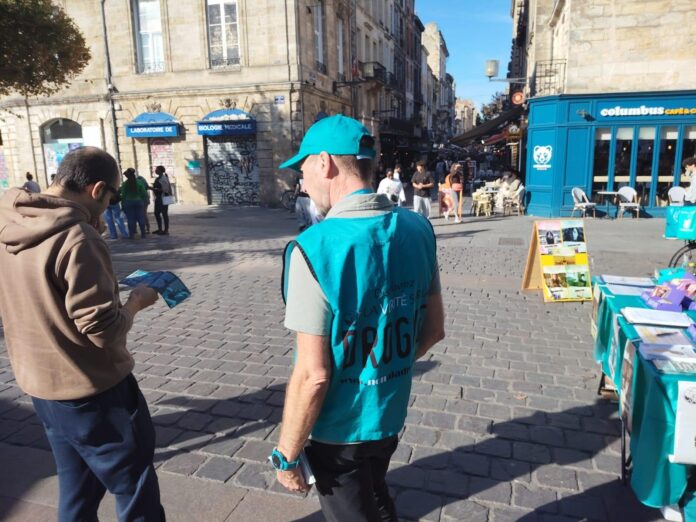
The south-west of France also saw sustained engagement, including a prevention stand in Bordeaux which attracted a constant flow of passers-by and local traders. In addition to the brochures distributed in surrounding stores, volunteers carried out simulated impairment exercises using glasses imitating the effects of alcohol or cannabis, sparking discussions about the risks associated with recreational consumption. Area merchants stressed the importance of providing teens and young adults with tools to understand the dangers of substances.

Other towns in the southwest, including Agen, welcomed volunteers who distributed brochures to stores whose owners expressed interest in supporting long-term prevention. In Toulouse, volunteers continued their awareness-raising activities in neighborhoods where educators regularly requested materials. In Nice, a stand on the street made it possible to interact with families affected by drug addiction, and several people asked to be contacted to participate in future activities, including one who expressed an interest in joining the association.

In late fall, several hundred brochures were distributed in Belfort, eastern France, where a social housing worker requested a full box of brochures on inhalant gases to distribute directly to families he thought might benefit. Local stores responded positively, with some traders reporting that the brochures had quickly sold out and asking to be restocked regularly. In Marseille, other documents were distributed in neighborhoods where community demand for prevention tools remained strong throughout the year.

Across these regions, volunteers observed consistent trends: the desire of parents for practical and reliable information, the eagerness of merchants to participate in the well-being of the community, and the open-mindedness of young adults who often shared their personal experiences or concerns. Many residents described these materials as helpful in starting conversations within their families or workplaces.

Looking back on recent activities, Ivan Arjona-Peladorepresentative of the Church of Scientology to the European Union, the OSCE, the Council of Europe and the United Nations, highlighted the broader importance of these initiatives:

“The growing participation of local communities shows how much people value evidence-based and accessible prevention. When individuals receive clear information, they feel empowered to fulfill their responsibilities to their families and neighborhoods. Effective prevention contributes not only to public health, but also to the dignity and cohesion of our societies across Europe. »

These efforts are part of the long-standing commitment of the Church of Scientology and its members to education, drug prevention, human rights awareness and community improvement. Founded by L. Ron Hubbard By the 1950s, Scientology was recognized as a religion in several European countries, and its churches, missions, and affiliated groups led nonsectarian initiatives that encouraged informed choices and community safety. Recognition of these contributions continues to grow across the continent.


Originally published at Almouwatin.com

Ending world hunger costs less than 1% of military spending

0
Ending world hunger costs less than 1% of military spending

By 2026, 318 million people will face famine levels or worse, more than double the figure in 2019, the food agency reported in its Global Outlook 2026.

International support for the planet’s hungriest people is “slow, fragmented and underfunded”, meaning many people living in the world’s troubled areas are unlikely to be able to receive sufficient aid next year, it said. PAM.

Participants in a food security livelihood program sort freshly harvested eggplants in Cox’s Bazar, Bangladesh.

“It is the poorest who pay the ultimate price,” said Amina MohamedDeputy Secretary General of the UN. “When elephants fight, it is the grass that suffers,” she added, citing an African proverb often used to convey the idea that when powerful nations, organizations or individuals engage in conflict, it is the weak or innocent who bear the brunt of the suffering.

Around the world, this “grass” – innocent civilians in Sudan, Gaza, Haiti, Yemen, the Sahel, the Democratic Republic of Congo and so many other places – are suffering beyond measure.

Families are paying the price for wars they did not start and decisions made in rooms where their voices are never heard, the deputy UN chief said.

WFP, an essential lifeline

“WFP provides a critical lifeline to people on the front lines of conflict and weather disasters, as well as those forced from their homes, and we are transforming the way we work to invest in long-term solutions to combat food insecurity,” said WFP Executive Director Cindy McCain.

In 2026, the agency plans to help 110 million vulnerable people at an estimated cost of $13 billion, providing emergency food assistance, nutritional support, community resilience programs and technical assistance to strengthen national systems.

“The world is grappling with simultaneous famines in Gaza and parts of Sudan. This is completely unacceptable in the 21st century,” McCain said.

“Across the world, hunger is becoming more entrenched. WFP has proven time and time again that early, effective and innovative solutions can save and change lives – but we desperately need more support to continue this vital work.”

Investing in climate adaptation, promoting peace and supporting local markets, while ensuring women and young people have ownership and decision-making power, are among the key priorities to end world hunger, said Amina Mohammed.

Originally published at Almouwatin.com

UNICEF condemns deadly school attack in Nigeria, demands urgent protection for students

0
UNICEF condemns deadly school attack in Nigeria, demands urgent protection for students

“No child should be put at risk while pursuing their education” UNICEF said, emphasizing that classrooms must remain places of safety and not of fear.

According to local reports, one of the kidnapped schoolgirls managed to escape and is now safe, while another student who was not taken also fled during the incident.

Speaking at the daily noon press briefing in New York, UN deputy spokesperson Farhan Haq called for rapid release of all abductees.

UNICEF offered its condolences to the affected families, expressed solidarity with the community and wished a full recovery to the injured.

Call for protection

The agency stressed that students, teachers and educational institutions must be protected against all forms of violence, in accordance with international humanitarian and human rights law. He urged those responsible to be held accountable, in accordance with national and international standards.

Nigeria endorsed the Safe Schools Declaration in 2015, committing to protecting the civilian character of educational institutions and ensuring safe access to learning during conflict.

The Declaration, launched at the first International Conference on Safe Schools in Oslo, Norway, aims to reduce attacks on education and protect learning environments around the world.

UNICEF said it continues to work closely with government partners, civil society and communities to strengthen child protection systems and promote safe and inclusive learning spaces across the country, emphasizing that stronger safeguards can help prevent future tragedies.

Kidnappings hinder learning

Attacks on schools and kidnappings of students remain a major obstacle to learning in Nigeria. A UNICEF report released last year to mark 10 years of the infamous Chibok kidnappings found that only 37 percent of schools in 10 states have early warning systems to detect threats, including violence and armed attacks.

The Minimum Safe School Standards (MSSS) monitoring report revealed stark safety disparities in six main areas: school governance, violence prevention, natural hazards, conflicts, everyday risks and security infrastructure.

The findings highlighted that ensuring that all Nigerian children can learn without fear remains an urgent and unfinished task.

UNICEF reiterated that education is a fundamental right and insisted that the protection of children, teachers and school infrastructure must remain a national and global priority.

Originally published at Almouwatin.com

Insolvency proceedings: Council and European Parliament agree on common EU rules

0
Foreign Affairs Council: Press remarks by High Representative Kaja Kallas upon arrival

The Council and the European Parliament reached a provisional agreement on an EU directive about harmonising certain aspects of insolvency law.

Source link

Olympic Truce: “Humanity can find common ground through sport”

0
Olympic Truce: “Humanity can find common ground through sport”

Speaking on the eve of the Milan-Cortina 2026 Winter Olympics, Annalena Baerbock recalled her years as a young trampoline gymnast chasing the Olympic dream – and the sense of unity that sport can forge, even between rivals.

The Olympic Truce, she said, is a powerful symbol of this possibility – “a living metaphor for the what peace requires: disciplinerespect and courage are necessary to build peace.

Examples from recent decades show how powerful this metaphor can be in practice.

In the 1990s, Open Football Schools brought together more than 150,000 children from ethnic divides in the Balkans, using the game to rebuild trust after conflict.

Similar programs in Colombia and Cyprus have helped fractured communities slowly regain trust through shared games, shared goals and shared terrain.

General Assembly President Annalena Baerbock (left) chairs the meeting Sport for development and peace: building a peaceful and better world through sport and the Olympic ideal.

Equality at home

The ability of sport to break down barriers is not only a matter of peace between nations, but also of equality at the national level.

Gender equality featured prominently in the Assembly President’s remarks. She celebrated the defiant spirit of Canada’s women’s hockey team, which won Olympic gold at Sochi 2014, and adopted the famous provocation “Play like a girl?” » with the answer: Yes – “fast and strong like girls”.

Their message, she says, opposes the stereotypes that continue to limit women and girls far beyond sports.

Milan-Cortina 2026 is expected to be the most balanced Winter Games yet, with 47 percent female athletes.

Italian promise

Italy is committed to ensuring the Games advance inclusion and accessibility on and off the ice, supported by hundreds of planned legacy projects.

The Italian delegation also highlighted moments of extraordinary sportsmanship that embody the Olympic spirit, recalling the generosity of bobsledder Eugenio Monti, who lent equipment to his rivals during the 1964 Innsbruck Games – an act that cost him victory that day but earned him lasting respect.

“Sport and the Olympic Games can be a beacon of hope, an alternative to rivalry and division,” said the Italian representative.

As the world turns to the Winter Games, the UN’s message is simple: the values ​​learned on the ground – fairness, courage, teamwork – are the same values ​​needed to build a more peaceful and inclusive world.

Originally published at Almouwatin.com

Ending violence against women “a matter of dignity, equality and human rights”

0
Ending violence against women “a matter of dignity, equality and human rights”

Instead, she found herself linked to a man who “went from being a nice guy to a monster.” He beat her “with his bare hands,” she said. said recently.

The young Yemeni mother is one of an estimated 840 million women worldwide – nearly one in three – who have experienced physical or sexual violence at the hands of an intimate partner, such as a former or current husband.

Worse still, this figure has barely changed since 2000, with a paltry 0.2 percent annual decline over the past two decades.

In the last 12 months alone, 11 percent of women aged 15 or older, or some 316 million, have been victims of physical or sexual violence by an intimate partner..

An “omnipresent” injustice

“Violence against women is one of humanity’s oldest and most widespread injustices, but it remains one of the least followed“, said Tedros Adhanom Ghebreyesus, Director-General of the World Health Organization (WHO).

The lack of progress is documented in a report released Wednesday by the WHO and other United Nations agencies.

It analyzes data from 168 countries, covering the period from 2000 to 2023, revealing “a bleak picture of a deeply neglected crisis and a seriously underfunded response.”

For the first time, national and regional estimates of sexual violence committed by someone other than a partner – a male relative or friend, for example – are included.

The results show that 263 million women have been victims of sexual violence by another partner since the age of 15a figure that experts warn is significantly underestimated due to stigma and fear.

The financing gap persists

The WHO noted that despite growing evidence of effective strategies to prevent violence against women, financial support continues to be reduced.

In 2022, only 0.2% of global development assistance was spent on these programs, and funding has declined further.

This comes at a time when humanitarian emergencies, rising inequality and other challenges put millions of women and girls at risk.

Violence starts early

Women who experience violence face unwanted pregnancies, a higher risk of contracting sexually transmitted infections and suffering from depression, the report said.

Furthermore, violence against women begins early and risks persist throughout life. In the last 12 months alone, 12.5 million young women aged 15 to 19 were victims of physical and/or sexual violence by an intimate partner.

“Data shows that many women first experience violence from a partner when they are adolescents. many children grow up watching their mothers being pushed, hit or humiliated, with violence being a part of everyday life“, said Catherine Russell, executive director of the children’s rights agency. UNICEF.

The key is to break this pattern, she added.

Action, support and investment

The report was published before International Day for the Elimination of Violence against Women and Girlsobserved each year on November 25.

It calls for decisive government action and funding to scale up evidence-based prevention programs and to strengthen health, legal and social services for survivors.

Countries must also invest in data systems to track progress and reach groups most at risk, in addition to implementing laws and policies that empower women and girls.

No society can call itself just, safe or healthy when half of its population lives in fear.“said Tedros.

“Ending this violence is not just a matter of politics; it’s about dignity, equality and human rights. »

Salma’s dream

Salma* is now back at school, after a judge finally released her to her parents.

She was also referred to a safe space supported by the United Nations reproductive agency, UNFPAwhere she learned her rights and remains true to her dream of becoming a doctor.

“We must urgently act together to end this violence and ensure that every woman and girl, in all their diversity, can exercise their rights, realize their potential and contribute fully to fairer, more equal and more prosperous societies,” said Diene Keita, Executive Director of UNFPA.

*Name changed for protection reasons.

Originally published at Almouwatin.com

Gaza: Displaced Palestinians dealing with the ‘death of dignity’, warns UNICEF

0
Gaza: Displaced Palestinians dealing with the ‘death of dignity’, warns UNICEF

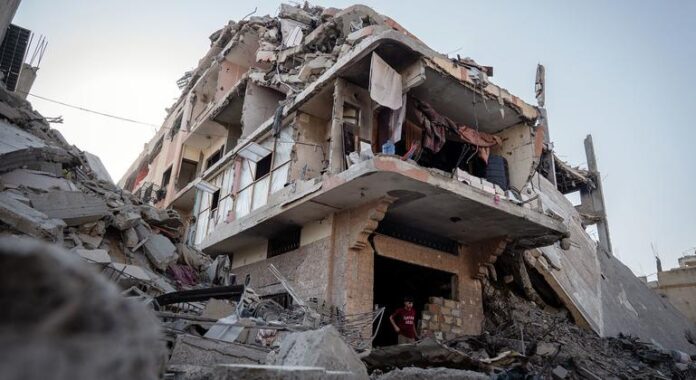
Children’s Fund, UNICEF, highlighted the case of six-year-old twins Yahya and Nabeela who were critically injured by an unexploded remnant of war in the north of the wartorn enclave.

They are receiving mental health support from the agency and tarpaulins to protect them from the cold.

Even though it hasn’t rained for a few days, the many families who live in tents are still struggling to recover from the sudden and heavy downpours at the weekend.

Degraded and afraid

Tess Ingram with UNICEF in Gaza described the plight of one displaced family whose tent was flooded. Wafa is a mother of five who was in tears.

“She said there were times that she wished that she was in the house in her family home with the children when it was bombed,” said Ms. Ingram, who added that Wafa had referred to “the death of dignity that they have experienced in recent days.”

Ms. Ingram said that an estimated 18,000 households were affected across more than 100 sites by the recent rains, but that many more families were likely impacted.

Winter needs outpace aid amid sanitation crisis

With winter approaching, UN humanitarian partners warn that shelter supplies entering Gaza remain far below what is needed. Fewer than 60,000 tents and just over 300,000 tarpaulins and bedding items have entered since early September, after a six-month ban was lifted.

The volume of items going in is simply not enough,” UN Spokesperson Stéphane Dujarric said on Wednesday at the daily briefing in New York.

Child-protection partners have distributed 48,000 winter clothing kits since the ceasefire, offering some relief to families trying to keep children warm.

Water and sanitation teams have reached around 400,000 people in the past two days with diapers, towels, jerry cans and other essential hygiene supplies.

Sanitation system in ruins

With Gaza’s wastewater treatment system effectively destroyed, partners describe sanitation across the Strip as “deplorable”.

In northern Gaza, the Sheikh Radwan ponds are again at risk of overflowing, forcing emergency measures to drain sewage into the sea. Public health risks are rising, including the spread of bacterial infections linked to contaminated water and waste.

Nutrition partners report a slight fall in malnutrition cases in October, though admissions remain nearly four times higher than during the previous ceasefire in January.

Source link

UN calls for legal safeguards for AI in healthcare

0
UN calls for legal safeguards for AI in healthcare

The warning comes in a report by the UN World Health Organization’s (WHO) office in Europe, where AI is already helping doctors to spot diseases, reduce administrative tasks and communicate with patients.

The technology is reshaping how care is delivered, data are interpreted, and resources are allocated.

“But without clear strategies, data privacy, legal guardrails and investment in AI literacy, we risk deepening inequities rather than reducing them,” said Dr. Hans Kluge, WHO Regional Director for Europe.

Transforming healthcare

The report is the first comprehensive assessment of how AI is being adopted and regulated in health systems across the region.  The survey was sent to the 53 countries there, and 50 participated.

Although nearly all recognize how AI could transform healthcare – from diagnostics to disease surveillance to personalized medicine – only four countries have a dedicated national strategy and a further seven are developing one.

Some countries are taking proactive steps such as Estonia, where electronic health records, insurance data and population databases are linked in a unified platform that supports AI tools.

Finland also has invested in AI training for health workers, while Spain is piloting AI for early disease detection in primary healthcare.

Challenges and constraints

However, across the region, regulation is struggling to keep pace with technology.

Forty-three countries, 86 per cent, report legal uncertainty as their top barrier to AI adoption, while 39 – that’s 78 per cent – cite financial affordability.

Meanwhile, less than 10 per cent of countries have liability standards for AI in health, critical for determining who is responsible in the event an AI system makes a mistake or causes harm.

“Despite these challenges, there is a broad consensus on the policy measures that could facilitate the uptake of AI,” the report said.

“Nearly all Member States viewed clear liability rules for manufacturers, deployers and users of AI systems as a key enabler. Similarly, guidance that ensures transparency, verifiability and explainability of AI solutions is considered essential for building trust in AI-driven outcomes.”

Prioritize people always

WHO urged countries to develop AI strategies that align with public health goals.

They were also encouraged to invest in an AI-ready workforce, strengthen legal and ethical safeguards, engage with the public and improve cross-border data governance.

“AI is on the verge of revolutionizing healthcare, but its promise will only be realized if people and patients remain at the centre of every decision,” said Dr. Kluge.

“The choices we make now will determine whether AI empowers patients and health workers or leaves them behind.” 

Source link