
MEPs achieved increases for the 2026 EU budget and secured funds for Horizon Europe, transport and energy networks, civil protection and agriculture.Committee on Budgets Source : © European Union, 2025 – EP
‘Mobs’ target Palestinians in occupied West Bank, as floods roil Gaza
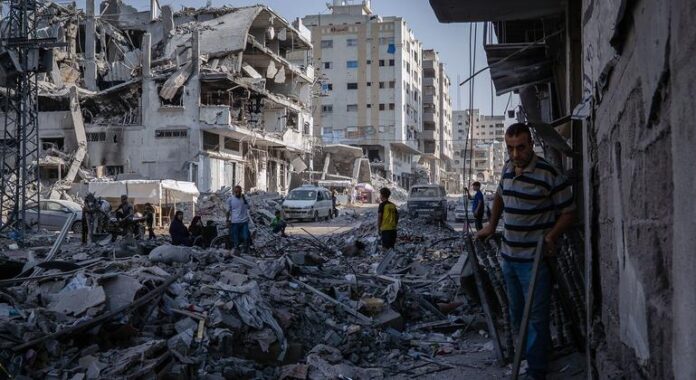
OHCHR condemned this week’s attacks as abhorrent and said they reflected a wider pattern of increased violence against Palestinians.
Several people were reportedly injured in the attacks, which included a raid on a dairy factory, while delivery trucks and homes were set ablaze.
The surge in violence comes as Israeli authorities have also ramped up home demolitions in addition to property seizures and the forcible displacement and transfer of thousands of Palestinians by Israeli settlers and the military, OHCHR continued, in a briefing for journalists at the UN in Geneva.
Officials reiterated that Israel’s assertion of sovereignty over the occupied West Bank and its annexation of parts of it, are in breach of international law which has been confirmed by the International Court of Justice (ICJ).
Floods in Gaza
Meanwhile in Gaza, hundreds of tents and makeshift shelters were flooded due to heavy rain on Friday.
“We fear that thousands of displaced families will be left fully exposed to these harsh weather conditions” amid wider health and protection concerns, said the UN Spokesperson Stéphane Dujarric at a later briefing in New York.
UN partners are working to provide shelter support via rapid response teams.
Around 1,000 tents were distributed to families in Deir al Balah and Khan Younis on Thursday. Between Sunday and Wednesday, partners provided about 7,000 blankets to more than 1,800 households, along with some 15,000 tarpaulins to more than 3,700 households and winter clothing.
Aid partners stress that proper flood prevention requires equipment which is not available in Gaza, including tools to drain water away from tents and to clear solid waste and rubble.
Aid items ‘stuck in Jordan’
“Millions of urgently needed shelter items remain stuck in Jordan, Egypt and Israel, awaiting approvals to enter Gaza,” Mr. Dujarric continued.
“Dire living conditions are also increasing people’s exposure to explosive ordnance, with children among those most at risk. Some people have been injured while collecting firewood; others are having to pitch tents near areas suspected of containing unexploded remnants simply because they have no safer options.”
The Spokesperson underscored the need for the full and sustained opening of existing and additional crossings, clearance of essential aid and equipment for entry, and access for all aid items from the UN and partners.
EU budget for 2026: Council and Parliament reach agreement

The Council and the European Parliament have agreed on the EU’s annual budget for 2026. Next year’s budget will focus on delivering Union priorities and dealing with ongoing challenges. It will boost competitiveness, strengthen Europe’s defence readiness and preparedness, provide support for humanitarian assistance and address migratory pressures.
Sudan war: Aid teams plead for access to thousands trapped in El Fasher

That ordeal reduced people to eating peanut shells and animal feed, UN human rights chief Volker Türk said on Friday, before condemning the reported mass killings of civilians, executions based on ethnicity and other atrocities, which are likely continuing.
At the Human Rights Council in Geneva, Mr. Türk told Member States that bloodstains on the ground in El Fasher can be seen from space.
“We warned that the fall of the city to the Rapid Support Forces would result in a bloodbath,” he said, before calling for immediate international action to stop the violence at a special meeting convened by concerned Member States. “All those involved in this conflict should know: we are watching you, and justice must prevail,” the High Commissioner insisted.
Stranded, seeking help
According to the UN refugee agency, UNHCR, nearly 100,000 people have fled El Fasher and villages close by in the last two weeks alone.
“They are stranded somewhere,” said the agency’s Head of Sub Office in Port Sudan, Jacqueline Wilma Parlevliet. Families arriving in Tawila, about 50 kilometres from El Fasher have recounted “unimaginable horrors” before and after fleeing the city, she said.
Briefing journalists in Geneva via video, Ms. Parlevliet highlighted widespread reports of rape and sexual violence by escapees and scenes of desperation.
“Parents are searching for missing children, many traumatized due to conflict and the dangerous journey to reach safety. Unable to pay ransoms, families have lost young male relatives to arrests or forced recruitment into armed groups,” the UNHCR official explained.
Those hoping to find safety away from El Fasher face ever more dangerous journeys skirting around military checkpoints, some travelling for up to 15 days with limited food and water before reaching shelter in locations including Ad Dabbah in Northern state.
The small town on the bank of the river Nile now houses at least 37,000 people from El Fasher and thousands more are thought to be on their way. Reports also indicate that armed groups are forcibly returning many people to El Fasher where conditions are dire, UNHCR said, citing local sources.
“Thousands of people, particularly the elderly, those with disabilities and the wounded, remain trapped, either prevented from leaving the city or lacking the means or strength to flee,” Ms. Parlevliet told journalists.
A crisis of staggering proportions
Sudan is the world’s largest displacement crisis with more than 12 million people uprooted inside and outside the country.
For many of those attempting to return home elsewhere in the vast east African nation, the threat of unexploded weapons remains huge, according to the UN Mine Action Service, UNMAS.
It noted that in South Kordofan, West Kordofan, and Blue Nile States alone, 13 million square kilometres of land are contaminated.
“There are many other countries that are affected by explosive remnants of war and landmines…Sudan is very different. Why? Because, war is mainly happening in urban areas,” said Sediq Rashid, Chief of UNMAS Sudan, speaking from Port Sudan.
He explained that just within the capital, Khartoum, risks ranged from unexploded and abandoned ammunitions, anti-vehicle mines and anti-personnel mines.
Displaced families are particularly at risk, often settling in unfamiliar locations “without any awareness of past conflicts or contamination”, Mr. Rashid continued.
Meanwhile, civilian casualties from mines and other unexploded ordnance continue to rise – “and we know that the cases that are being reported represent only a fraction of the true scale of the harm”, he said.
Human rights Council spotlight on Sudanese plight
- It’s an indication of the gravity of the Sudan crisis that the UN Human Rights Council met on Friday in Special Session, prompted by the dire situation in El Fasher.
- The Council has been a key part of the UN and international system since it was established by the UN General Assembly in 2006, precisely to take action to protect people’s most fundamental rights when they come under attack, as in Sudan.
- Human Rights Council investigations can for instance be referred to the International Criminal Court (ICC). Read our UN News explainer on the ICC here: https://news.un.org/en/story/2024/05/1149981
- Specifically, Member States expressed alarm as paramilitary Rapid Support Forces captured the North Darfur capital, El Fasher, ending an 18-month siege late last month. This has been linked to credible accounts of widespread atrocities including summary executions, ethnically motivated killings, sexual violence, abductions and deliberate attacks on civilians.
- As is usual during Special Sessions, the UN’s top human rights official, Volker Türk, delivers the opening address, followed by leading independent experts, the country or countries concerned and then Member State or States that called for the meeting in the first place.
- You can see the whole session here on webtv 38th Special Session of the Human Rights Council | UN Web TV and an edited version of key speakers’ remarks here: UN Geneva – Multimedia Newsroom : 38th Special Session of the HRC on Sudan
- The Council has followed the Sudan crisis since it erupted in April 2023 following a breakdown in transition to civilian rule, following the overthrow of long-time President Omar al-Bashir. At today’s Special Session, Members adopted a resolution requesting independent rights investigators to conduct an urgent inquiry into the El Fasher allegations and report back.
Stolen past: in the fight against illicit trafficking in antiquities
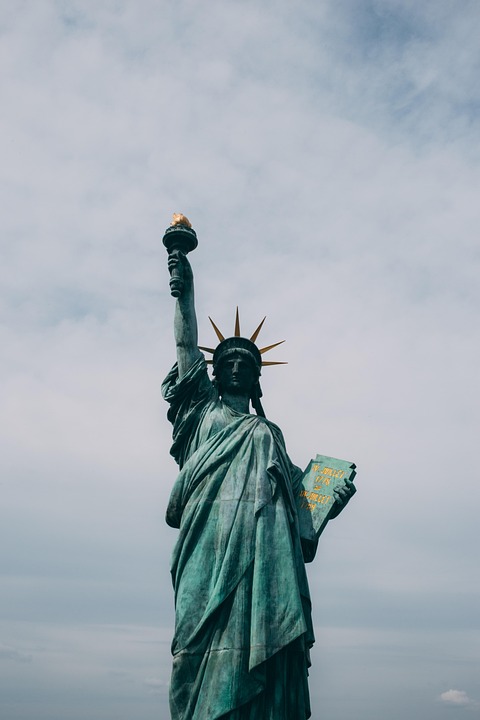
Last year alone, more than 37,000 cultural objects – including archaeological objects, works of art, coins and musical instruments – were seized in an international operation led by Interpol and other organizations, working with law enforcement and customs authorities from 23 countries.
According to Interpol, Ukrainian customs authorities intercepted 87 items of historical value, including icons of Saint Seraphim of Sarov and ancient coins that smugglers were trying to illegally export to Poland, Moldova and Romania.
In Spain, investigators discovered a group that had looted archaeological sites in Cáceres province, using metal detectors to extract thousands of Roman coins and selling them on social media.
In Greece, three people were arrested for trying to sell five Byzantine icons for $80,000.
International cooperation
According to the United Nations Office on Drugs and Crime (UNODC), the smuggling of cultural goods is, alongside arms and drug trafficking, among the most lucrative illicit exchanges.
However, unlike other forms of trafficking, the trade in cultural goods is not completely forbidden.
The high demand for antiques and works of art, combined with weak regulation, makes the market very lucrative and relatively low-risk, particularly in times of political instability, war and social upheaval, where changing priorities often leave archaeological sites and museums unattended.
Organized criminal networks take advantage of crises, operate through complex supply chains, and profit from both the legal and black markets.
Talk to UN News in advance International Day Against Illicit Trafficking in Cultural Propertycelebrated every year on November 14, the cultural organization of the United Nations, UNESCOKrista Pikkat of Krista Pikkat said: “Illicit trafficking, theft and illicit transfers of cultural property really touch on issues such as cultural rights, cultural identity, our memory and communities and their history. »
Increasingly, traffickers are also turning to online platforms and auctions to sell stolen items, including items recovered from underwater archaeological sites.
UNESCO condemned the October 2025 theft of “eight priceless cultural objects” from the famous Louvre Museum in Paris, France, warning that such crimes “endanger the conservation, study and transmission of valuable historical objects.”
Financing of terrorism
The organization highlights that illicit trafficking fuels global criminal networks linked to money laundering, tax evasion and even terrorist financing.
Since 2023, UNESCO has trained more than 1,200 museum and customs professionals from 80 countries to strengthen legal frameworks, train and raise public awareness.
“We also collaborate with some of our partners, for example the International Atomic Energy Agency (IAEA), to see how nuclear technology can be applied to provenance research. It is therefore also interesting to see how new technologies in artificial intelligence actually offer us new opportunities in the fight against illicit trafficking,” added Ms. Pikkat.
In September, UNESCO launched the first Virtual Museum of Stolen Cultural Objectsusing 3D modeling and virtual reality to display digital replicas of stolen objects.
The platform includes educational materials, testimonies from affected communities and examples of successful restitution. “The idea behind the museum,” Ms. Pikkat said, “is that one day it will be empty.”
She shared a personal example involving her home country of Estonia, which nominated several altar sculptures from a small island church to the museum’s collection.
A 16th-century altarpiece from KaarmaChurch in Estonia.
Made by Lübeck artisans in the 16th century, these pieces reflect Estonia’s historical ties to the Hanseatic League.
Their true value, she stressed, lies not in money but in their historical, cultural and spiritual significance. UNESCO warns that a society deprived of its heritage loses part of its identity and the foundations of its future development.
The UN cultural agency continues to support countries in their efforts to identify and recover stolen objects, particularly in Central Asia, where objects have been trafficked from Afghanistan.
Digital tools such as electronic records, databases and blockchain technology now help trace the provenance of antiquities.
Authorities urge buyers to always request official documents proving origin and to avoid unknown online sellers. Suspicious items can be reported to local law enforcement or directly to Interpol.
Each repatriated artifact reestablishes a precious link between past and present.
Originally published at Almouwatin.com
Ukraine: UN condemns latest deadly attack targeting civilians in Kyiv
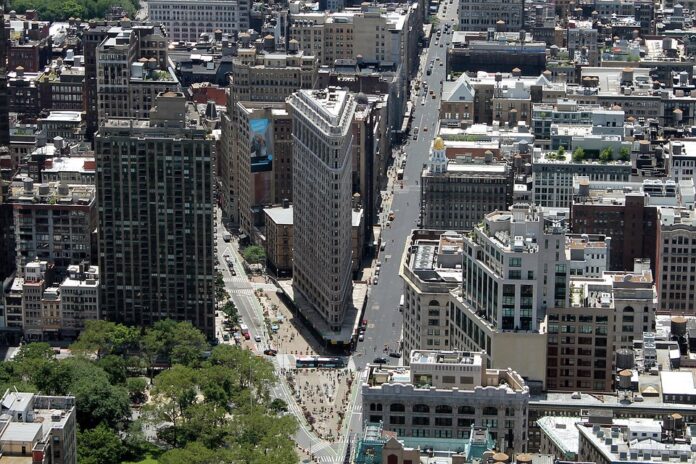
The UN humanitarian coordinator for Ukraine, Matthias Schmale, deplored the latest wave of drone and missile strikes, which damaged or destroyed homes, medical facilities and heating networks in the city.
“I condemn the massive damage caused to civilians by these strikes, which are destroying essential infrastructure just as winter sets in.“, he declared in a declaration posted on social networks.
Assault on energy systems
Ukraine is facing intensifying attacks on its energy network, UN human rights investigators said recently. report.
“The month of October was marked by emergency power cuts in several regions of Ukraine, due to the Russian Federation’s continued attacks on some regions and new large-scale strikes against energy infrastructure,” the statement said.
Children suffering
At least six people were killed in the kyiv attack, according to media reports.
The United Nations Children’s Fund (UNICEF) said two children, aged seven and ten, were among the injured.
“Even more terrifying, sleepless and cold nights for children in Ukraine as attacks continue, affecting homes, electricity and heating supply systems», the agency tweeted.
UNICEF also spoke to a boy called Viacheslav. His house was damaged in the strikes and his neighbors were among those reportedly killed.
“First there was a roar, then it got louder, then everything exploded. Our windows exploded,” he recalls. “I was very scared.”
UNICEF called for an end to all attacks and for the protection of children.
Humanitarian response continues
The full-scale Russian invasion of Ukraine is now in its fourth year and continues to devastate lives and infrastructure.
More than 14,500 people were killed and nearly 38,500 injured.
Nearly 13 million people, 36 percent of the populationneed for humanitarian aidaccording to the UN aid coordination office OCHA.
Despite the challenges, the The UN and its partners helped 8.4 million people last year.
Originally published at Almouwatin.com
Sudan war: Aid teams plead for access to thousands trapped in El Fasher
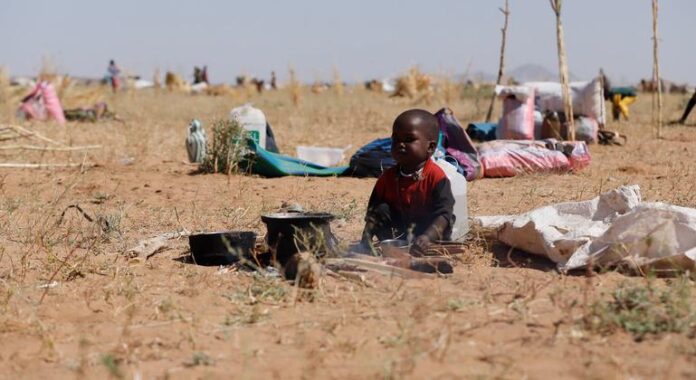
That ordeal reduced people to eating peanut shells and animal feed, UN human rights chief Volker Türk said on Friday, before condemning the reported mass killings of civilians, executions based on ethnicity and other atrocities, which are likely continuing.
At the Human Rights Council in Geneva, Mr. Türk told Member States that bloodstains on the ground in El Fasher can be seen from space.
“We warned that the fall of the city to the Rapid Support Forces would result in a bloodbath,” he said, before calling for immediate international action to stop the violence at a special meeting convened by concerned Member States. “All those involved in this conflict should know: we are watching you, and justice must prevail,” the High Commissioner insisted.
Stranded, seeking help
According to the UN refugee agency, UNHCR, nearly 100,000 people have fled El Fasher and villages close by in the last two weeks alone.
“They are stranded somewhere,” said the agency’s Head of Sub Office in Port Sudan, Jacqueline Wilma Parlevliet. Families arriving in Tawila, about 50 kilometres from El Fasher have recounted “unimaginable horrors” before and after fleeing the city, she said.
Briefing journalists in Geneva via video, Ms. Parlevliet highlighted widespread reports of rape and sexual violence by escapees and scenes of desperation.
“Parents are searching for missing children, many traumatized due to conflict and the dangerous journey to reach safety. Unable to pay ransoms, families have lost young male relatives to arrests or forced recruitment into armed groups,” the UNHCR official explained.
Those hoping to find safety away from El Fasher face ever more dangerous journeys skirting around military checkpoints, some travelling for up to 15 days with limited food and water before reaching shelter in locations including Ad Dabbah in Northern state.
The small town on the bank of the river Nile now houses at least 37,000 people from El Fasher and thousands more are thought to be on their way. Reports also indicate that armed groups are forcibly returning many people to El Fasher where conditions are dire, UNHCR said, citing local sources.
“Thousands of people, particularly the elderly, those with disabilities and the wounded, remain trapped, either prevented from leaving the city or lacking the means or strength to flee,” Ms. Parlevliet told journalists.
A crisis of staggering proportions
Sudan is the world’s largest displacement crisis with more than 12 million people uprooted inside and outside the country.
For many of those attempting to return home elsewhere in the vast east African nation, the threat of unexploded weapons remains huge, according to the UN Mine Action Service, UNMAS.
It noted that in South Kordofan, West Kordofan, and Blue Nile States alone, 13 million square kilometres of land are contaminated.
“There are many other countries that are affected by explosive remnants of war and landmines…Sudan is very different. Why? Because, war is mainly happening in urban areas,” said Sediq Rashid, Chief of UNMAS Sudan, speaking from Port Sudan.
He explained that just within the capital, Khartoum, risks ranged from unexploded and abandoned ammunitions, anti-vehicle mines and anti-personnel mines.
Displaced families are particularly at risk, often settling in unfamiliar locations “without any awareness of past conflicts or contamination”, Mr. Rashid continued.
Meanwhile, civilian casualties from mines and other unexploded ordnance continue to rise – “and we know that the cases that are being reported represent only a fraction of the true scale of the harm”, he said.
Human rights Council spotlight on Sudanese plight
- It’s an indication of the gravity of the Sudan crisis that the UN Human Rights Council met on Friday in Special Session, prompted by the dire situation in El Fasher.
- The Council has been a key part of the UN and international system since it was established by the UN General Assembly in 2006, precisely to take action to protect people’s most fundamental rights when they come under attack, as in Sudan.
- Human Rights Council investigations can for instance be referred to the International Criminal Court (ICC). Read our UN News explainer on the ICC here: https://news.un.org/en/story/2024/05/1149981
- Specifically, Member States expressed alarm as paramilitary Rapid Support Forces captured the North Darfur capital, El Fasher, ending an 18-month siege late last month. This has been linked to credible accounts of widespread atrocities including summary executions, ethnically motivated killings, sexual violence, abductions and deliberate attacks on civilians.
- As is usual during Special Sessions, the UN’s top human rights official, Volker Türk, delivers the opening address, followed by leading independent experts, the country or countries concerned and then Member State or States that called for the meeting in the first place.
- You can see the whole session here on webtv 38th Special Session of the Human Rights Council | UN Web TV and an edited version of key speakers’ remarks here: UN Geneva – Multimedia Newsroom : 38th Special Session of the HRC on Sudan
- The Council has followed the Sudan crisis since it erupted in April 2023 following a breakdown in transition to civilian rule, following the overthrow of long-time President Omar al-Bashir. At today’s Special Session, Members adopted a resolution requesting independent rights investigators to conduct an urgent inquiry into the El Fasher allegations and report back.
War in Sudan: humanitarian teams plead for access to thousands of people stuck in El Fasher

This ordeal has reduced people to eating peanut shells and animal food, UN human rights chief Volker Türk said on Friday, before condemning the massacres of civilians, executions based on ethnicity and other atrocities, which should continue.
At Human Rights Council In Geneva, Mr. Türk told Member States that the bloodstains on the ground in El Fasher were visible from space.
“We warned that the fall of the city to the Rapid Support Forces would result in bloodshed,” he said. before calling for immediate international action to end the violence at a special meeting called by relevant member states. “Everyone involved in this conflict should know: we are watching you and justice must prevail. » insisted the High Commissioner.
Stuck, looking for help
According to the United Nations refugee agency, UNHCRNearly 100,000 people have fled El Fasher and neighboring villages in the last two weeks alone.
“They are stuck somewhere” said Jacqueline Wilma Parlevliet, head of the agency’s sub-office in Port Sudan. Families arriving in Tawila, about 50 kilometers from El Fasher, recounted “unimaginable horrors” before and after fleeing the town, she said.
Speaking to journalists in Geneva by video, Parlevliet highlighted widespread reports of rape and sexual violence by escapees and scenes of despair.
“Parents are searching for missing children, many of them traumatized by the conflict and the dangerous journey to safety. Unable to pay ransoms, families have lost young male relatives to arrest or forced recruitment into armed groups.” » explained the UNHCR official.
Those hoping to find safety away from El Fasher face increasingly dangerous journeys bypassing military checkpoints, with some traveling for up to 15 days with limited food and water before finding refuge in places like Ad Dabbah in the Northern state.
The small town on the banks of the Nile is now home to at least 37,000 El Fasher residents and thousands more are believed to be on the way. There are also reports that armed groups are forcibly returning many people to El Fasher, where conditions are dire, UNHCR said, citing local sources.
“Thousands of people, especially the elderly, the disabled and the injured, remain stuck, either prevented from leaving the city or lacking the means or strength to flee,” Parlevliet told reporters.
A crisis of staggering proportions
Sudan has the world’s largest displacement crisis, with more than 12 million people uprooted inside and outside the country.
For many of those trying to return home elsewhere in the vast East African country, the threat of unexploded weapons remains enormous, according to the United Nations Mine Action ServiceUNMAS.
He noted that in South Kordofan, West Kordofan and Blue Nile states alone, 13 million square kilometers of land are contaminated.
“Many other countries are affected by explosive remnants of war and landmines…Sudan is very different. Why? Because the war is mainly taking place in urban areas,” said Sediq Rashid, head of UNMAS Sudan, speaking from Port Sudan.
He explained that in the capital, Khartoum, risks ranged from unexploded and abandoned ordnance to anti-vehicle and anti-personnel mines.
Displaced families are particularly exposed, often settling in unfamiliar places “without any awareness of past conflicts or contamination,” Mr. Rashid continued.
Meanwhile, civilian casualties from mines and other unexploded ordnance continue to rise – “and we know that the reported cases represent only a fraction of the true scale of the damage,” he said.
Human Rights Council highlights critical situation in Sudan
- It is an indication of the seriousness of the crisis in Sudan that the UN Human Rights Council met in a special session on Friday, prompted by the dire situation in El Fasher.
- The Council has been a key part of the UN and the international system since its creation by the UN General Assembly in 2006, precisely to act to protect people’s most fundamental rights when they are under attack, as in Sudan.
- Human Rights Council investigations can, for example, be referred to the International Criminal Court (ICC). Read our UN News explainer on the ICC here: https://news.un.org/en/story/2024/05/1149981
- Specifically, Member States expressed concern when rapid support paramilitary forces captured North Darfur’s capital, El Fasher, ending an 18-month siege late last month. This has been linked to credible accounts of widespread atrocities, including summary executions, ethnically motivated killings, sexual violence, kidnappings and deliberate attacks on civilians.
- As usual at special sessions, the UN’s top human rights official, Volker Türk, delivers the opening speech, followed by leading independent experts, the country(ies) involved, and then the member state(s) that convened the meeting in the first place.
- You can watch the entire session here on webtv 38th Special Session of the Human Rights Council | UN Web TV and an edited version of keynote speakers here: UN Geneva – Multimedia press room: 38th Extraordinary Session of the HRC on Sudan
- The Council has been following the Sudanese crisis since it erupted in April 2023, following the failure of the transition to civilian rule following the overthrow of longtime President Omar al-Bashir. During today’s special session, members adopted a resolution calling for independent rights investigators carry out an urgent investigation into El Fasher’s allegations and report.
Originally published at Almouwatin.com
Smart heat pumps could take pressure off grid and cut bills, say Southampton scientists
Heat pumps could play a significant role in stabilising the nation’s electricity supply by providing demand flexibility, according
Eight in ten workers find a job thanks to support from EU fund

More than eight in ten dismissed workers have found a new job within 18 months of receiving European Globalisation Adjustment Fund support, according to a new report. This EU fund helps workers or the self-employed who lose their job due to restructuring get new skills and find a new job.
