Thirteen survivors were rescued by Malaysian authorities, but dozens remain missing.
Another ship with around 230 people on board is believed to still be at sea, raising fears of another tragedy.
Thousands of Rohingya refugees continue to attempt perilous journeys across the Bay of Bengal and Andaman Sea in search of safety, as conditions deteriorate in camps in Bangladesh and conflict-hit Myanmar.
The death toll rises
The United Nations refugee agency, UNHCRand the International Organization for Migration (IOM) expressed deep concern over the increasing human losses, stressing that more than 600 people have already died or gone missing at sea this year.
Women and children make up more than two-thirds of those making these dangerous crossings.
The agencies welcomed the rescue efforts by Malaysian authorities and local communities and called for stronger regional cooperation to strengthen search and rescue capabilities, ensure safe disembarkation and address the root causes of displacement in Myanmar.
In Gaza, a immunization, nutrition and health catch-up campaign is underway to reach more than 40,000 children under the age of three who have not received routine vaccinations due to two years of conflict.
UNICEFThe United Nations Children’s Fund warned on Tuesday that vaccination rates in the enclave had fallen below 70 percent – a key threshold for keeping preventable diseases at bay.
The campaign has already reached thousands of children after starting this weekend. It will take place in three rounds: this month, December and January.
UNICEF spokesperson Ricardo Pires noted that before the war, Gaza had 98 percent vaccination coverage and 55 vaccination sites: “Today, coverage has fallen below 70 percent with 31 vaccination centers destroyed or damaged. »
While a fragile ceasefire remains in place in Gaza, Pires said the biggest problem is the delivery of essential medical equipment to the Strip, essential to the success of the campaign.
That includes 1.6 million syringes, but the vast majority are still outside the enclave, UNICEF’s Pires said.
Fuel supply
Between Friday and Monday, the United Nations Office for Project Services distributed over 619,000 liters of diesel to humanitarian partners to support critical operations including water services, sanitation, hygiene, health, logistics, rubble removal, education, nutrition and protection.
Between 1 November and Sunday, UN partners in Gaza provided general food assistance to some 255,000 people, distributing two food parcels per household.
“A month after the start of the ceasefire, our partners working on food security are distributing around 160,000 packs of bread every day, produced by 19 UN-supported bakeries, including nine in northern Gaza,” said deputy spokesperson Farhan Haq.
Loan initiative improves access for vulnerable food producers
A UN-backed lending initiative is underway, aimed at helping small farmers and producers in the Sahara and beyond, who are held back by the difficulties they often face in obtaining commercial loans.
Announcing the news on Tuesday, the Food and Agriculture Organization (FAO) explained that producers face barriers to accessing funds because the sector is perceived as riskier than others, due to its exposure to climate shocks and price volatility.
Credit where credit is due
But thanks to the European Union which provides guarantees to the tune of 109.5 million euros, the Italian public development bank CDP will now grant credits to approved lenders operating in Africa and Turkey.
FAO’s role is to provide technical expertise in food, agriculture and finance to the program’s local lenders.
“Knowledge is the best instrument to reduce risks,” said the head of the UN agency, Qu Dongyu.
In Cubamore than 54,000 people remain displaced, including 7,500 residing in official shelters, according to the UN relief coordination office, OCHA. The scale of damage is now much higher than initial estimates, with more than 600 health facilities and 90,000 households affected.
UN agencies are supporting the national response, assisting around 140,000 people in shelters and community kitchens, and distributing agricultural tools and livestock feed to restore livelihoods.
They also provide equipment to strengthen disease control and prevention efforts and deliver medical supplies to strengthen reproductive health services, including maternal care.
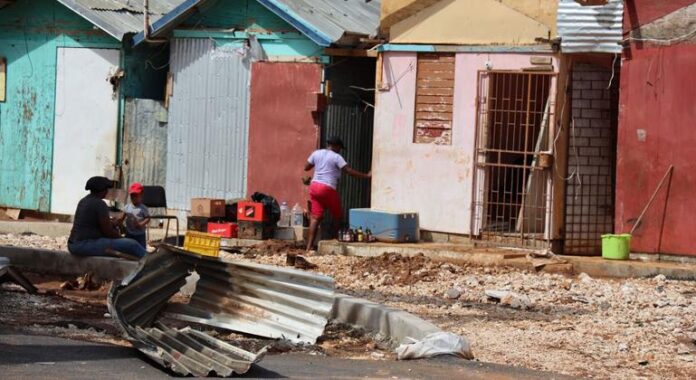
In Jamaicaaccess to isolated communities is improving but remains precarious.
Only two communities are still inaccessible – down from 27 last week – although additional rainfall could limit access once again.
Housing remains a major concern. Some 40,000 tarpaulins intended for delivery were not transported due to blocked and damaged roads. The United Nations World Food Program (PAM) has so far helped 9,000 people in the hard-hit Westmoreland and St. Elizabeth areas, and plans to extend cash assistance to up to 90,000 households when conditions permit.
In Haitiwhere Hurricane Melissa left more than 40 dead, humanitarian partners are expanding their operations amid significant damage in several departments.
The UN and partners also distributed hygiene kits, restored electricity for vaccine refrigeration and provided psychosocial support in schools.
They are also delivering 15 days of food rations to hard-hit southern areas. In Petit Goâve, food aid is being provided to more than 40,000 people, and further distributions are planned this week.
To overcome access challenges, the United Nations Humanitarian Air Service (UNHAS) has expanded its operations with five new access points to reach isolated communities.
Philippines: Response intensifies after back-to-back typhoons
In the Philippines, WFP is scaling up emergency operations following Typhoon Kalmaegi and Super Typhoon Fung-Wong, which affected 8.3 million people and displaced more than 1.4 million people in Luzon, the country’s largest and most populous island.
Before landfall, the agency distributed emergency cash transfers to more than 210,000 people to help families evacuate and prepare.
Since the storms, WFP has provided 187,000 family food packages, enough to feed nearly a million people for several days.
Telecommunications units and generators have also been deployed to restore connectivity, while logistics teams are supporting relief efforts in 14 provinces.
UN News on Tuesday interviewed Arnaud Peral, UN resident coordinator in the country, who highlighted the relative success of government-led preparedness and early warning systems – fully supported by UN agencies.
The European Commission’s new European Democracy Shield and civil society strategy will protect our democracies and civil society from the threat posed by foreign interference and disinformation. Find out more.
“Women speaking to us from El Fasher, the heart of Sudan’s latest catastrophe, tell us that they’ve endured starvation…displacement, rape and bombardment,” Anna Mutavati, UN Women Regional Director for East and Southern Africa, told reporters in Geneva. “Pregnant women have given birth in the streets as the last remaining maternity hospitals were looted and destroyed.”
The Rapid Support Forces (RSF) militia captured North Darfur state capital El Fasher after more than 500 days of siege in late October, amid reports of widespread atrocities including summary executions and sexual violence.
Fighting erupted in April 2023 between the Sudanese Armed Forces and the paramilitary RSF when a transition to civilian rule broke down, stemming from the overthrow of long-time ruler Omar al-Bashir four years earlier. The ensuing heavy fighting has devastated communities, displaced millions and exacerbated an already dire humanitarian crisis.
In 2008, the UN Security Council recognised that rape in conflict and other forms of sexual violence can constitute a war crime, a crime against humanity and a component of genocide.
Find out how one war criminal was brought to justice in the DR Congo here, including for using rape as a weapon of conflict.
Ms. Mutavati said that the situation is worsening dramatically as fighting spreads around the city, prompting mass displacement. Thousands of women and girls have fled to other localities in North Darfur including Tawila, which is some 70 kilometres away, Korma and Malit, where a humanitarian presence is “very scarce”.
On Monday, UN aid coordination office OCHA said that nearly 89,000 people have fled from the area, some seeking refuge near the Sudan-Chad border.
“What the women tell us is that on their horrific journey…every step that they’ve taken to fetch water, to collect firewood or to stand in a food line has carried a high risk of sexual violence,” the UN Women representative said. “There is mounting evidence that rape is being deliberately and systematically used as a weapon of war.”
Nowhere is safe
Warning that women’s bodies “have just become a crime scene in Sudan”, Ms. Mutavati insisted that there are “no safe spaces” left where women can find protection or access basic psychosocial care.
“Basic dignity has also collapsed,” the UN Women official insisted, explaining that in North Darfur a single packet of sanitary towels costs around $27, while humanitarian cash assistance amounts to slightly below $150 per month for a family of six, on average.
Ms. Mutavati spoke of “impossible decisions” having to be made by families “forced to choose between food and medicine and dignity”.
“The essential needs of women and girls fall to the very bottom of that list,” she said.
Ms. Mutavati also said that in Sudan – like in other crises – “women and girls eat the least and they eat last”.
“Most women and girls may not be eating at all in Sudan…Women often skip meals so that their children can eat, while adolescent girls frequently get the smallest share, undermining their long-term nutrition and health,” she said.
“In besieged, remote areas like Darfur or Kordofan, women and girls are often the ones that are scavenging for survival,” Ms. Mutavati added, citing reports of women “foraging for wild leaves and berries to boil into soup” while facing additional risks of violence.
Starvation takes hold
In early November, the latest UN-backed IPC food security analysis confirmed famine conditions in El Fasher and in the capital of South Kordofan state, Kadugli.
Ms. Mutavati also said that health workers report rising cases of severe acute malnutrition in infants, often linked to their starving mothers’ reduced ability to breastfeed.
“There’s a ripple effect of the hunger that women are experiencing,” she warned.
Calling for an end to the violence, for broader humanitarian access and for increased support to women-led soup kitchens and other aid providers, Ms. Mutavati stressed that women and girls in Sudan “are the measure of our shared humanity”.
“Every day that the world delays to act on Sudan, another woman gives birth under fire or buries her child in hunger, or disappears without justice,” she concluded.
Relief chief presses for aid access
The UN’s top humanitarian official, Tom Fletcher, arrived in Sudan on Monday to press for an end to atrocities and to push for unhindered access for aid workers.
The situation in North Darfur remains volatile following the fall of El Fasher. Although major clashes have eased, civilians still face sporadic attacks, looting and gender-based violence.
In South Kordofan, a drone strike reportedly hit the town of Um Barmbeeta, destroying a school and injuring several displaced people, while insecurity continues to block access to areas where thousands remain cut off from aid.
More than 12,000 people have fled violence in Darfur and Kordofan to seek safety in White Nile State since late October, straining already scarce resources. The UN has again called for the protection of civilians and for aid workers to be granted safe and sustained access across frontlines.
In Cuba, more than 54,000 people remain displaced, including 7,500 staying in official shelters, according to the UN relief coordination office, OCHA. The scale of damage is now significantly higher than initial estimates, with more than 600 health facilities and 90,000 homes affected.
UN agencies are supporting the national response, having assisted about 140,000 people in shelters and community kitchens, and distributing agricultural tools and livestock feed to restore livelihoods.
They are also supplying equipment to bolster disease control and prevention efforts and delivering medical supplies to reinforce reproductive health services, including maternal care.
In Jamaica, access to isolated communities is improving but remains precarious.
Only two communities are still unreachable – down from 27 last week – though additional rainfall could limit access once again.
Shelter remains a critical concern. Some 40,000 tarpaulins earmarked for delivery have not been transported due to blocked and damaged roads. The UN World Food Programme (WFP) has so far assisted 9,000 people in hard-hit Westmoreland and St. Elizabeth, with plans to extend cash assistance to up to 90,000 households as conditions allow.
In Haiti, where Hurricane Melissa claimed more than 40 lives, humanitarian partners are expanding operations amid extensive damage across multiple departments.
The UN and partners have also distributed hygiene kits and restored electricity for vaccine refrigeration and providing psychosocial support in schools.
They are also delivering 15-day food rations to hard-hit areas in the south. In Petit Goâve, food assistance is being provided to more than 40,000 people, with further distributions planned this week.
To overcome access challenges, the UN Humanitarian Air Service (UNHAS) has expanded operations with five new access points to reach isolated communities.
Philippines: Response scales up after back-to-back typhoons
In the Philippines, the WFP is scaling up emergency operations following back-to-back Typhoon Kalmaegi and Super Typhoon Fung-Wong, which have affected 8.3 million people and displaced over 1.4 million across Luzon – the country’s largest and most populous island.
Ahead of landfall, the agency delivered emergency cash transfers to more than 210,000 people to help families evacuate and prepare.
Since the storms, WFP has provided 187,000 family food packs, enough to sustain nearly one million people for several days.
Telecommunications units and generators have also been deployed to restore connectivity, while logistics teams support relief efforts across 14 provinces.
UN News interviewed Arnaud Peral, the UN Resident Coordinator in the country, on Tuesday who highlighted the relative success of Government-led preparedness and early warning systems – fully supported by UN agencies.
The project will improve the reliability and efficiency of Panama’s power grid, strengthening security of supply and access to electricity for households and businesses.
The agreement contributes to the EIB Group’s climate action and environmental sustainability goals.
This is the largest loan signed by the EIB for a private company in Central America.
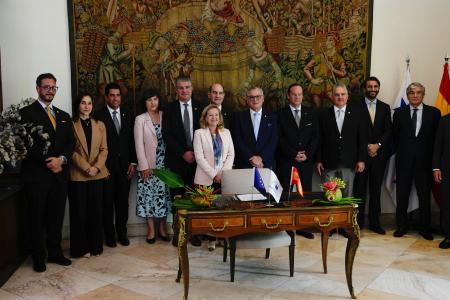
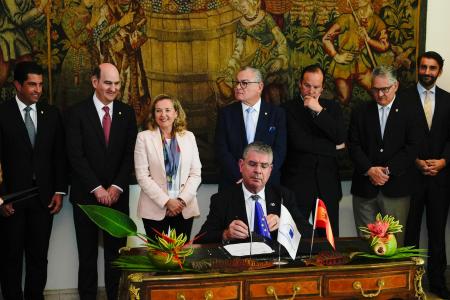
EIB Global, the international partnerships and development arm of the European Investment Bank (EIB), and Naturgy Energy Group, via its Panamanian distribution companies EDEMET, S.A. and EDECHI, S.A., have signed a $300 million framework loan to back the modernisation and expansion of Panama’s power grid. This is the largest loan signed by the EIB for a private company in Central America.
The loan is guaranteed by Spanish export credit agency CESCE. This guarantee was developed jointly by the EIB and CESCE to support green projects led by Spanish companies outside Spain, contributing to the climate action and environmental sustainability goals promoted by the European Union within and beyond its borders.
This project will improve the reliability and efficiency of electricity supply in the country, connect new users, including low-income households, and enable greater integration of renewable energy sources. The agreement is an example of public-private sector cooperation to promote the energy transition and sustainable development in Panama.
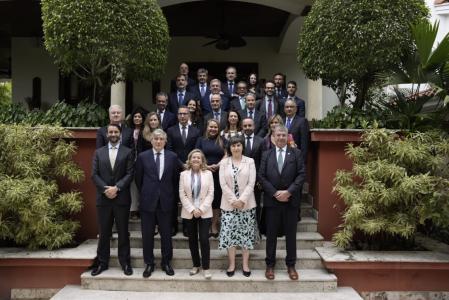
The signature event was attended by EIB Group President Nadia Calviño, Naturgy Chairman and CEO Francisco Reynés, CESCE CEO Pablo de Ramón-Laca, EIB Vice-President Ioannis Tsakiris, EU ambassador to Panama Isabela Matusz and Spanish ambassador to Panama Guzmán Palacios Fernández.
Several members of the government of Panama were also present: Minister for the Economy and Finance Felipe Chapman, Minister of the Presidency Juan Carlos Orillac, Trade and Industry Minister Julio Moltó, Foreign Minister Javier Martínez-Acha, Minister for Canal Affairs José Ramón Icaza, Mayor of Panama Mayer Mizrachi, Energy Secretary of the Government of Panama Rodrigo Rodríguez and National Public Services Authority (ASEP) General Administrator Zelmar Rodríguez Crespo. The board of directors of Naturgy Panamá was also in attendance.
“This EIB financing will support the modernisation of Panama’s energy infrastructure, strengthening regional energy integration. It is an example of how partnerships are key to providing people with access to a cleaner and more secure energy supply,” said EIB Group President Nadia Calviño.
“This loan will strengthen Naturgy’s investments in Panama, and reflects our commitment and intention to stay in the country. The new investments in Panama’s power grid will help improve service quality for our customers and security of supply, while promoting a more efficient, secure and sustainable energy model,” added Naturgy Chairman and CEO Francisco Reynés.
CESCE CEO Pablo de Ramón-Laca highlighted “the leadership of Spanish companies in the implementation of key projects for Panama’s economic development.” He also stressed the importance of the agreement with the EIB that “expands CESCE’s capacity to support the international expansion of Spanish companies.”
“This collaboration with Naturgy and CESCE reflects the EIB’s role as a catalyst for sustainable investments connecting Europe with Latin America. This project will drive the modernisation of Panama’s electricity system and facilitate access to cleaner, more efficient and more affordable energy for thousands of homes and businesses. It is a clear example of how the Team Europe approach and the Global Gateway initiative have a real impact on people’s lives and contribute to a more sustainable and resilient energy future,” said EIB Vice-President Ioannis Tsakiris.
Modernising electricity infrastructure to promote growth in Panama
This initiative is a major step forward for the development of Panama’s energy infrastructure. The investment programme will expand and modernise power distribution grids across the country, cutting technical and commercial losses, while also expanding the capacity and resilience of the electricity system. In addition, it will facilitate the connection of new users and help integrate renewable energy, especially solar energy. By improving the grid’s operational efficiency and reliability, the project is expected to help reduce electricity costs and strengthen energy security, benefiting the most vulnerable communities in particular. This investment will contribute to long-term energy security, economic growth and climate change mitigation in Panama, and promote European participation in Latin America’s sustainable energy transition.
Strengthening EU-Latin America cooperation for energy infrastructure
The operation is part of the EU Global Gateway Investment Agenda for Latin America and the Caribbean, under the flagship initiative to bolster the Central American Regional Electricity Market (MER). It will help achieve Panama’s Nationally Determined Contribution (NDC) under the Paris Agreement by enabling the integration of new renewable energy capacity and improving overall system efficiency. The project is an example of the EIB’s key role as the financial partner of European companies expanding investments in sustainable infrastructure in Latin America.
To this end, at the recent CELAC-EU (Community of Latin American and Caribbean States) Summit in Colombia, the EIB presented a new €1 billion financing initiative to back investment in integrating power grids across Central America. This lending envelope will support the construction and upgrading of transmission and distribution infrastructure and promote renewable energy generation in Costa Rica, Panama, Honduras, Guatemala, El Salvador and Belize. The operation aims to help the region advance its energy transition and decarbonisation goals, while improving access to reliable and affordable electricity.
Background information
About EIB Global:
The European Investment Bank (ElB) is the long-term lending institution of the European Union, owned by its Member States. It finances investments that contribute to EU policy objectives.
EIB Global is the EIB Group’s specialised arm devoted to increasing the impact of international partnerships and development finance, and a key partner of the Global Gateway. It aims to support around €100 billion of investment by the end of 2027. EIB Global brings the EIB Group closer to people, companies and institutions through its offices across the world. Photos of EIB headquarters for media use are available here.
The EIB in Latin America and the Caribbean:
The European Investment Bank has been providing economic support for projects in Latin America and the Caribbean since 2022, facilitating long-term investment with favourable conditions and providing the technical support needed to ensure that these projects deliver positive social, economic and environmental results. Since the EIB began operating in Latin America in 1993 and the Caribbean in 1978, it has provided total financing of more than €17 billion to support over 350 projects in 30 countries in the region.
About the Global Gateway Investment Agenda:
EIB Global is a key partner in the implementation of the European Union’s Global Gateway Investment Agenda, supporting sound projects that improve global and regional connectivity in the digital, climate, transport, health, energy and education sectors. Investing in connectivity is at the very heart of what EIB Global does, building on the Bank’s 65 years of experience in this domain.
About Naturgy:
Naturgy is an energy multinational with a diversified international business portfolio. In addition to Spain, the group is also active in Latin America (Mexico, Brazil, Argentina, Chile and Panama), the United States, Australia and the rest of Europe. It supplies gas and electricity to over 18 million customers in the above countries, operating in both regulated and liberalised markets. It works in electricity generation, distribution and sale, as well as in gas infrastructure, distribution and sale. The group has electricity generation capacity of 18.4 GW across the world, with a diversified mix including 7.7 GW of renewable capacity.
Naturgy’s commitment to Panama:
Naturgy has made record investments of $500 million, committed in the income limit (IMP) tariff review 2022-2026. For 2026-2030 (ASEP approval pending), estimated investment of over $600 million will go to projects focused on improving quality, growing demand, cutting losses and modernising the grid. Since the end of 2024, the company has concluded 14 substation and distribution line projects totalling $46 million. Naturgy Panamá is also now implementing a further 24 strategic projects with associated investment of $215 million.
Naturgy’s efforts over the past year, with approval from the regulatory authority, have led to a major improvement in service quality, among other indicators. Since the implementation of the company’s quality plan, the unplanned system average interruption duration index (SAIDI) has been reduced by 23%, and the unplanned system average interruption frequency index (SAIFI) has fallen by 25% (September 2024 to September 2025).
About CESCE:
CESCE is Spain’s export credit agency. It has a wide range of insurance policies and guarantees to help make Spanish companies’ international activities more competitive and secure.
A “the breaking point becomes visible” in the peace process, they warned, as core commitments under a historic 2018 peace deal stagnate or reverse.
Context of the conflict
The 2018 Revitalized Peace Agreement was the main guarantee against a resumption of civil war, but elements of its power-sharing and security arrangements are fraying.
With elections scheduled for December 2026 in the world’s youngest country, political competition risks sparking violence instead of consolidating peace.
Meanwhile, the war in neighboring Sudan is only making the situation worse. Since April 2023, more than 1.2 million people have crossed the border into South Sudan, further straining already limited systems and resources.
The political changes have weakened the inclusive governance structures essential to the peace agreement.
The detention and trial of opposition leaders has led to more unstable and polarized politics.
Progress on key transition tasks – security sector reform, constitution-making and election planning – remains stalled, while regional mechanisms fail to ease local tensions.
“The principle of inclusiveness that underpinned the agreement appears to have been sacrificed,» declared Jean-Pierre Lacroix, head of UN peace operations.
Ceasefire violations and clashes between government forces and opposition elements intensified in Jonglei, Unity and Upper Nile states.
Aerial bombardments and riverine operations were documented, as well as ambushes and reprisal attacks.
Recent incidents have resulted in civilian casualties, displacement and loss of livelihoods.
“South Sudan is showing all signs of a clear and present danger of relapsing into full-scale conflict,” said Solomon Ayele Dersso of the civil society organization Amani Africa.
In South Sudan, 7.5 million people face acute food insecurity, while flooding, displacement and violence continue to worsen humanitarian needs.
There are reports of widespread gender-based violence, including rape, kidnapping and forced marriage, with 260 conflict-related cases recorded last year.
Despite local peacebuilding efforts, women remain largely excluded from national political processes; the agreed representation quota of 35 percent was not reached.
“There couldn’t be a worse time to withdraw support,” said UN Women Executive Director Sima Bahous.
U.N. officials called for an immediate cessation of hostilities, a resumption of political dialogue, the protection of civilians and sustained support for the U.N. peacekeeping mission. MISS.
Without decisive action, they warn, South Sudan risks descending into another war – with civilians once again bearing the heaviest cost.
Annalena Baerbock’s statement comes as the assembly discusses the ICC bill. annual report in light of sanctions imposed this year by the United States on judges and prosecutors.
The sanctions stem from a decree adopted in February in response to a U.N.-backed court’s decision to issue arrest warrants against Israel’s prime minister, and then the defense minister, for alleged war crimes in Gaza.
Sanctions may include blocking financial access to property or assets in the United States, as well as a travel ban.
Ms. Baerbock recalled that the Court was founded on the principle that “justice is a universal duty” but that its mission remains unaccomplished.
“For more than two decades, the Court has fought against impunity and shown that even in the darkest moments, accountability remains possible,” she said. “Yet today, as we witness atrocities that continue to shock the conscience of humanity, it is clear that the Court’s mission is far from over. »
“Deliberate attacks” on the court
Ms. Baerbock stressed the importance of international cooperation for investigations, arrests and the execution of arrest warrants, as well as the need for independence as a guarantee to ensure that crimes are prosecuted under the Rome Statute, the international treaty that founded the Court.
But the court has not been free of interference, she stressed.
“Justice officials have been sanctioned for defending the rule of law and seeking accountability; and its systems have faced cyberattacks intended to undermine the credibility of the Courtsaid Ms. Baerbock.
“These are not isolated incidents; they are deliberate attacks on the Court that aim to weaken the rule of law and erode trust in international institutions. »
Stop the “bullying” and demand a resolution
THE resolution presented at Tuesday’s meeting stresses that ICC officials should be able to exercise their mandate “without intimidation” and “condemns any threats, attacks or interference against the Court, its staff or those who cooperate with it.”
ICC President Judge Tomoko Akane told delegates that the court’s rulings remind the international community that justice “transcends borders and interests” but that When “judges are pressured, threatened or weakened, the credibility of international law itself is weakened.”
Judge Tomoko Akane, President of the International Criminal Court, delivers the Court’s report to the United Nations General Assembly.
“Attacks, threats and coercive measures against the Court and its officials have persisted and continue to pose a serious threat to the Court’s administration of justice and the global fight against impunity,” she added.
Decisions, repairs
Ms. Akane highlighted the achievements and challenges facing the Court and called on Member States to uphold the international legal system.
She mentioned some key cases before the Court, including individuals accused of serious crimes in Sudan, Afghanistan and Israel, but reiterated that arrest warrants can only be executed with the cooperation of States.
In the year to August, more than 18,000 victims participated in cases brought before the ICC.
“The court gives victims a voice, a space to tell their story and the hope that the truth will be recognized and accountability established.“, said Ms. Akane before emphasizing that reparations are an integral part of the procedure.
She spoke of the Victims Fund set up by members of the ICC as a tool that has produced tangible results – in Uganda for example – where nearly 50,000 victims have received financial reparations for war crimes committed against them.
Most of those people died “because of lack of medical care, unsanitary cells, insufficient food and limited access to clean water,” according to the latest United Nations human rights report on the situation in the Caribbean island nation.
Haiti faces a serious humanitarian, political and security crisis due to gang violence, compounded by deep-rooted poverty and a series of devastating natural disasters, most recently Hurricane Melissa.
The country’s justice system has struggled to function effectively amid these crises. Cases are not tried quickly enough and 82 percent of prisoners are held in detention awaiting trial.
Here’s what you need to know about Haiti’s prisons and how the UN is helping to improve the situation for inmates.
William O’Neill (center) visits a detention center in Haiti.
Prisons under pressure
At the end of September 2025, more than 7,200 men, women, boys and girls were detained in Haitian prisons. Convicted criminals are often held alongside awaiting trial inmates and children are frequently detained alongside adults, in violation of international standards, including the Nelson Mandela Rules, the universally recognized model for 21st century prison management, named in honor of the former South African president who was incarcerated for 27 years as a political prisoner.
Gang occupation of urban areas where several prisons are located and high-profile escapes, some led by gang members, have further reduced the capacity of the prison system and led to overcrowding.
Some prisons hold at least three times the number of people they were built for.
Inhumane conditions
Conditions in Haitian prisons have been described by the UN as inhumane and degrading, but what does that actually mean? William O’Neill, the UN-appointed expert on the human rights situation in Haiti, has visited many of them: “Frankly, the conditions are inhumane. Incredibly crowded and hot. There is not enough food. There is very little access to medical care. Prisoners are kept in cells for many hours in a day with very little air or light, or access to water, toilets and showers.”
Fifty-two people have died in custody over the past three months in Haitian prisons, most of them “from illnesses that should not kill them,” Mr. O’Neill said, adding that “they are so weakened by the conditions and the lack of adequate nutrition and access to enough water, it’s a deadly combination.”
The penal system has a budget intended to provide food to prisoners, but this money is often diverted elsewhere through corruption.
A Haitian who spent three years in pretrial detention has been released with UN support.
Arrested for stealing two pairs of shoes
Deadly conditions are largely the result of housing too many detainees in too little space.
This chronic overpopulation is a direct result of the practice of incarcerating people upstream from a trail. Known as pretrial detention, in Haiti, 82 percent of the nation’s prison population awaits trial, so innocent in the eyes of the law, until proven guilty at trial.
One prisoner told William O’Neill that he had been waiting for a court date for two years; his alleged crime? The theft of two pairs of shoes.
“There is a delay because the justice system is not working,” Mr O’Neill said. “There aren’t enough trials and they keep arresting people. The police often arrest people en masse. Literally, they come to the scene of an alleged crime and arrest everyone they find. People get caught in that kind of dragnet and spend a lot of time in jail even if they had nothing to do with the crime.”
Gangs of Port-au-Prince
The violence in the Haitian capital, Port-au-Prince, where gangs reportedly control 90 percent of the territory, has led to the closure of many courts, further slowing down the justice system.
At the same time, in March 2024, the capital’s two main prisons, the National Penitentiary of Port-au-Prince and the Croix-des-Bouquets prison, were attacked by gangs, leading to the escape of 4,600 inmates, including several notorious gang leaders.
Local sources indicated that many escapees joined and strengthened the ranks of several gangs.
A gang member poses in the Delmas 3 district of Port-au-Prince.
Rebuilding justice
Supporting prison reform and improving conditions of detention in Haiti has been a key objective of the United Nations political mission in Haiti, BINUHthe Human Rights Office and designated expert and a key pillar of the broader UN mandate to strengthen the rule of law and human rights. The objective is to carry out long-term structural reform to address systemic deficiencies in the justice sector.
Initiatives have included helping prosecutors and judges attend prison hearings, leading to the release of some young people and reductions in pre-trial detention. Training was provided to police and prison officers, and the UN supported the rehabilitation of detention centers, including the installation of basic infrastructure such as latrines, water access points and ventilation systems.
Ultimately, it is Haiti’s Ministry of Justice that is responsible for prison and police reform and according to designated expert, William O’Neill, the UN can support the authorities “by providing expertise and resources, but also by demanding results. We are not just going to continue to provide training and equipment. We need results and lasting results.”