Wednesday, April 22, 2026
Home Blog Page 283

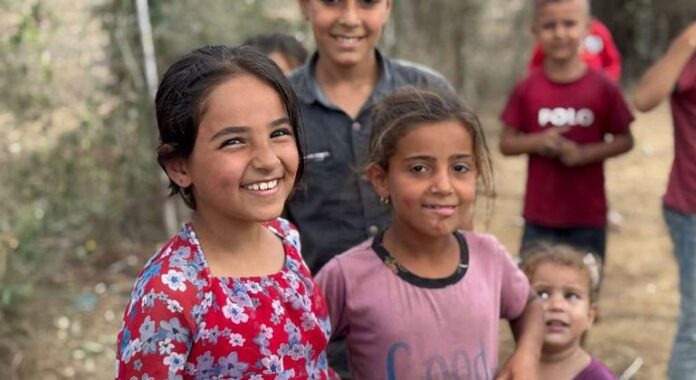
Record starvation and malnutrition in Gaza; more West Bank displacement

0
Record starvation and malnutrition in Gaza; more West Bank displacement

That warning comes from the UN World Food Programme (WFP) in a tweet posted on Tuesday, calling for more aid to be allowed into the enclave by Israeli authorities. 

Gaza’s Ministry of Health reported that five people died over the past 24 hours due to malnutrition and starvation, the UN Office for the Coordination of Humanitarian Affairs (OCHA) said in its latest update.

This brings the total number of malnutrition-related deaths to 227, including 103 children, since October 2023.  

Still not enough aid

Humanitarians continue to decry the low level of supplies entering Gaza, which remains a fraction of what is needed to meet the immense needs of the roughly 2.1 million people living there.

One third of the population is not eating for days on end, and half a million are on the brink of starvation, WFP emphasised.

The agency is calling for at least 100 trucks a day to be allowed into Gaza, much faster approvals and clearances, and for no armed presence or shooting near humanitarian convoys and food distribution sites, among other measures.

Humanitarian missions face obstructions

Although the UN and partners continue to do everything possible to bring assistance in, humanitarian movements still face significant delays and other challenges. 

UN Spokesperson Stéphane Dujarric outlined the situation for journalists attending the regular media briefing at Headquarters in New York. 

He said on Monday humanitarians had formally asked Israel to coordinate 16 missions – including the collection of food, medical supplies and fuel – from the Kerem Shalom and Zikim border crossings, the only two aid corridors in operation.

Other missions involved moving goods and personnel within Gaza, from south to north and within the southern part of the Strip. 

‘Precious time’ wasted

Out of the 16 missions, four were facilitated and three were denied; another four were impeded but eventually were fully accomplished,” he said.

Of the remaining missions, two were cancelled by the respective organizations and two more that involved collection of food and health supplies from the Kerem Shalom crossing were impeded and unable to be completed.  Another mission was impeded but was still ongoing.

“Efforts to coordinate humanitarian movements often drag on for hours due to unpredictable clearances by the Israeli authorities, wasting precious time,” he added. 

West Bank unrest

OCHA also updated on the situation in the occupied West Bank, where another Palestinian Bedouin community was displaced on Monday due to violence by Israeli forces and settlers. 

Israeli forces raided the community of Ein Ayoub in Ramallah governorate and ordered the immediate eviction of its roughly 100 Palestinian residents.

Many of these people have no alternative means of shelter, OCHA said. 

Source link

The world has the tools to put an end to the Haiti crisis – it’s time to use them

0

“I often think that I can’t even find words anymore to describe the situation. Is it alarming, is it sharp, is it urgent? That’s all and even more. “”

The sentence on which she finally settled was “surprisingly horrible”.

Haiti is currently faced with an prolonged and aggravated humanitarian crisis-the violence of the gangs extending beyond the capital of Port-au-Prince, civilians are more and more landing the weight of this terror. In addition, Haiti is one of the five countries in the world in the process of living in famine conditions.

Eassenger crisis response

In the midst of this horror, Haiti’s humanitarian plan is only nine percent financeThis makes it the least funded humanitarian response plan in the world according to Ms. Richardson.

But despite these difficult and prolonged circumstances, Ms. Richardson also wanted to emphasize that political will and funding could guarantee that the current crisis should not be the future of Haiti.

“” Haiti’s fate does not need to be misery and despair“She said.” Haiti died in a negative [way]Haiti can quickly slide upwards.

Beyond the figures

More than 1.3 million people were moved to Haiti following violence – the greatest number of the history of Haiti – and almost half of the country suffers from emergency food insecurity.

These figures have become so large that it can be difficult to conceive of the real human impact behind them.

“All of this is just figures. Beyond each figure, there is a mother, a child, a father, a young“She said.

Sometimes these figures also obscure certain livelihoods. For example, the number of 1.3 million moved obscured those who are left behind, perhaps because they could not physically flee while violence has empiety in their neighborhood.

Richardson said she had heard many stories like this.

“This might be people in a wheelchair or an elderly parent whom they just have to leave behind. They cannot move with them. ”

Ask yourself, what can you do more?

Ms. Richardson said there was a lot about Haiti’s current situation that she finds frustrating – more precisely the fact that the international community identified the solutions to mitigate, if not completely, the crisis.

“We have tools, but The response of the international community is not tied with gravity in the field“She said.

For example, the Multinational Security Support Mission (MSS) has half of the staff and very little of the equipment he needs to fulfill his mandate.

In addition, while sanctions against political leaders with gang ties are slowly settled, they are insufficient. Likewise, the international community is not enough to stop the flow of firearms.

“These tools must receive appropriate support and investment in order to achieve their full mandate. There must be a way to stop weapons in Haiti“Said Ms. Richardson.

Calling states to wonder what they can do more to put an end to the humanitarian crisis, Ms. Richardson said that the world had to perform several tasks.

‘A divided heart’

Ms. Richardson will take a new position in Libya on September 1, and while she is preparing to leave her years of work in Haiti, she told journalists that she had a divided heart.

On the one hand, it is a humanitarian crisis of “striking” proportions that the world seems to have forgotten. But. If the international community could adopt solutions before them, the crisis could end.

Haiti can turn the page

“” We cannot do what we do if we are not optimistic. Of course, we believe that there are solutions. Of course, we believe that the future is brighter than the present. »»

Ms. Richardson said that this optimism comes in part from the “honorable and brilliant” past of Haiti and the resistance it has seen on the ground.

“Each condition is there to turn the page … Haitians are extremely ready for this, so that the country has a more positive echo in the international community.”

Originally published at Almouwatin.com

First person: Echoes of War while help arrives in the historic city of Syria

0

Eleonora Servino was on the first UN help convoy to Uwaida, who saw a recent climbing of violence that left many dead and thousands of displaced people.

As an international organization for migration (Iom) The head of the mission in Syria, Ms. Verno said that the difference on the Bosra road is austere.

“Do you know this feeling when you visit somewhere as a tourist, how did the memories integrate into your mind?” Happy and peaceful places filled with amazing views, delicious food, warm smiles and a relaxed atmosphere. This is how I remember Bosra, Syria, 20 years ago.

© UNESCO / Véronique Dauge

The ancient city of Bosra, Syria, a UNESCO World Heritage Site in 2015 (file)

Rival of ancient Italian relics

I went to see her old Roman theater, a [UN Educational, Scientific and Cultural Organization] Unesco World Heritage Site. I remember the masonry perfectly preserved in the tunnels leading to the stage, the complex sculptures.

Everything rivaled, even outdated, the monuments of my native Italy. I felt at home, with a shared story.

Recently, I came back for very different reasons.

The head of the IOM mission in Syria Eleonora Servino (right) on the first UN aid convoy to the city of Sweida.

Tourists have long left

Syria has endured 14 years of brutal civil war, moving millions. Tourists have left for a long time. But now, with war and stability that comes up slowly, people come back. My organization, OIM, has just been officially authorized to resume operations. One of my first acts as head of the interim advertising mission was to hit the road to Bosra.

It is the only way to the governorate of AS-Sweida, which recently experienced weeks of violence, leaving many deaths and more than 168,000 displaced.

I was part of the first United Nations assessment mission. With the support of Ochha [UN humanitarian agency] And the Syrian Arabian Red Crescent, the convoy provided 40 trucks of aid from various agencies and organizations.

© UNOCHA / ALI HAJ SULEIMAN

Hostilities broke out in Sweida in July 2025. (File)

“Signs of violence everywhere”

Signs of violence were everywhere. The streets were strangely silent in Sweida. No traffic. None of the bustle you expect in a city that once had more than 70,000 inhabitants.

Built -in buildings, shipwrecked cars and a feeling of omnipresent tension dominated the landscape.

We have visited three areas where internally displaced people have found a shelter, either in host communities or in municipal centers. People have opened their homes to those forced to flee. However, the lack of electricity, water and the main road blocked contracts for resources, which makes it more difficult despite the good will and the humanitarian spirit of ordinary citizens.

“People are always in shock”

The need for humanitarian assistance is clear, from what we have seen and what we have heard. People are always in shock. We talked to people who have lost so much: houses, families, goods, livelihoods.

Our DTM teams (monitoring of the matrix) are on the ground by conducting regular surveys. The needs are basic but essential: food, species, hygiene articles, clothes, cooking sets, fuel and shelter.

We are an essential element of the humanitarian community, pleading and supporting those moved by the conflict. We will continue to work to keep access open and improve it, guaranteeing people what they need. »»

Originally published at Almouwatin.com

Myanmar: Rights investigators reveal “systematic torture”, sexual violence

0

In his Annual report Released on Tuesday, the Independent investigation mechanism for myanmar (IIMM) said that it had made “significant progress” documenting crimes and identifying managers, including security forces supervising detention facilities.

Myanmar went down to the civil war after February 2021 military coup And the detention of civilian leaders, including President Win Myint and the State Councilor Aung San Suu Kyi. The takeover triggered mass manifestations, a violent repression against dissent and an armed resistance movement at the national level.

“Significant evidence”

Detailed crimes in Tuesday report include burning of sexual body parts, other forms of sexual violence and summary executions of captured combatants or civilians accused of being informants.

“” We have discovered significant evidence, in particular testimonies of eyewitnesses, showing systematic torture in the myanmar detention facilities, »» said Nicholas Koumjian, chief of the mechanism.

“” We have progressed in the identification of the authors, including the commanders who oversee these facilities and we are ready to support all the courts arranged and capable of pursuing these crimes.“”

Order responsibility

The report covers the period from July 1, 2024 to June 30, 2025 and relies on more than 1,300 sources, including nearly 600 testimonials from eyewitnesses, photographs, videos, documents, cards and forensic evidence.

It also details an intensification of surveys on air attacks against schools, houses and hospitals – including incidents in the days following the earthquake of March 2025When rescue operations were still in progress.

The UN Human Rights Council-The researchers recorded analyze the composition of the air army of Myanmar and its chain of command to identify those responsible for these strikes.

New surveys have also been opened on the atrocities of the state of Rakhine, where the soldiers and the ethnic armed group Arakan Army are fighting for control, alongside current probes on crimes committed against the Rohingyas in 2016 and 2017.

International responsibility

The evidence collected by the investigators have already supported the procedures before the International Criminal Court (ICC), the International Court of Justice (Icj) and in Argentina.

He contributed to the CPI prosecutor in November 2024 Request for an arrest warrant For Min Aung Hlaing, the military leader of Myanmar and the Argentine Federal Court in February 2025 guaranteed against him and 24 others.

“” Our report highlights a continuous increase in the frequency and brutality of the atrocities committed in Myanmar,“Said Mr. Koumjian.

“We work towards the day the authors must respond to their actions in court.”

Spiral crisis

The fighting between the military, the pro-democracy forces and the ethnic armed groups have moved millions and pushed the country into deep political, economic and humanitarian troubles.

The country also faces the long -standing consequences of military operations of 2017 against the Muslim minority Rohingya in the state of Rakhine.

These campaigns – described by the United Nations High Commissioner for Human Rights, Zeid Ra’ad Al Hussein, as “an example of an ethnic cleaning manual” – have forced hundreds of thousands of rohingya to flee through the border of Bangladesh, where most remain in congested refugee camps.

Multiple pressures

Investigators warn that their work is compromised by the UN liquidity crisis, which reduced the mechanism budget in 2025 to only 73% of the approved amount and will require a 20% reduction in regular staff funded by the budget in 2026.

To identify resource constraints and operational challenges – including the lack of direct access to Myanmar witnesses, security risks and cybersecurity threats – the investigation team has adopted a three -year strategic plan, focusing on strengthening operational resilience and capacity improvement.

Originally published at Almouwatin.com

Myanmar: Rights investigators reveal ‘systematic torture’, sexual violence

0
Myanmar: Rights investigators reveal ‘systematic torture’, sexual violence

In its annual report released on Tuesday, the Independent Investigative Mechanism for Myanmar (IIMM) said it had made “important progress” documenting crimes and identifying those responsible, including commanders of security forces overseeing detention facilities.

Myanmar descended into civil war following the military coup of February 2021 and the detention of civilian leaders, including President Win Myint and State Counsellor Aung San Suu Kyi. The takeover sparked mass protests, a violent crackdown on dissent and a nationwide armed resistance movement.

‘Significant evidence’

The crimes detailed in Tuesday’s report include burning of sexual body parts, other forms of sexual violence and summary executions of captured combatants or civilians accused of being informers.

We have uncovered significant evidence, including eyewitness testimony, showing systematic torture in Myanmar detention facilities,said Nicholas Koumjian, Head of the Mechanism.

We have made headway in identifying the perpetrators, including the commanders who oversee these facilities and we stand ready to support any jurisdictions willing and able to prosecute these crimes.

Command responsibility

The report covers the period from 1 July 2024 to 30 June 2025 and draws on more than 1,300 sources, including nearly 600 eyewitness testimonies, photographs, videos, documents, maps and forensic evidence.

It also details intensified investigations into aerial attacks on schools, homes and hospitals – including incidents in the days following the March 2025 earthquake, when rescue operations were still underway.

The UN Human Rights Council-mandated investigators are analysing the composition of the Myanmar Air Force and its chain of command to identify those responsible for such strikes.

New investigations have also been opened into atrocities in Rakhine state, where the military and the ethnic armed group Arakan Army are battling for control, alongside ongoing probes into crimes committed against the Rohingya in 2016 and 2017.

International accountability

Evidence collected by investigators has already supported proceedings before the International Criminal Court (ICC), the International Court of Justice (ICJ) and in Argentina.

It contributed to the ICC Prosecutor’s November 2024 request for an arrest warrant for Min Aung Hlaing, Myanmar’s military chief and to the Argentine Federal Court’s February 2025 warrants against him and 24 others.

Our report highlights a continued increase in the frequency and brutality of atrocities committed in Myanmar,” Mr. Koumjian said.

“We are working towards the day when the perpetrators will have to answer for their actions in a court of law.”

Spiralling crisis

Fighting between the military, pro-democracy forces and ethnic armed groups has displaced millions and pushed the country into deep political, economic and humanitarian turmoil.

The country also faces the long-running consequences of the 2017 military operations against the Rohingya Muslim minority in Rakhine state.

Those campaigns – described by the then UN High Commissioner for Human Rights Zeid Ra’ad Al Hussein as “a textbook example of ethnic cleansing” – forced hundreds of thousands of Rohingya to flee across the border into Bangladesh, where most remain in crowded refugee camps.

Multiple pressures

Investigators warn their work is being undermined by the UN’s liquidity crisis, which have cut the mechanism’s 2025 budget to just 73 per cent of the approved amount and will require a 20 per cent reduction in regular budget-funded staff in 2026.

To address resource constraints and operational challenges – including lack of direct access to witnesses in Myanmar, security risks and cybersecurity threats – the investigation team has adopted a three-year Strategic Plan, focusing on strengthening operational resilience and enhancing capacity.

Source link

Joint statement on the humanitarian situation in Gaza

0
Joint statement on the humanitarian situation in Gaza

Joint statement on behalf of 27 partners on aid to Gaza and restrictions facing NGOs

The humanitarian suffering in Gaza has reached unimaginable levels. Famine is unfolding before our eyes. Urgent action is needed now to halt and reverse starvation. Humanitarian space must be protected, and aid should never be politicised.

However, due to restrictive new registration requirements, essential international NGOs may be forced to leave the Occupied Palestinian Territories imminently which would worsen the humanitarian situation still further. We call on the government of Israel to provide authorisation for all international NGO aid shipments and to unblock essential humanitarian actors from operating. Immediate, permanent and concrete steps must be taken to facilitate safe, large-scale access for the UN, international NGOs and humanitarian partners. All crossings and routes must be used to allow a flood of aid into Gaza, including food, nutrition supplies, shelter, fuel, clean water, medicine and medical equipment. Lethal force must not be used at distribution sites, and civilians, humanitarians and medical workers must be protected. 

We are grateful to the US, Qatar and Egypt for their efforts in pushing for a ceasefire and pursuing peace. We need a ceasefire that can end the war, for hostages to be released and aid to enter Gaza by land unhindered.

This statement has been signed by:

The Foreign Ministers of Australia, Belgium, Canada, Cyprus, Denmark, Estonia, Finland, France, Greece, Iceland, Ireland, Japan, Lithuania, Luxembourg, Malta, the Netherlands, Norway, Portugal, Slovakia, Slovenia, Spain, Sweden, Switzerland and the UK.

Kaja Kallas, Dubravka Šuica and Hadja Lahbib.

Source link

Ukrainian Cropdusters Are Hunting Russian Drones

0


Ukrainians are hunting drones by all means possible. Including planes that previously performed civilian work. Recently, a farmer

Source link

10 ways the EU makes your life easier

0
10 ways the EU makes your life easier

Follow Sven, Elena and Sofia as they embark on an exciting trip across Europe and discover the benefits the EU brings to your daily life. From study opportunities and ticket compensation claims to using your phone abroad and the euro, there’s all sorts of ways the EU improves your life. Read on.

Source link

Indigenous Peoples Day highlights AI’s risks and opportunities

0
Indigenous Peoples Day highlights AI’s risks and opportunities

An estimated 476 million Indigenous Peoples live across 90 countries, representing 5,000 different cultures.

Without proper safeguards, AI risks harming Indigenous rights through inequitable distribution of the groundbreaking technology, environmental damage and the reinforcement of damaging colonial legacies.

The growing amount of electricity generation needed for AI data centres and other infrastructure is also intensifying climate change pressures, according to the UN.

When situated near Indigenous Peoples’ lands, AI data sites can exacerbate environmental degradation, negatively affecting the ecosystems they depend on.

Moreover, decisions on AI are often made by governments and major tech companies excluding any consultation with Indigenous Peoples. This has meant Indigenous language, knowledge and culture are regularly included in AI datasets without consent, perpetuating patterns of appropriation and misrepresenting Indigenous Peoples.

Despite challenges and risks, AI also presents new opportunities. Worldwide, Indigenous Peoples have explored the use of AI, using it as a tool for preserving intergenerational knowledge, empowering youth, and preserving culture, language and identity.

Safeguards for and innovations from Indigenous Peoples in the realm of AI are the focus of this year’s International Day of the World’s Indigenous Peoples, as well as recipients of the Equator Prize.

2025 Equator Prize  

To commemorate the day, the UN Development Programme (UNDP) has announced the ten community-based, Indigenous-led organizations that will be recipients of the 2025 Equator Prize.  

This award honours environmentally grounded solutions led by Indigenous Peoples that promote sustainable development, with winners demonstrating this year’s prize theme, “Nature for Climate Action”.

Winners will receive $10,000, be honored at a high-level online ceremony later this year and may join global events, including the UN General Assembly and the UN Climate Change Conference, COP30, taking place in Brazil later this year.

Prize recipients  

The Latin American recipients include Cooperativa de Mujeres Artesanas del Gran Chaco (COMAR) in Argentina, Associação Uasei dos Povos Indígenas de Oiapoque (Uasei) in Brazil, the Hakhu Amazon Foundation in Ecuador and the First Agrobiodiversity Zone in Peru.  

COMAR supports Indigenous women through Matriarca, a brand turning traditional crafts into sustainable products. Uasei fosters an Indigenous-led bioeconomy around native açaí, while Hakhu defends the Ecuadorian Amazon and Indigenous rights through advocacy, decolonial education and grassroots media. 

In India, Bibifathima Swa Sahaya supports village farmers through multi-cropping, seed banks and solar-powered processing – combining traditional knowledge with regenerative agriculture and renewable energy. 

© Equator Initiative/Bibifathima Swa Sahaya Sangha

The 2025 Equator Prize winners exemplify this year’s theme, “Nature for Climate Action,” with a special focus on youth- and women-led climate action.

In Indonesia, Mitra BUMMA supports community enterprises protecting 100,000 hectares of rainforest while also boosting local economies and governance. The Ranu Welum Foundation empowers Indigenous Dayak communities through forest conservation and cultural preservation.

In Papua New Guinea, Sea Women of Melanesia Inc. empowers women to lead marine conservation by combining traditional knowledge with modern science.

And in Africa, Nature and People As One in Kenyaempowers pastoralist communities to restore drylands using traditional knowledge and affordable restoration methods, and Sustainable Ocean Alliance Tanzania restores marine ecosystems through sustainable seaweed farming and empowers coastal communities.

“On this important day, the 2025 Equator Prize winners are a reminder of the importance of honoring and recognizing the vision and leadership of Indigenous Peoples and local communities,” said Marcos Neto, UN Assistant Secretary-General and Director of UNDP’s Bureau for Policy and Programme Support. 

Source link

Colombia: Statement by the Spokesperson following the death of Senator Miguel Uribe Turbay

0
Colombia: Statement by the Spokesperson following the death of Senator Miguel Uribe Turbay

Colombia: Statement by the Spokesperson following the death of Senator Miguel Uribe Turbay

Source link