Thursday, April 23, 2026
Home Blog Page 291

Netherlands-Based Foundation Trains Sri Lankan Youth in Media and Human Rights

0

Kingnewsiwre / Press release / A Dutch-registered human rights foundation, founded by Sri Lankan refugee Shanta Dalugamage, is empowering the next generation in Sri Lanka through journalism and human rights education—bridging communities across continents with an inclusive and interfaith approach.

Rathnapura, Sri Lanka / Ulft, Netherlands – August 2025 – On 27 July 2025, Stichting Mission Lanka, in collaboration with Vision Media Academy, hosted its sixth Journalism and Human Rights workshop for 100 students at Ananda Maithree Damma School in Rathnapura. The one-day program included practical training in public speaking, event management, and basic media communication.

We focus on public speaking, event management and self-expression,” said Dalugamage. “These are foundational tools—not just for journalism, but for leadership and advocacy.

Participants received certificates of participation and human rights booklets from United for Human Rights, a global initiative inspired by the Universal Declaration of Human Rights (UDHR) and the educational writings of L. Ron Hubbard, who emphasized that human rights must be made a fact, not an idealistic dream.

From Online Discovery to Global Partnership

Dalugamage first discovered the Youth for Human Rights program over a decade ago while seeking accessible education tools to support grassroots outreach. In 2020–2021, he attended a human rights open house hosted by the Church of Scientology of Amsterdam, where he began a collaborative relationship with the Church and its volunteers. Since then, the Church has supported his efforts, including through educational materials from United for Human Rights.

When civil society actors like Stichting Mission Lanka bring human rights education to young people, they are building the kind of grassroots understanding that Europe consistently advocates for,” said Ivan Arjona, Representative of the Church of Scientology to the European Institutions, OSCE, Council of Europe and the United Nations. “This initiative exemplifies the values enshrined in the UDHR and shows how European-based communities can support constructive change abroad.

The collaboration reflects the Church’s longstanding engagement with interfaith dialogue and humanitarian work. Through its international platform, it partners with individuals and organizations of all religious backgrounds, supporting inclusive, community-driven outreach.

A Broad Foundation with Global Links

Founded in 2019, Stichting Mission Lanka is committed to human rights, children’s education, interfaith dialogue, women’s empowerment, and conflict mediation in Sri Lanka. The organisation works across faiths and communities, guided by a Christian philosophy of peace, inclusion, and compassion. It maintains that all children and families—regardless of religion, race, or background—deserve the tools to thrive.

Europe-South Asia Engagement: Rights and Freedoms

The initiative illustrates how Europe-based diaspora can foster local empowerment abroad. While the Netherlands continues to rank highly (ranked 3rd globally), in the 2025 World Press Freedom Index, Sri Lanka was ranked 139th—an improvement from 150th in the previous year—reflecting early signs of progress under its new administration. The South Asian country’s media environment remains fragile, with ongoing legal scrutiny and institutional limitations.

Yet grassroots efforts like those of Stichting Mission Lanka show that education and dialogue can be powerful tools for change—especially when backed by international partnerships rooted in shared values.

World News in Brief: Funding schools in Afghanistan, Seaweed farming in Latin America, drought in Somalia

0
World News in Brief: Funding schools in Afghanistan, Seaweed farming in Latin America, drought in Somalia

The agency plans to procure over 1,200 metric tons of fortified biscuits, which will provide 200,000 primary school-aged girls and boys with sustenance for around three months.  

“For many children, the daily snack they receive in the first break of the day is often their only nutritious meal, giving them the energy to stay healthy, focused, and ready to learn,” said Mutinta Chimuka, Deputy Country Director for WFP in Afghanistan.  

Food security  

“WFP in Afghanistan launched its school feeding programme more than two decades ago to link food security and better nutrition with education,” said Ms. Chimuka.

School feeding activities have played a crucial role in improving attendance, retention and learning outcomes.

Primary schools participating in the programme saw enrollment increase by nearly 11 percent in 2024 compared to 2023, while attendance also improved, reaching an average of 87 per cent in the classroom, two percentage points above WFP’s target.

Seaweed farming, a potential key driver of sustainable development in Latin America

In the last decade, seaweed farming grew by 66 percent in Latin America and the Caribbean, a new report from the Food and Agriculture Organization (FAO) has found.

The practice of cultivating and harvesting seaweed or algae in the marine environment offers a relatively low-carbon method to produce highly nutritious food while supporting rural livelihoods, according to international experts gathered at a regional workshop in Chile.  

Seaweed farming is vital to sustainable coastal development in Latin America, experts argue, highlighting its nutritional value and the need for clearer, coordinated regulation.

Untapped potential

Expanding seaweed cultivation holds significant untapped potential for sustainable development in Latin America and the Caribbean.

However, while countries like Brazil, Chile and Venezuela lead production, most initiatives across the region remain small-scale.  

Yet, with a 66 per cent increase over the past decade, experts see major opportunities for growth. Supporting emerging producers, diversifying species and investing in research and technology – including AI and biotechnology – could  deliver both economic and environmental benefits.  

Strengthening community participation, particularly among women and youth, will also be essential. With coordinated action and inclusive policies, seaweed farming could become a key driver of resilient coastal development.

Hundreds of thousands impacted by severe drought in Somalia

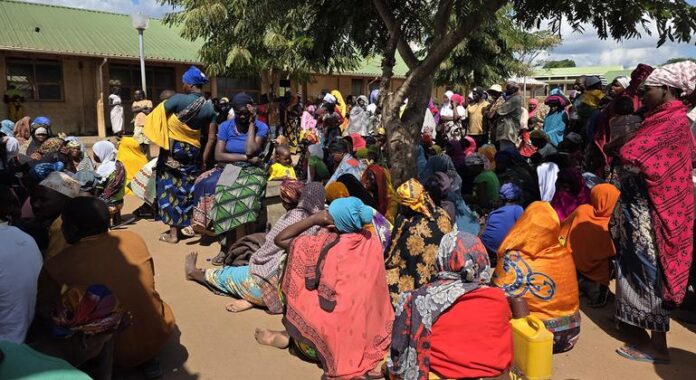
Hundreds of thousands of people have been impacted by severe drought in Somalia’s central and northern regions, according to the UN’s humanitarian coordination office, OCHA.  

With food insecurity escalating, dwindling access to water and pasture and major disruption to livelihoods, a joint assessment by UN agencies and partners is currently underway in Puntland and Somaliland to determine key needs.

Wells run dry

An analysis from the Food and Agriculture Organization (FAO) noted that more than 880,000 Somalis are currently living in severely drought-affected areas across 16 districts, humanitarians on the ground reported that water wells have dried up and that more than 160 boreholes are no longer functioning.

Although the UN-managed Somalia Humanitarian Fund is preparing to allocate resources for urgent life-saving assistance, only 17 per cent of the plan has been funded to date. 

Source link

New European toolkit launched to help eliminate viral hepatitis B and C in prisons

0

This new practical online resource, launched ahead of Prisoners’ Justice Day on 10 August, aims to support local efforts to eliminate viral hepatitis in prison settings, in accordance with the United Nations Sustainable Development Goal on Good Health and Well-Being.

The new toolkit is designed to support the implementation and scale-up of hepatitis B and C interventions in prisons across Europe. It also reinforces the principle of ‘equivalence of care’, ensuring that people in prison receive healthcare comparable to that available in the community. 

People in prison experience higher levels of viral hepatitis than the general population, making them a key group for targeted prevention and treatment. In Europe, individuals entering prison are also more likely to have a history of injecting drug use — a major risk factor for hepatitis B and C virus transmission. Sharing of injecting equipment and other risk factors — such as unsafe tattooing or body piercing practices, sharing of razors and unprotected sex — make prisons a priority setting for targeted viral hepatitis prevention and treatment interventions.  

Short sentences and repeat incarcerations mean that same group of people often move between prison and the community. For this reason, tackling health problems such as viral hepatitis in prison settings can also deliver health benefits to the wider community by driving down the overall disease burden and preventing future transmission of infections. This is known as the ‘community dividend’. 

The toolkit consists of four key sections: background, strategy development, strategy implementation and monitoring and evaluation. It includes links to relevant public health guidance, and practical tools to understand the context, and define and implement an elimination strategy inside prisons. Examples from prisons in Germany, Spain, France, Italy and Luxembourg, are provided, illustrating models of care. 

In the toolkit, the EUDA and ECDC provide practical, evidence-based information for those working in prison healthcare on how to set up interventions to prevent and control viral hepatitis in these settings.  

The information is also likely to be relevant to other audiences, including policymakers, security staff, people living in prison, peer support workers, and voluntary workers. Further support for people working in prison healthcare will be available in the form of dedicated training sessions provided by EUDA and ECDC in the coming months to facilitate the effective implementation of the toolkit and scale-up of services. 

Source link

Climate KIC Secures Largest Share of Horizon Missions Funding

0
Climate KIC Secures Largest Share of Horizon Missions Funding

Rapid Response to a New Funding Model 

When Horizon Europe Missions launched in 2021, Climate KIC, formerly EIT Climate-KIC, quickly positioned itself as a key vehicle for delivering this new type of research programme. Climate KIC has secured €99 million across 19 Mission projects – far more than any other grantee of the scheme’s €2.24 billion grant portfolio, which spans 295 projects. 

About the Missions: Focused, Challenge-led Funding 

The Missions are the EU’s latest research funding experiment. Rather than focusing solely on traditional cross-border research, they aim to fund demonstrators and capacity-building projects that drive innovation and attract external investment in five focus areas: cancer; climate adaptation; oceans and rivers; soil; and climate-neutral cities. 

Strengthening Financial Independence 

The new policy was introduced just as Climate KIC was moving towards independence from the EIT. According to the EIT model, EIT KICs are expected to generate their own revenue and become financially sustainable in 15 years. In 2024, following the signing of a Memorandum of Cooperation with the EIT, Climate KIC entered a new phase as a financially sustainable member of the EIT Community, continuing to align with the EIT model while operating with greater autonomy. In 2021, Climate KIC’s budget stood at €39.1 million – including €1.8 million from membership fees and €6.7 million from external funders. 

The €99 million from Horizon Missions represents a significant amount for the network, which received €720 million in EIT funding between 2010 and 2024. 

Mega-projects Driving Impact Across Europe 

Much of this funding comes from large-scale projects designed to build critical mass around the Missions. One flagship example is the €53 million NetZeroCities project, which is developing a support platform for the Climate-Neutral and Smart Cities Mission. As coordinator, EIT Climate receives €36 million from the project. 

Another major initiative is Pathways2Resilience, which aims to empower 100 regions and communities to improve their climate resilience. The €29 million project includes €21 million in funding for local adaptation actions, with EIT Climate managing €23 million of the total. 

Climate KIC: A Flagship of the EIT Model 

Climate KIC’s Horizon Missions success highlights the strength of the EIT model – driving systemic innovation through a uniquely integrated approach. As part of Europe’s largest innovation ecosystem, Climate KIC continues to deliver climate impact at scale while advancing the EIT’s mission to build a greener, more sustainable future. 

Source link

World News in Brief: financing of schools in Afghanistan, Algae agriculture in Latin America, drought in Somalia

0

The agency plans to obtain more than 1,200 tonnes of fortified cookies, which will provide 200,000 girls and boys of primary age for about three months.

“For many children, the daily snack they receive during the first break of the day is often their only nutritious meal, giving them energy to stay healthy, focused and ready to learn” Wfp in Afghanistan.

Food security

“PAM in Afghanistan has launched its school food program for more than two decades to connect food security and better nutrition with education,” said Chimuka.

School food activities have played a crucial role in improving attendance, retention and learning results.

Primary schools participating in the program have seen registrations increase by almost 11% in 2024 compared to 2023, while attendance also improved, reaching an average of 87% in class, at two percentage points greater than WFP.

Algae farming, a potential key engine of sustainable development in Latin America

Over the past decade, algae agriculture has increased by 66% in Latin America and the Caribbean, a new report of the organization of food and agriculture (Faofound it.

The practice of cultivation and harvesting algae or seaweed in the marine environment offers a relatively low carbon method to produce very nutritious foods while supporting rural livelihoods, according to international experts gathered during a regional workshop in Chile.

Algae agriculture is vital for sustainable coastal development in Latin America, according to experts, highlighting its nutritional value and the need for clearer and coordinated regulations.

Unexploited potential

The widening of algae culture has significant unexploited potential for sustainable development in Latin America and the Caribbean.

However, while countries like Brazil, Chile and Venezuela direct production, most initiatives in the region remain on a small scale.

However, with an increase of 66% in the last decade, experts have seen the main growth opportunities. Support emerging producers, diversify species and invest in research and technology – including AI and biotechnology – could offer economic and environmental advantages.

Strengthening the participation of the community, especially among women and young people, will also be essential. With coordinated action and inclusive policies, algae agriculture could become a key engine for resilient coastal development.

Hundreds of thousands affected by severe drought in Somalia

Hundreds of thousands of people were affected by severe drought in the central and northern Somalia regions, according to the UN humanitarian coordination office, Ochha.

With increasing food insecurity, the decrease in access to water and grazing and major disruptions of livelihoods, a joint assessment of United Nations agencies and partners is currently underway in Puntland and Somaliland to determine key needs.

The wells are dry

An analysis of the organization of food and agriculture (FAO) noted that more than 880,000 Somalians are currently living in severe areas affected by 16 districts, the humanitarian workers in the field reported that the water wells have dried and that more than 160 boreholes no longer work.

Although the unmanaged Somalia humanitarian fund is preparing to allocate resources for urgent help to save life, only 17% of the plan has been funded to date.

Originally published at Almouwatin.com

Syria: ceasefire under pressure such as violence and problems of access to aid persist in Sweida

0

The truce of July 19 followed weeks of sectarian clashes, Israeli air strikes and serious human rights violations in the South governorate, also known as AS-Sweida.

Therefore, More than 190,000 people were moved there and in Dar’a and Rural Damascus Voisins Governors.

The fighting also caused serious damage to infrastructure and livelihoods. Electricity networks, water production assets, including wells and main public facilities, have been affected.

Volatility, surveillance and demonstrations

Between August 1 and 5, Sweida and the surrounding security situation has remained volatile, with clashes reported in three places, according to the Ochha Flash update.

“In addition, an air surveillance activity allocated to Israeli defense forces (FDI) has been observed on several locations in Dar’a and AS-Sweida, contributing to regional tension,” said the agency.

During the same period, public demonstrations occurred in several sites of Sweida, reiterating calls for better humanitarian access and protection.

Parallel demonstrations also took place in the governors of Dar’a and Damascus who stressed the importance of national unity.

Help efforts are continuing

Humanitarian access remains constrained, said OCHA, while the UN and the partners continue to support response efforts.

THE The main road between Sweida and the capital, Damascus, has been inaccessible since July 12 due to security problems.

In addition, the southern corridor via Busra Eshham in eastern Dar’a was temporarily closed for 24 hours, but reopened on Monday, affecting the delivery of aid.

“Humanitarian actors have increased response efforts, including fuel and food deliveries to AS-Swaida and Dar’a, facilitation of the commercial convoy and sheltered from the dwellings of the displaced populations,” said OCHA.

Inter-agencies mission

Since climbing hostilities, humanitarian workers have provided bread assistance to nearly 1.5 million people.

OCHA also led an inter-agencies mission to DAR’A to assess the shelter conditions and discuss medium-term housing options for displaced people.

Meanwhile, the restoration of essential services is underway in Sweida, with partial electricity restored by emergency repairs.

However Generalized telecommunications and internet breakdowns persist Through the governorate, and the maintenance of water and electricity networks continues in rural areas.

Originally published at Almouwatin.com

Only 1.5% of Gaza’s agricultural land remains accessible and in good condition

0

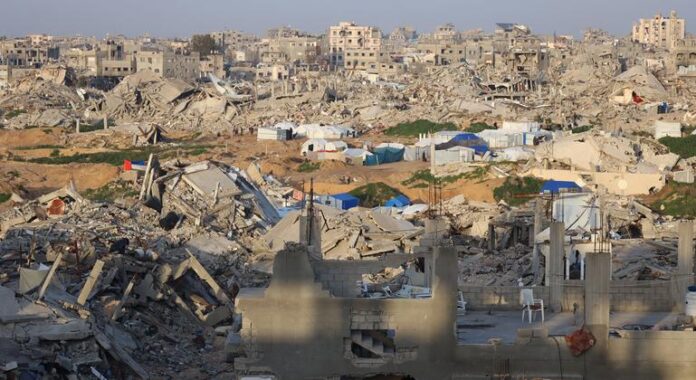
A new report organization of food and agriculture (Fao) And the United Nations Satellite Center (Unosat) reveals that only 8.6% of the land cultivated in Gaza are still accessible, while Only 1.5% of cultivated land is both accessible and in good conditionFrom July 28.

More than 86% of cultivated land is damaged, while 12.4% are in good condition but out of reach, because the fighting between Israeli forces and Hamas activists and other armed groups continue.

Famine in progress

This report occurs while Israel’s offensive inside Gaza continues to restrict the distribution of aid – and deaths linked to famine increase.

The local ministry of health reported Five new deaths related to malnutrition in the past 24 hours Wednesday, bringing the Total to nearly 200 deaths related to faminehalf of which are children.

Collaboration of health care

According to the United Nations Coordination Office (Ochha), hospitals are upgraded with many reduced patients to bed on the ground or in the streets.

This mass suffering is due to the lack of beds, medical supplies and equipment. However, emergency medical teams refused again on Tuesday in Gaza.

The World Health Organization (WHO)) also indicated that more than 100 health professionals, such as surgeons and other specialized medical staff, have been prohibited from entering the enclave since March.

Meanwhile, the limited availability of fuel continues to restrict vital operations. The UN has collected around 300,000 liters from the passage to Kerem Shalom in the last two days, but it is much less than what is necessary.

Due to the lack of fuel, the UN Health Partners reports that more than 100 premature babies are in imminent danger.

Renewed travel controls

In addition, the Israeli army renewed two travel orders covering five districts to the governors of Gaza and Khan Younis on Wednesday.

The shelter equipment has not been authorized to enter Gaza since March 2, when Israel has retired from the ceasefire agreement, and the few materials available on the local market are extremely expensive and limited in quantity, which makes them inaccessible to most families.

Commercial products entry

On Tuesday, the Israeli authorities would have authorized the entry of a limited number of trucks carrying commercial products, including rice, sugar and vegetable oil – but the UN is always looking for more clarity on the situation.

Sugar remains one of the most expensive items on the market, a bag of two ounces costs some $ 170. Eggs, poultry and meat have completely disappeared from the markets, forcing families to count on legumes and bread to survive.

During the daily briefing on Wednesday in New York, the deputy spokesman of the UN, Farhan Haq, stressed that “The market aggravation situation highlights the urgent need for the entry of humanitarian aid and large -scale commercial goods – and in a coherent manner. »»

Originally published at Almouwatin.com

Hunger in Gaza: Women and children face death in search of food

0
Hunger in Gaza: Women and children face death in search of food

“I used to easily receive aid distributed by the UN,” Abir Safi, a displaced person from the Zeitoun neighborhood of Gaza City, told UN News. “Now, we get nothing. I risk my life by going to the Zikim crossing and returning with an empty bag. All I want is to return to my children with some food.”

Ms. Safi said she never imagined that providing for her children would become a deadly adventure. After losing her husband in the war, she found herself alone, facing the responsibility of supporting her family amid deteriorating humanitarian conditions.

She was among thousands of citizens who gathered along Rashid Street in northern Gaza, which connects the Zikim crossing to northern Gaza, hoping to receive humanitarian aid.

A horse-drawn cart carries the bodies of more than seven Palestinians killed while trying to reach aid.

‘Bullets over my head’

Our correspondent witnessed the arrival of thousands of Palestinians returning from a journey in search of food supplies. Thousands of emaciated bodies – men, women, and children – were caught in a scene that has become a daily occurrence. Everyone is running in search of the few aid trucks that reach northern Gaza.

The United Nations has the capacity and resources necessary to distribute aid in a safe, dignified manner to all those in need in the Gaza Strip. The organization continues to call for the lifting of restrictions imposed by the Israeli authorities on the entry and distribution of aid into Gaza.

The danger lies not only in the crowding and chaos, but also in the death that lurks around everyone. Fayza al-Turmisi, a displaced person from Shuja’iyya, described the horrific scene along Rashid Street in northern Gaza.

“They fire shells and bullets at us here. We are forced to lie on the ground. I hide among more than 200 men, and bullets fly over my head. If you raise your head, you get hit. If you stay on the ground, bullets fall around you.”

A young Gazan was injured while trying to obtain aid.

A young Gazan was injured while trying to obtain aid.

Between mourning and hunger

Mohammed Mudeiris, aged seven, said he lost his father in an airstrike just the day before. He doesn’t have the luxury of grieving for his father as he is now the sole breadwinner for his siblings.

Walking through the dense crowds, he extends his small hand, begging for a handful of flour to take back to his siblings.

“I am the eldest of my siblings,” he said. “My father was killed in an airstrike yesterday. I am trying to ask someone to give me a plate of flour or a meal from the aid that arrived today.”

Mohammed Mudeiris, a child who lost his father in an Israeli airstrike, coming to secure food for his siblings from aid trucks arriving via the Zikim crossing.

Mohammed Mudeiris, a child who lost his father in an Israeli airstrike, coming to secure food for his siblings from aid trucks arriving via the Zikim crossing.

‘I risk my life to bring food to my children’

The race for food is not limited to men. Women are forced to take this risk, driven by the responsibilities of motherhood and the needs of their children.

“I throw myself into danger to bring food for my children,” said Asma Masoud, who was displaced from northern Gaza.

“We never get our fair share of aid,” she said. “My husband is paralysed, and there are widows and women like me who cannot provide food for their children.”

Highlighting that some young people take the aid and sell it at exorbitant prices that she cannot afford to buy, Ms. Masoud called on the world to ensure “a fair distribution mechanism and to allow UNRWA [the UN agency for Palestine refugees] and international organizations to do so”.

Aid should be distributed via text messages so that every person in need receives their share, as was the case before, she said.

“But now, only a few people are profiting and selling the aid,” she stated. “We cannot tolerate that. It is an injustice.”

Asma Masoud, a displaced woman from northern Gaza, returning from a search for food.

Asma Masoud, a displaced woman from northern Gaza, returning from a search for food.

‘I don’t know how I’m going to feed my children’

Ms. Safi agreed with Ms. Masoud, complaining that “the beneficiaries now are largely thieves.”

“I’ve lost a lot of weight, and all my health is gone,” Ms. Safi said. “I don’t know how I’m going to feed my children. I want to receive aid with dignity. Aid used to come through the United Nations, and I could easily go and receive it, but now I don’t receive anything.”

I want to receive aid with dignity.

This chaotic system leaves behind widows, women, the elderly and many other complex humanitarian cases, such as Maqboula Adas, who supports her injured husband and her son who has a broken leg.

“My husband is injured and cannot move,” she explained. “My eldest son has a broken leg, and I also have three daughters. No one supports us except God. Every day I go to try to get some flour. If it weren’t for that, they would have died of hunger.”

Maqboula Adas, a displaced woman from Shuja’iyya.

Maqboula Adas, a displaced woman from Shuja’iyya.

Carts carry corpses

At the height of this tragedy, macabre scenes emerge. Instead of carrying bags of flour, a horse-drawn cart transports the bodies of at least seven Palestinians who were killed while trying to get aid.

While some young men carried sacks of flour on their backs, ambulances bring the wounded and dead from the northern regions. The achievement of getting food aid comes at a heavy price.

One young man was injured in the head and face while trying to collect aid.

“I came to collect aid, but today wasn’t my day,” he said. “I will come again despite my injury, and I hope God will provide for me next time.”

Thousands of Palestinians seeking aid arriving from the Israeli Zikim crossing in northern Gaza.

Thousands of Palestinians seeking aid arriving from the Israeli Zikim crossing in northern Gaza.

Risk of famine

Gaza is facing a severe risk of famine, with food consumption and nutrition indicators at their worst levels since the beginning of the current conflict, according to a warning issued by the Integrated Food Security Phase Classification (IPC). 

At least 147 deaths due to hunger and malnutrition have been reported, including 88 children. More than 28,000 cases of severe acute malnutrition have been recorded among children, according to reports from the World Health Organization and the World Food Programme.

Despite promises to facilitate the flow of aid, restrictions on the entry of food and fuel, along with ongoing attacks near the crossings, have prevented supplies from reaching those in need. In addition, the chaotic distribution of aid within Gaza has further complicated the situation and placed civilians at greater risk.

The UN human rights office (OHCHR) has documented the deaths of hundreds of people attempting to access aid amid ongoing gunfire and shelling near relief truck routes and military distribution points.

Abir Safi, a displaced woman from Al-Zaytoun neighbourhood.

Abir Safi, a displaced woman from Al-Zaytoun neighbourhood.

‘If I get killed, who will take care of my children?’

Amidst this chaos, widow Enaam Siam, a mother of six, recounts her struggle for food.

“I am a widow and a mother of six orphaned children, one of whom is injured,” she said. “Every day, I go out amidst death to bring them food. I see the dead and wounded.”

She asked why aid is no longer delivered to warehouses and distributed via text message.

“If I am killed, who will take care of my children? There are thousands of women in a similar situation. We want safety, peace and a fair system that ensures aid reaches those in need.”

Source link

Ceasefire in doubt while the rebels supported by Rwanda kill hundreds in eastern Dr. Congo

0

The United Nations Human Rights Office (Ohchr) said he received first -hand accounts that at least 319 civilians had been killed by M23 fighters, helped by Rwanda Defense Force, between July 9 and 21 in the northern Kivu province.

Most of the victims, including at least 48 women and 19 children, were local farmers camping in their fields during the planting season.

Stop the attacks immediately

Volker Türk, the United Nations High Commissioner for Human Rights, condemned “the rise of deadly violence”.

“I am dismayed by attacks on civilians by M23 and other armed groups in the east of the DRC in the middle of fighting, despite the ceasefire that was recently signed in Doha,” he said in a press release on Wednesday.

“” All attacks on civilians must stop immediately and all those responsible must be held to account.“”

The latest massacre marks one of the highest civil death tolls documented since the M23 – a group largely made up of Congolese Tutsi fighters created over 15 years ago – reappeared as a major military threat in 2022.

The peace agreement vacillates

The peak of violence occurs only a few weeks after two high -level peace initiatives seemed to offer a path to go.

On June 27, Rwanda and the DRC signed a Bilateral peace agreement In Washington, followed by the so -called Doha declaration between the DRC government and the rebel leaders of M23 on July 19, which has engaged both parties to a ceasefire and other negotiations.

However, humanitarian NGOs say that little has changed on the ground.

“I urge the signatories and facilitators of the Doha and Washington agreements Ensure that they quickly translate into security, security and real progress for civilians“Said Mr. Türk.

Attacks on all sides

Meanwhile, other armed groups continue to terrorize civilians in eastern Congo. Just in July, the UN documented the deadly attacks of the Allied Democratic Forces (ADF), cooperate the development of Congo (Codeco) and Raia Mutomboki / Wazalendo Militias in Ituri, South Kivu and North Kivu.

July 27, ADF fighters attacked a Christian congregation in the village of Komanda of IturiKilling at least 40 worshipers – including 13 children – and houses, stores and burned vehicles. Earlier in the month, the same group killed at least 70 civilians in a single attack on the village of Pikamaibo.

Women and girls also endure systematic sexual violence as a war. On July 27, eight women were raped by Raia Mutomboki / Wazalendo Fighters in the village of Busolo in southern Kivu.

Worsen the humanitarian crisis

Increasing insecurity fuels what humanitarian workers describe as one of the most acute humanitarian crises in the world.

According to UN figures, more than 7.8 million people are now in -house (PDI) in eastern DRC – the highest figure ever recorded – while 28 million people are faced with food insecurity, including almost four million in emergency levels.

Adding to tension, more than 30,000 refugees from South Sudan have fled in the province of Ituri since April, escaping a wave of murders and active hostilities in the central state of Equatoria.

The world gastronomic program (Wfp) warned that the financing of deficits could soon force him to suspend rescue aid for hundreds of thousands.

Health services also collapse under pressure. In the first half of 2025, 33 attacks were recorded against health workers and establishments – an increase of 276% compared to the previous six months, according to the United Nations Reproductive Health Agency, Unfpa.

Originally published at Almouwatin.com

Ceasefire in doubt as Rwanda-backed rebels kill hundreds in eastern DR Congo

0
Ceasefire in doubt as Rwanda-backed rebels kill hundreds in eastern DR Congo

The UN human rights office (OHCHR) said it had received first-hand accounts indicating that at least 319 civilians were killed by M23 fighters, aided by members of the Rwanda Defence Force, between 9 and 21 July in North Kivu province.

Most of the victims, including at least 48 women and 19 children, were local farmers camping in their fields during the planting season.

Stop attacks immediately

Volker Türk, UN High Commissioner for Human Rights, condemned the “surge of deadly violence”.

“I am appalled by the attacks on civilians by the M23 and other armed groups in eastern DRC amid continued fighting, despite the ceasefire that was recently signed in Doha,” he said in a news release on Wednesday.

All attacks against civilians must stop immediately and all those responsible must be held to account.

The latest massacre marks one of the highest civilian death tolls documented since the M23 – a group largely composed of Congolese Tutsi fighters established over 15 years ago – re-emerged as a major military threat in 2022.

Peace agreement faltering

The spike in violence comes just weeks after two high-level peace initiatives appeared to offer a path forward.

On 27 June, Rwanda and the DRC signed a bilateral peace agreement in Washington, followed by the so-called Doha Declaration between the DRC Government and M23 rebel leaders on 19 July, which committed both sides to a ceasefire and further negotiations.

However, humanitarian NGOs say little has changed on the ground.

“I urge the signatories and facilitators of both the Doha and Washington agreements to ensure that they rapidly translate into safety, security and real progress for civilians,” Mr. Türk said.

Attacks from all sides

Meanwhile, other armed groups continue to terrorise civilians across eastern Congo. In July alone, the UN documented deadly attacks by the Allied Democratic Forces (ADF), Coopérative pour le développement du Congo (CODECO) and Raia Mutomboki/Wazalendo militias in Ituri, South Kivu and North Kivu.

On 27 July, ADF fighters attacked a Christian congregation in Ituri’s Komanda village, killing at least 40 worshippers – including 13 children – and torching homes, shops and vehicles. Earlier in the month the same group killed at least 70 civilians in a single attack on Pikamaibo village.

Women and girls are also enduring systematic sexual violence as a weapon of war. On 27 July, eight women were raped by Raia Mutomboki/Wazalendo fighters in South Kivu’s Busolo village.

Worsening humanitarian crisis

The growing insecurity is fuelling what humanitarians describe as one of the world’s most acute humanitarian crises.

According to UN figures, over 7.8 million people are now internally displaced (IDPs) in eastern DRC – the highest figure on record – while 28 million people are facing food insecurity, including nearly four million at emergency levels.

Adding to the strain, more than 30,000 refugees from South Sudan have fled into Ituri province since April, escaping a wave of killings and active hostilities across Central Equatoria State.

The World Food Programme (WFP) has warned that funding shortfalls may soon force it to suspend lifesaving assistance to hundreds of thousands.

Health services are also collapsing under pressure. In the first half of 2025, 33 attacks were recorded on health workers and facilities – a 276 per cent increase from the previous six months, according to the UN reproductive health agency, UNFPA.

Source link