Friday, April 24, 2026
Home Blog Page 315

No to Drugs Yes to Life in A Wave of Prevention Sweeps Through France

0
No to Drugs Yes to Life in A Wave of Prevention Sweeps Through France

KINGNEWSWIRE / Press release // France, July 23, 2025 — In a powerful display of citizen-led prevention, volunteers across France mobilized last weekend under the global initiative “The Truth About Drugs”, distributing more than 19,000 drug education booklets to communities from Saint-Jean-de-Luz to Lyon, Murol to Le Touquet.

This grassroots campaign is part of the worldwide “Drug-Free World” program, inspired by the humanitarian works of Scientology founder L. Ron Hubbard, who identified drug abuse as a major barrier to social progress. As he stated: “Research has demonstrated that the single most destructive element present in our current culture is drugs.” His insights form the philosophical cornerstone of a movement now reaching tens of millions across more than 180 countries.

A Weekend of Action Across France

The Southwest France team spearheaded the effort, with targeted outreach in cities, seaside resorts, and village centers. Among the highlights:

  • Murol and Chambon (19 July): booklets were placed in 34 stores. One artisan, long supportive of the campaign, took 60 copies for her shop, praising the consistency and dedication of the volunteers.
  • Lyon (20 July): booklets were welcomed in 8 key locations near the bustling Westfield shopping center, catching the attention of younger shopkeepers previously unaware of the initiative.
  • Northern France (20 July): In Berck-Ville, Berck-Plage, and Le Touquet, the team celebrated a record-breaking 13,000 booklets distributed to 162 businesses—many of which eagerly made space to display the materials. A total of 126 display points now carry the materials across the region.
  • Saint-Jean-de-Luz (19 July): Over 4,180 booklets were delivered through shops and a street stand. The day yielded 49 official validations14 anti-drug ambassador pledges, and 8 interactive course completions using distortion goggles that simulate the effects of drug use.

Stories of Impact and Inspiration

The campaign isn’t just numbers—it’s changing lives. In Saint-Jean-de-Luz, a woman running a children’s art workshop took dozens of booklets, enthusiastically offering to connect the team with the authorities to set up a stand at the popular Night Festivals in the Basque region.

DFW Saint Jean de Luz 2

In another case, a primary school facilitator—concerned by the lack of drug education in her daughter’s school—showed interest on helping the campaign arrive into middle schools both locally and in her hometown of Marseille, where she described a devastating rise in drug use compared to her youth.

Even everyday citizens took part: a retiree grabbed the booklets about the negative effects of cannabis for a neighbor, while a mother and her teenage son visited the stand to learn together. Some high school students from Seine-Saint-Denis (department 93) took materials to help a friend, showing that prevention is becoming peer-led.

A European and Global Movement

DFW Le Touquet

The Drug-Free World campaign has reached more than 200 million people globally, providing educational booklets, online courses, and public service announcements free of charge. The initiative, coordinated internationally by the Foundation for a Drug-Free World, partners with teachers, law enforcement, community leaders, and concerned citizens.

In Europe, the drug situation remains alarming. According to the European Monitoring Centre for Drugs and Drug Addiction (EMCDDA), France ranks among the top European countries for cannabis use, especially among adolescents. A 2023 report revealed that 21% of French 15-16-year-olds admitted to using cannabis in the past year—well above the European average.

In response, campaigns like this one are stepping in to fill gaps left by overwhelmed public systems. As Ivan Arjona Pelado, President of the European Office of the Church of Scientology for Public Affairs and Human Rights, affirms:

“We can’t win the battle against drug abuse by punishing alone. Education is our best weapon. That’s why many Scientologists and concerned citizens across Europe dedicate their time and energy to prevention. We bring facts. We inspire change. And we say, without apology: No to drugs, YES TO LIFE.”

With continued public engagement and growing support from local communities, this campaign is not only spreading awareness but empowering a new generation to make informed choices—and to help others do the same.

Source link

UN official reiterates call for Gaza ceasefire as ‘nightmare of historic proportions’ unfolds

0
UN official reiterates call for Gaza ceasefire as ‘nightmare of historic proportions’ unfolds

Khaled Khiari, Assistant Secretary-General for the Middle East, told ministers and ambassadors that ongoing talks must lead to a permanent end to hostilities, the release of all hostages, unimpeded entry of humanitarian aid, and for recovery and reconstruction to begin.

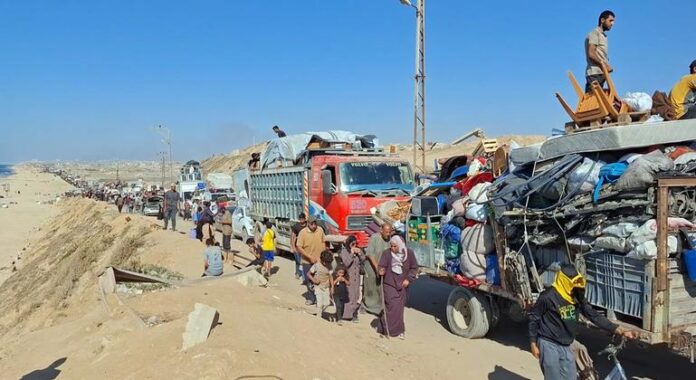
He painted a grim picture of conditions on the ground, citing expanded Israeli military operations, particularly in Deir Al-Balah, which have led to further mass displacement.

UN premises were also struck, hampering humanitarian operations and exacerbating the already dire situation.

ASG Khiari briefs the Security Council.

Humanitarian toll deepens

At least 1,891 Palestinians have been killed in Gaza since 30 June, according to figures from Gazan health authorities, including 294 people reportedly killed while attempting to collect aid near militarised distribution points.  

Evacuation orders continue to force repeated displacement, while food insecurity and malnutrition are worsening despite a limited uptick in the entry of humanitarian supplies.

On the Israeli side, 13 soldiers have been killed in the same period. Palestinian armed groups have continued sporadic rocket attacks into Israel. According to Israeli sources, 50 hostages – including 28 believed to be dead – are still being held by Hamas and other groups.

The Secretary-General has repeatedly condemned the continued holding of hostages by Hamas and other armed groups,” Mr. Khiari stressed. “Hostages must be released immediately and unconditionally.

Places of worship struck

The briefing also highlighted growing concerns about civilian casualties and attacks on protected sites.  

Mr. Khiari condemned a 17 July strike on the Catholic Church of the Holy Family in Gaza City, which killed three and injured several others. The strike forced the evacuation of roughly 600 Palestinians, including children and persons with special needs, who had been sheltering there.

The Israeli Prime Minister’s Office expressed regret, describing the strike as the result of “stray ammunition,” and said an investigation was underway, Mr. Khiari reported.

© UN Women/Samar Abu Elouf

A woman and child walk through the heavily bombed town of Khuza’a in the Gaza Strip.

Dire fuel shortages

Since 9 July, Israel has allowed limited fuel deliveries through the Kerem Shalom/Karim Abu Salem crossing, after 130 days of a full blockade.

However, the amount is “a fraction of what is required to run essential life-saving services in Gaza, where nearly every aspect of life depends on fuel,” Mr. Khiari warned.

Occupied West Bank

Turning to the occupied West Bank, Mr. Khiari reported high levels of violence, including deadly Israeli military operations, attacks by settlers on Palestinians and retaliatory attacks by Palestinians against Israelis.

He noted that the Palestinian Authority (PA) is facing a severe fiscal crisis, with $2.7 billion in withheld clearance revenues, crippling its ability to pay salaries and provide basic services.

Unless urgently addressed, the deterioration of the PA’s fiscal and institutional situation could have catastrophic consequences, undermining the significant progress made over many years to build up Palestinian institutions,” he warned, urging immediate international support.

A wide view of the Security Council meeting on the situation in the Middle East, including the Palestinian question.

A wide view of the Security Council meeting on the situation in the Middle East, including the Palestinian question.

Tensions in the wider region

Mr. Khiari also highlighted continued tensions along the Blue Line between Lebanon and Israel, as well as renewed violence in Syria’s Sweida region and Israeli airstrikes on Syrian territory.

He urged both Israel and Syria to adhere to the 1974 Disengagement Agreement and to avoid any actions that risk escalating the conflict.

Call for a political horizon

Mr. Khiari concluded by reiterating that only a revived political process towards the two-State solution can deliver a sustainable solution.

Our goal is clear: realizing the vision of two States – Israel and a viable and sovereign Palestinian State of which Gaza is an integral part – living side by side in peace and security within secure and recognized borders, on the basis of the pre-1967 lines, with Jerusalem as the capital of both States,” he said.

Source link

Key figure behind major Russian-speaking cybercrime forum targeted in Ukraine – Suspected forum administrator with nearly 20 years in cybercrime made over EUR 7 million facilitating illegal activities

0
Key figure behind major Russian-speaking cybercrime forum targeted in Ukraine – Suspected forum administrator with nearly 20 years in cybercrime made over EUR 7 million facilitating illegal activities

Key figure behind major Russian-speaking cybercrime forum targeted in Ukraine – Suspected forum administrator with nearly 20 years in cybercrime made over EUR 7 million facilitating illegal activities | Europol You need to enable JavaScript to run this app. Loading application.Please wait. Source link

Source link

Live security advice: debate on the situation in the Middle East

0

The Security Council meets today for its quarterly debate on the situation in the Middle East, emphasizing the worsening of the crisis in Gaza. UN deputy secretary general, Khaled Khiari, should inform the situation in the enclave ravaged by war where the entry and distribution of food remains seriously limited, malnutrition increases and fuel and shelter supplies are critical. UN NewsIn coordination with the coverage of UN meetings, brings you live updates of today’s discussions. UN applications users can follow here.

Originally published at Almouwatin.com

Press statement by President António Costa following the 30th EU–Japan summit 2025

0
Press statement by President António Costa following the 30th EU–Japan summit 2025

European Council President António Costa took part in to the 30th EU–Japan summit 2025. In his press statement following the plenary session, he emphasised the importance of strengthening EU-Japan relations, in particular in security and defence, multilateralism, and in trade and economic security.

Source link

Opening remarks by President António Costa at the EU-Japan summit in Tokyo, Japan

0
Key figure behind major Russian-speaking cybercrime forum targeted in Ukraine – Suspected forum administrator with nearly 20 years in cybercrime made over EUR 7 million facilitating illegal activities

On 23 July 2025, European Council President António Costa was in Tokyo, Japan for the 30th EU-Japan summit. In his opening remarks at the start of the plenary session, he emphasised the importance of further deepening the EU-Japan strategic partnership, built on shared values and interests. Source link

Source link

Syria: Ongoing violence fuelling mass displacement in Sweida

0
Syria: Ongoing violence fuelling mass displacement in Sweida

More than 93,000 Syrians have been displaced across Sweida, neighbouring Dar’a governorate and Rural Damascus due to escalating violence in the city,  UN Spokesperson Stéphane Dujarric said at Monday’s daily press briefing in New York.

Most displaced people in Sweida are staying with local communities or in one of 15 reception centres, while around 30 collective shelters have opened in Dar’a.

Infrastructure and services are suffering in the area. Some hospitals and health centres in Sweida are out of service, water infrastructure has been critically damaged, significant cuts to electricity have been reported, and access to food is disrupted.

Initial aid delivery

On Sunday, the first aid convoy deployed by the Syrian Arab Red Crescent reached Sweida and the Salkhad district within the city, where most displaced people are seeking safety.  

The convoy of 32 trucks carried food, water, medical supplies and fuel provided by the World Food Programme (WFP), the UN Children’s Fund (UNICEF) and other partners.

UN Emergency Relief Coordinator Tom Fletcher welcomed this initial delivery on social media, saying it was a “desperately needed first step, but much more relief is needed.”  

Mr. Dujarric stressed that as the UN engages with relevant parties to facilitate humanitarian access and ensure the protection of civilians, the Office for the Coordination of Humanitarian Affairs (OCHA) is working with authorities to facilitate a direct visit to Sweida to deliver assistance when security conditions allow.  

Mr. Fletcher echoed this sentiment, saying OCHA teams “are mobilised to move as much as we can.”

“We continue to urge all parties to protect people who have been caught up in the violence, including by allowing them to move freely to seek safety and medical assistance,” concluded Mr. Dujarric.

Source link

The “ perfect storm ” of global crises has led years of overvoltage of food prices: FAO

0

The report, which will be published later this month, reveals how between 2020 and 2024, the world experienced a spectacular increase in food prices pulled by a combination of COVID 19 Inflation, the war in Ukraine restricting movements on food and staple products and the increase in climatic shocks.

“The episodes described in this publication evoke what we call a perfect storm,” said Mr. Torero Cullen.

Máximo Torero Cullen speaks to journalists from the UN headquarters via a video link.

First, he explained that during the COVID-19 pandemic, governments launched budgetary stimulus and emergency packages, which increased demand and, consequently, global inflation.

The invasion of Russia on a large scale of Ukraine has aggravated this crisis. Before the start of the war in 2022, Ukraine was a key exporter of wheat, sunflower oil and fertilizer. War not only restricted these exports, but disrupted the commercial roads and pushed the fuel and the entry costs, which amplified inflation around the world.

In addition, climatic shocks increasingly frequent and intense in large production regions – such as droughts, floods and heat waves – aggravated food inflation.

World impacts

It was not until 2024 that prices were returned to the pre-cook levels, which means that households had trouble for several years to afford food, with major consequences.

As real wages have dropped while food prices increased, household purchasing power was eroded. Households reacted by buying cheaper and less nutritious foods, reducing the frequency of meals and often prioritizing meals for certain family members and reducing the contribution for women and children.

Mr. Torero Cullen also explained that an increase in food prices is directly correlated to an increase in moderate and severe food insecurity. The impacts of this were particularly severe in West Africa and Asia, where food imports, dependence and depreciation of money made food even more expensive.

In addition, as food prices increased, nutritional results in children under the age of five have worsened. The SOFI report has shown that an increase in food prices by 10% resulted in an increase of 2.7 to 6.1% declinewhich has lasting effects on child development and public health systems.

In particular, these serious impacts were uneven, mainly affecting low -income and African countries – many of which still see an aggravation of the figures. During the peak of the crisis in January 2023, some low -income countries experienced food price inflation of up to 30%, against 13.6% worldwide.

Political recommendations

Mr. Torero Cullen finished his briefing by describing the detailed political prescriptions in the Sofi report.

He first underlined the targeted budgetary support. “Social protection measures are the most effective response to food price peaks,” he said. “This will protect vulnerable populations without creating a long -term fiscal risk or market distortions.”

He also underlined by avoiding trade disturbances, by coordinating monetary and budgetary policies, improving market transparency and institutional preparation as an essential components to avoid future crises.

“This Sofi stresses that inflation can undermine progress. He underlines our vulnerabilities, and it also brings the importance of strengthening resilience, inclusion and transparency to avoid and minimize the risk of these problems, “he concluded.

Originally published at Almouwatin.com

World News in Brief: Houthi-Israel tensions, Sudan cholera cases rise, deadly attacks in Ukraine

0
World News in Brief: US strikes on Yemen, Gaza aid update, debt burden weighs on developing world

These strikes occurred while the UN Mission to support the Hudaydah Agreement – established in 2018 to support the ceasefire between the Government of Yemen and the Houthis – was patrolling at locations to the northern parts of the Port. 

The Secretary-General also expressed deep concern about the continuing missile and drone strikes conducted by the Houthis against Israel. 

Risk of further escalation

Concerned about the risk of further escalation, the UN recalled that international law, together with international humanitarian law, must be respected by all parties at all times, including the obligations to respect and protect civilian infrastructure. 

“The Secretary-General remains profoundly concerned about the risk of further escalation in the region,” said Mr. Dujarric. 

As the UN Chief reiterated his call for “all involved to cease all military actions and exercise maximum restraint,” he also renewed his call for the immediate and unconditional release of all UN and other personnel arbitrarily detained by the Houthi authorities. 

Sudan: Crisis worsens as cholera and floods drive needs higher  

The humanitarian crisis in Sudan continues to deepen as cholera spreads, flooding displaces communities, and thousands of people return to areas with little to no support, according to the UN Office for the Coordination of Humanitarian Affairs (OCHA).

In the locality of Tawila, in North Darfur State, over 1,300 confirmed cases of cholera in just one week were reported on Sunday by an association of Sudanese doctors. 

While local and international partners have set up cholera treatment centres, the current capacity is far from sufficient to cope with the rising caseload.  

As Tawila hosts several hundred thousand displaced people, partners on the ground have been struggling to keep pace with the growing needs, notably as such needs are set to increase as the upcoming rainy season sets in. 

Vulnerable returnees 

Across Sudan, people returning to their communities face serious challenges, including the lack of essential services and the threat posed by explosive remnants of war. 

In White Nile State, some residents have begun returning after being displaced for a year. Yet, an assessment by OCHA and its partners last week found that health, water, sanitation and hygiene support is urgently needed, even more so ahead of the rainy season.

Similarly, in eastern Sudan, OCHA warns that many families returning to Kassala State are struggling to cope with the impact of heavy rains and flooding, as heavy rains destroyed more than 280 homes in the village of Tirik earlier in July. 

Additionally, as insecurity continues to impede the work of humanitarians, challenges faced by returnee families often lead them to return to displacement sites, undermining the sustainability of return efforts. 

In this context, OCHA called for increased international support to meet soaring needs across Sudan. 

Ukraine: At least 20 civilians reportedly killed in recent attacks  

In Ukraine, attacks over the weekend and into Monday reportedly killed over 20 civilians and injured more than 100 others, including several children, according to authorities.

The strikes affected the capital Kyiv, as well as western and front-line regions, damaging homes, schools, and a health facility.

In Kyiv, a kindergarten, metro stations, shops and residential buildings were hit. 

The Ivano-Frankivsk region in western Ukraine which hosts many displaced people and had previously been less affected by hostilities, suffered the largest attack since the full-scale Russian invasion in February 2022.  

Frontline regions  

Meanwhile, in areas near the frontlines in the Donetsk, Dnipro and Kherson regions, hostilities caused civilian casualties and further damage to schools, a health facility, and apartment buildings. Odesa, Kharkiv, Sumy and other regions also reported that homes and shops were destroyed.  

With support from UN agencies, and coordinating with local authorities and first respondents, humanitarian organizations on the ground continue to provide shelter materials, non-food items, legal aid, psychosocial support and assistance for children across the country.  

Source link

The Security Council, in unanimous vote, pushes nations to resolve peacefully disputes

0

THE textSponsored by Pakistan and adopted unanimously, reiterated that all states “will settle their international disputes by peaceful means by dialogue, diplomatic commitment and cooperation so that international peace and security and justice are not in danger.”

He also reiterated that nations must “refrain from their international threat or the use of force against territorial integrity or political independence of any state, or in any other way incompatible with the objectives of the United Nations”.

Emphasizing the need to prevent the disputes from occurring and of Esserdier, the resolution also called on the Member States to take “the necessary measures for the effective implementation of Security advice Resolutions for peaceful dispute settlement. »»

Preventive mediation and diplomacy

The text has encouraged the Secretary -General to ensure that the United Nations can “lead and support mediation and preventive diplomacy efforts”, while continuing to deploy his good offices.

He also took note “with appreciation” of the UN work Mediation support unit (MSU) and urged the secretariat to ensure the availability of “well -trained, experienced, independent, impartial and geographically and linguistically diverse mediation experts at all levels”.

The MSU is the Focal point of the UN at the level of the system on expertise and the support of mediation, providing tailor -made operational support to the world -scale peace and dialogue processes.

Participation of women and young people

The resolution also stressed the importance of integrating the inclusive approaches to the peaceful dispute resolution; Ensure the complete, equal and significant participation of women and the significant participation of young people in conflict prevention and dispute resolution efforts.

He also highlighted the role of regional and sub-regional organizations in the complement of the United Nations efforts, calling for an improvement in information sharing and cooperation.

The Council also requested that the Secretary General presents “concrete recommendations to further strengthen the peaceful dispute settlement mechanisms” within one year, in parallel with the plans of an open debate to examine progress.

Originally published at Almouwatin.com