
In today’s fast-paced digital world, videos as well as music are everywhere. Whether it’s a viral clip on
VidsYoutube: The All-in-One Online Video Downloader for Everyone
Humanitarian Day 2025 Celebrated in Amsterdam: Honoring Global Changemakers
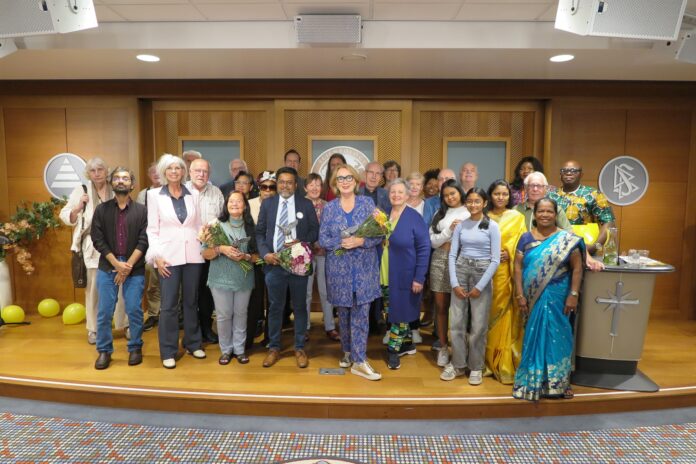
KINGNEWSWIRE // Press release / Amsterdam, Netherlands — August 23, 2025 — The spirit of compassion and service took center stage on Saturday afternoon as the annual Humanitarian Awards were celebrated in Amsterdam. The event, held at the Chapel of the Church of Scientology of Amsterdam, brought together leaders, activists, and community members to recognize individuals whose work embodies dedication to humanity and positive social change.
Organized by the recognized ANBI (Public Benefit Organization), the Church of Scientology of Amsterdam, this year’s ceremony honored three exceptional individuals: Shantha Dalumagage, Morgana Sythove, and Ineke Hilhorst.
The awards were presented by Gerbrig Deinum, Public Affairs Director of the Church of Scientology Amsterdam, in a ceremony inspired by the humanitarian vision of L. Ron Hubbard, founder of Scientology, who taught that “my own philosophy is that one should share what wisdom he has, one should help others to help themselves, and one should keep going despite heavy weather, for there is always a calm ahead.”
Adding to the significance of the occasion, Eric Roux, Global Chair of the United Religions Initiative (URI), traveled from Brussels to attend and speak about URI’s worldwide efforts to promote interfaith cooperation and peace-building. The presence of URI members highlighted the international impact of the awardees’ work.
Honoring Efforts to Improve Lives
Each Humanitarian Award recipient was recognized for their unique and profound contributions—ranging from international human rights campaigns to interreligious dialogue and local social initiatives that foster compassion and understanding.
Shantha Dalumagage: Championing Human Rights and Equality in Sri Lanka
The first award of the afternoon went to Shantha Dalumagage, a lawyer and founder of the Mission Lanka Foundation, dedicated to advancing human rights in Sri Lanka.
Working closely with United for Human Rights International, Shantha has spearheaded initiatives that include spreading awareness of the Universal Declaration of Human Rights, improving education in rural areas, and supporting women’s empowerment.
Beyond education and advocacy, his foundation provides clean drinking water, sanitation facilities, and free legal aid for those unable to afford it. Shantha has also been outspoken on environmental issues, actively campaigning against ecocide—the severe destruction of ecosystems and the environment.
His holistic approach to human rights addresses not only individual freedoms but also the broader well-being of communities, making him a worthy and inspiring recipient of the Humanitarian Award 2025.
“Shantha’s tireless efforts have improved the lives of countless individuals in Sri Lanka,” said Gerbrig Deinum. “His work is a shining example of what it means to serve humanity.”
Morgana Sythove: Building Bridges Across Faiths
The second award was presented to Morgana Sythove, honored for her global role as a spiritual leader and Global Trustee of the United Religions Initiative (URI), an international organization dedicated to fostering peace and understanding among diverse religious and spiritual traditions.
Morgana is a leading voice in the folk religious movement and an internationally oriented Wiccan priestess. Her work focuses on connecting people across religious boundaries, strengthening eco-spiritual communities, supporting humanitarian initiatives, and advocating for women’s rights and ecological justice.
She has represented these causes on the global stage, speaking multiple times at the Parliament of the World’s Religions, including landmark gatherings in Barcelona and Toronto. Through these appearances and her travels worldwide, Morgana has become an influential opinion leader in the interfaith community.
During her speech, Morgana shared insights into Paganism, explaining that the Dutch word heiden—commonly translated as “heathen”—originally meant “from the heath”, signifying a connection with nature and spirituality rather than a rejection of belief.
“It is about understanding the rhythm of the moon and the cycles of nature,” she explained. “Far from being non-spiritual, it is a profound expression of reverence for life.”
Her award was presented in the presence of many URI members, including Eric Roux, emphasizing the global network of cooperation and harmony she represents.
Ineke Hilhorst: Creativity, Compassion, and Community
The third award went to Ineke Hilhorst, a versatile pioneer whose work spans documentary filmmaking, television production, coaching, and community strategy. Ineke’s initiatives bridge past and present, using creativity and storytelling to foster understanding and connection.
Among her notable contributions are the creation of monuments designed to promote tolerance, such as “Vreemde Vogels” (Strange Birds) in Amsterdam and “De Drie Mannetjes” (The Three Little Men) in Laren. These works are not static memorials; they are accompanied by annual programs of discussions, lectures, and educational activities through initiatives like the Table for Tolerance, making them “living monuments” that continually engage the community.
Her humanitarian spirit extends far beyond her local projects. Ineke has been active in refugee support efforts, even helping an Afghan women’s rights activist escape the Taliban and find safety in Germany.
Her blend of creativity, dedication, and compassion has strengthened communities and inspired countless others to take action, making her a deeply deserving recipient of the Humanitarian Award 2025.
A Celebration of Service and Humanity
The ceremony reflected the values at the heart of Humanitarian Day: service, compassion, and unity. The presence of international guests and local community leaders highlighted the interconnectedness of today’s world and the shared responsibility to address humanitarian challenges.
As the awards were presented, Gerbrig Deinum emphasized the role of individual action in creating positive change:
“These awards honor individuals whose actions embody the very best of humanity,” she said. “By recognizing their achievements, we inspire others to step forward and create a more caring and peaceful world.”
Ivan Arjona, the European representative of the Church of Scientology, also attended the event and praised the awardees’ commitment to service:
“These individuals remind us that real change comes from people who act with compassion and courage. Their work aligns with our shared mission to build a world where human dignity and rights are respected everywhere,” said Arjona.
The evening concluded with heartfelt applause for the honorees, a testament to the power of visionaries who dedicate their lives to the service of others.
Inspired by L. Ron Hubbard and Scientology’s Global Mission
The event was guided by the humanitarian vision of L. Ron Hubbard, who emphasized that true value lies in helping others. This principle is also central to the global work led by Mr. David Miscavige, the ecclesiastical leader of the Scientology religion, whose leadership has expanded the Church’s humanitarian initiatives worldwide to unprecedented levels.
The Church of Scientology of Amsterdam, as the official organizer of the event, continues to foster programs that promote education, human rights, and community empowerment. The Humanitarian Awards serve as a living expression of this mission, celebrating individuals whose actions make the world a better place.
“The achievements of Shantha, Morgana, and Ineke are proof that each of us has the power to create positive change,” added Ivan Arjona. “They are an inspiration to us all.”
‘Reparatory justice’ key to ending racism against Africans and their descendants

Doing so is key to dismantling systemic racism that is rooted in legacies of slavery and colonialism, it said.
Actions include formal apologies, truth-seeking, memorialisation and education measures, medical and psychosocial support, as well as compensation.
Past and present linked
For the most part, the report found that amid some rollback of commitments to racial justice, measures taken by States, businesses, religious groups, universities, museums and others remain limited.
“To deliver reparatory justice, States and other actors must implement a comprehensive approach that includes reparations in various forms,” said UN High Commissioner for Human Rights Volker Türk.
“To be truly effective, this approach must squarely consider the web of links between the past and the present – at the individual and societal levels, in all areas of life – in order to dismantle unjust structures and systems designed and shaped by the past.”
Consider local contexts
Mr. Türk cautioned against a “one-size-fits-all approach” as reparatory justice should respond to the demands of affected communities.
“Initiatives and processes should be grounded in history and local context, respond to evolving demands of communities, and centre the specific experiences of women of African descent in particular,” he said.
The report recommends that Africans and people of African descent must guide the design and implementation of these measures through meaningful, inclusive and safe participation.
Reviews, restitution and research
It also highlights initiatives already underway. For example, some countries have reviewed public spaces to identify, remove or contextualise statues and place names linked to persons who were involved in the transatlantic slave trade.
Museums in several European countries are also taking steps to address their collections’ links with the past.
The restitution of cultural heritage is continuing, such as the return of so-called “Benin bronzes” – centuries’ old sculptures, plaques and other items looted from what is now Edo state in Nigeria.
Additionally, some academic institutions have carried out or funded external research into their own history, issued apologies, advanced educational opportunities for communities and created memorials. Some business enterprises also have taken clear steps to acknowledge their links with the past.
“Claims for compensation have been lodged before courts in multiple jurisdictions, and associated legal arguments have bolstered wider public movements and fostered political pressure for change,” the UN rights office added.
The report calls for further research and policy proposals on broader structural and systemic issues, including in the areas of climate and environmental justice, as well as reforms to address the shortcomings of development aid and international financial and governance architecture.
2025 humanitarian day celebrated in Amsterdam: tribute to the actors of world change
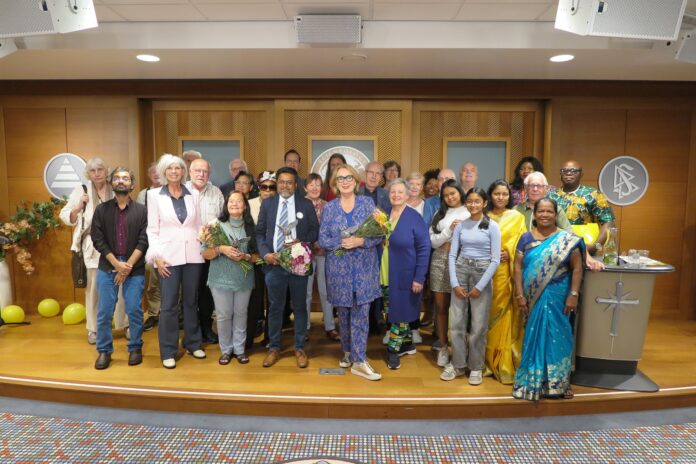
Kingnewswire // press release / Amsterdam, Netherlands-August 23, 2025 -The spirit of compassion and service was in the spotlight on Saturday afternoon during the annual ceremony of Humanitarian Awards which was held in Amsterdam. The event, which was held at the Chapel of the Church of Scientology of Amsterdambrought together leaders, activists and members of the community in order to pay tribute to people whose work embodies dedication to humanity and positive social change.
Organized by theAnbi (organization of public interest) Recognized, the Church of Scientology of Amsterdam, the ceremony of this year paid tribute to three exceptional people: Shantha dalumagage,, Morgana Sythove And Ineke Hilhorst.
The prices were given by Gerbrig Deinum,, Director of public affairs of the Church of Scientology of Amsterdamduring a ceremony inspired by the humanitarian vision of L. Ron Hubbardfounder of Scientology, who taught that “”My own philosophy is that everyone must share their wisdom, help others to help themselves and persevere despite the difficulties, because calm always ends up coming back. »»
To add to the importance of the event, Eric RouxWorld President of theInitiative of United Religions (URI)went from Brussels to attend the ceremony and talk about URI global efforts to promote interconfessional cooperation and peacebuilding. The presence of URI members underlined the international impact of the laureate labor.
Tribute to efforts to improve people’s lives
Each winner of the humanitarian prize has been awarded for their unique and deep contributions, ranging from international campaigns to human rights to interreligious dialogue and local social initiatives that promote compassion and understanding.
Shantha Dalumagage: defender of human rights and equality in Sri Lanka
The first prize in the afternoon was awarded to Shantha dalumagagelawyer and founder of LANKA Foundation missionwho devotes himself to the promotion of Human rights in Sri Lanka.
Working in close collaboration with United for Human Rights InternationalShantha led initiatives aimed at raising public awareness of Universal Declaration of Human Rightsto improve education in rural areas and to support theWomen’s empowerment.
Beyond the education and the defense of rights, its foundation providesdrinking waterof the health facilities and a Free legal aid To those who cannot afford to offer them. Shantha also expressed himself openly on environmental issues, actively leading to campaign against theecocidalthat is to say the serious destruction of ecosystems and the environment.
His holistic approach to human rights approaches not only individual freedoms, but also the general well-being of communities, which makes him a worthy and inspiring winner of 2025 humanitarian price.
“Shantha’s tireless efforts have improved the lives of countless people in Sri Lanka,” said Gerbrig Deinum. “His work is a brilliant example of what humanity means. »»
Morgana Sythove: Throwing bridges between religions
The second prize was awarded to Morgana Sythoverewarded for its global role as spiritual leader And world administrator of theUnited Religions Initiative (URI)an international organization which is devoted to the promotion of peace and understanding between the different religious and spiritual traditions.
Morgana is a figurehead of popular religious movement and a Wiccan priestess with an international vocation. His work mainly consists in bringing people together beyond religious borders, Strengthen eco-spiritual communitiesto support Humanitarian initiatives and to defend them women’s rights and the ecological justice.
She represented these causes on the international scene, speaking several times to Parliament of world religionsespecially during historical rallies to Barcelona And Toronto. Thanks to these interventions and his journeys around the world, Morgana has become an influential opinion leader in the interconfessional community.
During her speech, Morgana shared his reflections on the paganismexplaining that the Dutch word Heidengenerally translated by “pagan”, originally meant “Lande”indicating a link with nature and spirituality rather than a rejection of belief.
“It is a question of understanding the rhythm of the moon and the cycles of nature,” she explained. “Far from being non -spiritual, it is a deep expression of respect for life.”
Its price was given to him in the presence of many members of URI, of which Eric Rouxhighlighting the global network of cooperation and harmony it represents.
Ineke Hilhorst: creativity, compassion and community
The third prize was awarded to Ineke Hilhorsta versatile pioneer whose work covers the documentary cinemathere television productionTHE coaching and the community strategy. The initiatives of Ineke make the bridge between the past and the present, using creativity and narration to promote understanding and links.
Among its notable contributions, we can cite the creation of monuments intended to promote tolerance, such as “VREEMDE VOGELS” (strange birds) in Amsterdam and “from Drie Mannetjes” (the three little men) in Laren. These works are not static commemorative monuments; They are accompanied by annual programs for discussions, conferences and educational activities thanks to initiatives such as the “table for tolerance”, which makes them “living monuments” which continuously imply the community.
His humanitarian spirit extends far beyond his local projects. Ineke has actively engaged in refugee support actionseven helping an Afghan female activist to escape the Taliban and find refuge in Germany.
His mixture of creativity, dedication and compassion reinforced communities and inspired countless other people to act, which makes her a completely deserving winner of the 2025 humanitarian price.
A celebration of service and humanity
The ceremony reflected values at the heart of the Humanitarian day : service, compassion and unit. The presence of international guests and local community leaders has highlighted the interdependence of the current world and the shared responsibility for meeting humanitarian challenges.
During the awards ceremony, Gerbrig Deinum highlighted the role of individual action in creating a positive change:
“These awards reward people whose actions embody the best of humanity,” she said. “By recognizing their achievements, we inspire other people to move forward and create a more united and more peaceful world. »»
Ivan Arjona,, European representative of theChurch of Scientologyalso attended the event and praised the winners’ commitment to the service of others:
“These people remind us that real change comes from those who act with compassion and courage. Their work is part of our joint mission to build a world where dignity and human rights are respected everywhere, ”said Mr. Arjona.
The evening ended with warm applause for the winners, testifying to the power of visionaries who devote their lives to the service of others.
Inspired by L. Ron Hubbard and the World Scientology Mission
The event was inspired by the humanitarian vision of L. Ron Hubbardwhich underlined that the real value lies in the aid given to the others. This principle is also at the heart of the world work led by M. David MiscavigeTHE ecclesiastical chief of the religion of Scientologywhose leadership has made it possible to extend the humanitarian initiatives of the Church to an unprecedented level worldwide.
L’Church of Scientology of Amsterdamas an official organistor of the event, continues to promote programs that promote education, human rights and the empowerment of communities. THE Humanitarian Awards are the living expression of this mission, celebrating people whose actions make the world better.
“The achievements of Shantha, Morgana and Ineke are proof that each of us has the power to make positive changes”, added Ivan Arjona. “They are a source of inspiration for all of us. »»
Originally published at Almouwatin.com
Attacks across Gaza intensify amid fear and hunger: ‘Leave me here,’ injured girl told fleeing family
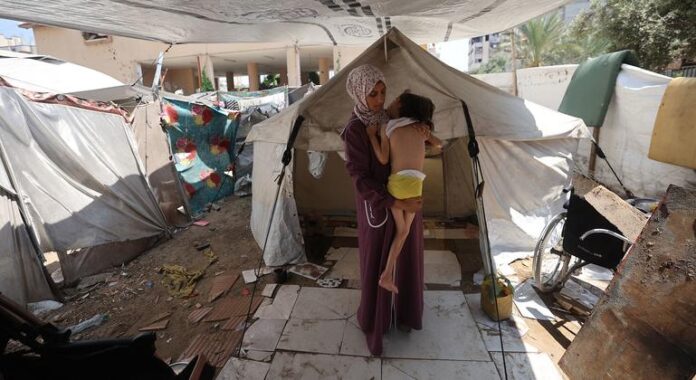
A 14-year-old girl with cerebral palsy who depends on a wheelchair was among crowds fleeing Israeli military aircraft operations east of Rafah in Gaza on 13 October 2023, said committee member Muhannad Salah Al-Azzeh, who presented a report on the Occupied Palestinian Territories on Wednesday in Geneva. In the melee, she lost her wheelchair.
“She was crawling on the sand and asking her family, telling them ‘you can leave me here’ because she felt that she was slowing them down,” he said.
Indeed, some people are unaware of evacuation orders being given in Gaza due to their disabilities since the start of the nearly two-year-long war triggered by the Hamas-led attack on Israel.
“This is one of the most serious issues because in regular situations, personal disabilities are excluded in emergencies, more excluded,” he said. “It’s more complicated for them.”
A woman in a wheelchair is carried across rubble.
States fail to protect rights of persons with disabilities
Following extensive interviews with individuals, delegations and organizations working in Gaza and the West Bank, the UN committee submitted a series of recommendations and serious concerns to Israel and the Palestinian Authority.
The situation in Gaza is a grave concern, Mr. Al-Azzeh stated.
“What we are witnessing there is highly concerning for us,” he warned. “We do believe that all the State parties to the Convention on the Rights of Persons with Disabilities, they really failed in one way or another to fulfill their obligations to protect and to ensure the minimum protection of persons with disabilities in the emergency situation.”
Citing grim cases reported to the committee since the start of war, he said in one instance, prolonged electricity shutdowns in Rafah left a mother unable to receive evacuation messages on her mobile phone, and she and her children subsequently died in an Israeli strike.
Nine-year-old Noor’s parents, who are deaf, have heavily relied on her to survive Israeli tank shelling and attacks. She has had to learn new signing vocabulary for the language of war, including tanks, armed quadcopters, shrapnel and aircraft, the committee representative said.
There are dozens of examples of people like Abdulrahman Al-Gharbawi, with cerebral palsy and a lower limb disability, he said.
All nine times the 27-year-old graphic designer’s family has been forcibly displaced since the start of the war, his mother would carry his wheelchair while his father and brother would carry him.
‘Horrific’ situation in Gaza City
The UN Office for the Coordination of Humanitarian Affairs (OCHA) warned on Wednesday that further intensification of the continued offensive on Gaza City, amid ongoing famine, will push civilians – already battered and bereaved – into an even deeper catastrophe that world leaders must act decisively to prevent.
“Partners supporting displacement sites warned that the escalating hostilities in Gaza City are having horrific humanitarian consequences for people living at these sites, many of whom were previously displaced from North Gaza,” the UN agency said. “They say that many households are unable to move due to high costs and a lack of safe space to move to, with older people and those with disabilities especially affected.”
Partners report that between 14 and 31 August, more than 82,000 new displacements have been recorded, including nearly 30,000 movements from north to south, OCHA stated.
Chronic aid delivery obstacles
Meanwhile, humanitarian efforts continue to face chronic obstacles. While a trickle of aid is getting into the war-torn Gaza Strip, steep challenges remain, according to OCHA’s latest situation report.
Between 17 and 30 August, partners continued daily convoys to uplift humanitarian food aid from the Kerem Shalom and Zikim crossings, bringing more than 6,900 metric tonnes of wheat flour, food parcels and bulk food supplies into Gaza through the UN-coordinated aid mechanism, OCHA reported.
“However, nearly all of this aid was offloaded by hungry crowds or looted by organized groups along convoy routes, preventing targeted household distributions and delivery to partner warehouses,” the UN agency stated.
Since 20 July, when regular food cargo shipments from Gaza’s crossings resumed, less than 40 per cent of the 2,000 metric tonnes of food supplies required daily to meet basic humanitarian food assistance needs could enter the Strip, OCHA said.
“Daily, civilians continue to be killed and injured by military forces or due to violence erupting among desperate crowds while trying to access aid, including in the militarised zone near checkpoints waiting for aid convoys and at non-humanitarian militarised distribution sites,” the UN agency reported.
‘Two per cent of food aid reached warehouses’
As of 30 August, 99 kitchens supported by 19 partners were preparing and distributing 468,000 meals daily across the Gaza Strip, with 155,000 in the north and 313,000 in central and southern Gaza, according to the OCHA report.
“Partners relied on the two per cent of food aid that safely reached warehouses, coupled with resources secured locally from markets,” the UN agency said.
“While representing an 80 per cent increase compared to the 260,000 daily meals prepared in early August, this remains far below the over one million meals produced in April with the humanitarian and commercial food stocks and cooking gas entered during the ceasefire.”
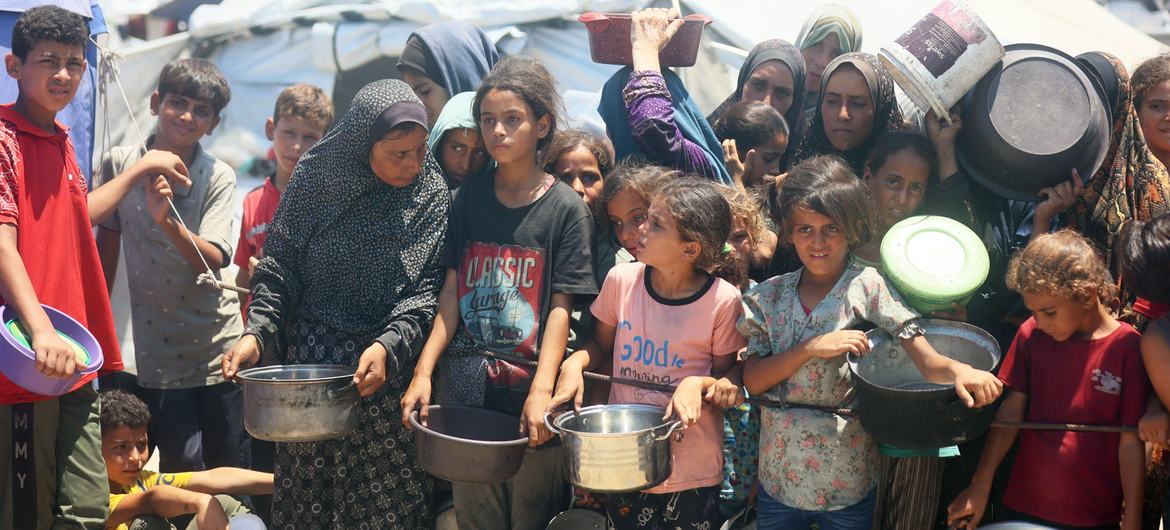
Families and children seeking food from a community kitchen in western Gaza City in late July. (file)
Famine response
The UN and partners continued integrated famine response efforts come on the heels of the UN-backed global hunger experts’ report finding famine conditions in parts of Gaza last month.
Efforts included scaling up cooked meal provision, promoting small-scale home gardening and community oven initiatives, expanding cash and voucher assistance and strengthening real-time monitoring and analysis systems.
“Intense advocacy continues with the Israeli authorities to increase the volume of humanitarian and commercial goods approved for entry, with a focus on fresh produce and fortified food, nutrition, health and cooking gas,” OCHA said in its report.
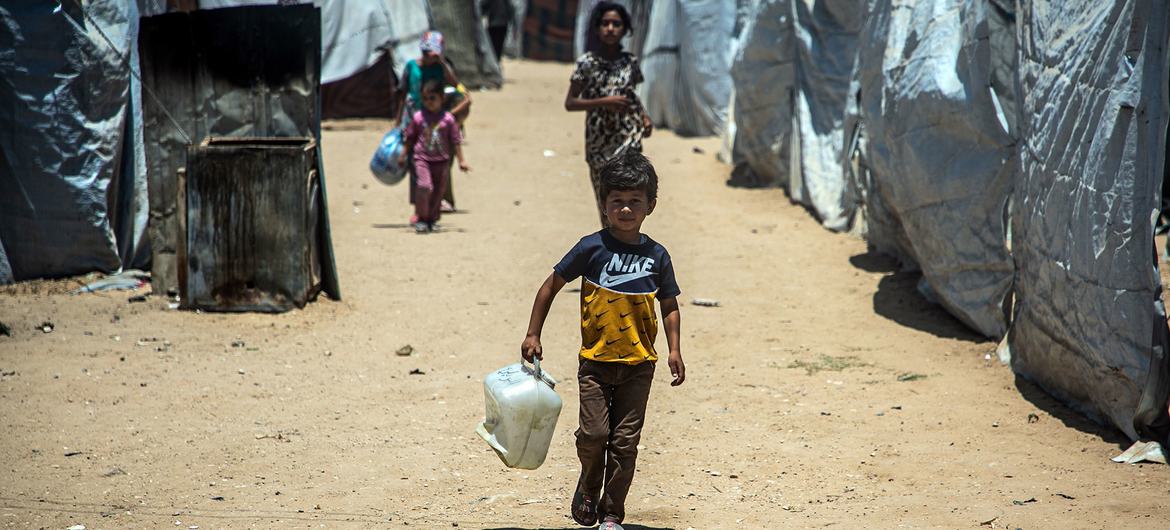
Access to safe drinking water in the Gaza Strip has been severely compromised due to the ongoing war.
New supplies and critical shortages
For the first time in over five months, concentrated fodder for livestock owners entered Gaza. Approximately 60 metric tonnes were distributed to 600 livestock holders in Deir Al-Balah, OCHA said.
However, despite sustained advocacy, cooking gas has not entered Gaza for more than five months and is no longer available in markets, the UN agency stated.
“Firewood has also become increasingly unaffordable,” according to the agency. “Many people are reduced to using waste and scrap wood as alternative cooking sources, exacerbating health and environmental risks.”
Meanwhile, the UN relief agency for Palestine refugees’ (UNRWA) health facilities continue to serve around 132,000 patients with non-communicable diseases despite facing dire shortages of medical supplies. Insulin stocks will be exhausted within one to two weeks, leaving at least 16,000 diabetic patients without an essential part of their treatment, OCHA reported.
Access to clean water is severely limited. At the same time, hospitals remain lacking in essential supplies and continue to face overcrowding as daily attacks are seeing a rise in the numbers of dead and injured.
EBI Conference 2025 – The European Times News

DISCLAIMER: Information and opinions reproduced in the articles are the ones of those stating them and it is their own responsibility. Publication in The European Times does not automatically means endorsement of the view, but the right to express it.
DISCLAIMER TRANSLATIONS: All articles in this site are published in English. The translated versions are done through an automated process known as neural translations. If in doubt, always refer to the original article. Thank you for understanding.
SRM 10th Anniversary Conference

Join the celebration of the Single Resolution Mechanism’s 10th Anniversary Conference, hosted by the Single Resolution Board, on 15 October 2025 in Brussels.This event offers a unique opportunity to reflect on a decade of achievements in banking resolution and crisis management while exploring the road ahead.More information and registration
Humanitarian Day 2025 Celebrated in Amsterdam: Honoring Global Changemakers

KINGNEWSWIRE // Press release / Amsterdam, Netherlands — August 23, 2025 — The spirit of compassion and service took center stage on Saturday afternoon as the annual Humanitarian Awards were celebrated in Amsterdam. The event, held at the Chapel of the Church of Scientology of Amsterdam, brought together leaders, activists, and community members to recognize individuals whose work embodies dedication to humanity and positive social change.
Organized by the recognized ANBI (Public Benefit Organization), the Church of Scientology of Amsterdam, this year’s ceremony honored three exceptional individuals: Shantha Dalumagage, Morgana Sythove, and Ineke Hilhorst.
The awards were presented by Gerbrig Deinum, Public Affairs Director of the Church of Scientology Amsterdam, in a ceremony inspired by the humanitarian vision of L. Ron Hubbard, founder of Scientology, who taught that “my own philosophy is that one should share what wisdom he has, one should help others to help themselves, and one should keep going despite heavy weather, for there is always a calm ahead.”
Adding to the significance of the occasion, Eric Roux, Global Chair of the United Religions Initiative (URI), traveled from Brussels to attend and speak about URI’s worldwide efforts to promote interfaith cooperation and peace-building. The presence of URI members highlighted the international impact of the awardees’ work.
Honoring Efforts to Improve Lives
Each Humanitarian Award recipient was recognized for their unique and profound contributions—ranging from international human rights campaigns to interreligious dialogue and local social initiatives that foster compassion and understanding.
Shantha Dalumagage: Championing Human Rights and Equality in Sri Lanka
The first award of the afternoon went to Shantha Dalumagage, a lawyer and founder of the Mission Lanka Foundation, dedicated to advancing human rights in Sri Lanka.
Working closely with United for Human Rights International, Shantha has spearheaded initiatives that include spreading awareness of the Universal Declaration of Human Rights, improving education in rural areas, and supporting women’s empowerment.
Beyond education and advocacy, his foundation provides clean drinking water, sanitation facilities, and free legal aid for those unable to afford it. Shantha has also been outspoken on environmental issues, actively campaigning against ecocide—the severe destruction of ecosystems and the environment.
His holistic approach to human rights addresses not only individual freedoms but also the broader well-being of communities, making him a worthy and inspiring recipient of the Humanitarian Award 2025.
“Shantha’s tireless efforts have improved the lives of countless individuals in Sri Lanka,” said Gerbrig Deinum. “His work is a shining example of what it means to serve humanity.”
Morgana Sythove: Building Bridges Across Faiths
The second award was presented to Morgana Sythove, honored for her global role as a spiritual leader and Global Trustee of the United Religions Initiative (URI), an international organization dedicated to fostering peace and understanding among diverse religious and spiritual traditions.
Morgana is a leading voice in the folk religious movement and an internationally oriented Wiccan priestess. Her work focuses on connecting people across religious boundaries, strengthening eco-spiritual communities, supporting humanitarian initiatives, and advocating for women’s rights and ecological justice.
She has represented these causes on the global stage, speaking multiple times at the Parliament of the World’s Religions, including landmark gatherings in Barcelona and Toronto. Through these appearances and her travels worldwide, Morgana has become an influential opinion leader in the interfaith community.
During her speech, Morgana shared insights into Paganism, explaining that the Dutch word heiden—commonly translated as “heathen”—originally meant “from the heath”, signifying a connection with nature and spirituality rather than a rejection of belief.
“It is about understanding the rhythm of the moon and the cycles of nature,” she explained. “Far from being non-spiritual, it is a profound expression of reverence for life.”
Her award was presented in the presence of many URI members, including Eric Roux, emphasizing the global network of cooperation and harmony she represents.
Ineke Hilhorst: Creativity, Compassion, and Community
The third award went to Ineke Hilhorst, a versatile pioneer whose work spans documentary filmmaking, television production, coaching, and community strategy. Ineke’s initiatives bridge past and present, using creativity and storytelling to foster understanding and connection.
Among her notable contributions are the creation of monuments designed to promote tolerance, such as “Vreemde Vogels” (Strange Birds) in Amsterdam and “De Drie Mannetjes” (The Three Little Men) in Laren. These works are not static memorials; they are accompanied by annual programs of discussions, lectures, and educational activities through initiatives like the Table for Tolerance, making them “living monuments” that continually engage the community.
Her humanitarian spirit extends far beyond her local projects. Ineke has been active in refugee support efforts, even helping an Afghan women’s rights activist escape the Taliban and find safety in Germany.
Her blend of creativity, dedication, and compassion has strengthened communities and inspired countless others to take action, making her a deeply deserving recipient of the Humanitarian Award 2025.
A Celebration of Service and Humanity
The ceremony reflected the values at the heart of Humanitarian Day: service, compassion, and unity. The presence of international guests and local community leaders highlighted the interconnectedness of today’s world and the shared responsibility to address humanitarian challenges.
As the awards were presented, Gerbrig Deinum emphasized the role of individual action in creating positive change:
“These awards honor individuals whose actions embody the very best of humanity,” she said. “By recognizing their achievements, we inspire others to step forward and create a more caring and peaceful world.”
Ivan Arjona, the European representative of the Church of Scientology, also attended the event and praised the awardees’ commitment to service:
“These individuals remind us that real change comes from people who act with compassion and courage. Their work aligns with our shared mission to build a world where human dignity and rights are respected everywhere,” said Arjona.
The evening concluded with heartfelt applause for the honorees, a testament to the power of visionaries who dedicate their lives to the service of others.
Inspired by L. Ron Hubbard and Scientology’s Global Mission
The event was guided by the humanitarian vision of L. Ron Hubbard, who emphasized that true value lies in helping others. This principle is also central to the global work led by Mr. David Miscavige, the ecclesiastical leader of the Scientology religion, whose leadership has expanded the Church’s humanitarian initiatives worldwide to unprecedented levels.
The Church of Scientology of Amsterdam, as the official organizer of the event, continues to foster programs that promote education, human rights, and community empowerment. The Humanitarian Awards serve as a living expression of this mission, celebrating individuals whose actions make the world a better place.
“The achievements of Shantha, Morgana, and Ineke are proof that each of us has the power to create positive change,” added Ivan Arjona. “They are an inspiration to us all.”
10 Timeless Steps To Strengthen Education In Values Across Europe

Most educators agree that instilling core values in students is vital for fostering a harmonious society. He, she, and they recognise that an emphasis on ethical education helps equip future generations with the necessary skills to navigate complex moral landscapes. Through practical approaches and comprehensive strategies, these ten steps aim to enhance value-based education across Europe, empowering students to lead with integrity and respect in their communities.
Reimagining Curriculum: The Core of Value Education
Transforming the curriculum is imperative for embedding value education into the fabric of learning. This requires a thorough examination of existing educational structures, ensuring that they reflect ethical principles and moral imperatives relevant to today’s society. A stronger emphasis on values can prepare students not just for exams, but for the complexities of life, fostering critical thinking and empathy as foundational skills in a global context.
Integrating Values into Existing Frameworks
Incorporating values into established curricula involves aligning educational objectives with ethical standards and societal needs. Educators should identify opportunities within existing subjects where discussions on integrity, respect, and responsibility can seamlessly fit. Engaging teachers in professional development around these integrations contributes substantially to a unified approach in fostering value-driven education.
Creating Cross-Curricular Connections
Connecting values across different subjects creates a holistic educational experience. For instance, history lessons can illustrate the importance of fairness and justice, while literature can explore themes of compassion and resilience. Such links not only deepen understanding but also encourage students to view each subject through the lens of shared human values.
Developing cross-curricular connections enhances students’ ability to apply value education in diverse contexts. For example, a project that merges science with social studies allows students to examine the environmental impact of industrialization while discussing the ethical implications of climate change. This multi-faceted approach not only enriches learning but also helps students build a coherent framework of values that are relevant across their entire education. By utilising collaborative teaching strategies, schools can provide a richer landscape where students can explore values in a more integrated manner, leading to a deeper understanding and personal resonance with these principles.
The Role of Educators: Champions of Change
A transformative educational environment relies heavily on instructors who act as advocates for values-based education. These educators not only impart knowledge but also embody the principles they wish to instil in their students. By promoting inclusion, resilience, and empathy, they become role models, enabling students to internalise these principles within their everyday lives. Their influence extends beyond the classroom, impacting the wider community as they drive conversations and initiatives aimed at cultivating a values-centric society.
Empowering Teachers through Professional Development
Enhanced professional development programmes enable teachers to embrace innovative teaching strategies that prioritise values education. Workshops, seminars, and collaborative learning opportunities equip educators with the tools to effectively incorporate ethical teaching practices. By fostering a culture of continuous improvement, they can better engage students, adapting methodologies that resonate with diverse learning styles and needs.
Fostering a Values-Based Teaching Philosophy
Adopting a values-based teaching philosophy encourages educators to weave ethical considerations into their instructional practices. This approach enables them to create a cohesive learning environment where students feel valued and motivated. In practice, educators might integrate discussions on social justice, environmental stewardship, or global citizenship into their curriculum. Notably, research indicates that schools with a clear values framework report higher levels of student engagement and satisfaction, ultimately producing well-rounded individuals prepared for future challenges.
Community Engagement: Building Bridges Beyond the Classroom
Strengthening education in values requires the active involvement of the wider community, creating a supportive network that enriches students’ learning experiences. By forging partnerships between schools and local organisations, educators can cultivate a richer, more diverse environment that extends beyond classroom walls, ensuring that students are not only learning in isolation but are also engaging with the values and challenges present in their communities.
Collaborating with Local Organisations and Stakeholders
Collaborative efforts between schools and local organisations can lead to transformative educational experiences. Community groups, charities, and businesses can provide resources, mentorship, and real-world experiences, connecting theoretical knowledge with practical application. For instance, a school partnering with a local environmental group might facilitate students’ participation in conservation projects, allowing them to understand sustainability and responsibility firsthand.
Involving Parents in the Educational Process
Involving parents in educational initiatives fosters stronger connections between home and school, thus enriching the educational environment. Schools that actively seek parental input and participation often see improved student engagement and outcomes. Workshops aimed at educating parents about the value system being taught can empower them to reinforce these values at home, creating a cohesive support system for students.
Further involvement of parents can take the shape of participatory events and discussions that focus on values education. Schools might conduct regular workshops where parents and teachers collaborate, sharing strategies to instil values such as respect, empathy, and integrity. For example, initiatives encouraging parents to attend value-based activities can create a unified message, allowing families to model these principles in everyday life. Engaging parents not only strengthens educational values but also builds a supportive community framework, promoting shared responsibility for students’ development.
International Best Practices: Learning from Global Examples
Exploring international best practices provides valuable insights into effective value education that can be adapted across Europe. Countries with successful value education initiatives showcase models that promote engagement, critical thinking, and ethical behaviour among students. These models often highlight the significance of integrating community resources and leveraging diverse cultural perspectives to enrich educational experiences.
Case Studies of Successful Value Education Initiatives
Several case studies exemplify impactful value education programmes worldwide. These initiatives demonstrate how structured approaches can lead to significant improvements in student outcomes.
- Finland: Achieved a 90% satisfaction rate in value education integration, incorporating ethical discussions into daily lessons.
- Japan: Implemented *Moral Education* as part of the curriculum, resulting in improved student behaviour and social responsibility, with a reported 80% reduction in school bullying incidents.
- Canada: The *Empathy Project* has seen a 30% improvement in peer relationships through community engagement work, particularly in urban areas.
- Sweden: Schools that adopted *Values-Based Education* reported a 25% increase in student attendance and reduced disciplinary actions.
Adapting Models to Unique European Contexts
Adapting successful global models to European contexts necessitates consideration of cultural diversity and educational structures within each nation. This tailoring allows for value education initiatives to resonate with local communities, addressing specific social issues while fostering a shared sense of responsibility among students. Collaborating with local stakeholders enables the creation of programmes that reflect the unique societal values and challenges present in each country.
Measuring Success: Assessing Value Education Impact
Evaluating the impact of value education necessitates a comprehensive approach, intertwining qualitative and quantitative measures. Regular assessments help to pinpoint strengths and weaknesses in programmes, ensuring that objectives align with the desired outcomes. Gathering feedback from students, educators, and parents can illuminate how effectively values are being imparted, facilitating adjustments as needed.
Developing Metrics for Value-Based Learning Outcomes
Establishing robust metrics for value-based learning outcomes involves defining clear, measurable objectives aligned with the core values being taught. Schools might employ tools such as surveys, observational assessments, and standardised tests to gauge understanding and application of these values among students. The metrics must resonate with the specific cultural and social contexts of the students they serve.
Collecting and Analysing Data for Continuous Improvement
Data collection and analysis is necessary for refining value education strategies. Institutions should implement systematic methods for gathering feedback, utilising tools like focus groups, interviews, and academic performance tracking. This data serves as a foundation for identifying trends and effectiveness in teaching values, empowering educators to fine-tune curricula and address challenges promptly.
Employing a combination of qualitative and quantitative data collection methods, such as the integration of digital platforms for real-time feedback, enhances the robustness of the analysis. Conducting regular reviews of collected data allows educators to compare value learning impacts over time, identifying shifts in student behaviour and engagement. Established frameworks may involve the use of benchmark studies, facilitating cross-institutional comparisons and fostering a culture of shared learning. This continual cycle of assessment not only aids in recognising successful practices but also highlights areas needing targeted interventions, thereby promoting sustained improvement in value education across Europe.
Conclusion
To wrap up, they emphasise that strengthening education in values across Europe requires a comprehensive approach that incorporates community involvement, curriculum development, and teacher training. He highlights the importance of fostering an inclusive environment where diverse perspectives are respected, while she notes the role of parents in reinforcing these values at home. By implementing these ten timeless steps, educators and policymakers can create a more cohesive society where individuals are equipped with the moral compass necessary to navigate contemporary challenges.
EU Citizens Call for Stronger Role of the Union Amid Global Challenges, Survey Reveals

Brussels, September 4, 2025 — A new EU-wide survey shows that Europeans are increasingly looking to the European Union to play a stronger role in protecting citizens against international crises and security threats, while also pushing for greater transparency and unity among Member States.
According to the latest Eurobarometer survey, conducted by the European Parliament, 68% of respondents want the EU to take a more active role in shielding its citizens from global risks. The call for solidarity is even louder when it comes to cooperation between Member States, with nine out of ten Europeans (90%) urging governments to work more closely together to face the current geopolitical landscape.
Defence, Economy and Security Top the Agenda
The survey highlights citizens’ concerns over the current political and economic climate. When asked about the EU’s priorities on the world stage, defence and security (37%) emerged as the top area of focus, followed by competitiveness, economy and industry (32%).
At a domestic level, Europeans are particularly worried about inflation and the rising cost of living (41%), issues that have remained top concerns since the last European elections. Defence and security (34%) and the fight against poverty and social exclusion (31%) were also cited as key areas for the European Parliament to prioritize.
European Parliament President Roberta Metsola emphasized the importance of these results, stating:
“EU citizens want Europe to focus on security and the economy. They look to the EU for stability and expect a strong and united European voice in today’s uncertain world. Our priorities and the EU’s next long-term budget must therefore allow the Union to tackle new geopolitical realities. Parliament has listened and now, we must put our money where our mouth is, invest in what matters and deliver for our citizens.”
Push for Joint Financing and Greater Transparency
The results reveal a clear desire for common financing of major projects, with 78% of Europeans supporting the idea of funding more initiatives at the EU level rather than individually by Member States.
At the same time, transparency and accountability remain crucial. An overwhelming 91% of respondents believe that the European Parliament must have all necessary tools and information to oversee EU spending effectively.
Additionally, 85% of citizens support making EU funds conditional on Member States’ compliance with democratic values and the rule of law.
EU Membership Seen as Beneficial
The survey also found that Europeans continue to view EU membership positively. Nearly three out of four respondents (73%) believe their country has benefited from being part of the EU, citing contributions to peace and security (37%), improved cooperation between Member States (36%), and economic growth (29%).
Furthermore, 72% say EU actions have a direct impact on their daily lives, with half describing this impact as positive (50%).
About the Survey
The Spring 2025 Eurobarometer survey was carried out by research agency Verian between 5 and 29 May 2025, across all 27 EU Member States. It included 26,410 face-to-face and video interviews (CAVI), with results weighted according to each country’s population size.
The findings provide valuable insights as EU institutions prepare to define priorities for the post-2027 long-term budget, aiming to align funding with citizens’ expectations for a stronger, more united Europe.
