Thursday, April 30, 2026
Home Blog Page 378

The path to happiness in action: how Hungarian scientologists lead environmental change

0

Kingnewswire // press release // At a time when ecological problems get worse, it has never been so urgent to adopt an approach to environmental action based on values. Aware of this, the United Nations Environment Program launched the “Faith for Earth” initiative (Faith for Earth), a global effort aimed at involving religious and spiritual communities as essential partners in the protection of the planet. At the heart of this initiative is a simple but deep idea: that moral benchmarks and inner transformation are just as essential to sustainability as science and technology. We see this vision coming to life more and more concrete in Hungary, where a movement inspired by The path of happinessa common sense moral code written by L. Ron Hubbard, mobilizes scientologists and local citizens so that they take significant and practical measures in favor of the restoration of the environment, a cleaning action, a conversation, a responsible act at the same time.

A clean planet begins with a clear conscience

On the occasion of World Environment Day 2025, the Budapest Scientology Church organized a round table entitled “The present and the future of environmental protection from the point of view of science and religion”. Scientists and spiritual leaders from various traditions (Adventists, Catholics, Hindu and Scientologists) met for a rare and significant dialogue.

The discussions have revealed a common understanding: true environmental sustainability requires more than political reforms or green technologies. It requires a transformation of the way people think, live and assume their responsibilities. A scientologist worker stressed that real change begins when individuals decide to live ethically, not for fear, but for the sake of the common good.

A concept from the principle “protect and improve your environment” from the book The path of happiness resonated throughout the event:

“The idea that everyone has a share in the planet and that he can and must help take care of it may seem very large and, for some, completely unrealistic. But today, what is happening on the other side of the world, even very far, can have repercussions on what is happening at home.»L. Ron Hubbard

In a world that often favors comfort to the detriment of consciousness, this message has affected a sensitive string, reminding participants that taking care of the environment is ultimately a personal choice, repeated day after day.

The movement for a better world: a moral code in action

This principle is put into practice visibly in the work of the Jobb Világ Mozgalom (Movement for a better world), founded by Attila Kis-Balázsa Hungarian scientologist whose commitment to the environment is deeply rooted in The path of happiness.

What started as an individual initiative, to collect waste when he was a child, has turned into a dynamic national movement of volunteering. Today, hundreds of people participate in cleaning operations organized throughout Hungary. And if the work is concrete, the spirit which animates it is undeniably ethical.

“The path of happiness brought me clarity. He showed me that doing good is not only idealistic, it is essential. When people feel that they can change things, they do it. »-Attila Kis-Balázs

Each cleaning operation is guided by principles such as:

  • “Give a good example. »»
  • “Protect and improve your environment. »»

These ideas are not theoretical: they are put into practice during joyful, inclusive and deeply enriching monthly events.

How it works: an action inspired for a cleaner Hungary

In Hungary, The way to happiness has become much more than a book: it is the ethical pillar of an expanding environmental movement. At the heart of this movement is Attila Kis-Balázs, a longtime scientologist whose personal history is as fascinating as the cause he defends.

Long before founding the Jobb Világ Mozgalom (Movement for a better world), Attila was just a boy who was walking in the streets of his city, discreetly picking up waste. “It didn’t seem to me to be an extraordinary gesture,” he recalls. But it just seemed to me. This little gesture, repeated over the years, would later turn into something much bigger: a coordinated national effort to clean and maintain Hungarian public spaces, with kindness, joy and determination.

The turning point took place when Attila read The path of happiness. His simple but powerful principles, in particular “help take care of the planet” and “avoid doing things that others will have to clean,” brought him the moral clarity he was looking for. “It put the points on the I for me,” he says. “It was not only a question of collecting the waste. It was a question of being the kind of person who leaves the world better than she found it. »»

Motivated by this ethical framework, he began to organize cleaning events, first with friends and family. But word of mouth quickly worked and the rallies gained momentum. Today, the Better World Movement mobilizes hundreds of volunteers across Hungary, creating a snowball effect that results not only by clean parks and streets, but also in a boost of energy within the communities concerned.

The moral code that guides the movement

The impact of the Better World Movement is particularly noticeable during cleaning operations organized on weekends. No fanfare, just people of all ages who come with gloves, bags and a common motivation. The atmosphere is relaxed, often accompanied by music, laughter and improvised conversations between strangers. The work is concrete: collect waste, sort recyclable materials, restore green spaces. But what strikes the new participants is the feeling of unity.

Events generally last two to three hours and are followed by an informal meal or discussions. The idea is not only to clean, but also to create links. “Some people come for the first time by simple curiosity,” explains a long -standing volunteer. “But they leave with the feeling of having done something important. It is this feeling that encourages them to come back. »»

Municipalities have also become aware of this movement. Local authorities often associate with movement and suggest places that need attention. A specially developed application makes it possible to coordinate efforts and encourage citizens to offer new sites. But what really feeds continuity is the emotional reward: the quiet pride of having improved something.

Although the movement is not limited to Scientologists, many of its most diligent volunteers are inspired by the book The path of happiness. They do not speak of this book as a set of rules, but as a guide to live with integrity. For them, picking up waste is not only an act of service, it is a way of expressing their respect for life and for others.

A global example of action motivated by faith

The Hungarian initiative is part of a broader awakening of religious communities around the world. The initiative Faith for Earth UNEP Specifies precisely this type of actions based on values: efforts that translate spiritual convictions into concrete actions to save the planet.

Iván Arjonarepresentative of the Church of Scientology to the European Union and the United Nations, considers the movement for a world better as a model illustrating how individual ethics can have repercussions on social change:

“What makes the way to happiness so effective is that it is addressed to the person, not in abstract terms, but by giving them concrete advice. When people align their actions on their values, change becomes inevitable. »»

From streets of Budapest to international dialogue rooms, the message is gaining ground: lasting change begins with people, and people guided by a moral code can actually change the world.

At a time when global challenges may seem insurmountable, the movement for a better world and The path of happiness offer something rare: a feeling of control, a sense and concrete and practical means to make the world better, an action at the same time.

Originally published at Almouwatin.com

How Hungarian Scientologists Are Leading Environmental Change

0
How Hungarian Scientologists Are Leading Environmental Change

KINGNEWSWIRE // PRESS RELEASE // In a time of growing ecological distress, the need for a values-based approach to environmental action has never been more urgent. Recognizing this, the United Nations Environment Programme launched the Faith for Earth Initiative — a global effort to engage religious and spiritual communities as essential partners in protecting the planet. At the heart of this initiative is a simple but profound idea: that moral guidance and inner transformation are just as critical to sustainability as science and technology. We find this vision to become more and more vividly brought to life in Hungary, where a movement inspired by The Way to Happiness, a common-sense moral code authored by L. Ron Hubbard, is mobilizing Scientologists and local citizens alike to take meaningful, practical steps toward environmental restoration — one clean-up, one conversation, one act of responsibility at a time.

A Clean Planet Begins with a Clear Conscience

On World Environment Day 2025, the Church of Scientology in Budapest hosted a roundtable titled “The Present and Future of Environmental Protection from the Perspective of Science and Religion.” Scientists and spiritual leaders from diverse traditions — Adventist, Catholic, Hindu, and Scientologist — came together in a rare and meaningful dialogue.

The discussions revealed a shared understanding: true environmental sustainability requires more than policy reforms or green technologies. It demands a transformation in how people think, live, and take responsibility. A Scientologist speaker emphasized that real change starts when individuals decide to live ethically — not out of fear, but out of care.

A concept from the principle “Safeguard and improve your environment,” from The Way to Happiness resonated throughout the event:

“The idea that one has a share in the planet and that one can and should help care for it may seem very large and, to some, quite beyond reality. But today what happens on the other side of the world, even so far away, can effect what happens in your own home.” L. Ron hubbard

In a world that often promotes convenience over conscience, this message struck a chord — reminding participants that caring for the environment is ultimately a personal choice, repeated day after day.


The Better World Movement: A Moral Code in Motion

This principle is lived out visibly in the work of the Jobb Világ Mozgalom (Better World Movement), founded by Attila Kis-Balázs, a Hungarian Scientologist whose commitment to environmental action is rooted deeply in The Way to Happiness.

What began as a solo effort — picking up litter as a child — grew into a vibrant national volunteer movement. Today, hundreds of people take part in clean-up events organized across Hungary. And while the work is practical, the spirit behind it is unmistakably ethical.

The Way to Happiness gave me clarity. It showed me that doing good is not just idealistic — it’s essential. When people feel they can make a difference, they do.” — Attila Kis-Balázs

Each clean-up is guided by principles such as:

  • “Set a good example.”
  • “Safeguard and improve your environment.”

These ideas aren’t theoretical — they are put into practice through monthly events that are joyful, inclusive, and deeply fulfilling.


How It Works: Inspired Action for a Cleaner Hungary

In Hungary, The Way to Happiness has become much more than a book — it’s the ethical backbone of a growing environmental movement. At its heart is Attila Kis-Balázs, a lifelong Scientologist whose personal story is as compelling as the cause he champions.

Long before founding the Jobb Világ Mozgalom (Better World Movement), Attila was just a boy walking the streets of his town, quietly picking up litter. “It didn’t feel like a big act,” he recalls. “But it felt right.” That small gesture, repeated over the years, would later evolve into something far greater: a coordinated national effort to clean and care for Hungary’s public spaces — with kindness, joy, and purpose.

The turning point came when Attila read The Way to Happiness. Its simple but powerful principles — especially “Help take care of the planet” and “Try not to do things that others will have to clean up” — gave him the moral clarity he was seeking. “It connected the dots for me,” he says. “It wasn’t just about cleaning up trash. It was about being the kind of person who leaves the world better than they found it.”

Motivated by this ethical framework, he began organizing clean-up events, initially among friends and family. But word spread quickly, and the gatherings began to grow. Today, the Better World Movement mobilizes hundreds of volunteers across Hungary, creating a ripple effect that’s visible not only in cleaner parks and streets, but also in the renewed spirit of the communities involved.

The Moral Code That Guides the Movement

The impact of the Better World Movement can be felt most clearly during one of its weekend clean-ups. There’s no fanfare — just people of all ages showing up with gloves, bags, and a sense of purpose. The atmosphere is light-hearted, often accompanied by music, laughter, and impromptu conversations between strangers. The work is real — collecting waste, sorting recyclables, restoring green spaces — but what strikes first-time participants is the sense of unity.

Events usually last two to three hours and are followed by informal shared meals or discussions. The idea is not just to clean but to connect. “We’ve had people come for the first time just out of curiosity,” says one longtime volunteer. “But they leave with a sense that they’ve done something important. That feeling brings them back.”

Municipalities have taken notice too. Local governments often partner with the movement, suggesting locations in need of attention. A custom-developed app helps coordinate efforts and encourages citizens to propose new sites. But what really fuels the continuity is the emotional reward — the quiet pride of having made something better.

While the movement isn’t limited to Scientologists, many of its most consistent volunteers are inspired by The Way to Happiness. They speak of the book not as a set of rules, but as a guide for living with integrity. For them, picking up a piece of trash isn’t just an act of service — it’s a way of expressing respect for life and for others.

A Global Example for Faith-Driven Action

The Hungarian initiative is part of a wider awakening across faith communities worldwide. The UNEP’s Faith for Earth Initiative supports exactly this kind of values-driven action: efforts that bring spiritual conviction into practical, planet-saving work.

Iván Arjona, the Church of Scientology’s representative to the European Union and United Nations, sees the Better World Movement as a model for how individual ethics can ripple outward to societal change:

“What makes The Way to Happiness so effective is that it speaks to the person — not in abstract terms, but in real-life guidance. When people align their actions with their values, change becomes unstoppable.”

From the streets of Budapest to the halls of international dialogue, the message is gaining ground: lasting change begins with people — and people guided by a moral code can indeed change the world.

In a time when global challenges can feel overwhelming, the Better World Movement and The Way to Happiness offer something rare: a sense of control, meaning, and real, practical ways to make the world better — one action at a time.

Source link

Guterres Renews calls for the ceasefire of Israel-Iran

0

“” I reiterate my call to an immediate de-escalation leading to a ceasefire“Said Mr. Guterres a declaration in which he strongly invited to any other internationalization of the conflict.

“All additional military interventions could have enormous consequences, not only for people involved but for the whole region and for international peace and security as a whole,” he warned.

He condemned “the tragic and unnecessary losses of lives and injuries to civilians and damage to critical civil houses and infrastructure”.

Fatal climbing

The crisis broke out on Friday when Israel began to target nuclear and military sites across Iran, which prompted Tehran to launch reprisals on Israeli cities.

Since then, more than 250 people have been killed in both countries, according to the media.

The International Atomic Energy Agency (Aiea), which has been monitoring Iran’s nuclear program for decades, said that it had received information that two centrifuge production facilities were struck on Wednesday.

The Tesa Karaj Workshop and the Tehran Research Tehran were previously under its follow -up and verification as part of an international agreement of 2015 known as The Complete Complete Action Plan (JCPOA).

“On the Tehran site, a building was affected where advanced centrifuge rotors were manufactured and tested,” said the agency A tweet. “In Karaj, two buildings were destroyed when various centrifuge components were manufactured.”

Last week, IAEA after a resolution declaring that Iran did not comply with its non-proliferation obligations.

The text noted Iran’s “many failures” to provide the agency with a complete and timely cooperation concerning nuclear materials and unconcluded activities in several unsuccessful places in the country.

Diplomacy reigns supreme

As the Middle East crisis deepens, the secretary general stressed that “Diplomacy remains the best and the only way to respond to concerns about Iran’s nuclear program and regional security problems. “”

He stressed that “THE Charter of the United Nations remains our shared frame to save people from the scourge of war», Undering all Member States to fully comply with the document and international law, including international humanitarian law.

Originally published at Almouwatin.com

Make midwives universally accessible and save millions of lives, WHO urges

0
Make midwives universally accessible and save millions of lives, WHO urges

According to the World Health Organization (WHO), this sort of large-scale life-saving is possible, if midwifery care is universally accessible and consistent with international standards.

Expanding and investing in midwifery models of care is one of the most effective strategies to improve maternal and newborn health globally,” said Dr. Anshu Banerjee, director for maternal, child and adolescent health and ageing at WHO.

In a recently released report, WHO outlined how individual countries, with the support of the international community, can mobilise relevant stakeholders and institute policies which support midwives.

Midwifery models of care

Midwives worldwide work diligently to provide a continuum of care to women, including care surrounding sexual and reproductive health, pregnancy, childbirth and postnatal care.

Emphasizing personalized and culturally conscious approaches, midwifery is especially helpful in reducing access barriers for women in rural or conflict-affected regions where hospitals may not be accessible.

“Skilled midwives help women trust in their bodies, their abilities and their care…ensuring women are consistently part of decision making and have access to the information they need,” said Ulrika Rehnstrom Loi, a midwifery expert at WHO.

The WHO report emphasised that midwifery models of care are especially important as concerns of over-medicalisation in childbirth become more pronounced.

“In a world where childbirth is increasingly medicalised, [midwives] offer a person-centered evidence-based approach that respects the physiological process of birth, restores dignity and autonomy to maternity care,” said Anna Ugglas, Chief Executive of the International Confederation of Midwives.

Implementing a global imperative 

Currently, the world faces a global shortage of around one million midwives. Concentrated and cross-sectoral action is needed to reverse this shortage.

“Midwifery models of care are not just smart solutions — they are a necessity,” Ms. Ugglas said.

The WHO report outlined that increasing the number of midwives worldwide requires policy action across many sectors, including health and education, in addition to advocacy campaigns.

In Morocco, the Association of Midwives conducted an awareness campaign which distributed flyers and cultivated partnerships with women and civil society organizations.

This campaign ultimately led to legislation in 2016 which defined what midwifery was, the first of its kind in Morocco.

Like the Moroccan example indicates, the report said that policymaking, advocacy and implementation must all happen simultaneously and that each country must adopt an approach which is specific to their context.

“[Midwifery] approaches improve outcomes, maximize resources and can be adapted to all countries,” said Dr. Banerjee.

Case study in rural midwifery

A campaign in the West Bank led by the Palestinian Red Crescent Society, the Palestine Committee of Norway and the Palestinian Ministry of Health worked to address the challenges that women in rural areas face when accessing care.

Through coordinating with hospitals and community members, the campaign expanded midwifery services to six regional hospitals and 37 villages between 2013 and 2016. This led to a 20 per cent decrease in unplanned caesarean sections and a 21 per cent decline in preterm birth rates.

And these were just the short-term effects, but Mr. Banerjee said that expanded midwifery access can have longer-term effects too.

“[Midwifery models of care] also enhance women’s and families’ experiences of care – building trusted partnerships for health at this critical stage of life.” 

Source link

Civilian deaths in conflict are surging, warns UN human rights office

0
Civilian deaths in conflict are surging, warns UN human rights office

At least 48,384 individuals – mostly civilians – were killed in 2024, based on casualties recorded by OHCHR.

“Behind every statistic is a story. Behind every data point, a person,” said UN rights chief Volker Türk.

This alarming rise in civilian deaths exposes major failures to protect some of the most vulnerable in both peacetime and conflict situations, “painting a picture of a global human rights landscape in need of urgent action,” he said.

Human rights defenders

Just over 500 of those killed in 2024 were human rights defenders, with the number of journalists killed also rising by 10 per cent, comparing 2023 to 2024.

The level of targeting of human rights defenders and journalists remained alarmingly high: at least one human rights defender, journalist, or trade unionist was killed or forcibly disappeared every 14 days.

Detentions of rights defenders was most widespread in northern Africa, central, southern and western Asia. Killings were most prevalent in Latin America and the Caribbean.

Alarming rise in deaths of women and children

Violence against children and women in armed conflicts has been devastating over the past two years.

Between 2023 and 2024, approximately four times more children and women were killed in armed conflicts than during 2021–2022.

Women reported experiencing gender-based discrimination at more than twice the rate of men, and the poorest households were hardest hit, perpetuating cycles of poverty and inequality.

Discrimination does not exist in isolation,” said Mr Türk, as OHCHR’s findings revealed widespread and compounding discrimination, with nearly one in three persons with disabilities reporting having experienced discrimination, compared to fewer than one in five without disabilities.

Source link

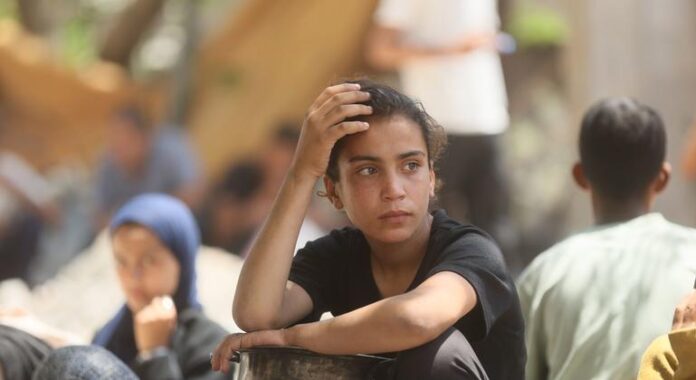
Office of the Rights of the United Nations `Horrified ” by fatal violence on the food distribution sites of Gaza

0

The United Nations Human Rights Office (Ohchr) in the Palestinian territory occupied on Wednesday called on the Israeli army to cease the use of deadly force close to help convoys and food distribution sites.

He cited the “repeated incidents” of Palestinians who have hit or dissected themselves while looking for food, warning that such attacks could constitute war crimes under international law.

“We are horrified by repeated incidents, continuously reported in recent days through Gaza, and We call an immediate end to these insane killings“Said the office in a statement.

Hundreds killed

Since May 27, when the Gaza Humanitarian Foundation (GHF), an initiative supported by Israel and the United States began food distribution in southern Gaza-bypassing the system not directed by the non-Dirigés-hundreds have been killed and many others injured nearly four distribution points or while waiting to take help.

In one of the most deadly recent incidents, the Israeli army would have bombed a crowd while waiting for the United Nations restoration trucks in the south of Gaza on June 17, killing at least 51 people and injuring about 200 others, according to the Gazan health authorities.

One day earlier, three Palestinians were reportedly killed and several injured in a similar incident in the west of Beit Lahiya.

“” There is no information to suggest that people killed or injured were involved in hostilities or threatened to the Israeli army or the staff of the GHF distribution points, “said the OHCHR.

Protect civilians, humanitarian workers

The United Nations World Food Program (Wfp), which managed to send only 9,000 metric tonnes of food to Gaza in the last month – a fraction of what is necessary for 2.1 million people in need – echoes the appeal to immediate protection of civilians and humanitarian workers.

“Far too many people are dead while trying to access the food aid net to come,” said the agency statement.

“All violence leading to hungry people killed or injured while looking for vital aid is completely unacceptable.”

Massive scale required

The United Nations Agence on Emergency Food Help said that fear of famine and the desperate need for food caused large crowds to come together along the well -known transport routes, hoping to intercept and access humanitarian supplies during transport.

“” Only a massive increase in food distributions can stabilize the situationTo calm the anxieties and rebuild confidence in communities that more food arrives, “he said, calling urgently for safer convoy routes, faster authorizations, restored communication channels and additional border openings.

“The moment to act is now. Delays are expensive. We must be allowed to do our work safely, “said the agency.

Originally published at Almouwatin.com

Deal struck on improving transparency of funding of EU political parties

0
Deal struck on improving transparency of funding of EU political parties

Council and Parliament have agreed to ensure greater accountability in the rules governing EU political parties and foundations. The provisional new rules will improve parties’ transparency, funding, and compliance with EU values.

Source link

Deal struck on improving transparency of funding of EU political parties

0
Deal struck on improving transparency of funding of EU political parties

Council and Parliament have agreed to ensure greater accountability in the rules governing EU political parties and foundations. The provisional new rules will improve parties’ transparency, funding, and compliance with EU values. Source link

Source link

Montenegro and Moldova: MEPs applaud EU membership progress

0
Montenegro and Moldova: MEPs applaud EU membership progress

Importance of political stability in Montenegro

Parliament calls for political stability in Montenegro and substantial progress regarding electoral and judicial reforms as well as the fight against organised crime and corruption. In a report adopted by 470 votes in favour. 102 against and 77 abstentions, MEPs stress that Montenegro remains the leading candidate in the EU enlargement process and point to the overwhelming support of its citizens and the majority of political actors for joining the EU in 2028. Parliament welcomes the country’s full alignment with the EU’s common foreign and security policy, including EU sanctions against Russia, and commends Montenegro for its support for the international rules-based order at the United Nations.

Fight against foreign interference

Parliament is however seriously concerned by malign interference, cyber-attacks, hybrid threats, disinformation campaigns and efforts to destabilise Montenegro, including attempts to influence its political processes and public opinion. These discredit the EU and undermine the country’s progress towards EU membership.

The rapporteur on Montenegro Marjan Šarec (Renew Europe, Slovenia) said: “It is important to note that the adoption of necessary legislation involved cooperation between both coalition and opposition parties. This reflects a high level of awareness that the European path is the only right one for Montenegro, with no viable alternative. Montenegro’s achievements thus far provide a solid foundation for addressing future challenges, which are numerous and far from easy. The fight against organised crime and corruption, judicial reform, and the prevention of influence from third countries are of critical importance for meeting democratic standards.”

MEPs praise Moldova’s EU membership efforts

Commending Moldova’s exemplary commitment to advancing its progress towards EU membership, a report approved by MEPs by 456 votes in favour to 118 against with 51 abstentions recognises that EU-Moldova relations have entered into a new phase. Cooperation has intensified alongside sustained efforts by the government in Chișinău to align Moldova’s laws with those of the EU (the so-called “EU acquis”). Despite significant internal and external challenges, such as the effects of Russia’s continuing war against neighbouring Ukraine and Moscow’s interference in Moldova’s democratic processes, MEPs welcome the Moldovan government’s progress on meeting the EU’s enlargement requirements and the country’s ambition to open negotiations on more enlargement-related issues. MEPs call on the European Commission to enhance its support for Moldova to achieve these objectives.

Russian interference in Moldova’s democratic processes
MEPs note that in both Moldova’s recent constitutional referendum on European integration and the 2024 presidential election Moldovans reaffirmed their support for EU membership and the government’s pro-European reform agenda. Despite being subject to a massive hybrid campaign by Russia and its proxies, MEPs say both the referendum and the election were held professionally and “with an extraordinary sense of duty and dedication”. They also note that the country’s parliamentary elections in autumn 2025 will be crucial for the continuation of Moldova’s pro-European trajectory and warn about the likely intensification of foreign, in particular Russian, malign interference and hybrid attacks.

The rapporteur on Moldova Sven Mikser (S&D, Estonia) said: “We commend Moldova’s strong commitment to EU integration and acknowledge the country’s strategic importance for Europe. The Moldovan authorities have demonstrated remarkable determination to pursue reforms and align with EU values despite facing major challenges and external pressure by the Kremlin and its proxies.”

Source link

Montenegro and Moldova: MEPs applaud EU membership progress | News

0
Montenegro and Moldova: MEPs applaud EU membership progress | News

Importance of political stability in Montenegro

Parliament calls for political stability in Montenegro and substantial progress regarding electoral and judicial reforms as well as the fight against organised crime and corruption. In a report adopted by 470 votes in favour. 102 against and 77 abstentions, MEPs stress that Montenegro remains the leading candidate in the EU enlargement process and point to the overwhelming support of its citizens and the majority of political actors for joining the EU in 2028. Parliament welcomes the country’s full alignment with the EU’s common foreign and security policy, including EU sanctions against Russia, and commends Montenegro for its support for the international rules-based order at the United Nations.

Fight against foreign interference

Parliament is however seriously concerned by malign interference, cyber-attacks, hybrid threats, disinformation campaigns and efforts to destabilise Montenegro, including attempts to influence its political processes and public opinion. These discredit the EU and undermine the country’s progress towards EU membership.

The rapporteur on Montenegro Marjan Šarec (Renew Europe, Slovenia) said: “It is important to note that the adoption of necessary legislation involved cooperation between both coalition and opposition parties. This reflects a high level of awareness that the European path is the only right one for Montenegro, with no viable alternative. Montenegro’s achievements thus far provide a solid foundation for addressing future challenges, which are numerous and far from easy. The fight against organised crime and corruption, judicial reform, and the prevention of influence from third countries are of critical importance for meeting democratic standards.”

MEPs praise Moldova’s EU membership efforts

Commending Moldova’s exemplary commitment to advancing its progress towards EU membership, a report approved by MEPs by 456 votes in favour to 118 against with 51 abstentions recognises that EU-Moldova relations have entered into a new phase. Cooperation has intensified alongside sustained efforts by the government in Chișinău to align Moldova’s laws with those of the EU (the so-called “EU acquis”). Despite significant internal and external challenges, such as the effects of Russia’s continuing war against neighbouring Ukraine and Moscow’s interference in Moldova’s democratic processes, MEPs welcome the Moldovan government’s progress on meeting the EU’s enlargement requirements and the country’s ambition to open negotiations on more enlargement-related issues. MEPs call on the European Commission to enhance its support for Moldova to achieve these objectives.

Russian interference in Moldova’s democratic processes
MEPs note that in both Moldova’s recent constitutional referendum on European integration and the 2024 presidential election Moldovans reaffirmed their support for EU membership and the government’s pro-European reform agenda. Despite being subject to a massive hybrid campaign by Russia and its proxies, MEPs say both the referendum and the election were held professionally and “with an extraordinary sense of duty and dedication”. They also note that the country’s parliamentary elections in autumn 2025 will be crucial for the continuation of Moldova’s pro-European trajectory and warn about the likely intensification of foreign, in particular Russian, malign interference and hybrid attacks.

The rapporteur on Moldova Sven Mikser (S&D, Estonia) said: “We commend Moldova’s strong commitment to EU integration and acknowledge the country’s strategic importance for Europe. The Moldovan authorities have demonstrated remarkable determination to pursue reforms and align with EU values despite facing major challenges and external pressure by the Kremlin and its proxies.”

Source link