

Weekly schedule of President António Costa, 7 – 13 July 2025.
Nantes upgrades metropolitan transport network with EU support to boost soft mobility

The Sustainable Mobility Infrastructures for Low Emissions and qualitative Service (SMILES) project, supported by EU funding via the Public Sector loan Facility (PSLF) under the Just Transition Mechanism (JTM), aims to green and diversify mobility in Nantes, a city in the Loire-Atlantique department of France.
Nantes Métropole, the entity responsible for the implementation of the project, is undertaking several key initiatives, including the upgrade of three tram lines, the replacement of the existing tram fleet with 46 new vehicles, the construction of a multimodal transport hub, the extension of a tramway line, and the development of a 38-kilometer network of cycling paths.
The project follows the sustainable mobility strategy of Nantes Métropole and aims to increase the modal share of public transport and encourage soft mobility. The upgrade of transport infrastructure is also in line with the Territorial Just Transition Plan of Loire-Atlantique region, which prioritises green mobility and CO2 reduction.
The project, which kicked off in early 2024, has already achieved notable successes.
A major milestone was reached on 18 May 2024, when residents of Nantes were invited to celebrate the launch of the first two brand-new tramways, set to replace the outdated models that had reached the end of their service life. The newly introduced tramways feature a modern design and larger trainsets with enhanced capacity, allowing for more frequent service that caters to the evolving needs of an expanding population. The first passengers to board the new trams were enthusiastic about the enhanced travel experience, highlighting the increased space, natural light, comfort, accessibility, and advanced digital technologies as major advantages over the previous fleet, and advanced digital technologies as major advantages over the previous fleet.
By the end of 2024, 14 new trams had already been deployed and additional 46 new trams funded by PSLF are expected to be deployed by the end of 2027.
During the summer of 2024, Nantes Métropole also carried out works for the optimisation of tram line 2, which involved the renovation of 1.5 kilometres of tramway platform, containing 2 tracks and 4 rails. The renovation work utilised an innovative, locally developed method known as “la nouvelle voie nantaise” which enables the removal of tracks without demolishing the platform surface. This approach significantly reduces the construction time and minimises disruptions to citizens. Same technique will be applied for the renovation of tram line 3, which started in February 2025, ensuring a similarly efficient construction process.
A more recent highlight was the inauguration of the extended tramway line 1 on 22 May 2025. This new 1.4-kilometre section crossing the river Erdre and the ring road now connects Nantes with neighbouring town of La Chapelle-sur-Erdre in the north. The extended tramway line 1 offers improved public transport access, fosters connectivity and supports daily mobility for over 110 trams while completing the connection to the Babinière hub.
Another major construction site of Nantes Métropole is for the new multimodal transport hub – Babinière – located at the North-West entrance to the city. Babinière is part of a broader project for connecting tram lines 1 and 2 and is set to become an important multimodal transport hub in 2025. It will also house a technical and operating centre for the maintenance of the new trams as well as a greenway for pedestrians and bicycles.
As part of its soft mobility strategy, Nantes Métropole also started the construction of three new major cycle routes. By 2026, the city will have increased its cyclable network by 50 kilometres of bidirectional lanes, thanks in part to funding from the PSLF, which will support 38 kilometres of the new cycling infrastructure.
The overall project is driving the shift towards more sustainable transport modes in the Nantes Métropole area, supporting a greener and more efficient public transport system that benefits the daily lives of its citizens. By improving the transport infrastructure, the project is expected to have a significant impact on reducing travel times and alleviating road congestion, thereby improving the overall efficiency of the transport network and creating a more liveable environment.
The development of alternative modes of transport is expected to change the commuting practices of Nantes residents by increasing the use of carbon-free transport modes while reducing the modal share of cars from 44% to 28% by 2030. The project will contribute to an annual reduction of greenhouse gas emissions by 21,000 CO2 tonnes.
The European Commission supports the SMILES project with a grant of €30 million awarded in early 2024 under the Public Sector Loan Facility. The project is also financed by a €200 million loan from the European Investment Bank (EIB), the Commission’s finance partner under the Facility. On top of the PSLF support, the project receives €130 millions of public investment from the metropolitan budget, Loire-Atlantique Department and French State, its total budget reaching over €400 million.
About the Public Sector Loan Facility (PSLF) and the Just Transition Mechanism (JTM)
The Public Sector Loan Facility is an instrument under the Just Transition Mechanism that aims at alleviating the social and economic effects of the transition towards climate neutrality in the EU regions. It is a blending facility that combines loans (up to around €6-8 billion) from the European Investment Bank (EIB) with grants (up to €1.3 billion) from the European Commission to help mainly public sector entities in the most affected EU regions (identified in the territorial just transition plans) to mobilise additional public investments and meet their development needs in the transition towards climate neutrality. These plans are drawn up by each EU Member State and outline the challenges to be addressed in each just transition region, together with the development needs and targets to be reached by 2030.
The first PSLF call for proposals was launched on 19 July 2022 with 10 intermediate cut-offs until the end of 2025. On 11 September 2025 is the last cut-off date under the first call for proposals. The next call for proposals will be launched in the second half of 2025.
PSLF is managed by DG REGIO and implemented by CINEA.
About DG REGIO
The Directorate-General for Regional and Urban Policy (DG REGIO) is the department of the European Commission responsible for EU policies on regions and cities. It develops and carries out the Commission’s policies on regional and urban policy. It assists the economic and social development of the developed and less developed regions across the European Union.
About CINEA
The European Climate, Infrastructure and Environment Executive Agency (CINEA) is an Executive Agency established by the European Commission to implement parts of EU funding programmes for transport, energy, climate action, environment and maritime fisheries and aquaculture. CINEA aims to assist its beneficiaries, establish strong partnerships, deliver high-quality programme and project management, foster effective knowledge sharing and create synergies between programmes – to support a sustainable, connected, and decarbonised Europe.
About EIB
The European Investment Bank (EIB), whose shareholders are the 27 Member States of the European Union, is the EU’s long-term financing institution. The EIB provides loans to the public and private sectors to support high-quality investments contributing to the achievement of the EU headline targets.
Visit the PSLF website to find out more about the Facility and the projects it funds.
ECCC Governing Board and the Network of National Coordination Centres met in Rome, Italy

During the meetings, members welcomed Natalia Tkachuk from the National Cybersecurity Coordination Center within the National Security and Defense Council of Ukraine, and Kyrylo Zaporozhets from the State Service of Special Communications and Information Protection of Ukraine, for a presentation on Cybersecurity in Ukraine – three years of lessons learned.
This session provided an opportunity for meaningful engagement with Ukrainian representatives. The Board expressed its support for Ukraine and its commitment to continuing the dialogue.
The Board also discussed matters related to the governance of the ECCC. Topics included the ongoing implementation of cybersecurity projects co-funded by the ECCC, the development of the cyber community and the establishment of a Strategic Advisory Group, the ECCC’s annual accounts and initial audits, as well as the continued work of the Board’s Working Groups. In addition, an initial discussion was held on the future direction of the ECCC beyond 2027.
Contact for media: communicationeccc [dot] europa [dot] eu (communication[at]eccc[dot]europa[dot]eu)
“ A spirit of unity ”: cooperatives cultivating peace in South Sudan
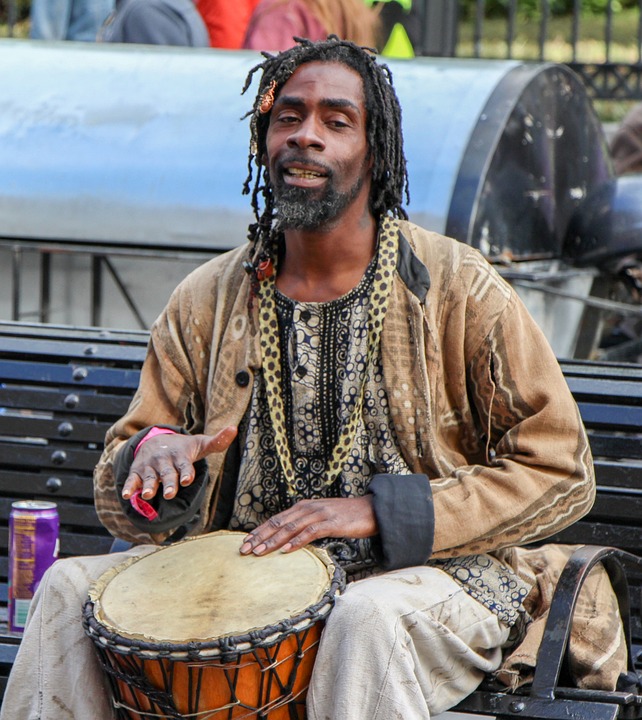
“Cooperatives are a system that allows southern suddens to improve their livelihoods, but at the same time, also contributes to the economy … This is the only way for South Sudan to leave poverty,” said Louis Bagare Project Manager of food and agricultural cooperatives (Fao) In South Sudan.
He spoke before International Cooperative DayWho is celebrated every July 5, and who emphasizes how cooperatives allow people to provide for their basic needs in contexts where individuals working alone are insufficient.
A path to peace
In South Sudan, the potential of cooperatives extends beyond economic empowerment.
A farmer from South Sudan Till his land.
“Cooperatives are one of the avenues that can bring peace and stability to South Sudan,” said Mr. Bagare.
For more than a decade, South Sudan has been faced with many challenges that come across. After its independence in 2011, a civil war broke out, concluding in 2018 with a peace agreement. But this peace is more fragile that never.
Pillage and inter -municipal violence, mainly perpetrated by young people, continues to be an omnipresent concern for many communities which are already confronted food insecurity and continuous climatic shocks.
In this context, cooperatives provide a glimmer of hope.
“Cooperatives have really changed the state of mind of our people and brought stability to the country,” said Deng William Aachiek, director of rural producers from the Sudan Ministry of South South Agriculture and Food Security.
But what can cooperatives inaugurate lasting peace?
A voluntary and democratic group
Cooperatives are voluntary economic organizations in which members share risk, work and income.
“A cooperative is a democratic social association of people who, as an individual, cannot improve their status of life and social status … But once they meet in a cooperative, they can then increase the level of their lives,” said Oneil Yosia Damia, Director General of Cooperative Development in South Sudan.
A cooperative of southern Sudan farmers has been trained in the production of seeds by FAO.
FaoLouis Bagare believes that this type of democratic approach to governance at the local level will go to the national level and encourage more widespread adhesion to a democratic form of governance through South Sudan.
Income, no firearms
In addition to providing a model of democratic governance, cooperatives also allow economic growth and development, providing communities – especially young people – a viable and lasting alternative to looting.
“When, in particular young people, are engaged in productive activities that generate income, they will not have the point of choosing a firearm to go fight or to fly and loot,” said Bagare.
In South Sudan, communities that form cooperatives often do not have enough individual resources to maintain a sustainable livelihood, a reality that pushes young people to violent looting for survival.
” When [community members] Work together, when they bring together ideas, when they bring together resources, it is much easier for them to overcome their livelihoods, “said Bagare.
Bagare also explained that banks are more ready to invest in groups and that organizations like FAO are more likely to provide support for cooperatives. But in the end, the objective is that it will not be long term.
“The emphasis is placed on the strengthening of their capacity so that they can create lives,” said Bagare.
A historical structure in the youngest country in the world
In South Sudan, there are cooperatives of each shape and size. Massively, these cooperatives are agricultural, but some also produce soap, bread and textiles. The history of South Sudan is populated by examples of this type of work.
“Cooperatives are not something now. This is part of the culture of South Sudan, ”said Bagare.
Mr. Daima referred to “the golden era” of the cooperatives that existed before the civil war in 2011. He said that his office in the Ministry of Agriculture and Food Safety works with diligence to return to that time.
“I want our cooperatives to be as busy as bees. It is the spirit of unity, of unity, ”said Mr. Daima.
Mr. Bagare hopes for a future in South Sudan where cooperatives are part of each economic sector – not just agriculture.
“If we are able to work together, we can become better people tomorrow. But when we continue to fight only, we will continue to destroy ourselves. ”
Originally published at Almouwatin.com
Refuge and security Elude to Afghan women from the returned to Iran and Pakistan
Since September 2023, more than 2.43 million undocumented Afghan migrants have returned from Iran and Pakistan.
Women and girls represent approximately half of Pakistan returnees, while their share among those returning from Iran have increased regularly, reaching around 30% in June.
The pace of climbing yields is useful reported THE Humanitarian work groupa consortium of humanitarian actors led by United Nations and the United Nations Reproductive Health Agency (Unfpa).
Border vulnerabilities
Women and girls arrive with little protection or support.
“A tent would be my only protection. I don’t have appropriate clothes or hijabs to wear, no food to eat, no contact number and no parents to stay, “said a woman on the border.
Those who travel without a mahram – A male tutor – Faced with specific risks. Interviews and discussions by the working group have revealed extortion, harassment and threats of violence to border crossings.
“They took 6,000 rupees (about $ 21) and only gave me 2,000 back. Now I don’t know where to go with this money, “a woman told Torkham. In Qala Islam, others have pointed out “ill -treatment and harassment … provoking fear and distress”.
Increased risks of protection
Rapatrians are faced with growing exposure to sexist violence, early and forced marriage, trafficking and transactional sex – exacerbated by a lack of basic resources.
A humanitarian worker from Kandahar said: “A widow with four girls was trying to see if she could sell one or two girls to someone here to have money to survive.”
Humanitarian agencies report a critical shortage of safe spaces and mental health and psychosocial support services (MHPS), in particular to border passages, where many women arrive in distress and disoriented.
Shelter, livelihoods and education
In the provinces, women cite shelter, livelihoods and education of girls as best needs.
“We need a place to stay, a chance to learn and a way to win,” said a repatriated woman from Nangarhar’s province.
Only 10% of households led by women live in permanent shelters and almost four out of ten fear the expulsion. In Herat, 71% of women declared rent disputes and 45% of households led by women lived in inadequate housing.
“Many families lack sufficient financial resources to provide basic foods and necessities,” said a woman in Herat.
Women who previously worked in professions such as sewing or crafts now find it difficult to restart due to a lack of tools, movement restrictions and limited networks.
Ahead
The forced yields that should continue, humanitarian agencies urge on the scale of sex sensitive services, including security spaces, mental health care, support for livelihoods and access to education.
UN women and its partners call for an increase in funding and supported international support to meet urgent and long -term needs of Afghan women and girls.
Originally published at Almouwatin.com
Speech by President António Costa at the opening ceremony of the Danish Presidency of the Council of the European Union

DISCLAIMER: Information and opinions reproduced in the articles are the ones of those stating them and it is their own responsibility. Publication in The European Times does not automatically means endorsement of the view, but the right to express it.
DISCLAIMER TRANSLATIONS: All articles in this site are published in English. The translated versions are done through an automated process known as neural translations. If in doubt, always refer to the original article. Thank you for understanding.
UN chief ‘appalled’ by worsening Gaza crisis as civilians face displacement, aid blockades
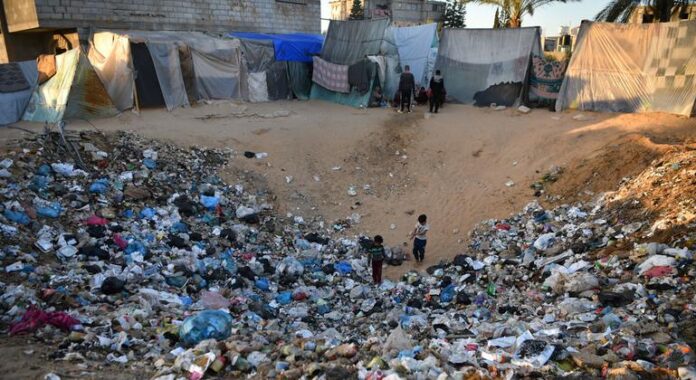
Multiple attacks in recent days have killed and injured scores of Palestinians at sites hosting displaced people and others attempting to access essential supplies, according to a statement from UN Spokesperson Stéphane Dujarric on Thursday.
“The Secretary-General strongly condemns the loss of civilian life,” Mr. Dujarric said.
On just one day this week, nearly 30,000 people were forced to flee under new Israeli relocation orders, with no safe place to go and clearly inadequate supplies of shelter, food, medicine or water, he added.
Critical systems shutting down
With no fuel having entered Gaza in over 17 weeks, the UN chief is also “gravely concerned that the last lifelines for survival are being cut off.”
“Without an urgent influx of fuel, incubators will shut down, ambulances will be unable to reach the injured and sick, and water cannot be purified,” Mr. Dujarric said.
“The delivery by the United Nations and partners of what little of our lifesaving humanitarian aid is left in Gaza will also grind to a halt.”
The Secretary-General reiterated his call for safe and sustained humanitarian access so aid can reach people in desperate need.
“The UN has a clear and proven plan, rooted in the humanitarian principles, to get vital assistance to civilians – safely and at scale, wherever they are,” Mr. Dujarric said.
The Secretary-General reiterated his call for an immediate and permanent ceasefire and the unconditional release of all hostages held by Hamas and other groups. He reminded all parties that international humanitarian law must be upheld.
Displacement continues
Displacement remains relentless. On Wednesday, Israeli authorities issued a new evacuation order in parts of Gaza City, affecting some 40,000 people and including a displacement site, a medical point and one of the few neighbourhoods that had remained untouched by such orders since before the March ceasefire.
Since that ceasefire collapsed, over 50 such orders have been issued, now covering 78 per cent of Gaza’s territory.
“Add the Israeli-militarized zones and that percentage jumps to 85 – leaving just 15 per cent where civilians can actually stay,” Mr. Dujarric said, briefing reporters at the UN Headquarters, in New York.
Those areas are overcrowded and severely lacking in services or proper infrastructure.
“Imagine having just over two million people in Manhattan – which is actually slightly bigger – but instead of buildings, the area is strewn with the rubble of demolished and bombed-out structures, without infrastructure or basic support,” the UN Spokesperson said.
“And in Gaza, these remaining areas are also fragmented and unsafe.”
The United Nations Human Rights Council hears dark updates on Ukraine, Gaza and global racism

Climbing conflicts in Ukraine
In an oral update, il à Marques Kehris, Deputy Secretary General of the UN Human Rightsreported a strong escalation of hostilities in Ukraine.
Civil victims increased from April to June, seeing almost 50% dead and additional injuries compared to the same period in 2024.
“More than 90% of these victims took place in a territory controlled by Ukraine,” she said, attributing the point in part to the intensification of Russian drone and missile attacks.
Attacks using aerial warheads and repeated strikes in hospitals have instilled “terror and anxiety” among urban populations, she added. A night attack from June 16 to 17 in kyiv killed more civilians than any other assault in the past year.
While cease-fire negotiations have produced humanitarian gains-such as the exchange of prisoners of war and the return of deceased soldiers-Ms. Kehris stressed arduous conditions of detention.
More than 117 former Ukrainian prisoners of war interviewed by the United Nations Rights Office, Ohchrpointed out torture, including sexual violence, in Russian captivity. Although less widespread, similar abuses have also been documented in unofficial Ukrainian detention facilities, which caused calls to transparent investigations.
The report also noted continuous violations of human rights in the territories occupied by Russia, in particular restrictions on civic space and the exercise of freedom of expression.
“Peace is more imperative than ever,” said Kehris, reiterating calls for immediate cessation of hostilities in accordance with international law.
Structural racism and intersectionality
Ashwini KP, Special rapporteur on contemporary forms of racismpresented a thematic report focused on intersectionality as a tool for racial justice.
Based on the experiences of black feminists and extended by studies focused on the members of the Dalit, Indigenous, Muslims and Roma community, the concept of intersectionality was presented as essential to dismantle systemic discrimination.
“Women of African origin, the oppressed communities of caste, Roma, Arab and Muslim women and other marginalized groups are affected disproportionately due to forms of discrimination that are overlapping,” said Ashwini.
Its report has detailed how states can integrate an intersectional approach, emphasizing data disintegration, the development of participatory policies, legal recognition of multiple discrimination and historical responsibility.
Ashwini stressed the importance of restorative justice for the communities affected by colonialism and slavery and called for states – in particular those historically accomplices – to implement daring reforms.
People search the rubble of a building destroyed in the central band of Gaza.
Deepening of the crisis in Gaza
Francesca Albanese, Special rapporteur on the situation of human rights in the Palestinian territories occupied since 1967Also reported to the council, with a dark update on Gaza.
She described conditions as “apocalyptic” and reported more than 200,000 people killed or injured since October 7, 2023, when Hamas and other Palestinian armed groups attacked Israeli communities – killing at least 1,200 people and taking more than 250 as hostages.
“In Gaza, the Palestinians continue to suffer suffering beyond the imagination,” said Ms. Albanese, describing the Gaza humanitarian foundation supported by Israel as a “death trap-designed to kill or force the theft of a hungry, bombed and emaciated population marked for elimination”.
She also accused Israel of having used conflict as an opportunity to test new weapons and technologies against the population of the “without restraint” enclave.
“The occupation forever has provided optimal test fields for weapons manufacturers and large technologies with little surveillance and zero responsibility-while investors and private and public institutions have largely benefited,” she said.
“We have to reverse the tide,” said Ms. Albanese, calling on the Member States to impose a full embargo on arms in Israel, to suspend all trade agreements and investment relations and to apply responsibility, “ensure that corporate entities are faced with legal consequences for their involvement in serious violations of international law”.
Independent rights experts
Special rapporteurs are independent human rights experts appointed and mandated by the Human Rights Council – The UN’s highest intergovernmental forum on human rights.
Being part of his Special proceduresSpecial rapporteurs and other independent experts are mandated to monitor and assess the situation of rights in certain thematic situations or country.
They work in their individual quality, are not UN staff and do not receive wages.
Originally published at Almouwatin.com
UN Human Rights Council hears grim updates on Ukraine, Gaza and global racism

Escalating conflict in Ukraine
In an oral update, Ilze Brands Kehris, UN Assistant Secretary-General for Human Rights, reported a sharp escalation in hostilities in Ukraine.
Civilian casualties have surged, with April to June seeing nearly 50 per cent more deaths and injuries compared to the same period in 2024.
“More than 90 per cent of these casualties occurred in territory controlled by Ukraine,” she said, attributing the spike in part to intensified Russian drone and missile attacks.
Attacks using airburst warheads and repeated strikes on hospitals have instilled “terror and anxiety” among urban populations, she added. A June 16-17 nighttime attack in Kyiv killed more civilians than any other assault in the past year.
While ceasefire negotiations have produced some humanitarian gains – such as the exchange of prisoners of war and the return of deceased soldiers – Ms. Kehris underscored harrowing conditions in detention.
Over 117 former Ukrainian POWs interviewed by the UN rights office, OHCHR, reported torture, including sexual violence, in Russian captivity. Though less widespread, similar abuses have also been documented in unofficial Ukrainian detention facilities, prompting calls for transparent investigations.
The report also noted ongoing human rights violations in territories occupied by Russia, including restrictions on civic space and the exercise of freedom of expression.
“Peace is more imperative than ever,” Ms. Kehris said, reiterating calls for an immediate cessation of hostilities in line with international law.
Structural racism and intersectionality
Ashwini K.P., Special Rapporteur on contemporary forms of racism, delivered a thematic report focused on intersectionality as a tool for racial justice.
Drawing from experiences of Black feminists and expanded by studies focusing on Dalit, Indigenous, Muslim and Roma community members, the concept of intersectionality was presented as essential to dismantling systemic discrimination.
“Women of African descent, caste-oppressed communities, Roma, Arab and Muslim women, and other marginalized groups are disproportionately impacted due to overlapping forms of discrimination,” Ms. Ashwini said.
Her report detailed how states can integrate an intersectional approach, emphasising data disaggregation, participatory policymaking, legal recognition of multiple discrimination and historical accountability.
Ms. Ashwini highlighted the importance of reparatory justice for communities affected by colonialism and slavery and called on states – particularly those historically complicit – to implement bold reforms.
People search through the rubble of a destroyed building in the central Gaza Strip.
Deepening crisis in Gaza
Francesca Albanese, Special Rapporteur on the situation of human rights in the Palestinian territories occupied since 1967, also reported to the Council, with grim update on Gaza.
She described conditions as “apocalyptic” and reported over 200,000 people killed or injured since 7 October 2023, when Hamas and other Palestinian armed groups attacked Israeli communities – killing at least 1,200 people and taking more than 250 as hostages.
“In Gaza, Palestinians continue to endure suffering beyond imagination,” Ms. Albanese said, describing the Israeli-backed Gaza Humanitarian Foundation as a “death trap – engineered to kill or force the flight of a starved, bombarded, emaciated population marked for elimination.”
She also accused Israel of using the conflict as an opportunity to test new weapons and technology against the population of the enclave “without restraint”.
“The forever-occupation has provided an optimal testing ground for arms manufacturers and big tech with little oversight and zero accountability – while investors, and private and public institutions have profited handsomely,” she said.
“We must reverse the tide,” Ms. Albanese urged, calling on Member States to impose a full arms embargo on Israel, suspend all trade agreements and investment relation and enforce accountability, “ensuring that corporate entities face legal consequences for their involvement in serious violations of international law.”
Independent rights experts
Special Rapporteurs are independent human rights experts appointed and mandated by the Human Rights Council – the UN’s highest intergovernmental forum on human rights.
Forming a part of its Special Procedures, Special Rapporteurs and other independent experts are mandated to monitor and assess the rights situation in certain thematic or country situations.
They work in their individual capacity, are not UN staff and do not receive a salary.
The chief of the UN `dismayed ” by aggravating the Gaza crisis while civilians are faced with a trip, help the blockages

In recent days, multiple days have killed and injured dozens of Palestinians on sites hosting displaced people and others trying to access essential supplies, according to a statement UN spokesperson Stéphane Dujarric Thursday.
“The secretary general firmly condemns the loss of civilian life,” said Dujarric.
Only one day this week, nearly 30,000 people were forced to flee under new Israeli relocation orders, without any safe place and clearly inadequate supplies of shelters, food, medication or water, he added.
Critical systems Stop
Without fuel having entered Gaza in more than 17 weeks, the United Nations is also “seriously concerned about the fact that the last lines of survival survival are cut”.
“Without an urgent influx of fuel, the incubators will stop, the ambulances will not be able to reach the wounded and the patients, and the water cannot be purified,” said Dujarric.
“Delivery by the United Nations and the partners of the little wild humanitarian aid is left in Gaza will also stop.”
The secretary general reiterated his call for safe and sustained humanitarian access so that help can reach people in desperate need.
“The UN has a clear and experienced plan, rooted in humanitarian principles, to obtain vital aid for civilians – safely and on a large scale, wherever they are,” said Dujarric.
The secretary general reiterated his call to an immediate and permanent ceasefire and the unconditional release of all the hostages held by Hamas and other groups. He reminded of all the parties that international humanitarian law should be confirmed.
Continuous displacement
The displacement remains relentless. Wednesday, the Israeli authorities published a new evacuation order in certain parts of Gaza City, affecting some 40,000 people and including a travel site, a medical point and one of the few districts that had remained intact by these orders since before the ceasefire in March.
Since this ceasefire has collapsed, more than 50 orders of this type have been issued, now covering 78% of the Gaza territory.
“Add the Israeli-militarized areas and this percentage jumps at 85-leaving only 15% where civilians can really stay,” said Dujarric, informs journalists at the United Nations headquarters in New York.
These areas are overcrowded and seriously lack of appropriate services or infrastructure.
“Imagine having a little more than two million people in Manhattan-which is actually slightly larger-but instead of buildings, the area is dotted with rubble and bombed structures, without basic infrastructure or support,” said UN spokesperson.
“And in Gaza, these remaining areas are also fragmented and dangerous.”
Originally published at Almouwatin.com
