Sunday, May 3, 2026
Home Blog Page 444

InnoNext Opens Doors for EIT Talent and Startups Across Europe

0
InnoNext Opens Doors for EIT Talent and Startups Across Europe

The European Institute of Innovation and Technology (EIT) Community can now engage in a new matchmaking platform designed to foster cross-sector innovation. InnoNext, a collaborative initiative powered by the European Innovation Council (EIC), opens fresh opportunities for EIT Community members to participate in fully funded Innovation Internships across Europe.

Through this platform, graduates from EIT Label programmes and EIT-supported startups can access tailored placements that connect academic talent with business needs. The goal: to strengthen innovation, accelerate scale-ups and bridge research with industry.

What Is InnoNext?

InnoNext is a pan-European initiative offering Innovation Internships to high-potential talent from across EU-funded programmes, including the EIC, EIT, European Research Council (ERC), Marie Skłodowska-Curie Actions (MSCA) and Horizon Europe Research Infrastructures.

By aligning entrepreneurial ambition with academic expertise, the programme supports research commercialisation, fosters business growth and enhances the societal impact of European innovation

Who Can Take part?

Talents

  • students or graduates from EIT Label Master’s or Doctoral programmes
  • EIT Alumni members
  • researchers from other postdoctoral training programmes funded by the EIT Community

Startups and SMEs

  • startups and SMEs supported by the EIT Community and its business creation services
  • businesses founded with support from Knowledge and Innovation Communities (KICs)
  • companies that have partnered with KICs for innovation activities
  • startups or scale-ups with at least one co-founder who is an EIT Alumni member

How it Enhances Impact

For talents, InnoNext offers the opportunity to apply academic knowledge to real-world business challenges, while gaining valuable entrepreneurial and professional experience. Participants can build strong networks within Europe’s innovation ecosystem and receive financial support for a fully funded internship lasting three to six months.

For startups and SMEs, the programme offers access to highly specialised research talent, enabling them to host internships without financial burden. Through the InnoNext platform’s AI-driven matching system, companies can find candidates aligned with their innovation needs and benefit from fresh insights to support product development and scale-up efforts.

This initiative echoes the EIT’s broader mission and achievements in nurturing innovation — having supported over 9 900 ventures, launched 2 450+ new products and trained more than 880 000 individuals in critical innovation and entrepreneurial skills.

By connecting academic and entrepreneurial minds across several of Europe’s pioneering agencies, InnoNext represents a collaborative step forward in the EU’s long-term strategy to boost innovation, competitiveness and sustainable growth.

Check your eligibility and register

For more information, contact the team at info@innonext-project.eu.

Source link

InnoNext Opens Doors for EIT Talent and Startups Across Europe

0
InnoNext Opens Doors for EIT Talent and Startups Across Europe

The European Institute of Innovation and Technology (EIT) Community can now engage in a new matchmaking platform designed to foster cross-sector innovation. InnoNext, a collaborative initiative powered by the European Innovation Council (EIC), opens fresh opportunities for EIT Community members to participate in fully funded Innovation Internships across Europe.

Through this platform, graduates from EIT Label programmes and EIT-supported startups can access tailored placements that connect academic talent with business needs. The goal: to strengthen innovation, accelerate scale-ups and bridge research with industry.

What Is InnoNext?

InnoNext is a pan-European initiative offering Innovation Internships to high-potential talent from across EU-funded programmes, including the EIC, EIT, European Research Council (ERC), Marie Skłodowska-Curie Actions (MSCA) and Horizon Europe Research Infrastructures.

By aligning entrepreneurial ambition with academic expertise, the programme supports research commercialisation, fosters business growth and enhances the societal impact of European innovation

Who Can Take part?

Talents

  • students or graduates from EIT Label Master’s or Doctoral programmes
  • EIT Alumni members
  • researchers from other postdoctoral training programmes funded by the EIT Community

Startups and SMEs

  • startups and SMEs supported by the EIT Community and its business creation services
  • businesses founded with support from Knowledge and Innovation Communities (KICs)
  • companies that have partnered with KICs for innovation activities
  • startups or scale-ups with at least one co-founder who is an EIT Alumni member

How it Enhances Impact

For talents, InnoNext offers the opportunity to apply academic knowledge to real-world business challenges, while gaining valuable entrepreneurial and professional experience. Participants can build strong networks within Europe’s innovation ecosystem and receive financial support for a fully funded internship lasting three to six months.

For startups and SMEs, the programme offers access to highly specialised research talent, enabling them to host internships without financial burden. Through the InnoNext platform’s AI-driven matching system, companies can find candidates aligned with their innovation needs and benefit from fresh insights to support product development and scale-up efforts.

This initiative echoes the EIT’s broader mission and achievements in nurturing innovation — having supported over 9 900 ventures, launched 2 450+ new products and trained more than 880 000 individuals in critical innovation and entrepreneurial skills.

By connecting academic and entrepreneurial minds across several of Europe’s pioneering agencies, InnoNext represents a collaborative step forward in the EU’s long-term strategy to boost innovation, competitiveness and sustainable growth.

Check your eligibility and register

For more information, contact the team at info@innonext-project.eu.

Source link

Gaza: Aid ban pushes civilians to the brink

0
Gaza: Aid ban pushes civilians to the brink

UN Spokesperson Stéphane Dujarric told reporters at a news briefing at UN Headquarters on Thursday that the humanitarian situation continues to deteriorate rapidly.

Children are going hungry, patients remain untreated, and people are dying,” he said.

“It is time to lift those restrictions immediately.”

According to latest reports, the disruption in the flow of goods has led to dramatic price hikes – up to 1,400 per cent above pre-ceasefire levels – with  basic items such as dairy, eggs, fruits and meat now absent from local markets.

In April alone, prices have risen by 50 per cent compared to March, according to the UN aid coordination office, OCHA. Shortages of cash and plummeting purchasing power have forced many families deeper into hunger.

Conditions on the ground

On Wednesday, UN’s acting Humanitarian Coordinator for the occupied Palestinian territory, Suzanna Tkalec, visited Deir al Balah and Khan Younis to assess conditions on the ground.

In Khan Younis, the team inspected the main desalination plant for southern Gaza, which has been operating at only 15 per cent capacity since early March due to electricity cuts imposed by Israel. As a result, access to clean water remains extremely limited.

They also visited two overcrowded displacement sites to evaluate living conditions.

In Deir al Balah, the UN team observed operations at a community kitchen run by the Atfaluna Society for Deaf Children, which offers meals and training for youth, women and people with disabilities.

Severe shortages

Meanwhile, humanitarian partners are reporting severe shortages of tents, tarpaulins and other critical materials, Mr. Dujarric said.

Warehouses are almost depleted, which is limiting shelter assistance to just a fraction of what is needed to survive.

UN agencies continue to provide relief as best they can. UN reproductive health agency, UNFPA, this week supplied 10 reproductive health kits – enough to support over 6,900 people – to six health partners, and emergency supplies to key hospitals.

More than 900 women and girls were reached with dignity kits and agency workers held around 240 sessions addressing gender-based violence, with 200 new case files opened.

Call for accountability over killing of UN staffer

Responding to a question on the deadly 19 March strike that killed a UN staff member and severely injured at least five others in Gaza, Mr. Dujarric said that Israeli authorities had reported the outcome of their internal investigation to the UN.

“There has been more cooperation and transparency on their side that we have had in these types of incidents, since the beginning of this conflict,” he said, underscoring the need to ensure accountability and transparency – for this case as well as all others.

“We have seen UN colleagues killed in Gaza or UN infrastructure attacked. And again, we call on all parties to fully comply with international humanitarian law, including the protection of civilians but also the protection of UN and humanitarian staff.”

Source link

European Peace Facility: Council adopts two assistance measures in support of Moldovan Armed Forces

0
European Peace Facility: Council adopts two assistance measures in support of Moldovan Armed Forces

The Council adopted two assistance measures worth €60 million under the European Peace Facility that will benefit the Moldovan Armed Forces.

Source link

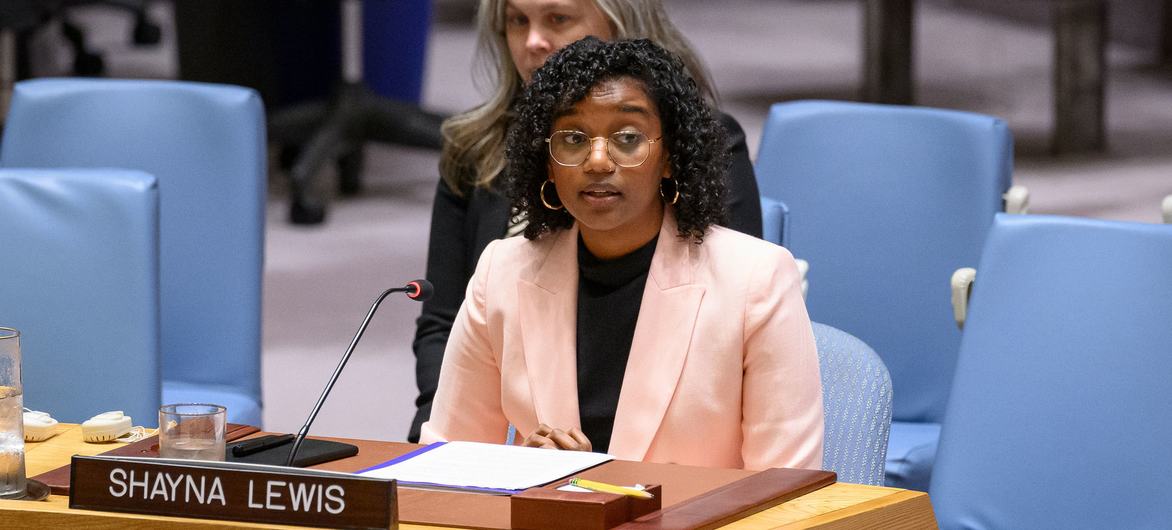
Sexual violence systematically used as a weapon of war in the DR Congo

0
Sexual violence systematically used as a weapon of war in the DR Congo

Senior UN officials warned on Wednesday that all parties involved in the conflict are systematically using sexual violence as a tactic of war against civilians.

Worsening conditions in the east

Escalating attacks by non-State armed groups in eastern DRC have led to a significant surge in sexual violence, predominantly targeting women and children.

Rwanda-backed M23 rebels seized control of key eastern cities such as Goma and Bukavu from government forces earlier this year, plunging the already volatile, mineral-rich region deeper into chaos following years of instability and conflict between multiple armed factions.

UN peacekeepers are deployed under a mandate from the Security Council to protect civilians and support the delivery of humanitarian aid.

“In the face of this unprecedented security and humanitarian crisis, the situation for women and children continues to deteriorate,” UN officials stressed.

Children are increasingly subjected to grave human rights violations, including recruitment and abduction by armed groups, alongside the threat of sexual violence.

Local militias have also coerced young girls into early marriages. Since February, at least nine girls have reportedly been forced into marriage, according to the UN Office for the Coordination of Humanitarian Affairs (OCHA).

No end to displacement

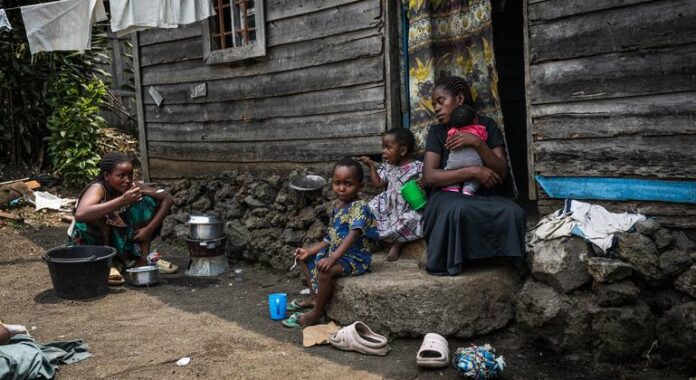
The DRC is currently facing one of the world’s most severe displacement crises, with 7.8 million people internally displaced. Nearly 9,000 of them are currently sheltering in 50 collective centres in North Kivu, OCHA reports.

Ongoing violence, looting, and restricted humanitarian access have worsened living conditions. Attacks on healthcare facilities and severe shortages of medical supplies are placing additional strain on survivors, particularly those requiring life-saving HIV treatment, which is increasingly unavailable.

Prolonged conflict has also driven 1.1 million Congolese to flee to neighbouring countries, with children comprising over half of the refugee population.

Impunity and lack of support

Despite the scale of the crisis, acts of sexual violence remain largely underreported due to fear of stigma, threats of retaliation, and inadequate access to humanitarian services. Survivors frequently face obstacles in accessing medical treatment, mental health support, and legal protection.

UN officials have called for urgent accountability measures and the implementation of gender-sensitive, child-centred responses.

Restoring critical humanitarian aid and protection services is essential to help survivors reclaim their health, dignity, and a sense of safety.

Source link

New rules to improve EU road safety, cut air pollution and digitalise vehicle registration

0
New rules to improve EU road safety, cut air pollution and digitalise vehicle registration

The European Commission has put forward new rules that will help improve EU road safety. They will bring in periodic technical inspections for electric vehicles, digital vehicle registration and advanced emission testing methods to detect high-emitting vehicles to cut fine particles pollution. Source link

Source link

New rules to improve EU road safety, cut air pollution and digitalise vehicle registration

0
New rules to improve EU road safety, cut air pollution and digitalise vehicle registration

The European Commission has put forward new rules that will help improve EU road safety. They will bring in periodic technical inspections for electric vehicles, digital vehicle registration and advanced emission testing methods to detect high-emitting vehicles to cut fine particles pollution.

Source link

Clandestine lab producing drugs at industrial-scale dismantled in Belgium

0
Clandestine lab producing drugs at industrial-scale dismantled in Belgium

The lab was located in a mansion in a remote area. Two Dutch nationals, who were identified as chemists, were responsible for the drug production, while one Belgian national facilitated the production process. Investigators believe the lab had been operating for more than a year and that it had the capacity to produce hundreds of […]

Source link

Outrage as Russian overnight attacks on Ukraine cities kill at least nine civilians

0
Outrage as Russian overnight attacks on Ukraine cities kill at least nine civilians

Reports indicate that the latest Russian strikes damaged 12 buildings in the capital, causing widespread damage to homes, businesses and key services, while phones have been heard ringing from the rubble.

Other Ukrainian cities targeted included Zhytomyr – due west of Kyiv – and the northeastern cities of Sumy –  where a daytime missile strike killed at least 34 people on 13 April – and Kharkiv – where the authorities reported 24 drone and missile strikes in total.

“The casualty count is expected to rise as emergency teams continue search-and-rescue operations,” said the UN aid coordination office, OCHA.

The development follows Ukrainian President Volodymyr Zelensky’s reported decision on Wednesday to reject a US-led proposal to seek a peace deal with Russia that would have involved ceding territory lost during the war. In theory, this would include the eastern Ukrainian regions of Donetsk, Luhansk, Kherson and Zaporizhzhia, in addition to Crimea, which Russia annexed illegally in 2014.

“Last night’s large-scale attack by the armed forces of the Russian Federation on residential areas in Kyiv and surrounding regions is yet another appalling violation of international humanitarian law,” said the UN’s top aid official in Ukraine, Matthias Schmale.

Children and a pregnant woman were among the more than 70 people injured by Wednesday night’s reported missile and drone strikes. “This senseless use of force must stop… Civilians must never be targets”, insisted Mr. Schmale, UN Humanitarian Coordinator for Ukraine.

Spike in civilian attacks

Echoing that message, the UN Children’s Fund, UNICEF, appealed for an end to the use of explosive weapons in civilian areas which have caused a marked rise in attacks on civilian areas this year.

According to the UN human rights office, OHCHR, at least 164 civilians were killed in March and 910 injured across Ukraine. This represents a 50 per cent increase from February 2025 (129 killed; 588 injured), and a 71 per cent increase compared with March 2024 (129 killed; 498 injured).

On Tuesday and Wednesday, OCHA reported that drone and glide bomb attacks had struck densely populated areas “throughout the country”, while fighting in front-line regions has killed more civilians.

Cities targeted included Zaporizhzhia, where a glide bomb strike on Tuesday left one person dead and injured more than 40 others, including seven children and a pregnant woman, OCHA said. Several apartment buildings were damaged in the attack on the city which is near to the front line and home to 630,000 people, including many displaced from other regions.

The UN aid office also reported overnight drone strikes on Wednesday in the regions of Dnipro, Donetsk, Kharkiv, Kherson, Poltava and Odesa, damaging a hospital, homes, warehouses and an energy facility.


Source link

Connect traditions with benevolence: how scientologists have brought joy to Easter celebrations across Europe

0

Kingnewswire / Press release / Easter, the party of renewal and compassion, this year has taken an even deeper meaning this year thanks to the inspiring efforts of the Church of Scientology and its volunteers. Through Hungary and the United Kingdom, Scientologists kissed the spirit of this celebration by helping families in need and creating spaces where tradition, joy and community have gathered in harmony.

Hungary: Easter hope delivered with love

001 2 Connect traditions with benevolence: how scientologists have brought joy to Easter celebrations across Europe

In Hungary, the volunteer ministers of the Church of Scientology transformed Easter into a tangible season of hope. Responding to sincere requests from local associations and leaders of the ROM community, the volunteers distributed not only food, but also kindness. In Budapest, they joined the association of large families of úpalota to delight children with 100 chocolate rabbits and 200 chocolate eggs, thus strengthening a very popular tradition from Easter Monday which consists in “watering” and looking for eggs.

easter hungar 2 Connect traditions with benevolence: how scientologists have brought joy to Easter celebrations across Europe

Meanwhile, in the village of Felsőgagy, their help has reached some of the most disadvantaged families in the region. Thanks to almost a ton of non -perishable foodstuffs and sweet surprises for Easter, 58 families and 80 children were able to celebrate this celebration in dignity and joy. The elderly were not forgotten either, thanks to coordination with the local town hall. This has shown that faith, when it is accompanied by concrete actions, can transform whole communities.

United Kingdom: Saint Hill opens its doors for a magical day for Easter

Thousands of kilometers away, in the West Sussex, the Domaine de Saint Hill, which belongs to the Church of Scientology, opened its doors to more than 3,000 guests for one of the most lively Easter celebrations in the region. Families came from far away to participate in a day filled with laughter, conviviality and entertainment. More than 40,000 Easter eggs have been hidden in the vast area, and the children enjoyed seven hunts with different eggs adapted to all ages.

uk easter 3 Connect traditions with benevolence: how scientologists have brought joy to Easter celebrations across Europe

This event was much more than a simple egg hunt, it was a real conviviality festival. Between the children’s zoo, the donkey’s back walks, the inflatable castles and the fairy tales characters, the party was a magical experience for all. The volunteers made sure that each child leaves with a well -filled basket and a smile on his lips. Some have even chosen to share their loot with their new friends.

sh easter Connect traditions with benevolence: how scientologists have brought joy to Easter celebrations across Europe

Mathilde Jansson, one of the event organizers, perfectly summed up the atmosphere of the day: “We like to share the magnificent domain of Saint Hill with the community. A big thank you to our volunteers and the families who joined us, you made this day so special. »»

A message of unity in diversity

Ivan Arjona, representative of the Church of Scientology to the European Union and the United Nations, shared a timely reflection on the value of cultural and religious diversity:

“Celebrations like Easter are not only an opportunity to reflect and renew themselves, but also an essential opportunity to discover the richness of different traditions. Accepting diversity does not weaken tradition, it strengthens it. When we get to know others and share their joy, we preserve the essence of our own heritage while building bridges of peace and understanding. »»

His words echo the broader vision of the Church of Scientology, which considers intercultural exchanges not as a threat to identity, but as a powerful tool to strengthen it thanks to mutual respect and the common celebration.

A hand stretched beyond borders and beliefs

The work of the volunteer ministers of Scientology goes far beyond the joy of the holidays. All over the world, they play a discreet but essential role by supporting religious leaders of all faiths (Christians, Muslims, Jews, Buddhists, Hindus and others) in their mission at the service of their communities. Whether it is a question of distributing help, bringing help in the event of a disaster or simply helping to organize traditional festivities, voluntary ministers stand alongside religious leaders to ensure that no one is left behind.

In Hungary and the United Kingdom, their presence at Easter was not only logistical: it was a question of riding morale, strengthening traditions and reminding everyone that solidarity and compassion do not know any religious boundaries.

A universal message: mutual aid has no borders

These two Easter stories, one focused on humanitarian aid and the other on community celebration, highlight a powerful truth: the Church of Scientology and its members undertake to build bridges between people, religions and cultures.

Whether by bringing comfort to families in difficulty in rural areas of Hungary or by opening their doors to thousands of people for a joyful celebration of spring in England, Scientologists show that their commitment to improve the world goes hand in hand with respect for traditions and the rapprochement of people.

In a world where divisions often make the headlines, these acts of kindness and strengthening of the community highlight what can be accomplished when good will shows the way.

Growing recognition of the religious role of Scientology

Founded in the 1950s by the author and humanitarian L. Ron Hubbardthe Church of Scientology continues to be recognized as an authentic religion around the world. Its religious status has been officially recognized by the courts and government organizations in many countries, notably the United States, Spain, Sweden, South Africa, Australia, New Zealand, Portugal and the United Kingdom. In recent decades only, decisions of the European Court of Human Rights have also strengthened the right of Scientologists to freely practice their faith. These recognitions reflect not only the growing presence of the Church, but also its constant commitment to human rights, religious freedom and community service in all cultures.

Originally published at Almouwatin.com