
The Commission has given the green light to 13 projects that will help it access raw materials located outside the EU. The projects will also boost local value creation in third countries. We need raw materials to build electric vehicles, batteries, high-performance magnets and much more. Source link
EU will support raw materials projects outside the EU

The Commission has given the green light to 13 projects that will help it access raw materials located outside the EU. The projects will also boost local value creation in third countries. We need raw materials to build electric vehicles, batteries, high-performance magnets and much more.
New EU plan to ensure water security and quality for all

The Commission has presented a plan to support EU countries in managing water more efficiently. By implementing current EU water laws and actions, we can ensure water security and prepare for water-related disasters, locally and globally. Everyone needs access to secure, clean and affordable water. Source link
New EU plan to ensure water security and quality for all
The Commission has presented a plan to support EU countries in managing water more efficiently. By implementing current EU water laws and actions, we can ensure water security and prepare for water-related disasters, locally and globally. Everyone needs access to secure, clean and affordable water.
LIFE awards go to projects working on nature, circular economy and climate action

The EU’s LIFE awards 2025 have honoured 3 projects doing pioneering work in nature, circular economy and climate action. LIFE Lynx took a prize for helping to reverse the decline of lynxes, LIFEPOPWAT for depolluting contaminated water and LIFE DESERT-ADAPT for tackling desertification.
World News in Brief: Aid for Syria, children under attack in Mozambique, rights-based climate action
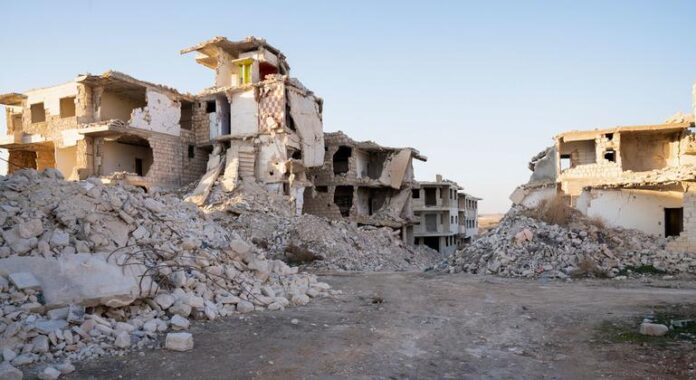
Despite limited resources, the UN and partners are reaching some 2.5 million people each month across the country. In May alone, more than one million people received assistance, according to the Office for the Coordination of Humanitarian Affairs (OCHA).
Cross-border aid has significantly increased this year. Since January, 1,185 humanitarian trucks have crossed from Türkiye into Syria – six times the number recorded during the same period last year. The uptick reflects growing needs and intensified delivery efforts.
Syria’s health system, however, remains under severe strain. Fewer than 60 per cent of hospitals and less than half of primary health centres are fully functional. Essential medicines are in short supply, treatment costs are beyond the reach of many families and overcrowded shelters continue to heighten the risk of disease outbreaks.
Meanwhile, explosive remnants of war and unexploded ordnance pose a deadly and ongoing threat to civilians. Since 8 December, 2024, more than 1,000 casualties have been reported – over 400 of them fatal and nearly 600 resulting in injuries – children accounting for over a third of the victims.
“The humanitarian community is calling for urgent support to expand risk education, professional clearance operations and assistance for survivors,” UN Spokesperson Stéphane Dujarric told journalists at the regular news briefing in New York.
Funding shortfalls are compounding the crisis. The Syria Humanitarian Response Plan requires $2 billion by the end of June to support 8 million of the most vulnerable people. To date, it has received just $236 million – less than 12 per cent of the total needed.
Northern Mozambique has been mired in what has been described as a “triple crisis” – violence and insecurity, climate shocks, and post-electoral unrest. (file photo)
Children targeted by armed groups in northern Mozambique
Children also continue to bear the brunt of a worsening crisis in Mozambique, where over 1.3 million people have been displaced by violence, extreme weather shocks and post-electoral unrest.
These crises have also left 5.2 million in urgent need of humanitarian assistance.
The situation is particularly dire in the northern Cabo Delgado province, which has witnessed a spike in reports of abduction, forced recruitment and use of children by non-state armed groups.
According to the UN Children’s Fund (UNICEF), at least three girls aged 12, 14 and 17 were killed in an attack last month, and eight other children abducted – highlighting the grave risks facing children in the conflict.
The agency expressed deep concern over such gross violations of children’s rights, stressing that “every child has the right to live in safety, free from violence and fear.”
UNICEF is working with partner agencies to assist impacted children and their families, support the safe return and reintegration of children abducted by non-state armed groups, and provide access to vital services such as health, protection, and education.
UN rights chief calls for bold climate action grounded in human rights
The UN’s top rights official warned on Tuesday that humanity’s survival is inseparable from the health of the planet.
Speaking at Oxford University, Volker Türk highlighted the need for a new kind of politics to tackle the climate crisis and rising global inequality, urging strong leadership to push for urgent, just and rights-based solutions.
“Not only have we created a false separation from nature, we are deluded enough to believe we can make nature bend to our will,” Mr. Türk said, criticizing the continued exploitation of fragile ecosystems.
The High Commissioner linked environmental degradation with systemic injustice, stating that the world’s richest one per cent are responsible for more carbon emissions than the poorest two-thirds. He stressed that those least responsible for the climate crisis are often the ones suffering its worst impacts.
He also expressed concern over the lack of adequate climate finance and called for reforms to international financial systems, noting growing support for a proposed fossil fuel non-proliferation treaty that would aim to end the expansion of new oil, coal and gas projects.
“Our rights call for all people, now and in the future, to live in safety, security and opportunity, on a healthy planet,” he said.
Mr. Türk concluded by urging governments, institutions and individuals to join a global movement for change, grounded in human rights, to address the climate emergency and build a more sustainable and equitable future.
‘Bulgaria has now met all the necessary criteria for euro area membership’ – statement by the Eurogroup President, Paschal Donohoe

Eurogroup President Paschal Donohoe issued a statement on today’s positive assessment of Bulgaria’s fulfilment of the criteria for joining the euro in the Convergence Reports published by the European Commission and the European Central Bank.
Statement by the High Representative on behalf of the European Union on the alignment of certain countries concerning restrictive measures in view of Russia’s destabilising activities

DISCLAIMER: Information and opinions reproduced in the articles are the ones of those stating them and it is their own responsibility. Publication in The European Times does not automatically means endorsement of the view, but the right to express it.
DISCLAIMER TRANSLATIONS: All articles in this site are published in English. The translated versions are done through an automated process known as neural translations. If in doubt, always refer to the original article. Thank you for understanding.
Haiti: WFP concerned over humanitarian situation as hurricane season begins
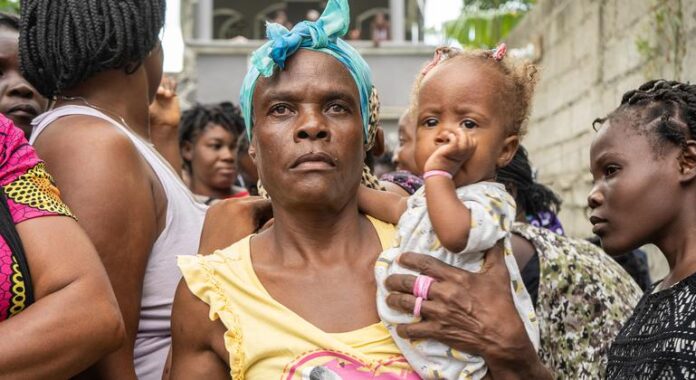
With roughly half the population, 5.7 million people, facing some sort of emergency level of hunger, Haiti is one of five countries in the world with catastrophic levels of hunger.
“Despite all the violence, displacement and collapse”, WFP remains in Haiti, Lola Castro, Regional Director in Latin America and the Caribbean, said during a briefing on Tuesday, having recently returned from the country.
More than one million people in Haiti are displaced due to ongoing gang violence and insecurity.
As the hostilities are disrupting the food systems and supply chains in the capital Port-au-Prince, WFP is facing a “quite dramatic” situation, Ms. Castro said.
Displaced population
Displaced populations, notably in and around Port-au-Prince, are faced with a “very problematic” situation, she said, as hostilities have recently uprooted around 14,000 people from the commune of Kenscoff.
“Kenscoff is a commune where people used to come and sell their food,” she said, and the same people are now relying on food assistance after their houses were burned and their livelihoods “destroyed.”
Gender-based violence
With 6,000 cases of gender-based violence having been reported this year, the situation of women and girls in Port-au-Prince is dramatic, according to Ms. Castro.
The city is probably “one of the most dangerous places in the world” for women and girls. “We need to provide them support to assure that they become less vulnerable and are not exposed to all this violence,” she said.
Dwindling aid stocks
The 2025 Humanitarian Response Plan for Haiti calls for just over $908 million but is only eight per cent funded. Ms. Castro said WFP alone needs $46.4 million over the next six months to sustain its emergency response and address the root causes of hunger and malnutrition.
The hurricane season began on 1 June and runs through the end of November. She warned that at this moment when half of all Haitians are already going hungry, a single storm could push millions into a humanitarian catastrophe.
While in past years, WFP had humanitarian stocks ready in the country and could assist between a quarter to half a million people in the immediate aftermath of a disaster, “this year, we start the hurricane season with an empty warehouse,” she said.
Unless resources are made available, the agency will have no capacity to respond—there are no contingency supplies, no logistical buffer, and no lifeline for the most vulnerable.
“We cannot forget the people of Haiti,” Ms. Castro said, calling on the humanitarian community to provide urgent support.
UN calls for ‘immediate and unconditional’ release of aid workers arbitrarily detained in Yemen
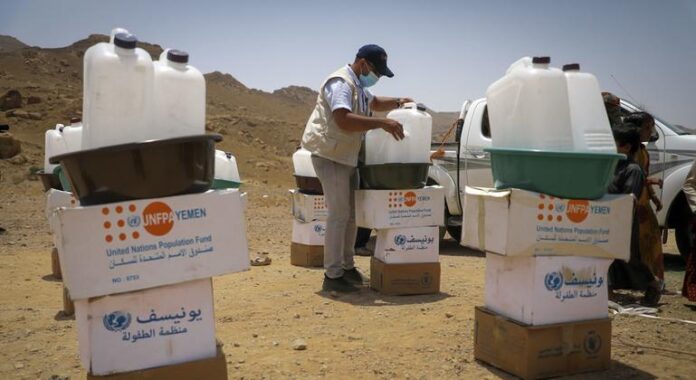
In a statement on Monday, António Guterres strongly condemned the death in detention of a World Food Programme (WFP) staff member earlier this year.
The Houthis have yet to provide “an explanation for this deplorable tragedy,” António Guterres said, renewing his call for “an immediate, transparent and thorough investigation and accountability.”
Profound injustice
“The UN and its humanitarian partners should never be targeted, arrested or detained while carrying out their mandates for the benefit of the people they serve,” said the UN chief.
These detentions have further constrained the UN’s ability to operate effectively in Yemen and have “undermined mediation efforts to secure a path toward peace,” he added.
Safe and immediate release
Marking the occasion of Eid Al-Adha this Friday, “a time to show compassion,” the Secretary-General urged the Houthis to “immediately release those arbitrarily detained” and “end the ordeal of families who face celebrating yet another holiday without their loved ones.”
“I renew my call for their immediate and unconditional release, including those held since 2021 and 2023, and most recently this January,” Mr. Guterres said.
“You are not forgotten,” he added, addressing the detained aid workers, assuring them that the UN will continue to work through all possible channels to secure their safe and immediate release.
He also welcomed the support of international partners, NGOs and all those working to support the people of Yemen, urging Member States to express solidarity with those detained and “intensify advocacy towards their release.”
