Philip R. Lane: Europe and the world economy
The European Union working towards litter-free coastal communities
The growing amount of litter reaching our oceans is one of the most significant forms of marine pollution, posing threats to both marine ecosystems and human health.
As litter enters the marine environment from land and rivers, and gets to the sea basins of different countries, it turns into a transboundary issue. Therefore, to be addressed effectively, it requires a transnational action involving policy makers and local authorities, researchers, the industry, Non-Governmental Organisations, and civil society.
Being aware of the challenges of marine litter, in the last 15 years several EU funding programmes have addressed marine litter under different perspectives. The outcome is a wide range of EU research projects and associated results.
This important legacy has led to new knowledge and guidance in the form of scientific publications and technical reports, online information products, interfaces and apps for data management, monitoring and modelling tools, protocols and technologies, case studies and awareness materials.
EU projects joining forces on marine litter
The Task Force on Healthy ocean and resilient coasts (Pillar IV) of the Atlantic Action Plan of the European Commission, and the Interreg Atlantic Area project Free LitterAT have launched a collaborative framework to address this issue.
The objective is to engage key EU projects that had delivered or plan to deliver tangible outcomes to help coastal communities and stakeholders to prevent and/or reduce marine litter for litter-free coastal communities.
The full list of projects that joined the initiative can be found at the end of the news.
Marine litter-free toolkit
As a first product of this collaborative initiative, they developed a Free Litter Toolkit to facilitate the access to key projects and associated resources, while also fostering networking and result clustering activities.
The toolkit includes references to selected projects and associated resources that are expected to become solutions to achieve litter-free coastal communities.
To produce the toolkit, European project repositories, databases and related literature were consulted. Selected projects were also approached to join the initiative and to support the identification of their results.
The resources selected cover tangible results such as guidelines and methodologies, good practices, manuals, procedures, prototype technology, lifecycle studies, ready-to-work tools and technologies, software, apps, training and communication materials. It also includes scientific publications in the following thematic areas:
- Waste management and recycling
- Prevention of litter entrance from sources (e.g. rivers)
- Applicable detection, monitoring and modelling approaches
- Marine litter removal and collection (abandoned, lost or other discarded fishing gear, Fishing for Litter schemes, coast and beach clean-up)
- Awareness raising
The Toolkit does not assume to be comprehensive in terms of capturing the huge universe of projects dealing with marine litter. However, it showcases a significant sample of key projects that can contribute to litter-free coastal communities with their outcomes.
Although the action is promoted in the framework of the Atlantic Action Plan, the scope of the collaboration is not limited to this geographical area. It has the vocation to be applicable to other sea basins too.
Future actions
A wide dissemination plan for the toolkit will be implemented with the involvement of the participating EU projects and the support of the Atlantic Action Plan Pillar IV taskforce. The key goal is to reach as many potential end users involved in promoting litter free communities as possible.
The organisation of joint actions (workshops, pilot actions, training activities), and the possibility of clustering the results of the projects will be explored.
Background – PILLAR IV of the Atlantic Action Plan
The Atlantic Maritime Strategy, adopted by the European Commission in 2011, was created in response to calls from stakeholders for a more ambitious, open and effective cooperation in the Atlantic Ocean Area. The first Atlantic Action Plan (2013-2020) was updated by the Action Plan 2.0, released in 2020, and aims to unlock the potential of the blue economy in the Atlantic Area while preserving marine ecosystems and contributing to climate change adaptation and mitigation.
The implementation of the Atlantic Action Plan is supported by the Sea Basins Assistance Mechanism funded under the European Maritime, Fisheries and Aquaculture Fund.
The Action Plan has the ambition to achieve seven goals under the four thematic pillars listed below through concrete actions mobilising all relevant Atlantic stakeholders.
- Pillar I: Ports as gateways and hubs for the blue economy
- Pillar II: Blue skills of the future and ocean literacy
- Pillar III: Marine renewable energy
- Pillar IV: Healthy ocean and resilient coasts
These pillars are interconnected and trans-regional by nature. They address key challenges and aim to foster sustainable blue growth and contribute to greater territorial cooperation in the EU Atlantic area. In practical terms, each Pillar is supported by a task force of representatives of the four Atlantic countries. Each taskforce is chaired by a Pillar Coordinator with every country being responsible for one pillar and nominating its coordinator.
The Pillar IV addresses the context of vulnerability of the European Atlantic Ocean and its coastal areas, which are exposed to several human activities.
The Pillar focuses on two specific goals (fig I): Goal 6 “Stronger coastal resilience” and Goal 7 “The fight against marine pollution”, the latter one including a set of concrete actions, most of them addressed to tackle marine litter.
Further information can be found in the Pillar IV infographic.
Projects involved in the toolkit
AQUA-LIT – ‘Preventing measures for averting the discarding of litter in the marine environment from the aquaculture industry’
CAPonLITTER – ‘Capitalising good coastal practices and improving policies to prevent marine litter’
https://www.interregeurope.eu/caponlitter/
CIRCNETS – ‘Blue Circular Nets’
https://www.interreg-npa.eu/projects/circnets/home/
CleanAtlantic – ‘Tackling Marine Litter in the Atlantic Area’
CRoCuS – ‘Cleaner Rivers – Cleaner Seas’
http://earthforever.org/en/p22.html
EUROqCHARM – ‘EUROpean quality Controlled Harmonization Assuring Reproducible Monitoring and assessment of plastic pollution’
Free LitterAT – ‘Advancing towards litter-free Atlantic coastal communities by preventing and reducing macro and micro litter’
GoJelly – ‘GoJelly – A gelatinous solution to plastic pollution’
INdIGO – ‘Innovative fishing Gear for Ocean’
https://indigo-interregproject.eu/
INSPIRE – ‘Innovative Solutions for Plastic Free European Rivers’
INTEMARES Artes Perdidos – ‘INTEMARES – Lost Fishing Gear’
INTEMARES Caladeros Limpios – ‘INTEMARES – Clean Fishing Grounds’
LIFE LEMA – ‘Intelligent marine litter removal and management for local authorities’
https://www.azti.es/proyectos/life-lema/
MAELSTROM – ‘Smart technology for Marine Litter Sustainable Removal and Management’
https://www.maelstrom-h2020.eu/
MARELITT Baltic – ‘Reducing the impact of marine litter in the form of Derelict Fishing Gear (DFG) on the Baltic Sea environment’
https://www.marelittbaltic.eu/
Mo.Ri.net – ‘Monitoring, census, removal and recycling of ghost nets: fishermen as key players in the safeguard of the sea’
https://www.isprambiente.gov.it/en/projects/sea/mo-ri-net-project
NETTAG – ‘NetTag – Preventing marine litter from fisheries’
NETTAG+ – ‘Preventing, avoiding and mitigating environmental impacts of fishing gears and associated marine litter’
Oceanwise – ‘Wise reduction of EPS marine litter in the North-East Atlantic Ocean’
https://www.oceanwise-project.eu/
Plastic Pirates – ‘Upscaling the Plastic Pirates citizen science initiative across Europe’
https://www.plastic-pirates.eu/en
REMEDIES – ‘Co-creating strong uptake of REMEDIES for the future of our oceans through deploying plastic litter valorisation and prevention pathways’
https://remedies-for-ocean.eu/
SEACLEAR – ‘SEarch, identificAtion and Collection of marine Litter with Autonomous Robots’
SEACLEAR 2.0 – ‘Scalable full-cycle marine litter remediation in the Mediterranean: Robotic and Participatory solutions’
SEARCULAR – ‘Circular solutions for fishing gears’
TREASURE – ‘Targeting the reduction of plastic outflow into the Sorth sea’
Criminal group forging over 12 000 official documents halted in Poland
The investigation started in 2020. Since then, law enforcement authorities have seized over 12 000 counterfeit documents, secured EUR 250 000 and arrested 42 suspects in total, all members of the same organised criminal group. The most recent action days against the gang took place on 3 and 4 December 2024 in Poland and resulted in:7 suspects arrested4 locations searchedSeizure…
DR Congo violence has pushed 35,000 to Burundi, says UN refugee agency
UNHCR, the UN refugee agency, reported on Thursday that 35,000 Congolese nationals have now reached Burundi since the beginning of February, as Rwanda-backed M23 fighters continue to advance across both South and North Kivu.
The UN human rights office (OHCHR) in DRC also expressed concern over growing lawlessness as warlords responsible for grave crimes including rape, were reportedly sprung from prison in Goma, Kabare and Bukavu in recent days.
These former detainees are now at large and pose a threat to their former victims and judges who sentenced them, along with the lawyers who represented victims of sexual violence, said Patrice Vahard, Director of the UN Joint Human Rights Office in DR Congo (UNJHRO).
“The consequences will be huge, first for the state of law, but in particular for these women who believed in justice because they received help, but who unfortunately now risk being confronted by some of their tormentors.”
Burundi arrivals
UNHCR spokesperson Olga Sarrado told UN News that those fleeing DR Congo are entering Burundi via its northwestern border.
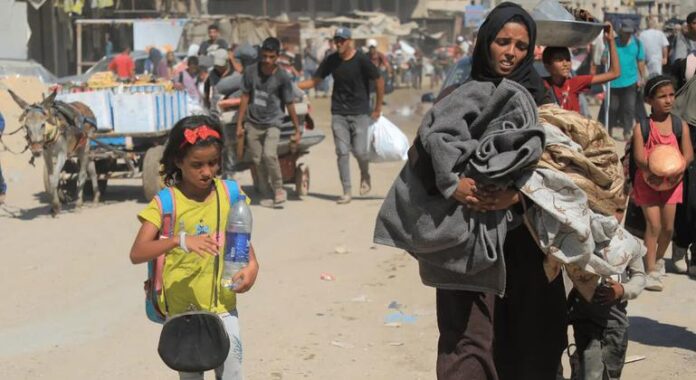
“The vast majority are women and children, they are arriving exhausted, tired,” she said. “Many of them tell our teams on the ground that they have lost family members, sometimes children, while they were fleeing.”
Ms. Sarrado described dire conditions at the border and said that the majority of those arriving from DRC do so by unofficial means, with many taking risks to cross the Ruzizi River.
“Some of them are sheltering in the open, just in makeshift shelters, others are being sheltered in schools and also in a stadium at the border,” the UN refugee agency official added.
Needs are increasing and there is a significant shortage of basic services in the displacement shelters including toilets, food and water.
Goma aid lifeline resumes
The UN World Food Programme (WFP) announced on Thursday that it had partially resumed food assistance to parts of Goma, which fell to M23 rebels three weeks ago.
But as fighting between M23 and national troops continues, the UN aid agency expressed alarm at “soaring hunger” caused by people fleeing displacement camps.
In North Kivu, WFP has reached 9,000 people with emergency food assistance out of a target of 83,000. “Security must improve for WFP to reach tens of thousands more of the most vulnerable populations at risk,” it stressed.
Where possible, the UN agency is delivering vital nutrition supplies to treat moderate acute malnutrition in children aged six to 59 months, amid surging staple food prices that have made it increasingly difficult for families to eat.
Prices rise along with insecurity
The price of maize flour has risen by nearly 67 per cent, salt is 43 per cent more expensive than before the crisis erupted and the cost of cooking oil has increased by up to 45 per cent, WFP said.
“Escalating violence is forcing more families to flee – and now they have no food, no security and nowhere safe to go,” said WFP spokesperson Shaza Mograby. “The desperation of affected communities continues to grow by the day.”
Humanitarians continue to struggle to reach the most vulnerable while major access routes remain blocked and Goma International airport remains closed.
“WFP’s priority is to resume operations fully as soon as it is safe to do so,” the UN agency insisted.
“The longer we are unable to give food and emergency assistance to families affected by the conflict, the greater and more dire their needs are,” said Peter Musoko, WFP’s Country Director and Representative in DRC.
“I do not want to see children and mothers sink deeper into hunger and severe malnutrition. We need the violence to stop so we can resume our humanitarian activities. The most vulnerable people in DRC cannot afford to be overlooked during this crisis.’
WFP plans to reach seven million of the most vulnerable women, men, and children in DR Congo with lifesaving food and nutrition assistance this year. It is working with other UN agencies, NGOs and Government partners to address immediate needs and prepare for a potential large-scale response once conditions allow.
A key part of this operation is the WFP-run UN Humanitarian Air Service (UNHAS) operation. It provides aid teams with critical access and logistical support for their work across the country but it urgently requires $33.1 million to avoid the suspension of operations by the end of March.
In recent weeks, the UNHAS fleet relocated to Kalemie in Tanganyika, establishing a new operational hub for eastern DRC.
So far this year, the air service has transported 2,464 passengers, including humanitarian workers relocated from Goma and Bukavu; it has also delivered 23 metric tons of essential light cargo across DR Congo.
From suits to social justice: World’s top human rights forum turns stage over
Trading suits, ties and debates for DJ turntables, bright traditional Indigenous garb and ancient instruments, three performers – an anthropologist, an R&B singer and a genre-defying artist – showcased their music and messages at the Stand Up for Social Justice event to celebrate the World Day of Social Justice, marked annually on 20 February.
It took place in front of hundreds of people in the emblematic Human Rights and Alliance of Civilizations Room, where high-stakes diplomacy happens throughout the year.
The world needs more diverse platforms like the UN “so that transculturality can exist”, said Brisa Flow, a Chilean-born Mapuche artist who got her first break in rap battles in Brazil, following her intense musical performance.
“We need more empathy and to listen more to Indigenous Peoples in order to better understand how to take care of our territories that need care, not just in terms of water, food and land, but also our children and our elders,” said the São Paulo-based singer, rocking a green marble-printed manicure.
“We need to be in spaces where everything we speak about is not just a utopia, where hope, which exists, can be heard and considered.”
Calls for change around the world
Ms. Flow joined French-speaking Geneva-born R&B revelation Ocevne (pronounced Océane) and anthropologist-cum-poet Idjahure Terena in delivering powerful music and personal messages inspired by social justice while helping to link local realities to issues of a global scale.
Echoing the Day’s 2025 theme Strengthening a Just Transition for a Sustainable Future, the event was co-organised by UNRISD, an independent UN research institute focusing on development issues, and Antigel, a Geneva-based music festival designed to make culture more accessible.
The messages from the young people on stage did just that, with electrifying performances and calls for change around the world.
For Ocevne, 28, the message was about equality.
“The simplest way I could define it is simply the right to equal opportunities,” she said. “No matter your background, where you come from, who you are, your gender, everything, we all have the right to that opportunity.”
Ocevne warming up the room at the Stand Up for Social Justice concert in Geneva.
‘No climate justice without social justice’
Climate justice was another recurring theme throughout the event, an issue highlighted by Mr. Terena, a doctoral student in social anthropology at the University of São Paulo and poet who spends much of his time defending the rights of his community and others.
“There is no climate justice without social justice,” he told the audience. “We know that standing forests are the simplest and most efficient solution for fighting global warming.”
The young researcher slammed the impact of mining companies and agribusinesses on his ancestral land that belongs to the Terena people of Brazil in the Pantanal region of Mato Grosso do Sul.
“This is not just a territorial issue, but a matter of physical and cultural survival for our peoples and for humanity as indigenous lands represent the most important areas of biodiversity,” he said, inviting the audience to fight for a “common, diverse living world”.
Idjahure Terena playing the japurutu flute with his father-in-law Francisco Baniwa in Brazil.
‘The future is going to be very hot’
Indeed, “the future is going to be very hot,” said Ms. Flow, adding that “it is already very hot in Brazil, and this is urgent for us because without water, we cannot live, and without food, [we cannot] either.”
Advocating for issues affecting indigenous communities, including the burning impacts of climate change on the natural resources of her home country, she said collectively not enough is getting done.
“We need more communication and more exchanges. By exchanges, I mean listening, speaking, listening, speaking and thinking about new ways of living well so that we can keep heading into the future.”
Brisa Flow performing with Brazilian federal deputy Célia Xakriabá.
Amplifying marginalised voices
The event is the brainchild of UNRISD communications chief Karima Cherif, who wanted to bridge art and research through the initiative.
She says her institute works with scholars from the global South to ensure that the voices and expertise of minorities are heard.
“We’re giving voices to the marginalised and the youth,” explained Ms. Cherif, who sees art as a way to “translate what we do in a language that can touch hearts”.
‘Never give up’
Thuy-San Dinh, who heads Antigel, echoed her vision and encouraged the young audience to pursue their goals, recalling when she co-created the annual event 15 years ago.
“You have to believe in your ideas and never give up,” Ms. Dinh said.
Melanie Rouquier, who created SHAP SHAP, a non-profit that fights global inequality and discrimination through cultural projects, told several activists in the room that each of their actions showed citizen engagement was not a lost cause.
“To resist, we have to get together,” she said.
Brisa Flow playing a traditional instrument at the Stand Up for Social Justice concert in Geneva in February 2025.
Connecting generations
For Aryan Yasin, a designer from Geneva who founded a cultural non-profit supporting disadvantaged youth, the show was an opportunity for cross-pollination and broadening his network by connecting with UN staff.
The exceptional venue “is not a place where you would necessarily see young people”, he said. “But, that actually allows us to create an intergenerational connection, with people who are more experienced, more established,” he added.
After the show, management student Ludivine said she was mesmerised by the experience. Putting on a concert with one of her favourite artists there to denounce inequalities “makes sense… because at the UN, people get together to talk about inequalities around the world.”
Ms. Flow (right) at a protest by the Guarani people of Brazil.
What is social justice?
After the event ended, doctoral students Beatrice and Thomas shared what the concept of social justice, which can seem quite abstract, meant to them.
“It’s about recognising and taking differences into account while ensuring that everyone has the same access” to the same opportunities, said Beatrice, from Italy, who studies at École Polytechnique Fédérale de Lausanne.
“That may mean that some people will need more support, while others may not need as much, but have different needs.”
Thomas offered a more societal vision of the idea.
“For me, it’s something that is both individual and collective – something that must be built as a society. It is entirely dependent on the structures we have put in place, but it also relies on everything that is local.”
Read our social justice explainer here.
‘We need to be united’
Ahead of the concert, Tatiana Valovaya, Director-General of the UN Office at Geneva set the tone in her opening remarks in the Human Rights and Alliance of Civilizations Room.
“This room sees a lot of very important and challenging negotiations,” she told the audience. “But, today we open this room to everyone.”
Geneva Mayor Christina Kitsos, whose term is guided by the motto “what connects us”, reminded the youthful audience of the UN’s fundamental role despite the worrying rise of “desire to undermine all the work [that has been done] around humanitarian aid and human rights”.
“We need to be united, strong and truly hopeful and courageous to ensure that we stay the course, that we remain a beacon in this world in turmoil,” she said.
UN chief condemns ‘abhorrent and appalling’ treatment of hostages’ remains by Hamas
Hamas militants said the bodies of the four people who were returned to Tel Aviv on Thursday morning were those of a mother and two children from the Bibas family, along with 84-year-old peace activist Oded Lifshitz.
It is the first time that Hamas – which has controlled the Gaza Strip since 2006 – has returned the bodies of hostages seized during the terror attacks it launched on 7 October 2023, since the ceasefire with Israel came into effect last month.
Addressing correspondents at the daily briefing in New York, UN Spokesperson Stéphane Dujarric said that under international law, any handover of a dead person’s remains “must comply with the prohibition of cruel, inhuman or degrading treatment, ensuring respect for the dignity of the deceased – and their families.”
“I can tell you that the Secretary-General condemns the parading of bodies and displaying of the coffins of the deceased hostages in the manner seen this morning, which is abhorrent and appalling,” said Mr. Dujarric.
Ceasefire must continue
The Secretary-General also reiterated his appeal to all combatants who are party to the fragile ceasefire process to stand by their commitments and continue the full implementation of the deal.
Six hostages are due to be freed on Saturday.
Hamas claimed in November 2023 that Shiri Bibas and her two sons had been killed during an Israeli airstrike but provided no evidence. Israelis gathered in Hostages Square in Tel Aviv on Thursday observed a minute’s silence following news of the handover.
“The hearts of an entire nation lie in tatters,” said Israel’s President Isaac Herzog.
Respect for the dead
The UN chief urged the parties to the conflict “to respect the remains of the dead and to return them to their relatives, consistent with applicable obligations under international humanitarian law and human rights law.”
The UN has long called for the release of all hostages, a permanent ceasefire and irreversible progress towards a two-State solution, Mr. Dujarric reminded.
Aid for civilians in Gaza continues to scale-up
The Humanitarian Coordinator for the Occupied Palestinian Territory, Muhannad Hadi, together with the head of UN migration agency IOM, Amy Pope, heard pleas for urgent shelter and support during a visit to southern areas of Gaza on Thursday.
Mr. Hadi and Ms. Pope also met with humanitarian partners, staff and heads of UN agencies to discuss the ongoing response.
Humanitarian assistance in Gaza continues to scale up, said Mr. Dujarric, with nearly all those in need now reached with food parcels, including rations for one month for most families.
Polio vaccinations
Meanwhile, preparations continue for the third round of polio vaccinations across Gaza, due to resume on Saturday.
The World Health Organization (WHO) and children’s agency UNICEF have warned the current environment in Gaza “creates ideal conditions for further spread of the poliovirus, as transmission can happen in overcrowded shelters and when water, sanitation and hygiene infrastructure is damaged.”
The UN reproductive health agency, UNFPA, reports that nearly 2,400 postpartum kits have been distributed to all hospitals that provide maternity services over the past two weeks, Mr. Dujarric added.
European farmers to get over €98 million in EU financial support
EU farmers who have lost income due to adverse climatic events or natural disasters are set to receive over €98 million from the EU’s agricultural reserve. The funds will be shared among farmers in Spain, Croatia, Cyprus, Latvia and Hungary who have all suffered due to extreme weather conditions.
Scientologists Lead Human Rights Advocacy in Mental Health Through CCHR Exhibition in the Netherlands
Netherlands – February 18, 2025 – The Netherlands Committee for Human Rights Foundation (NCRM), in collaboration with the Citizens Commission on Human Rights (CCHR), successfully hosted the traveling exhibition “Psychiatry: An Industry of Death” at the Zuiderkerk in Amsterdam. This powerful event, held from February 15 to 17, shed light on historical and contemporary human rights violations within psychiatry. The exhibition, driven by the dedicated efforts of Scientologists and human rights activists, provided an eye-opening experience to hundreds of visitors.
The three-day exhibition took place in the heart of Amsterdam, a striking contrast to a concurrent European Congress of Neurology and Neuropsychiatry, which was held in a secluded industrial area outside the city. This strategic placement of the exhibit ensured maximum public visibility and accessibility, reflecting the transparency and public engagement that CCHR stands for.
An Eye-Opening Journey Through Psychiatry’s History
Visitors to the exhibit were guided through interactive displays, multimedia presentations, and historical accounts that detailed psychiatry’s troubled past, from early psychiatric institutions and eugenics programs to modern-day concerns like over-medication and involuntary commitment. The powerful visuals and testimonies resonated with the hundreds of visitors who attended, ensuring that critical discussions on psychiatric practices remained in the public domain.
The Zuiderkerk, a historic site that once served as a cemetery, added a symbolic weight to the event. The entrance porch, marked by a skull and crossbones, served as a stark reminder of the suffering endured by victims of psychiatric abuse. Volunteers ensured that CCHR’s message was visible throughout—from a balloon arch in CCHR colors to informational boards and flyers distributed on-site.
Exposing Psychiatric Practices and Their Consequences
The exhibition coincided with the psychiatric congress, whose program included sessions on brain stimulation techniques, including electroshock, electromagnetic induction, and deep brain stimulation via implanted electrodes. NCRM volunteers emphasized that while some neurotechnological treatments may help patients with nerve damage, psychiatry’s historical focus on biochemical imbalances and brain interventions has led to an alarming rise in psychiatric drug prescriptions, now affecting nearly 3 million people in the Netherlands.
A key issue highlighted was the sharp increase in ADHD diagnoses and the use of Ritalin, which quadrupled after a 2005 treatment guideline heavily influenced by psychiatrists with pharmaceutical industry ties. Today, nearly 4% of Dutch youth are medicated for ADHD, despite experts pointing to social and environmental factors—such as school pressure, poverty, and screen exposure—as major contributors to behavioral difficulties.
Stories of Strength and Survival
A particularly moving moment came when a survivor of psychiatric institutionalization, bravely shared her experience. She recounted how she was forcibly taken from her home, denied access to her children, and placed under psychiatric incarceration, where every attempt to assert her rights was met with further drugging and control. She revealed that the only way to escape was to pretend to comply—a sentiment echoed by another visitor who had faced similar struggles.
The official opening of the exhibition featured another powerful testimony from an expert by experience, who described her forced admission and the emotional toll it took on her. Her account deeply moved the audience, many of whom admitted they were previously unaware of the extent of such abuses in psychiatry.
Electroshock Therapy and the Call for Reform
A crucial topic in the exhibition was electroshock therapy (ECT), which is still performed on 1,000 patients annually in the Netherlands. Despite mounting evidence of its permanent memory loss risks and lack of proven efficacy, psychiatric institutions continue its use. A controversial study on ECT in 2020 led to the following conclusion: “Given the high risk of permanent memory loss and the small mortality risk, this longstanding failure to determine whether or not ECT works means that its use should be immediately suspended until a series of well-designed, randomized, placebo-controlled studies have investigated whether there really are any significant benefits against which the proven significant risks can be weighed“. Apparently, “criticism is not or hardly getting through to the psychiatric caste” says Ivan Arjona from Scientology Europe, who has been involved since years at the UN denouncing the heavy violations of human rights. The UN Special Rapporteur on Torture even stated that forced psychiatric interventions could amount to torture when imposed without true informed consent.
NCRM volunteers pressed the Dutch Association for Psychiatry for a response, but the association defended its adherence to existing laws and regulations rather than reconsidering its stance. This highlights the persistent institutional resistance to reform, despite growing global advocacy from the WHO and UN for a shift away from the biomedical model of mental health.
The Role of Media in Amplifying the Message
The exhibition’s impact was further strengthened by media coverage, which played a key role in bringing awareness to the broader public. Reports appeared in “De Andere Krant”, an alternative Dutch newspaper with 12,000 prints, as well as in Amsterdam Daily, ensuring that the issues raised reached a wider audience. Additionally, the open letter addressed to the psychiatry congress organizers had tangible effects. In response to CCHR’s advocacy, the congress removed two key sessions on brain stimulation techniques and pharmacological treatments—a significant victory in the fight against coercive psychiatric interventions.
CCHR volunteer Ogé further emphasized the importance of implementing WHO and UN guidelines that promote ethical mental health practices, highlighting CCHR’s ongoing role in shaping policies that safeguard human rights.
A Continuing Fight for Mental Health Rights
Since its founding in 1969 by members of the Church of Scientology, inspired by the work of L. Ron Hubbard, and psychiatrist Dr. Thomas Szasz, CCHR has remained a leading voice in exposing psychiatric abuses and advocating for reforms. Through public exhibitions, legal actions, and lobbying efforts, CCHR continues to challenge the pharmaceutical industry’s influence, prevent coercive treatments, and defend the rights of individuals affected by psychiatry.
The success of the Amsterdam exhibit is a testament to the unwavering dedication of Scientologists and CCHR activists in bringing truth and accountability to the field of mental health. As the battle for human rights in psychiatry continues, CCHR’s work stands as a beacon of hope and justice for individuals and families affected by psychiatric abuses.
EU greenlight to reduce food waste and set new rules on waste textile
An agreement has been struck to set EU targets for food waste reduction by 2030 and measures towards a more sustainable and less waste-producing textile sector. Under the new rules, textile producers and fashion brands would be required to pay a fee to help fund waste collection and treatment.
Brussels, an economic hub in Europe – what opportunities for businesses?
They consider Brussels as A strategic economic crossroads in Europe, offering opportunities For companies. They benefit froman advantageous geographical positiond ‘a qualified workforce and ofA dynamic entrepreneurial environment. It attracts investors and businesses around the world, which A major economic center in Europe. They can enjoy many growth possibilities and development.
Brussels economic landscape
The economic landscape of Brussels is characterized by a strong presence of international companies and European institutions.
Historical evolution as a European Affairs Center
The economic landscape of Brussels has evolved over the years to become a major economic center in Europe.
Current economic indicators and market position
Over the years, Brussels has developed a very competitive market with promising economic indicators.
The current economic indicators of Brussels show a Stable economic growth and a strategic position within the European Union, which makes it a attractive economic hub For companies. They have a skilled workforce and a Easy access to European markets, which constitutes a major asset For investors and companies seeking to settle in the region.
Strategic geographic position
Geographically, Brussels is located in the heart of Europe, which makes it a economic crossroads Ideal for companies. It is surrounded by prosperous countries and has easy access to the main European markets.
Administrative Center of the European Union
Geographically, Brussels is home to many institutions of the European Union, which makes it a decision -making Key for companies wishing to operate in the European market.
Connection to international affairs
Europeanly, Brussels is a Connection hub For companies seeking to establish business relations with other countries. It has an international airport and transport networks effective.
Europeanly, companies can take advantage of the proximity of Brussels with other European countries, which facilitates trade and investment. In addition, the city is home to many embassies And international organizationswhich offers companies opportunities networking and partnership. This allows companies to grow and prosper in an environment competitive but also stimulating.
Key sectors
The service sector is dominant in Brussels, with opportunities for companies in the fields of finance, telecommunications and logistics. Companies can take advantage of the presence of many European and international institutions.
Domination of the Service Industry
Companies can take advantage of skilled workforce andInfrastructure developed of the city to develop.
Technology and innovation clusters
The clusters of technology and innovation are very present in Brussels, with Competitiveness centers in the areas of biotechnology and Information technology.
The clusters of technology and innovation in Brussels offer collaboration opportunities and partnership for companies, as well as funding and incubators For start-ups. This allows companies to develop and that remained competitive on the European market.
Market Entry Opportunities
Regarding the opportunities for entering the market, companies can find valuable information on the site of the Brussels-Capital Region, in particular via Advice for businesses and independents | Brussels-Capital Region.
Business Infrastructure Support
Around business support infrastructure, they have many resources to help them develop, including business incubators and Coworking spaces.
Incentment incentives and programs
Investing in the Brussels region can be very advantageous because it offers tax incentives and support programs For companies wishing to set up or develop on its territory.
Indeed, the foreign investments are strongly encouraged, and companies can benefit from grants and Reduced rate loans To finance their projects. In addition, the region offers economic activity zones with High quality infrastructurewhich facilitates the installation and operation of companies.
Regulatory framework
Below European requirements, Brussels offers an environment conducive to businesses. Regulations are clear and promote economic growth. Companies can thus benefit from a stable frame To develop their activities.
Benefits of European compliance
Below European standards, companies benefit from Access to a large market. They can thus establish solid partnerships with other European companies and enjoyTax advantages.
Local commercial regulations
There are many advantages of local commercial regulations. Companies can benefit from financial aid and personalized support for their development. This allows them to develop and create jobs.
Local commercial regulations in Brussels are very favorable to companies. They offer great flexibility and allow companies to adapt quickly to market changes. In addition, the Operating costs are relatively down compared to other European cities, which allows companies to reduce their costs and ofincrease their profitability.
Labor and talent basin
In the heart of Europe, Brussels offers a Dynamic economic landscape which attracts businesses around the world. They take advantage of a skilled workforce and a talent Multicultural.
Multilingual professional basis
In Brussels, they find a Multilingual professional basis which facilitates international trade. Companies thus benefit from a Easy access to European and global markets.
Access to international expertise
Professionally, companies in Brussels benefit from a Access to international expertise high level. They can thus Connect with experts around the world and grow their business in a way competitive.
Companies in Brussels can also take advantage of the presence international organizations and embassies, which offers them a Access to networks and at partnership opportunities unique. This allows them to develop internationally and strengthen their position on the world market.
Conclusion
She notes that Brussels offers considerable economic opportunities for businesses. They benefit from a strategic location, a skilled workforce and a favorable business environment. She points out that companies can take advantage of the presence of many European and international institutions to develop their activities. They can thus strengthen their competitiveness and their visibility on the European market.
Originally published at Almouwatin.com