The future of public transport is increasingly leaning towards automation, addressing issues such as driver shortages, road safety, congestion, and carbon emissions.
However, successful deployment requires seamless interaction between automated buses and other road users, such as cars, motorcycles, bicycles, and pedestrians. The Human Machine Interaction for Automated Public Transport Buses (InterAct) project, led by DAM Shuttles in conjunction with partners ADASTEC, Applied Autonomy, and Vy Buss, seeks to enhance communication between self-driving buses and pedestrians, cyclists, and motorists.
Building on insights from the previously EIT Urban Mobility co-funded project LivingLAPT, which focused on small autonomous shuttles, InterAct pivots towards full-size, full-speed automated electric buses. These vehicles offer higher capacity and are further along in the development towards driving without a safety driver onboard, thus bringing public transport closer to a driverless future.
In InterAct, the project will develop and test external human-machine interfaces (eHMI) that enable safe and intuitive interactions between automated buses and their environment. Pilots in the real-world environments of Stavanger, Norway and Rotterdam, Netherlands, will see the project integrate the eHMI solution into fully automated buses.
The missing puzzle piece? Human-machine communication!
While automation in public transport promises efficiency and sustainability, a significant challenge remains: the clear communication between automated buses and other road users. In conventional settings, bus drivers use eye contact and gestures to signal intent, creating trust and predictability. The absence of a human driver necessitates alternative interaction mechanisms to maintain safety and encourage acceptance of automated driving technology. Safety and trust are key challenges the project will tackle, working to ensure pedestrians and cyclists can reliably interpret the bus’s intentions without human intervention. Additionally, the project will work to enable a seamless transition for users accustomed to traditional bus services.
The human factor of automation
InterAct will develop and deploy eHMI technology, consisting of external text displays on the front, sides, and rear of automated buses. These displays will replace human driver gestures by providing clear messages to pedestrians, cyclists, and motorists. The displays will provide important information, such as confirming the detection of road users or signalling when it is safe for them to proceed. The solution will be developed by ADASTEC, technology experts in the SAE Level-4 automated driving software platform for large-scale vehicles, alongside fleet management specialists Applied Autonomy. Real-life testing in Rotterdam and Stavanger will require technical adaptations to the solution tailored toward the mixed traffic conditions of each city and will focus on assessing how well the eHMI communicates with other road users, its impact on safety, and overall user acceptance.
During 2025, the project aims to have an automated bus operation driving between Rotterdam Meijersplein and the Rotterdam-The Hague Airport with the goal of reaching an average speed of 23 kilometers an hour. The 5 km route will see the automated buses, operated by DAM Shuttles, deal with mixed traffic conditions including roundabouts, pedestrian crossings, intersections with traffic lights and overtaking vehicles.
In Stavanger it is aimed to use the human machine interface between the automated buses operated by Vy Buss, and external road users, such that mixed traffic interactions between the automated system and the other road users happens safely without the use of the safety driver using eye contact or hand gestures.
Both pilots will use ADASTEC’s SAE Level-4 automated driving software platform flowride.ai, integrated into the buses, to enable the vehicles to handle bus stops, intersections, traffic lights, crosswalks, traffic participants as well as allowing for precise localisation. Applied Autonomy’s expertise will play a key role in determining the data that will need to be extracted from the bus to best understand the solution’s performance in the mixed traffic conditions.
Automation for a safer and more sustainable future
Improved safety, economic efficiency, and environmental and social benefits are key forces driving the move toward automated public transport. InterAct aims to demonstrate that clear, machine-generated communication will improve road safety by replacing potentially ambiguous human signals and decreasing accidents caused by human error. By replacing drivers and allowing for remote monitoring of multiple buses, automated buses will help the industry overcome challenges caused by driver shortages and lower operational costs. The InterAct project is a critical step towards the widespread adoption of automated public transport solutions. Check out this video on ADASTEC’s SAE Level-4 automated bus.
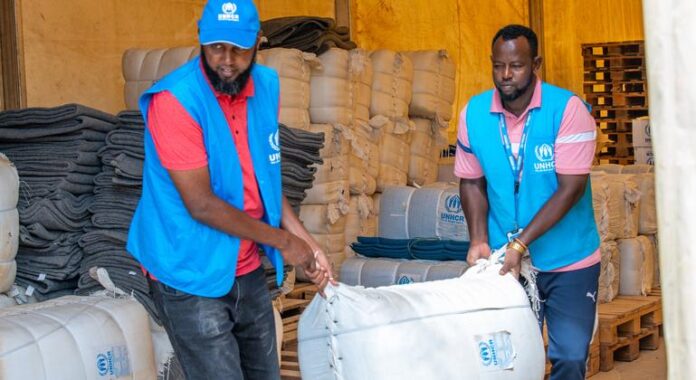
Over the past five years, the refugee population in Kenya has surged by more than 70 per cent – from approximately 500,000 to 843,000 – driven largely by conflict and drought in neighbouring Sudan and Somalia. Of these, around 720,000 people are sheltering in the Dadaab and Kakuma camps, as well as the Kalobeyei settlement.
In Sudan, the civil war that erupted in April 2023 has killed over 18,000 people, displaced 13 million, and left 30.4 million in need of assistance, according to the UN.
WFP provides emergency food and nutrition support to 2.3 million Sudanese as violence and the collapse of essential infrastructure deepen the crisis.
In Somalia, severe drought has placed 3.4 million people – including 1.7 million children – at risk of acute malnutrition.
Previously, a monthly WFP ration for a refugee in the camps included 8.1 kilogrammes of rice, 1.5 kg of lentils, 1.1 litres of oil, and cash for purchasing essentials. That support has now been halved, and cash payments have stopped entirely.
Without emergency funding, food rations could drop to just 28 per cent of their original level. WFP is appealing for $44 million to restore full food and cash assistance through August.
Cuts compound existing crises
Although cuts to foreign aid by many developed nations this year has further constrained operations, WFP began reducing services for Kenya’s refugee population in 2024.
Many of the families arriving are already food insecure, and Global Acute Malnutrition (GAM) rates among children and pregnant or breastfeeding women exceed 13 per cent – three percent above the emergency threshold. Targeted nutrition programmes ended in late 2024 due to lack of resources.
Council adopts conclusions on the use of satellite data, in particular from Earth Observation constellations, for civil protection and crisis management.
The President of the European Council, António Costa, will travel to Brazil from 27 to 29 May 2025, with official engagements in Brasília and São Paulo. This mission marks a renewed political momentum in EU-Brazil relations and reflects the importance of Brazil as a key strategic partner.
During the visit, President Costa will meet President Luiz Inácio Lula da Silva and will deliver a keynote address at the inaugural EU-Brazil Investment Forum. The visit comes at a pivotal moment for EU-Brazil relations, as both partners seek to advance joint priorities on climate action, digital transformation, sustainable development and global governance, and reinforce high-level political and economic ties.
Brazil is not just a close friend, it is a strategic partner for the EU – a global player and a key ally in promoting democracy, multilateralism and shaping a more just and sustainable world.
In times when these values are challenged globally, it is even more crucial that countries like Brazil and the European Union stand together to uphold them.
This visit is an opportunity to deepen our cooperation and further work towards an ambitious global agenda that benefits both our citizens and our planet. Together, we are investing in trust, sustainability and an international order rooted in cooperation, not confrontation.
António Costa, President of the European Council
During his meeting with President Lula in Brasília on 27 May, President Costa will focus on reinforcing political, economic and sectoral cooperation, particularly in view of Brazil’s upcoming presidency of COP30. The two presidents will exchange views on their bilateral and global priorities, including climate change, trade, the green and digital transitions and critical raw materials. They will also discuss the global geopolitical context and how to maximize the benefits of the EU-Mercosur Agreement, the negotiations of which were concluded last December.
The following day, on 29 May, the President will head to São Paulo to deliver remarks at the inaugural EU-Brazil investment forum and formally launch the EU-Brazil Investment Dialogue. This new framework will support high-standard and sustainable investments and further strengthen economic ties.
At a time when bilateral relations face growing strains and multilateralism is under pressure, the visit will highlight the EU’s commitment to an ambitious and forward-looking strategic partnership with Brazil, underpinned by strong political ties, robust economic cooperation and a shared commitment to tackling global challenges together.
Background
Brazil has been a strategic partner of the EU since 2007. The EU is Brazil’s second-largest trading partner and its largest foreign investor, with over €300 billion in direct investment stocks. Since President Lula took office in 2023, EU-Brazil ties have gained new dynamism, with revived and new political and sectoral dialogues on climate, energy, digital transformation, security, and public health. The conclusion of negotiations of the EU-Mercosur Agreement in December 2024 has added further impetus to the relationship.
The EU and Brazil also cooperate closely in the UN and the G20, within the framework of the EU-CELAC summit and through new initiatives such as the Global Alliance Against Hunger and Poverty and the G20 coalition for regional vaccine production.
European Council President António Costa will travel to Brazil from 27 to 29 May 2025 to meet with Brazilian President Lula da Silva and participate in the EU-Brazil Investment Forum. The visit highlights the EU’s commitment to a forward-looking strategic partnership with Brazil to advance joint priorities, including climate action and multilateral cooperation.
629 Palestinians were reportedly killed in the last week, according to OHCHR in the Occupied Palestinian Territory.
At least 358 were killed because of attacks targeting houses and tents for displaced people, with children and women comprising at least 148 of the victims.
“The high number of strikes on shelters, in the context of the existing destruction of infrastructure in Gaza, raises grave concerns that not all strikes were targeting military objectives,” OHCHR said.
Journalists under fire
Furthermore, nine Palestinian journalists were killed last week, making it one of the deadliest for the profession since the conflict began in October 2023.
Although journalists have a deep sense of duty to their work, “they, too, are displaced, tired and hungry like the rest of the population of Gaza,” OHCHR said.
“However, it appears that in many instances, these journalists may have been deliberately targeted with the intention of limiting the flow of information on what is happening in Gaza and the scale of the impact that this war is having on civilians.”
The office said international journalists must be allowed into Gaza and their safety ensured.
Aid on the move
Meanwhile, lifesaving aid is making its way across the enclave following a nearly 80-day blockade.
UN aid coordination office OCHA confirmed that 90 trucks carrying nutrition supplies, flour, medicines and other critical stocks left the Kerem Shalom border crossing on Wednesday for multiple destinations inside Gaza.
Among the supplies were more than 500 pallets containing items such as ready-to-use therapeutic food and nutritional supplements which were offloaded at a warehouse in Deir Al-Balah belonging to the UN Children’s Fund (UNICEF).
The contents are being unpacked and repackaged into smaller loads for onward transportation to distribution points.
Workers pack freshly baked bread into bags for distribution at Al-Banna Bakery in Deir al-Balah, Gaza.
Famine risk persists
A handful of bakeries in south and central Gaza, supported by the UN World Food Programme (WFP), are also now operational and are back to baking bread, which is being distributed via community kitchens.
“However, after nearly 80 days of a total blockade of humanitarian assistance, families still face a high risk of famine, and far more aid is urgently needed into the Gaza Strip,” said Mr. Dujarric.
Food security experts recently warned that Gaza’s entire population, over two million people, are at risk of famine, with nearly half a million facing starvation.
Humanitarians underlined the critical need for Israel to facilitate the movement of aid convoys, including from southern Gaza into the north, so that all supplies can reach people in need wherever they are.
“We also need to ensure the use of secure routes from Kerem Shalom onward into Gaza, as we did last night,” the Spokesperson said.
Strikes and shelling continue
Meanwhile, military operations continue across Gaza, with reports of strikes, shelling and fresh ground incursions.
The Al Awda hospital in North Gaza caught fire on Thursday, reportedly after being attacked. The medicine warehouse was heavily damaged, according to initial reports.
“Through coordination with Israeli authorities, OCHA facilitated the access of the Palestinian Civil Defense to the area, where they spent hours working to extinguish the fire,” said Mr. Dujarric.
He added that water wells in some areas of Gaza are shutting down as no fuel has been allowed in since the blockade.
“OCHA reports that Israeli authorities continue to deny our attempts to deliver fuel from areas where coordination is required,” he said.
Healthcare under attack
The World Health Organization (WHO) warned that Israel’s intensified military operations continue to threaten Gaza’s already weakened health system.
Four major hospitals – Kamal Adwan, Indonesia, Hamad and European Gaza – have had to suspend medical services in the past week due to their proximity to hostilities or evacuation zones, and attacks.
Only 19 out of 36 hospitals remain operational. Twelve provide a variety of health services, while the rest are only able to provide basic emergency care.
WHO has recorded 28 attacks on healthcare in Gaza over the past week, and 697 attacks since October 2023.
Speaking at a high-level open debate in the Security Council on protection of civilians in armed conflict on Thursday, UN Emergency Relief Coordinator Tom Fletcher described a grim picture of accelerating harm, disintegrating norms and growing impunity.
“The scaffolding built last century to protect us from inhumanity is crumbling,” he said.
“Those who will die as a result need us to act.”
Chilling numbers
According to UN figures, civilians accounted for most of the deaths in 14 armed conflicts last year, while displacement reached a record 122 million people globally.
Attacks on hospitals, schools, water systems and power grids also surged, leaving millions without essential services.
UN staff members and aid workers were caught in the crossfire, with over 360 aid workers killed – at least 200 in Gaza and at least 54 in Sudan – mostly national staff.
Warfare transforming
Mr. Fletcher warned that new technologies, including artificial intelligence (AI), are transforming warfare in ways that could further erode human oversight and legal accountability, while proliferation of misinformation is costing lives.
“False narratives and disinformation have undermined humanitarian operations and eroded trust in humanitarian actors…while those trying to report on the plight of civilians were also harmed,” he said.
According to UNESCO, the UN focal agency on protection of the press, at least 53 journalists were killed in armed conflict last year.
“We are witnessing, therefore, an unravelling of the protection of civilians and respect for international humanitarian law.”
Women’s bodies are battlegrounds
UN Women Executive Director Sima Bahous expanded on the gendered dimensions of civilian harm, saying over 612 million women and girls are living in conflict zones today.
They are not simply collateral damage but direct targets of bombs, missiles and policies.
“Conflict-related sexual violence is a protection crisis that warrants its own attention,” she said, describing a growing pattern of “reproductive violence” and pointing to blockades on medical supplies, bombed maternity wards and skyrocketing maternal death.
In Gaza, over 28,000 women and girls have been killed since October 2023 – an average of one every hour, she said.
“Tens of thousands have given birth under bombardment and siege, without anaesthetics, without postpartum care or clean water, and while being malnourished, displaced and traumatised.”
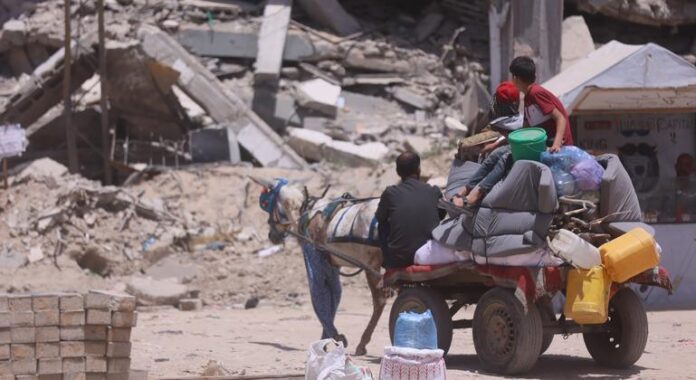
Destruction in northern Gaza.
Hold perpetrators accountable
Ms. Bahous urged the Security Council to recognise reproductive violence as a distinct category of harm and bring those responsible to justice.
She also highlighted the mental health impacts of conflict on women and girls – from depression and trauma to domestic violence and suicidal thoughts.
The threats extend into the digital sphere, where women activists and journalists are being pushed out of public life by online abuse, deepfakes and disinformation campaigns.
Enforce compliance with law
Both Mr. Fletcher and Ms. Bahous called for urgent action.
UN Member States must enforce compliance with international humanitarian law, fight impunity, and empower civilians – especially women – as agents of their own protection and bringing change.
Mr. Fletcher emphasised that even lawful military actions can cause disproportionate civilian suffering.
“[We need a] more comprehensive and people-centred approach,” he said, urging strong policy and operational measures to protect civilians and a deeper understanding of patterns of life and harm.
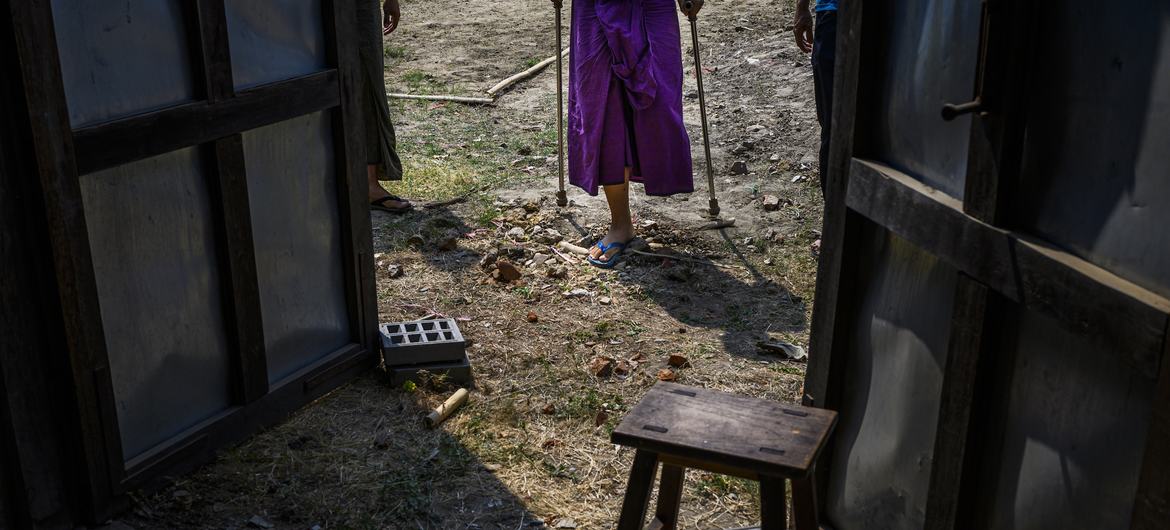
A child who lost his left leg after accidentally stepping on a landmine in his family’s paddy fields in central Myanmar.
Protection and peace inseparable
Recalling Security Council resolution 1325 on women, peace and security, Ms. Bahous called for sustained investment in women’s organizations, which are on the frontlines – protecting civilians – men, women, children and the elderly alike.
“Yet, they are under siege,” she said, noting that continued funding cuts will cost us the very women driving peace and recovery in the world’s most fragile contexts.
She concluded stressing that protection of women and their participation in peace “are inseparable”.
“The most effective shield we can offer women and girls is their own power, their own voices, and their own leadership…there is no pathway to peace that does not begin with the protection of women and girls.”
European Council President António Costa will travel to Brazil from 27 to 29 May 2025 to meet with Brazilian President Lula da Silva and participate in the EU-Brazil Investment Forum. The visit highlights the EU’s commitment to a forward-looking strategic partnership with Brazil to advance joint priorities, including climate action and multilateral cooperation.
Before granting Mauritius independence in 1968, Britain unlawfully separated the Chagos archipelago to create the British Indian Ocean Territory.
In doing so, it expelled 1,500–2,000 islanders to lease Diego Garcia, the largest island, to the United States for joint military use.
Under the agreement, the UK will lease the island of Diego Garcia for the next 99 years to continue operating its joint military base with the United States.
Value of diplomacy
The agreement signed on Thursday between the UK and Mauritius is “a significant step towards resolving a long-standing dispute in the Indian Ocean region” and “demonstrates the value of diplomacy in addressing historical grievances”, said UN Spokesperson Stéphane Dujarric in Thursday’s briefing.
Welcoming the signature of the agreement, the UN Secretary-General, urged both the UK and Mauritius to “continue engaging in constructive discussion”, in order to ensure that “the rights and aspirations of the Chagossians people are fully respected,” said Mr. Dujarric.
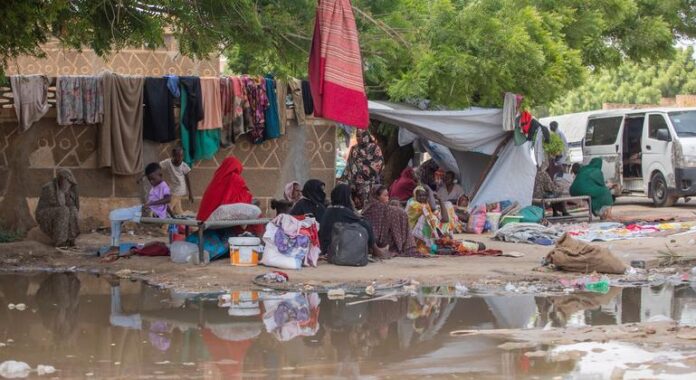
The civil war in Sudan, which erupted in April 2023 between the Sudanese Armed Forces (SAF) and the paramilitary Rapid Support Forces (RSF), has killed over 18,000 people and displaced 13 million, triggering a regional migration crisis.
Even before the war, humanitarian conditions and human rights protections were fragile, but in the past two years, they have become dire.
Of the 30.4 million Sudanese in need of assistance, the UN World Food Programme (WFP) is currently reaching 2.3 million with emergency food and nutrition support, as ongoing violence and infrastructure destruction compound the crisis.
Urgent ceasefire needed
Recent drone attacks on Port Sudan, once a vital entry point for aid, have further deepened the crisis. UN-designated expert Radhouane Nouicer warned Monday that these strikes on critical infrastructure “are putting lives at risk, worsening the humanitarian crisis, and violating basic human rights.”
On Thursday, Mr. Dujarric reported that attacks in Khartoum state have triggered a total electricity blackout, disrupting access to clean water and healthcare amid rising food prices and cholera outbreaks.
The blackout has exacerbated the spread of cholera and other waterborne diseases.
Mr. Dujarric also noted that ongoing insecurity displaced 47,000 people from Khiwai and Nuhud in West Kordofan this month, while another 1,000 were displaced this week from Abu Shouk camp and El Fasher in North Darfur.
At the Arab League Summit in Iraq over the weekend, UN Secretary-General António Guterres called for urgent multilateral action to end “appalling violence, famine and mass displacement,” and met with African Union leaders to encourage a push for a ceasefire.
Emergency relief funds released for DR Congo
The UN Central Emergency Response Fund (CERF) has allocated new funds to crisis situations, from Afghanistan to Zambia.
On Wednesday, CERF made $750,000 available to support cholera response in the Democratic Republic of the Congo, said Stéphane Dujarric, Spokesperson for the UN Secretary-General.
The emergency funds will enable the World Health Organization (WHO), the UN Children’s Fund (UNICEF), and partners to deliver critical aid, including timely cholera detection and response, medical treatment, risk communication, and community engagement.
In addition, CERF allocated $10 million to help more than 270,0000 people in vulnerable communities across South Sudan, where the threat of renewed civil war looms.
Ahead of the rainy season, CERF’s life-saving aid will notably target communities who have been impacted by overlapping crises, especially conflict and displacement in the states of Jonglei and Upper Nile.
CERF also allocated $9.5 million to support climate action initiatives in eight countries: Afghanistan, the Central African Republic, Chad, Mauritania, Niger, Somalia, Venezuela, and Zambia.