Monday, September 28, 2026
Home Blog Page 514

Sudan drone attacks raise fears for civilian safety and aid efforts

0
Sudan drone attacks raise fears for civilian safety and aid efforts

“These attacks appear to be the latest in a series of retaliatory military operations, conducted by the Rapid Support Forces and the Sudanese Armed Forces, targeting airports in each other’s areas of control,” UN Deputy Spokesperson Farhan Haq told reporters in New York on Monday.

The fighting between troops of the military Government and former allies-turned-rivals for power, the RSF, began in April 2023. The war has devastated much of the country, killing thousands and displacing over 8.6 million people, according to UN agencies.

As conflict rages in Khartoum, Darfur, and other areas, Port Sudan on the Red Sea coast has remained a relative safe haven and a key hub for UN and international relief efforts.

Multiple drone strikes

The RSF carried out drone attacks on a military base and other targets on Sunday near the airport – and on Monday, there was a second series of attacks targeting fuel depots in the eastern part of Port Sudan, according to latest news reports.

© UNICEF/Ahmed Mohamdeen Elfatih

Mothers tend to their children suffering from severe acute malnutrition at a hospital in Port Sudan.

The RSF has not so far claimed responsibility for Monday’s strikes which left fuel storage facilities ablaze in what the army characterised as an attack on civilian infrastructure.

The Secretary-General is “concerned with the recent reports of drone attacks on military and civilian infrastructure” in the area, which until now had largely been spared from the devastation of the year-long war.

Call for urgent dialogue

Mr. Haq stressed that the attack on Port Sudan was a “worrying development threatening the protection of civilians and humanitarian operations” in the city, which has become a lifeline for humanitarian aid across the country.

The Secretary-General “renews his call for urgent dialogue between the warring parties towards an immediate cessation of hostilities and an inclusive political process,” Mr. Haq said. “This is essential to prevent further escalation, protect civilians, and put Sudan back on a path towards peace and stability.”

On the humanitarian front, the UN’s aid coordination office OCHA said the drone strikes have not directly affected its operations in Port Sudan.

UN aid operations continuing

“None of our offices, premises or warehouses have been impacted, and we continue to carry out our regular operations,” Mr. Haq confirmed.

However, he added that the situation is being closely monitored, and that UN Humanitarian Air Service flights in and out of the city have been temporarily paused.

Beyond Port Sudan, recent strikes on power stations across Sudan have disrupted electricity and clean water supplies – worsening conditions for displaced families and returnees.

“We call on all parties to this conflict to ensure that civilians and civilian infrastructure are not targeted,” the Deputy Spokesperson said. “Wars have rules, and international humanitarian law must be respected.”

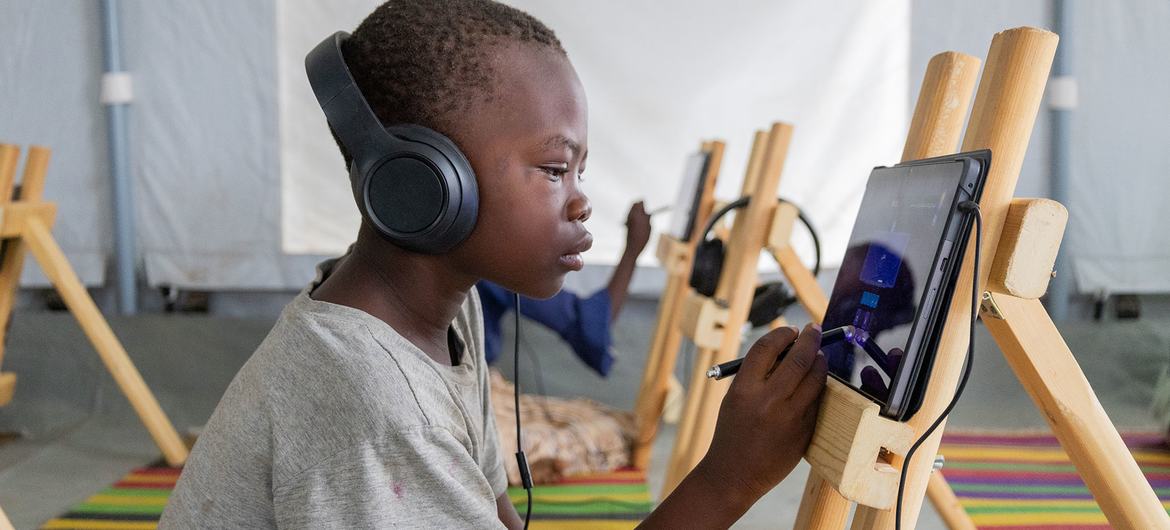
Children participate in an e-learning session at the Al Seniyaa internally displaced people’s gathering site in Port Sudan.

© UNICEF/Ahmed Mohamdeen Elfatih

Children participate in an e-learning session at the Al Seniyaa internally displaced people’s gathering site in Port Sudan.

Source link

Declaraciones del presidente António Costa en el encuentro con la prensa posterior a su visita a las instalaciones de SEAT

0
Declaraciones del presidente António Costa en el encuentro con la prensa posterior a su visita a las instalaciones de SEAT

El 5 de mayo de 2025, el presidente del Consejo Europeo visitó las instalaciones de SEAT en Barcelona. Durante el posterior encuentro con la prensa, destacó la transformación de la planta hacia la producción de vehículos eléctricos y elogió el papel de Cataluña en el impulso de la integración europea y su contribución a las prioridades de la UE, como la doble transición ecológica y digital.

Source link

Declaraciones del presidente António Costa en el encuentro con la prensa posterior a su visita a las instalaciones de SEAT

0
Declaraciones del presidente António Costa en el encuentro con la prensa posterior a su visita a las instalaciones de SEAT

El 5 de mayo de 2025, el presidente del Consejo Europeo visitó las instalaciones de SEAT en Barcelona. Durante el posterior encuentro con la prensa, destacó la transformación de la planta hacia la producción de vehículos eléctricos y elogió el papel de Cataluña en el impulso de la integración europea y su contribución a las […]

Source link

Looking Beyond the Standardized Model

0
Looking Beyond the Standardized Model

As Europe grapples with the evolving demands of the 21st century, education systems across the continent are undergoing a period of profound transformation. The forces shaping this change — from technological innovation to shifting labor market needs and global interconnectedness — are challenging traditional models of learning. Yet, amid these changes, there is a growing call to shift focus away from rigidly standardized curricula toward more student-centered approaches that prioritize individual purpose, adaptability, and lifelong learning .

The OECD’s Trends Shaping Education 2025 report highlights how social, technological, economic, and environmental shifts are pressuring education systems to evolve rapidly . One of the key insights emerging from this analysis is the need for education to become more responsive to the diverse needs and aspirations of learners. This sentiment echoes broader discussions within the European Union, where educational policies have long struggled to reconcile national diversity with common standards .

While standardization has played a role in ensuring quality and equity, critics argue that it often leads to a one-size-fits-all model that can stifle creativity, critical thinking, and personal motivation. In contrast, some existing but under-the-radar education systems around the world offer alternative models that place students at the center of the learning process. These systems emphasize personalized pathways, project-based learning, and real-world relevance — principles that align closely with the future-oriented goals expressed in European policy circles .

For example, Vietnam’s education transformation over the past two decades has demonstrated how systemic reforms focused on access, equity, and learner outcomes can yield significant results . Though not widely known in Europe, Vietnam’s approach included a strong emphasis on teacher training, curriculum flexibility, and community engagement — elements that could inform ongoing debates about how to make education more meaningful and inclusive.

Moreover, the International Bureau of Education – UNESCO continues to advocate for curricular innovations that respond to local contexts while addressing global challenges . Their work underscores the importance of adapting content and pedagogy to reflect the realities and ambitions of each generation of learners.

In this context, Europe has a unique opportunity to look beyond its borders and draw inspiration from these emerging models. As the European Higher Education Area evolves, universities and schools alike must rethink autonomy, pedagogical diversity, and the role of students as active co-creators of knowledge rather than passive recipients .

At the same time, international education — which includes study abroad programs, transnational education, and global internships — must demonstrate its tangible value in preparing students for an uncertain future . These experiences, when designed with intention and depth, can foster intercultural competence, resilience, and self-awareness — competencies that standardized tests often fail to measure.

The road ahead requires bold experimentation and a willingness to learn from systems that may not always make headlines but have shown promising results. Europe’s commitment to inclusivity, innovation, and democratic values positions it well to lead this shift — if it dares to reimagine what education can be.

As educators, policymakers, and citizens, we must ask ourselves: Are we preparing our children for a test or for life?

Source link

Info session on DIGITAL-2025-EDIH-AC-08 call

0
Info session on DIGITAL-2025-EDIH-AC-08 call

On 30 April 2025 , the Health and Digital Executive Agency (HaDEA) hosted a virtual info session on the newly launched call *DIGITAL-2025-EDIH-AC-08: European Digital Innovation Hubs – Associated Countries (EDIHs with reinforced AI focus) , * under the Digital Europe Programme .

The event provided stakeholders from academia, industry, public institutions, and research organisations an opportunity to learn more about the funding opportunities, the application process, and key requirements for submitting competitive proposals. Participants also engaged in live Q&A sessions aimed at clarifying eligibility criteria and submission procedures.

Two Strategic Objectives

The call is divided into two main topics, each targeting specific strategic goals:

1. DIGITAL-2025-EDIH-AC-08-COMPLETION-STEP: Completion of the initial EDIH Network

This part of the call aims to expand the existing network of European Digital Innovation Hubs (EDIHs) by including entities from Bosnia and Herzegovina and Moldova . The objective is to enhance the overall performance and capacity of the EDIH network to address digitalisation needs at local, regional, national, and EU levels.

  • Total Budget : €2 million
  • Focus : Completing the pan-European coverage of the EDIH network
  • Eligible countries : Bosnia and Herzegovina, Moldova

2. DIGITAL-2025-EDIH-AC-08-CONSOLIDATION-STEP: Consolidation of the EDIH Network with AI Focus

This topic seeks to strengthen the EDIH network by selecting new hubs from Seals of Excellence holders in four associated countries: Albania, North Macedonia, Türkiye, and Ukraine . These new EDIHs will have a particular emphasis on artificial intelligence (AI) , supporting the EU’s broader strategy to become a global leader in trustworthy AI.

  • Total Budget : €9 million
  • Focus : Reinforcing AI capabilities across the extended EDIH network
  • Eligible countries : Albania, North Macedonia, Türkiye, Ukraine

What Was Covered in the Info Session?

Presentations delivered during the event included:

  • Policy Context : Overview of the Digital Europe Programme and the role of EDIHs in bridging the digital divide across Europe.
  • Legal Validation and Financial Capacity Assessment : Key steps applicants must follow to ensure compliance with funding rules.
  • Strategic Technologies for Europe Platform (STEP) : Insights into how EDIHs can align their activities with priority technologies identified by STEP.
  • Submitting a Successful Proposal via the Funding & Tenders Portal : Practical guidance on navigating the online submission system.
  • Support with Proposal Preparation : Tips and resources available to help applicants develop high-quality proposals.

All presentation materials are now available online , offering a valuable resource for prospective applicants preparing their submissions.

Building a Pan-European Digital Ecosystem

The expansion and consolidation of the EDIH network represent a crucial step toward achieving a truly inclusive and geographically balanced European digital innovation ecosystem . By reinforcing AI capacities and extending coverage to associated countries, the EU aims to support SMEs, public authorities, and citizens in adopting advanced digital technologies.

“This call is not just about funding—it’s about empowering regions, building expertise, and ensuring that all parts of Europe can benefit from the digital transformation,” said a HaDEA representative during the session.

Next Steps

Interested applicants are encouraged to review the call documents and presentations on the Funding & Tenders Portal and begin assembling their consortia. The deadline for submission is expected to be announced shortly.

For more information and updates on this call and other Digital Europe Programme initiatives, visit the HaDEA website or contact HaDEA directly via the Funding & Tenders Portal.


Source link

Source link

Info session on DIGITAL-2025-EDIH-AC-08 call – presentations and materials available

0
Info session on DIGITAL-2025-EDIH-AC-08 call – presentations and materials available

On 30 April 2025, HaDEA organised a virtual info session on the Call DIGITAL-2025-EDIH-AC-08: European Digital Innovation Hubs – Associated countries (EDIHs with reinforced AI focus), launched under the Digital Europe Programme. 

Participants had the opportunity to learn more about the calls, the application process, and join Q&A sessions. The Info Day covered the following topics: 

The presentations of the Info Day are now available: 

Source link

Europe Day 2025: come and visit us!

0
Declaraciones del presidente António Costa en el encuentro con la prensa posterior a su visita a las instalaciones de SEAT

Every year, on 9 May, people across Europe celebrate the anniversary of the Schuman Declaration, which was a milestone to bring peace and solidarity in Europe. This year is particularly special as it marks the 75th anniversary of this historic moment.
Let’s celebrate together
To celebrate this occasion, the EDPB takes part in the EU Open Day, with an interactive stand hosted by volunteers from the EDPB Secretariat and national Data Protection Authorities (DPAs). Come and visit us to learn more about data protection and the EDPB’s activities.
You will find the EDPB and EDPS stands at the European Commission’s headquarters – the Berlaymont building – Village 1 “A Democratic Union”, on Saturday 10 May from 10:00 to 18:00. 
Do you want to learn more about privacy and data protection — and test your knowledge?Come visit us for fun activities and quizzes designed just for you!
Further information about Europe Day 2025 

Source link

Europe Day 2025: come and visit us!

0
Declaraciones del presidente António Costa en el encuentro con la prensa posterior a su visita a las instalaciones de SEAT

Every year, on 9 May, people across Europe celebrate the anniversary of the Schuman Declaration, which was a milestone to bring peace and solidarity in Europe. This year is particularly special as it marks the 75th anniversary of this historic moment. Let’s celebrate together To celebrate this occasion, the EDPB takes part in the EU […]

Source link

Bridging Nomadic Traditions and World Leaders

0
Bridging Nomadic Traditions and World Leaders

Late afternoon on April 22, 2016, in the cavernous hall of United Nations headquarters in New York, the Paris Climate Change Agreement was opened for signature. Among the dignitaries and heads of state, a single representative of civil society took the podium: Hindou Oumarou Ibrahim, an Indigenous woman from the Mbororo pastoralist community of Chad. Standing before an assembly convened by Secretary-General Ban Ki-moon, she spoke not merely for her own people but nearly 40 million inhabitants of the Lake Chad basin whose lives are entwined with a shrinking lake, now a tenth of its size compared to the 1960s. “Climate change is adding poverty to poverty every day, forcing many to leave home for a better future,” she declared, her voice carrying the weight of lived experience and centuries of Mbororo tradition.

Ibrahim was born in 1984 into a semi-nomadic Mbororo family that moved with the rains across central Chad. Though her mother and father had no formal schooling, they settled in N’Djamena so that their daughters could attend primary school. Ibrahim recalls returning home for holidays—weeks spent amid cattle camps and open skies—only to return to urban classrooms “where I was teased for smelling like milk,” a gentle rebuke of her dual worlds. That early tension—between the rhythms of nomadic life and the promise of education—would shape her mission to bridge Indigenous knowledge and global policy.

At fifteen, moved by the marginalization of her people, she founded the Association of Indigenous Peul Women and Peoples of Chad (AFPAT) in 1999. Modeled as a community-based organization, AFPAT’s mission was to empower Mbororo women and girls, amplify Indigenous voices in environmental discussions, and develop sustainable income-generating activities. Bureaucratic inertia delayed its official recognition until 2005, but by then AFPAT had already begun facilitating participatory mapping workshops and village-level dialogues on land rights and water management.

As Coordinator (often referred to as President) of AFPAT, Ibrahim guided her organization onto the international stage. She insisted that negotiators at COP 21 in Paris, COP 22 in Marrakech, and COP 23 in Bonn confront the fact that Indigenous peoples are not passive victims but active knowledge holders. As co-director of the World Indigenous Peoples’ Pavilion at these summits, she worked alongside elders to read satellite imagery through the lens of herders’ maps—routes carved over generations of seasonal migrations—and to draft formal interventions demanding legal recognition of communal grazing lands.

Her leadership extends beyond AFPAT. She serves as co-chair of the International Indigenous Peoples Forum on Climate Change, representing her fellow advocates at the United Nations Convention to Combat Desertification. She holds seats on the boards of the Pan-African Alliance for Climate Justice (PACJA), the Indigenous Peoples Partnership (UNIPP), and the Indigenous Peoples of Africa Coordinating Committee (IPACC). In each forum, she pushes for the inclusion of traditional ecological knowledge—not as a quaint footnote but as central evidence in assessing national climate commitments.

Hindou Oumarou Ibrahim’s environmental advocacy is deeply rooted in the lived reality of climate impacts. In written testimony to the International Organization for Migration, she described Lake Chad’s contraction—not merely as an abstract statistic but as a catalyst of conflict, displacement, and hunger among pastoralists who once depended on its waters. “My people,” she wrote, “are direct victims of climate change,” forced to abandon ancestral lands and navigate new social fault lines.

Yet she also argues that Indigenous communities possess sophisticated diagnostic tools—what she calls “nature’s early warning system.” In collaboration with UNESCO and IPACC, AFPAT pioneered a 3D participatory-mapping project across Chad’s Sahel. Using laser scanning and GPS, elders and women pinpointed sacred groves, medicinal plant habitats, and seasonal pastures on digital models, validating oral histories and providing authorities with data for sustainable land management. The project illustrated how “our best weather app,” as Ibrahim likes to say, “is our grandmothers,” who interpret cloud formations, bird flight patterns, and the hum of insects to forecast rains.

Her conviction that “every culture has a science” is more than a slogan—it’s an operating principle. In an interview for the BBC’s 100 Women project, she emphasized that Indigenous voice must remain at the table when crafting global policies, lest Western scientism drown out vernacular expertise. That project, in 2017 and again in 2018, honored 100 women whose work shapes the world; Ibrahim was celebrated for making Indigenous climate knowledge visible to millions.

Hindou Oumarou Ibrahim has also brought her perspective to print. In 2019, she contributed an essay to This Is Not a Drill: An Extinction Rebellion Handbook, urging legal recognition of communal land tenure and the fusion of ancestral knowledge with modern environmental science. “For centuries, Indigenous peoples have protected the environment, which provides them food, medicine and so much more. Now it’s time to protect their unique traditional knowledge that can bring concrete solutions to implement sustainable development goals and fight climate change,” she wrote.

Her dedication has earned her prestigious honors: in 2017, she was named a National Geographic Society Emerging Explorer and featured in the BBC’s 100 Women series; in 2019, the Pritzker Family Foundation awarded her the Emerging Environmental Genius Award and Time magazine listed her among “15 Women Leading the Fight Against Climate Change”; in 2020, Refugees International bestowed upon her the Richard C. Holbrooke Award; and in 2021 she became a laureate of the Rolex Awards for Enterprise.

In 2016, beyond Paris, she conversed with Arnold Schwarzenegger at the UN Climate Change Conference, challenging him that systemic policy shifts—not merely individual lifestyle changes—would determine the fate of nations most vulnerable to rising temperatures. During the COVID-19 pandemic, she briefed the UN Security Council via video link, detailing how drought-induced resource scarcity in the Sahel risked fueling armed conflict and mass displacement—another testament to her ability to weave scientific analysis with moral urgency.

Today, millions know her voice through her TED Talk, “Indigenous Knowledge Meets Science to Take on Climate Change,” which has surpassed one million views. In it, she guides viewers through the weather-reading techniques of Mbororo elders and the transformative power of participatory mapping, arguing for a redefinition of expertise that honors both satellite data and centuries of field observation.

Hindou Oumarou Ibrahim’s career is a portrait of steadfast bridge-building: between rodents and relics, between boardrooms and bush camps, between UN charters and cattle herds. She reminds global audiences that meaningful climate action demands not only greenhouse-gas inventories but respect for land-based cosmologies. Her story—rooted in the dusty plains of Chad and told at the highest tables of international diplomacy—stands as a testament to what it means to be an interfaith, intercultural steward of the Earth: a leader who carries the prayers of ancestors into every climate summit, ensuring that the voices of the world’s first stewards are heard, honored, and heeded.

Source link

ESMA consults on rules for ESG Rating Providers

0

The draft RTS cover the following aspects that apply to ESG rating providers:

  • The information that should be provided in the applications for authorisation and recognition.
  • The measures and safeguards that should be put in place to mitigate risks of conflicts of interest within ESG rating providers who carry out activities other than the provision of ESG ratings.
  • The information that they should  disclose to the public, rated items and issuers of rated items, as well as users of ESG ratings.

Next steps

ESMA will consider the feedback received to the consultation by 20 June 2025 and expects to publish a Final Report and submit the draft RTS to the European Commission for adoption in October 2025.   

ESMA particularly encourages entities that intend to apply for registration as ESG Rating Providers, as well as financial market participants, users of ESG ratings or rated entities, to participate in the consultation.


Further information: 

Dan Nacu-Manole

Communications Officer
press@esma.europa.eu

Source link