Wednesday, September 30, 2026
Home Blog Page 543

Gaza: Guterres calls on Israel to ensure life-saving aid reaches civilians

0
Gaza: Guterres calls on Israel to ensure life-saving aid reaches civilians

Speaking to journalists at UN Headquarters, António Guterres also repeated his call for a renewed ceasefire between Israel and Hamas, and the release of all hostages still being held inside the shattered enclave.

No food, fuel, medicine and commercial items have entered Gaza since 2 March following the Israeli blockade, and supplies are piling up at crossing points.

Meanwhile, the ceasefire announced in January following 15 months of war has collapsed, amid airstrikes, renewed ground operations and rocket launches into Israel by Palestinian militants. 

‘An endless death loop’

“As aid has dried up, the floodgates of horror have re-opened,” Mr. Guterres said.

“Gaza is a killing field – and civilians are in an endless death loop.”

He noted that “certain truths are clear since the atrocious October 7 attacks by Hamas,” chiefly that ceasefires work.

The truce allowed for the release of hostages, as well as the distribution of lifesaving aid, and proved that the humanitarian community can deliver.

Shattered hope

He recalled that “for weeks, guns fell silent, obstacles were removed, looting ended – and we were able to deliver lifesaving supplies to virtually every part of the Gaza Strip,” which ended with the “shattering” of the deal.  

“Hope sank for Palestinian families in Gaza and families of hostages in Israel – as I was reminded when I met again with hostage families yesterday,” he added.

For this reason, the Secretary-General has consistently been pushing for the immediate and unconditional release of all hostages, a permanent ceasefire, and full humanitarian access to the territory.

“In times like this, we must be crystal clear,” he said, noting that with crossing points shut and aid blockaded, there is no effective security and the ability to deliver assistance has been strangled.

He also cited a joint statement by UN humanitarian chiefs, issued on Monday, which refuted assertions that there is enough food in Gaza to feed everyone there.  

International obligations 

“We must also be clear about the obligations,” Mr. Guterres continued, emphasizing the “unequivocal obligations” of Israel, as the occupying power, in line with international law.

He pointed to the Fourth Geneva Convention, which outlines the duty to ensure food and medical supplies for the population, as well as ensuring and maintaining medical and hospital establishments and services, public health and hygiene.

Additionally, medical personnel shall be allowed to carry out their duties.

“And Article 59, paragraph 1, of the Fourth Geneva Convention provides that ‘if the whole or part of the population of an occupied territory is inadequately supplied, the Occupying Power shall agree to relief schemes on behalf of the said population, and shall facilitate them by all means at its disposal,’” he quoted.

International humanitarian law also includes the obligation to respect humanitarian relief personnel, he added, paying tribute to the “humanitarian heroes” under fire in Gaza. 

Against new ‘authorization mechanisms’ 

While UN agencies and partners stand ready and determined to deliver, “the Israeli authorities newly proposed ‘authorization mechanisms’ for aid delivery risk further controlling and callously limiting aid down to the last calorie and grain of flour,” the Secretary-General said. 

“Let me be clear: We will not participate in any arrangement that does not fully respect the humanitarian principles: humanity, impartiality, independence and neutrality.”  

Mr. Guterres said unimpeded humanitarian access must be guaranteed, and humanitarian personnel must be given protection, in line with international law.  

He stressed that “the inviolability of United Nations premises and assets must be respected,” and again called for an independent investigation into the killing of humanitarians, including UN personnel.

Dead end ahead 

The Secretary-General concluded the briefing by underlining the need to stick to core principles. He urged UN Member States to adhere to their obligations, adding that there must be justice and accountability when they do not. 

“The world may be running out of words to describe the situation in Gaza, but we will never run away from the truth,” he said. 

He warned that “the current path is a dead end – totally intolerable in the eyes of international law and history,” while the risk of the occupied West Bank transforming into another Gaza makes the situation even worse.

“It is time to end the dehumanization, protect civilians, release the hostages, ensure lifesaving aid, and renew the ceasefire,” he said.

Source link

Ukraine: Press remarks by High Representative Kaja Kallas after the EU-Ukraine Association Council

0
Ukraine: Press remarks by High Representative Kaja Kallas after the EU-Ukraine Association Council

Ukraine: Press remarks by High Representative Kaja Kallas after the EU-Ukraine Association Council

Source link

World Health Day 2025: Scientology Network Promotes a Drug-Free World Through Education and Awareness

0
World Health Day 2025: Scientology Network Promotes a Drug-Free World Through Education and Awareness

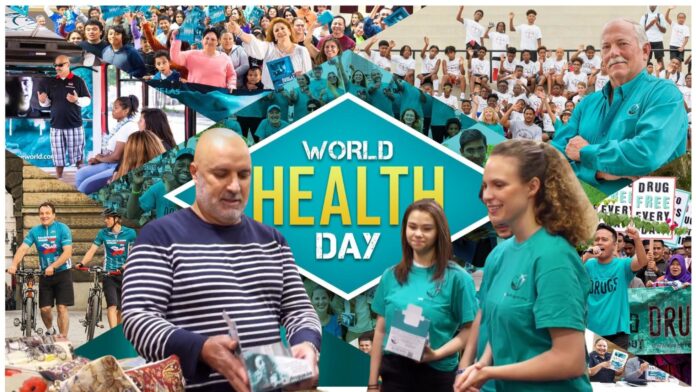
KINGNEWSWIRE / Press release / April 7, 2025 — In celebration of World Health Day, the Scientology Network aired an ambitious all-day television marathon to address one of the most ravaging public health crises of our time: drug abuse. The programming initiative, which ran throughout the day, was aimed at educating viewers about the threat of drugs and promoting prevention efforts through compelling documentaries, public service announcements (PSAs), and inspiring profiles of grassroots activists who are fighting and addiction in their communities.

The marathon “World Health Day Marathon to Shape a Drug-Free Future”, involved the Foundation for a Drug-Free World, the Scientologist-sponsored charity that has brought its evidence-based educational materials to almost 200 countries. As drug overdoses still take lives—especially young adults between the ages of 18–45 according to reports—the campaign emphasized the need for immediate action.(1)

A Crisis Demanding Attention 

Based on recent statistics cited during the marathon, almost half of all American teens have tried illegal drugs by the time they finish high school. This risky behavior is largely responsible for the increasing rate of overdose deaths, which continue to be one of the most common causes of death for young adults.

Contributing to the problem are chemical street drugs and prescription medications that are being highly promoted by pharmaceutical companies, both of which are extremely dangerous to naive users.

The Truth About Drugs campaign—the cornerstone of the Foundation’s activities—works to counteract drug use myths by providing clear, factual information. In partnership with schools, community groups, and government agencies, the foundation supplies educators, parents, and activists with the materials to stop drug abuse progression before it starts.

Highlights of the Programming Lineup

The marathon included some major elements:

Voices for Humanity : A TV show that featured people who acted to stem society’s ills, including drug addiction. From teachers introducing drug education programs into classrooms to volunteers passing out informational brochures on street corners, these portraits recognized ordinary citizens who were doing extraordinary things. This included the Vice President of Foundation for Drug Free Europe Julie Delvaux, who has her own episode about the work she is doing in Belgium and who also organizes specialized conferences at the UNODC.

Public Service Announcements (PSAs) : Brief but powerful messages emphasized specific drugs such as marijuana, opioids, and synthetic drugs. The PSAs addressed not just the physical cost of addiction but also its wider social cost, including damaged relationships and missed opportunities.

Documentary Feature: “The Truth About Drugs” : Showcasing an uncompromising look at the realities of drug abuse, the documentary explored the science of addiction, personal tales of reformed addicts, and revelations concerning extensive marketing campaigns that normalize harmful behavior. It served as a wake-up call for those viewers who had no idea how widespread the problem was.

A Legacy of Social Betterment Founded upon Visionary Leadership

Established by writer and philanthropist L. Ron Hubbard, the Church of Scientology has been dedicated to solving the issues of society through its international Social Betterment programs for decades. These initiatives, comprising anti-drug abuse, anti-crime, anti-illiteracy, and anti-human rights abuse campaigns, demonstrate Hubbard’s aspiration to empower individuals and make communities more resilient. The Church has garnered dozens of awards and acknowledgments globally for its community service throughout the years.

These programs, especially the Foundation for a Drug-Free World, have been hailed by governments, NGOs, and civic groups for their effectiveness and continue to save lives through education and activism. Having reached millions of lives through these programs, the Church is undeterred in its commitment to continuing Hubbard’s legacy of compassion and service.

Reaching International Audiences

Since it debuted on March 12, 2018, the Scientology Network has been a platform for presenting a wide range of views and highlighting humanitarian endeavors in keeping with the Church’s mission. Seen in more than 240 nations and territories on six continents, the network airs to millions of households on DIRECTV, streaming platforms, and mobile apps. Its cutting-edge storytelling has garnered over 125 industry awards, attesting to its dedication to programming excellence. For this World Health Day observance, the network utilized its worldwide audience to share the message of prevention and recovery. Airing live from the Scientology Media Productions’ cutting-edge studios in Los Angeles, the marathon began at 8 a.m. ET and ran throughout the day for optimal viewing accessibility across the globe.

While the marathon constituted a day of focused activism, its purpose extends far beyond April 7. By empowering communities with information and materials, the Foundation for a Drug-Free World is striving to create lasting change—a world where fewer lives are devastated by addiction and more can thrive independent of dependency on illicit drugs. 

Today, on this World Health Day, the Scientology Network demonstrated how life-altering that power is when applied to the greater good. To view the complete schedule or watch on-demand content from the marathon, go to Scientology.tv/schedule. World Health Day for this year is behind us, but the conversation sparked by the Scientology Network programming continues to reverberate. As communities around the world grapple with the devastating effects of drug abuse, campaigns like these remind us that hope lies in education, collaboration and unwavering determination to forge a healthier tomorrow for all.

Scientology Network debuted on March 12, 2018, launched by David Miscavige, ecclesiastical leader of the Scientology religion. Since then, Scientology Network has been viewed in over 240 countries and territories worldwide in 17 languages.

Ukraine crisis: ‘Even wars have rules,’ UN relief chief tells Security Council

0
Ukraine crisis: ‘Even wars have rules,’ UN relief chief tells Security Council

Briefing the Security Council, Under-Secretary-General for Humanitarian Affairs Tom Fletcher called on the international community to step up support and do more to protect civilians under fire.

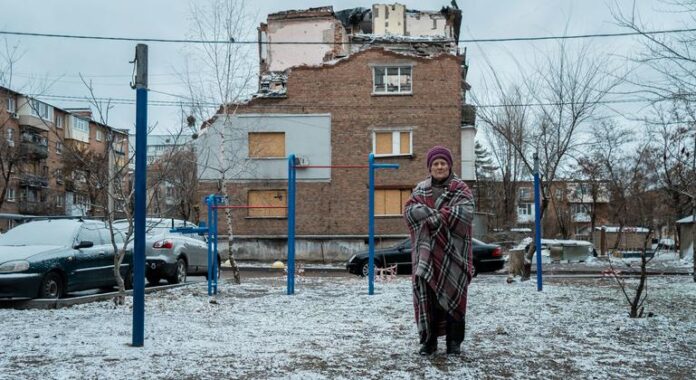
In recent weeks, continued Russian strikes on cities have seen civilian casualties rise – including children – and damaged critical infrastructure including healthcare facilities, apartments, schools and playgrounds.

Mr. Fletcher noted the strike on Friday in the densely populated city of Kryvyi Rih in the Dnipro region, in which at least nine children were killed, according to Ukrainian authorities.

“This brutal pattern of civilian death and destruction in populated areas must stop,” he said.

He said parties to the conflict must protect civilians and civilian infrastructure as required under international humanitarian law.

“Indiscriminate attacks on them are strictly prohibited: there must be limits to how war is waged.”

Tom Fletcher, UN Emergency Relief Coordinator, briefs the Security Council.

Displacement and desperation

The war continues to drive mass displacement, with nearly 3.7 million Ukrainians uprooted from their homes inside the country, and a further seven million now living as refugees.

Civilian casualties and infrastructure damage has also been reported in the Kursk, Belgorod and Bryansk regions of Russia. In addition, humanitarians are unable to reach an estimated 1.5 million civilians in Russian-occupied areas of Donetsk, Kherson, Luhansk and Zaporizhzhia.

“International humanitarian law demands that the parties facilitate the rapid, unimpeded passage of humanitarian relief for civilians in need, wherever they are,” Mr. Fletcher emphasised.

The impact on women has been particularly severe.

Critical aid programmes at risk

There has been a staggering 36 per cent increase in gender-based violence, alongside rising maternal health risks. Alarmingly, nearly half of all births in Ukraine since 2022 have been pre-term, a sign of the immense stress and hardship endured by expecting mothers.

Despite the soaring needs, the $2.6 billion UN-led humanitarian response plan in Ukraine has received only about 17 per cent of funds needed.

Mr. Fletcher warned that without additional financial support, critical aid programmes will be scaled back, leaving millions without food, healthcare or shelter.

In response to funding shortfalls, humanitarians are prioritising four key areas: supporting frontline communities, emergency response, facilitating evacuations, and assisting the displaced.

Mr. Fletcher stressed the need for increased financial support to ensure humanitarian operations can continue reaching those most in need.

“If you cannot stop the attacks on civilians – in Ukraine and elsewhere – at least give us the security we need and resources to save as many survivors as we can,” he urged.

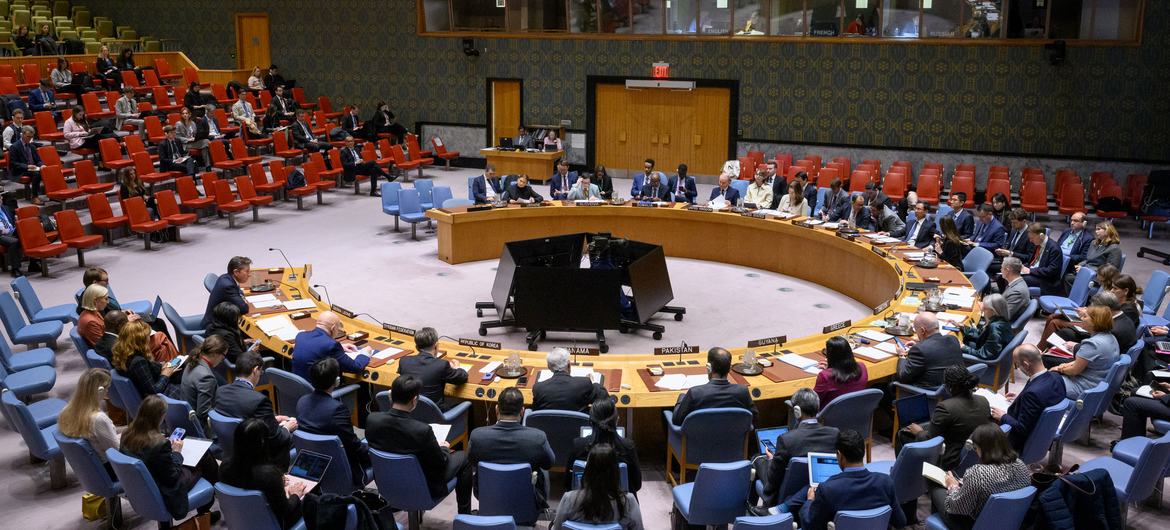
A wide view of the UN Security Council chamber as members meet to discuss the maintenance of peace and security of Ukraine.

A wide view of the UN Security Council chamber as members meet to discuss the maintenance of peace and security of Ukraine.

Ukraine ‘undermining’ US-Russia dialogue: Nebenzia

Russian Ambassador Vassily Nebenzia said that Ukrainian media continue to portray his country as deliberately attempting to undermine peace efforts.

“It is clear that in these attempts, the goal is to undermine American-Russian dialogue and torpedo the potential agreements that the Kyiv regime will have to accept,” he said, adding that statements from Ukraine are “far removed from reality”.

He stated that Russia is ready for serious and practical dialogue, but “we will not allow anyone to deceive us”.

“We will not allow anyone to use this negotiating process in the interest of strengthening the regime’s military potential,” Ambassador Nebenzia said.

US committed to just and lasting peace: Shea

Speaking for the United States, Acting Representative Dorothy Shea, said that her country is committed to achieving a just and lasting peace.

She noted that in bilateral engagements with both Russia and Ukraine, the US has proposed a comprehensive ceasefire.

“To achieve the goal of peace, both Ukraine and Russia must fully implement the ceasefire commitments they have already made in Riyadh,” she added, noting that these initial steps, if fully implemented, will protect lives and improve livelihoods.

Even more importantly, she said, they could offer a basis for expanding a comprehensive ceasefire and negotiation towards a final, durable peace.

“We call on Russia and Ukraine to fulfill their commitments. The world is watching. We call on both sides to exercise restraint and demonstrate their commitment to peace is real.”

Russia must be held accountable: Ukraine

Khrystyna Hayovyshyn, Deputy Permanent Representative of Ukraine to the UN, said that Russia must be held accountable for its invasive actions in her country.

“To end this war, it is necessary to put pressure on them – real pressure – without wasting time on empty talk,” she said.

“A resolute international response to Russian atrocities is crucial. Such terror must never become the norm,” she added.

Ms. Hayovyshyn further stated that Russia must respond to the US proposal for an immediate, interim 30-day full ceasefire – which her country has accepted – and end its war of aggression against Ukraine.

Source link

New EU rules to cut loss of plastic pellets into the environment

0
New EU rules to cut loss of plastic pellets into the environment

New rules have been agreed on that will help prevent the loss of plastic pellets – the industrial raw materials used to make plastic products – into the environment. They set new obligations at all stages of the plastic pellet supply chain, both on land and sea, and will help cut plastic pollution.

Source link

A plan to shape Europe’s leadership in artificial intelligence

0
A plan to shape Europe’s leadership in artificial intelligence

The Commission presented the artificial intelligence continent action plan, which will shape the next phase of AI in Europe. From building AI infrastructure to strengthening AI skills and talents, it will promote the development and deployment of AI solutions that benefit society and the economy.

Source link

World News in Brief: Nobody wins trade wars Guterres warns, WFP alert over US funding cuts, ‘modern slavery’ must be eradicated says Yang

0
World News in Brief: Nobody wins trade wars Guterres warns, WFP alert over US funding cuts, ‘modern slavery’ must be eradicated says Yang

António Guterres was responding to a journalist at the stakeout in UN Headquarters in New York, who asked him for reaction to the recent decision by United States President Donald Trump to impose a minimum ten per cent tariff on nearly every country in the world.

Tariffs are a tax on imports coming into a country which are usually charged to the exporting nation as a percentage of value.

Concern for vulnerable developing economies

“Trade wars are extremely negative,” the UN chief said, adding that he was “particularly worried” at the impact rising tariffs could have on vulnerable developing countries, warning that it could be “devastating”.

“I sincerely hope that we will have no recession, because a recession will have dramatic consequences, especially for the poorest people in the world,” the UN chief added.

US funding cuts spell ‘death sentence’ for millions, food agency warns

The World Food Programme (WFP) has voiced deep concern over news that the United States has ended funding for life-saving emergency food assistance in 14 countries.

“If implemented, this could amount to a death sentence for millions of people facing extreme hunger and starvation,” the UN agency said in a post on the social media platform X on Monday.

WFP Executive Director Cindy McCain warned in a separate post that continued cuts to its programmes “will deepen hunger, fuel instability, and make the world far less safe.”

She urged world leaders “to weigh the consequences,” noting that “with conflicts and extreme hunger surging, pulling support doesn’t just cost lives – it undermines global stability.”

WFP are in contact with Washington to seek clarification and to urge continued support for the programmes.

Refugees at risk

Among the millions who will be affected are refugees living in Uganda, who total some 1.8 million.

 On average, between 10,000 to 12,000 refugees have entered the country every month since 2022, according to the UN refugee agency, UNHCR.

This is putting a strain on resources amid ongoing funding cuts that have forced the agency to prioritize areas such as healthcare and screening at reception centres.

“The budget that has been set aside to spend for the entire year is being used up now because of the influx,” Matthew Crentsil, UNHCR Representative in Uganda, told journalists in Geneva on Tuesday.

“I don’t want to even mention the shortage that WFP is experiencing in providing food,” he said, speaking from the capital, Kampala.

“There is no assurance of funding for WFP to provide food for refugees in Uganda beyond June of this year, so this is all exacerbating the already precarious situation that we have here in Uganda.”

‘Urgent need to eradicate modern slavery and human trafficking’: Assembly President

An estimated 50 million people currently live in modern slavery, while a third of human trafficking victims are now children, said President of the UN General Assembly Philemon Yang on Tuesday.

Welcoming the publication of the latest Global Commission on Modern Slavery and Human Trafficking report, Mr. Yang urged Member States to “strengthen measures that combat modern slavery and trafficking in persons.”

“Modern slavery and human trafficking are violations of fundamental human rights,” Mr. Yang said, adding that the “Universal Declaration of Human Rights was clear in prohibiting slavery and the slave trade in all their forms.”

Plan of action

In order to put an end to these violations he said it was important to tackle the root causes the make people vulnerable to being trafficked or enslaved in the first place.

The implementation of a UN Global Plan of Action, adopted by the General Assembly in 2010 to complement the UN Trafficking Protocol, is set to be reviewed by Member States later this year. New goals to combat trafficking in persons will be set during the review.

Mr. Yang encouraged Member States to enact “policies that are trauma-informed and survivor centred,” and added that such policies should “promote inclusive growth and provide [survivors with] equal access to healthcare, education, skills training and job.”

There is an urgent need to eradicate modern slavery and human trafficking, he warned.

Source link

Seven arrests in hit against Egyptian criminal network smuggling irregular migrants across the Mediterranean

0

Decisive action against key smuggling routeIn recent years, Egyptian nationals have increasingly been reported as both illegal migrants and smugglers operating on various routes into and throughout the EU, including the Mediterranean and the Western Balkan routes. The network targeted by this investigation offered illegal journeys by sailboat from the Turkish coast to Italian and Greek destinations, demanding payments of…

Source link

Plastic pellet losses: Council and Parliament agree on new rules to reduce microplastic pollution

0
Ukraine: Press remarks by High Representative Kaja Kallas after the EU-Ukraine Association Council

Council and Parliament reach provisional agreement on plastic pellet losses.

Source link

Myanmar quake: ‘I constantly worry – what if another earthquake happens?’

0
Myanmar quake: ‘I constantly worry – what if another earthquake happens?’

The 7.7 magnitude earthquake which struck shortly before 1 PM local time on 28 March, was the strongest in recent memory.

As aftershocks continue, UN agencies are warning of a looming health emergency, with children sleeping in the open, exposed to extreme heat, unsanitary conditions and the constant fear of another disaster.

According to the latest figures, over 3,500 people have died, nearly 5,000 have been injured and more than 200 remain missing.

The UN relief chief, speaking from Myanmar where he is overseeing the aid effort, underscored the Organization’s commitment to help communities in need.

“The United Nations is here – we are going to stay here and we will deliver for them. But we need the world to get behind us, but more importantly, to back this community as they rebuild their lives,” said Tom Fletcher, UN Emergency Relief Coordinator, as he visited neighbourhoods levelled by the disaster in the capital Nay Pyi Taw on Saturday.

He highlighted the need for the international community to step up support, stressing that the most vulnerable have been the most affected.

“One thing that I have been struck by here is that you would think earthquakes hit everyone equally, but they hit the poorest hardest because they do not have the resources to respond, to move house, to live elsewhere, to start to rebuild.”

Education in ruins

The earthquake has dealt a severe blow to Myanmar’s already fragile education system.

According to government reports, at least 1,824 schools have been damaged or destroyed, leaving hundreds of thousands of children without access to education.

With schools reduced to rubble, there is growing concern that many children, especially those in poorer communities, will fall behind in their studies – or never return to school at all.

No quick and easy fixes

There are “no quick and easy fixes,” the UN Children’s Fund (UNICEF) warns.

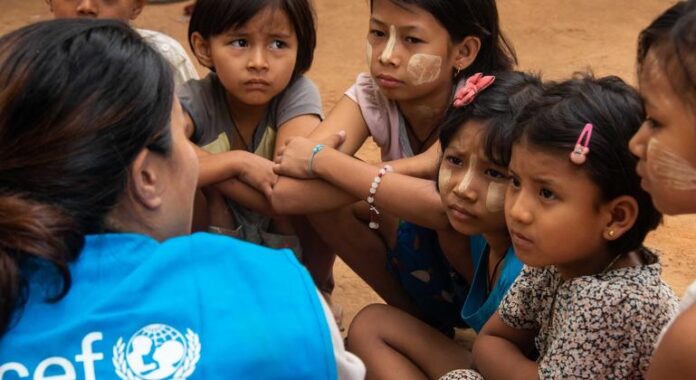
“Many children have lost their parents, their friends and they need a place where they can get psychosocial support and begin to feel a sense of normalcy,” Eliana Drakopoulos, Chief of Communications at UNICEF Myanmar, told UN News.

“As hard as that is to imagine…we have to respond to the immediate emergency, but we also have to be here for the long haul to help people recover from this massive tragedy.”

Eliana Drakopoulos, Chief of Communications at UNICEF Myanmar, updates on the situation in the affected areas

Health risks

The destruction of homes, hospitals and sanitation facilities, combined with heavy rains over the weekend have raised fears of disease outbreaks.

According to the UN World Health Organization (WHO)-led Health Cluster, more than 65 healthcare facilities have been damaged, further complicating the situation. The lack of medical supplies is putting the lives of injured and sick children at even greater risk.

Beyond the physical dangers, children are also dealing with the psychological trauma of the disaster. Many are afraid to sleep indoors, fearing that another earthquake will strike.

Heightened challenges for persons with disabilities

The earthquake’s devastation has disproportionately impacted persons with disabilities who face increased vulnerability due to physical injuries, displacement and disruption of essential services.

According to a UN initial rapid assessment conducted with 15 organizations of persons with disabilities and special schools in Mandalay and Sagaing, 11 of them reported direct impacts. The disaster has also led to a rise in newly acquired disabilities, further straining limited resources.

Preliminary reports indicate families of persons with disabilities have suffered severe hardships, including the collapse of homes, destruction of critical infrastructure such as sanitation facilities and loss of livelihoods.

“I am even afraid to use the toilet, fearing that another earthquake might strike while I am inside,” said one woman living with disability.

“I constantly worry – what if another earthquake happens while I’m inside a damaged house? The fear and anxiety never go away.”

Source link