Wednesday, September 30, 2026
Home Blog Page 546

UN rights office calls for end to Israel’s ‘illegal presence’ in the Occupied Palestinian Territory

0
UN rights office calls for end to Israel’s ‘illegal presence’ in the Occupied Palestinian Territory

The Palestinian co-director of the documentary, Basel Adra, delivered remarks to the UN Committee on the Exercise of the Inalienable Rights of the Palestinian People. Ambassador Riyad Mansour of the Observer State of Palestine and Israeli Human Rights lawyer Netta Amar Schiff – who joined via videolink – also took part.

No Other Land, directed by Palestinian and Israeli filmmakers, sheds light on the lived reality of Palestinians under occupation in Masafer Yatta, a collection of 19 hamlets, in the occupied West Bank.

‘The same reality’

“I wanted the world to know that we exist in this land…But even after winning the Oscar we went back to the same reality,” said Mr. Adra at the beginning of his remarks.

James Turpin, Chief of Prevention and Sustaining Peace Section, UN Human Rights, speaks during the meeting of the Committee on Exercise of Inalienable Rights of Palestinian People.

Addressing the overall human rights situation, James Turpin, who heads the Prevention and Sustaining Peace Section at OHCHR, said that for 15 years his office “has monitored, recorded and warned about the human rights situation in the Occupied Palestinian Territory and the widespread violations resulting from Israel’s 57-year military occupation.”

“The documentary film, No Other Land, brings to life, in a compelling and accessible way, what the UN has documented in countless reports,” added Mr. Turpin.

As of 2022, approximately 20 per cent of the West Bank had been designated as “firing zones” by Israeli authorities – or military areas closed to civilians – affecting over 5,000 Palestinians from 38 communities.

Settlement expansion continues

“There are now over 737,000 Israeli settlers in the West Bank” and “steps are regularly taken to accelerate construction of additional housing units in new or existing Israeli settlements in East Jerusalem”, Mr. Turpin said.

Israel’s policies and practices in the OPT “undermines the territorial integrity essential to the Palestinian people’s right to self-determination and violates the prohibition against acquiring territory by force,” he added.

In October 2023, in Masafer Yatta, Basel Adra’s cousin was shot in the chest by an Israeli settler. The scene unfolded in front of an Israeli soldier, Mr. Adra told the committee.

“Israel systematically fails to prevent or punish settler attacks, with a reported policy of police non-enforcement in relation to settler violence, leaving Palestinians bereft of any hope of obtaining justice and accountability,” said Mr. Turpin.

Livelihoods lost

The OHCHR official added that settler violence “combined with arbitrary movement restrictions devastates Palestinian livelihoods,” highlighting also the use of unnecessary and disproportionate force against Palestinians, movement restrictions, and mass displacement.

“Israel’s illegal presence in the OPT must end, as confirmed by the International Court of Justice (ICJ)” said Mr. Turpin, referring to the July 2024 Advisory opinion from the ICJ.

“Almost every day there are settler attacks against Masafer Yatta,” added Basel Adra, co-director of No Other Land. 

Source link

INTERVIEW: Myanmar ‘an emergency within an emergency’, UN warns |

0
INTERVIEW: Myanmar ‘an emergency within an emergency’, UN warns |

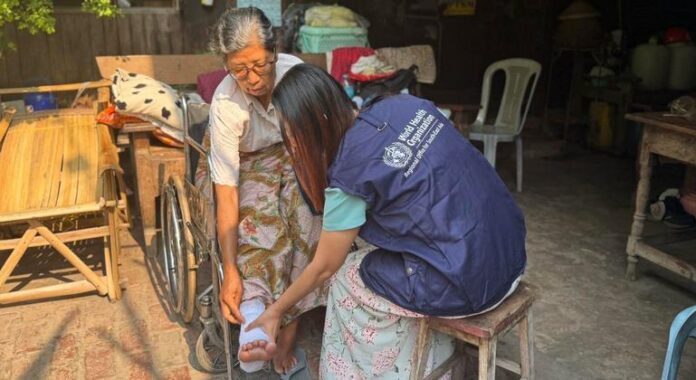
The UN World Health Organization (WHO) has been at the forefront of the emergency response, delivering critical medical supplies and coordinating lifesaving care. However, hospitals are overwhelmed, medical supplies are running dangerously low, and aid workers are racing to prevent deadly disease outbreaks among displaced communities.

Speaking from the stricken capital Nay Pyi Taw, Elena Vuolo, WHO Deputy Representative in Myanmar, told UN News the situation was “an emergency within an emergency”.

“Even before the disaster, nearly 12 million people in Myanmar required healthcare assistance. Now, with this earthquake, the situation has worsened.”

More than 3,900 deaths and nearly 6,000 serious injuries have been reported, and there are concerns over potentially deadly outbreaks of cholera and malaria.  

“There are other needs – water, food, security and shelter that are becoming bigger. An already fragile outlook “has become even more fragile, an emergency within an emergency,” she warned.

In the interview, Ms. Vuolo details the scale of the crisis, the biggest health risks facing survivors and why urgent global action is essential.

Read the full interview below. The text has been edited for brevity and clarity.


UN News: It has been one week since the devastating 7.7 earthquake struck Myanmar. Can you give us an overview of the current situation in the affected areas?

Elena Vuolo: Unfortunately, one week has passed, which means that our window of hope to extract and find people alive is narrowing because usually, the “golden window” is the first three days after an earthquake strikes.

In the first 24 hours, we at WHO mobilized supplies, including trauma care kits from our warehouse in Yangon and transported them for immediate relief.  

Over the past week, we have been working around the clock, alongside other UN agencies, emergency medical teams from abroad and our respective headquarters and regional offices to mobilize the response.  

Unfortunately, we have witnessed the collapse of several hospitals. This was already a health system that was overstretched and severely impacted by four years of crisis. The earthquake has only exacerbated the humanitarian and healthcare needs.

We are trying to deliver life-saving interventions, mental health support and trauma care…but we were already working in a fragile context that has become even more fragile, an emergency within an emergency

Right now, hospitals are overwhelmed. Despite emergency medical teams from various countries, there is limited capacity to properly treat all those in need – especially those with severe injuries requiring advanced surgical care.

UN News: You mentioned the strain on the medical infrastructure even before this disaster. Now that the earthquake has struck, what are the emerging needs you are seeing?

Ms. Vuolo: The most immediate and critical needs are surgical care and trauma care.

WHO has brought in almost 100 tonnes of supplies through humanitarian cargo over the past week. When you extract someone from the rubble, you need to ensure they receive the right surgery at the right time in the right facility.

One major challenge is that 86 per cent of healthcare facilities, including many hospitals, have been damaged by the earthquake.

Even before the disaster, nearly 12 million people in Myanmar required healthcare assistance under the humanitarian response plan. Now, with this earthquake, the situation has worsened.  

As of today, more than 3,900 deaths and 5,900 injuries have been reported. Our priority is ensuring that the injured receive trauma and surgical care.

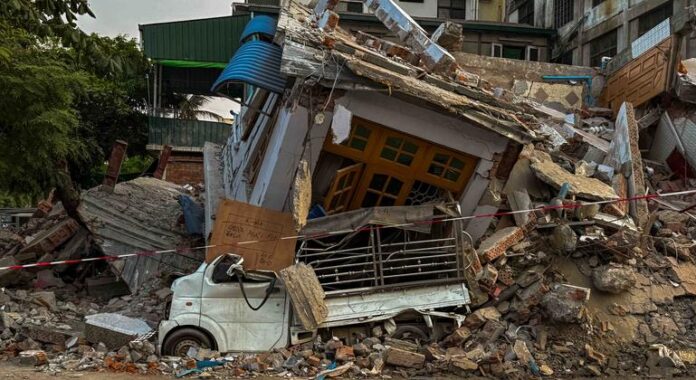
A building housing a pharmacy destroyed by the earthquake.

UN News: What about other health concerns and diseases, especially outbreaks?

Ms. Vuolo: We are also working to prevent disease outbreaks, particularly cholera, which is a major concern due to poor water and sanitation conditions. Last year, Mandalay, one of the hardest-hit areas in this disaster, already reported cholera cases. Nearly half of the townships in Mandalay state were affected by cholera.  

In response, we carried out a vaccination campaign for 70,000 people, but due to limited vaccine availability, we were unable to cover all those in need. Given Mandalay’s vulnerability, there is a high risk of a cholera resurgence.

Additionally, funding cuts and reduced international aid are not helping. We are trying to deliver life-saving interventions, mental health support, trauma care supplies and preventing further disruption of health services.

There are other needs related to water, food, security and shelter that are arising and becoming bigger, because we were already working in a fragile context – a context that has become even more fragile, an emergency within an emergency.

Like it was during the pandemic, the healthcare workers are on the frontline – they are the heroes of an emergency response: the nurses, the midwives, the doctors who continue working every day under very difficult circumstances

UN News: What about the mental and psychosocial impact? Are you seeing significant challenges and are there support structures in place?

Ms. Vuolo: WHO has always prioritized mental health and psychosocial support, especially in hard-to-reach and conflict-affected areas. We work with various partners, either directly or through the health cluster.

Now, and this takes me back even to the times of the COVID-19 pandemic response – there are two main groups in need of support: affected communities, who have been traumatized by this unprecedented earthquake, and there are healthcare workers.  

Many are working in makeshift hospitals under extreme conditions – 39°C (102°F) temperatures in tents amid power cuts and without basic resources. They are working under very difficult situations despite their own personal losses.

Like it was during the pandemic, the healthcare workers are on the frontline – they are the heroes of an emergency response: the nurses, the midwives, the doctors who continue working every day in these temporary hospitals or in hospitals that are no longer fully functional and doing it in the best way they can.

To support them, we are providing psychosocial and mental health support to our health cluster partners. And then through these partners, we are also supporting community-based psychosocial support.

There is severe trauma. But let us not forget that Friday was one of the shockwaves. There was a shockwave on Saturday, and then since then, every day. Some of them are minor but others are strong.  

I want to be very honest – when I or WHO colleagues feel some shaking, we are very worried. And if we do not feel safe, I cannot think how people living outside their own houses feel, spending nights in temporary shelters.

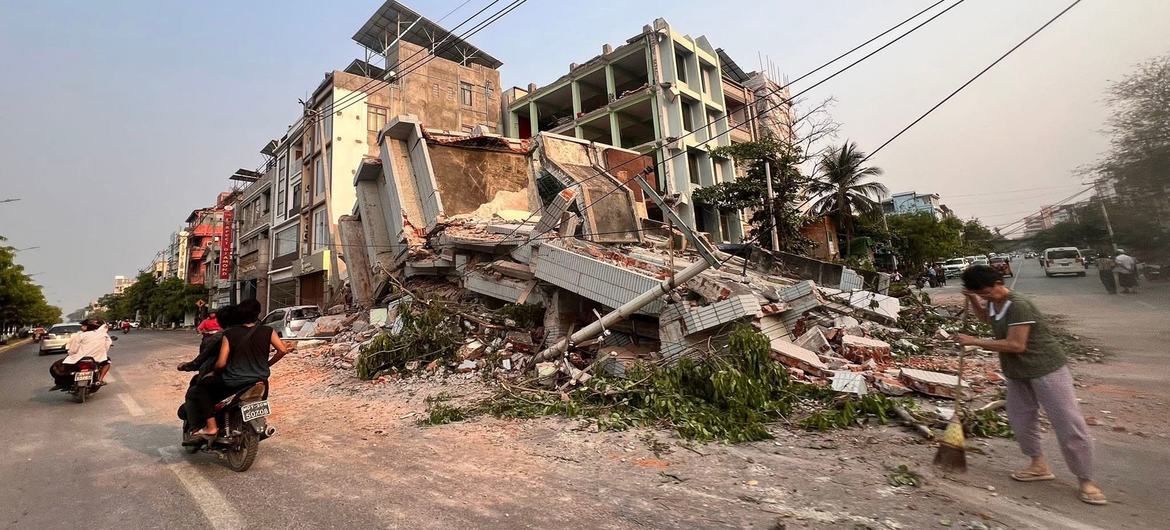
A resident sweeps debris from a street in Mandalay, Myanmar, in the aftermath of the 7.7 magnitude earthquake.

A resident sweeps debris from a street in Mandalay, Myanmar, in the aftermath of the 7.7 magnitude earthquake.

UN News: What are the most urgent needs for WHO and health partners in terms of access and supplies?

Ms. Vuolo: Supplies are the top priority. More than 5,000 injured people need treatment, and many will require long-term recovery, including physiotherapy and rehabilitation. Additionally, patients with pre-existing conditions, such as diabetes or other chronic diseases, still need access to their medications.

I experienced this firsthand when a colleague was injured during the earthquake. We took her to two hospitals, both of which could not treat her. We took her to another, smaller facility that did not even have the supplies to give her stitches. She had an injury on her foot.

We found a solution and evacuated her to Yangon. But this gives you the sense of what are the needs are. It was two hours after the earthquake, but the hospitals ran out of supplies. Nobody could predict the scale of the disaster.

There is urgent need for not only trauma-related supplies but also essential medicines to prevent the disruption of routine healthcare services – for mothers, children or the elderly, and for diseases like malaria or tuberculosis.

In just two hours after the earthquake, hospitals ran out of supplies. Nobody could predict the scale and impact of this disaster

We have launched an $8 million flash appeal to cover a 30-day emergency response, but beyond that, we also need resources for long-term recovery.

UN News: You mentioned an $8 million appeal, but even before this disaster in Myanmar and elsewhere, aid agencies were struggling with funding. With the United States and other key donors scaling back, how much of an impact are you seeing? How can the international community help?

Ms. Vuolo: The first three months of 2025 have been a game changer for the multilateral system in general. Several countries are, unfortunately, prioritizing military spending over global health, and international humanitarian aid and development.

Until December 2024, Myanmar was one of the least-funded humanitarian crises. I do not want to say that Myanmar is neglected, but certainly Myanmar deserves more attention. With the aid cuts from the US and some other countries, we have not been able to operate. As of March, the health cluster had received less than two per cent of the funding needed for this year.

Now, the $8 million flash appeal is for a window of 30 days. This is to allow our critical work to continue providing life-saving supplies and disease outbreak prevention, like what we do in other emergencies – from Gaza to Afghanistan. This will also allow to continue early detection response for disease that could become outbreaks – particularly cholera.

But beyond this immediate response – and I am speaking also for other UN agencies in Myanmar – we will have to work on recovery on reconstruction. Hospitals and schools have been destroyed, where the situation is already so fragile and limited in its capacity, and people need protection. We as the United Nations have a role to play.

Now when resources are going down, we need to find innovative solutions and partnerships, including with the community and with the others in the region, since this crisis has regional implications.

In addition, we appeal to the international community to also advocate with those countries that have decided to undermine the global aid architecture to rethink about the consequences of their actions. We know that elsewhere, people are dying from HIV because funding for lifesaving medicines have been cut. It is not only Myanmar, but there are also several other emergencies that are facing similar dire situation like us.

That said, I must say – I am very encouraged by the international support, like the deployment of medical teams from different corners from the world, which provide much-needed medical care.

Source link

Myanmar quake: Airstrikes continue despite ceasefire

0
Myanmar quake: Airstrikes continue despite ceasefire

“In the days following the deadly earthquake that tore through central Myanmar last week, the Myanmar military continued operations and attacks, including airstrikes – some of which were launched shortly after tremors subsided,” said Ravina Shamdasani, spokesperson for the High Commissioner for Human Rights.

“We urge a halt to all military operations and for the focus to be on assisting those impacted by the quake,” she told journalists in Geneva, reiterating Mr. Türk’s call for an “inclusive political solution” to end more than four years of fighting sparked by the junta’s February 2021 coup d’état.

Latest data from the UN human rights office, OHCHR, points to at least 61 reported attacks across Myanmar since the disaster happened, including 16 since the ceasefire announced by the military was supposed to take effect on 2 April.

A broad coalition of opposition armed groups have declared a temporary truce on offensive operations to facilitate emergency aid.

The tactics of the military – known as the Tatmadaw in Myanmar – include using near-silent adapted paragliders to bomb communities, said James Rodehaver, Head of OHCHR’s Myanmar team:

“What those are is an individual military operative who uses a hang-glider with a backpack attached to his back or to his torso with a large fan on it and he uses that to essentially paraglide using the fan as a motor over areas and drop hand-held bombs or munitions onto targets below.”

Quake response

The regions most impacted by the earthquake which struck at approximately 12.50pm local time on 28 March are Mandalay – the country’s second city and home to 1.2 million people – Sagaing, capital Nay Pyi Taw, Bago, Magway, and eastern and southern Shan states.  

Assessments have shown widespread destruction across central Myanmar to critical infrastructure – including health facilities, road networks and bridges.

In an update, the UN World Health Organization also reported that electricity and water supplies remain disrupted, worsening access to health services and heightening risks of waterborne and foodborne disease outbreaks.  

Massive destruction

The UN refugee agency, UNHCHR – which issued an appeal for $16 million to support 1.2 million survivors said that up to 80 per cent of structures in Myanmar’s second city of Mandalay are estimated to have collapsed.  

Spokesperson Babar Baloch explained that the UN agency has already deployed existing emergency relief including plastic sheets and kitchen sets for 25,000 survivors in Mandalay, Sagaing and Bago regions, as well as the capital, Nay Pyi Taw, and parts of Shan State.

UN partner the International Committee of the Red Cross (ICRC) meanwhile reported that 136 townships have been affected by the earthquake “and about 25 per cent are in areas not controlled by the Government, so that’s complicating the access”.

Echoing those concerns, Ms. Shamdasani from the UN human rights office said that the scale of the disaster had been made worse by the information blackout caused by internet and telecommunications shutdowns “imposed by the military”.

Source link

Isabel Schnabel: Reviving growth in the euro area

0
Isabel Schnabel: Reviving growth in the euro area

Isabel Schnabel: Reviving growth in the euro area

Source link

Winners of 2025 EU prize for women innovators announced

0
Winners of 2025 EU prize for women innovators announced

Agnès Arbat from Spain has won the 2025 EU prize for woman innovators. She is the co-founder of a company that develops innovative drugs to enhance fertility. Camille Bouget (France) took the Rising Innovator award and Débora Andreia Campelo Campos (Portugal), the EIT Women Leadership prize.

Source link

6 tips to spot and stop information manipulation

0
6 tips to spot and stop information manipulation

Don’t let yourself be mislead by information manipulation. Fact-check first. To help you set the record straight, we’ve compiled a list of 6 key tips that protect against online manipulation, from verifying sources to thinking critically before sharing information. Read more.

Source link

Remarks by President António Costa at the joint doorstep with European Commission President Ursula von der Leyen following the first EU-Central Asia summit

0
Remarks by President António Costa at the joint doorstep with European Commission President Ursula von der Leyen following the first EU-Central Asia summit

At the end of the EU-Central Asia summit, European Council President António Costa held a joint press point with European Commission President Ursula von der Leyen. In his remarks, President Costa highlighted the summit as the beginning of a new chapter in the EU-Central Asia partnership, which was elevated to a strategic level.

Source link

Myanmar: UN chief calls for urgent access as quake toll mounts

0
Myanmar: UN chief calls for urgent access as quake toll mounts

Speaking to reporters at UN Headquarters in New York, Secretary-General António Guterres warned that the earthquake has “supercharged the suffering”.

“Myanmar today is the scene of utter devastation and desperation,” he said.

He emphasised that even before the disaster, the country was grappling with political turmoil, human rights abuses and a worsening humanitarian situation.

“We need rapid action on several fronts,” he said.

Millions in desperate need

According to the UN Office for the Coordination of Humanitarian Affairs (OCHA), more than 17 million people have been affected by the earthquakes, with nearly nine million experiencing the highest level of devastation.

Over 370 people remain missing, while thousands of others are injured. Telecommunications, power, and water supply systems have collapsed in the hardest-hit regions, leaving survivors without basic necessities and humanitarians struggling to reach them.

Road access between Yangon and central Myanmar requires detours, delaying aid deliveries, while commercial flights to Mandalay remain suspended.  

“The hardest-hit areas remain without electricity and water, while telecommunications and internet access are severely disrupted, cutting off affected communities from essential services,” OCHA said in a flash update.

Meanwhile, entire families, including children, are sleeping in the open due to fears of aftershocks or because their homes have been destroyed.

Makeshift shelters are overcrowded and lack security and privacy, increasing the risk of sexual- and gender-based violence, UN agencies warn, calling for urgent measures to ensure safety and dignity of women and girls.

Julia Rees, UNICEF Deputy Representative in Myanmar, describes the situation in some of the worst affected areas:

UN mobilizing support

Mr. Guterres announced that he is dispatching UN Emergency Relief Coordinator Tom Fletcher to Myanmar to oversee relief operations.

“He will be on the ground tomorrow,” Mr. Guterres said, adding that Special Envoy Julie Bishop will visit Myanmar in the coming days to reinforce the UN’s commitment to peace and dialogue.

The UN has also allocated $5 million from its Central Emergency Response Fund (CERF) for immediate aid, while the UN Office for Project Services (UNOPS) has mobilized $12 million for food, shelter, water, sanitation, debris removal and healthcare.

However, these funds fall far short of what is needed.

“I appeal to the international community to immediately step up vitally needed funding to match the scale of this crisis,” Mr. Guterres said.

A boy, with his sister beside him, sits on a piece of a collapsed wall of community hall in Mandalay. Thousands of families have lost their homes in the city in the aftermath of the earthquakes.

Call for unhindered access

One of the biggest obstacles to relief efforts is the ongoing conflict in Myanmar. The country has been in turmoil since the military overthrew the democratically elected government in 2021, leading to widespread violence and displacement.

While Myanmar’s military and armed opposition groups have announced temporary ceasefires to facilitate aid deliveries, Mr. Guterres stressed that these must translate into lasting peace.

“I appeal for rapid, safe, sustained and unimpeded humanitarian access to reach those most in need across the country,” he said, calling on all parties to uphold their obligations to protect civilians.

Monsoon risks

As humanitarian operations scale up, UN agencies have warned that time is running out. Initial assessments indicate that more than 76 per cent of those surveyed have yet to receive any assistance.

With the monsoon season approaching, the risk of disease outbreaks and further displacement looms large.

Return to democracy

Beyond immediate relief efforts, Mr. Guterres called for the earthquake response to serve as a turning point for Myanmar.

He called for the current tragic moment to become an opportunity for the people of Myanmar, appealing for a political process that includes an end to violence, the release of political prisoners and a pathway to democracy.

“As communities across Myanmar unite in grief, it is also time to unite behind a political solution to end the brutal conflict,” Mr. Guterres said.

In addition to restoring democracy, he stressed the need for a comprehensive solution that includes the safe, voluntary, dignified and sustainable return of Rohingya refugees from Bangladesh.

“The United Nations will keep pushing for peace and lifesaving support for the people of Myanmar in their hour of need.”

Source link

Remarks by President António Costa at the plenary session of the first EU-Central Asia summit

0
Remarks by President António Costa at the joint doorstep with European Commission President Ursula von der Leyen following the first EU-Central Asia summit

In his opening remarks at the first EU-Central Asia summit in Samarkand, European Council President António Costa highlighted the 30-year diplomatic ties between the EU and Central Asia. Marking a new chapter in the relations between the two regions, the summit elevates the EU-Central Asia partnership to a strategic level and President Costa emphasised the need for continued and deeper cooperation to tackle global and regional challenges.

Source link

DR Congo: Armed violence displaces thousands as cholera outbreak worsens

0
DR Congo: Armed violence displaces thousands as cholera outbreak worsens

Intense clashes between local armed groups and M23 rebels were reported on Thursday in the town of Masisi Centre in North Kivu.

Preliminary reports from partners on the ground indicate at least two civilian fatalities and multiple injuries, with several wounded evacuated to Masisi General Hospital.

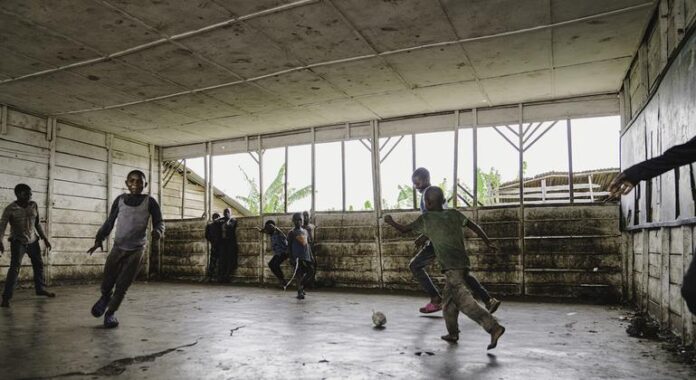
Meanwhile, many civilians remain confined to their homes due to active crossfire, intensifying fear and limited access to basic needs and services.

“The volatility of frontlines and ongoing combat have rendered comprehensive assessments impossible,” OCHA said.

Despite international support, armed groups have made significant recent gains, particularly the M23 movement, which claims to defend the interests of Congolese Tutsi – many of whom were exiled to Rwanda – and is reportedly backed by Rwandan forces. The extremist Allied Democratic Forces (ADF) also remain active in the region.

Delivering lifesaving aid

In eastern Masisi, where the security situation allows, UN partners are delivering critical aid to displaced and returning populations.

OCHA noted that since yesterday, partners have been distributing household and hygiene kits to more than 500 displaced households in Sake’s collective centre.

Furthermore, 19 of 24 water points in Sake have been rehabilitated, restoring access to safe water for over 4,000 households.

Fresh clashes in South Kivu

In South Kivu, fighting flared again on Tuesday in Fizi Territory, as local armed groups clashed with M23 fighters.

The violence struck the villages of Mulima and Lusuku – both already sheltering thousands of displaced families – prompting another wave of forced displacement. 

Cholera outbreak

Meanwhile, in the southern province of Tanganyika, a rapidly escalating cholera outbreak is placing thousands at risk. 

As of Wednesday, nine out of 11 health zones in the province are affected, with more than 1,450 confirmed cases and 27 deaths reported since January – a six-fold increase compared to the same period last year.

UN health partners point to severely limited access to safe water – with less than 20 per cent coverage in affected areas – and insufficient healthcare capacity to manage cases effectively. 

Source link