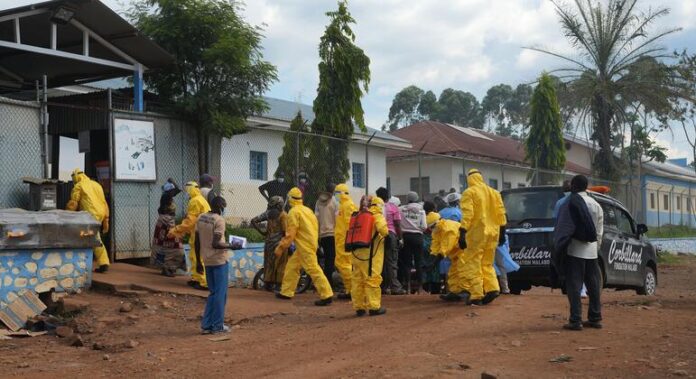
The fast-moving outbreak, which has also spread to neighbouring Uganda, is caused by the rare and deadly Bundibugyo species of the Ebola virus. WHO’s Health Emergency Alert and Response Operations Director, Dr Abdirahman Mahamud, told reporters in Geneva that as of 8 June in DRC, there have been 550 confirmed cases and 101 deaths.
“The good news [is], we have 19 cumulative recovered patients, so early identification and treatment save lives,” he said.
Speaking from Bunia in Ituri Province, which accounts for 94 per cent of total cases in the country, Dr Mahamud explained that the rise in confirmed cases “is due to the scale-up of testing”. More decentralized labs have opened to accelerate analysis of suspected Ebola samples, including a fully functional facility in Mongbwalu, he said.
Uganda has reported 19 confirmed cases including two deaths, as well as one probable individual who has died. WHO said that there is no evidence of community transmission in Uganda so far.
Remote chance
In DRC as of 6 June, 5,040 contacts had been identified and were under follow-up across Ituri, North Kivu and South Kivu provinces. The ramp-up in contact tracing has enabled health workers to reach 62 per cent of the contacts so far, with hopes of reaching the 90 to 95 per cent target “in the coming weeks”, Dr Mahamud said. He described making “slow and steady progress” based on building trust and working with the community.
The WHO official stressed that local healthcare workers play an essential role in early identification and referral of cases to treatment centres. He described the current set-up as “a well-functioning system that’s integrated from surveillance to contact tracing to the treatment centre and to the lab”, along with efficient data sharing.
Still, major challenges remain, including in remote locations with limited connectivity, from where samples may take eight hours to reach a lab.
“Ituri, North and South Kivus combined are as big as France,” Dr Mahamud said. “If you are in Bunia, you can get your result in one or two hours”, whereas for places further away from testing facilities, the process can take 24 hours.
In a positive development, in remote Aru close to the Ugandan border, where samples have to travel for 10 hours by road for testing, a lab will be operational by Friday, he said.
So far WHO has set up field laboratories in five affected areas to enable testing closer to the epicentre of the outbreak. Working with partners in support of Government-led efforts, the UN health agency has deployed over 100 personnel to the DRC, delivered 40 tonnes of equipment and medical supplies, and helped set up Ebola treatment centres.
New import quotas and higher duties will replace the bloc’s expiring steel safeguards from 1 July
The European Union has given final approval to new steel market protection rules, setting up a sharper trade defence system just weeks before the bloc’s existing safeguards expire. The measure will tighten tariff-free import quotas, raise duties on excess imports and introduce stronger origin-tracing requirements, as Brussels tries to protect an industry it now treats as central to competitiveness, defence and the green transition.
The Council of the EU said on Monday that ministers had adopted a regulation designed to shield the bloc from the trade effects of global steel overcapacity. The law will replace the current steel safeguard regime, which expires on 30 June, and will start applying from 1 July 2026.
Under the Council-approved regulation, the EU will reduce import quotas and apply higher duties to steel brought in above those limits. The bloc is also adding a “melt and pour” requirement, intended to identify where steel was first produced and to make circumvention through third countries harder.
Brussels moves before safeguards expire
The decision closes a legislative file that has moved quickly because the existing safeguards, introduced in 2018, cannot simply continue unchanged. EU policymakers argue that without a replacement, the bloc could become more exposed to displaced steel flows at a time when other major economies are using trade barriers of their own.
The Commission has said the new system will set free-of-duty quotas at 18.3 million tonnes and apply a 50% duty to out-of-quota imports. It is also consulting industry on the paperwork needed to verify the country of “melt and pour”, with the implementing act expected later this year after a targeted Commission consultation.
The measures follow an earlier Commission proposal to halve tariff-free steel imports and double duties above the quota, a move The European Times previously reported as part of the EU’s wider attempt to shield industry from global overcapacity.
A strategic industry under pressure
Steel remains a foundation material for European manufacturing, infrastructure, clean energy equipment and defence supply chains. But the sector has faced weak demand, high energy costs and persistent import pressure. EU institutions say global overcapacity is projected to reach levels far above Europe’s annual consumption, leaving producers vulnerable to low-priced supply that may not reflect normal market conditions.
The Council said the EU steel industry directly employs around 300,000 people and has lost significant capacity and jobs since 2007. Officials also link the sector’s survival to Europe’s ability to invest in lower-carbon industrial production.
For supporters, the regulation is a necessary bridge between open trade and industrial security. For critics and downstream users, including sectors that rely on competitively priced steel, the risk is that stronger protection raises costs or complicates supply chains. Trade partners will also watch how quotas are allocated, especially where European economic security, World Trade Organization compatibility and relations with candidate countries intersect.
Implementation now becomes the test
The next phase will be less about adoption and more about enforcement. Customs authorities, importers, steel users and producers will need clarity on documentation, quota access and origin checks before the new regime becomes fully operational.
Ukraine’s position is expected to remain politically sensitive. EU lawmakers have stressed that Ukrainian steel should not be treated as a source of global overcapacity while the country’s industry is under direct attack from Russia and while Kyiv remains on a candidate-country path toward EU membership.
The regulation marks one of Brussels’ clearest recent signals that industrial policy and trade defence are now being tied more closely to security and strategic autonomy. Whether it stabilises Europe’s steel base without transferring too much pressure to consumers and downstream manufacturers will become visible only after the new rules begin applying in July.
New trade rules will replace expiring safeguards from 1 July, tightening quotas and traceability for steel imports
The European Union has adopted a new steel protection regime aimed at shielding one of its core industries from global overcapacity, cheap imports and trade diversion. The rules, approved by the Council on Monday, will replace the bloc’s expiring steel safeguards and test whether Brussels can defend industrial jobs while keeping supply stable for manufacturers that rely on steel.
The Council adopted the regulation on 8 June, saying it would apply from 1 July 2026, immediately after the current EU steel safeguard measure expires on 30 June. The measure is part of a broader attempt to respond to structural excess capacity in global steelmaking, which EU officials say has made Europe increasingly exposed to dumped or redirected supply.
A tighter quota system
The new framework lowers the volume of steel that can enter the EU without additional duties and raises the tariff on imports above those limits. According to the European Parliament, the measure will cap tariff-free steel imports at 18.3 million tonnes a year, a 47% reduction compared with 2024 quotas, and apply a 50% customs duty above quota.
The regulation also introduces a “melt and pour” rule, intended to identify where steel was first melted and cast. That traceability requirement is designed to reduce circumvention, including cases where steel is lightly processed in a third country before entering the EU under a different origin claim.
MEPs backed the measure in May by 606 votes in favour, 16 against and 39 abstentions. In its own account of the vote, the European Parliament said the rules were compatible with World Trade Organization obligations and would include an early review of the product scope.
Industrial policy meets social policy
Steel is not only a trade file. It sits at the centre of Europe’s climate, defence and employment debates. The sector is needed for wind turbines, electricity grids, railways, buildings, vehicles and military equipment. It also supports regional economies in member states where steel plants remain major employers.
The Council says the EU steel industry directly employs around 300,000 people, but has faced falling capacity utilisation, high energy costs and mounting import pressure. Capacity use stood at 67% in 2024, according to the Council, while global excess capacity is projected to rise to 721 million tonnes by 2027, more than five times annual EU consumption.
For Brussels, the economic argument is tied to decarbonisation. Steelmakers are being asked to invest in lower-emission production while competing with imports from countries where energy costs, subsidies or environmental standards may differ sharply. If plants close before green investment can scale, Europe risks losing both industrial capacity and the ability to clean it up.
Trade defence with difficult edges
The measure will not remove all tensions. Downstream industries, including construction, machinery and automotive manufacturing, need reliable access to affordable steel. If protection tightens supply too much, costs can move through the wider economy. The regulation therefore includes flexibility for unused quotas to be carried over within the same year and a reinforced review mechanism for the Commission to propose adjustments if market conditions shift.
Ukraine also occupies a sensitive place in the framework. Parliament said the country’s status as an EU candidate and its security situation should be considered when country quotas are allocated. The political message is clear: the EU wants to counter global overcapacity without treating Ukraine’s wartime steel sector as the source of the problem.
The regulation also sits alongside a joint declaration by the Council, Parliament and Commission on reducing economic dependencies on Russia and gradually phasing out Russian steel products. That adds a geopolitical layer to a policy already shaped by trade conflict, energy prices and Europe’s search for strategic autonomy.
The decision follows earlier proposals to harden Europe’s trade defence tools, including the plan covered by The European Times on steel tariffs. Monday’s adoption turns that direction into law. The next test will be whether the measure protects European steelmaking without simply shifting pressure onto the workers, consumers and smaller firms that depend on it.
At least 19 people were killed, along with extensive damage to hospitals, homes and classrooms.
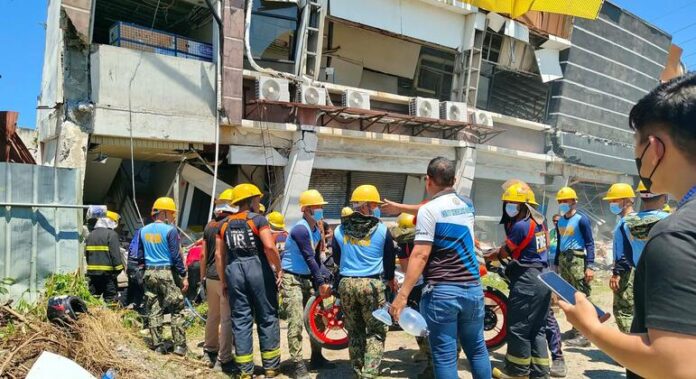
The 7.8 magnitude quake struck at 7:37am local time (7:37pm Sunday in New York), about 32 kilometres (20 miles) offshore west of Maasim in Sarangani province, according to the UN relief coordination office, OCHA.
Mindanao, the Philippines’ second-largest and second-most populous island, is home to roughly 26 million people. The quake triggered tsunami alerts across parts of the Philippines and neighbouring countries, prompting coastal evacuations before the warnings were lifted later in the day.
Initial government reports cited by OCHA indicate that 19 people were killed, 12 remain missing and at least 134 were injured. Authorities cautioned that the figures remain provisional as assessments continue.
Many of the fatalities were reported in Sarangani province, including people killed in a landslide, although those figures have not yet been verified.
More than 138 aftershocks, ranging in magnitude from 1.3 to 6.7 on the Richter scale, were recorded following the quake. Operations at General Santos International Airport were temporarily suspended before resuming on a limited basis.
Initial reports indicate widespread damage to schools, hospitals, government buildings and other structures. Power outages and telecommunications blackouts were reported in several affected areas, while damaged roads and bridges have hindered access to some communities.
Millions of students affected
The earthquake struck on the first day of the new school year for millions of students across Mindanao.
More than 3.2 million learners have been affected and classes suspended in over 6,200 public and private schools pending safety inspections and structural assessments.
The UN Children’s Fund (UNICEF) said it was particularly concerned about the impact on children. Initial reports indicate injuries among some students and damage to school buildings and public facilities.
“The safety of learners and teachers must remain the top priority,” UNICEF said, adding that it had emergency supplies and cash assistance ready for rapid deployment.
Humanitarian partners are warning that the psychological impact on children could be significant from the main quake and subsequent aftershocks.
Regis Chapman, WFP Country Director in the Philippines speaks to UN News from Manila.
Emergency response
The Philippine Government placed national disaster management teams and agencies on “red alert” and activated the humanitarian inter-agency coordinating mechanism.
President Ferdinand Marcos Jr. ordered government agencies to respond immediately, while search, rescue and retrieval operations continued throughout the day.
Government disaster management, health, education and public works teams have been deployed to affected areas. Social workers, mobile command centres and field kitchens have also been mobilized to support displaced families.
UN and partners mobilize
The UN in the Philippines issued a statement of solidarity, commending the swift actions of national and local authorities and reaffirming its readiness to support the government-led response.
The UN World Food Programme (WFP) is deploying staff and emergency equipment to help establish a temporary storage facility for relief supplies, while the Philippine Red Cross and other partners have also begun mobilising response teams.
Humanitarian organizations are conducting rapid assessments to identify urgent needs, while an ad hoc Humanitarian Country Team meeting is scheduled for Tuesday as authorities work to determine the full scale of one of the strongest earthquakes to strike Mindanao in recent years.
Georgette Gagnon, UN Deputy Special Representative currently leading the UN mission, UNAMA, reflected on recent visits across the country and said communities repeatedly described mounting hardship.
Ms. Gagnon noted that the country’s de facto authorities have consolidated territorial and administrative control and currently face “no meaningful armed or political challenge,” but warned that this apparent stability masks deeper risks.
“What exists is increasing control by the de facto authorities without a clear end-state,” she told the Council.
She pointed to demographic and economic pressures as major concerns, noting that nearly 5.9 million Afghans have returned since 2023 and up to 2.8 million more could return this year despite limited opportunities and strained communities.
Afghanistan remains one of the world’s largest humanitarian crises, with 21.9 million people requiring assistance in 2026.
Struggling women and girls
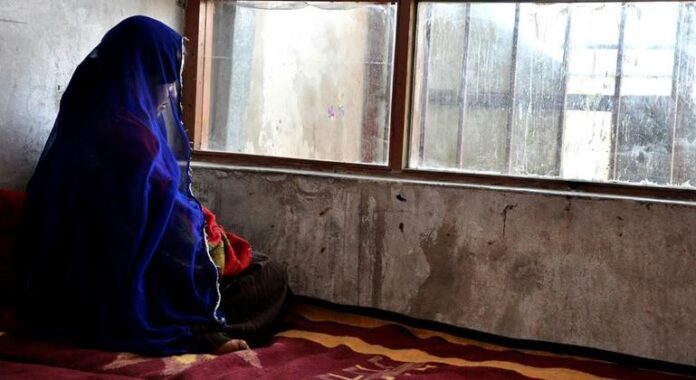
The top official warned of “severe and growing restrictions” with long-term consequences when it comes to women and girls, noting that an estimated 3.8 million girls aged seven to 18 are out of school.
“Each year, approximately 250,000 more girls are permanently excluded from secondary education pathways, creating a lost generation of talent and potential,” she said, adding that increasing restrictions have damaged Afghanistan’s economy and weakened sectors such as health and education.
She also renewed calls for authorities to reverse restrictions affecting women, including the continued exclusion of Afghan female UN staff from UN premises.
UN Photo/Loey Felipe Edem Wosornu (on screen), Director of the Crisis Response Division of the Office for the Coordination of Humanitarian Affairs, addresses the UN Security Council meeting on the situation in Afghanistan.
‘Nearly half the country needs help’
Edem Wosornu, Director of OCHA’s Crisis Response Division, warned that humanitarian conditions continue to deteriorate under the combined pressures of conflict, hunger, climate shocks and underfunding.
“Afghanistan remains one of the world’s largest and most complex humanitarian crises,” she said. “Nearly half the country needs help.”
She reported that renewed fighting along the Afghanistan–Pakistan border earlier this year displaced more than 100,000 people and left vulnerable communities cut off from assistance for weeks.
“Hunger is growing across Afghanistan,” Wosornu said, noting that 4.7 million people now face severe food insecurity, 50 per cent more than at the same point last year, while 3.7 million children are suffering acute malnutrition.
She described reports of some families making desperate decisions to survive, including selling their own daughters, while restrictions on women continue to undermine humanitarian operations.
UN Photo/Loey Felipe Metra Mehran, Founder of the Afghanistan Justice Archive, addresses the UN Security Council meeting on the situation in Afghanistan.
Institutionalised oppression
Civil society representative Metra Mehran, founder of the Afghanistan Justice Archive, described what she called a system of institutionalised gender oppression in Afghanistan.
“Since August 2021, the Taliban have enacted over 230 decrees,” she said, arguing that authorities have systematically stripped women and girls of basic rights including to education, employment, movement and participation in public life. “The Taliban have even criminalized women’s voices and faces.”
She highlighted a recently enacted Criminal Procedure Code that she said formalizes discrimination and legalises violence against women.
“Men effectively own their wives,” Ms. Mehran told the Council, warning that women resisting restrictions have faced arrests, violence and intimidation.
She also warned that states and international institutions have legal obligations under international law to act now.
“This is not only our fight,” she said in closing. “It is a test of our global system. A test of multilateralism. And a test of whether the principles recited in chambers like this truly mean anything in practice.”
UNAMA’s Gagnon emphasized that continued engagement remains necessary despite limited progress. “Ongoing and constant dialogue is essential, together with principled and pragmatic engagement, even where progress towards the end state is incremental,” she said.
Germany’s long-running treatment of Scientologists is facing renewed scrutiny after nearly three decades of official suspicion failed to produce evidence of a real threat to the country’s constitutional order. The issue is no longer a debate about theology. It is a question of whether public authorities maintained exceptional measures against a minority belief community without the evidence required in a democratic state governed by law.
Decades of suspicion, but no proven threat
A new STAND article argues that international institutions repeatedly warned Germany about measures affecting Scientologists, including intelligence observation, public suspicion and so-called “sect filter” declarations. STAND, which describes itself as an initiative opposing discrimination against Scientologists and others, says the end of federal-level routine observation should prompt a wider public review of the policies that accompanied it.
For years, German authorities presented their approach as a defence of the free democratic basic order. But that justification now faces a basic evidentiary problem: after decades of surveillance, public reporting and administrative scrutiny, no concrete attempt by Scientologists to overthrow or subvert German democracy has been established. Even in earlier years, intelligence officials and observers reportedly questioned whether the available material justified the scale and duration of the measures imposed.
The debate has gained new relevance after Germany’s federal domestic intelligence service reportedly ended Scientology as a standalone federal area of observation after nearly three decades. The federal shift reopens serious questions about proportionality, evidence and the long-term consequences of official suspicion directed at a specific belief community.
International warnings were not new
One of the clearest international interventions came in 2019, when UN special rapporteurs wrote to Germany about information they had received concerning discriminatory measures against Scientologists. Their communication focused on “Schutzerklärung” declarations, often described as “sect filters,” which asked applicants in some settings to distance themselves from Scientology-related methods, training or organisations.
The UN communication did not decide the facts in advance. But it asked Germany to explain the legal basis for such measures and raised concern that individuals identifying as Scientologists should not be required to disclose or disavow their beliefs unless the state could show a legitimate and substantiated reason. That point remains central: a democratic state may regulate unlawful conduct, but it may not burden people because of belief, association or religious identity without clear and specific justification.
Similar concerns have appeared in other religious-freedom reporting. The U.S. Commission on International Religious Freedom has also noted that in some parts of Germany, potential employees or grant recipients had been asked to sign statements showing no connection to the Church of Scientology. Such measures go beyond ordinary public administration. They create a test of ideological distance from one named religious community.
German courts have limited discriminatory practices
German courts have recognised that individual Scientologists may invoke constitutional protections for religion or worldview, depending on the facts of the case.
A significant example came in 2022, when Germany’s Federal Administrative Court ruled that Munich could not deny an environmental mobility subsidy because an applicant refused to sign a declaration distancing herself from Scientology. The court found that the declaration was not sufficiently connected to the environmental purpose of the subsidy and interfered with constitutional protections, including equality and freedom of religion or belief.
That ruling did not require public authorities to approve of Scientology. It confirmed something more fundamental: access to public benefits cannot be conditioned on a person’s declaration against a specific belief community.
The burden is now on the state
The renewed discussion should not be framed as whether German institutions like or dislike Scientology. That is not the democratic test, because states must remain non-judgemental in regards to beliefs. The test is whether the state treated individuals and communities according to law, evidence, proportionality and equal dignity.
After nearly thirty years, the burden is no longer on Scientologists to prove that they are entitled to ordinary civic treatment. The burden is on public authorities to explain why they continued the unjustified exceptional measures, while there was no evidence, why those measures were maintained for so long, and whether any remaining administrative forms, procurement rules or local practices still single out Scientology by name.
Previous European Times coverage has raised similar questions about the relationship between surveillance, public language and the civic treatment of Scientologists in Germany. The latest STAND account adds another layer by placing those concerns within a longer record of international warnings.
The appropriate next step is a transparent review of all remaining Scientology-specific declarations, public-contract requirements and administrative practices. Such a review should ask a direct question: if decades of scrutiny did not establish a concrete threat, why should any exceptional treatment remain? What redress will the government now undertake to repair the damaged lives of thousands of Scientologists in the country?
For Scientologists in Germany, the issue is personal as well as legal. For the wider European debate, it is a test of whether minority belief communities can expect the same standards of neutrality, evidence and attribution that democratic institutions promise to all.
Press ReleaseThis article is based on a press release or official communication. The European Times republishes it as a public service.
Strengthening engagement in public life
Rather than focusing only on identifying challenges, they explored how faith and Lutheran theology can shape responses to injustice and strengthen engagement in public life. Through theological reflection, prayer and peer learning, they examined how the gospel calls Christians to uphold human dignity, defend human rights and contribute to just and peaceful societies. They also discussed how to build stronger partnerships through church-based and ecumenical networks.
Many young people are already engaged in some form of advocacy for change and transformation in church and the wider society, thus the workshop sought to build on such momentum with elevated skills. “Faith that stays silent in the face of suffering is not the faith that Jesus modelled,” Nassar noted.
The discussions challenged assumptions about what civic engagement looks like. John Jacob of the Lutheran Church of Christ in Nigeria said the workshop had helped him understand that creating impact can begin with small, intentional actions.
“I learned that I do not need to wait for a huge project before making a difference,” he said. “I can start where I am, speak up, take action and contribute to building a more just and humane society.”
Anderson Strohm, Evangelical Church of the Lutheran Confession in Brazil, said he especially found the small group conversations meaningful. “The organized speaking time allowed us to talk about youth leadership and the challenges present in our communities, and our role in bringing and building the change we want to see in our churches,” he explained.
Young people’s energy, creativity, and strong voice are assets for influencing democracy in a meaningful way, said Amos Kanunga, Evangelical Lutheran Church in Tanzania. He noted that “through voting, leadership, social media, and community participation, youth can promote positive change, accountability, and development in society.”
For LWF Program Executive for Youth Savanna Sullivan, the workshop responds to a growing desire among young people to connect faith with civic action.
Most computers refuse to take orders from devices they don’t already trust. Operating system makers pile on safeguards so that running code on someone else’s machine takes real effort. So it stings to learn that one popular soundbar throws all of that away — and that an attacker only needs to be within Bluetooth range to walk right in.
Image credit: Creative Technologies
Key Takeaways:
A flaw in Creative’s Sound Blaster Katana V2X lets anyone roughly 15 meters away push malicious firmware to the speaker over Bluetooth, with no pairing and no physical contact.
Once reprogrammed, the speaker pretends to be a keyboard and types the attacker’s commands straight into the connected PC.
Creative declined to treat the behavior as a vulnerability and has shipped no fix; the speaker’s Bluetooth radio stays on even in sleep mode.
The device in question is the Sound Blaster Katana V2X, a soundbar from Singapore-based Creative Technologies that sells for $283 and earns warm reviews for its sound. It connects to Windows, macOS, and Linux machines over USB or Bluetooth.
A speaker that becomes a keyboard
Researcher Rasmus Moorats found the hole by accident. He bought a Katana V2X, wanted to write a Linux tool to talk to it, and worked out how through CTP, a proprietary channel he figures stands for Creative Transport Protocol. CTP lets a connected device adjust things like LED colors and equalizer settings, and lets the speaker answer back.
Then came the surprise. His Bluetooth device reached the speaker — itself plugged into a PC over USB — with no authentication and no pairing first. One CTP command, labeled “upload new firmware to device,” let him swap the official firmware for his own. Nothing checked code signatures or blocked unofficial images.
After loading a harmless test build that flashed the word “patched” on the LED display, Moorats kept digging. The Katana V2X runs FreeRTOS, the open source operating system, which carried a set of HID functions so the speaker could behave as a human interface device — the category that covers keyboards, mice, and webcams. The stock build only handled volume and play-pause.
So he rewrote the speaker’s USB descriptor set, the report that tells a computer what a peripheral can do. He bolted on a second descriptor that announced the speaker as a keyboard, then reused code already in the firmware to fire off keypresses. The next question was obvious: could he relay his own commands through the speaker and into the PC? He could. In a blog post published on Wednesday, he wrote:
“Chaining it all together, I was able to totally remotely, over the air, upload a custom firmware to my speaker which I hadn’t paired with, which would reboot, flash the custom firmware, and after rebooting type in the command echo pwned and execute it.”
He added what a real attacker would do with the same trick:
“In a real attack scenario, I would execute the keystrokes for opening powershell.exe or similar and paste an actually malicious one-liner into that, but as a proof of concept, this was more than enough for me. A real attacker would also likely disable the routine for updating the firmware in both normal and recovery mode, making it impossible to wipe the malicious firmware from the device or patch it in the future.”
Always listening
The problem gets sharper because Bluetooth never switches off on this speaker, not even in sleep mode, with no apparent way to turn it off. Before the speaker and the USB-connected machine talk, they run a challenge-and-response handshake. The software performs it automatically at boot, so it rarely slows an attacker down. In a few cases — for instance, when the Katana V2X app isn’t running — the handshake is required, yet the correct answer can be pulled straight from the app binary that ships with the speaker. For Bluetooth-connected devices, no challenge and response is needed at all.
Moorats took his findings to Creative and heard nothing. He then pulled in CERT Singapore to push the matter along, and the company eventually replied through them. Creative engineers said they do not consider this to be a vulnerability, as it does not present a cybersecurity risk. He tested the attack against a connected Windows machine. As of June 7, Creative also pulled the firmware download links for the Katana V2/V2X/SE, which broke a third-party mitigation tool that had relied on those files for clean firmware.
It is worth stressing that all of this works only when the attacker sits within Bluetooth range. That is a real limit — it narrows the threat to neighbors, housemates, or people in an office next door. Even so, the idea of a Bluetooth gadget quietly serving as a relay into your PC and a listening device is not comforting, and it opens a wider question: which other Bluetooth peripherals leave their owners exposed the same way?
Why this fits a bigger pattern
The keyboard-impersonation trick is not new in spirit. Security researchers first demonstrated BadUSB at Black Hat in 2014, showing that a peripheral’s firmware could be rewritten to pose as a keyboard and inject commands the operating system trusts by default. Tools like the Rubber Ducky later turned the technique into a point-and-click gadget. What changes here is the delivery: earlier attacks needed someone to physically plug in a doctored device, while this one weaponizes hardware the victim already owns and trusts, reachable from across a room. Anyone curious about the lineage can read up on the BadUSB technique and how it sidesteps antivirus by operating below the software layer.
The deeper issue is the trust we hand to consumer gadgets that ship with networked radios and rewritable firmware but skimp on code signing. We have seen wireless flaws hand attackers control of devices without pairing before, including the BlueBorne set of Bluetooth bugs disclosed in 2017. When a manufacturer decides an over-the-air firmware swap is not a security concern, owners are left to mitigate it themselves — by isolating the device on the network, watching USB activity, or simply unplugging the speaker when it is not in use. For a $283 soundbar that keeps its radio awake around the clock, that is an awkward bargain.
Member states will have two years to turn the new support and reporting rules into national law
The European Union gave final approval on 8 June 2026 to a revised victims’ rights law that will require stronger support for people affected by crime, including a common 116 006 helpline, easier digital reporting and tighter safeguards for children and personal data.
The Council’s final green light updates the EU’s 2012 framework on the rights, support and protection of victims of crime. The directive is expected to be published in the Official Journal in July 2026 and enter into force 20 days later. EU countries will then have 24 months to transpose it into national law.
The measure is significant because victim support remains uneven across the bloc. The European Commission estimates that 70 to 75 million people in the EU become victims of crime each year, while only 14 countries have so far set up the 116 006 victim-support number.
A single number for support
Under the new rules, victims across the EU should be able to use 116 006 to receive information about their rights, emotional support and guidance on available services. Existing national helplines may continue to operate, but the EU-wide number is intended to make access clearer for residents, travellers, students and workers who may face crime outside their home country.
Costas Fytiris, Cyprus’s justice and public order minister, said the new law sends a message that victims deserve effective support. “No one should have to face the aftermath of crime alone,” he said.
The directive also requires member states to make reporting easier when it is in the victim’s interest. That includes accessible digital tools, online reporting and the possibility of submitting evidence electronically. Supporters argue this could matter especially for people who fear intimidation, face mobility barriers or are unsure how to approach authorities in another EU country.
Children, legal aid and compensation
The revised law gives particular attention to children. They are to receive child-friendly support services, age-appropriate protection measures, psychological help and the possibility of recorded interviews, reducing the need to repeat traumatic testimony.
Victims who participate in criminal proceedings and cannot afford a lawyer should have access to legal aid. The directive also strengthens compensation rules: where a court has awarded compensation and the offender does not pay within a reasonable time, member states may, under certain conditions, advance payment to victims of violent intentional crime and later recover the amount from the offender.
The Commission’s broader victims’ rights framework says victims need recognition, protection from further harm, support, access to justice and compensation. The revised directive tries to make those principles more practical, particularly in cross-border situations where victims can struggle to understand procedures or find help quickly.
Implementation will decide its impact
The law’s adoption does not immediately change national systems. Its effect will depend on how member states fund helplines, train police and prosecutors, protect vulnerable victims and connect support services with courts, hospitals and civil-society organisations.
That implementation test is central to the EU’s wider rights agenda. As The European Times has reported in its coverage of human rights violations in Europe, legal protections can be strong on paper while access to justice remains slow, fragmented or difficult for people with limited resources.
For victims of crime, the new directive is therefore both a legal update and a practical promise. Brussels has now set the baseline. The next question is whether every member state can make support visible, reachable and reliable before the two-year deadline expires.
Ethics shape how you interact with the world, but pervasive surveillance, algorithmic bias, and data exploitation challenge your moral autonomy. You constantly trade privacy for convenience, often unaware of how deeply technology influences your decisions. While connectivity brings unprecedented access to knowledge, it also normalizes ethical compromises embedded in everyday tools.
The Digital Panopticon
Constant Surveillance
You are always being watched, even when you don’t realize it. Every search, swipe, and location ping feeds a system that anticipates your behavior. This invisible monitoring normalizes self-censorship, shaping choices before you even make them. Freedom feels intact-until you notice how rarely you step outside the expected path.
The Mechanization of Morality
Automated Judgments
You accept algorithmic decisions in hiring, lending, and policing as neutral, but these systems embed hidden biases that replicate historical injustices. Each automated choice distances you from moral responsibility, normalizing outcomes you’d question if made by a person. The danger lies in mistaking efficiency for fairness-when machines decide, accountability often vanishes.
The New Newspeak of Silicon Valley
You hear terms like “disruption,” “optimization,” and “frictionless experience” repeated so often they begin to lose meaning. These phrases sound progressive, but often mask invasive data practices and labor exploitation. Silicon Valley’s language reframes surveillance as personalization, addiction as engagement. When euphemisms replace honesty, you’re less likely to question who benefits-and who pays the price.
Corporate Totalitarianism
You live under invisible rule-not by law, but by algorithm. Every click, pause, and scroll feeds corporate systems that shape choices without consent. These entities don’t govern through force, but through pervasive surveillance and behavioral manipulation. Your preferences are predicted before you feel them. Resistance isn’t rebellion-it’s simply opting out, which is engineered to be nearly impossible.
The Mirage of Autonomy
You believe your choices are your own, but algorithms shape what you see, think, and buy. Every “personalized” recommendation trains you to follow invisible scripts. Your sense of independence dissolves as predictive systems anticipate decisions before you make them. Autonomy becomes a performance, not a reality. You’re not choosing freely-you’re reacting within tightly curated digital boundaries.
To wrap up
Conclusively, you live in a world where technology is always present, shaping how you make decisions and interact with others. Constant connectivity can subtly shift your sense of right and wrong, often without you noticing. Your ethical compass is not erased, but it can be quietly recalibrated by the systems you use every day.