Tuesday, March 24, 2026
Home Blog Page 75

World news in brief: More detentions of UN staff in Yemen, peacekeepers killed in Sudan sent home and attacks in Ukraine

0

This latest incident, which occurred on Thursday, brings to 69 the total number of UN personnel currently detained by the Houthis.

These detentions have made the delivery of humanitarian aid into Houthi-controlled areas untenable, directly affecting millions of people in need and limiting their access to life-saving aid, said UN spokesperson Stéphane Dujarric. said in a statement.

“The Secretary-General calls for the immediate and unconditional release of all arbitrarily detained personnel of the United Nations, but also of non-governmental organizations (NGOs), civil society and diplomatic missions,” he said.

“Mr Guterres calls on the Houthis to rescind the referral to UN personnel for prosecution,” he added, further calling for respect for international law, including the privileges and immunities of the UN and its personnel, “which are essential to enable humanitarian action in a secure and principled environment.”

The Secretary-General and the United Nations will continue their sustained efforts with Member States and with the Security Councilas well as through direct engagement with the Houthis, to secure the release of all detained UN colleagues.

Bodies of Bangladeshi peacekeepers killed in Sudan attack repatriated

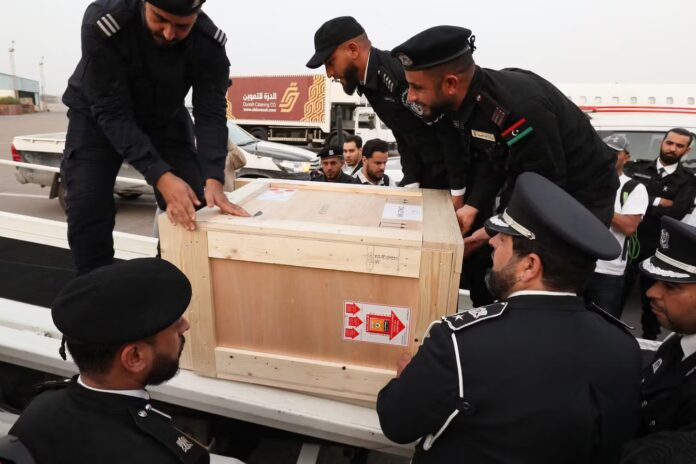
The bodies of six UN peacekeepers killed last weekend in a drone attack on their camp in Kadugli, South Kordofan, Sudan, were flown to their home country of Bangladesh on Friday.

Peacekeepers serving with the United Nations Interim Security Force for Abyei (UNISFA), included Corporal Muhammed Masud Rana (37), Private Muhammed Sabuj Mia (29), Private Muhammed Jahangir Alam (29), Private Santo Mondol (26), Private Shamin Reza (28) and Private Muhammed Mominul Islam (35).

“We once again send our deepest condolences to their families, their colleagues, the government and the people of Bangladesh,” UN spokesman Dujarric told reporters in New York.

He reiterated that attacks on UN peacekeepers “are not only unacceptable, but may constitute a war crime,” stressing that accountability in this and all other cases must prevail.

Mr. Dujarric further noted that eight of the nine injured peacekeepers are receiving medical treatment in Nairobi, Kenya, and one was released after receiving treatment at the Mission’s medical center in Abyei.

World news in brief: More detentions of UN staff in Yemen, peacekeepers killed in Sudan sent home and attacks in Ukraine

Humanitarian organizations are supporting those affected by deadly nighttime attacks in Ternopil, western Ukraine.

Attacks disrupt essential services in Ukraine

A new wave of Russian attacks has seriously disrupted essential services in Ukraine, worsening humanitarian needs in a harsh winter, the UN aid coordination office said (OCHA) reported.

Between Thursday and Friday morning, several deaths and more than 30 people were injured, according to Ukrainian authorities.

A bridge and a train station were hit in Odessa, where a woman was reportedly killed, while her three children and several other civilians were injured. In the same region, attacks on energy infrastructure left some 270,000 customers without water, around 85,000 without heat and 75,000 without electricity.

As of October, humanitarian organizations, including the UN, had helped 4.4 million people, according to OCHA. Humanitarians have also deployed emergency teams to provide first aid to those affected by the recent attacks.

A humanitarian convoy delivered seven tons of medicine, hygiene products and other essential goods to a frontline community in Kherson on Friday. So far this year, OCHA and partners have sent 29 humanitarian convoys to the region, reaching more than 30,000 residents.

Burundi sees its situation deteriorate in the face of the influx of refugees

More than 84,000 people have crossed into Burundi from South Kivu in the Democratic Republic of Congo (DRC) since the start of the month, bringing the total number of Congolese refugees and asylum seekers in the country to more than 200,000.

Citing reports from the United Nations High Commissioner for Refugees (UNHCR), Mr. Dujarric said transit centers and informal sites hosting new arrivals have exceeded their capacity – in some cases by more than 200 percent.

“Local resources, as you can imagine, have been overwhelmed,” he added.

Across the border, violence in South Kivu has forced more than 500,000 Congolese to leave their homes. Where access allows, the UN refugee agency and its partners continue to provide protection monitoring and assistance.

UNHCR is seeking $47 million over the next four months to help 500,000 internally displaced people in the DRC and up to 166,000 refugees in Burundi, Rwanda and other neighboring countries to whom Congolese men, women and children have sought refuge.

Originally published at Almouwatin.com

The Security Council renews its peacekeeping mission in the DRC in the context of the resumption of M23 offensives in the east

0

Resolution 2808 (2025) extends the mandate of the United Nations Organization Stabilization Mission in the DRC (MONUSCO) until December 20, 2026, maintaining an authorized personnel ceiling of 11,500 military personnel, 600 military observers and staff officers, 443 police officers and 1,270 members of formed police units.

According to the resolution, MONUSCO’s main area of ​​operations remains North Kivu and Ituri, with any deployment related to monitoring the ceasefire in South Kivu being subject to security conditions and prior notification to the Council.

The mission force intervention brigade was also renewed on an “exceptional” basis, with the Council emphasizing that a precedent had been created. The specialized force was created in 2013 and tasked with disrupting and disarming armed groups.

The resolution also highlights what it calls a “rapidly deteriorating security and humanitarian crisis” in eastern DRC due to the M23 armed group (March 23 Movement) offensive in North Kivu and South Kivu “with the support and direct participation of the Rwandan Defense Forces”.

It further condemns the group’s capture of Uvira, a strategic town in South Kivu on the shores of Lake Tanganyika, warning that it risks destabilizing the region as a whole.

What MONUSCO is responsible for

  • Protect civilians under threat of physical violence, in particular through a proactive attitude, early warning, community engagement and local mediation.
  • Use “all necessary measures” to prevent, deter and stop attacks against civiliansincluding in and around displacement and refugee sites.
  • Neutralize armed groups through targeted offensive operations by the Force Intervention Brigade, acting alone or jointly with the Congolese forces.
  • Support a permanent ceasefireincluding helping to implement and monitor the Doha Ceasefire Monitoring and Verification Mechanism and supporting regional verification efforts.
  • Assisting in disarmament, demobilization and reintegrationsecurity sector reform, as well as monitoring and reporting violations of human rights and international humanitarian law.
  • Help monitor the arms embargoincluding by observing and reporting cross-border flows of arms and related materiel to Group of experts established by resolution 1533.

Read the full text of the resolution here.

National Perspectives

France, responsible for the file, said the council negotiated the project in “unusual circumstances” as the M23 continued its offensive in South Kivu.

“Given the seriousness and urgency of the situation, and following this resolution, France calls on all parties to honor their commitments to achieve lasting peace in the east of the DRC and in the Great Lakes region,” declared Ambassador Jérôme Bonnafont, presenting the text.

The United States said negotiations had been “once again disrupted” by advances by the M23 “backed by the Rwandan Defense Forces,” and urged the group to meet its Doha commitments.

“The M23 must immediately withdraw at least 75 km from Uvira and re-comply with all its obligations undertaken in the framework agreement,” said Jennifer Locetta, Ambassador and Alternative Representative for Special Political Affairs.

China and Russia, while supporting the renewal, stressed that the mandate was the product of difficult compromises and warned against politicization of the mission.

Sun Lei, ambassador and deputy permanent representative of China, said the council should respect the “independence, neutrality and authority” of the operation.

He stressed that China “firmly supports” the sovereignty, independence and territorial integrity of the DRC, adding that “all countries outside the region should remain truly committed to peace in eastern DRC and stop taking advantage of the situation and seeking economic resources and other selfish interests.”

Speaking on behalf of Russia, Anna Evstigneeva, Ambassador and Deputy Permanent Representative, said her country expected detailed proposals on the modalities of MONUSCO’s role in monitoring the ceasefire by March 1, 2026, while also calling on all parties to comply with their obligations under Council resolutions.

“We call on the parties to ceasefire, to honor their obligations to implement Security Council Resolution 2773, which sets out key solutions to resolve this conflict for the benefit of the millions of inhabitants of the DRC and other countries in the region,” she said.

Broadcast of the Security Council meeting.

Originally published at Almouwatin.com
World News in Brief: Progress on hunger in Asia-Pacific, key Gaza pipeline repaired, flu hits Europe hard

0
World News in Brief: Progress on hunger in Asia-Pacific, key Gaza pipeline repaired, flu hits Europe hard

The prevalence of undernourishment in the region declined to 6.4 per cent in 2024, down from seven per cent in 2023, marking a significant improvement, according to the report.

This progress translates into 25 million people escaping hunger in just one year.

Progress is uneven, however, with nearly 80 per cent of people living in South Asia at risk. Overall, Asia and the Pacific region still account for nearly 40 per cent of the world’s hungry.

Cost is the culprit

In 2024, 24.4 per cent of children under five were stunted, with South Asia recording the highest prevalence. On the other hand, adult obesity continues to rise, particularly in Oceania (Australia, New Zealand and the South Pacific)

The report finds that the cost of a healthy diet in the region averaged higher than the global average last year, at $4.77 per person per day on Purchasing Power Parity (PPP).

Among other key recommendations, the report calls on countries to strengthen multi sector policies addressing food insecurity and nutrition.

Key Gaza water pipeline repaired, but miserable conditions remain

In Gaza, a key water pipeline in the south is back up and running, after a repair team was granted access to the site by Israeli authorities.

The UN aid coordination office (OCHA) reported a week ago that the main water line running from Israel into Khan Younis in southern Gaza had sustained damage and was out of service – representing a key concern for the enclave’s 2.1 million people.

A request to reach the site and make repairs was denied at the time.

Preparing for winter

Meanwhile, amid cold winter temperatures, UN agencies and partners continue to work to help Gazans stay warm.

This includes UNICEF, which welcomed support from Sweden for winterisation supplies, sanitation, nutrition and humanitarian cash transfers for children and families.

The UN Development Programme (UNDP) also highlighted the critical need for safe and sturdy shelters.

With assistance from the Republic of Korea, the agency has replaced more than 800 worn-out tents for displaced Gazans, but it’s only a start, UNDP insisted.

New influenza strain circulates in Europe, says WHO

The early arrival of seasonal influenza has continued sweeping across Europe, with at least 27 European countries reporting “high or very high” flu activity as of Wednesday.

In six countries – Ireland, Kyrgyzstan, Montenegro, Serbia, Slovenia, and the UK – more than one in two patients with influenza-like symptoms tested positive for the virus, according to the World Health Organization (WHO).

New variant dominates

The UN agency confirmed that a new influenza variant called A (H3N2) now accounts for up to 90 per cent of all confirmed cases in the European region.

“It shows how just a small genetic variation in the flu virus can place enormous pressure on our health systems because people don’t have built-up immunity against it,” said Dr. Hans Kluge, WHO Regional Director for Europe.

He also emphasized the importance of getting vaccinated quickly.

As in previous episodes of influenza, school-aged children are the primary drivers of community spread. But adults aged at least 65 are usually most at risk, constituting the majority of severe cases that require hospitalisation.

Source link

Head of Communication Section (AD8)

0

The EIT is now organising a call for expressions of interest with a view to establishing a reserve list for Temporary Staff (TA) for the profile of Head of Communication Section. The place of employment will be Budapest, where the EIT seat is located.

The Head of Communication Section will contribute to and manage external communication activities and actions and strengthening the EIT’s communications and promotion efforts to increase the awareness, visibility and understanding of the EIT Community, its results and achievements. 

TASKS 

In particular, the tasks of the Head of Communication Section will include the following: 

  • Support the Head of Unit and the Head of Department in the coordination of the work of the section in their area of responsibility;
  • Contribute to drawing up, managing, implementing and evaluating the EIT communication and engagement strategies and plans, including dedicated campaigns in priority areas;
  • Manage the EIT’s external communications tools and channels and the creation of engaging content for EIT audiences;
  • Financial and/or operational management, including coordination and supervision of procurement, grant procedures and expert management processes; implementation of contracts; operational initiation, verification and reporting;
  • Develop internal processes for the efficient function of the Section.

The jobholder may be asked to carry out any other tasks as deemed necessary in the interest of the service.

Deadline for applications: 29 January 2026 (12:00 PM Budapest time)

Source link

UN calls for calm in Bangladesh after killing of protest leader sparks unrest

0

UN Secretary-General António Guterres condemned the killing of Sharif Osman Bin Hadi, a leading figure in last year’s protests, and called on authorities to ensure those responsible are held accountable.

He urged the authorities to proceed “a prompt, impartial, thorough and transparent investigation, consistent with international human rights standards” and called for restraint as Bangladesh heads towards legislative elections scheduled for February 2026, its spokesperson Stéphane Dujarric said at a regular press briefing in New York.

Mr. Guterres also called for calm, calling on all parties to “refrain from all violence, reduce tensions and exercise the greatest restraint in order to preserve a peaceful electoral environment.»

This murder also aroused the same concern on the part of the United Nations High Commissioner for Human Rights, Volker Türk, who said he was “deeply troubled” by Mr Hadi’s death after being shot dead last week.

Retaliation and revenge will only deepen divisions and undermine the rights of all.” Mr. Türk said in a statement published in Geneva, echoing calls for accountability from those responsible.

New troubles

Youth leader Hadi, 32, was shot dead by masked attackers on December 12 as he left a mosque in Dhaka, according to media reports. He was airlifted to a hospital in Singapore for treatment, where he later died from his injuries.

Following the news of his death on Thursday, protests broke out in several regions of Bangladesh.

Media reports further reported that thousands of protesters took to the streets of the capital, with some buildings set on fire or vandalized. Authorities said several properties, including buildings housing major newspapers, were set on fire and journalists were allegedly attacked during the unrest.

A fragile political moment

Troubles arise against a backdrop of dramatic political change last year. In July 2024, student-led demonstrations Initial demands for reforms to civil service employment quotas were met with violent repression by security forces and pro-government groups.

Although the quota system was later withdrawn, the protests expanded into a national movement calling for the resignation of former Prime Minister Sheikh Hasina and accountability for the violent suppression of protests.

At the beginning of August, the situation deteriorated significantly. Sheikh Hasina, who has ruled Bangladesh since 2009 after an earlier term from 1996 to 2001, fled the country on August 5 under growing pressure.

A UN investigation later revealed that up to 1,400 people – including many children – may have been killed during the unrest of July and August, leaving thousands injured.

Protect fundamental freedoms

Mr Hadi has emerged as one of the movement’s most prominent young leaders and, according to media reports, had planned to run in the February 2026 parliamentary elections.

With the campaign set to begin soon, the UN human rights chief stressed that it is essential to ensure an environment in which all individuals can participate safely and peacefully in public life and freely express their different views.

I urge the authorities to respect the rights to freedom of expression, freedom of peaceful assembly and the safety of journalists at this critical time, and to prevent a further escalation of unrest.“, said Mr. Türk.

Originally published at Almouwatin.com

New collection of bacteria-eating viruses to tackle hospital superbug

0

Potential treatments for one of the world’s most dangerous hospital superbugs have been found in a surprising location – hospital toilets.

Samples in the phage collection. Transparent dots show where the phages have been effective in breaking down bacteria. Image credit: University of Southampton

An international team of researchers led by the University of Southampton and funded by Bowel Research UK have comprehensively catalogued a new collection of bacteria-eating viruses called phages sourced, in part, from hospital wastewater.

The phages in the collection have been shown to be effective against different strains of Klebsiella pneumoniae – a type of bacteria that has become a serious threat in hospitals because of its growing resistance to multiple antibiotics.

While phages that target Klebsiella are increasingly being documented in research, their clinical use has been slowed by fragmented access to data on phages and which bacteria they target.

To speed up research and treatment development, the researchers have made the new collection open source and publicly available at www.klebphacol.org . It’s been detailed in a paper published today (20 November 2025) in Nucleic Acids Research.

Dr Franklin Nobrega , Associate Professor in Microbiology at the University of Southampton and project lead, whose work is supported by Bowel Research UK , said: “Making the Klebsiella Phage Collection open access is crucial. It means scientists everywhere can both use and build on it. Researchers can request samples of phages and bacterial strains for their own studies, compare results across labs, and even contribute new phages and strains to the collection.

“By sharing these resources openly, we’re breaking down barriers that have slowed progress and creating a truly collaborative global effort to tackle antibiotic resistance.”

Klebsiella can cause serious infections such as pneumonia, bloodstream infections, and urinary tract infections—particularly in hospital patients or people with weakened immune systems.

Health officials are particularly concerned as some strains are developing resistance to multiple antibiotics, including those used as a last resort when others have failed.

New phage family discovered

Different phages work a bit like different keys – each one can only “unlock” (infect) certain strains of the bacteria.

The Klebsiella Phage Collection fully characterises 52 different phages, alongside 74 strains of Klebsiella. These phages come from five viral families, including a newly discovered group linked to the human gut.

Previous studies have suggested that some strains of Klebsiella are associated with inflammation in the gut, potentially worsening inflammatory bowel disease (IBD).

Dr Nobrega commented: “Some of these newly identified phages can be found in people’s guts across the world, in everyone from pre-term babies to older adults. They were found in healthy guts, so we know they are important for good gut health.

“The presence or absence of certain phages can predict how severe diseases like bowel cancer and IBD are going to be, so our discovery, along with our new library of phages, paves the way for more research to understanding more about these diseases and ultimately improve treatments.”

Kathryn Pretzel-Shiels, CEO of Bowel Research UK, said: “Research like this is crucial in understanding the best way to harness the power of the microbiome to prevent and treat bowel conditions. We’re enabling more research to help scientists fully understand the role our gut microbiome plays in maintaining a healthy gut and protecting us from bowel disease.”

The hope is that this phage library will not only support new treatments but also improve understanding of how phages and bacteria interact -knowledge that could prove vital in the fight against antibiotic resistance.

KlebPhaCol:  A community-driven resource for Klebsiella research identified a novel phage family is published in Nucleic Acids Research and is available online.

Source: University of Southampton

Source link

New collection of bacteria-eating viruses to tackle hospital superbug

0
New collection of bacteria-eating viruses to tackle hospital superbug


Potential treatments for one of the world’s most dangerous hospital superbugs have been found in a surprising location – hospital toilets.

Samples in the phage collection. Transparent dots show where the phages have been effective in breaking down bacteria. Image credit: University of Southampton

An international team of researchers led by the University of Southampton and funded by Bowel Research UK have comprehensively catalogued a new collection of bacteria-eating viruses called phages sourced, in part, from hospital wastewater.

The phages in the collection have been shown to be effective against different strains of Klebsiella pneumoniae – a type of bacteria that has become a serious threat in hospitals because of its growing resistance to multiple antibiotics.

While phages that target Klebsiella are increasingly being documented in research, their clinical use has been slowed by fragmented access to data on phages and which bacteria they target.

To speed up research and treatment development, the researchers have made the new collection open source and publicly available at www.klebphacol.org . It’s been detailed in a paper published today (20 November 2025) in Nucleic Acids Research.

Dr Franklin Nobrega , Associate Professor in Microbiology at the University of Southampton and project lead, whose work is supported by Bowel Research UK , said: “Making the Klebsiella Phage Collection open access is crucial. It means scientists everywhere can both use and build on it. Researchers can request samples of phages and bacterial strains for their own studies, compare results across labs, and even contribute new phages and strains to the collection.

“By sharing these resources openly, we’re breaking down barriers that have slowed progress and creating a truly collaborative global effort to tackle antibiotic resistance.”

Klebsiella can cause serious infections such as pneumonia, bloodstream infections, and urinary tract infections—particularly in hospital patients or people with weakened immune systems.

Health officials are particularly concerned as some strains are developing resistance to multiple antibiotics, including those used as a last resort when others have failed.

New phage family discovered

Different phages work a bit like different keys – each one can only “unlock” (infect) certain strains of the bacteria.

The Klebsiella Phage Collection fully characterises 52 different phages, alongside 74 strains of Klebsiella. These phages come from five viral families, including a newly discovered group linked to the human gut.

Previous studies have suggested that some strains of Klebsiella are associated with inflammation in the gut, potentially worsening inflammatory bowel disease (IBD).

Dr Nobrega commented: “Some of these newly identified phages can be found in people’s guts across the world, in everyone from pre-term babies to older adults. They were found in healthy guts, so we know they are important for good gut health.

“The presence or absence of certain phages can predict how severe diseases like bowel cancer and IBD are going to be, so our discovery, along with our new library of phages, paves the way for more research to understanding more about these diseases and ultimately improve treatments.”

Kathryn Pretzel-Shiels, CEO of Bowel Research UK, said: “Research like this is crucial in understanding the best way to harness the power of the microbiome to prevent and treat bowel conditions. We’re enabling more research to help scientists fully understand the role our gut microbiome plays in maintaining a healthy gut and protecting us from bowel disease.”

The hope is that this phage library will not only support new treatments but also improve understanding of how phages and bacteria interact -knowledge that could prove vital in the fight against antibiotic resistance.

KlebPhaCol:  A community-driven resource for Klebsiella research identified a novel phage family is published in Nucleic Acids Research and is available online.

Source: University of Southampton


Source link

Calm the mind and promote world peace on World Meditation Day

0

For the second year, the UN is commemorating this ancient practice, which is proven to help improve personal well-being and mental health.

“When attention deficit is so great, meditation is absolutely essential,” Indian spiritual leader Gurudev Ravi Shankar said at an event at UN headquarters Friday before the event. World Meditation Day.

“Nearly 500 universities around the world have now started adopting meditation. Hospitals are adopting meditation,” he added.

In a time of global challenges, meditation offers a powerful way to cultivate peace, unity and compassion.

What is behind the international day?

In an effort to raise awareness of the benefits of this practice, last year the United Nations General Assembly organized proclaimed on December 21 as World Meditation Dayreaffirming the right of everyone to enjoy the highest possible standard of physical and mental health.

Organized by the Permanent Mission of India and other countries which promoted the establishment of the international day, the event “Meditation for World Peace and Harmony» aimed at fostering domestic harmony and promoting international unity.

Meditation has the power to bring those who practice it to a “space of feeling oneness, of tranquility – that oneness that binds everyone together,” said Mr. Shankar, who also led a meditation session at the event.

A powerful tool

According to the World Health Organization (WHO)Meditation can be a powerful self-care tool to enhance treatments and improve overall well-being, especially when it comes to anxiety.

Mr. Shankar noted that there are now 700 research articles showing more than 100 benefits of the practice.

With a focus on breathing and presence, incorporating meditation into one’s daily routine, even for just a few minutes, can help achieve a sense of calm and focus.

Before starting the meditation session, Mr. Shankar spoke about the anger and desire that grips the mind.

“Those two things don’t give you peace of mind, they don’t even let you sleep,” he said.

Meditation and breathing can relieve these disturbing feelings.

“Our breathing has a secret. Breathing connects our body and mind. By paying attention to the breath, you are able to calm your emotions,” he explained.

He concluded that meditation cannot be forced, it just happens.

“You are only creating a situation in which meditation can and does happen and for that you have to keep your desire on one side and your anxieties and fears on the other – we can deal with that later,” he said, before leading the room into a state of calm.

Originally published at Almouwatin.com

South Sudan: UN Mission condemns killing of staff member in Wau, calls for prompt investigation

0

The staff member was arrested by security officers on December 15. MISS was in close contact with local authorities, seeking safe release. The Mission received confirmation of his death earlier this week.

“We are devastated by the loss of our colleague,” Anita Kiki Gbeho, head of UNMISS, said in a statement. statement.

Such killings of United Nations personnel are unacceptable. We call for an immediate and thorough investigation to determine the circumstances of his detention and death and to ensure that justice is served for him and his family. The safety and security of UN personnel must always be respected.»

The Mission extended its deepest condolences to the family, friends and colleagues of the victim, describing him as a dedicated member of the United Nations team committed to serving the people of South Sudan.

Serving peace in the face of complex challenges

UNMISS was established in 2011, following the independence of South Sudan, with a mandate to protect civilians, monitor human rights and support peacebuilding and reconciliation, working closely with communities, government institutions and civil society.

With more than 17,000 civilians, police and soldiers deployed across the country, UNMISS operates in some of the most challenging environments, where insecurity and inter-communal violence continue to threaten lives and livelihoods.

Despite these risks, the Mission remains steadfast in its commitment to peace, protection and accountability.

UNMISS urged national and local authorities to conduct a prompt and transparent investigation and bring the perpetrators to justice in accordance with international and national laws.

Originally published at Almouwatin.com

Gaza famine pushed back, but millions still face hunger and malnutrition, UN says

0

According to the last CPI report – global monitoring of malnutrition and food insecurity – no area of ​​Gaza is currently classified as being in famine (IPC Phase 5), following improved humanitarian and commercial access following the October 10 ceasefire.

However, almost the entire Gaza Strip remains in an emergency situation (IPC Phase 4), while hundreds of thousands of people continue to experience very high rates of acute malnutrition.

Between mid-October and the end of November, about 1.6 million people – or about 77 percent of the population analyzed – faced crisis-level famine (phase 3) or worse. This included more than 500,000 people in emergency (phase 4) and more than 100,000 people in disaster (phase 5), the report said.

“Dangerously fragile” gains

UN Secretary-General António Guterres said the latest findings show progress, but warn that gains remain “fragile – and dangerous”.

“The famine has been pushed back. Many more people have access to the food they need to survive,” he told reporters at UN headquarters in New York.

He added, however, that 1.6 million people in Gaza – more than 75 percent of the population – “are expected to face extreme levels of acute food insecurity and critical risks of malnutrition”.

The IPC analysis projects that until mid-April 2026, around 571,000 people will remain in emergency conditions, while around 1,900 people are expected to continue to face catastrophic hunger. In a worst-case scenario – including a resumption of hostilities or a cessation of humanitarian and commercial flows – the entire Gaza Strip could once again face famine.

Malnutrition is a major concern

Malnutrition remains a major concern, particularly among children and pregnant and lactating women.

Nearly 101,000 children aged six to 59 months are expected to suffer from acute malnutrition by mid-October 2026, including more than 31,000 severe cases. It is also estimated that 37,000 pregnant and breastfeeding women will need treatment.

Although food aid has increased, the report highlights that aid largely only meets basic survival needs. Health services, water and sanitation systems, housing and livelihoods remain severely damaged, leaving families vulnerable – particularly in winter.

Source: IPC (issue 142, December 2025)

Acute food insecurity and acute malnutrition projected in the Gaza Strip.

Click here for the report.

A “truly lasting” ceasefire is needed

“Families are enduring unbearable situations,” Mr. Guterres said, describing children sleeping in flooded tents and buildings collapsing in heavy rain and wind.

He said humanitarian teams were preparing more than 1.5 million hot meals every day, reopening nutrition centers and restoring water and health services, but he warned that needs continued to grow faster than aid delivery.

We need a truly lasting ceasefire,he said, calling for more crossings into Gaza, fewer restrictions on essential supplies, safe routes within the Strip, sustainable funding and unhindered humanitarian access.

The IPC report highlights that without sustained and expanded access, continued aid and the rebuilding of critical infrastructure, Gaza’s food security situation could rapidly deteriorate again, with long-term consequences for an already traumatized population.

Originally published at Almouwatin.com