Saturday, September 26, 2026
Home Blog Page 754

9 Ways NASA Solves Water Problems Around the Globe

0

World Water Day reminds us not to take for granted the clean water we rely on. And in space, we treat every drop as a precious resource, prompting investment in technologies to conserve and reuse. Now, these innovations are hard at work here on Earth!

From discovering hidden water sources to advancing purification techniques, check out the different ways NASA is changing how we use and manage the water in our lives.

Microbial Check Valve

A mat of ecoSPEARS spikes filled with a NASA-developed formula removes toxic polychlorinated biphenyls (PCBs) without damaging the aquatic ecosystem. Image credit: Gagan Cambow, ecoSPEARS

A water disinfection unit known as the Microbial Check Valve, which passes water through a bed of iodinated resin, was invented in the 1970s for drinking water on the space shuttle, and it was updated to be self-regenerating in the 1990s for use on the International Space Station.

The Microbial Check Valve is now central to water purification units that have been deployed across India, Mexico, Pakistan, and other countries, including hundreds of remote village locations. It also led to the popular DentaPure cartridge that has been purifying waterlines in dental instruments around the world for almost 30 years.

Radar Imaging to Locate Well Sources

Regardless of the amount of winter ice cover, the waters off of the Alaskan coast usually come alive each spring with blooms of phytoplankton. These blooms can form striking patterns of blue and green seawater, such as those visible in this image of the Chukchi Sea acquired on June 18, 2018, by the Operational Land Imager (OLI) on Landsat 8.
Regardless of the amount of winter ice cover, the waters off of the Alaskan coast usually come alive each spring with blooms of phytoplankton. These blooms can form striking patterns of blue and green seawater, such as those visible in this image of the Chukchi Sea acquired on June 18, 2018, by the Operational Land Imager (OLI) on Landsat 8. Image credit: NASA/U.S. Geological Survey/Norman Kuring/Kathryn Hansen

In 2002, an exploration geologist who was using Earth imagery from NASA’s Spaceborne Imaging Radar to locate underground resources realized the images could also lead him to subterranean moisture.

He set about developing the WATEX System at his company, Radar Technologies International, and in 2013 the system uncovered a vast aquifer with tens of trillions of gallons of water beneath a parched corner of northwest Kenya. The technology has now helped to place 2,500 wells, many of them in drought-stricken regions, with a 98% success rate for finding water.

Water Testing App

Orbital Systems’ Oas shower is the world’s first water-recirculating shower. It was inspired by a university’s partnership with NASA and is enabled by NanoCeram filter technology, which NASA helped fund with an eye toward improving astronaut life-support systems.
Orbital Systems’ Oas shower is the world’s first water-recirculating shower. It was inspired by a university’s partnership with NASA and is enabled by NanoCeram filter technology, which NASA helped fund with an eye toward improving astronaut life-support systems. Image credit: Orbital Systems

After NASA developed a simple coliform bacteria test for astronauts to test water on the International Space Station, an agency environmental engineer worked with his wife and a software engineer to develop the mWater smartphone app that let users carry out a coliform bacteria test based on the one NASA had created, as well as other simple water tests.

The app could then share the results through mapping software. Governments, nonprofit organizations, and water providers in 180 countries now use mWater test kits and apps to test drinking water and record, share, and track water data.

Filter Born from Astronaut Drinking Water Standards

nkd.life 1 web 0 9 Ways NASA Solves Water Problems Around the Globe
The Pod+ water bottle from nkd LIFE uses a filter medium developed and tested with the help of NASA funding, known as NanoCeram and now marketed as Disruptor, to purify water on the go, removing 99.97% of contaminants and accommodating a high flow rate. Image credits: nkd LIFE Ltd.

Since its early days, NASA has explored various water purification technologies to provide drinking water for astronauts. In the early 2000s, with SBIR funding from the agency, Argonide Corporation optimized a filtration technology called NanoCeram, which uses a combination of positively charged microscopic alumina fibers and activated carbon to trap microorganisms and other contaminants.

NanoCeram has since been incorporated into lab-quality filters, water bottles, portable humanitarian units, industrial water purification, and even a water-recycling shower.

Microbial Contaminant Sterilizer

The Puronics Defender whole-house water conditioner uses silver-ion technology based on work NASA did in the run-ups to the Apollo and space shuttle missions. Positively charged silver ions neutralize bacteria in the unit’s filter beds.
The Puronics Defender whole-house water conditioner uses silver-ion technology based on work NASA did in the run-ups to the Apollo and space shuttle missions. Positively charged silver ions neutralize bacteria in the unit’s filter beds. Image credit: Advanced Cascade Water Systems Inc.

An early water purification technique NASA explored was the use of silver ions to neutralize microbial contaminants. In the lead-ups to the Apollo missions and then the space shuttle, the space agency commissioned the design and construction of silver ion generators to sterilize the water that was a by-product of the spacecrafts’ fuel cells, ensuring it would be safe to drink.

NASA never flew the technology, but the agency published details about the inventions, which have provided a basis for commercial product lines including in-home water filters and water softeners, as well as systems for pools, spas, cooling towers, ponds, boilers, and hospitals.

Groundwater Remediation

Brett Baker checks a sprinkler on his family’s pear farm. Farms like his in California’s Sacramento-San Joaquin River Delta have to monitor their water use, but accurate estimates were nearly impossible until the advent of OpenET, a platform that uses Landsat data to determine the total amount of water evaporated and transpired from a given area.
Brett Baker checks a sprinkler on his family’s pear farm. Farms like his in California’s Sacramento-San Joaquin River Delta have to monitor their water use, but accurate estimates were nearly impossible until the advent of OpenET, a platform that uses Landsat data to determine the total amount of water evaporated and transpired from a given area. Image credit: Environmental Defense Fund

After NASA discovered large amounts of chlorinated solvents in the groundwater around a historic launch complex at Kennedy Space Center, scientists at the center came up with a unique method for removing these pollutants – which are now banned but were also once used by a variety of industries.

In the 20 years following its patenting, NASA has licensed this formula, known as emulsified zero-valent iron, or EZVI, to several businesses that have used it in environmental cleanups all over the country. One of the Kennedy engineers later invented a similar technology for removing polychlorinated biphenyls, or PCBs, another common pollutant, from groundwater.

A company that formed to license that technology in 2017 is already carrying out cleanups around the world.


Filtration by Osmosis 

In the gray water reclamation system at Ames Research Center’s Sustainability Base, the two beige Aquaporin HFFO14 forward-osmosis modules on the left have as much filtration capacity as the entire legacy system on the right.
In the gray water reclamation system at Ames Research Center’s Sustainability Base, the two beige Aquaporin HFFO14 forward-osmosis modules on the left have as much filtration capacity as the entire legacy system on the right. Image credit: Aquaporin A/S

In 2007, NASA learned of a Danish company working on water filtration based on membranes infused with aquaporins – the proteins that let water pass through cell membranes one molecule at a time.

Always interested in better water purification technology, NASA became the company’s first paying customer, funding the development of prototypes and then working with the European Space Agency to test the membranes on the International Space Station.

The company, Aquaporin A/S, now sells under-sink water purifiers in Europe and India, and its forward osmosis modules are cleaning industrial and municipal wastewater.

Tools to Monitor Farm Water Use

The best way to calculate agricultural water use isn’t to measure how much water is diverted to cropland, but to measure evapotranspiration from the plants and soil.

A tool called EEFlux, built by researchers in the 2010s, was among the first to use Earth-imaging data from NASA-built satellites to calculate evapotranspiration. It helps manage water resources in dry areas like California.

A similar commercial method from Tule Technologies has helped some California farmers cut their water use by up to half. In 2021, NASA and partners debuted the OpenET online platform that lets users calculate evapotranspiration anywhere in 17 western states. The tool is helping farmers and local governments work together to conserve scarce water resources.

Thrusters Powered by Electrolyzed Water

Millennium Space Systems bought Tethers Unlimited’s first three water-electrolysis engines by helping to fund the technology’s final stage of development through NASA’s Tipping Point solicitation. The thrusters were to fly on Millennium’s Altair small satellites.
Millennium Space Systems bought Tethers Unlimited’s first three water-electrolysis engines by helping to fund the technology’s final stage of development through NASA’s Tipping Point solicitation. The thrusters were to fly on Millennium’s Altair small satellites. Image credit: Millennium Space Systems

For all the ways NASA helps purify and conserve water on Earth, it is still, first and foremost, the world’s premier space agency. As such, it has also worked to use water as a rocket fuel – one that could be obtained on other planets, moons, and asteroids for deep-space travel.

An electric current can separate water into hydrogen – NASA’s rocket fuel of choice – and oxygen, which helps it burn. In 2019, the company Tethers Unlimited unveiled the first commercial thrusters powered by electrolyzed water, which it developed with years of funding from the space agency.

The technology is first going nto commercial satellites, which will use it to maintain or change their orbits.

Economic losses from weather and climate-related extremes in Europe reached around half a trillion euros over past 40 years

0

Around 3% of all such events were responsible for 60% of the losses according to the EEA briefing ‘Economic losses and fatalities from weather- and climate-related events in Europe’, which together with an updated EEA indicator assesses data on economic losses due to extreme weather- and climate-related events. While it is generally agreed that global economic losses increased over the last half century, (studies of the World Meteorological Organisation), the available data do not show in a clear trend of losses for Europe over the last 4 decades.  The assessment covers the period from 1980-2020 and 32 EEA member countries (including all 27 EU Member States, plus Norway, Switzerland, Turkey, Iceland and Liechtenstein).

Adaption crucial for disaster risk reduction, increasing resilience

The aim of the EEA briefing and indicator is to provide more data-based information about the impact of extreme weather events and climate-related hazards like heatwaves, heavy precipitation and droughts and the increased risk they pose to assets and infrastructure and to human health. These events, which are expected to increase due to climate change, are already causing substantial economic losses. Monitoring the impact of such events is important to inform policy makers so that they can improve climate change adaptation and disaster risk reduction measures to minimise damage and loss of human life.

The EU’s adaptation strategy aims to build resilience and ensure that Europe is better prepared to manage the risks and adapt to the impacts of climate change. Closing the climate protection gap by increasing insurance coverage can be one of the key financial risk management tools to increase societies’ ability to recover from disasters, reduce vulnerability and promote resilience. EU Member States are also responding by putting in place national adaptation policies, including national, regional and sectoral climate risk assessments.

Key findings

Europe is facing economic losses and fatalities from weather and climate extremes every year and in all regions of Europe. The economic impact of these events varies considerably across countries, the EEA assessment found.

For  EEA member countries, total economic losses from weather- and climate-related events amounted to between EUR 450 and EUR 520 billion (in 2020 euros), for the 1980-2020 period.

  • In absolute terms, the highest economic losses in the period 1980-2020 were registered in Germany followed by France then Italy.
  • The highest losses per capita were recorded in Switzerland, Slovenia and France, and the highest losses per area were in Switzerland, Germany and Italy (based on CATDAT data).
  • Around 23 % of total losses were insured, although this also varied considerably among countries, from 1 % in Romania and Lithuania to 56 % in Denmark and 55 % in the Netherlands (based on CATDAT data).

The assessment also found that the overwhelming amount of the fatalities — more than 85%  in the 40-year period — was due to heatwaves. The heatwave of 2003 caused most fatalities, representing between 50 and 75% of all fatalities from weather and climate-related events over the last four decades, according to the data. Similar heatwaves after 2003 caused a significant lower amount of fatalities, as adaptation measures were taken in different countries and by different actors.

Background

Despite existing recommendations from the European Commission and other international organisations, there is currently no mechanism in place in most EU Member States to collect, assess or report economic losses from weather and climate-related extreme events in a homogeneous way and with sufficient detail to support adaptation policies. However some private companies collect these data and the EEA has access to 2 of these private sources with data for 1980-2020: NatCatSERVICE from Munich Re and CATDAT from Risklayer.

Source link

Syrian war at ‘worst point’ in four years, says Commission of Inquiry head

0
Syrian war at ‘worst point’ in four years, says Commission of Inquiry head

Paulo Pinheiro spoke to UN News this week after presenting his latest report to the UN General Assembly’s Third Committee, which examines a range of social, humanitarian affairs and human rights issues.

The Syrian war, which began in March 2011, is at its “worst point” in four years, he said, while stressing that the escalating violence is not a consequence of any other conflict.

International involvement

“This aggravation is a result of the presence of different Member States in the theatre of operation,” he said, listing Türkiye, Russia, and the United States, as well as forces connected to the Kurdish population in the northeast.

The Commission of Inquiry was established by the UN Human Rights Council in Geneva in August 2011 to investigate all alleged violations of international human rights law in Syria since the start of the war.

Although not in his mandate, Mr. Pinheiro pointed to two situations in Syria that he said are linked to the current conflict between Israel and Palestine, with the first being Israeli airstrikes against the airports in Damascus and Aleppo – both critical for humanitarian aid flows into the country.

“Another connected complicator is the presence of Hezbollah – that is a political force, military force, in Lebanon but it is also present in the theatre of operations in Syria,” he said.

‘Competition’ for coverage

Mr. Pinheiro also lamented “the competition for visibility in the international media”, saying “at this time, it’s difficult to try to remind the world that the war in Syria continues.”

The UN and partners continue to respond to the immense humanitarian needs in Syria, where more than 15 million people require assistance– a 9 per cent increase over last year.

Last month, the UN welcomed the resumption of aid deliveries into northwest Syria via a border crossing with Türkiye.

The Bab al-Hawa border crossing had closed in July after the UN Security Council failed to reach consensus on two competing resolutions seeking to renew the aid corridor.

Some four million people in northwest Syria – the last rebel-held stronghold – rely on the lifeline, which was established nearly a decade ago through a UN Security Council resolution.  

Communities on both sides of the border were also devastated by deadly earthquakes in February, contributing to rising needs. 

Source link

Is Germany hindering the EU severely disabled person’s ID card?

0
Is Germany hindering the EU severely disabled person’s ID card?

Berlin [ENA] The EU wants to introduce a uniform European disability and parking permit and the current European parking permit for people with disabilities is to be strengthened. The Federal Council is currently blocking this project with a resolution that must now be discussed.

An EU severely disabled person’s ID card has been required for a long time, i.e. an EU uniform ID card that certifies a severe disability. The EU then started a pilot project many years ago, which has now been completed. The next step planned is the introduction of the EU severely disabled person’s card. The Commission proposal is currently being discussed by the European Parliament and the Council. If the proposal is adopted, Member States will have 18 months to transpose the provisions of the directive into national law.

The procedure is currently being blocked by Germany because the German Federal Council has opened a procedure to “open the procedure on the application of the principles of subsidiarity and proportionality”. In its resolution of October 20, 2023, the Federal Council stated that the EU severely disabled ID card and an EU-wide uniform parking permit were welcomed, but one of the demands on the Federal Government is the name of the EU severely disabled person’s ID card.

“The introduction of a new identification document offers the opportunity to choose a name with a positive connotation that goes beyond historically developed terms and that focuses on participation and inclusion. “European participation card” or “European inclusion card” could represent suitable alternatives,” it says the decision of the Federal Council. However, there are also critical things to be read in the decision.

The Federal Council obviously also sees the regulations planned with regard to mobility as problematic, i.e. allowing people with an EU severely disabled person’s card to use local public transport and asks “the area of ​​special conditions based on legal regulations in the area of ​​passenger transport services to be removed from the scope of application”. to delete.

The Federal Council explained the dangers of “national discrimination” in its decision. This means that the criteria of the individual EU states for recognizing a severely disabled person’s card are interpreted differently. This means that the term and definition of when a person is considered “disabled” is defined by each EU state for itself. With the EU severely disabled person’s card, it can mean that someone in the holiday country could receive benefits through the EU severely disabled person’s card in the country of residence, even though the criteria for recognizing the severe disability do not exist in the country of residence.

The Federal Council’s resolution also refers to additional burdens within the federal states and municipalities, as well as the additional implementation effort. Even if it is not clearly presented, the decision reads like a commitment to an EU severely disabled person’s permit and parking permit, but then follows a long breakdown of points that are supposed to speak against it.

Now it depends on how the federal ministries react, but one thing became clear from the Federal Council’s decision that one of the big factors is money and the need for additional staff. Points that are obviously often seen as an obstacle to social projects or the implementation and strengthening of the rights of disabled people. The UN Convention on the Rights of Persons with Disabilities is nothing new and the Union-led governments in particular had a great opportunity to create more legal foundations in order to be able to consistently implement the UN Convention on the Rights of Persons with Disabilities.

The fact that the term “severe disability” is interpreted differently also shows clearly that we have different social developments across Europe and that a clear agreement as to when a limitation exists has less to do with the individual’s feelings, but is based on different parameters are usually defined by those who have no limitations themselves, but believe that they can evaluate them.

There are further differentiations in the validity of the EU severely disabled person’s card, as it is only intended for short stays in another EU country, which in turn is defined as 3 months. However, this time limit contradicts other regulations. In Spain, for example, short vacations of up to 179 days are possible. Statement from B90 / Katrin Langensiepen: https://bit.ly/EU-Schwerbehindertenkarten

Europe’s environmental taxes in decline, despite potentially crucial role

0
Europe's environmental taxes in decline, despite potentially crucial role

Despite calls for more environmental taxes at the national, European and global levels, implementation has been very slow. In the EU, environmental taxes account for 5.9% of total taxes, less than the 6.6% almost 20 years ago.

The European Environment Agency (EEA) briefing ‘The role of environmental taxation in supporting sustainability transitions’ looks at recent trends in taxes related to pollution, resource use and greenhouse gas emissions. It also considers the potential of these taxes in raising revenues and supporting Europe’s sustainability ambitions.

Passer d’une fiscalité sur le travail à une taxation des activités qui nuisent à l’environnement ou au climat bénéficie depuis longtemps du soutien des économistes et des hommes politiques. Toutefois, comme pour l’élimination progressive des subventions nuisibles à l’environnement, des augmentations substantielles des recettes fiscales environnementales n’ont pour l’essentiel pas été réalisées, note l’AEE.

In the EU, revenues from environmental taxes were 330 billion EUR in 2019. The share of environmental taxes of total tax revenues declined from 6.6%, in 2002, to 5.9%, in 2019. The trend varies across Europe but, critically, the share declined in frontrunner countries implementing environmental taxes, such as Denmark, Norway, and Sweden, the EEA briefing notes.

The observed trends highlight the problem that effective environmental taxes end up eroding the tax base in the long term. Thus, the primary focus of environmental taxes needs to shift from revenue generation to support achieving environment and climate objectives, the EEA briefing concludes.

Pakistan urged to halt Afghan deportations to avoid ‘human rights catastrophe’

0
Pakistan urged to halt Afghan deportations to avoid ‘human rights catastrophe’

OHCHR is urging the authorities to halt deportations, which are set to begin on 1 November, Spokesperson Ravina Shamdasani told journalists in Geneva.

Currently, more than two million undocumented Afghans are living in Pakistan, at least 600,000 of whom arrived after the Taliban returned to power in August 2021.

‘Grave risk’ of violations

“We believe many of those facing deportation will be at grave risk of human rights violations if returned to Afghanistan, including arbitrary arrest and detention, torture, cruel and other inhuman treatment,” she said.

At particular risk are “civil society activists, journalists, human rights defenders, former government officials and security force members, and of course women and girls as a whole,” she added, recalling “abhorrent policies” banning them from secondary and university education, working in many sectors and other aspects of daily and public life.

Ms. Shamdasani noted that the UN refugee agency, UNHCR, and the International Organization for Migration (IOM) have already documented a sharp increase in returns to Afghanistan since the deadline was announced on 3 October.

By 15 October, 59,780 Afghans had left Pakistan, according to a recent flash report by the two agencies. The majority, 78 per cent, cited fear of arrest as the reason for leaving.

‘Suspend forcible returns’

“As the 1 November deadline approaches, we urge the Pakistan authorities to suspend forcible returns of Afghan nationals before it is too late to avoid a human rights catastrophe,” said Ms. Shamdasani.

OHCHR also called on the Government to continue providing protection to those in need and ensure that any future returns are safe, dignified, voluntary and in line with international law.

Immense needs back home

Ms. Shamdasani noted that as winter approaches, any mass deportations are bound to deepen the dire humanitarian crisis in Afghanistan, which continues to grapple with the devastating impact of the series of earthquakes that struck Herat province this month.

At least 1,400 people were killed and 1,800 injured, she added, citing official figures.

She also noted that Afghanistan has a population of 43 million people, most of whom, nearly 30 million, currently need relief assistance, according to the UN humanitarian affairs office, OCHA.  More than three million are internally displaced.

“We remind the de facto authorities of the international human rights obligations that continue to bind Afghanistan as a state and their obligations to protect, promote and fulfil human rights,” she said. 

Source link

Circular business models and smarter design can reduce environment and climate impacts from textiles — European Environment Agency

0

Impacts from textiles and the role of design and circular business models

The EEA briefing ‘Textiles and the environment: The role of design in Europe’s circular economy’ provides updated estimates of textiles’ life-cycle impacts on the environment and climate.

The briefing shows that, compared with other consumption categories, textiles caused in 2020 the third highest pressures on water and land use, and the fifth highest use of raw materials  and greenhouse gas emissions. Per average person in the EU, textile consumption required 9 cubic metres of water, 400 square metres of land, 391 kilogrammes (kg) of raw materials, and caused a carbon footprint of about 270 kg. The vast majority of the resource use and emissions took place outside of Europe.

The briefing also looks at how circular business models and design can reduce the negative impacts from textile production and consumption by retaining the value of textiles, extending their life cycles and increasing the usage of recycled materials. This requires technical, social and business innovation, supported by policy, education and changes in consumer behaviour.

A key aspect to increase textile products’ circularity is their design. Circular design — such as careful material selection, timeless look or garment multi-functionality — can allow for longer use and reuse of products, extending the life cycle of textiles. According to the EEA briefing, optimising resource use and reducing emissions at production stage would also mitigate negative impacts as would better collection, reuse and recycling of discarded textiles.

Reducing microplastic pollution

Textiles are a major source of microplastic pollution, mainly through wastewater from washing cycles, but also through manufacturing, wearing, and end-of-life disposal of garments. The EEA briefing ‘Microplastics from textiles: towards a circular economy for textiles in Europe’ looks at this specific type of pollution, highlighting three key prevention measures: sustainable design and production, controlling emissions during use and improved end-of-life processing.

According to the EEA briefing, pollution could be reduced, for example, by using alternative production processes and pre-washing of garments at manufacturing sites with proper filtering of wastewater. Other promising measures that could be introduced or scaled up include integrating filters into household washing machines, developing milder detergents, and generally taking better care of garments. Finally, textile waste collection, wastewater treatment and management would further reduce leaks to environment.

Find out more

Both EEA briefings summarise more detailed technical reports by the EEA’s European Topic Centre on Waste and Materials in a Green Economy (ETC/WMGE):

–          Textiles and the environment: The role of design in Europe’s circular economy

–          Microplastic pollution from textile consumption in Europe

Source link

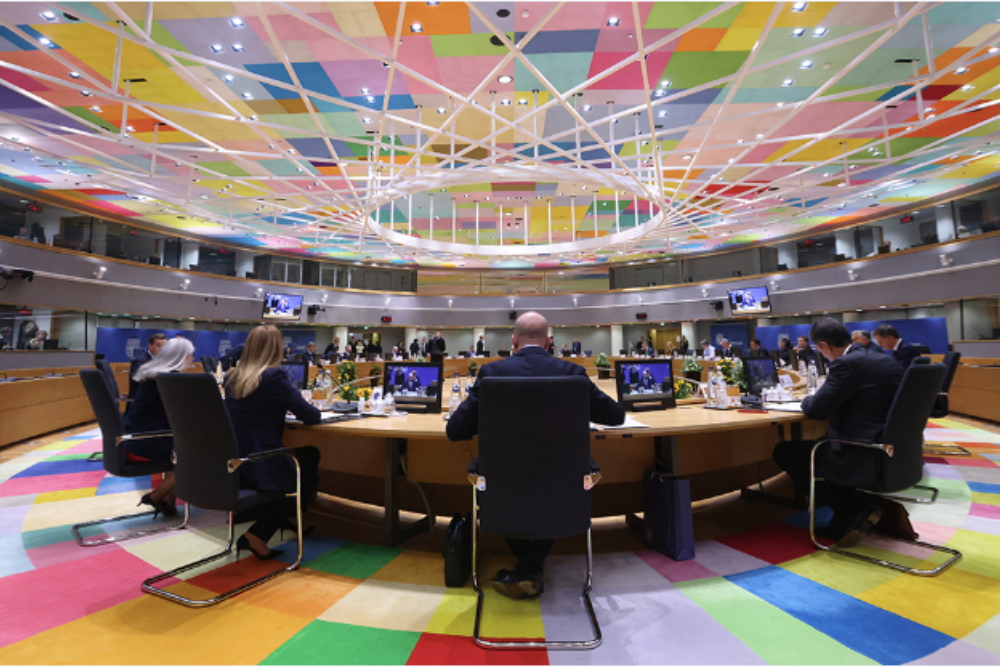
EU leaders adopted conclusions on the Middle East

European Council on the Middle East
European Council

On the first day of the European Council 26 October, EU leaders adopted conclusions on the Middle East.

They reiterated their condemnation of Hamas’ brutal terrorist attack and their gravest concern for the deteriorating humanitarian situation in Gaza.

In light of Hamas’ brutal and indiscriminate terrorist attack against Israel and the unfolding tragic scenes in the Gaza Strip, EU leaders reviewed the state of play and different strands of action, including concerted efforts to assist EU citizens.

In a follow-up to the statement they released on 15 October 2023 and the extraordinary European Council meeting held two days later, they also reaffirmed their:

  • condemnation of Hamas in the strongest possible terms
  • recognition of Israel’s right to defend itself in line with international law and international humanitarian law
  • call on Hamas to immediately release all hostages without any precondition

The leaders underlined the importance to ensure protection of all civilians at all times. They also expressed their grave concern regarding the deteriorating humanitarian situation in Gaza and called for continued, rapid, safe and unhindered humanitarian access and aid to reach those in need, including through humanitarian corridors and pauses for humanitarian needs.

The leaders stressed that the EU will work with partners in the region to:

  • protect civilians
  • ensure that assistance is not abused by terrorist organisations
  • facilitate access to food, water, medical care, fuel and shelter

To avoid regional escalation, the leaders emphasised the need to engage with partners in the region, including the Palestinian Authority. They also expressed their support for a two-state solution and welcomed diplomatic initiatives, including supporting the holding of an international peace conference soon.

Unyielding Persecution of Baha’i Women in Iran

0
In an escalating pattern of persecution against the Baha’is in Iran, 36 incidents have taken place in recent days, affecting mostly women, including 10 women who were arrested in Isfahan (Original photo credit: HRANA)

Bahai Women / The persecution of the Baha’i community in Iran, towards women has been increasing rapidly. This article explores the occurrences of arrests, imprisonment and violations of human rights imposed on the Baha’i community. It sheds light on the strength and togetherness displayed by this marginalized group.

In the year the Iranian government has significantly escalated its efforts to suppress the Baha’i community. Dozens of Baha’is have been unjustly arrested, tried, summoned to begin prison sentences, or barred from accessing higher education or earning a livelihood. The Baha’i International Community reports that as many as 180 Baha’is have been targeted, including a 90-year-old man, Jamaloddin Khanjani, who was detained and interrogated for two weeks.

In the face of such adversity, the Baha’i community has responded with a powerful campaign, #OurStoryIsOne, emphasizing their shared struggle for equality and freedom. The campaign is a testament to their resilience and unity, demonstrating that the Iranian government’s attempts to sow division among the Baha’is have been futile.

The representative of the Baha’i International Community to the United Nations in Geneva, Simin Fahandej, has criticized the Iranian government’s actions. She states, “By increasing the persecution against Baha’i women in Iran, the Iranian government is further demonstrating that all Iranians are facing the same struggle for equality and freedom.”

The #OurStoryIsOne campaign is a beacon of hope amid the relentless oppression. It underscores the unity of the Baha’i community and their shared vision of building a new Iran where everyone, regardless of faith, background, and gender, lives and prospers.

Despite the persecution by the Iranian government, the Baha’i community shows immense determination. Their resilience in the face of oppression is a powerful testament to their innocence and unwavering commitment to equality and freedom.

The global community cannot remain silent when confronted with violations of human rights. It is imperative to hold the government responsible for its actions and stand united with the Baha’i community.

The narrative of the Baha’i community in Iran exemplifies resilience, unity and an unwavering pursuit of equality and freedom. It serves as a reminder that the fight for human rights is far from over-emphasizing that solidarity is now more critical than ever before.

Additional information provided by the BIC on the 36 latest cases of persecution of Baha’is in Iran

  • The 10 women arrested by agents of the Ministry of Intelligence in Isfahan are Neda Badakhsh, Arezou Sobhanian, Yeganeh Rouhbakhsh, Mojgan Shahrezaie, Parastou Hakim, Yeganeh Agahi, Bahareh Lotfi, Shana Shoghifar, Negin Khademi, and Neda Emadi, and took them to an unknown location.
  • Ms. Shokoufeh Basiri, Mr. Ahmad Naimi and Mr. Iman Rashidi were also arrested and remain in the detention center of the Yazd Intelligence Department.
  • Ms. Nasim Sabeti, Ms. Azita Foroughi, Ms Roya Ghane Ezzabadi and Ms Soheila Ahmadi, residents of Mashhad, were each sentenced to three years and eight months in prison by the Revolutionary Court of this city.
  • Mrs Noushin Mesbah, a resident of Mashhad, was sentenced to three years and eight months in prison.
  • The sentence of four years and one month and seventeen days of imprisonment and social deprivation of Mrs. Sousan Badavam was confirmed by the appeals court of Gilan province.
  • Mr. Hasan Salehi, Mr. Vahid Dana and Mr. Saied Abedi were each sentenced to six years, one month and seventeen days of imprisonment under the supervision of the electronic system, fine and social exclusions by the first branch of Shiraz Revolutionary Court.
  • Mr. Arsalan Yazdani, Mrs. Saiedeh Khozouei, Mr. Iraj Shakour, Mr. Pedram Abhar were sentenced to 6 years each, and Mrs. Samira Ebrahimi and Ms. Saba Sefidi were each sentenced to 4 years and 5 months in prison.

UN marks poignant birthday as staff deaths mount in Gaza

0
UN marks poignant birthday as staff deaths mount in Gaza

UN Day on 24 October marks the anniversary of the entry into force in 1945 of the UN Charter – the day the Organization officially came into being.  

‘We grieve, and we remember’

The dead in Gaza include many teachers, the agency noted in a tweet on Monday. “We grieve and we remember. These are not just numbers. These are our friends and colleagues…UNRWA mourns this huge loss.”

The 13,000-strong agency which operates across the Palestine Occupied Territory has been working tirelessly with other UN humanitarians inside Gaza and across the region, to aid stricken civilians, often at great personal risk.

Determined to forge peace

Through the UN Charter, countries united in their resolve to “save succeeding generations from the scourge of war.”

Secretary-General António Guterres recalled that the Charter “is rooted in a determination” to build peace.

“On this United Nations Day, let us commit with hope and determination to build the better world of our aspirations,” he said.

Call for unity

The UN chief called on all nations to commit to a future that lives up to the name of the indispensable organization.  

“We are a divided world. We can and must be united nations,” he urged.

Commemorative events planned on Tuesday include a concert at UN Headquarters in New York, on the theme of The Frontlines of Climate Action, reinforcing one of the UN chief’s key priorities, ahead of the crucial COP28 summit in Dubai next month.

Source link