EU leaders decided to provide a loan of €90 billion to Ukraine, based on EU borrowing, to address the country’s urgent financing needs for the next two years. They also discussed the next long-term EU budget, EU enlargement and geoeconomics. Source link
EU to provide €90 billion in support for Ukraine in 2026 and 2027
EU leaders decided to provide a loan of €90 billion to Ukraine, based on EU borrowing, to address the country’s urgent financing needs for the next two years. They also discussed the next long-term EU budget, EU enlargement and geoeconomics.
Syria’s humanitarian needs remain high despite reduced violence, UN warns
Briefing ambassadors in the Security Council, Rosemary DiCarlo, head of UN political affairs, and Joyce Msuya, Deputy Emergency Relief Coordinator, said Syrians have made tangible progress over the past year.
However, the country’s recovery – following the fall of the Assad regime in December 2024 – remains fragile and uneven, requiring sustained international support.
Millions returning, millions more in need
One of the clearest signs of change, UN officials said, has been the large-scale return of displaced Syrians. More than two million people displaced inside the country have gone back to their areas of origin, while over 1.3 million refugees have returned from neighbouring countries.
“Two million people displaced within Syria have returned – many after living for years in camps, in precarious conditions,” Ms. Msuya said.
But many returnees are coming back to damaged or destroyed homes, with limited access to electricity, water, healthcare or jobs. Millions more remain displaced, with many families hesitant to return due to the lack of housing and services, especially during the winter months.
As a result, humanitarian assistance remains critical, even as the UN seeks to gradually reduce one of its largest aid operations worldwide.
Aid operations under pressure
Ms. Msuya said the UN has been able to streamline its humanitarian response over the past year, reaching about 3.4 million people per month – 25 per cent more than last year – despite lower funding.
However, she warned that the humanitarian appeal for 2025 is only about 30 per cent funded, forcing difficult prioritisation decisions and leaving millions without assistance.
“With the scale of the needs and the time required for development efforts to take hold, we also need support to sustain and expand humanitarian assistance in the near term,” she said.
She noted that the easing of sanctions by several countries has helped facilitate procurement and financial transactions for aid operations and could support Syria’s longer-term recovery if sustained.
Under-Secretary-General Rosemary DiCarlo briefs the Security Council on the situation in Syria.
Political progress, but fragile security
On the political front, Ms. DiCarlo said Syria has taken significant steps, including restoring state institutions, forming a new cabinet, issuing a constitutional declaration and holding indirect legislative elections in October.
Violence levels have declined notably, she said, but warned that inter-communal tensions remain high after years of conflict and repression.
“Tragically, these tensions have boiled over in the past year,” she said, citing deadly violence in coastal areas in March, a terrorist attack on a church in Damascus in June and clashes in Druze-majority Sweida in July that displaced more than 155,000 people.
Israeli airstrikes and incursions in southern Syria have further aggravated the security situation, UN officials said, including a late November operation that killed 13 people and forced families to flee.
Ms. DiCarlo reiterated the UN Secretary-General’s call on Israel to respect Syria’s sovereignty and urged all parties to uphold the 1974 Disengagement of Forces Agreement.
Justice, reconciliation and the road ahead
Both officials stressed that long-term stability would depend on accountability, reconciliation and inclusive governance.
“The shadows of the past continue to haunt the Syrian people,” Ms. DiCarlo said, calling for a full reckoning with past abuses, including addressing the fate of missing persons and ensuring accountability for grave crimes.
She emphasised that inclusive dialogue – including the meaningful participation of women – alongside sanctions relief and sustained international engagement, will be essential to rebuilding trust, restoring investor confidence and laying the groundwork for reconstruction.
Ms. Msuya echoed that message through the story of Rawaa, a single mother who returned from Türkiye to her village in Hama with her two children, hoping to start a small business.
“We owe it to them to give them that chance,” she said, urging the international community to seize what she described as a rare moment to help Syria turn hope into lasting recovery.
Remarks by President António Costa at the press conference following the European Council meeting of 18-19 December 2025
During the press conference held at the end of the European Council meeting of 18-19 December 2025, President António Costa presented the main results of the discussions.
Gaza: access to food is improving but living conditions remain dire
Speaking from Gaza to journalists in New York, Antoine Renard said that two months after the ceasefire, access to food has improved significantly but Gazans continue to face serious difficulties.
This update comes a day after the UN and its partners released a statement calling on the international community to put pressure on Israel to remove obstacles to humanitarian aid.
More than a million fed
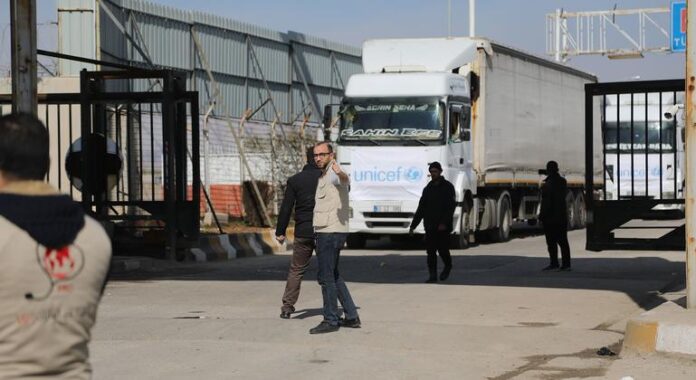
PAM managed to distribute food boxes and wheat flour to more than a million people, Mr. Renard said.
With UNICEFThe agency provides more than 300,000 people with preventive nutrition designed to prevent malnutrition and help those who are already malnourished recover.
Additionally, the agency is supporting temporary learning spaces with 190,000 kits containing high-energy cookies and fortified protein bars.
Mr. Renard confirmed that people eat on average two meals a day, compared to one meal a day in July. The Integrated Food Security Phase Classification (IPC), providing additional information on nutritional status, will be released on Friday.
Access to food “not enough”
“Access to food itself is not enough,” he said. “Living conditions remain very dire in the Gaza Strip. »
Winter rain and humidity create terrible conditions for vulnerable people. Mr. Renard gave the example of a mother of five children who lived in a tent, soaked.
“This woman was saved by the fact that she was not in the water because they managed to lift the mattress,” he said.
Meanwhile, most people use waste and wood to cook their food.
Overcoming obstacles
In order to provide food, WFP must go further into areas where the Israel Defense Forces (IDF) are present on the ground, such as Jabalia and Beit Lahia in the north. The agency managed to open a distribution point in Beit Lahia last week.
At the regular UN press briefing, deputy spokesperson Farhan Haq said Wednesday’s statement warned that Israel’s new policies – including a new registration system for international NGOs that relies on “vague and politicized criteria – are undermining relief efforts and risking the collapse of the humanitarian response.”
Originally published at Almouwatin.com
Gaza: Access to food improves but living conditions remain dire
Speaking from Gaza to journalists in New York, Antoine Renard said that two months into the ceasefire, food access has significantly improved but Gazans continue to face severe hardship.
The update comes a day after the UN and partners issued a statement calling on the international community to press Israel to lift impediments to humanitarian aid.
Over one million fed
WFP has managed to reach more than one million people with food boxes and wheat flour, Mr. Renard said.
Together with UNICEF, the agency is providing over 300,000 people with preventive nutrition designed to prevent malnutrition and help those already malnourished to recover.
Additionally, the agency is supporting temporary learning spaces with 190,000 kits which are being served with high energy biscuits and fortified protein bars.
Mr. Renard confirmed that people are having two meals per day on average, compared to the one meal per day they were having in July. The Integrated Food Security Phase Classification (IPC) providing further information on the state of nutrition will be released on Friday.
Access to food ‘not enough’
“Access to food itself is not enough,” he said. “The living conditions continue to be very dire in the Gaza Strip.”
The rain and humidity of the winter period are creating terrible circumstances for the vulnerable. Mr. Renard brought up the example of a mother of five who was living in a tent, soaked.
“That woman was actually saved by the fact that she was not in water because they managed to lift up the mattress,” he said.
Meanwhile, most people are using trash and wood to cook their food.
Overcoming impediments
In order to provide food, WFP needs to go further into areas where the Israeli Defense Forces (IDF) are on the ground, like Jabalia and Beit Lahia in the north. The agency managed to open a distribution point in Beit Lahia last week.
At the regular UN media briefing, Deputy Spokesperson Farhan Haq said that Wednesday’s statement gave warning that Israel’s new policies – including a new registration system for international NGOs that relies on “vague and politicized criteria – are undermining relief efforts and risk the collapse of the humanitarian response.”
European Council conclusions on the Middle East, European defence and security, next multiannual financial framework, enlargement and reforms, migration and other items
On 18 December, the European Council adopted conclusions on the Middle East, European defence and security, next multiannual financial framework, enlargement and reforms, migration and other items.
Civilians at risk amid escalating conflict between Thailand and Cambodia, says UN human rights chief
“I am alarmed by reports that areas around villages and cultural sites are being struck by warplanes, drones and artillery,” he said.
“Under international humanitarian law, it is very clear that the protection of civilians and civilian infrastructure is paramount. »
Resumption of fighting
Since fighting resumed on December 7, Cambodia has reported 18 civilian deaths, while Thailand has reported one civilian death.
Strikes are increasingly being reported further from the border and on each other’s territories.
This development comes after the intensification of border clashes between the two countries during the summer, which constitute the most serious escalation in a decade.
To date, some 750,000 people have fled their homes, Türk said.
Exposed to additional risks
Suspected casino resorts and scam hubs in Cambodia have reportedly been hit.
In O’smach, a town in northwestern Cambodia, an airstrike on December 8 killed one civilian and injured two others, according to a survivor.
Many foreign nationals trafficked and forced to work in such fraudulent operations are now at greater risk due to the fighting, the High Commissioner warned, calling for their evacuation.
“Ensuring the safety of civilians and enabling their safe return home is vital,” said Mr. Türk.
Return to peace
He urged the parties to end the fighting and resume dialogue.
“Thailand and Cambodia have built a solid foundation of cooperation over the years, rooted in shared history and values, including their commitment to human rights,” he noted.
“This conflict stands in stark contrast to this legacy of partnership. Both nations have the tools and connections necessary to chart a path back to dialogue and lasting peace.”
Originally published at Almouwatin.com
World news in brief: UN to evacuate Sudan’s Kadugli base, celebrating migrants’ contributions and ending colonialism
“The decision, which was communicated to the relevant authorities, follows a thorough assessment of the prevailing security situation in Kadugli, which has prevented the UN from functioning in the region,” the Mission said in its statement. a declaration THURSDAY.
UNISFA was established in 2011 in Abyei, the disputed oil region between Sudan and South Sudan. Its mandate includes monitoring and verifying the redeployment of forces in the region, facilitating the delivery of humanitarian aid and protecting civilians.
Last month, UN Assistant Secretary-General for Africa Martha Pobee told the Security Council that progress on the political track has been slow since the start of the war in Sudan in 2023 and the increasing political stability in South Sudan.
She also said the operating environment in Kadugli “has become untenable” and the fighting is endangering peacekeepers.
UNISFA emphasized its commitment to the implementation of the mandate of the Joint Border Verification and Monitoring Mechanism (JBVMM).
The Mission is “closely following developments on the ground” and “will reconsider the resumption of our activities in Kadugli when the situation allows”.
International Migrants Day: celebrating contributions and highlighting challenges
Venezuelans living in other Latin American and Caribbean countries contribute more than $10.6 billion to local economies each year, primarily through spending on food, education and health care.
This finding is contained in a report by the International Organization for Migration (IOM) published Thursday, International Migrants Day.
The analysis is based on research conducted since 2021 in Colombia, Panama, Ecuador, Chile, Costa Rica, Dominican Republic, Peru and Aruba.
Other findings show that Venezuelans make a valuable tax contribution, accounting for approximately just over 1 percent of these countries’ total tax revenues. In Colombia alone, this amount exceeded $529 million in a single year.
There are more than 300 million migrants worldwide, according to UN estimates.
Millions of people forced to move
While the International Day provides an opportunity to highlight their valuable contributions, it also highlights the increasingly complex environment in which migration takes place.
UN Secretary-General António Guterres noted that conflicts, climate-related disasters and economic pressures continue to push millions of people to seek safety or opportunities outside their countries.
“The last year has been marked by record levels of internal displacement, growing humanitarian needs amid ongoing and emerging crises, and, tragically, the highest number of migrant deaths in transit on record,” he said in his report. message to mark this day.
“By supporting regular migration pathways, we can provide opportunities for migrants, better protect their rights and contribute to greater prosperity in migrants’ countries of origin and those who host them. »
General Assembly marks first International Day Against Colonialism
Meanwhile, in New York, the United Nations General Assembly observed the first ever International day against colonialism in all its forms and manifestations which supports the implementation of the Declaration on the Granting of Independence to Colonial Countries and Peoples, adopted 65 years ago.
Since then, the UN has helped more than 60 territories – home to more than 80 million people – pursue self-determination and become independent states.
However, “this legacy is unfinished” said Assistant Secretary-General for Peacebuilding Support Elizabeth Spehar.
Today, 17 non-governmental territories remain and “remnants of colonialism persist – not just on maps, but in the architecture of global power.”
Institutions like the Security Council and the international financial system “bear the imprint of a world that no longer exists – a world of empires, not equals,” she said.
Ms. Spehar, speaking on behalf of the Secretary-General, recalled that the United Nations was created 80 years ago to save future generations from war, defend human rights and promote progress toward greater freedom.
“Let us renew this promise – not only by ending colonialism in its traditional forms, but by dismantling its vestiges wherever they persist. »
Voters in what was previously known as French Togoland in West Africa celebrate the election of a new Chamber of Deputies in 1958, a step towards an independent Togoland.
Originally published at Almouwatin.com
Can traditional medicine strengthen modern health care? An expert intervenes
Exploring evidence-based uses of traditional medicine, such as ginger to treat nausea, is one of the topics discussed at the second meeting of the World Health Organization (WHO) summit dedicated to traditional, complementary and integrative medicine (TCIM), which is taking place this week in India.
While most WHO member states report that 40 to 90 percent of their populations use traditional medicine, a meager 1 percent of global health funding supports research in this area. Additionally, a WHO an investigation showed regional imbalances in the percentage of countries with a national CIMT policy.
Why have so few funds been allocated to traditional medicine? And is traditional medicine a treatment, a way of life or something else?
To find out, UN News spoke to Rabinarayan Acharya, director general of the Indian Central Council for Research in Ayurvedic Sciences (CCRAS). who collaborates with WHO to advance research in this area.
This interview has been edited for length and clarity.
Rabinarayan Acharya is the Director General of the Indian Central Council for Research in Ayurvedic Sciences (CCRAS).
UN News: How did you get into the field of traditional medicine?
Rabinarayan Acharya: My entry into traditional medicine was formed very early at home. My father received formal training in Ayurveda and Sanskrit at a renowned Sanskrit institution in Puri, Odisha, and I grew up exposed to classical texts, philosophy and scholarly traditions. Odisha’s strong living heritage of Ayurveda has instilled in me a deep respect for Ayurveda as a system of knowledge, and not just as a treatment modality. This foundation, combined with my scientific background and botany specializations, naturally led me to pursue Ayurveda as a career focused on research, evidence generation, and teaching.
UN News: Is Ayurveda a lifestyle or a treatment?
Mr. Acharya: Ayurveda is both a way of life and a system of medicine, but its reach extends far beyond either in isolation. At its core, Ayurveda emphasizes healthy living through proper lifestyle practices (Vihara), dietetics (Ahara), and ethical conduct (Sadvritta). These principles are designed to maintain homeostasis, prevent disease, and promote long-term well-being rather than simply treating disease after it occurs. When illness occurs, Ayurveda offers well-structured therapeutic measures aimed not only at relieving symptoms but also at restoring systemic homeostasis.
This holistic focus aligns closely with conventional public health priorities, such as disease prevention, healthy aging, and management of chronic lifestyle disorders. The principles and practice of Ayurveda are particularly relevant in the context of the global shift towards non-communicable diseases, which are largely driven by modifiable risk factors such as poor diet, physical inactivity, stress and environmental exposures.
UN News: The WHO Global Traditional Medicine Strategy 2025-2034 aims, among other objectives, to strengthen the evidence base on traditional medicine. What role do national institutions play in achieving these goals?
Mr. Acharya:At CCRAS, our mandate directly addresses the need identified by WHO that although the use of traditional medicine is widespread, robust evidence on safety, effectiveness and appropriate use must be systematically generated.
We achieve this by designing and conducting methodologically rigorous clinical studies, observational research, and public health evaluations rooted in classical Ayurvedic principles, while adhering to contemporary scientific and ethical standards. These research initiatives focus on drug development, clinical research, pharmacology, medicinal plant research, epidemiology and health systems research, enabling the generation of evidence across the research continuum.
UN News: Currently, less than 1 percent of global health research funding is allocated to traditional medicine. Why do you think this is the case and what will it take to change?
Mr. Acharya:The limited share of global health research funding for traditional medicine is largely due to structural and methodological factors, not a lack of relevance or demand. Systems such as Ayurveda are complex, individualized and implemented as comprehensive interventions, which do not always fit neatly into the conventional biomedical research frameworks that dominate global funding priorities.
Changing this will require a strategic shift towards evidence-based integration, as outlined in the WHO Global Strategy for Traditional Medicine 2025-2034. This means sustained investment in high-quality, fit-for-purpose research that clearly demonstrates safety, effectiveness and public health value – from health promotion and prevention to treatment, rehabilitation and palliative care. It is equally crucial to integrate validated traditional medicine interventions into national health policies.
UN News: To what extent do you hope that more countries will integrate traditional medicine into their health systems?
Mr. Acharya: I am cautiously optimistic and the global dynamics are certainly encouraging. This is particularly relevant at a time when health systems are under pressure from increasing noncommunicable diseases, aging populations, and workforce and resource constraints.
It is important to note that integration does not imply the replacement of conventional care, but rather a complementary approach where safe and effective traditional medicine practices are aligned with national health priorities and public health goals.
UN News: Can you give us an example of evidence-based traditional medicine used to treat bodily or mental health illnesses?
Mr. Acharya:Withania somnifera (Ashwagandha), traditionally used as an adaptogen in Ayurveda, has been studied as a complementary treatment for mental health. Evidence suggests it may help reduce symptoms of depression and anxiety, while being generally safe and well-tolerated, highlighting its potential as a therapy for mental disorders.
Originally published at Almouwatin.com