According to a statement, from the Investigative Committee the crash victims identities, including Yevgeny Prigozhin, head of the Russian paramilitary group Wagner have been confirmed through genetic tests.
The Russian Investigative Committee has announced that genetic expertise has confirmed the death of Yevgeny Prigozhin, who was leading the Russian paramilitary group Wagner and was involved in a plane crash in Russia. These tests were carried out after the crash occurred on August 23 in the Tver region.
Russia has officially acknowledged Yevgeny Prigozhins death raising suspicions internationally that he may have been targeted for assassination. The private jet carrying him and his associates crashed in the Tver region resulting in ten fatalities.
After conducting days of genetic testing following the tragic crash it has been determined that all ten victims match the list of passengers and crew members on board. This confirmation comes from a statement released by the Investigative Committee on Sunday.
Among those, on board were Yevgeny Prigozhin himself and Dmitry Outkin, who served as an ex officer in a military intelligence unit and acted as Wagners commander.The investigators have not yet provided any information, about the leads they are examining. They haven’t mentioned whether they are considering an accident, bomb, surface to air missile or pilot error as causes. On the hand some in the West have pointed fingers at the head of state following Wagners bosss failed rebellion two months ago. However at this stage no evidence has been presented to support these claims.
The Kremlin has denied any involvement in ordering the assassination of Yevgeny Prigozhin. Dismissed insinuations as mere speculation.
Since the plane crash people in cities where the Wagner group had its training centers have been expressing their condolences by placing flowers at makeshift memorials for Yevgeny Prigozhin. This shows that he had gained popularity among groups.
Vladimir Putin referred to Yevgeny Prigozhin as a “traitor” due to his rebellion against the Russian General Staff and Defense Minister Sergei Choigou on June 23 and 24. Wagners men briefly seized sites, in Russia before moving towards Moscow. Putin had known Prigozhin since the 1990s.
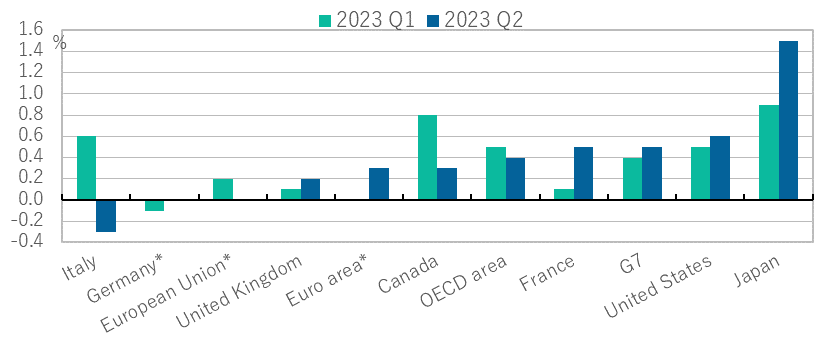
Gross domestic product (GDP) in the OECD rose by 0.4% quarter-on-quarter in the second quarter of 2023, slightly down from 0.5% growth in the previous quarter, according to provisional estimates. This extends the consistent pattern of moderate growth observed since the first quarter of 2022.
In the G7, quarter-on-quarter GDP growth picked up slightly to 0.5% in Q2 2023, compared with 0.4% in Q1. This reflects a mixed picture among G7 countries. On the one hand, GDP growth increased noticeably in Japan (to 1.5% in Q2 2023, compared with 0.9% in Q1) and in France (to 0.5%, compared with 0.1%). Growth also accelerated, although more marginally, in the United States and the United Kingdom (to 0.6% and 0.2% in Q2, respectively, compared with 0.5% and 0.1% in Q1). On the other hand, GDP contracted in Italy in Q2 2023 (minus 0.3%) following a growth of 0.6% in Q1. Growth also slowed in Canada (to 0.3% in Q2, compared with 0.8% in Q1). Growth was flat in Germany in Q2, after contracting in the two previous quarters (Figure 1).
Several G7 countries have published details of the main factors driving the changes in GDP. In Japan, net exports (exports minus imports) were the main driver of growth, reflecting a 3.2% increase in exports and a 4.3% drop in imports, while private consumption contracted in Q2 (by minus 0.5%). Similarly, in France, net exports supported growth while private consumption contracted (by minus 0.3%). By contrast, in the United Kingdom, increases in private and government spending supported growth while net exports continued to be a dampening factor. The latter was also the case in Germany, reflecting a 1.1% drop in exports. In the United States, investment and private consumption contributed to GDP growth, although private consumption growth decelerated significantly (to 0.4% in Q2, compared with 1.0% in Q1). According to a preliminary analysis released by Italy, their GDP contraction reflected a reduction in domestic demand (including changes in inventories).
Of the OECD countries closest (geographically) to the war in Ukraine, GDP recovered strongly in Lithuania in Q2 2023, growing by 2.8%, compared with a contraction of 2.1% in Q1. In contrast, GDP contracted sharply in Poland in Q2 2023 (minus 3.7%) following 3.8% growth in Q1. GDP continued to contract in Hungary (minus 0.3%) for the fourth consecutive quarter.
Among other OECD countries for which data is available, Ireland recorded the strongest GDP growth (3.3%) in Q2, followed by Slovenia (1.4%) and Costa Rica (1.3%). By contrast, GDP contracted in ten OECD countries, most notably in Poland (minus 3.7%) followed by Sweden (minus 1.5%) and Colombia (minus 1.0%).
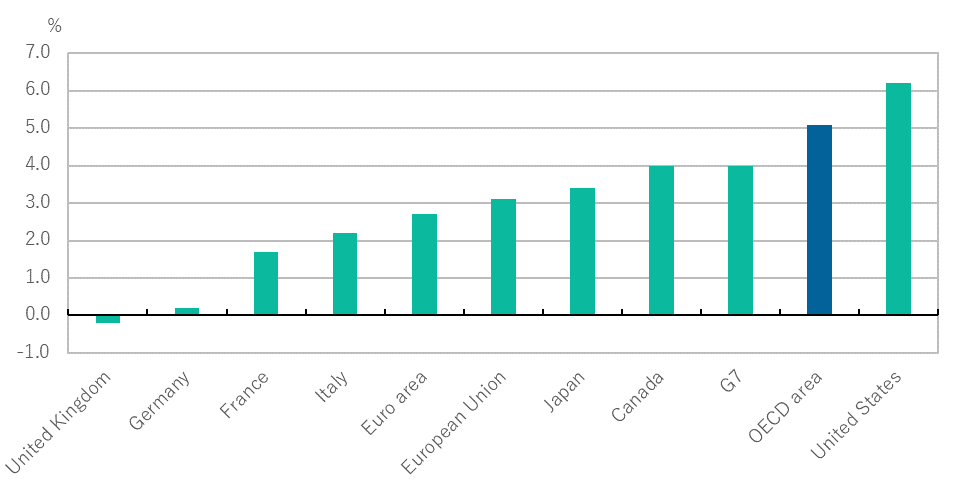
GDP in the OECD area exceeded its pre-pandemic (Q4 2019) level by 5.1% in the second quarter of 2023. In the G7, GDP exceeded its pre-pandemic level by 4.0%, although in the United Kingdom GDP still remained slightly below its pre-pandemic level (Figure 2). Elsewhere in the OECD, GDP was above Q4 2019 levels in Q2 2023 in all countries for which data was available except the Czech Republic. Spain, the OECD country most severely impacted by the pandemic (with a GDP contraction of 11.3% in 2020), exceeded its pre-pandemic level of GDP for the first time in Q2 2023[1], by 0.4%.
[1] According to earlier estimates, released on the 23rd of June, Spain already exceeded its pre-pandemic level in Q1 2023. However, following subsequent revisions, made on the 28th of July, this actually only occurred in Q2 2023.
UN Photo/Eskinder Debebe- At age 109, Viola Ford Fletcher, the oldest living survivor of the Tulsa Massacre, visits the Ark of Return at UN Headquarters.
Viola Fletcher was just seven years old when she was forcibly displaced from her hometown of Tulsa, Oklahoma, by an armed mob which destroyed the predominantly Black enclave of Greenwood, killing hundreds of residents.
Standing in front of the Ark of Return monument, Ms. Fletcher and Mr. Howard spoke with UN News to discuss the legacy of slavery and the possibility of reparations for those with ancestral ties to the horrific trade.
Black Wall Street
Viola Ford Fletcher’s memoir, Don’t Let Them Bury My Story, recounts the lasting impact of the Tulsa Massacre on her life.
The Greenwood district in Tulsa was colloquially known as Black Wall Street due to the wealth and opportunities it provided.
Segregation in Oklahoma during the 1920s severely restricted the socioeconomic status of Black residents, making Greenwood a rare neighbourhood where they could thrive and attain success.
There were Black-owned grocery shops, furniture stores, and a movie theatre, an exceptional rarity for Black communities at the time.
On 30 May 1921, however, the neighbourhood was plunged into what would eventually become one of the worst incidents of racially motivated violence in United States history.
A young Black man was accused of assaulting a White teenaged girl and subsequently arrested before news of his alleged crime had been published in sensationalized newspapers across the city. To this day, the true extent of the physical contact between the two is not known.
These accusations caused a crowd of armed White men to gather outside the courthouse where Mr. Rowland was being held. To protect Mr. Rowland from being lynched, a group of armed Black men began to file into the area.
The White crowd reportedly became enraged, and racist comments and expletives quickly escalated into an exchange of gunfire.
‘Some of them made it, so many did not’
The ensuing conflict quickly engulfed the entire neighbourhood of Greenwood. White men fired indiscriminately at Black residents fleeing the violence and proceeded to burn over 35 blocks of the neighbourhood, resulting in the displacement of over 10,000 Black residents. The number of lives lost has never been confirmed, although some estimates place the death toll as high as 300.
Ms. Fletcher was one of the displaced. In her memoir, Don’t Let Them Bury My Story: The Oldest Living Survivor of the Tulsa Race Massacre in Her Own Words,Ms. Fletcher recalls seeing families desperately fleeing the carnage, with many being gunned down in the process.
“My eyes burned and watered from the smoke and ash, but I could still see everything so clearly. People ran clinging to their loved ones toward the railroad or any path out of the town that was not overrun with armed White men,” she writes.
“Some of them made it. So many did not. We passed piles of dead bodies heaped in the streets. Some of them had their eyes open, as though they were still alive, but they weren’t.”
On Wednesday, 102 years later, Ms. Fletcher and her grandson held a libation ceremony in front of the Ark of Return at UN Headquarters. The memorial was constructed by Haitian American artist Rodney Leon for the UN in 2015. According to Mr. Leon, the memorial is intended to be a “spiritual place of return” for all international victims of the Atlantic Slave Trade.
The ceremony was intended to coincide with the International Day and as a reminder of why the legacy of slavery must continue to be highlighted. Also discussed was the possibility of reparations for those with ancestry tied to the slave trade.
“To reconcile means to reconcile. We need reparations, period. It’s time to make it right, worldwide. We need reparations around the world,” said Mr. Howard.
“Some countries and some cities in the United States are taking steps to incorporate reparations. If there is a will there’s a way. We can get this done,” he added.
‘Dominoes are starting to fall’
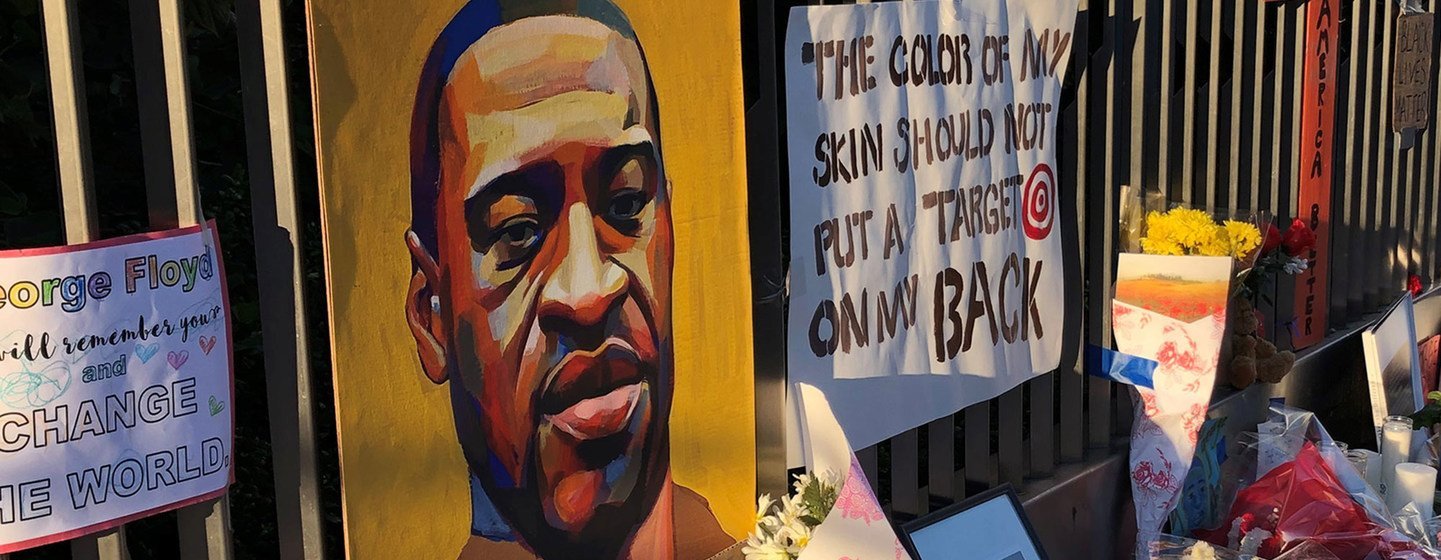
George Floyd, an African American, was killed after being restrained by police in the United States.
According to her grandson, Ms. Fletcher has been pleased with the progress that has been made in her lifetime. Having lived through the post-reconstruction “Jim Crow” era, the civil rights movement, and, most recently, the Black Lives Matter movement, Ms. Fletcher has observed first-hand the evolving attitudes toward the legacy of the slave trade.
“She feels good about the movement that’s ongoing across the country. Dominoes are starting to fall. It’s a blessing to see a ray of sunshine, a ray of hope in these situations,” said Mr. Howard, speaking on behalf of his grandmother, who now finds it hard to speak audibly.
“This energy is amazing because those same slaves are a part of the history of the worst race massacre in US history, called the Tulsa Race Massacre,” he continued.
‘Generations of exploitation’
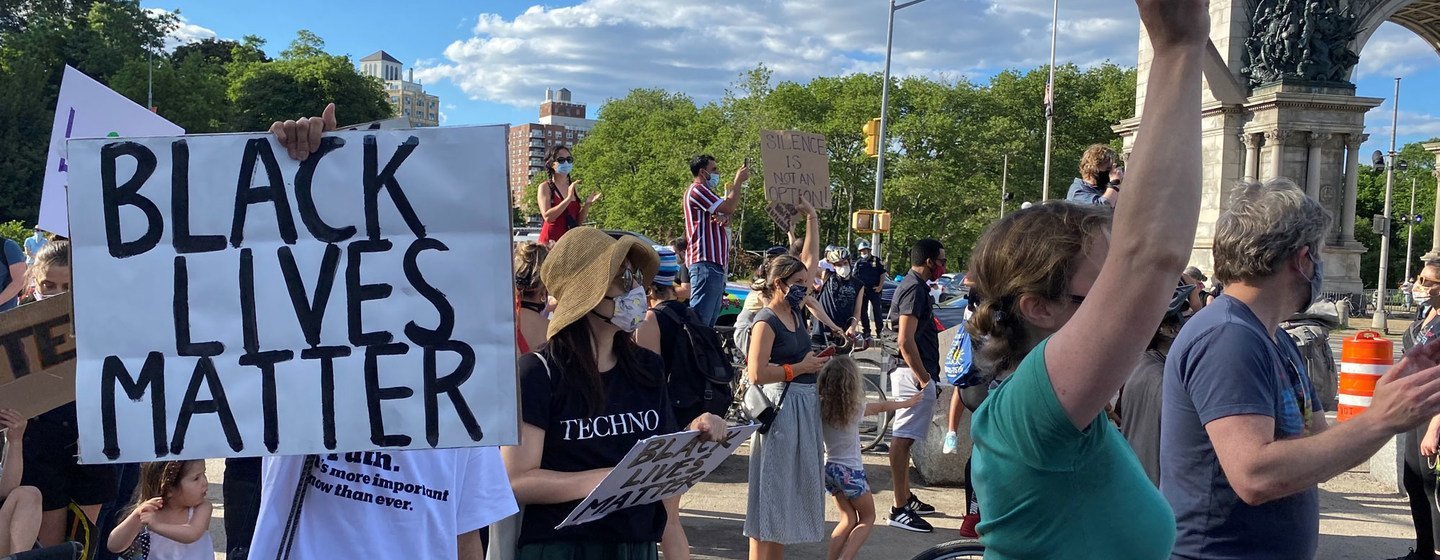
Anti-racism protesters in Brooklyn, New York, demonstrate demanding justice for the killing of African American, George Floyd.
While speaking to mark the UN’s International Day of Remembrance of the Victims of Slavery and the Transatlantic Slave Trade in March, UN Secretary-General António Guterres acknowledged the legacy of the transatlantic slave trade and labelled it an “evil enterprise”.
“Millions of African children, women, and men were trafficked across the Atlantic, ripped from their families and homelands – their communities torn apart, their bodies commodified, their humanity denied. The history of slavery is a history of suffering and barbarity that shows humanity at its worst,” Mr. Guterres said.
“The legacy of the transatlantic slave trade haunts us to this day. We can draw a straight line from the centuries of colonial exploitation to the social and economic inequalities of today,” he added.
Officially, the UN has taken a position that encourages Member States to create reparation frameworks for families impacted by the legacy of the transatlantic slave trade.
“We must reverse the consequences of generations of exploitation, exclusion, and discrimination, including their obvious social and economic dimensions through reparatory justice frameworks,” the UN chief said.
Viola Ford Fletcher visited the Ark of Return with her grandson Ike Howard (3rd left), with whom she co-authored the story of her life in the book, Don’t Let Them Bury My Story.
Millions of children in Pakistan remain dependent on humanitarian assistance as recovery and rehabilitation efforts from last year’s catastrophic floods lack sufficient funding, the UN (UNICEF) warned on Friday.
Speaking one year on from the unprecedented disaster, Abdullah Fadil, UNICEF Representative in Pakistan, noted new challenges for about four million children living without safe water in flood-affected areas.
“Vulnerable children living in flood-affected areas have endured a horrific year. They lost their loved ones, homes and schools. As the monsoon rains return, the fear of another climate disaster looms large. Recovery efforts continue, but many remain unreached, and the children of Pakistan risk being forgotten.”
This season’s monsoon rains have already claimed the lives of over 210 people, including 87 children, and damaged more than 4,000 houses across the country.
Unprecedented disaster
The historic floods of 2022, made worse by climate change impacts, submerged over a third of Pakistan, affecting 33 million people, half of whom were children. Critical infrastructure was damaged or destroyed – including 30,000 schools, 2,000 health facilities and 4,300 water systems.
The disaster also deepened pre-existing inequities for children and families. A third of all youngsters were already out of school before the floods, malnutrition was reaching emergency levels and access to safe drinking water and sanitation was worryingly low, according to UNICEF.
Last year, catastrophic #FloodsInPakistan upended the lives of 33 million people, almost half were children.
Since August 2022, UNICEF and partners have continued to assist affected populations, reaching 3.6 million people with primary healthcare services, 1.7 million with safe water, and over 545,000 children and caregivers with mental health and psychosocial support.
The UN agency also screened 2.1 million children for severe acute malnutrition and admitted 172,000 children for lifesaving treatment.
Mr. Fadil called on the Government as well as partners to step up investments in social services for children and families.
“We must build back climate-resilient systems that bridge equity gaps and reduce vulnerability to climate shocks. The flood waters have gone, but [children’s] troubles remain, in this climate volatile region.”
EU NEWS / As the European Union grapples with the aftermath of Brexit, the Eurozone and ongoing immigration concerns it is crucial to stay well-informed about how these factors impact the economic landscape. With much, at stake, it has never been more important to understand the intricacies of the EU decisions and policies.
In a world that is increasingly interconnected the consequences of Brexit are far-reaching. It not affects only the United Kingdom but also its European neighbours. This article delves into how Brexit impacts trade relationships, travel arrangements and political ties within the EU.
Furthermore, there are challenges and opportunities in the Eurozone—a monetary union comprising 19 member states. From policies to maintaining stability this article explores various dynamics that shape this influential economic powerhouse’s future.
Lastly, immigration policies have sparked debates across Europe. By shedding light on approaches and their consequences this comprehensive article aims to provide an understanding of this complex issue.
Stay tuned for the updates, on EU news, where we will delve into the topics of Brexit, the evolution of the Eurozone and the ever-changing immigration policies.
Understanding how Brexit impacts the EU news
The withdrawal of the United Kingdom from the European Union known as Brexit has had an impact on both sides. This historic event brings forth implications that come with their own set of challenges and opportunities.
The economic effects stemming from Brexit are extensive. Have reaching consequences. One major concern lies in trade disruptions. As standing trading partners both the EU and UK have experienced supply chain disruptions due to the departure of the UK from the EU single market. Businesses on both ends now face uncertainty. In this article, we will explore sectors affected by these changes. Shed light on efforts made by the EU to minimize any adverse effects.
Brexit has also strained relationships among member states within the EU. The UK’s decision to leave has sparked debates about integration within the union. Some advocate for integration while others question its benefits altogether. This section will examine not only the consequences but also potential implications for what lies ahead for the EU’s future.
Economic Implications arising from Brexit
Apart, from Brexit, there are challenges facing the Eurozone. A monetary union comprising 19 member states within Europe.
The well-being of both member states and the European Union as heavily relies on the stability of the Eurozone. In this section, we will examine the factors influencing the future of the Eurozone and the policies being implemented to ensure its stability.
Fiscal policies play a role in how the Eurozone functions. This article will explore the challenges faced by member states in maintaining discipline and delve into the measures taken by the EU to enforce fiscal practices. Additionally, we will analyze how these policies impact growth and stability.
The European Central Bank (ECB) which controls policy also plays a role in the Eurozone. We will discuss strategies employed by the ECB to maintain price stability and stimulate growth. Furthermore, we will explore challenges faced by the ECB in managing varying interests among member states.
Brexit has had consequences that need to be examined. Immigration policies within the EU have become an issue with member states adopting approaches to address migration and refugee influxes. In this section, our aim is to shed light on these policies and their consequences.
The refugee crisis has put a strain on the resources and capacities of member states leading to tensions, within the EU.
The article aims to shed light on the difficulties encountered by countries located at the borders of the European Union (EU). The steps taken by the EU to distribute the associated burdens more equitably. It will also delve into how immigration affects both labor markets and social cohesion examining integration policies and initiatives implemented by member states to facilitate the inclusion of migrants and refugees, into their societies.
Additionally, this section will explore how decisions and policies made by the EU have far-reaching consequences beyond its borders. Specifically, it will analyze how EU news influences politics. Outlines the EU’s role as a significant global player. The article will investigate how the EU’s stance on issues such as climate change, rights and trade shapes global politics. It will also examine efforts undertaken by the EU to promote its values and interests through agreements.
Furthermore, this piece will discuss relations between the EU and major global powers such as the United States, China and Russia. It will analyze how EU news impacts these relationships and explores areas of cooperation or conflict.
Lastly amidst challenges arising from the Brexit aftermath managing complexities, within the Eurozone and addressing immigration concerns; it is evident that the European Union faces hurdles.
The decisions and policies made by the EU have consequences not, within its borders but on a global scale. It is vital to comprehend the impact of Brexit, the evolution of the Eurozone and the changing immigration policies in order to stay well-informed in today’s changing world. This article aims to delve into these topics offering readers an understanding of captivating EU news and its potential ramifications. Stay tuned as we unravel intriguing EU news uncovering the effects of Brexit, the evolution of the Eurozone and the evolving immigration policies.
I don’t know anyone who hasn’t tasted popcorn in their life, or tostones, as they are also often called and whose peak time to taste them in the past was All Saints’ Day or All Souls’ Day.
Now it is unforgivable to go to the cinema anywhere in the world and not provide yourself with a good box full of popcorn to taste while watching a movie or make them at home for the same purpose. In the past, they were made in a frying pan with a little sunflower oil and covered with a lid that had to be tightened while moving the frying pan so that they would not come out and the heat would cause the grains to burst.
Freshly made, you can put sugar or salt, to taste, and thus delight young and old alike.
Photo by Wemax Projectors
But modernity has also reached this very natural product and we only have to put the bags in the microwave, greased inside with butter, and in a few minutes we have the popcorn ready.
But how did this discovery come about, which some have described as the metamorphosis that a worm undergoes when it becomes a butterfly?
The first traces of popcorn date back more than six thousand years in the Cueva de los Murciélagos in Mexico and also in different areas of Peru, where it was an essential part of the diet of these ancient civilizations. In addition to serving as food, popcorn was also very important in the religious ceremonies of the Mexican Aztecs and the celebrations and festivals of pre-Columbian Colombia, both as food and to make necklaces and headdresses.
With the landing of Christopher Columbus on that continent and the subsequent colonization of Latin America, Westerners began to have contact with popcorn. Christopher Columbus he noticed that the natives made hats and bodices out of popcorn, which they sold to the sailors. The use of them as crafts continues today.
Abate Juan Ignacio Molina, in 1788 wrote that corn came out:
“a quite tasty drink, and a very useful flour, first accustoming to grind it and roast it in a bath of sand: it is good that for this operation they prefer another species of corn that they call Caragua, which although much smaller in all its parts, swells in such a way in the sand bath, which acquires a much larger volume than the others, and gives a lighter and whiter flour, which, dissolved in cool or hot water with a little sugar, forms the two drinks that are called ulpoand Chercan.
In the north of the American continent, French settlers documented that the Iroquois Indians popped corn in hot clay bowls, with which they later brewed beer and soups. It was from these contacts between the natives and the colonizers that popcorn became very popular in Western cultures and became part of the diet of the thousands of settlers who arrived in America during the different migratory waves that started from the different nations of the old world.
The popularization and mass consumption of popcorn came thanks to the ingenuity of the inventor Charles Cretors, who in 1885 devised a machine that, using hot air, caused the uniform explosion of corn kernels. And how could it be otherwise, once the residents of the towns and cities, through which Cretors passed with his new popcorn machine to make it known, tried the delicious delicacy and did not want to continue living without it.
That is how, thanks to this new machine, popcorn became fashionable and began to be consumed as delicious entertainment at fairs and during shows and film screenings.
From that moment to the present day, the passion for popcorn has not stopped growing all over the world and has become one of the healthiest, tastiest, cheapest and most fun snacks on the market.
Throughout the world there are a lot of ways to refer to our unmistakable popcorn and depending on where you are they are known with names as curious as Crispetes, fuss, little corn, roosters, poporopos, poscon, poporochos, popcorns, pururú, pop, popcorn, canchita, cancha perlita, canguil, pororó, popcorn, chivitas, corn goats, tote corn, popcorn, rosettes, roses, bagels, tostones, cocaleca, etc.
Such a change would require a constitutional amendment.
Prime Minister Ulf Kristerson said his country has no plans, like Denmark, to ban Koran burning. “Each country exposed to acute threats chooses its own way to deal with them. I have a lot of respect for what Denmark is doing at the moment,” Kristersson was quoted as saying by SVT. He added that the Swedish government was of the opinion that it should not follow the example of Denmark. “A change would require a constitutional amendment, so it’s not the best fit for Sweden,” Kristersson said.
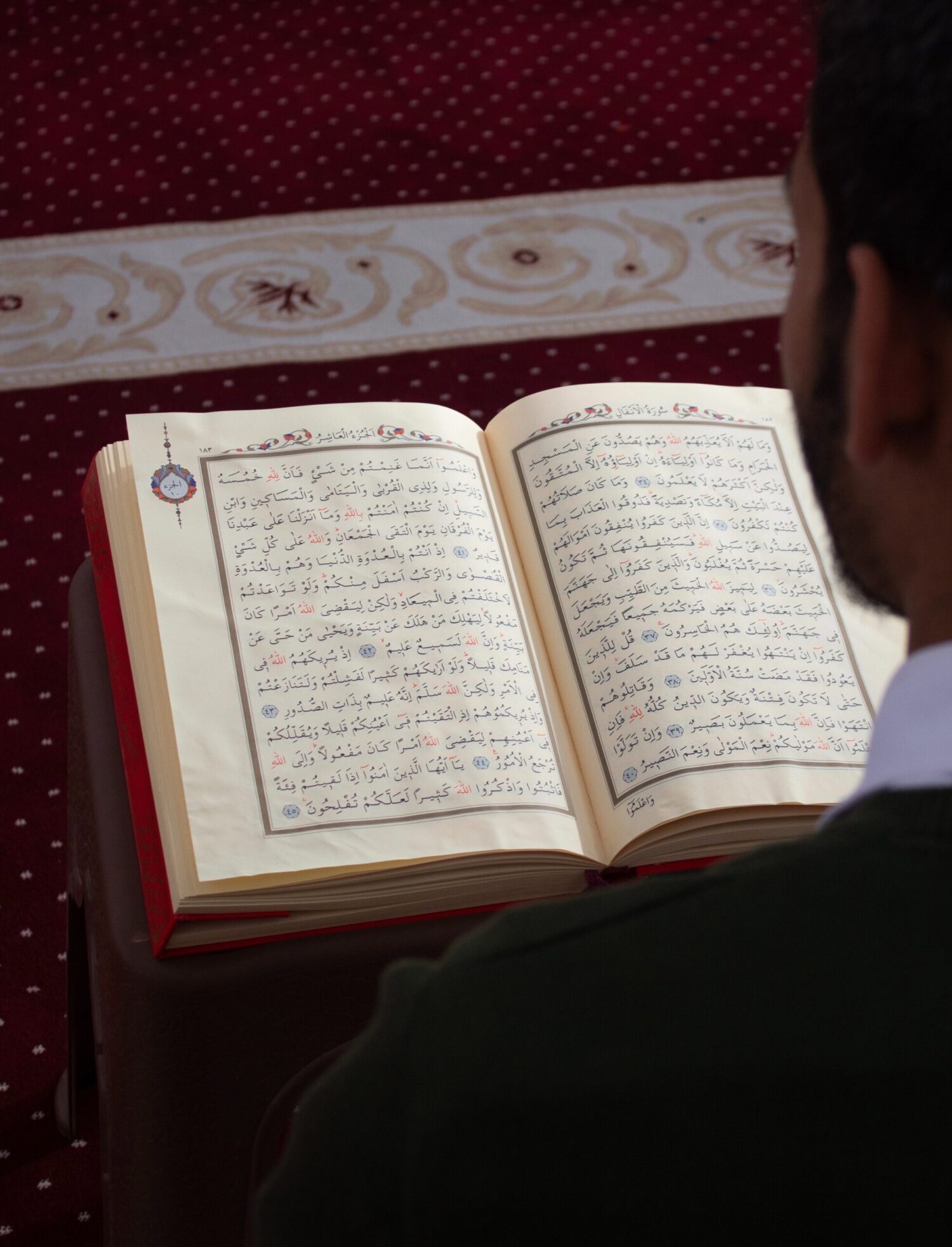
The Danish government announced plans to ban the burning of the Koran after most desecrations of Islam’s holy book sparked outrage in Muslim countries. Koran burnings in Denmark and Sweden have sparked protests in some Muslim-majority countries this year, and both countries have since stepped up security measures.
Otherwise, Chechen leader Ramzan Kadyrov threatened that after Ukraine, they will invade the countries where people have burned the Koran.
Photo by Emre Ateşoğlu: https://www.pexels.com/photo/man-reading-koran-16066399/
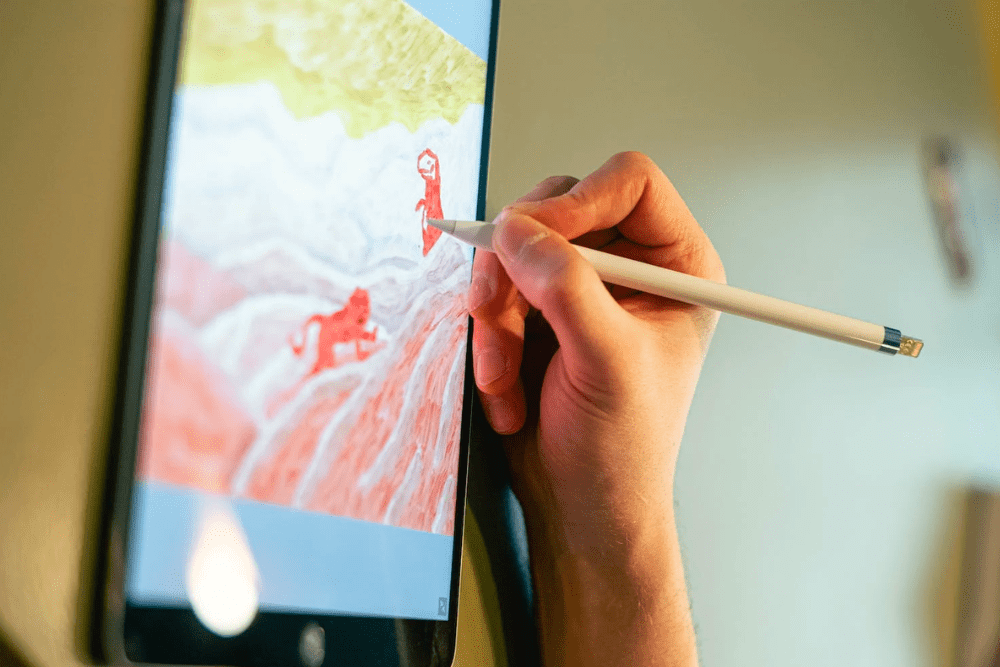
In recent decades, a new form of art has emerged – digital art.
Throughout the course of history the world of art has undergone changes. From cave paintings, to the masterpieces of the Renaissance art has always served as a medium for human creativity and self expression. In times a new form of artistic expression has emerged; digital art. This article takes a look at how digital art has evolved over the years from its beginnings to its prominent position in todays art world.
The Birth of Digital Art:
The advent of computers and digital technology in the mid 20th century laid the groundwork for the birth of art. In the 1950s artists like Ben F. Laposky began experimenting with images created by manipulating circuits. These early pioneers utilized analog computers to produce captivating patterns and abstract designs.
The Rise of Computer Graphics;
In the 1960s computer technology advanced further giving rise to computer graphics. Artists and computer scientists collaborated to develop computer generated images (CGIs). Significant milestones during this time include Ivan Sutherlands Sketchpad software in 1963. Douglas Engelbarts invention of the computer mouse in 1964 – both instrumental, in shaping the evolution of digital art.
The advancement, in technology has greatly influenced the world of art with the emergence of art. With the advent of computers in the 1980s artists gained access to tools and software that allowed them to replicate traditional artistic techniques. Programs like Adobe Photoshop opened up a realm of possibilities by enabling artists to paint, draw and manipulate images digitally.
This technological shift gave rise to painting and photography as forms of art. Artists were now able to create artworks that resembled oil paintings or charcoal sketches using mediums. In addition the availability of cameras made it easier for photographers to capture images while photo editing software allowed them to enhance and modify their photos digitally.
The impact of art
The impact of art expanded beyond expression as it began permeating various industries like advertising and entertainment. Digital techniques revolutionized logo design, graphics creation and animation in the advertising field. Moreover movies started incorporating computer generated imagery (CGI) to produce effects and bring fantastical worlds to life. Throughout its evolution digital art has undergone transformations thanks to advancements in technology. From analog computers, to software applications. As a result digital art has become a part of todays landscape.
The world of tools has opened up opportunities, for artists empowering them to challenge conventions and redefine traditional artistic methods. Digital art is no longer confined to screens. Is now being exhibited in galleries, museums and online platforms well. As technology progresses the future of this evolving art form holds possibilities that we can only begin to imagine.
Some frogs glow at dusk, using a fluorescent compound, scientists say
In 2017, scientists announced a natural miracle, some frogs glow at dusk, using a fluorescent compound that we have not seen before in nature.
At the time, it was not known how many species of frogs could emit this fluorescence.
A study of 151 species of South American frogs shows the degree of fluorescence of each individual species. Data from the study suggest that fluorescence is tied to the frogs’ vision.
According to scientists, light emission affects the way frogs signal to each other. They believe that fluorescence repels predators.
“Through a field study in South America, we discovered and documented patterns of biofluorescence in tropical amphibians,” writes Florida State University biologist Courtney Witcher.
“Many things in the animal kingdom glow, but the reason is not always obvious,” scientists point out.
Fluorescence is a type of glow created when light is absorbed and re-emitted at a different wavelength, and is seen in many species, including sharks, chameleons and salamanders. Bones also fluoresce, scientists explain.
The biofluorescence produced in the skin of frogs is different from the fluorescence of other luminous animals.
Blue light, which is closest to Earth’s natural twilight, produces the strongest fluorescence, and the fluorescence itself appears primarily in two distinct peaks of visible light — green and orange, the scientists said.
Many frogs are crepuscular – that is, they are active at dusk. In some species, their eyes are designed to work best in this light, dominated by rod-shaped photoreceptors sensitive to green and blue, writes Science Alert.
Frogs’ green glow is brightest during the day, scientists explain. The parts of the body that glow are those most involved in animal communication, namely the throat and back. This suggests that biofluorescence is part of the communication toolkit of frogs.
Source: Science Alert
Illustrative Photo by nastia: https://www.pexels.com/photo/green-frog-103796/
Sometimes it is difficult to distinguish a person who frequently lies from one who suffers from mythomania
Everyone has lied at some point. This is an undeniable fact. In fact, although honesty is considered the highest moral value, it is possible that lying is accepted in some situations. You can lie to avoid revealing a surprise party or get rid of someone who will only bring unhappiness into your life, for example. But what about people who lie for no reason?
Sometimes it is difficult to distinguish a person who often lies from one who suffers from mythomania – a condition in which we can talk about compulsive lying. In this disorder, called mythomania, a person lies compulsively, constantly falsifies and distorts reality, in most cases he himself does not realize that he is lying and can even believe his own fictions and accept them as real.
Mythomania is more common in men than in women. Among the main personality characteristics of these people are low self-esteem, narcissism, little or no social skills, and a tendency to distrust other people.
What is going on in these people’s heads to lie incessantly for no reason?
Need for approval
This is one of the most common reasons for lying, but in this particular case there is no real environmental pressure to do so. This means that the subject, despite being in a social circle that accepts and welcomes him, continues to feel that he must win the approval of others and therefore lies.
Importance is given to the content of the lies
This situation is on more than one level, so let’s see it with an example. A man lies to his friends, saying he has a lot of money. When they find out that this is not the case, everyone is shocked. They are all of similar financial status and there has never been a collective admiration for those people who have more. Here the lie has nothing to do with the pressure of the environment, but with the inner judgment of the liar himself. For him, having a lot of money is one aspect that makes someone successful and he wants to be that way.
Feeling out of control
It may seem absurd, but fictional stories are under the control of the teller, not reality. For this reason, when he tells a story, he modifies it in a fantastic way. That is, the liar takes control of the narrative and the events he presents.
In this way, details and facts that could contradict each other are avoided.
Today’s invention is a continuation of yesterday’s invention
Usually these people get so far from reality in their lies that they themselves entangle a chain of lies that could hardly be unraveled.
They say what they wish were true
Although it may seem unlikely, repeating a lie many times can turn it into a collective truth. For this reason, many people narrate certain facts and aspects of themselves that reflect what they would like to be in reality.
To him who utters it, it is not a lie
After all, the words that come out of our mouths represent a message that has passed through the filters of our perception, mental processing, and memory capacity. That is, sometimes a lie to others can be a truth to us.