Persons with the condition – which is caused by a lack of melanin pigmentation, affecting skin, hair and eye colour – continue to face an uphill battle to attain a life with dignity and equality, said Muluka-Anne Miti-Drummond, the UN Independent Expert on albinism.
“My clarion call today is for Governments, UN counterparts, civil society organisations, influencers, community members and all stakeholders to reach out to persons with albinism and ensure their voices are heard – to form new partnerships and strengthen existing ones,” she said in a message to mark International Albinism Awareness Day on Tuesday.
Worldwide representation
Albinism is a rare, non-contagious, genetically inherited condition that is present at birth. It is found in both sexes regardless of ethnicity and in all countries worldwide.
Albinism is much more prevalent in sub-Saharan Africa, with estimates of one in 1,400 people being affected in Tanzania, according to the UN.
Prevalence as high as one in 1,000 has been reported for select populations in Zimbabwe and for other specific ethnic groups in Southern Africa.
Cancer and other dangers
Almost all people with albinism are visually impaired and prone to developing skin cancer.
They also face discrimination due to their skin colour, meaning they are often subject to multiple and intersecting discrimination on the grounds of both disability and skin colour. In some cultures, they have been killed for their body parts.
Over the past decade, UN human rights entities have received reports of more than 600 attacks against children and adults with albinism. Witchcraft was identified as one of the root causes of these attacks, as some believe that the body parts of people with albinism can bestow good luck or wealth.
Diversity and collaboration
This year, the International Day is being celebrated around the theme of “Inclusion is Strength”, which upholds the importance of diversity – both within and outside the albinism community.
Specifically, it highlights the value and benefits of including a broad spectrum of persons with albinism in albinism-related discussions, such as young people, women, children, older persons and LGBTQ+ persons of all races and ethnic backgrounds.
It also calls for collaborating and embracing albinism within the disability movement, and in other sectors where decisions affect persons with the condition, as well as teaming up with other groups outside the albinism movement, such as those working to advance human rights.
Translate policies into action
“Today, we have the opportunity to pause, reflect and remember that not all persons are treated equal, and that many persons with albinism continue to suffer human rights abuses and violations, often invisibly and in silence,” Ms. Miti-Drummond said.
She was adamant that persons with albinism cannot be excluded or left behind when it comes to decisions affecting them, stressing that human rights laws, policies and dialogue, must include issues relating to albinism.
“More critically, these must translate to actions and tangible results,” she said.
“Such a journey for inclusion should not be difficult given the myriad of human rights commitments States and stakeholders have undertaken at the international, regional, and national fora,” she added.
“Human rights mainstreaming is a common mantra, and the challenges faced by persons with albinism can be eliminated through strengthened partnerships and collaboration.”
WHO’s representative in Ukraine Dr. Jarno Habicht told reporters that after the collapse of the dam caused severe flooding and massive displacement, the agency’s primary concern was the potential outbreak of waterborne diseases such as cholera and typhoid, as well as rodent-borne diseases.
The agency’s teams were monitoring the situation on the ground and were ready to scale up support, he said.
Water and food security fears
Dr. Habicht noted that back in the spring, WHO had provided cholera kits to people in the Kherson region and neighbouring areas “as a preventive measure”. Water safety messages were being shared in collaboration with the Ukrainian Ministry of Health on social media, along with information materials on how to avoid getting sick from contaminated water.
But the situation was evolving fast, Dr. Habicht said, and hundreds of thousands were in need of drinking water.
He also pointed out that WHO and partners in the field were monitoring the long terms impact of the release of hazardous chemicals into the water. Food security was another major concern in the flooded settlements.
Dr. Habicht also informed of ongoing discussions with the authorities on pipelines to support neighbouring cities like Kryvyi Rih and Mykolaiv, which are experiencing water shortages.
‘Emergency within the emergency’
The WHO representative described the mental health toll of the devastation on the population as “significant”, explaining that the Dnipro River was very frequented by locals in the summer and that the humanitarian disaster in the area “ruptured people’s memories”.
The situation has compounded the population’s distress following months of attacks on civilian infrastructure and a “dark and cold winter” amid power cuts, Dr. Habicht said.
Overall, there were more than 10 million people in the country with mental health needs. “It is an emergency within the emergency,” he stressed.
Access to care
Dr. Habicht also flagged the lack of care for non-communicable diseases, with many health facilities flooded and water and electricity supply issues impacting the cold chain. He said that the water damage had similar effects on health facilities as last October’s Russian strikes on the country’s energy infrastructure. Many elderly people in the area were at particular risk due to the lack of care.
Medical supplies, including pneumonia kits and pediatric kits, were part of the humanitarian convoys to Kherson last week and this week, Dr. Habicht said. WHO and partners were also assessing needs related to the restoration of health facilities.
Working as one
Describing the organization of operations on the ground, Dr. Habicht underscored that the whole UN was working together under the leadership of Resident and Humanitarian Coordinator Denise Brown, and that every day a coordination meeting was held on how to best support hundreds of thousands of desperate civilians together with the Government of Ukraine and partners.
He also recalled that there was still no humanitarian access to the parts of the affected areas occupied by Russia, and that security guarantees needed “to go there and save lives” were currently being discussed.
Attack on Kryvyi Rih
Meanwhile, a Russian missile attack on the city of Kryvyi Rih in Ukraine’s Dnipropetrovsk region hit a residential building on Tuesday according to media reports, killing at least 11 civilians.
The central Ukrainian city is the home town of President Volodymyr Zelenskyy.
Denise Brown condemned the attack, saying that “Russia’s invasion has, once again, claimed lives and brought suffering to the people of Ukraine”, and insisting that civilians and civilian infrastructure should never be a target, in line with international humanitarian law.
The city has also been impacted by the Kakhovka dam destruction as water supply to residents has been severely limited.
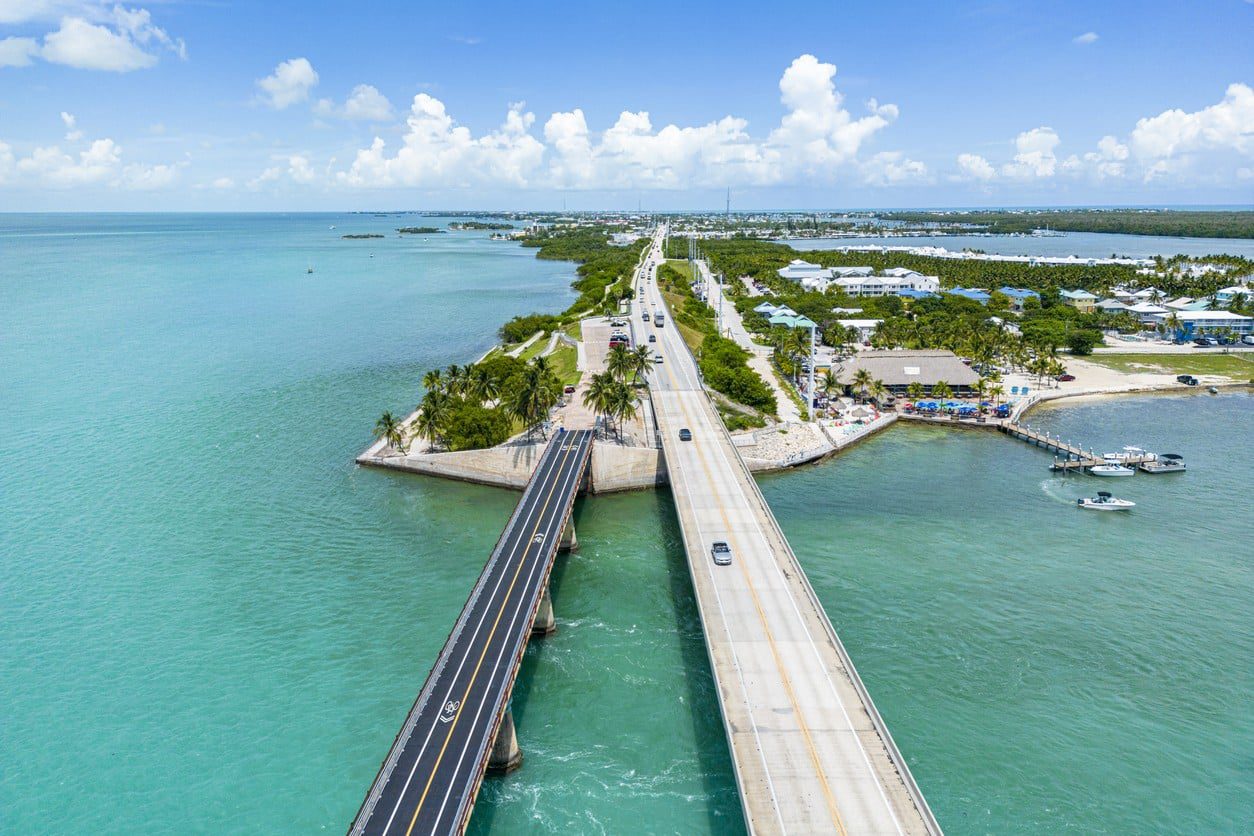
Stretching 111 miles into the open ocean, this engineering marvel connects the outlying islands of the Florida Keys to the mainland and forever changed more than just Florida
Traveling from Miami to Key West, Florida wasn’t always as carefree as it is today. In the early 20th century, the only way to reach the southernmost point of the continental United States was a day trip by boat, which depended on weather and tides.
But thanks to the stunning engineering marvel known as The Overseas Highway, which stretches 181 km miles from the southern tip of the continent through 44 tropical islands across 42 bridges, travelers seem to float along a necklace of mangroves and bays as they drive to the place, where North America and the Caribbean meet.
The Oversea Highway actually began construction as the Over-Sea Railroad and was the work of visionary Henry Morrison Flagler (known as the “Father of Modern Florida”).
In 1870, Flagler co-founded the Standard Oil Company with business magnate John D. Rockefeller, and it became one of the largest and most powerful corporations in the world at the beginning of the 20th century.
After visiting Florida and recognizing the tourist potential of the “Sunshine State”, Flagler poured much of his wealth into the region, building luxury resorts that turned one of the poorest states in the US into a winter paradise for tourists from the US Northeast from The Golden Age. However, guests have not been able to reach Flagler’s rich but remote resorts.
Thus, in 1885, Flagler connected a series of broken railroads along Florida’s Atlantic coast from Jacksonville, at the northern tip of Florida, to Miami, near the southern tip of the state. Miami was supposed to be the terminus of the line, but when the United States began construction of the Panama Canal in 1904, Flagler saw enormous potential for Key West, the closest American piece of land to the canal and the deepest port in the southeastern United States.
The bustling center was already thriving thanks to the production of cigars, mushrooms and fishing (by 1900 Key West was the largest city in Florida), but the island’s remote location made it difficult and expensive to transport goods north.
So Flagler decided to extend his route 150 miles (251 km) south to Key West, mostly over open sea. This so-called expansion was considered impossible by many of his contemporaries, and his vision was called “Flagler’s Folly” by his critics. Between 1905 and 1912, three hurricanes hit the construction site, killing more than 100 workers. Undeterred, Flagler pressed on.
The railroad took seven years, $50 million ($1.56 billion today) to build, and 4,000 African-American, Bahamian, and European immigrants who had to battle alligators, scorpions, and snakes while toiling in harsh conditions.
When the railway was finally completed in 1912, it was called the “eighth wonder of the world”. During the first launch of the Key West train from Miami, the then 82-year-old Flagler stepped out of his personal luxury carriage (which can be seen at the Flagler Museum in Palm Beach) and allegedly whispered to a friend, “Now I can die happy. My dream is fulfilled.”
The fact that Flagler funded more than $30 million out of his own pocket is remarkable,” says Florida historian Brad Bertelli. “Jeff Bezos or Bill Gates could do it today. Elon Musk with his SpaceX may be the best modern comparison.”
The railroad operated until 1935, when the deadliest hurricane in a century swept away miles of tracks. Instead of being restored, Flagler’s masterpiece was reshaped to accommodate America’s newfound love of cars.
In 1938, the US government set out to build one of the world’s longest causeways, relying on Flagler’s seemingly indestructible bridges that could withstand 200 mph winds. Crews laid the tracks so cars could run, and the newly opened Overseas Highway forever transformed the remote islands of the Florida Keys into the thriving tourist destination they are today.
More than a century after the railroad was completed, 20 of the original bridges still carry passengers from Miami to Key West. You can cover the distance in less than four hours, but getting around on the way is part of the fun. A series of fascinating, unusual stops help travelers better appreciate how this engineering marvel came to be and its lasting impact on the Florida Keys.
Key Largo is the northernmost part of the Florida Keys, 70 miles south of Miami, and is a great first stop. Alligators, snakes and other aquatic life may have terrified Flagler’s construction crews, but these days travelers come to Key Largo (the self-proclaimed “diving capital of the world”) to marvel at the abundant marine life. The Florida Keys National Marine Sanctuary, adjacent to John Pennekamp State Park, attracts scuba divers looking to dive into North America’s only living barrier reef.
The seagrass here is vital for fish, manatees and sea turtles, but the main attraction is swimming in the outstretched arms of Christ of the Deep, a submerged three-metre bronze statue of Jesus that has watched over visitors since 1965.
After this adventure, visitors head to Islamorada, a community located halfway between Miami and Key West that once housed a Marine Railroad station. Here at the Keys History and Discovery Center, a 35-minute documentary tells the story of the railroad’s construction and the many obstacles it encountered. The museum also displays artifacts from the train’s golden era, including dishes from the dining car, as well as an original menu where a steak cost $1.60.
From 1908 to 1912, about 400 workers lived in a camp on Pigeon Key, a small coral island located 56 km south of Islamorada, while they built the most difficult part of the Oversea Railway – the famous Seven Mile Bridge (colloquially called ” The old seven”), which connects Middle and Lower Key.
In 1909, civil engineer William Jay Krum was tasked with the daunting task of crossing 10 kilometers of open water. Construction crews are working around the clock, driving more than 700 piers into the middle of the ocean, sometimes almost 9 meters below sea level, to build the world’s longest bridge. They are assisted by divers who help create underwater concrete footings to support the weight of the railway.
The remains of the old construction camp can be reached by taking a tourist train over the old bridge from the town of Marathon to Pigeon Key. A 3.5 km section (the only accessible section) reopened in January 2022 after a five-year, $44 million renovation. Closed to other vehicular traffic, the once crumbling bridge is now a safe playground for those who want to ride a bike or rollerblade 19 meters above the crystal clear water or watch marine life such as sea turtles and sharks.
Today, only four permanent residents live on Pigeon Key. The five-acre island is now a National Historic Landmark and is powered primarily by solar energy. It’s also home to a museum that offers guided tours of several buildings that once housed the workers and tells the story of what daily life was like for the crew who built the Seven Mile Bridge.
Travelers along the length of the Overseas Highway today know the trip is over when they see US Mile 1 in Key West.
The sign marks the southernmost point in the contiguous US, meaning travelers are now closer to Cuba (144 km south) than Miami (212 km north). But while many visitors head straight for the city’s main drag, Duval Street, or the Ernest Hemingway House and Museum, the small but informative From Sails to Rails Museum is worth checking out.
Next year, Parliament is scheduled to hold 14 plenary sessions, of which eleven are four-day sessions in Strasbourg, two are two-day sessions in Brussels, and a single one-day session commemorating Holocaust Remembrance Day in Brussels.
European Parliament elections will take place between 6 and 9 June 2024.
Unsustainable consumption in Europe and beyond is one of the main drivers of climate change, biodiversity loss and pollution. According to two European Environment Agency (EEA) briefings, published today, efficiency gains in production have reduced some environmental impacts but alone they are unlikely to bring Europe’s consumption to a sustainable level. Deeper transformation of consumption patterns will be needed.
The EEA analysis shows that most environmental pressures from household consumption in Europe have not changed significantly from 2000 to 2019: greenhouse gas emissions and air pollutant emissions decreased but the use of land, materials and water increased or remained relatively stable. In the same period, household consumption in the EU increased by 26%, with about three quarters of the expenditure going to food, housing and services.
The EEA briefing highlights that Europe’s current consumption trends are not sustainable as efficiency gains in the production value chain do not appear to be enough to compensate for the increasing consumption levels in the long run. Moreover, many ecosystems are already under pressure beyond their regeneration capacity.
Sustainable and circular consumption
According to the EEA briefing on conditions and pathways for sustainable and circular consumption in Europe, moving towards a more circular economy in Europe, with more reuse, less waste and more consideration for biodiversity, can considerably reduce negative impacts of our consumption. This requires strong policies, new business models and changes in consumption patterns.
More specifically, the EEA briefing outlines that reduced pressures and impacts can be achieved by shifting consumption to products and services that use less materials or renewable and recycled resources; by consuming less through, for example, longer product lifespans or sharing models that can reduce the demand for new products; and by scaling up circular product design that enables longer use and easier repairs, reuse and recycling.
The EEA briefings are underpinned by a more detailed report by the EEA’s European Topic Centre on Circular Economy and Resource Use (ETC/CE).
The voluntary pension fund was created in 1990, when there was no single statute for MEPs. The fund was closed in 2009, which meant that no MEPs could join the scheme as of 2009 when the new MEPs’ single statute entered into force.
From the moment she came in office, President Metsola tasked the Parliament services to assess the situation and look for the best measures to mitigate the impact of the deficit as swiftly as possible.
The measures adopted today by the Bureau modify the conditions of the scheme. These reduce the nominal amount of the pensions by 50% and freeze the automatic indexation of the pension amount for all beneficiaries, while increasing the pensionable age from 65 to 67 for the beneficiaries not yet in pension.
The Bureau also creates a 6 months possibility for all beneficiaries to withdraw voluntarily from the pension scheme via a one-off payment.
These far-reaching measures are primarily aimed at reducing the actuarial deficit of the fund, thus putting it on a more sustainable path.
The Bureau also agreed to review the situation and the impact of these decisions end of 2024 and to consider at that stage if further actions are to be envisaged.
Background
Over the years, Parliament took a number of measures to keep the actuarial deficit of the voluntary pension fund manageable, such as raising the pensionable age and introducing a levy of 5% on pension payments. The final judgment of the Court of Justice of the European Union on appeals lodged against the rulings of the General Court was delivered on 9 March and confirmed the rulings, r recognizing the competence of the Bureau to modify the scheme and paving the way for swift actions by the Bureau.
The use of artificial intelligence in the EU will be regulated by the AI Act, the world’s first comprehensive AI law. Find out how it will protect you.
As part of its digital strategy, the EU wants to regulate artificial intelligence (AI) to ensure better conditions for the development and use of this innovative technology. AI can create many benefits, such as better healthcare; safer and cleaner transport; more efficient manufacturing; and cheaper and more sustainable energy.
In April 2021, the European Commission proposed the first EU regulatory framework for AI. It says that AI systems that can be used in different applications are analysed and classified according to the risk they pose to users. The different risk levels will mean more or less regulation. Once approved, these will be the world’s first rules on AI.
What Parliament wants in AI legislation
Parliament’s priority is to make sure that AI systems used in the EU are safe, transparent, traceable, non-discriminatory and environmentally friendly. AI systems should be overseen by people, rather than by automation, to prevent harmful outcomes.
Parliament also wants to establish a technology-neutral, uniform definition for AI that could be applied to future AI systems.
The new rules establish obligations for providers and users depending on the level of risk from artificial intelligence. While many AI systems pose minimal risk, they need to be assessed.
Unacceptable risk
Unacceptable risk AI systems are systems considered a threat to people and will be banned. They include:
Cognitive behavioural manipulation of people or specific vulnerable groups: for example voice-activated toys that encourage dangerous behaviour in children
Social scoring: classifying people based on behaviour, socio-economic status or personal characteristics
Real-time and remote biometric identification systems, such as facial recognition
Some exceptions may be allowed: For instance, “post” remote biometric identification systems where identification occurs after a significant delay will be allowed to prosecute serious crimes but only after court approval.
High risk
AI systems that negatively affect safety or fundamental rights will be considered high risk and will be divided into two categories:
1) AI systems that are used in products falling under the EU’s product safety legislation. This includes toys, aviation, cars, medical devices and lifts.
2) AI systems falling into eight specific areas that will have to be registered in an EU database:
Biometric identification and categorisation of natural persons
Management and operation of critical infrastructure
Education and vocational training
Employment, worker management and access to self-employment
Access to and enjoyment of essential private services and public services and benefits
Law enforcement
Migration, asylum and border control management
Assistance in legal interpretation and application of the law.
All high-risk AI systems will be assessed before being put on the market and also throughout their lifecycle.
Generative AI
Generative AI, like ChatGPT, would have to comply with transparency requirements:
Disclosing that the content was generated by AI
Designing the model to prevent it from generating illegal content
Publishing summaries of copyrighted data used for training
Limited risk
Limited risk AI systems should comply with minimal transparency requirements that would allow users to make informed decisions. After interacting with the applications, the user can then decide whether they want to continue using it. Users should be made aware when they are interacting with AI. This includes AI systems that generate or manipulate image, audio or video content, for example deepfakes.
Next steps
Parliament is set to agree its negotiating position in June 2023, after which talks will begin with EU countries in the Council on the final form of the law.
The aim is to reach an agreement by the end of this year.
ThePlan of Action for Women in Communities to Counter Hate Speech and Prevent Incitement to Violence that Could Lead to Atrocity Crimes (otherwise known as The Napoli Women in Communities Plan of Action) is based on a year-long consultation with women across the world working in the field of countering hate speech and preventing atrocity crimes.
It aim to empower women to contribute more systematically and significantly to countering the scourge and preventing incitement to violence that could lead to atrocities being committed.
‘Enduring challenge’
“First, the prevention of atrocity crimes – genocide, war crimes, ethnic cleansing, and crimes against humanity – remains an enduring challenge. It is at the heart of the mission of the United Nations,” noted Secretary-General António Guterres in remarks at the launch event, read by his Chef de Cabinet, Courtenay Rattray.
“Second, atrocity crimes have a gendered dimension, so efforts to prevent and respond to them must also take gender into account,” said the UN chief, underscoring the critical importance of the initiative for two reasons:
The Napoli Women in Communities Plan of Action was drafted from a women’s perspective, which contributed to mainstreaming women’s voices and experiences.
Failure to support
“We need to rethink how we approach prevention, starting by acknowledging that we have failed at including women and supporting their role in the prevention of genocide and other atrocity crimes,” noted Special Adviser of the UN Secretary-General on the Prevention of Genocide, Alice Wairimu Nderitu, who is also the UN Focal Point on Hate Speech.
Her view was echoed by the Permanent Representative of Italy to the United Nations, Maurizio Massari, who is also the Vice President of the UN Economic and Social Council – ECOSOC.
“If we want to fully include a women’s perspective and promote women-led initiatives aimed at countering hate speech, we must ensure that their voices are heard, and even more so, that their voices count at the table where decisions are taken,” noted Ambassador Massari.
Deliberations on The Napoli Women in Communities Plan of Action began in Napoli, Italy, with a meeting convened by OSAPG, on 13 and 14 June 2022, which resulted in Monday’s policy document, urging all relevant stakeholders to ensure that women are engaged – have the opportunity to engage, or have an increasing capacity to engage – in countering hate speech and preventing incitement to violence that could lead to atrocity crimes.
That’s the latest from the UN’s aid coordination office (OCHA), which tweeted that the UN and its humanitarian partners have delivered vital supplies, mainly water, hygiene items and food, to cover the needs of nearly 180,000 people, despite the difficult conditions.
The number of people reached with aid is up five-fold since 9 June.
“Drinking water continues to be an issue”, and long-term solutions are needed immediately, the UN’s top official in the country, Denise Brown, said on Sunday, speaking from an evacuation point in Kherson city.
In a video tweet, she said that it was some solace at least to see “people coming together”, at a humanitarian hub she visited, which is supporting evacuees from the flood zone.
Volunteers, the authorities, agencies and other humanitarians had brought supplies, clothes, support and food, “to ensure that people like the people I have been meeting today…have a safe place to sleep, food to eat and support.”
IAEA still concerned over nuclear safety
Meanwhile, the UN’s nuclear safety watchdog, IAEA, has stressed the need to “clarify the reason for a significant discrepancy” between different measurements of the height of the reservoir whose water cools the Zaporizhzhya nuclear power plant occupied by Russia.
The level has been “dropping rapidly” since the Kakhovka dam, situated not far downstream from the power plant, was destroyed last week.
Aid continues
UN humanitarians in the region, along with partners, continue to deliver help those impacted, said UN Spokesperson Stéphane Dujarric, briefing correspondents in New York.
He said apart from the delivery of mainly water, hygiene items and food for nearly 180,000 – up from the 35,000 people reached last Friday – the UN was also supporting people impacted by water availability in the south of the country.
“Today, we delivered water and hygiene items to nearly 2,000 people facing water shortages in Pokrov, in the Dnipro Region. In total, since the dam was destroyed on 6 June, we have reached more than 5,000 people with cash and distributed more than 800,000 litres of bottled water and 70,000 monthly rations of ready-to-eat food.”
Mines alert
He said around 100,000 people had been reached regarding the risk of mine contamination, due to floodwater.
“We will continue to make every effort to help people in southern Ukraine, while also sustaining our humanitarian response in parts of the country heavily impacted by the Russian invasion”, Mr. Dujarric added.
On Monday’s World Day against Child Labour, the International Labour Organization (ILO) shared these staggering numbers as a reminder of the urgent need to end this practice.
ILO’s Director-General Gilbert Houngbo said that for the first time in 20 years, child labour is on the rise.
“Child labour rarely happens because parents are bad, or do not care. Rather, it springs from a lack of social justice,” he said.
Solutions: decent work, social protection
Mr. Houngbo stressed on Twitter that the “most effective solutions” to the child labour emergency are decent work for adults, so that they can provide for their families, and improved social protection.
He also underscored that tackling the root causes of child labour requires
ending forced labour, creating safe and healthy workplaces, letting workers organize and make their voices heard, as well as ending discrimination, since child labour often affects the most marginalized.
Staggering figure for sub-Saharan Africa
More than half of all those subjected to child labour – some 86.6 million – are in sub-Saharan Africa, according to joint research by the ILO and the UN Children’s Fund (UNICEF).
Almost 24 per cent of all children in the region, or close to one in four, are in child labour.
Bulk of child labour in agriculture
Most of those in child labour on the African continent, and indeed worldwide, work in agriculture. The UN’s Food and Agriculture Organization (FAO) said on Monday that agriculture accounts for 70 per cent of child labour globally and that the numbers of youngsters working in the sector are on the rise.
FAO stressed that child labour was three times more prevalent among rural smallholders in farming, fisheries or forestry than in urban areas.
The agency emphasized that children often assist their parents in producing crops, rearing livestock or catching fish, “mainly for family consumption”, and that while not all this work is considered child labour, “for too many children, their work, particularly in agriculture, goes beyond the limits of safety and well-being and crosses into a form of labour that can harm their health or educational opportunities”.
Children carry bundles of sticks along the road in North Kivu province in the Democratic Republic of the Congo.
‘Ensure that children have a childhood’
FAO underscored the need to tackle the issue “from the field right up to the global level, to ensure that children have a childhood”.
The agency is working with partners on eliminating child labour in key sectors such as cocoa, cotton and coffee. Together with ILO and the European Union, FAO has reached more than 10,000 women, men, youth and children in Burkina Faso, Mali and Pakistan as part of a project aiming to address child labour in cotton value chains by improving households’ livelihoods, empowering women economically, and raising awareness of the problem.
FAO has also developed a framework on ending child labour in agriculture, aiming to provide guidance to policymakers, and has supported countries such as Uganda and Cabo Verde in developing prevention policies.