“The international community’s response to the crisis in Myanmar is failing, and that failure has contributed to a lethal downward spiral that is devastating the lives of millions of people,” Tom Andrews, Special Rapporteur on the situation of human rights in Myanmar, said at the end of a 10-day official visit to Japan.
Referring to the worsening situation in the country, he said Senior General Min Aung Hlaing, who has led the junta since the February 2021 coup, had responded to widespread opposition to their rule with “barbarism and oppression” against the people of Myanmar.
‘Hallmarks of the junta’
“Arbitrary detention, torture and systematic attacks on villages have become hallmarks of the junta,” he said. “The military is repeatedly attacking civilian populations throughout the country and has quite literally made war on the Myanmar people.”
Japan’s leadership will be “vital” in recalibrating a failing international response to the crisis, he said, calling on Tokyo to work with regional and global allies to weaken the capacity of Myanmar’s military junta to attack its citizens.
‘This is an emergency’
The Special Rapporteur also raised alarms about an impending humanitarian disaster in the Rohingya refugee camps in Bangladesh. Without immediate additional funding, a decision to cut food rations by an additional 20 per cent will be made in the coming weeks, reducing daily food rations to 27 cents per person. The cuts would also potentially eliminate food rations completely for hundreds of thousands.
“This is an emergency,” he warned, adding that he had visited Japan based on his belief Tokyo has an “essential” role to play in resolving the crisis. “Further cuts will leave the Rohingya, already victims of genocidal attacks in Myanmar, at risk of starvation and drive thousands into boats and dangerous land routes in utter desperation.”
Impose sanctions
As such, he called on the Government of Japan and all Member States to immediately increase humanitarian contributions, including by redirecting funds from development programmes in Myanmar. He also urged Japan to impose targeted economic sanctions on the Myanmar military and its key sources of funding, just as it is doing in response to the crisis in Ukraine.
“Economic sanctions that deprive the junta of the resources required to operate its war-making machinery would weaken the capacity of the junta to attack its people,” the Special Rapporteur said.
Renounce ‘fraudulent’ elections
In addition, he urged Japan to terminate a Ministry of Defence training programme for military personnel from Myanmar, referencing credible reports linking previous trainees to military units that have committed atrocities against civilians.
He also called on the Government of Japan to clearly and consistently renounce the junta’s plan to stage fraudulent national elections as a means of legitimizing itself.
“It is not possible to hold a genuine election when opposition leaders are arrested, detained, tortured and executed, when key political parties have been dissolved, when it is illegal to criticize the junta, and when journalists are imprisoned for doing their job,” he said.
The upcoming Group of Seven (G7) Summit of leading economies in Hiroshima presents an opportunity for Japan to shine a light on the situation in Myanmar before the world, he said, urging the Prime Minister to ensure that the crisis is high on the agenda and that a strong, unified message and action emerges.
Unsplash/Harish Shivaraman
The Sule Pagoda in downtown Yangon, Myanmar.
Special Rapporteurs
Special Rapporteurs and other rights experts are appointed by the UN Human Rights Council, are mandated to monitor and report on thematic issues or country situations, are not UN staff, and do not receive a salary for their work.
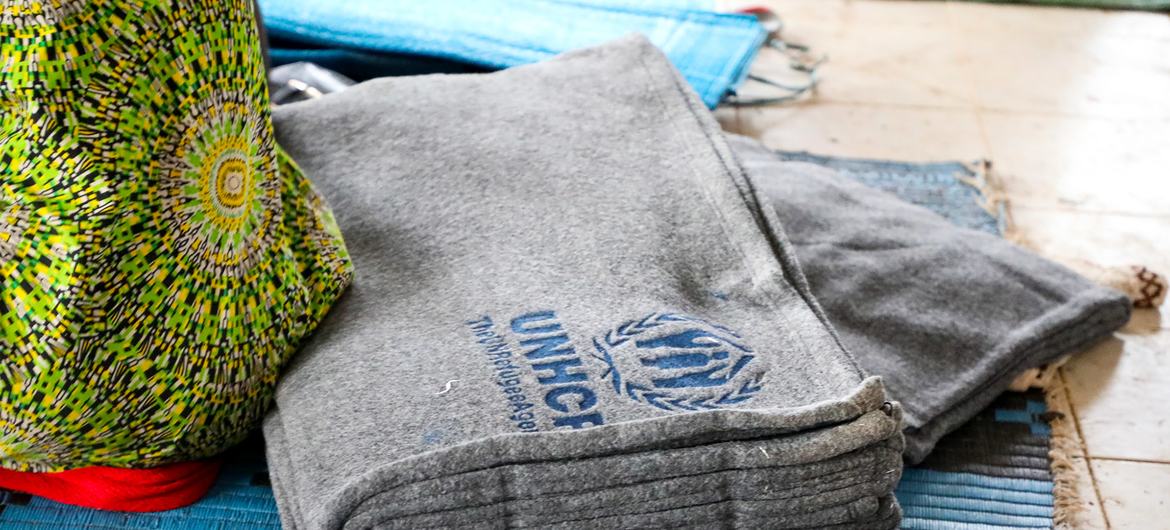
Civilians in Sudan, including scores of internally displaced people and refugees, are scrambling for safety and suffering the disastrous consequences of the violence there, as many aid operations have been forced to pause, UN humanitarians said on Friday.
The UN refugee agency (UNHCR) said that tens of thousands of refugees from South Sudan, Ethiopia and Eritrea living in the country have fled the fighting between the Sudanese Armed Forces (SAF) and the Rapid Support Forces (RSF) in the Khartoum area.
#Sudan's Human rights situation dramatically deteriorating. Hundreds of thousands have fled. Thousands of others trapped by the fighting & face acute shortages. We call on the parties to immediately end hostilities. Protecting civilians must be paramount https://t.co/mWw4W66NONpic.twitter.com/nBlfqwub7l
The newly displaced have found shelter in existing refugee camps further east and south, creating new humanitarian challenges.
UNHCR is also particularly concerned about the situation in the Darfur region, where fears are deepening of a revival of ethnic tensions.
Darfur alert
The agency’s representative in Sudan, Axel Bisschop, told reporters in Geneva that Darfur might present the “biggest challenge” from a humanitarian point of view. “We’re concerned that the intercommunal violence is going to increase and that we might have some situations which will repeat in relation to what we had a couple of years ago,” in a region which has already experienced severe conflict and displacement, he said.
UNHCR stressed that Darfur presents “a myriad of pressing protection issues”, highlighting that a number of sites hosting internally displaced people have been burned to the ground, while civilian houses and humanitarian premises have been hit by bullets.
Concerns over the region are shared by the UN rights office (OHCHR), which warned on Friday of a “serious risk” of violence escalating in West Darfur as the hostilities between the RSF and SAF have triggered intercommunal violence.
OHCHR spokesperson Ravina Shamdasani said that in El Geneina, West Darfur, “deadly ethnic clashes” have been reported and an estimated 96 people have been killed since 24 April.
Guterres ‘deeply grateful’ to governments aiding UN evacuation
The UN Secretary-General expressed his gratitude to France and other nations who have helped with the relocation and evacuation of UN staff from Khartoum and elsewhere this week.
In a statement issued by his Spokesperson, he highlighted help from France in safely transporting more than 400 UN personnel and dependents out of Sudan.
“The French Navy transported more than 350 of our colleagues and their families from Port Sudan to Jeddah, in Saudi Arabia, on Tuesday night.”
On Thursday, more than 70 UN and affiliated personnel, as well as others, were flown on a French Air Force plane from El Fasher, Sudan, to the capital of Chad.
“We also thank the authorities in the Kingdom of Saudi Arabia, Chad, Kenya and Uganda for facilitating the arrival of our colleagues and their families.
The Secretary-General is also very thankful to the many other Member States, including the United States, Jordan, Sweden, Germany, the United Kingdom and Canada, who have assisted in ensuring the safe transport of UN personnel.”
Rights abuses rise
The overall death toll in the conflict has risen to at least 512, according to the latest figures from the Sudanese Ministry of Health quoted by OHCHR on Friday, with the understanding that this is almost certainly a very conservative estimate.
While the fragile ceasefire has led to a decrease in fighting in some areas, allowing some to flee their homes in search of safety, human rights abuses against people on the move – such as extortion – have been rife, Ms. Shamdasani said.
Mr. Bisschop said that Sudan hosts over a million refugees, notably from South Sudan, Ethiopia and Eritrea.
UNHCR has received reports of around 33,000 refugees having fled from Khartoum to refugee camps in White Nile State, 2,000 to the camps in Gedaref and 5,000 to Kassala since the start of the crisis two weeks ago.
Thousands of people – Sudanese citizens, including many internally displaced people, and refugees living in Sudan – have also fled the country.
UNHCR spokesperson Matthew Saltmarsh said that in Chad, UNHCR together with the Government has registered around 5,000 arrivals so far, and that at least 20,000 have crossed.
Some 10,000 people have crossed to South Sudan, while in Egypt, Central African Republic and Ethiopia, there have been an unknown number of arrivals, given the speed at which the situation is unfolding and the scale of the country.
UNHCR said the security situation has forced it to “temporarily pause” most of its aid operations in Khartoum, the Darfurs and North Kordofan, where it has become “too dangerous to operate”.
“The suspension of some humanitarian programmes is likely to exacerbate protection risks faced by those who rely on humanitarian assistance to survive,” UNHCR warned.
Mr. Bisschop said that UNHCR was working closely with the UN World Food Programme (WFP), to see how the food that is already positioned in the country can be provided.
Brenda Kariuki, WFP’s Regional Communications Officer for East Africa, said that amid the crisis, millions more across the region could be plunged into hunger. In Sudan, security threats to humanitarian operations, as well as the looting of WFP supplies from warehouses and the theft of vehicles used to transport aid, were depriving the most vulnerable of desperately needed assistance, the UN agency said.
Around one-third of the country’s population, or some 15.8 million people, were already in need of aid before the fighting started. The UN’s 2023 Sudan Humanitarian Response Plan, for a total of $1.7 billion, remains only 13.5 per cent funded.
Healthcare in jeopardy
Meanwhile, the World Health Organization (WHO) reported on Thursday that in Khartoum, more than 60 per cent of health facilities are closed and only 16 per cent are operating as normal.
WHO spokesperson Christian Lindmeier told media in Geneva on Friday that WHO has verified 25 attacks on healthcare since the start of the fighting, which killed eight people and injured 18.
The UN Children’s Fund (UNICEF) previously warned that the ongoing violence has disrupted “critical, life-saving care” for some 50,000 children suffering from severe acute malnutrition.
Experts appointed by the UN Human Rights Council on Friday called for Singapore to impose an immediate moratorium on capital punishment, denouncing the Government’s continued use of the death penalty for drug-related crimes.
They strongly condemned the execution this week of Tangaraju s/o Suppiah, who was convicted of conspiring to traffic cannabis from Malaysia to the country in 2013.
Fair trial concerns
Mr. Suppiah, a 46-year-old Tamil from Singapore, was hanged on Tuesday despite claims that he had not been provided with adequate interpretation during police interrogations.
“The death penalty can only be carried out after a legal process with every possible safeguard that ensures a fair trial, including legal representation at every stage of proceedings and necessary interpretation in all oral proceedings,” the experts said.
Alarming executions rate
They added that the rate of execution notices for drug-related offences in Singapore was “highly alarming”.
Mr. Suppiah reportedly was the 12th person to be hanged since March 2022, according to the UN human rights office, OHCHR, which had urged the Government not to go ahead with his execution, citing concerns around due process and respect for fair trial guarantees.
The UN experts said States that have not yet abolished the death penalty may only impose capital punishment for the most serious crimes.
“Under international law, only crimes of extreme gravity involving intentional killing can be considered as ‘most serious’. Drug offences clearlydo not meet this threshold,” they argued.
Discrimination against minorities
The rights experts also voiced concerns about discriminatory treatment of people from minority groups, such as Mr. Suppiah, as well as reports of reprisals against their lawyers.
Mr. Suppiah was sentenced under Singaporean law, which makes capital punishment mandatory for certain offences, including drug-related convictions. The experts said the mandatory sentencing law strips judges of discretion to consider individual cases, context and circumstances.
“We reiterate that the mandatory use of the death penalty constitutes an arbitrary deprivation of life, since it is imposed without taking into account the defendant’s personal circumstances or circumstances of the particular offence,” they said.
About UN experts
The nine experts monitor and report on issues such as extrajudicial, summary and arbitrary executions; arbitrary detention, and minority rights.
They serve on a voluntary basis and are independent from any Government or organization.
They are not UN staff and do not receive payment for their work.
In light of the International Workers’ Day on 1 May, the European Union of Christian Democratic Workers calls on the strengthening of European industry and the promotion of well-paid high quality jobs.
“The digital and green transition will have a severe impact on our European economy. We are now setting the course for the future and we need to decide whether we want to keep key industries and quality jobs in Europe or if we will push them away to the USA or China”, says EUCDW president Dennis Radtke.
“The fight against climate change is a challenge for a whole generation, but the industry has to be part of the solution and not the problem. Setting the right incentives to invest rather than banning technologies must be the way forward to a just transition.”
EUCDW Secretary-General Cindy Franssen adds:
“The European industry should foster the green and digital transition and promote the creation of quality jobs with fair and safe working conditions and the promotion of collective bargaining. More than ever, we need a strong collaboration with all stakeholders involved: EU, Member States and social partners. That is the only way forward to a successful transition with respect for worker’s rights.”
On June 30, the fifth and last movie about Indiana Jones – “Clock of Fate” is released. It will have its world premiere at the Cannes Film Festival on May 18, when Harrison Ford will receive a Lifetime Achievement Award. On this date, but 15 years ago, “Kingdom of the Crystal Skull” was also released.
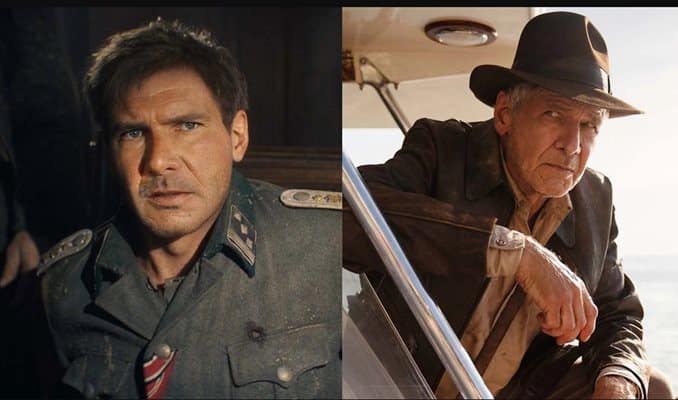
The event is expected with great interest also because of the scenes in which Harrison Ford is digitally rejuvenated. With them, it goes back to the previous series, especially the first two. This was necessary because just two weeks after the premiere – on July 13, the legendary actor turned 81 years old.
Something else, however, is historical. It is the first film in the series not to be directed by Steven Spielberg and not written by George Lucas, who are executive producers. And the first that does not come out of the film studio “Paramount”, after “Walt Disney” bought “Lucasfilm” in 2012.
Harrison Ford is digitally rejuvenated for the beginning of the strip, which takes place in 1944. It then jumps to 1967, where he plays with his own image. The modern IML software was used, which had previously been applied to the images of Robert De Niro, Al Pacino and Joe Pesci. At first, Spielberg was against the idea, but then even Harrison Ford himself was impressed with the final result.
Plans for a fifth film date back to the 1970s, when Lucas and Spielberg signed on with Paramount for four more installments following the smash hit of Raiders of the Lost Ark, which hit the screens in 1981. Lucas began to pursue a storyline for it in 2008, but the project was delayed for years. In 2012, he transferred everything to producer Kathleen Kennedy, who is the new president of Lucasfilm. But the company is focusing on the Star Wars sequels. It wasn’t until 2016 that one of the greatest screenwriters, David Koepp, was hired to write the fifth film. Everything was delayed due to script changes and in 2018 Jonathan Kasdan was hired. Koepp returns briefly and completes the script with Kasdan, Jez Butterwood and John-Henry Butterwood.
Spielberg took on the direction, but in 2020 gave it up to James Alan Mangold, known for “Copland”, “The Werewolf” and “Logan”.
Filming begins in June 2021 and ends in February 2022. Filming takes place in England, Scotland, Italy and Morocco.
The script briefly follows the life of the famous archaeologist Henry Joss Jr. in 1969. He is now a peaceful retiree during the space race. He doesn’t like that NASA has hired ex-Nazis to help defeat the USSR in it. Next to him in the adventures is his godmother Helena Shaw. His main rival is Jürgen Föhler, a former Nazi who is associated with the moon landing program. And it turned out, he wants a new world order, as he imagines it.
Photo: This is how Harrison Ford will look in different episodes of the film.
The International Trade Committee gave its green light on Thursday for another one-year suspension of EU import duties on Ukrainian exports to support the country’s economy.
Members of the International Trade Committee approved a proposal to renew the suspension of import duties, anti-dumping duties and safeguards on Ukrainian exports to the European Union for another year, against the background of Russia’s war of aggression that is hampering Ukraine’s ability to trade with the rest of the world.
The suspension of tariffs applies to fruits and vegetables subject to the entry price system, as well as agricultural products and processed agricultural products subject to tariff-rate quotas. Industrial products are subject to zero duties since 1 January 2023 under the EU-Ukraine Association Agreement, so they are not included in the new proposal.
MEPs adopted the committee’s draft report, prepared by standing rapporteur for Ukraine Sandra Kalniete (EPP, LV), by 27 votes, with 1 against and 7 abstentions.
Quote
“I strongly support renewing the trade-liberalisation measures that currently help ensure Ukrainian continuity and stability of trade amidst brutal war caused by Russia. These measures are pivotal to strengthening Ukraine’s resilience in the present and with an eye toward the future, as we work to advance Ukraine’s gradual integration in the EU internal market. Our solidarity with Ukraine is consistent, transparent, and rock-solid, which has been further reinforced by Ukraine’s EU candidate status. Ukraine’s future is in the European Union”, said Sandra Kalniete.
Background
Relations between the EU and Ukraine are regulated by an Association Agreement. The Deep and Comprehensive Free Trade Area included in the agreement has ensured preferential access to the EU market for Ukrainian businesses since 2016.
According to the Commission, the EU is Ukraine’s largest trading partner, accounting for 39.5% of its trade in 2021. Ukraine is the EU’s 15th biggest trading partner, accounting for around 1.2% of the EU’s total trade.
Next steps
The draft report is scheduled to be voted by all MEPs during the 8-11 May plenary session. The measure will apply on the day following its publication in the Official Journal of the EU.
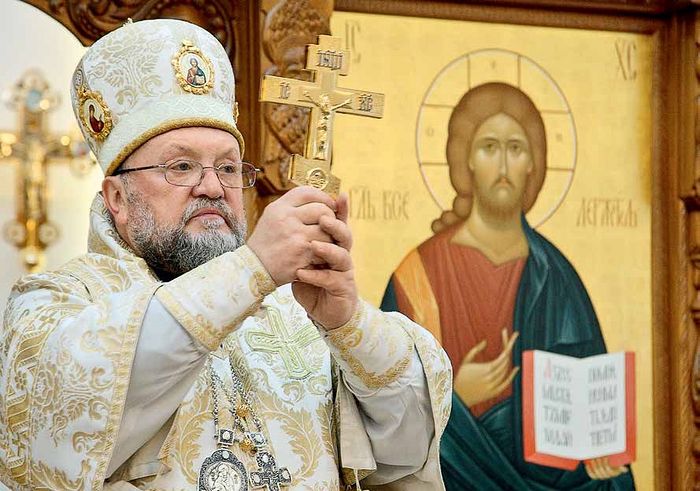
On April 22, 2023, Archbishop Artemy (Kishchenko) of Grodno (hierarch of the Belarusian Church) passed away to the Lord. He gave interviews to Pravmir more than once, and many of his wise thoughts will always be relevant. Let’s remember them. And let us remember Vladyka Artemy in prayers.
About our Christianity
We light candles, read the entire prayer books so that “everything is fine.” All these paraphernalia, the fulfillment of all these prescriptions, we see as a kind of guarantee of protection from life’s problems.
It is very calming, I would even say lulling. And under these unctuous, mournful chants, our conscience slowly falls asleep and forgets that Christianity is constant tension, constant work on oneself, for which no one outside will praise.
Something needs to be done about this situation. Of course, there is no second baptism, just like there is no second birth. But there is resuscitation, when a person finds himself in a critical situation between life and death and, in the course of the doctors’ operational actions, returns to normal again.
***
Many lay people have forgotten that the Church is something more than a “funeral service bureau”, that everything that we light candles so diligently about – health, well-being, money, success, etc. – all this is not a value for a Christian, and none of this was promised to us by Christ.
Ultimately, this contributes to the fact that religion is no longer perceived as a living communication with God, but either as a part of culture or as a national idea. <…>
This is the sobriety we need to take care of. Or rather, a new generation of priests and Christians themselves. Let there be few of them, let there be at least 12 of them in every city, but real Christians, and this leaven will be enough to raise the whole dough.
***
God knows His. And it is important for us that the persecuted Church is the triumphant Church. When the Church rots, the Lord sends her a revival through persecution. We know how our Church came to life in the period of the 20th century and how, on the contrary, in the period of freedom, forgotten, seemingly already dead sins returned to us.
About sincerity and adaptability
Christ Himself commanded: “Truly, I say to you, unless you turn and become like children, you will not enter the Kingdom of Heaven” (Mat. 18:3). To be a Christian means to be pure, open, spontaneous. And that means to respond to everything just as sincerely and directly, not to prevaricate and, most importantly, not to compromise with anything that is contrary to internal convictions, but promises external benefits.
And today we are all chameleons. Before saying anything, let’s think ten times, no matter how something happens, and how to say it in such a way that it would be as profitable and safe as possible. The child, on the contrary, always says exactly what he thinks. And that’s exactly what the Christian approach to life is – not to be afraid of anything, because Christ is with you.
***
Often, even in the Soviet period, and even in church terms, we were engaged in simple opportunism, justifying ourselves by the fact that it was necessary to save churches, it was necessary to save the lives of priests and parishioners, and for this we were ready to make any compromise, any concessions, sometimes to the detriment of our spiritual state. .
Martyrdom speaks of the opposite – no compromises, no concessions, only complete surrender to the Truth of God. This is the only way to remain a Christian when you don’t mimic the changing market conditions.
There is no need to worry about the Church beyond measure – Christ gave a promise that “the gates of hell will not prevail against her” (Matt. 16:18), which means that He Himself will help and protect her. The Church stands on the blood of martyrs, and not on opportunism. Adaptation is precisely born out of distrust of God. This is nothing but a loss of hope, an attempt to “settle” everything on our own, without His help.
About indifference
It’s hard to face indifference. When the shepherd is indifferent and does not want to do anything, when “my hut is on the edge, I only baptize and crown” – this is not pastoral work, but church craftsmanship.
And all this should be calmly endured, without emotions. I want to immediately crack and shout “Get out!”. Put another. But in front of me is a living person. Maybe in a few years it will turn into something beautiful. Just not today.
In general, it is very difficult in itself to comprehend the essence of Christianity, which we actually don’t think about at all, to search for God in ourselves and to understand the tasks of pastoring. It is difficult not to “sag under the changing world”, and even more difficult to change it…
About prayer
Christians pray first. I know that the call to prayer for many pastors sounds like an excuse, but for the parishioners it has already set the teeth on edge. But it is the greatest weapon that we ignore. It has real power. In this prayer, we demonstrate our solidarity, that we are not indifferent to what is happening.
About the missionary work of everyone
It is always worth remembering that missionary work is not the work of just a few people in the Church. It is the business of every Christian: to preach Christ by his life.
Regardless of our place in the Church, we must remember that each of our specific ministry: priest, bishop, cleaner, bell ringer, reader, etc. — is not limited to its independent function. They cannot be separated from our main and common service to all Christians – to be the salt of this world.
About experiences
I have been in the hospital four times this year. And all because of the experience! Of course, there were many important church issues and other problems, but we must always remember that the Church does not stand on us, but Christ preserves it. And in general, not everything in this life depends only on us. So take care of yourself and take care of your health! The believer knows that he lives under the gaze of God. And if so, why should he worry too much? Own sins – that’s the only reason for the experience. And the rest – no matter what happens, any difficulties, any difficulties – everything has its own educational and recreational program.
About violence
As a pastor, I’m more concerned about not the attitude towards terrorists – everything is clear with them. In particular, I am concerned about the speed with which a person turns from a victim into an aggressor.
I remember one very interesting case, which was told to me by the military prosecutor, who asked me to give communion to his father. I was still serving as a priest in Minsk then. So, one soldier raped a young girl with particular cruelty. And when his crimes were read out in the courtroom, the girl’s mother screamed in horror. At that moment, a shot rang out – the accused fell dead. The sentry, who also heard all this, could not stand it and shot at this scoundrel.
When this sentry was already judged, they considered that these were emotions, a state of passion. And he was condemned somehow very gently. But less than a year later, the prosecutor met with this guy, convicted for the second murder. He did it consciously. It would seem that he is looking for truth and justice and is ready to destroy untruth and injustice in any way, and on the other hand, he himself falls ill with this madness and begins to do evil even more than it was.
Violence breeds violence.
***
If you are a terrorist, then you are not Orthodox. Can you be an Orthodox killer? You can be a murderer, but in that case you are not Orthodox. After all, by our sin we remove ourselves from the composition of the Church.
About freedom
In general, freedom is the basis of the Christian life. Christianity is a religion of happiness that gives freedom. Man becomes happy when he is free. He is not afraid of anyone or anything. As the apostle Paul says: what can separate me from the love of God? Death? Persecution? Poverty? Hunger and cold? Yes, nothing can do that! As for death, this is only a reason for joy, this is an event that promises an early meeting with the beloved Christ.
Source: About sincerity, freedom and prayer (From interviews with Pravmir in different years)
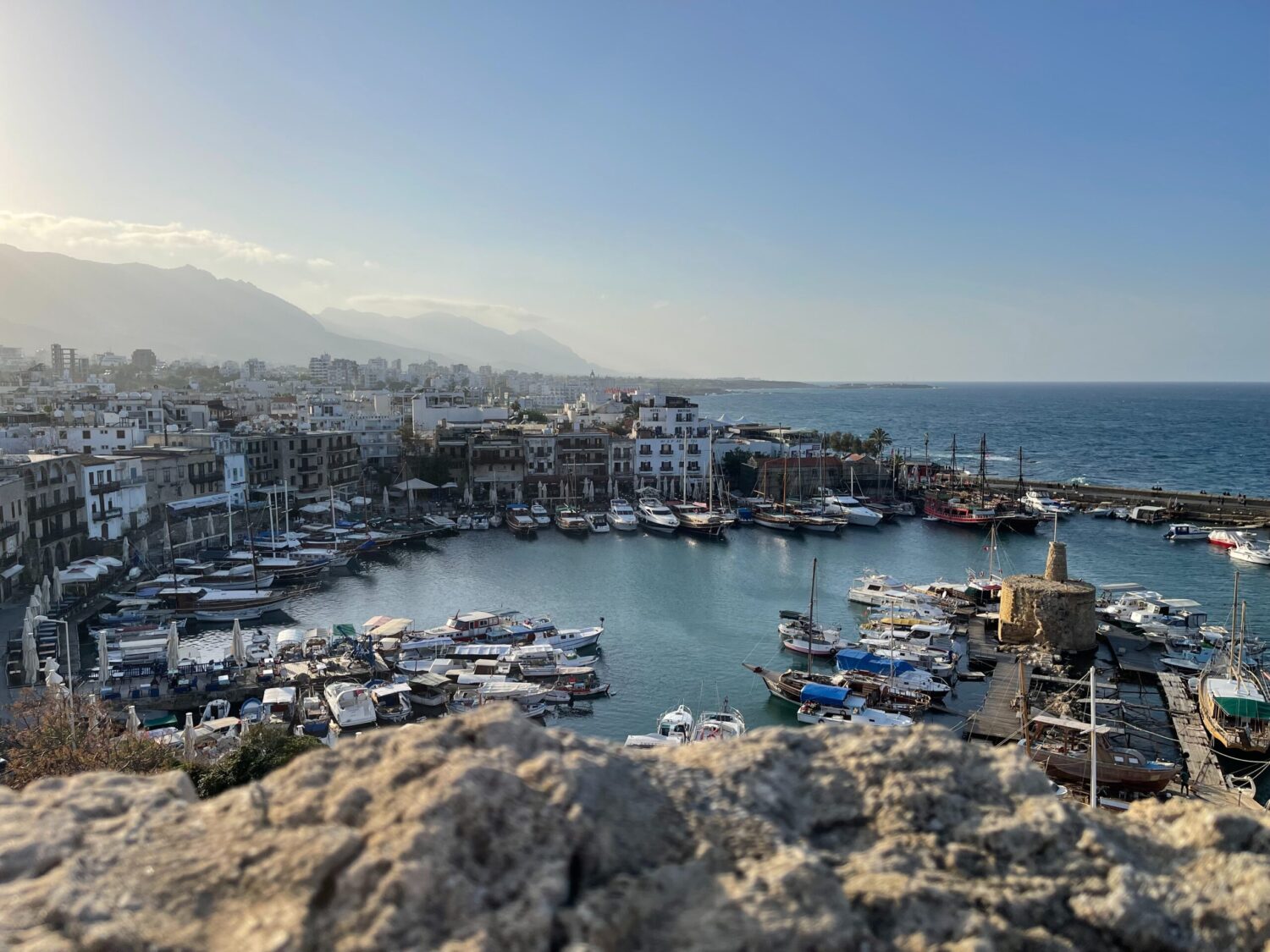
On 4th of April Cyprus released its first long-term bond issue as governments took advantage of strong demand for such assets after weeks of volatile bond markets.
This was reported by Reuters.
Nicosia raised €1 billion from its first long-term bond issue, the country’s debt management office said.
Thus, Cyprus became the next European country to enter the debt market.
The deal received more than 12 billion euros of demand, a record for Cyprus, Stelios Leonidou, who manages the Cypriot debt issuance, told Reuters.
“This is the largest portfolio of investor orders we’ve ever had in a year where market conditions for government bond issuance were not as good as last year,” he said.
American actor Nicolas Cage believes that eating insects can solve the problem of world hunger and has called for eating insects for the greater good. He shared his thoughts on eating bugs with Yahoo Entertainment during a joint interview with his Renfield co-star Nicholas Hoult.
“If you get rid of the fear and phobia of insects, you can solve the problem of world hunger. These foods are high in protein, fat-free, with great nutrients. And most importantly, they are everywhere!” commented the artist about the benefits from the bugs. However, he himself admits that this is unlikely to ever happen.
The unusual topic of the interview arose during the discussion of the film “Renfield”, the world premiere of which took place in March 2023. According to the script, the main actor Nicholas Hoult had to eat bugs – crickets and Colorado beetles.
On set, Holt feasted on insects cooked in butter, spices and caramel. He shared that he didn’t like the taste of the Colorado beetle, but liked the crickets.
Illustrative Photo by Egor Kamelev: https://www.pexels.com/photo/macro-photography-of-jewel-beetle-on-green-leaf-1114318/
By Hasanboy Burhanov, founder of the political opposition movement Erkin O’zbekiston (Free Uzbekistan).
A report in English, distributed to the participants of the 23rd Conference of the Alliance against Trafficking in Persons organised by the OSCE Office of the Special Representative and Co-ordinator for Combating Trafficking in Human Beings.
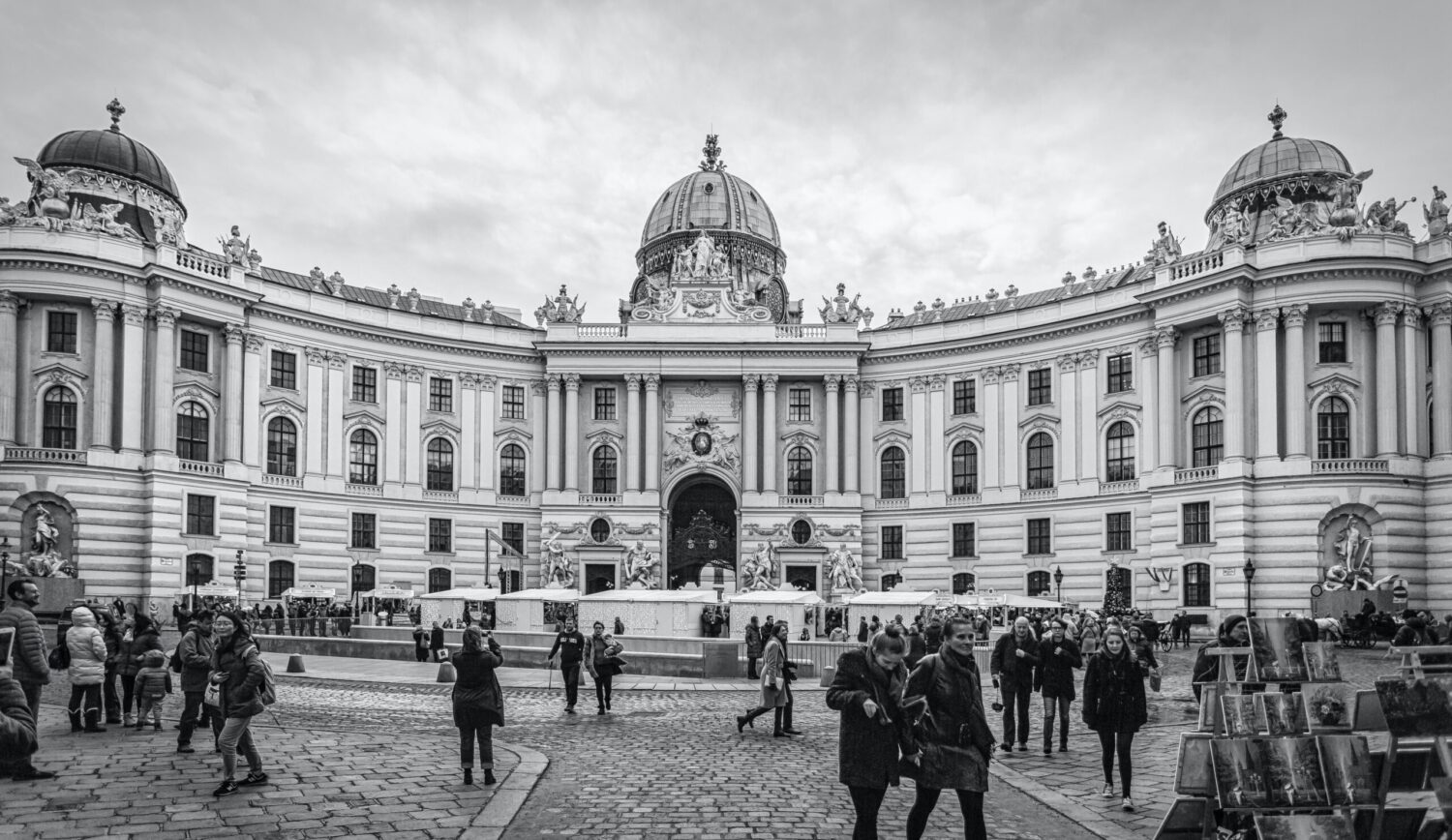
Hofburg Congress Center Vienna (Austria) 18.04.2023
Dear Colleagues,
Uzbekistan has been and remains the biggest exporter of migrant workers in Central Asia. More than 5 million people are forced to find work far away from home to be able to sustain themselves and their families.
After the Russian invasion of Ukraine, tens of thousands migrant workers from Uzbekistan and other Centra Asian republics were sent to build defensive structures in the occupied territories of Ukraine. Their situation there equals slavery.
In Russia – in mosques and in diaspora communities, especially those with Central Asian roots, – one encounters examples of systematic propaganda, aimed to attract migrants from Central Asia to the war against Ukraine. In their propaganda aimed at Muslims, the Russian authorities have been persistently placing the war against Ukraine in the context of a religious conflict.
At the same time, the Mirziyoyev regime is silent and tries not to notice the provocative actions of the Russian authorities, as it fully supports the Russian aggression against Ukraine.
In January 2018, 52 people burned alive in a bus in Kazakhstan. All of them were Uzbek nationals travelling to Russia for work. The Uzbek authorities did not even declare nationwide mourning for the tragic deaths of their citizens. In fact, in the entire history of modern Uzbekistan, the country’s authorities have never declared national mourning, although there have been a number of occasions to do so. The only exception was the three-day mourning period following the death of President Islam Karimov, in September 2016.
I have highlighted this fact so that you can understand how contemptuous the Uzbek authorities are towards their people.
Forced labour is present in Uzbekistan. It is also noteworthy that twice a year, for two days, the country’s workers have to work for the state for free. Their four days’ wages are forcibly transferred to a special account of “Mahalla” Public Charitable Foundation of Uzbekistan. This forced labour is disguised as “khashar” (subbotnik, or voluntary service on a weekend). These vestiges of the Soviet past are still preserved in Uzbekistan.
It is also known that the Uzbek authorities continue to make extensive use of child labour in the cultivation and harvesting of cotton.
Given all the above mentioned facts, we demand that the Uzbek authorities stop lying to the world community. No reforms are happening in the present-day Uzbekistan! The high approval rating of the Mirziyoyev regime, shown by various surveys, is the result of the information war led by both Russian and Uzbek states.
Our recommendations to the participating States of the OSCE:
– to hold public parliamentary hearings on Uzbekistan, in the context of the Mirziyoyev regime’s assistance to Russia in attempt to circumvent international sanctions. From our side, we will be ready to provide a report on the matter, speak out publicly and answer questions from the participants and attendants of the hearings;
– to consider attracting labour migrants from Uzbekistan to the EU, UK, US and Canadian labour markets;
– to increase grant programmes and funding, in order to contain the Russian propaganda and disinformation campaign in the Central Asian region.