This week, Brigham Young University engineers released the results of a unique project they embarked on: making the smallest Book of Mormon ever.
Tiny books of scriptures have been in the works for a while. Fox News reported that there is a Bible that is the size of a grain of sugar. Aaron Hawkins, BYU professor, explained, “Lots of people can do this and lots of people have done this with the Bible. But to our knowledge, no one has ever done it for the Book of Mormon. We realized it was up to BYU to put the Book of Mormon into silicon.”
BYU students Carson Zeller and Ethan Belliston contributed to this project.
The process of making the smallest Book of Mormon was time consuming — they had to “(engrave) the 4-inch diameter wafer with all 291,652 words contained in the book,” and “the students gave it a gold-plated coating”
Zeller told the Deseret News, “For the most part, the project wasn’t too difficult, because the process of etching the silicon and depositing the gold are standard processes used in fabricating computer chips or other devices. The most difficult part was probably getting the text of the Book of Mormon into a format so that we could use it just like any other pattern that would be traditionally used in the fabrication process.”
The engraving involved putting 1,497,482 microscopic characters onto the microchip. Belliston told BYU that this microchip will last forever. He said, “Like Moroni himself, we etched into this wafer so it is physically engraved.”
This project is currently on display at BYU in the Clyde Building.
Church leaders from Belgium received training to ensure safety and security in religious communities. The training was conducted by the Conference of European Churches (CEC) as part of its European Commission-funded project Safer and Stronger Communities in Europe (SASCE).
The event was held on 15 September at the Koekelberg Basilica in Brussels.
CEC Executive Secretary for Human Rights Dr Elizabeta Kitanovic conducted the briefing and training for the participants, sharing more about the SASCE project.
Guidelines for the protection of worship places meant for religious leaders, staff and worshippers were distributed. The materials were in French and Dutch.
“We welcome this very unique project,” said Rev. Steven Fuite, president of the Synod of the United Protestant Church in Belgium. “Through this project churches together with other religious communities get an opportunity to report violations of religious freedom to the European institutions, and other relevant organisations dealing with a hate crime,” he added.
The participants also reflected on the terrorist attacks carried out by the Islamic State in Brussels airport and Maelbeek metro station in 2016, as well as on Jewish Museum in Brussels in 2014.
The share of electric vehicleregistrations tripled from 3.5% in 2019 to 11.6% in 2020 (including 6.2% full electric vehicles and 5.4% plug-in hybrid electric vehicles). Despite the shrinking overall market for new cars due to the COVID-19 pandemic, the total number of new electric cars registered in 2020 increased to over 1 million.
About 1.4 million new vans were registered in Europe in 2020 with average emissions 1.9 % lower than in 2019. The share of electric vans increased from 1.4% in 2019 to 2.3% in 2020.
The CO2 emissions of new light-duty vehicles are tested according to the ‘type approval’ procedures. Since 2017, the more realistic Worldwide Harmonized Light Vehicle Test Procedure (WLTP) is in place, gradually replacing the outdated New European Driving Cycle (NEDC).
EEA activities
The EEA collects and regularly makes available data on new passenger cars and vans registered in Europe, in accordance with Regulation (EU) 2019/631. The data, including information on CO2 emissions and vehicle mass, are reported by all EU Member States, the United Kingdom (until 2020), Iceland (since 1 January 2018) and Norway (since 1 January 2019) in order to evaluate the CO2 emission performance of the new vehicle fleet.
Compliance with targets
The European Commission will confirm whether individual manufacturers or pools have met their own specific annual targets, which are based on the average mass of the vehicles registered.
According to the EEA briefing, even if the noise reduction measures currently available to local authorities are implemented to a high level, this would only reduce the number of people highly annoyed by transport noise by about 19% by 2030. Some examples of measures included in this optimistic scenario include reduction of speed limits on urban roads, a 50% electrification of road vehicle fleet, maintenance and rail grinding, quieter aircrafts and aircraft night curfews. The scenarios do not consider legislative or regulatory changes at EU level as such changes would require considerable amount of time to develop and implement.
The less ambitious scenario considers a more modest set of measures such as the compliance with the current EU noise regulation for motor vehicles, a 25% electrification of the road vehicle fleet, and improved landing and take-off procedures for aircrafts, amongst others. This scenario predicts that the number of people affected by noise would increase by 3%, mainly due to a projected increase in road, rail and air transport.
To achieve greater progress in reducing noise pollution, more efforts are needed to address noise from road transport, the EEA briefing states. To reach the zero pollution action plan target, measures would need to target not only areas with acute noise problems, but also areas where noise levels are more moderate. A combination of measures including, new or stricter noise regulations for road transport, better urban and transport planning as well as significant reductions in road traffic in cities could pave the way to reach the target.
Of the multitude of historic and popular houses of worship in India, one stands out among the most visited sacred sites on Earth: The Lotus Temple of Bahá’í Faith.
Delhi, capital of India, second most populous city in the world and growing nearly three percent annually, is home to dozens of churches, temples and mosques. Of the multitude of historic and popular houses of worship in the region, one stands out among the most visited sacred sites on Earth: The Lotus Temple of Bahá’í Faith.
The Lotus Temple, also known as Kamal Mandir or Lotus of Bahapur, is visited by 4.5 million a year, even more than the Shrine of the Báb on Mount Carmel in Haifa, Israel where the remains of the herald of the religion is buried. The temple was opened in 1986 and had already seen 100 millions visitors before its 30th year.
The temple’s 26 acres are covered by lush flora, and surrounded by nine blue reflecting pools and red sandstone walkways leading to the nine entrances. The temple itself consists of three rings, each ring with nine petals made of white marble forming the iconic image of the lotus flower in bloom floating in water. A prayer hall within the temple holds 2,500 and is sunlit through the glass roof at the center of the flower. Lotus Temple in New Delhi, India
A Bahá’í temple is called a mashriq al-adhkār in Arabic, which means “place where the uttering of the name of God arises at dawn.” Its unique construction has nine sides and nine doors. Bahá’í beliefs assign great importance to the number nine as explained by Shoghi Effendi, grandson and successor of ʻAbdu’l-Bahá, appointed to the role of Guardian of the Baháʼí Faith from 1921 until his death in 1957. “First, it symbolizes the nine great world religions of which we have any definite historical knowledge, including the Babi and Bahá’í Revelations; second, it represents the number of perfection, being the highest single number; third, it is the numerical value of the word ‘Bahá’.”
‘Abdu’l-Bahá—eldest son of Bahá’u’lláh, the founder of the religion—said, “When the Mashriqu’l-Adhkár is accomplished, when the lights are emanating therefrom, the righteous ones are presenting themselves therein, the prayers are performed with supplication towards the mysterious Kingdom, the voice of glorification is raised to the Lord, the Supreme, then the believers shall rejoice, the hearts shall be dilated and overflow with the love of the All-living and Self-existent God. The people shall hasten to worship in that heavenly Temple, the fragrances of God will be elevated, the divine teachings will be established in the hearts like the establishment of the Spirit in mankind; the people will then stand firm in the Cause of your Lord, the Merciful. Praise and greetings be upon you.”
The architect of the Lotus Temple, Fariborz Sahba, was chosen by the Universal House of Justice in 1976 to design and build a temple on the Indian subcontinent. He had previously worked on the design of the Seat of the Universal House of Justice on Mount Carmel in Haifa, Israel, and later returned to design the terraces of the Shrine of the Báb.
Delegates of the Bishops’ Conferences of the European Union will hold the Autumn COMECE Plenary Assembly in Brussels on 12-14 October 2022 for an in-depth discussion on the socio-economic and geopolitical implications of the Russian invasion of Ukraine, with a particular emphasis on the energy crisis.
The event will feature a dialogue meeting with Klaus Welle, Secretary-General of the European Parliament, an exchange with Pascal Lamy, former Director General of the World Trade Organisation and Coordinator of the Jacques Delors think tanks network, and Philip McDonagh, Director of the Centre for Religion, Human Values, and International Relations at the Dublin City University.
In the current context of the Russian military aggression on Ukraine, the EU Bishops will analyse the diverse implications of the war, shaping future COMECE contributions to EU policies promoting peace and justice in Europe and the world.
The Assembly will be an occasion for EU Episcopates Delegates to exchange on the current energy crisis, in particular on its socio-economic, geopolitical, and ecological dimensions. The attention of the EU Bishops will turn to the condition of the many refugees who have fled from their own country because of the conflict and to the most economically vulnerable people who find it difficult to meet their basic needs due to the rising energy and commodities prices.
Media The COMECE Plenary Assembly is a closed-door event. Journalists and media operators interested in covering the event or interviewing Bishops are strongly encouraged to contact the Press Office of COMECE.
Mass for Europe The programme also includes a Mass for Europe, to be celebrated at the Church of Notre-Dame des Victoires au Sablon, Place du Grand Sablon, Brussels, on Wednesday 12 October 2021 at 19:00 (CET). The Mass will be concelebrated by the Bishop Delegates of the Episcopates of the 27 EU Member States. It is a public event and does not require registration.
On the occasion of the 2022 COMECE Autumn Assembly and in the context of the Czech Presidency of the Council of the EU, the Bishops of the European Union warmly invite you to participate in the ‘Mass for Europe’, to be celebrated at the Church of Notre-Dame des Victoires au Sablon, Place du Grand Sablon, Bruxelles, on Wednesday 12 October 2022 at 19:00 (CET).
The Mass will be presided by H.Em. Cardinal Jean-Claude Hollerich SJ and concelebrated by the Bishops Delegates of the Episcopates of the 27 EU Member States. It is a public event and does not require registration.
At the Bangor Christian School in Maine ninth-graders are taught to “refute the teachings of the Islamic religion with the truth of God’s Word.” To work at the school, a teacher must affirm that “he/she is a ‘Born Again’ Christian who knows the Lord Jesus Christ as Savior,” and “must be an active, tithing member of a Bible believing church.”
Similarly, at Maine’s Temple Academy, teachers sign a contract acknowledging that “God recognize[s] homosexuals and other deviants as perverted” and that “deviation from Scriptural standards is grounds for termination.” Temple will not admit children who identify as gay or who come “from homes with serious differences with the school’s biblical basis.”
Putting aside any opinion of the schools’ teachings one way or the other, there are many taxpayers who might feel uncomfortable paying for schools whose moral vision differs from their own, and which, as school policy, will only allow those who follow a certain religion’s teachings in their employ. Yet that is what the Supreme Court has ruled in this summer’s Carson v. Makin decision. Maine must use its public education taxpayer-funded monies to support an inculcation of a world and moral view of one religion.
The Supreme Court has banged the gavel, but as in many such delicate cases involving the present and future of so many, the jury is still out in the court of public opinion. Is freedom of religion in better shape than ever? Has the wall of separation between Church and State remained sharp and crisp?
Separation of Church and State expert Charles Haynes, for one, doesn’t know what to do now. Haynes, who, according to the Washington Post, “literally wrote the book on the topic for the U.S. Department of Education along with partners as diverse as the National Association of Evangelicals and the American Civil Liberties Union,” frets that decisions such as Carson v. Makin and the widely publicized Kennedy v. Bremerton School District decision wherein the high court found in favor of a football coach praying on the 50-yard line on a public, taxpayer-funded high school football field, shrink the line between government and religion to an almost unrecognizable blur.
“What am I supposed to say now? What do I say?…We’re now at the point where you wonder if there is any Establishment Clause left,” Haynes said of the first 10 words of the First Amendment that bars laws “establishing” religion.
With America becoming more diverse by the day the perception of many is that the Supreme Court has indeed opened the door. But to what? To further recognition of the needs of all religions, not just one? Shall we now see devout Muslims unfurl their prayer rugs on high school football fields? Will Orthodox Hebrew schools now be fully funded by state revenue? Or will it be, as critics point out, just another excuse to intimidate and harass minority students who don’t go along with the crowd—as in the West Virginia high school earlier this year wherein a Jewish boy was compelled to attend a Christian prayer assembly against his will? His mother said, “I’m not knocking their faith, but there’s a time and place for everything—and in public schools, during the school day, is not the time and place.”
It has been a hot summer indeed with reactions to the high court’s decisions ranging from the Anti-Defamation League’s (ADL) sharp denunciation, “The Court’s see-no-evil approach to the coach’s prayer will encourage those who seek to proselytize within the public schools to do so with the Court’s blessing;” to the U.S. Conference of Catholic Bishops’ exultant, “This is a historic day in the life of our country, one that stirs our thoughts, emotions and prayers.”
The debate over how far is too far regarding state and church has been with us as long as the Republic. In 1785 in a rebuttal against a bill strikingly similar to Carson v. Makin which would have allocated state funds to a Christian school and therefore could have been construed as favoritism or sponsorship of that religion, Founding Father James Madison authored a passionate “Memorial and Remonstrance Against Religious Assessment,” which states in part regarding freedom of religion: “This right is in its nature an unalienable right. It is unalienable, because the opinions of men, depending only on the evidence contemplated by their own minds cannot follow the dictates of other men: It is unalienable also, because what is here a right towards men, is a duty towards the Creator.”
Thanks to the agitation of James Madison and his friend, Thomas Jefferson, the bill never got ratified and the law never got passed.
Jefferson penned the Virginia Statute for Religious Freedom in 1777, and coined the phrase “wall of separation between church and state” in an 1802 letter to the Danbury Baptist Association as a concise explanation of freedom of religion.
Are the foundations of that wall as strong as ever? Do they still guarantee true freedom of religion for all religions—minority, majority, and everything in between?
It depends on who’s speaking. Rep. Lauren Boebert (R-Colo) addressing a religious service in Colorado, said, “The church is supposed to direct the government. The government is not supposed to direct the church. That is not how our Founding Fathers intended it. I’m tired of this separation of church and state junk that’s not in the Constitution. It was in a stinking letter and it means nothing like what they say it does.”
Historically, the statesmen and lawmakers of our land have been unanimous in agreement, at least in principle, that state-sponsored religion is a bad and dangerous idea, harmful to religion itself which should be supported by its membership, governed by its own codes and doctrine and completely free from any government interference, including economic. As Benjamin Franklin commented, “When a Religion is good, I conceive that it will support itself; and when it cannot support itself, and God does not take care to support, so that its Professors are oblig’d to call for the help of the Civil Power, ’tis a Sign, I apprehend, of its being a bad one.”
Let’s go to New York City and see if the indie folk scene has its newcomers, and if those ones deserve a listen. Well, as usual, I found one which may fulfill your heart and your starvation for good music.
Adam Aronson is one of these guys you never heard of, just because he is new to the industry, but whom you at once put into your catalogue… And in your indie new songs’ playlist! Because he is good, he has a very personal atmosphere to share, and he knows how to make his music penetrate deeply into your emotional deep layers.
His new song, released today, has a melody that seem to come directly from the 70’s, with some sounds stemming from the 80’s, for a final perfectly modern product making a place for itself in the 2020s’ indie folk landscape. “Door Into Heaven” is a song about resilience. Adam says it relates “to the triumphant feelings that come with finding reliance in the face of adversity.” And man, it does the job!
Open the Door into Heaven with Adam Aronson
Accompanied by Nik Chinboukas on bass and Matt Zebrowski on drums, Adam gives a nice performance with a soulful voice that has a fresh aerial style and communicates well the enthusiasm he tries to find into more melancholic feelings. I know it looks like a dichotomic statement, But Adam’s challenge seems to be to fix life by overcoming tough feelings with your own personal energy and positiveness. And that is what he transmits: it’s possible, it’s nice, it’s life, it’s beautiful, and to hell with the hell.
And he does that with a style that has reminiscence of some of the best songwriters of all times. Jefferson Airplane, Lou Reed, Pink Floyd, Neil Young, are some of the names that crossed my mind when I heard the song for the first time.
Now if you are around NYC in September or October, Adam will be performing there, and you should find where and get there for a night. Meanwhile, here is his last song, “Door Into Heaven”:
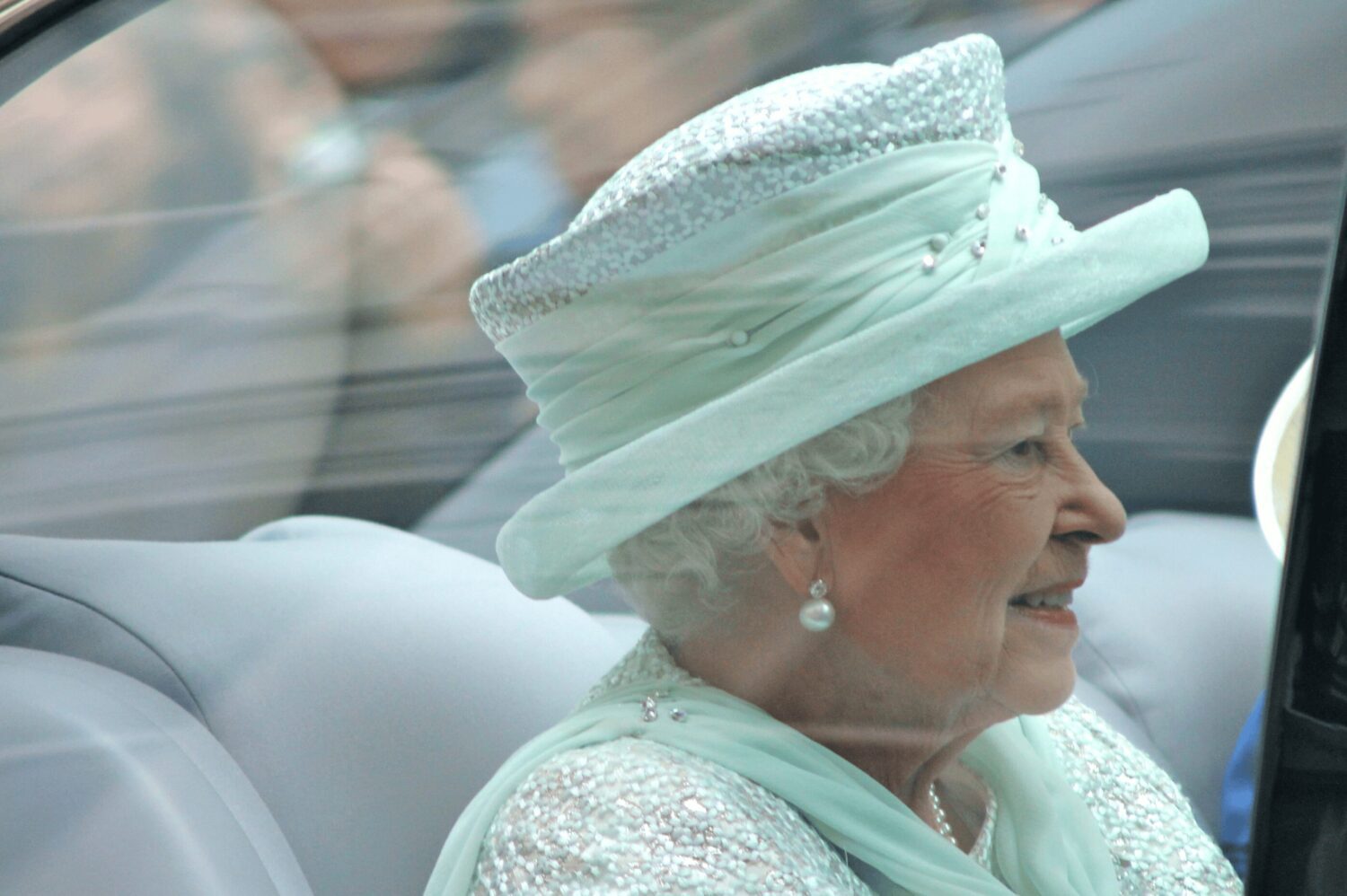
Charles Michel said in his statement about Queen Elizabeth II: “Her inspiration has spanned generations”. Here is the full statement:
We remember a remarkable woman today. A remarkable human being. Who shouldered an immense responsibility over the past 70 years. Her inspiration has spanned generations. And touched the lives of so many.
While we all mourn the passing of Queen Elizabeth the Second, we also consider her reign. It has left a legacy like few others in European and global history. From the turbulent years of the Cold War well into the globalised era of the 21st century.
For many, she was an anchor of stability in a rapidly changing world. She was once called “Elizabeth the Steadfast”. She was indeed a wise leader who never failed to show us the importance of lasting values in this modern world – values like service, commitment, and tradition.
She once said: “grief is the price we pay for love”. She was respected, esteemed, and sincerely loved by so many around the world. Our thoughts are, first and foremost, with the King and the Royal Family, with the people of the United Kingdom, and the Commonwealth.
For us in the European Union, her reign covered almost the full arc of post-war European integration. We will always remember her contribution to reconciliation among our nations after World War II and the Cold War. She had experienced the devastation of World War II and knew the importance of trust and cooperation among our countries.
Many of our past and present European leaders have experienced her warm hospitality. So did I at several occasions.
We will do our part to carry on her legacy. Her special legacy of building bridges and of building trust among nations.

/cdn.vox-cdn.com/uploads/chorus_asset/file/24068925/2208_43_238.jpg "Book of Mormon: BYU makes smallest Book of Mormon")