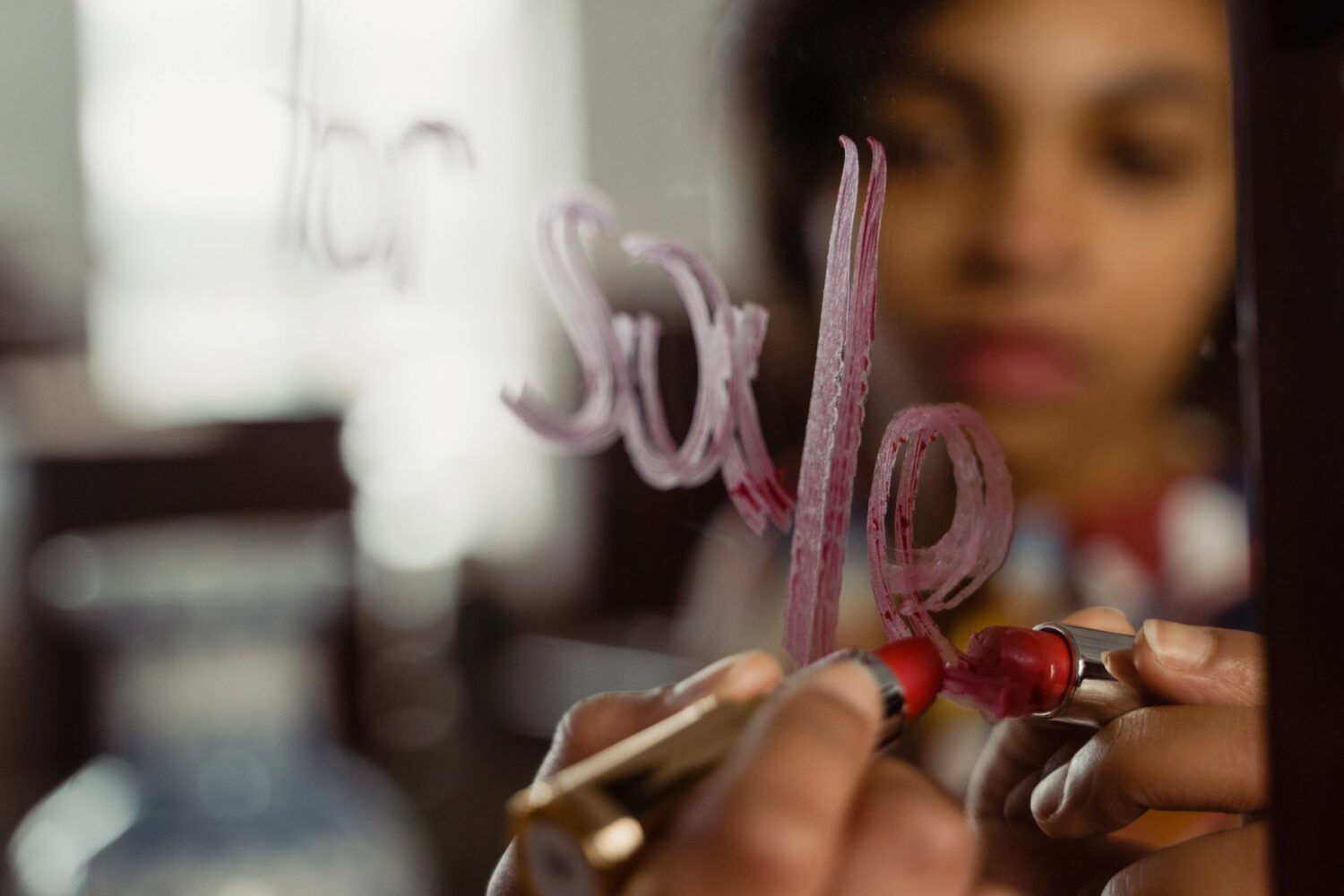
Body and face painting dates back at least 10,000 years. According to Pliny the Elder, even 2,000 years ago, the Romans used natural products in ways that are familiar to us today: they had blush, deodorants, hair dye, anti-wrinkle ointments, breath fresheners, and more.
Over the years, those who have used cosmetics have attracted the admiring glances of others for various reasons – sometimes ritualistic or on the occasion of various honors, but most often, and especially in modern times, the context has always been sexual.
Does wearing makeup really affect how others treat us? Even if it’s easier to accept that makeup affects others’ impression of us, does it really encourage the other person to make the first move?
A study by social psychologist Nicolas Gugen sheds some interesting light on the matter. He used two women who were sitting in a bar in France, in the first case with makeup and in the second case without makeup. In both cases they sat and waited for the men to speak to them.
When a man tried to start a conversation, the woman politely declined the invitation with the excuse that they were expecting friends and signaled the scientists. The procedure was repeated 60 times for one hour in two different bars. Here are the results:
Without makeup – the first contact attempt with both women was after an average of 23 minutes, and then there were attempts on average 1.5 times per hour.
With makeup – first contact was made after an average of 17 minutes and the average number of attempts thereafter was 2 per hour.
These results certainly show that makeup played a significant role in changing men’s behavior, with one-third more men attempting conversation with women when they were wearing makeup.
However, the following details are worth noting. Wearing makeup may have given women more confidence and thus unconsciously changed their behavior to attract more men. And, secondly, the test was conducted in France, and the can-do culture in other countries is very likely to give different results in other places.
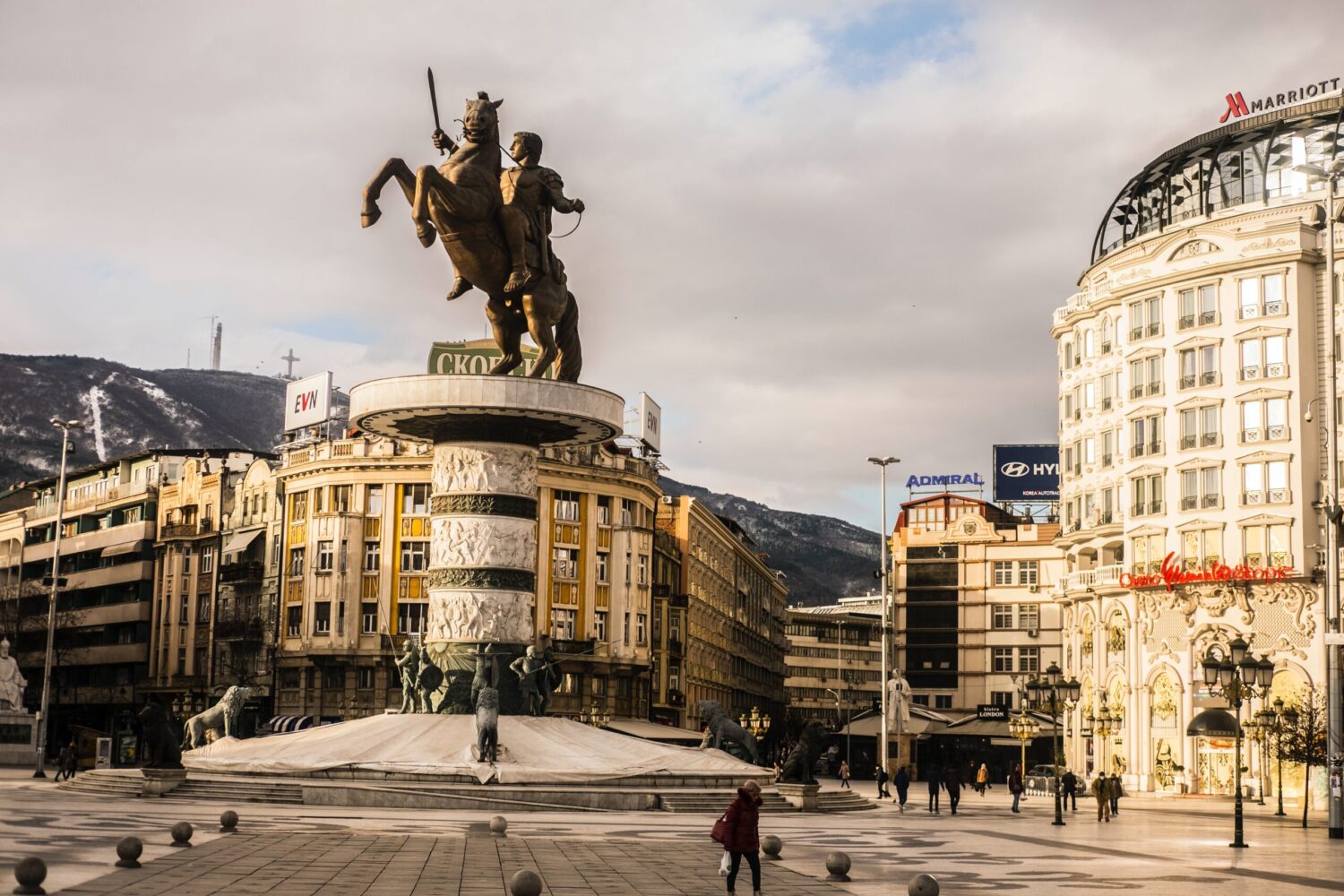
North Macedonia submitted a referendum for the Bulgarians
Only days after the Bulgarian Prime Minister Galab Donev and the Prime Minister of the Republic of North Macedonia Dimitar Kovachevski discussed the supply of electricity to ensure the needs of business against the backdrop of global energy. The opposition in North Macedonia submitted a proposal for a referendum to the State Election Commission, reported Nova Macedonia.
That’s what Christian Mickoski did. The consultation will be about the planned changes in the country’s constitution.
They also announced how the question was formulated.
“Are you in favor of repealing the law on the ratification of the Treaty of Friendship and Cooperation between North Macedonia and Bulgaria, published on January 18, 2017?” reads the question.
The head of state Stevo Pendarovski opposed the proposal. According to him, this could stop the country’s European integration.
The gathering of support for the submission of the proposal is pending. After that, one hundred and fifty thousand people will be needed to support its realization.
There is an idea that the referendum should be mandatory.
“The main topic on which we talked with Prime Minister Donev and his delegation was the energy crisis, which shook all economies around the world.
Today, we are fighting the shortage of electricity and expensive energy carriers, which bring big problems for both citizens and businesses,” Kovacevski announced.
“We reaffirmed the good assessment we have of the created preconditions for the positive development of the dialogue between our two countries and that we will consistently work to deepen constructive cooperation in all areas of mutual interest, striving to cover all areas that includes the Agreement on good neighborliness and cooperation between Bulgaria and the RSM and all agreements under the protocols of the Intergovernmental Commission”, stated Galab Donev.
Bulgaria can export about 200 megawatt hours of electricity to the Republic of North Macedonia by the end of March next year, Donev announced after a meeting with his colleague Dimitar Kovachevski.
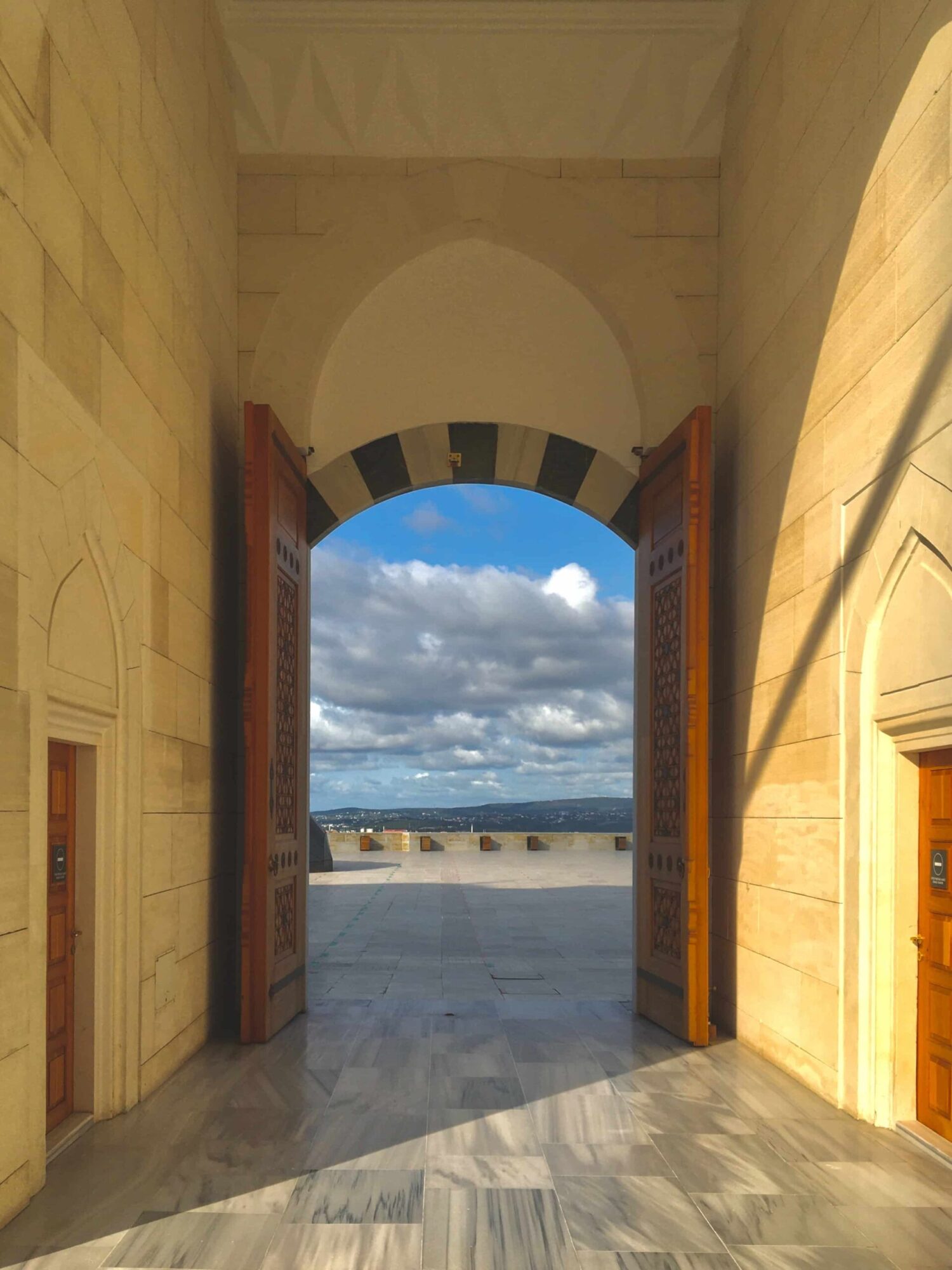
All people with an open mind, heart and soul are welcome to the new mosque and Islamic center in Sisak, regardless of their religion, Sisak chief imam Alem Crankic told Hina news agency on the eve of the opening ceremony of the religious complex, for which on Thursday Turkish President Recep Tayyip Erdogan also arrives.
The new Islamic center will cover an area of about 2,600 square meters and is the third Islamic center in Croatia after those in Zagreb and Rijeka. In Croatia, there is also a smaller mosque in Gunja, which is the first and oldest in the country, and a smaller Islamic center in Umag, Bosnian portal Klix and Hina news agency reported, quoted by BTA.
Already on the weekend after the opening, the Center organizes open days for Sisak residents and other interested parties to visit.
One fifth of the complex is a place for prayers, and the remaining approximately 2,000 square meters are intended for all visitors.
“If Muslims wanted to build this building for themselves, they would only build a mosque. We welcome all people with an open mind, heart and soul, regardless of their religious affiliation, all who are open to meeting and getting to know others,” the young imam emphasized.
In addition to the prayer area, the Center has multipurpose classrooms designed for religious students as well as other forms of learning, such as Islamic culture. There is also a restaurant with Islamic specialties and a large convention center that can host interfaith conferences.
There is also a “sofa room – a space for rest and communication” where visitors will be able to read in an oriental setting with a hot drink.
A feature of the mosque in Sisak is its energy efficiency, which is why it is called the first “eco mosque” in this part of Europe. The center has heat pumps, solar panels and a photovoltaic plant of 30 kilowatt hours.
Crankic points out that he is especially glad that the mosque also has an ecological aspect, because humanity is “getting more and more warnings about the extent to which it is its own enemy and how it will destroy itself” if it does not think about the environment.
Another rite, like prayer and fasting, which is one of the five mandatory pillars of Islam and supports its doctrinal dome, is the pilgrimage to Mecca (hajj). The Koran says about it this way: “I do the best Hajj (great pilgrimage) and die (small pilgrimage) for the sake of Allah, and not for the sake of any benefit in this life and glory” (K.2: 196). “They (new moons – auth.) determine the timing of the conduct of their affairs for people, and also determine the time of the Hajj (pilgrimage), which is one of the foundations of your religion” (K.2: 189). Every “true believer” is commanded to visit sacred places for Muslims at least once in his life. “The Messenger of Allah said: “In the period between two small pilgrimages, a person receives the expiation of all sins, and the reward for a large pilgrimage is paradise.” However, despite the obligation of this prescription, the Koran says that only those who are able to do it and who are able to undertake this feat can perform the hajj: “To perform the hajj to this House is an obligation for those who are able to perform it (hajj to the House) “(K.3:97),” Allah commanded those who can go to this House, so that they respond to this call (make Hajj) and arrive at the House on foot or on camels “(K.22:27 ).
Initially, the pilgrimage consisted of visiting the Kaaba and performing the corresponding rites. Subsequently, the Hajj included a visit to the grave of Muhammad in Medina and prayers in the mosques of Hijaz (the western coast of the Arabian Peninsula is the sacred land of Muslims). Followers of the Shiite trend in Islam make an additional pilgrimage to the graves of Imam Hussein in Karbala, the fourth (righteous) Caliph, cousin of Muhammad Ali ibn Abu Talib in Najaf, Imam Reza in Mashhad and the “holy” Mansum in Qom. This pilgrimage of Shiites to the graves of their imams is usually called not a hajj, but a ziyarat – a visit.
Sharia provides special provisions regarding the pilgrimage to Mecca:
Firstly, the one who decides to go on the Hajj must be of age. Women under forty must be accompanied by one of their male relatives.
Secondly, adequate, not insane, and also free (not a slave).
Should not make a pilgrimage for the sake of forbidden and sinful deeds (robbery, murder, theft, etc.). Should also refrain from traveling if there are more urgent matters or if the only possible route represents a serious danger to life.
It is not obligatory for the poor to make the Hajj, unless someone undertakes to provide for both his trip and the maintenance of his family, and there is great confidence that the benefactor will indeed fulfill his promise.
You must have with you “tasrih al-hajj” (permission to participate in the hajj). In view of the dangers that await the traveler, it is also considered obligatory to make a will before going on a pilgrimage.
Finally, the pilgrim, as mentioned above, must be able to perform the Hajj. This means:
Have a road food reserve with you.
Vehicle for the trip, as well as the ability to purchase a ticket for all necessary modes of transport.
To be physically healthy in order to fulfill all the requirements of the Hajj and endure all the difficulties of the journey.
To have a sufficient amount of funds to support the family or those for whom he is entrusted with care. Must be able to properly equip his household so that it does not fall into disrepair during his pilgrimage.
Sharia also provides for hajj for hire. If a Muslim has the means to make a pilgrimage, but does not have health for this, he can send another person instead of himself. At the same time, the one who performed the Hajj for hire, for someone, does not himself receive the honorary status of “Hajji” (performed the Hajj) and must once again perform the Hajj for himself. Sharia permits the performance of Hajj for hire by a man for a woman and vice versa. At the same time, Sharia condemns those who, not having sufficient health to travel, nevertheless take up this business, putting themselves in danger. There are various organizations around the world that provide assistance in performing the Hajj for low-income Muslims.
According to the rules of the Hajj, pilgrims must be dressed in a special attire – a scar. It consists of two parts of white calico or other linen. One piece is wrapped around the body below the waist, the other, larger in size, is thrown over the left shoulder and passed under the right armpit, thus covering the upper body. In men, the head should be open. Women performing Hajj and wearing ihram are allowed to have their faces open, but their hair must be hidden in any case. There is an opinion that a woman does not have to wear ihram at all, she can perform the entire ceremony in any of her clothes, but always with her head covered. (Gulnara Kerimova. “The Road to the House of Allah” https://www.cidct.org.ua/ru/about/). If the Hajj falls during the hot season, the use of umbrellas is allowed. Sandals are worn on the feet, but you can also go barefoot. The pilgrim must set foot on the land of Hijaz already in ihram. A person who has put on ihram, according to the rules, can no longer take it off until he finishes the entire ceremonial.
The second, more extended meaning of the word “ihram” is the adoption of certain prohibitions, putting on special clothes, entering the “sacred” land and, in fact, the beginning of the performance of the Hajj rites. The one who violated the prescription of ihram must atone for his guilt by sacrificing a ram on the eve of the holiday of kurban – bayram. The Qur’an regulates all these actions in some detail: “When you … after having died, interrupted the “ihram” before performing the Hajj, then you will have to enter the “Ihram” for the Hajj again, sacrifice a sheep and distribute it to the poor near the Forbidden Mosque. Whoever is unable to make a sacrifice must fast for three days in Mecca during the Hajj and seven days after returning home. If he is a resident of Mecca, then he does not need, in this case, to make a sacrifice and fast ”(K.2: 196). It is forbidden for a person dressed in ihram to cut his nails, shave, cut his hair “If one of you is sick or has some kind of ailment in his head and had to cut his hair, then ransom by fasting or alms, or by any pious deeds. He can shave or cut his hair, but he must fast for three days or feed six poor people for one day, or sacrifice a sheep and distribute meat to the poor and needy ”(K.2: 196).
It is forbidden to smoke, raise your voice, offend anyone, shed blood, kill even a fly, pick leaves from trees, etc. “During the Hajj, one should not approach women (this includes: sexual intercourse, kissing, talking on these topics – all this is a sin before Allah). Debauchery and bickering are also a sin during the Hajj” (K.2:197). Violation of these prohibitions makes the Hajj invalid. During the Hajj, the “faithful” is commanded to completely immerse himself in thoughts of Allah.
Hajj begins with a sevenfold circuit (tawaf) around the Kaaba, which is performed counterclockwise. The number “seven” is considered sacred by the Arabs. Pilgrims enter the courtyard of the forbidden mosque (Al-Haram) through the gate “babul-nijat” (gate of salvation). At the threshold of the Kaaba, the participants of the ceremony pronounce the words in Arabic: “Labbaik Allahuma labbeik. La ball of lacquer, labbake ”(K.2: 198) (Here I am in front of You, O Allah. You have no partner, You are alone). Tawwafa (bypass), as a rule, is performed under the guidance of a voluntary seid – an expert on the rules of bypass.
The kaaba itself is a black stone (granite) building in the shape of a cube (15 – 10 – 12 meters), covered with a black kiswa (a black woven coverlet with verses of the Koran embroidered on it in gold), which is replaced every year with a new one. The corners of the Kaaba are located on the cardinal points and have the names “Yemeni” (southern), “Iraqi” (northern), “Levantine” (western) and “stone” (eastern), in which the “black stone” is just mounted. Initially, in the pre-Islamic era (jahili), the kaaba was a pagan temple with a pantheon of folk gods. Now for Muslims, the Kaaba has a unique meaning as the first house of worship to Allah. It symbolizes absolute monotheism, the perfect uniqueness of Allah, the absence of any partners in him, which the Koran does not get tired of repeating in many suras. It is believed that the Kaaba – the main mosque of Muslims, is under the throne of Allah, and his throne is located above it in the sky.
In the left corner of the outer eastern wall of the kaaba there is a gilded door, and a little lower and to the left of it, in one of the corners of the kaaba at a height of 1.5 meters, there is a niche with a “black stone”
– al-hajar al-aswad). This oval stone, set in a silver frame at the end of the seventh century, is known to be part of the original structure built by Abraham and Ismail. According to Muslim tradition, it was given to Adam as a reminder of paradise. According to another version, he was Adam’s guardian angel, but was turned to stone after overlooking and allowing his ward to fall. It is alleged that the black stone was originally white, but later turned black, saturated with human sins, or from the touch of a woman who was in a state of impurity. At the same time, it is believed that inside the stone everything also remains white, and only its outer side has turned black. With a small number of people, Muslims manage to stick their heads into the niche and kiss the “black stone”, but with a large confluence of pilgrims, not everyone manages to venerate this “black shrine”. People only have time to touch the stone with their hand, after which they kiss the hand and apply it to the eyes.
There are different opinions about the real nature of the stone. Scientific circles settled on its cosmic meteorite origin. A feature of the “stone” is that it is not immersed in water and can float on its surface. It is thanks to this property that the authenticity of the black stone was confirmed in 951 when it was returned to Mecca after it was stolen by the Qarmatians in 930. There is a walking legend that a black stone hangs in the air. In fact, he does not levitate, but is fixed in the granite wall of the Kaaba, which is obvious to everyone. This misunderstanding most likely arose as a result of a confusion of two Arabic explications (legends) – the history of the black stone and the maqam Ibrahim stone (Abraham’s standing place), about which it is said that it could hang in the air and served Abraham as a floating forest during the construction of the Kaaba. Naturally, neither of these stones currently fly, and both obey the natural laws of gravity.
An interesting feature of the stone-kissing ceremony for Christians is that this action has absolutely no justification in the Muslim tradition. In order not to be convicted of idolatry, Muslims do not attach any religious significance to the stone itself and claim that it has never been an object of worship. The only reason why a simple stone has been so honored is because of blind imitation of the actions of Muhammad, who kissed it and thus began this tradition. All faqihs (lawyers) of the Shafi’i madhhab condemned kissing any inanimate object with the intention of taabud (i.e. worshiping Allah and approaching him), except for a black stone or muzhaf (copy, copy, plural masahif) of the Koran. The second Caliph Omar ibn Khattab said on this occasion: “By Allah, truly I know that you are just a stone, you do not benefit or harm, and if I had not seen that the Prophet was kissing you, I would not have kissed you”150 .
Muslim tradition conveys an incident that took place during the life of the companions of Muhammad (Sahab), which concerns a detour (tavwaf) around the Kaaba. “During the tawaf, Muawiyah (may Allah be pleased with him) bypassing the Kaaba touched all its corners. Seeing this, Ibn Abbas (may Allah be pleased with both of them) said that one should not touch two corners (two corners: except for the Yemeni corner and the corner with a black stone). He said: “Is there something in this house (Kaaba) that one should stay away from?” Ibn Abbas said, after reading a verse from the Qur’an: “So there was a beautiful example for you in the Messenger of Allah,” after which Muawiya left this action. Brought by Imam Bukhari”151.
Having made a sevenfold circuit (tawaf) around the Kaaba, a Muslim is not forbidden to spend as much time as he likes in prayer near it. Before leaving, he must perform two rak’ah prayers.
Opposite the gilded door of the Kaaba, 15 meters from it, towers maqam Ibrahim (standing of Abraham). A stone slab is placed here, according to Muslims, with footprints of Abraham (Ibrahim). Here, as a sign of respect for the prophet Ibrahim, the pilgrims read a prayer twice: “We ordered the people to make the place of Ibrahim standing during the construction of the Kaaba a place for prayer” (K.2: 125). According to Islamic legend, the angel Jabriel brought to the prophet Abraham (Ibrahim) a flat stone that could hang in the air and served the prophet as scaffolding during the construction of the kaaba. Muslims believe that the builders of the inviolable or forbidden mosque in Mecca (kaaba) are Abraham (Ibrahim) and his son Ismail: “Remember the history of the construction of the Inviolable Mosque in Mecca by Ibrahim and his son Ismail … here, Ibrahim with his son Ismail lay the foundations of the House » (K.2:125,127). Out of respect for Abraham, Muslims call him “Ibrahim Khalilullah” (Abraham is a friend of Allah): “Ibrahim personifies the unity of all religions – Muslims, Jews and Christians … Verily, Allah honored Ibrahim by calling him a friend!” (K.4:125) This is naturally taken from the Christian Bible: “Abraham believed God, and it was reckoned to him for righteousness, and he was called the friend of God” (James 2:23; 2Chr.20:7).
“From the oldest and only history of Abraham, written by Moses, from which information about the life of this patriarch can be obtained, we learn that Abraham never was where the city of Mecca was, and therefore did not build the Kaaba in Mecca. On the basis of verse 19 of the poem (imoallaqaty) by the Arab poet Zogeir bin Abu Solyn, a contemporary of Muhammad, G.S. Sablukov fully proves that the Kaaba was a pagan temple built by “some of the Koreishites and Jorgomites” not earlier than 500 years before the appearance of Muhammad. (See the work of G.S. Sablukov “Muhammedan’s stories about the qibla” pp. 149–157)”152.
Next to the maqam Ibrahim is another building, decorated with colorful Arabic ornaments. There is a well zem – zem (or deputy – deputy) in it. According to the Islamic interpretation of the biblical story (Gen. 21:14–21) about the case of Hagar (Hajara – considered in Islam the second wife of Ibrahim) and her son Ismail, after Abraham left them in the waterless valley of Mecca, Hagar (Hajara) began hastily look for water. In desperation, she ran around two small hills seven times, until finally she saw a spring near her son dying of thirst, which still exists. In memory of this event, pilgrims make a seven-fold ritual run – sai (effort) between the hills of Safa and Merv: “Allah exalted “as-Safa” and “al-Marwa” – two hills, making them reserved places of God for performing one of the rites of the Hajj ” (K. 2:158). Some believe that the source also received its name from the words with which Hagar called her son to her, saying: zyam – zyam, which in Egyptian means – come, come. According to another version, when Hagar (Hajarah) saw the water, she was afraid that all the water would flow out, and said: “Stop – stop” (zam – zam), and the water calmed down.
Water from the source of earth – earth is considered blessed and healing. It is believed that its origins are in paradise. There are many stories about the healing properties of this water. Pilgrims collect it in vessels and vials and deliver it to all parts of the world. Out of respect for this water, it is recommended to drink it while standing. At the same time, it is commanded not only to drink it, but to drink in full, i.e. in large quantities, otherwise you can be considered a hypocrite (munafiq), since a person, as it were, shows his contempt for water. The hadith on this subject reads as follows: “A true believer drinks in full from the source of Zam-Zam, while a munafiq does not drink in full (that is, it is, as it were, a sign of hypocrisy – do not drink enough from Zam-Zam).” There is a hadith attributed to Muhammad, in which he considers even a simple respectful view of the Kaaba and the source of zam-zam to be worship of Allah: Alima (Muslim scholars experts in the Koran, Sharia, Arabic, Persian, Turkish and other languages. Alims were considered the guardians of traditional and moral norms – author) and Zam – Zam. (Moreover) whoever looks at Zam-Zam, his sins will be forgiven.”153 It is also believed that a person whose stomach gets zam-zam water will not be in hell, since the fire of hell and the water from the source of zam-zam cannot be in the same place. Currently, to provide water to millions of pilgrims, the well is equipped with an electric motor.
The next action of the Hajj after the ritual run is the stoning of Satan. This ceremony takes place at the Jamra Bridge in the Mina Valley, about 25 km from Mecca. Pilgrims collect seven stones and throw them at three special stone pillars (jamarat), which symbolize the devil: “And give praise to Allah on the days indicated when the pilgrims stone Shaitan in the Mina Valley, on the 11th, 12th and 13th zu-l-hijji” (K.2:203). First, seven stones are thrown at a small pillar (Jamarat al-Ula), then at a medium one (Jamarat al-Wusta) and then at a large pillar (Jamarat al-Aqaba). At the same time, it is desirable to pronounce takbir (Allahu akbar). According to Islamic tradition, these stone steles mark the places where the devil appeared to Abraham, who tried to prevent the prophet from sacrificing Ismail and whom Abraham, together with his son Ismail, stoned.
After visiting Mount Muzdalif, on the ninth day of the pilgrimage, the pilgrims head for 24 km. from Mecca to the valley of Arafat, where they stand (wukuf) at Mount Arafat from noon to evening. “When the pilgrims leave Arafat and reach Muzdalifah, they need to remember Allah in a reserved place – on the Holy Mount Muzdalifah. From here they need to cry out to God, saying: “Labbaika!”, “Labbaika!”, i.e. “Here I am in front of You! O Allah! Here I am in front of You! You have no equal! Glory and praise to Thee! All power belongs to You!” Allahu Akbar! i.e. Allah is great!” (K.2:196) According to Muslim legend, Mount Arafat is the place where Adam and Eve met after their expulsion from paradise. Here pilgrims also listen to the sermon (khutba) of the Meccan imam. Khutba usually begins with the glorification of Allah and his messenger, then explains the origin of the Hajj and the meaning of the rite of sacrifice. If the mullah or imam – khatib has the relevant experience, then he wraps the sermon in the form of rhymed prose. With the most massive visits to these places, the pandemonium here is huge. Muslims even have information that mass gatherings of pilgrims during the Hajj period can be observed from space.
The next day after this, the feast of sacrifice is celebrated – Aid al – adha (Kurban – Bayram). Muslims perform a kind of Old Testament sacrifice, slaughtering sacrificial animals (sheep, goat, cow or camel): “We have made one of the rites of religion with which you approach people, the slaughter and sacrifice of camels and cows during the Hajj” (K.22 :36). This rite was established in memory of Abraham’s sacrifice of his son Ismail (according to the Bible, Isaac). Symbolically, this rite should remind the “faithful” of the spirit of Islam, when submission to the will of Allah is of paramount importance for a Muslim. Since 2/3 of the sacrificial meat is subsequently distributed to the poor (thin, saadaka – a ritual treat), this Old Testament rudiment also reminds of charity and the desire of the “orthodox” to share their earthly goods with the poor co-religionists. Saudi authorities prepare sacrificial animals for this ceremony in advance. Also, ditches are dug in advance, where, in order to avoid the appearance of infections, they dump, fill with lime and cover with sand mountains of slaughtered cattle, whose meat turned out to be unclaimed. According to Islamic doctrine, animals sacrificed on the holiday of Kurban – Bairam, on the Day of Judgment, will recognize their owners, who sacrificed them. Riding on these animals, Muslims will reach paradise by crossing the Sirat Bridge.
After that, the pilgrims shave or cut their hair and nails. All this is buried in the ground. Many natives use this part of the rite wisely and for this purpose become hairdressers for a while, which makes a good living. Moreover, for a short period of pilgrimage, the local population provides for itself for the entire next year, after which Mecca and Medina sink into a 10-month hibernation until the next Hajj.
Before heading to Medina, pilgrims make a farewell detour around the Kaaba (tavvaf al-vida), after which they receive the honorary status of “haji” (hajj for women) and have the right to wear a green turban, and in the Caucasus a green ribbon on a hat. After the sacrifice and shaving of the hair, the prohibitions regarding marital relations and other prohibitions that a person takes upon himself with entering into ihram are removed.
The small pilgrimage (umrah – visit, visit) includes four main actions: ihram, going around the kaaba, a ritual run between the hills (sai) and shaving or cutting hair on the head. It can take place at any time of the year. As a rule, Umrah is performed either at the beginning of the Hajj, after which you can limit yourself to it alone and stop the pilgrimage, or at the end of the Hajj. Regarding the obligatory nature of the small pilgrimage, the opinions of scientists were divided. Some of them (imams Ash – Shafi’i, Ahmad ibn Hanbal) believed that the small pilgrimage is as obligatory as the big one (hajj). At the same time, they relied on the verse of the Qur’an: “And in the best way make the Hajj (great pilgrimage) and die (small pilgrimage) for the sake of Allah” (K.2: 196). Another part of the theologians (Imams Abu Hanifa, Malik ibn Anas) believed that the small pilgrimage refers to desirable deeds (sunnah) and is performed only once in a lifetime. As an argument, they pointed to the fact that Muhammad did not include Umrah among the five pillars of Islam. “Also, in the hadith narrated by Jabir, it is said: “A Bedouin came to the Messenger of Allah and asked: “O Prophet, tell me about the small pilgrimage, is it obligatory?” To which the answer followed: “No, but making you a small pilgrimage is good for you” ”(See: At – Tirmizi M. Jami’u at – tirmizi [Collection of hadiths of Imam at – Tirmizi]. Riyadh: al – Afkjar hell – pressure, 1998. S. 169, hadith No. 931)157.
At the end of everything, Muslims visit the tomb of Muhammad in Medina. This action does not apply to the Hajj, but a sense of Muslim duty and gratitude to Muhammad for the contribution that he made to the course of world history encourages the “faithful” to visit Medina. The mosque of Mohammed in Medina, although smaller than the Meccan one, is still striking in its size. In the south-eastern part of it is the tomb of the Arab “prophet”. Approaching his tomb, Muslims should say: “Peace and prayer to you, O prophet, beloved of Allah, O great seer.”
There is an opinion of Imam Nawawi regarding visiting the grave of Muhammad. He says that “it is reprehensible to touch her with your hand and kiss her, according to the correct adab (culture, etiquette, traditions – author) one must be at a distance from her, as if someone came to visit the Prophet during his lifetime. It will be right. And one should not be deceived by the actions of many ordinary people who violate these adab. Their danger lies in the fact that they believe that touching with a hand, etc. contributes to obtaining more barakat (the goodness of Allah – ed.), and this is all from their ignorance, because the barakat is in what corresponds to Sharia and the words of the Alims (authoritative Muslim scholars – ed.), so how do they want to succeed, contrary to the correct adab “. (Matn Idah fi manasik li an-Navii. S.161. Ed. dar kutub ilmiya. Beirut. First edition)158.
Next to the grave of Muhammad are the graves of his companions and caliphs – Abu Bekr and Omar. On the territory of the mosque in a small cemetery called “Jannat al-Bagi” – eternal paradise, there are the graves of the third caliph Osman, the daughter of Muhammad Fatima and his last wife Aisha. Women who adhere to the Shia direction in Islam, be sure to visit the grave of Fatima, where they distribute alms to the poor. In addition to the grave of Fatima, Shiite Muslims must visit the grave of the fourth Caliph Ali ibn Abu Talib in Najaf and his son Imam Hussein in Karbala (Iraq), as well as one of the descendants of Ali Imam Reza in Mashhad (Iran) and the grave of Mansum in Qom, the sister of the Imam Reza. Despite the fact that there are many graves of the descendants of Shia imams and they are located in many cities of the world, it is obligatory to visit only the graves of imams Hussein and Reza. Shiites who make a pilgrimage to these graves receive the status of “Kerbalai” and “Meshedi”.
For those who do not have the opportunity to perform the hajj to the “sacred” Arab lands, it is commanded to perform the hajj in their own heart and make sure of the sincerity of their devotion to Allah and the fulfillment of his unconditional commands. “That is why on the upcoming holidays and on the holidays themselves, each of us should make a hajj in our own heart and our own soul in order to honestly answer the question: do we fully fulfill what our religion requires of everyone? We must not forget that in Islam, preparation for the holidays must first of all be used to strengthen faith, strictly follow religious instructions and prayers, commemorate the deceased relatives and friends, and try to deepen the knowledge of the fundamentals of Islam.
It is believed that the hajj is not only a religious way to please Allah and win his mercy, but also a good opportunity to communicate with each other: “Proclaim to people, O prophet, that Allah commanded those who can go to this House … to they received religious benefit from performing the Hajj (pilgrimage), as well as the benefit of meeting and communicating with their Muslim brothers, consulting with them about what is useful and good for them in religion and in the immediate life ”(K.22:27, 28). “Being a unique form of communication and ideological unity, the Hajj played an important historical, cultural and socio-political role in the medieval Muslim world. Hajj retains its ideological and political significance even today, being a form of unity for Muslims, a place and time for meetings of the leaders of Islamic states and discussion of important problems”160.
Source: Chapter 8. Rites in Islam – Unexpected Sharia [Text] / Mikhail Rozhdestvensky. – [Moscow: b. i.], 2011. – 494, [2] p.
Notes:
150. Nimeh Ismail Navvab. Hajj is the journey of a lifetime. Rites of Abraham. https://www.islamreligion.com/en/
151.Sufism on the scales of Sharia. P. 20 https://molites.narod.ru/
152. Orthodox theologians about Islam. Ya.D.Koblov. Personality of Muhammad. Application. The legend of Muhammadan about the night journey of Muhammad to heaven. M. “Imperial tradition” 2006 p.246
153. Source Water Zam-Zam. Her virtues and blessings. https://www.islam.ru/
154. Prophets. True faith is the faith of our ancestors. . ru/Server/Iman/Maktaba/Tarikh/proroki.dos
155. Institute of Religion and Politics. Hundreds of dead again in the Mina Valley. https://www.i-p.ru//
156. Riyadh counted illegal pilgrims during the Hajj period. https://www.izvestia.ru/news/
In his ethical activity and judgments, man has no right to take the viewpoint of Providence. He has no right to judge sub specie aeternitatis [from the point of view of eternity], appropriating God’s point of view as if he were seated on the throne with Him. Otherwise, he may imagine himself to be a sun shining equally on the good and the bad. To begin to allow and tolerate evil as a manifestation of free will, as God does with man. It may even begin to affirm the necessity of evil in the development of world tragedy, its reasonableness in the ways of Providence. And finally to enter the role of villain and traitor, believing that this role is necessary in the world tragedy foreseen and intended by the Creator and His providence. And the more terrible it is, the greater the humility and self-abasement and self-sacrifice of the actor who performs it for the sake of the celebration of righteousness and justice, for the sake of the celebration of Providence. Such was the role of Judas. “Beata culpa” [blessed guilt] would not be a fault at all, but rather a merit, but if only Judas could foresee the way of Providence and had the right to stand from the point of view of historical necessity, i.e. of the very Providence. The Apostle Paul is aware of these dialectical difficulties and poses the problem as follows: how can sinners be punished, if God’s righteousness and justice are best revealed through their injustice? “Should we not then do evil that good may come?” (Rom. 3:8).
If temptations must come into the world, then someone must take the blame for it—bring them into the world, though knowing that it would have been better (subjectively, not objectively) not to have been born for that role. Indeed, there is no more outrageous ambiguity, more outrageously quaternio terminorum [the fallacy of the four terms, i.e., deductive logical fallacy] than that “ought” and “ought.” In one case, this is a judgment of divine providence about historical destinies (temptations must come into the world), and in the other – a judgment of man about his moral duty, about his ultimate task in time and space: he must take the blame upon himself.
However, this is not a logical fallacy and it is not a sophistry: the whole problem is clearly contained in the two aspects of the obligatory. 1) the divine necessity of Providence and 2) the human necessity of moral action. In his moral obligation, man has no right to stand from the point of view of what is obligatory in the sense of Providence, from the point of view of historical necessity or the necessary degrees of development of the Absolute Spirit. It has no right to stand on the standpoint of Hegel’s historiosophy (that is, the standpoint of the “Absolute Spirit”) or Leibniz’s theodicy. It is equally vulgar and immoral for him to say: everything goes for the better in this best of all worlds, and history is progress in the consciousness of freedom. For it means to justify the crimes of history—for example, the atrocities of revolution—as necessary stages in the development of liberty. If “everything goes for the better”, then “everything is allowed”.
This thought can also be reached from the opposite side: man cannot stand on the point of view of Providence and absolute judgment even when the latter corresponds to his human understanding of good, evil and justice. For example, his thirst for revenge, to exterminate the villain, cannot be interpreted as a demand for divine vengeance. In contrast to this, the words sound: Vengeance is Mine, I will repay. And God rewards in another way and not then, and not where we think and want. And we must not justify the executioner by identifying his action with the will of Providence and divine wrath, as Joseph de Maistre does. It is for this very reason that every executioner is more odious than every villain, because he appropriates to himself the sanction of infallibility, the sanction of Providence, and the “objective spirit,” while the villain bears upon himself the manifest stamp of sin and crime, and that is more humble and – true.
Man has no right either to conduct the terrible judgment, or to anticipate it. The parable of the weeds testifies to this: what “objectively” seems insignificant and unnecessary to him cannot be destroyed for the sake of fulfilling absolute justice (for example, in Raskolnikov – the killing of the evil old woman and in general the whole problem of great personalities fulfilling the will of Providence). As a terrible judgment, absolute Justice acts not through us, but through its absolute servants – the angels. This is revealed through the parable.
In this way, as if by itself the following conclusion is imposed: Penetration into the divine plan of Providence does not justify anything and does not condemn people for their actions, does not contain any anthropodycy, because evil remains evil and it should not be “justified ”, that is, to become a right because of no good and necessary plan of Providence. Moreover, the evil leading to the best in this best of all worlds becomes a great evil; the evil that leads to “progress”, to a just system, is the worst evil – an evil that dares to justify itself by imagining that it is good. In this case, it is not the evil that is justified, but the good derived from it that is compromised. It is not the end that justifies the means, but the means that condemn the end. Any teleological rationalization of the historical process is an immoral enterprise.
Rationalist theodicy is morally unfit for man. But is it fit for God? After all, does it provide “justification of the Deity?”
N. A. Berdyaev’s remarkable article on theodicy in Vol. 7 of the present journal. It contains two main ideas:
1. Denial of false theodicy, of abstract monotheism, of the idea of a motionless, blissful, Eleatic and non-tragic God, creating the world and all the tragedy in it, while remaining isolated and passionless. Such a God should not be justified – this is an evil demiurge, and atheism is right in relation to him (pp. 56-57).
2. Confirmation of a possible theodicy, as a tragedy of God himself, as God’s sacrifice – suffering of God, Lord’s passions. God is love and God is freedom, and love and freedom are sacrifice and are suffering. Such a conception presupposes, of course, the God-humanity of Christ and the idea of the godlikeness of man.
In what sense is positive theodicy presented here? Properly – in only one way: God is protected from the reproach that he “left the bliss for Himself, and the suffering for the creation” (p. 55). Here God loves man and suffers with him.
Can such a decision be recognized as exhaustive? In the negative part, it seems to sound a strong thought: perfection cut off from the world is impossible. Perfection alongside the world, which lies in evil, and in the capacity of the original source and Creator of this world, is, of course, imperfection. If it (perfection) rejoices in its self-sufficiency, it is the worse for it, the more imperfect it is. Of course, perfection here is completeness and completeness (τέλος and πλήρωμα), and it cannot leave anything beyond itself, it must take everything upon itself and receive within itself. Perfection has to accept in its heart, to contain all the evil and suffering and tragedy of the world.
But here comes the difficulty – perfection filled with imperfection! Fullness filled with deficiencies! God, who took evil into Himself! And finally suffering, dying, experiencing tragedy! All these negative values (evil, suffering, death) turn out to be contained in the positive value of the Absolute Good – of God as perfection! But isn’t the tragic-suffering God an absolute contradiction? Is the category of tragedy applicable to God?
One thing is certain: in Christianity there is an idea of a “suffering God” and of the tragedy of God and man. The remarkable thing here is that every tragedy is divinely human and there is simply no other tragedy in its own sense. It is tragic that man is eternally united with God and eternally separated from Him (My God, my God, why have you forsaken me?) – eternally carrying within himself the holy and divine, and eternally falling away and losing. Such is the nature of the ideal world, of the idea. (“Sie ist nur da, inwiefern man Sie nicht hat und sie entflieht, inwiefern man sie fassen will” – Fichte).
Plato’s Eros is neither just a god nor just a man, but a “god-man” and therefore tragic and his fate is the tragic fate of Psyche. It is tragic for God to unite with human nature and it is tragic for man to unite with God. The complete absence of tragedy would be the separation of man from God, the absolute self-sufficiency of man who does not suspect God, and the absolute self-sufficiency of God who does not look at man. In the mixing and joining of the incompatible lies the tragedy. That is why, for the gnostic Basilides, the tragedy of the world process ends with an absolute separation, isolation of the spheres: the being separated from God will not suffer, because it is wrapped in the “veil of great ignorance”.[1]
Suffering and tragedy have their source in the all-pervading oneness. If we leave the opposites alone, without connecting them with threads (Plato), if we do not gather them into one, the phenomenon of incompatibility, contradiction, tragedy would not exist. The tragic contradiction can be formulated differently: enemies in love (Romeo and Juliet), innocent guilt (Oedipus), the destruction of what is worthy of life and happiness. But the main tragedy is the accusation and punishment of the sinless and innocent. This tragedy is, so to speak, unbearable, and the question arises: how does God tolerate it? Here the question of theodicy is posed anew: why should the world become a tragedy?
To answer, we must first of all see that the world is truly a tragedy, experience and intuitively penetrate the essence of the tragic. Is it necessary to prove that the world is a tragedy, that life is a tragedy? Moral experience convinces us that the whole world lies in evil, and yet the life of the world is of supreme value, the cosmos is beauty, and all created, all truly existent, is too good. Here is the tragic contradiction experienced from all sides by the human spirit: with the logical, ethical and aesthetic consciousness. It would be better if the world didn’t exist! And, along with that: No, it better be! To be – that’s more than anything! Being is wonderful!
The life of the animal and plant world is full of cruelty, suffering, self-sacrifice, heroism – it is tragic in its essence, because it is hideous and, at the same time, beautiful. The tragedy of nature is in its indifference, and it would not be a tragedy if it did not have the strange radiance of eternal beauty, if it did not awaken in the soul the involuntary recognition (so be it! – And let it…).
However, if we rise to the highest levels of being known to us – to our own life, to the fate of the free man, to the fates of history, then here the essence of life is revealed as a tragedy more vividly than anywhere else. Buddha saw it, Socrates experienced it, Christ raised it to the ultimate god-human height. And each person in his own destiny in some way repeats that of the Son of Man – in not recognizing Him as the Most Beautiful, in the “legalistic” accusations, in the enmity of the Pharisees, in the betrayal of the disciple, in the Way of the Cross of life. History is tragic – both in personal biography and in the biography of nations.
If there are other higher superhuman degrees of being, as all religions presuppose, the world of angels, demigods, titans and heroes, even there the highest category of achievement in their lives is tragedy, as is clear from the tragic fate of the most beautiful of angels . Tragedy is the main historical category and, at the same time, the highest category of life in its greatest fullness and richness. Because history must be the history of all life, with all its sides and in all its fullness. If the life of each “I”, of each spiritual being, is a strange combination of necessity and freedom, as we know from our own experience, then the tragedy of history is necessarily the fate of freedom, or freedom under the power of fate. Only a free being can be under the power of fate, only a tragic hero has fate in the full sense of the word. Biological, causal necessity is not fate.
So, we don’t need to prove that life is a tragedy – everyone knows that from experience. Even the experience of happiness does not cancel the tragedy, because it is a moment of the tragedy (for example “Romeo and Juliet”). The demise of supreme and wonderful happiness is tragic, and history, human destiny, knows no undying happiness. Perhaps they will object to us that everyday life is rather comical than tragic, and the very history of nations reveals the “irony of fate” at every step. That is right. But the point is that comedy is also a possible moment of tragedy. He finds a place for himself in every tragedy embracing the fullness of life; after all, the essence of the tragic and the comic, as Plato also hints in his “Pyrrhus”, is the same. The irony of fate is often tragic and the history of nations is a tragicomedy.
And yet it is necessary to prove this statement, it is necessary to assess all its depth and seriousness, because humanity in its significant part is excited by the desire to avoid tragedy by any means, to prove to itself in any way that everything in nature and in history goes well, improves, progresses, evolves, unerringly arrives at the final earthly paradise. The tragedy-free philosophy of history is very widespread and very diverse. Here in the first place is the atheistic theory of the continuous evolution and progress of mankind. Comte, Feuerbach and Marx fully follow this line, which has been pushed since Epicurean materialism and Titus Lucretius Carr. Quite frankly, Epicurus and Lucretius state that the driving nerve of Epicureanism is the desire to destroy every tragedy in life, and above all the tragedy of the encounter with the other world and its forces. On this basis is built the naive optimism of self-sufficient humanity, which has imagined that everything is going for the better and happens by itself by virtue of some immanent laws of development.
Hegel’s formula that history is progress in the consciousness of freedom is also an attempt at a non-tragic philosophy of history – along the path of rationalistic and pantheistic monism, which regards humanity and its science and statehood as the highest degree of absolute spirit, such a philosophy inevitably leads to the atheistic “religion for humanity”, to Feuerbach and to Marx. With the same optimistic rationalism, she assures us that the atrocities in history are only “sacrifices before the altar of freedom”, and by freedom here is meant the celebration of the rational regulation of all life – this is precisely the kind of “freedom” that Marx also understood. Everything is going well, towards a “conscious” and socially well-arranged humanity. How much deeper, and more serious, and closer to tragic reality is the modern form of irreligious understanding of history, such as we see in Spengler: everything grows, blossoms and withers, everything tends to sunset!
However, there are not only atheistic constructions of the non-tragic philosophy of history, which we may call non-tragic anthropodicys; there are also non-tragic theodicies that originate from the understanding of the Deity, but which in their essence are still strikingly close to the first in their naive optimism and rationalism. Teleologically acting nature, teleologically developing humanity, teleologically progressing economy, all this Providence without God, or more precisely, Providence carried out by false deities – all this is replaced by the teleologically acting Providence of the Godhead in the world and in history. The philosophical coincidence is precisely in naive rational teleologism: the causa finalis is also the causa efficiens. Under such conditions, of course, there can be nothing particularly tragic, and in the end everything works out for the better in this best of all worlds.
The rationalistic theodicy of the Stoics was adopted in principle by Leibniz. Providence is basically rational – every aporia and every tragedy is resolved to the end. Only at first sight many things in nature and in history seem to us inexpedient; in fact, Providence has foreseen everything and turned every evil into a means of achieving a greater good. The petty-naive rationalism of the Stoics, who asserted that bugs exist to keep people from sleeping too long, and mice to prevent them from keeping their belongings in disorder, is in principle no different from the grandiose universal rationalism of Leibniz, forced to admit that the guilt of Judas is a “blessed guilt” (beata culpa, qui talem redemptorem exiguit).
In fact, instead of a theodicy, we arrive at the most terrible moral accusation against a Deity, operating on the principle that the end justifies the means, building its kingdom on sin, tears and suffering. If this is how things stand in the “best of all worlds”, all that remains for us, together with Ivan Karamazov, is to reject all worlds – both the bad and the good. Schopenhauer is right: the attempt to bypass tragedy leads theodicy to the most vulgar optimism: all is well in this best of all worlds! The story turns into a moral vaudeville with a happy ending.
Roman Catholic rationalism builds its doctrine of Providence on the foundations of Aristotelian teleologism and the Stoic doctrine of providence. Added to this is the juridical theory of atonement, turning the greatest of all tragedies – Golgotha – into a rationally proceeding and successfully concluding process between humanity and God. Here all tragedy is radically removed: both God is justly satisfied and humanity is redeemed and saved.
The destruction of tragedy here is achieved mainly through the application of legal categories. Tragedy, however, eludes all legal categories: try to think legally about the affairs of Othello or Macbeth and you will arrive at a series of flat platitudes. This shows that the category of tragedy is infinitely higher, more complex and, therefore, irrational than that of law. Perhaps tragedy is the truest expression of the ultimate irrationality of being – concentration and condensation of the greatest and ultimate aporias, because if this incomprehensible impasse (aporia) is not there, then in its own sense there is no real tragedy.
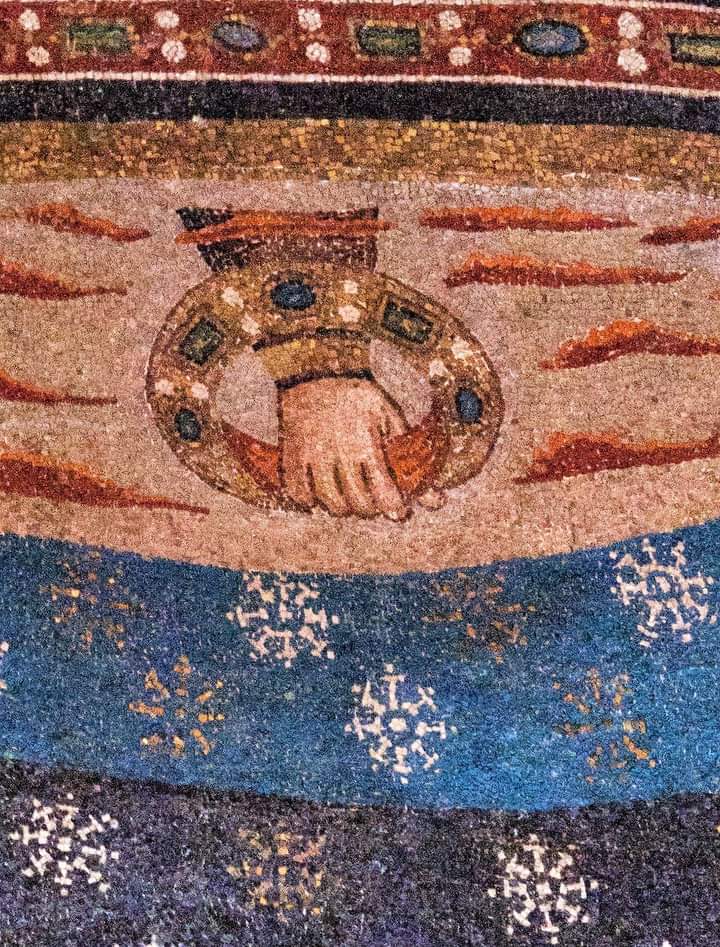
In this sense, science is tragic, in its aporias, and philosophy – in its extreme antinomies (such as Riche’s exclamation in his Metaphysics: “Yes, it is absurd, but what of it, since it exists”), ethics is also tragic – in the endless clashes of values, in its “pereat mundus, fiat iustitia” [let there be justice, even if the world perish], art is tragic – if only because its summit is tragedy, religion is also tragic – in its mysterium tremendum ( it is terrible for man to fall into the hands of the living God), in constant proximity to God and in infinite detachment from Him – in God-forsakenness. The tragedy of all life and of the entire history of the world – the universal, religious, divine and God-human tragedy – contains within itself, as in a focus, the concentration of all impasses, incomprehensibility and contradictions of the world. Here is the problem of problems, the point of collision and incomprehensible unity, here is the point of reconciliation of incompatible opposites. God Almighty holds in His hand that which is irresistibly pushed away. And this reconciliation of the incompatible is experienced as amazement, horror, tragedy; and together with this the hand of God is most strongly felt in him. That is why it is scary to fall into the hands of the living God, and in this fear is the most ancient experience of tragedy.
Only here does that strange spiritual experience find its explanation, that in suffering, in impasse and God-abandonment, the presence of God is felt most strongly – here, in extreme tragedy, the true theodicy is hidden, because this is where God is revealed – in the incomprehensibility of His Providence.
“From my depth (de profundis) I cried to You, Lord!”
Wer nie sein Brot mit Trähnen as,
Wer nie die kummervollen Nächte
Auf seinem Bette weinend sas,
Der kennt euch nicht, ihr himmlsche Mächte!
[2]
The fate of Job clearly reveals that it is precisely in the experience of the deepest tragedy that man’s meeting with Providence takes place, that precisely here – in this last why? – man stands face to face with God, but cannot see His Face. It can be said: where God acts, there everything is incomprehensible to man, and where everything is understandable, there is no encounter with God – there is the immanent world of human calculations and predictions (of a kind of “providence”). A fully unraveled and rationalized “Provision” would cease to be divine – its rational expediency reveals most unequivocally that there is human intent here. In their pretended consolations, Job’s friends are representatives of the world of rational theodicy: they seek to “justify” the Deity, to conceal the gaping abyss of tragic injustice of rational arguments, to find justice and expediency in Job’s fate according to their reason. However, it turns out that there is more truth in Job’s accusations directed at God than in the “justifications” of rational theodicy invented by his friends. Who is it that obscures Providence with meaningless words? This is what God says about all these “theodicies”.
In his tragic experience, Job felt clearly the injustice of these theodicies, and God Himself confirmed the absolute rightness of this feeling. After the categorical condemnation of human “theodicies” obscuring Providence, what does He say to Job? He unfolds before him a series of problems and mysteries of heaven and earth; He reveals Himself, or rather, hides Himself, as the problem of all problems; and then the tragic aporia of Job turns out to be one of the moments in the great crown of divine mysteries. The story of Job cannot be understood and “justified” through the immanent logos of this world, according to the method of Hegel and Leibniz – it has a prologue and an epilogue in heaven, in the other world. And what is happening there (a command given by God to Satanael) is incomprehensible to man and unacceptable to human ethics. This is not a solution, as it may seem to us, but a deepening of the tragedy and problematism – here God is not defined by human concepts of good and evil. After all, for Job, this otherworldly theodicy remains absolutely unknown; God didn’t tell him about her.
The tragedy of Job, as our Church teaches, is indeed a type of Golgotha, because Golgotha is the ultimate expression of the tragedy that can overtake the Son of Man and the sons of men. To see rational expediency and even juridical justice here is to really obscure Providence with meaningless words, and even worse – to obscure the judgment of good and evil (beata culpa!). Any rational and holy will can desire rational expediency and justice. However, this cannot be desired by the most reasonable and most holy will – that of the God-man. For this, the highest human wisdom and holiness, despite all the “theodicies”, was only able to say: let this cup pass me by! Does this mean that Christ failed to see that all is well in this best of all worlds? Or are these words of human weakness? Such a supposition would be most superficial and irrelevant, and it is refuted by: but Thy will be done. The acceptance of God’s will, of Providence, is not due to an awareness of its rational expediency by human reason. In the prayer for the cup, there is no weakness of the will, no limitation of human knowledge, but on the contrary – an absolutely true judgment of a holy will for man: we cannot wish for the God-man to be crucified, we cannot accept that Justice is crucified on the cross, to desire this crime, even in full readiness for suffering and self-sacrifice. Job prayed all the time: let this cup pass from me! Just like Christ – and not because of weakness, but out of awareness of his absolute right. We should not desire a suffering and humiliated righteousness.
The tragedy of Calvary disappears if we recognize one will in Christ (the Monothelite heresy) – only human or only divine. The tragedy is revealed in full depth only in the affirmation of the two wills: human and divine; a statement for which one of the greatest fathers of the Church – Maxim the Confessor – was martyred. If in this cup passing from me the will is expressed, the holy will of the Son of Man, then in your will, not mine, the divine will of the Father is present (I and the Father are one). The actual aporia of tragedy is that human will can be absolutely valuable and holy even when it contradicts the will of the Father, of Providence, when it will not be fulfilled. This is what Job’s friends cannot understand.
(to be continued)
Source: Vysheslavtsev, B. “Tragic Theodicy” – In: Put, 9, 1928, pp. 13-31 (in Russian).
Notes:
[1] Karsavin, L. Holy Fathers and Teachers of the Church, Paris 1927, p. 31.
Parliament and five rotating Council Presidencies commit to work together to adopt the reform of the EU migration and asylum rules before the 2024 EU elections.
On Wednesday, European Parliament President Roberta Metsola, Chair of the Civil Liberties Committee Juan Fernando López Aguilar, Asylum Contact Group Chair Elena Yoncheva and the Permanent Representatives of Czechia, Sweden, Spain, Belgium and France signed an agreement regarding the conduct of negotiations between the co-legislators with a view to reforming EU migration and asylum rules by February 2024.
They adopted the following joint statement:
“This is undoubtedly a historical moment. After a couple of months of exchanges on the Roadmap, the European Parliament and the upcoming Council Presidencies are committing themselves to make all efforts to finalise the reform of the Asylum and Migration legislative framework before the end of the current political cycle.
The Common European Asylum System and the New European Pact on migration and asylum represent a top priority in the work of the European Parliament and the Council of the European Union and both sides should make the necessary efforts and work together as closely as possible, in a spirit of sincere cooperation, towards the adoption of the legislative proposals before the end of the 2019-2024 legislative period.
To achieve the common commitment to conclude the reform during the current legislative cycle, the negotiations on the respective files should be concluded by February 2024. This would require that the negotiations between the co-legislators should start at the latest by the end of 2022. The effective implementation of the timetable agreed will be subject to follow-up meetings between the Members of the Asylum Contact Group and rotating Council Presidencies.
We believe that by combining our efforts the Union can make real progress and deliver before the end of the current legislature. We should be able to deliver a new legislative framework on one of our most challenging policy areas, which is one in which only a common EU answer can provide a sustainable system. This roadmap is a clear sign of our commitment that we will conclude the work.”
Background
The European Commission proposed the New Pact on Migration and Asylum in September 2020 in order to improve the procedures and reach an agreement to share responsibility fairly among member states and act in solidarity when dealing with migration flows.
UN Photo/Loey Felipe -
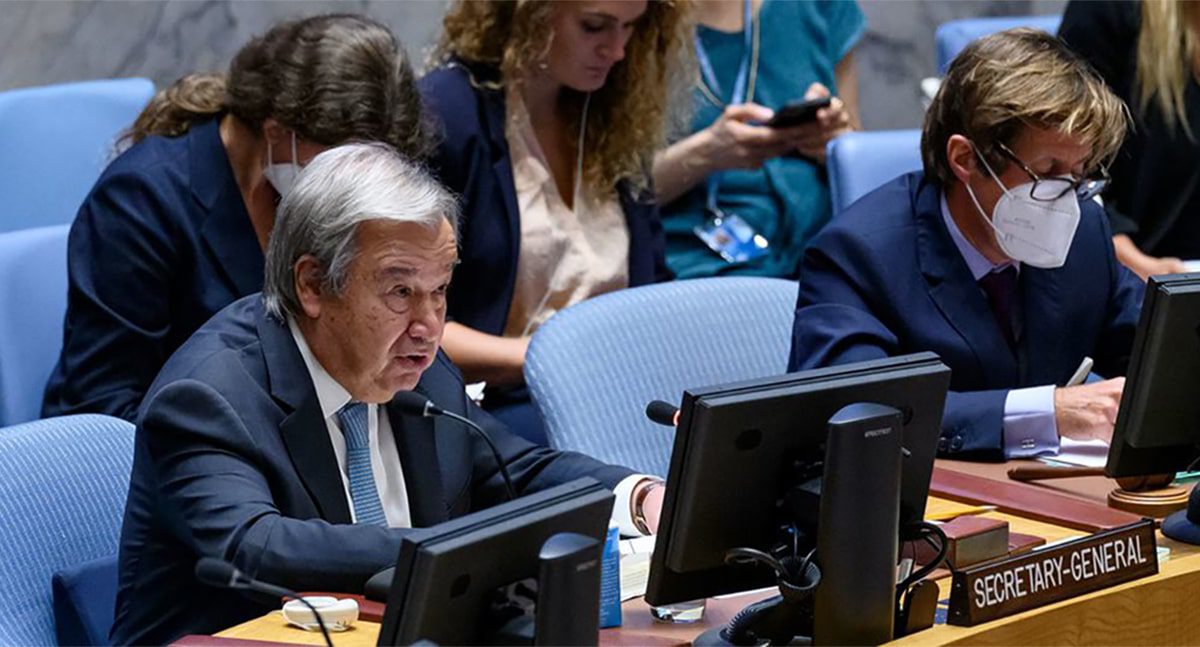
Secretary-General António Guterres addresses UN Security Council members on threats to international peace and security.
Briefing the Security Council on Tuesday, UN Secretary-General António Guterres again underlined the need to de-escalate the situation around the embattled Zaporizhzhia Nuclear Power Plant in Ukraine.
Guterres gravely concerned
Europe’s largest nuclear plant has come under repeated shelling in recent weeks, sparking fears of a potential nuclear disaster.
Highlighting his continued grave concern over the situation, the UN chief again warned that any damage to Zaporizhzhia, or to any other nuclear facility in Ukraine, could result in a wide-reaching catastrophe.
“All steps must be taken to avoid such a scenario. Common sense and cooperation must guide the way forward. Any action that might endanger the physical integrity, safety or security of the nuclear plant is unacceptable,” he said.
The Secretary-General stressed that efforts to re-establish the plant as purely civilian infrastructure are vital.
“As a first step, Russian and Ukrainian forces must commit not to engage in any military activity towards the plant site or from the plant site. The Zaporizhzhia facility and its surroundings must not be a target or a platform for military operations,” he said.
The second step would entail securing an agreement on a demilitarized perimeter.
“Specifically, that would include a commitment by Russian forces to withdraw all military personnel and equipment from that perimeter and a commitment by Ukrainian forces not to move into it. Operators at the plant must be able to carry out their responsibilities, and communications must be maintained”.
The Secretary-General called for commitment to support inspectors from the International Atomic Energy Agency (IAEA) stationed at the plant.
Following months of negotiations, a 14-member team from the nuclear watchdog arrived there last week. Two will remain at the site, which has been under Russian control since the early days of the conflict.
“I trust that the IAEA experts now deployed to Zaporizhzhia will be able to carry out their work without hindrance and contribute to ensuring lasting nuclear safety and security at the plant. All of us have a stake in the success of their critical mission,” he said.
‘Historic’ IAEA mission
IAEA chief Rafael Mariano Grossi, who led the mission, had described it as “historic”. The fact that staff are now there is “unprecedented”, he added.
Citing nuclear disasters in Chernobyl and Fukushima, as well as the conflict in Iraq, he recalled that while agency inspectors had experienced “difficult circumstances,” it had always been in the aftermath.
“We in this case have the historical, ethical imperative to prevent something from happening. And by having established this presence, and by agreeing to a special safety and security protection zone…we have the opportunity to prevent this from happening.”
Unsplash/Yehor Milohrodskyi
The Dnieper hydroelectric power station in Zaporizhzhia, Ukraine.
‘Playing with fire’
The mission report, published on Tuesday, provides concrete recommendations to address the seven pillars of nuclear safety that Mr. Grossi had outlined at the beginning of the war.
Although the first pillar calls for not violating the physical integrity of nuclear facilities, “this happened, and continues to happen,” he said.
“The hits that this facility has received and that I could personally see and assess together with my experts is simply unacceptable. We are playing with fire and something very, very catastrophic could take place,” he warned.
The report proposes setting up a nuclear safety and security protection zone that would be limited to the perimeter and the plant itself.
Other recommendations call for removing all military vehicles and equipment from nuclear buildings at the site and ensuring the return to clear and routine responsibilities for staff, in addition to re-establishing an “appropriate” work environment.
CEC Member Churches have been greatly shaken by the impact of the Russian aggression on Ukraine. Ecumenical solidarity has emerged in force among European churches, with our members and ecumenical partners responding with an outpouring of prayers for peace. A flood of appeals and statements are urging for a diplomatic solution through dialogue, strongly advocating for reconciliation, and encouraging political decision-makers and church leaders to play their crucial roles. European churches have also supported and continue to implement humanitarian projects, offering aid and an open door to those fleeing the conflict.
Czechia holds the Presidency of the Council until the end of 2022. A first series of hearings took place from 11 to 13 July. A second set of hearings to presents outlines priorities to EP committees will happen during the first week of September.
Agriculture and Rural Development
The impact of Russian aggression against Ukraine on food security is a key priority, according to Agriculture Minister Zdeněk Nekula on 11 July. The Presidency will seek an early start for the reform of the Common Agricultural Policy (CAP) to provide member states with flexibility and temporary exceptions to handle the crisis. The Presidency will also prioritise negotiations on the sustainable use of plant protection products.
A number of MEPs called for the way in which solidarity corridors for agricultural exports from Ukraine work to be improved and for a balance between EU food production and the proposed reduction in the use of pesticides. Some MEPs agreed that some derogations from CAP rules will be needed, while others warned against weakening the CAP and called for organic farming to be supported instead.
Development
On 12 July, Jiří Kozák, Deputy Minister for Foreign Affairs, highlighted a three-fold challenge caused by Russia’s war against Ukraine: the distribution of grain from Ukraine; securing sufficient humanitarian relief; and breaking the Russian narrative that the food security crisis is the EU’s fault. Mr Kozák also said that, for the Post-Cotonou Agreement, the Presidency is determined to conclude the remaining steps as fast as possible.
MEPs agreed on the importance of dealing with the immediate and longer-term impacts of the war on global food security. They also raised the question of refugees in Ukraine and its neighbours. Others questioned the Presidency on their priorities in the Sahel, on the migration issue on the EU’s southern border, and the integration of humanitarian relief and long-term development policy.
Transport and Tourism
On 12 July, Transport MinisterMartin Kupka, and Deputy Prime Minister for Digitisation and Minister of Regional DevelopmentIvan Bartoš, stressed that the Presidency will focus on measures to decarbonise transport, promote railways, make sure solidarity lanes for Ukraine are working and increase the resilience of the tourism sector. Minister Kupka promised MEPs that the work on new rules on the Single European Sky, alternative fuel infrastructure, sustainable fuels for aviation and maritime sectors, intelligent transport systems and TEN-T revision would advance.
Transport Committee MEPs urged the Presidency to put more efforts into addressing mobility poverty and road safety, make sure EU countries would unite in response to any possible new COVID-19 pandemic and asked for the option of providing EU financial support for solidarity lanes in Ukraine to be explored.
Fisheries
On 12 July, Zdeněk Nekula, Minister of Agriculture, said that the Presidency’s top priority will be to ensure food security in the EU and improve the competitiveness of the sector compared to third countries. Despite being a landlocked country, the Czech Presidency will also focus on fishing quotas, reaching agreements on EU fishing possibilities with third countries, as well as fisheries-relevant initiatives related to the Green Deal.
MEPs stressed the need to help fishers due to the impact of the war in Ukraine. They welcomed the intention to make fisheries more competitive but stressed the need to strike a balance between the socio-economic and environmental aspects of the initiative. Finally, some reaffirmed the idea of reforming the Common Fisheries Policy, even if the Commission is reluctant to do so.
Internal Market and Consumer Protection
Industry and Trade Minister Jozef Síkela told MEPs that the Presidency will pay special attention to better enforcement of Single Market tools and services, deeper market integration and high consumer protection, including raising consumer awareness on sustainable consumption and online risks. The Presidency will work to move forward on negotiations with MEPs on machinery products and consumer credits and to reach a common position in the Council on the General Product Safety Regulation, the Artificial Intelligence Act, and Transparency and Targeting of Political Advertising.
MEPs quizzed the Presidency on empowering consumers in light of the twin transition, the implementation of rules on dual quality of products, the update of travel package rules in light of the pandemic and the ongoing digital priorities (including the new Chips Act and European Digital Identity).
Women’s Rights and Gender Equality
Marian Jurečka, Deputy Prime Minister and Minister of Labour and Social Affairs, said the Czech Presidency will strive to achieve progress on the pay transparency directive. On an EU strategy for care, they will focus on long-term care and providing refugees from Ukraine with high-quality care. Member states’ diverse positions on preventing violence against women need to be respected, he said, although the definition of online sexual violence will be discussed in November. There will be Council conclusions on gender equality, and the Presidency will look into economic parity for men and women with a focus on youth.
Several MEPs asked if Czechia is planning to ratify the Istanbul Convention. Many welcomed the objective to reach a deal on pay transparency, stressed that LGBTI rights and sexual and reproductive health and rights must be protected, and highlighted Parliament’s call to add the right to abortion to the EU Charter of fundamental rights.
Employment and Social Affairs
On 11 July, Marian Jurečka, Deputy Prime Minister and Minister of Labour and Social Affairs, identified as key issues: managing the influx and integration of refugees, food and energy affordability for the most vulnerable and the fight against child poverty. Further priorities include reaching a common position in the Council on improving conditions in platform work, and progressing on the pay transparency directive.
MEPs asked for the Social Climate Fund to be made operational to protect the most vulnerable during the green transition. Some MEPs urged for the SURE instrument for the preservation of employment to become permanent and for a more ambitious use of the Child Guarantee. Finally, MEPs asked for an extraordinary Social Summit to address the impact the energy and inflation crisis and the recession are having on employment.
Environment, Public Health and Food Safety
On 11 July, Environment Minister Anna Hubáčková told MEPs the priorities are: reaching agreements on the Fit for 55 files; nature restoration law; protecting vulnerable households during the green transition; and global cooperation on climate and environment. MEPs questioned the minister on preparations for the UN conferences on climate change (COP27) and biodiversity (COP15), as well as the Russian war’s impact on the environment.
On 12 July, Health Minister Vlastimil Válek said the Presidency will focus on the fight against cancer; disinformation on vaccination and vaccines for new variants; progress on Council’s position regarding the European Health Data Space (EHDS), and healthcare services for Ukrainian refugees. MEPs quizzed the minister on fair prices and access to vaccines, the impact of the war, rare diseases and the impact of climate change on population health.
Later that day Agriculture Minister Zdeněk Nekula highlighted food security, sustainable agriculture, animal health, and achieving progress on “Farm to Fork” and agreeing on the “Deforestation” regulation. MEPs questioned the minister on the sustainable use of pesticides, the Russian war’s impact on food security, genomic technologies, the financing of the green transition of the agricultural sector, and meat production.
Regional Development
On 12 July, Deputy Prime Minister for Digitisation and Minister of Regional DevelopmentIvan Bartoš said the Presidency will focus on the future cohesion policy, analysing which instruments are helping to converge EU regions best and ensuring green and digital transitions, while at the same time providing for the necessary flexibility to face new developments.
MEPs stressed cohesion funds should be used to develop a capacity that ensures safe transit of food and supplies, in current time of war. They also warned that cohesion policy principles should not harm the environment. MEPs also urged the Presidency to support the idea of setting-up a new generation Just Transition fund and reviving the EU Cross Border Mechanism.
Economic and Monetary Affairs
Russia’s war in Ukraine and rising inflation will be the backdrop for most of the Presidency’s priorities, Finance Minister Zbyněk Stanjura told MEPs on 13 July. The Presidency would be prioritising reaching agreements on EU rules for a global minimum tax on large multinationals, green bonds, anti-money laundering rules and energy taxation. It would broker discussions on integrating Repower EU into the Recovery and Resilience Facility to remove Russian influence from the EU economy, and on the update of the EU’s fiscal rules.
MEPs focussed their questions on what the Presidency was concretely planning to do to save the rules on a global minimum tax, and how it would orient talks on a revision of the fiscal rules, and to what extent it is possible to address inflation without impinging on the independence of central banks. The looming economic difficulties and the debate around unanimity voting in the area of taxation were also raised by a number of MEPs.
Culture, Education and Youth
On 13 July, Culture Minister Martin Baxa said the Presidency will focus on finalising the EU’s 2023–2026 Work Plan for Culture. He also promised to work to open negotiations on boosting funds for the Creative Europe programme, as the current funding does not meet the sector’s needs. Minister of Education, Youth and Sports Vladimír Balaš focussed in his presentation on digital education, intergenerational dialogue and active support for the European Year of Youth, with a conference on the latter planned for 6 December 2022.
MEPs asked about plans for the Media Freedom Act, due to be announced in September, ways to include Ukrainian students in the EU student mobility programme, and integrating Ukrainian refugee children and young people into the EU education system. They also raised issues around sporting activities, the implementation of the Copyright directive, and completing the European Education area.
International Trade
“Free trade agreements are the core tasks of the Czech Presidency,” said Trade Minister Jozef Síkala on 13 July, a statement that Trade Committee members welcomed. They urged the conclusion and ratification of free trade agreements with, among others, New Zealand, Mexico, Chile, Australia, India and the Mercosur countries, insisting that all trade deals must respect the EU’s values and sustainability goals.
Trade Committee members asked the presidency to work towards reaching a Council position on the review of the Generalised Scheme of Preferences and the anti-coercion instrument and to finally conclude the Post-Cotonou agreement. Several MEPs urged the Council to intensify cooperation with Africa and to consider gender equality when working on trade.
Foreign Affairs
Foreign Affairs Minister Jan Lipavský on 13 July outlined five priorities: Ukraine, energy, defence, economy and democracy. Stressing the need to continue standing by Ukraine, he warned against the dangers of “Ukraine fatigue”, and called for weapons to be supplied to Kyiv more quickly and for greater efforts to facilitate the country’s post-war reconstruction. He also stressed the need for a strong transatlantic partnership and for discussing how the EU should reassess its relations with Russia in the long term.
MEPs quizzed Mr Lipavský on a range of subjects, including on the EU’s long-term vision for relations with Russia, how to move ahead with the EU enlargement process, in particular on Bulgaria’s blockade of North Macedonia, the necessity to grant EU visa liberalisation to Kosovo and the need to counter Russian false narratives in countries south of the EU, including Africa.
Industry, Research and Energy
Ivan Bartoš, Deputy Prime Minister for Digitisation and Minister of Regional Development, said that the Presidency will work on the digital agenda, communication resilience, sustainable digital ecosystems, cybersecurity in the EU, security of ICT supply chains, and digitalisation of public services. The Presidency will aim to secure a Council position on the AI Act, a general approach on the eID regulation, and to continue work on the Data Act. It will also work to reach an agreement in Council on the proposal to reinforce cybersecurity in the EU before the end of November, he said.
On industry and energy, Jozef Síkela, Minister of Industry and Trade, said that the Presidency will work to reduce the EU’s dependence on Russian fossil fuels as set out in the RepowerEU plan, continue work towards climate neutrality, while securing affordable energy for citizens. The Presidency will work on fast-tracking permitting procedures in renewables, improving energy efficiency and energy savings, as well as on the transition to low-carbon and renewable energy sources. It will also focus on diversifying supplies and assist the Commission with the EU’s energy platform for joint purchasing, to ensure that all member states have enough energy supplies for the winter.
On research and innovation, Vladimír Balaš, Minister of Education, Youth and Sports, said that the Presidency will work to advance the development of the European Research area and the EU research ecosystem. It will focus on synergies in research and innovation funding, on the enhancement of the European research infrastructure ecosystem, and the development of a new European innovation agenda. It will also aim to finalise the legislation on the Horizon Europe joint undertakings with regards to semiconductors, and the conclusion of association agreements with third countries on Horizon Europe.
On space policy, Martin Kupka, Minister of Transport , said that the Presidency will remain committed to ensuring that the EUSPA agency for the Space Programme, based in Prague, has the best conditions and provides the best standards. The main priority will be the programme for secure connectivity, and the Presidency is looking to start talks with MEPs as soon as possible. The Presidency will also focus on innovation and the use of data and services from EU space systems, and to extend existing capacities to protect the EU’s satellite systems.
Civil Liberties, Justice and Home Affairs
The Presidency strongly supports EU responses to Russian aggression, including the fight against impunity and collecting evidence on war crimes, Justice Minister Pavel Blažek told MEPs on 5 September. He said that Eurojust and its new mandate can play a key role, while stressing that ongoing work on cracking down on sanctions violations will continue.
European Affairs Minister Mikuláš Bek said that the work on the rule of law will play a major role and announced that the next discussion on the issue will focus on Poland, Portugal, Romania, Slovenia and Sweden. The Presidency will also work on the ongoing procedures on Poland and Hungary, in dialogue with the national governments.
MEPs encouraged the Presidency to produce country-specific recommendations on the state of rule of law. MEPs also called for more engagement on e-Privacy and e-Evidence, asked for a stronger stance on revelations about spyware being used and raised the issue of media monopolisation in certain countries.
On the same day, First Deputy Prime Minister and Interior Minister Vit Rakušan said the Presidency is ready to start negotiations on the Screening and Eurodac regulations and work on structural solutions for solidarity and legal migration. Online child sexual abuse, the mandate of the EU drug addiction monitoring centre, the political governance of the Schengen area and Croatia, Romania and Bulgaria’s inclusion in it, are also priorities.
MEPs asked for more details on the Council’s timetable on migration files, on data protection concerns in relation to fighting online child abuse as well as on pushbacks and human rights violations at the EU’s external borders.
Legal Affairs
On 5 September, Justice Minister Pavel Blažek identified progress on the directive on the protection of the environment through criminal law and the digitalisation of justice systems as key issues. Further priorities include corporate sustainability due diligence, the directive to tackle abusive lawsuits targeting critical voices, so-called SLAPPs, and legislation on Artificial Intelligence (AI).
MEPs stressed the importance of a liability regime for AI. Some MEPs urged for progress on the revision of EU geographical indications. Finally, MEPs asked for an ambitious approach on the SLAPPs directive, underlining that it is of vital importance for freedom of expression, fearing Council might weaken the initiative.
Constitutional Affairs
Following the presentation by European Affairs Minister Mikuláš Bek on 5 September, MEPs inquired on the follow-up to the Conference on the Future of Europe, including the revision of EU Treaties and the reform of electoral rules, already initiated by Parliament. They also called on the Presidency to focus on the fight against foreign interference and disinformation, and the protection of the EU’s legal order from breaches of the rule of law.
Minister Bek replied he intends to have a political discussion on a Convention to revise the Treaties in October, aiming to have a vote in November and pass on the matter to the European Council. Electoral law reform will be debated in October, but he warned MEPs the process will be politically complicated. The Presidency will seek a common approach on European political parties and foundations by the end of the year. On the rule of law, he promised that the topic will feature prominently in all General Affairs Council agendas.
The proposed article was originally printed in the Church Gazette (issues 15, 17 and 19) – an edition of our diocese, as a review of the book of Fr. M. Polsky[1] The canonical position of the supreme church authority in the USSR and abroad (from “Typography of Rev. Iov Pochaevsky in St. Troitskom monastry”, 1948, 196 p.), and it is reprinted here without any significant changes. In it I touch, as far as it is possible for me, only one of all concerned in the book of Fr. M. Polish questions, namely about the church organization abroad.
Based on a detailed analysis of facts and documents, in his book prot. Polsky comes to the following definite conclusion: “Today, the only canonical authority in the Russian Orthodox Church as a whole, both for its overseas part and – after 1927 – for Russia itself, is the Abroad Synod of Bishops” (p. 193). It is hardly possible to say more clearly. Therefore, if only out of respect for the author’s personality and work, we must treat his evidence carefully and try to put and understand the question on its merits. There is no room for controversy here. Or Fr. M. Polski is right – and then, convinced by him, all those who until that moment have thought otherwise are obliged to accept his conclusions and harmonize their church life according to them – or he is not right, but in such a case it is not enough to simply say this, but to reveal where the justice lies. There can be no relativism in the church. And the fact that so many people these days “don’t pay attention” to the question of church organization and consider it unimportant, some “business of the bishops”, is only a sign of a deep illness and loss of church consciousness. There cannot be multiple equally valid ways of understanding the Church, its nature, task and organization.
The book of Fr. M. Polski demands from us a clear and definite answer to the question: what is our specific disagreement with the Overseas Synod and where do we see the norm of the canonical structure of our church life? I am convinced that the time has come when these questions must be posed and considered in substance, that is, in the light of the Tradition of the Church, instead of in the fruitless form of “jurisdictional polemics”. Of course, just one article is not enough for this purpose. The concerted effort of the entire church consciousness is necessary. The task of this article is only to ask the question and try to evaluate the book of Fr. M. Polski in some comprehensive relationship. It goes without saying that the article has no official character and is only a private attempt – according to one’s own strength – to ecclesiastically approach some of the painful difficulties of our church life.
1. Canons and canonicity
All disputes over ecclesiastical organization usually boil down to the question of canonicity and non-canonicality, in which the ways of defining both are infinitely varied. Thus, at the basis of his judgments, Fr. M. Polski takes Apostolic Rule 34: “The bishops of each nation must know which of them is first and recognize him as the head.” And let them not do without his opinion anything that exceeds their power: let each do only that which pertains to his diocese and to the lands belonging to it. But the first should not do anything without the opinion of all. Because in this way there will be consensus and God will be glorified through the Lord in the Holy Spirit – Father and Son and Holy Spirit”.[2] However, we can ask: why, as the main criterion, Fr. M. Polsky proclaims just this and not some other rule? Take, for example, Rule 15 of the First Ecumenical Council. It prohibits bishops and clerics from moving from one diocese to another. At the same time, both in Russia and abroad, the relocated bishops were and continue to be not an exception to the rule, but a common practice, and the Abroad Synod itself was composed in its majority of bishops who abandoned their chairs. Therefore, if we take this rule as the main criterion, then under the concept of “non-canonicality” we can include the entire episcopate of the synodal period of the history of the Russian Church, not to mention emigration. We cite this example not to simplify the controversy, but only to show the arbitrary nature of the one used by Fr. M. Polish method, the application of which would make all modern disputes about canonicity meaningless. Because on the basis of individual canonical texts, arbitrarily selected and interpreted ad hoc, absolutely everything that pleases us can be proved, and in the émigré church-polemical literature, curious examples can be found of how with the help of the same canons one can prove and justify two diametrically opposed points of view. Thus, it becomes clear that before we use the canons, we must establish the norm of their use itself, i.e. try to clarify what a canon is and what its action is in the life of the Church.
It is known that the Church compiled the canons at different times and on different occasions, in the general case with the aim of correcting the distortions of church life or in connection with a change that occurred in the conditions of church life. Thus, in their origin, the canons were determined by the historical setting in view of which they were composed. From this, some “liberal” Orthodox people make the hasty and erroneous conclusion that, as a rule, the canons are “inapplicable” because the conditions of life for which they were created have changed, and therefore all disputes about canonicity are a fruitless and harmful casuistry. Opposing the “liberals” are those who can be called zealots of canonical formalism. Usually ill-informed in theology and in the history of the Church, they see in the canons only the letter and consider as heresy any attempt to see meaning behind that letter. Indeed, at first glance, the implementation of the canons faces great difficulties. So what relation to our lives could have some of the canons, for example, of the Council of Carthage, determining how to divide the dioceses with bishops who switched to the heresy of the Donatists (Council of Carthage, Rule 132)? And at the same time, the Church has repeatedly and solemnly confirmed the “indestructibility” and “unwaveringness” of the canons (Seventh Ecumenical Council, Rule 1; Council of Trulli), and the promise of fidelity to the canons is part of our bishop’s oath. In reality, however, this contradiction is apparent and based on a theological misunderstanding. The deepest error of both “liberals” and “zealots” is that they see in the canon a statute of a juridical nature – a kind of administrative rule that is automatically applicable if only a suitable text can be found. In this approach, some who find such a text try to use it to justify their position (which, in fact, is usually determined for completely different reasons), and others simply reject any reference to the canons as obviously “outdated” legislation.
The thing is, however, that the canon is not a legal document, that it is not a simple administrative rule that can be applied purely formally. The canon contains an indication of how, under the given conditions, the eternal and unchanging essence of the Church can be embodied and manifested, and precisely this eternal truth expressed in the canon – although on a completely different occasion, radically different from our historical situation – represents the eternal and unshakable content of the canon and it is she who makes the canons an invariable part of the Tradition of the Church. “The forms of historical existence of the Church – writes an Orthodox canonist – are extremely diverse. To anyone with even a little knowledge of Church history, this is so self-evident that it requires no proof. One historical form is replaced in this process by another. And yet, for all the diversity of the historical forms of church life, we find in them a constant core. This core is the dogmatic teaching of the Church, or in other words, the Church itself. Church life cannot take arbitrary forms, but only those that correspond to the essence of the Church and are able to express this essence under the specific historical conditions”.[3] Therefore, it is the canon that is the norm for how the Church embodies its immutable essence in changing historical conditions. And therefore to use the canons means, first of all, to be able to find in the text of the canon that eternal core, that side of the dogmatic teaching of the Church, which are precisely contained in it, then to update this eternally – again and again – in life. However, for such use of the canons, as for everything else in the Church, the dead knowledge of the Book of Rules is not enough,[4] but a spiritual effort is required, since the canons cannot be separated from the entire Tradition of the Church, as this people using them as absolute legal rules often do. Fidelity to the canons is fidelity to the entire Tradition of the Church, and this fidelity, in the words of Prof. Prot. Georgi Florovski, “does not mean fidelity to the external authority of the past, but is a living connection with the fullness of the Church’s experience. The reference to the Tradition is not only a historical argument, and the Tradition is not reduced to ecclesiastical archaeology”.[5]
And so, the yardstick for the ecclesiastical structure turns out to be not the bare canonical text, but the testimony contained in it about the Tradition of the Church. This is the only understanding of the canons that gives us an objective and ecclesiastical criterion for determining the applicability or non-applicability of one or another canon to a given situation, and thus also tells us the way of its use. Therefore, in our effort to determine the canonical norm of our ecclesiastical organization in these new conditions in which God has condemned us to live, we are obliged first of all to recall what the Church has always and everywhere embodied but with its external arrangement and what is that main thing to which the canons point.
2. The essence of the Church
The essence of the Church can be expressed with a single word – unity. The Greek term itself ἐκκλησία (church) means, according to the definition of St. Cyril of Jerusalem, “a gathering of all together in unity.” “And the fact that, from the very beginning, this term closely related to Old Testament terminology was taken to denote the Christian Church, speaks clearly of the consciousness of unity that was present in the primal church” – so he writes in his Essays on the History of Dogma for the Church V. Troitsky (subsequently Solovetsky confessor archbishop Hilarion).[6] However, what is the essence of this unity, what is expressed or should it be expressed?
With sadness we have to admit that if we continue to profess the unity of the Church, as well as other dogmas with our mouths, then in our consciousness this unity has become an almost hijacked concept, or almost subconsciously we have replaced its original meaning with our own concepts. While at the same time the unity of the Church is not just a “negative” sign, which means that the Church is united when there are no obvious disagreements in it, but represents the very content of church life. Unity in Christ of people with God and unity – in Christ – of the people themselves among themselves, according to the words of the Lord: “I am in them, and You in Me, so that they may be in complete unity” (John 17:23). “The church – writes Fr. G. Florovsky – is a unity not only in the sense that it is one and only, but above all because its very essence consists in the rejoining into one of the divided and fragmented human race”.[7] In the fallen and sinful world, everything divides people, and therefore the unity of the Church is supernatural. It requires a re-gathering and renewal of human nature itself – things that were accomplished by Christ in His Incarnation, in His death on the cross and Resurrection – and which are graciously given to us in the Church through the sacrament of Baptism. In the fallen world, Christ has begun a new being. “This very new being of humanity St. Ap. Paul calls the Church and characterizes it as the Body of Christ”,[8] that is, such an “organic unity of all believers that even the life of the regenerated person becomes unthinkable outside of this organic unity”.[9]
However, just as in the sacrament of Baptism we receive all the fullness of grace, but we ourselves must grow in it by being filled with it, so in the Church – all the fullness of unity is given in Christ, but each of us is required to fulfill or realize this unity, manifestation of this unity in life. In this way, the life of the Church represents a “creation of the body of Christ, until we all reach the unity of faith and the knowledge of the Son of God, to the state of a perfect man, to the full age of Christ’s perfection” (Eph. 4:12-13). “Only then will the head, that is, Christ, be fulfilled, when we are all united and fastened in the most permanent way”.[10] The way to realize this unity in Christ with a view to the creation of His Body is love. “Paul demands from us such a love – says St. John Chrysostom – that would bind us together, making us inseparable from one another, and such a perfect union as if we were members of the same body”.[11] And finally, in the Liturgy – the highest and final embodiment of the Church’s unity in Christ – only after we have “loved one another” can we pray: “All of us – partakers of the one Bread and the one Cup – unite one to another in the one Spirit of Holy Communion…” (From the Liturgy of St. Basil the Great).
Thus unity turns out to be a real content of church life. Given to the Church from the very beginning, it is also the goal of each of us and of all together – that fullness to which we are obliged to strive at every moment of our ecclesial existence.
3. The Catholicity of the Church: local and universal
Here is this unity, which is the dogmatic essence of the Church, represents in reality the norm of its organization, i.e. it is precisely what is embodied in both the external and internal organization of the Church throughout its earthly history – it is also pointed to it is invariably protected by church canons. “This unity, i.e. the church itself, does not seem like something desired and only expected. The church is not only a conceivable magnitude, it is a real historically tangible phenomenon… In the natural world, Christ has laid the beginning of a special, supernatural society, which will continue to exist alongside natural phenomena”.[12] And because of this, the historical forms of the church organization, although they change depending on the external historical conditions, change only because in these new conditions the same eternal essence of the Church and, above all, its unity is invariably embodied. That is why, under the diversity and difference of all these forms, we always find a basic core, some permanent principle, the betrayal of which or the violation of which would mean to change the very nature of the church. We have in mind the principle of the locality of the ecclesiastical structure.
The locality of the Church means that in one place, that is, in one territory, only one Church can exist, or in other words, one church organization, expressed in the unity of the priesthood. The bishop is the head of the Church – in the words of St. Cyprian of Carthage, who said: “The Church is in the bishop and the bishop is in the Church.” That is why in a Church there can be only one head – a bishop – and this bishop, in turn, heads the whole Church in the given place. “The Church of God in Corinth” (1 Cor. 1:2) – here the history of the Church begins with such church units scattered all over the world. And if subsequently this unit and its territory undergo development – from a small municipality in a given city to a diocese, from a diocese to a district and from a district to a huge patriarchate, the principle itself remains unchanged, and at its foundation always remains the same indestructible cell: the one bishop heading the one Church in the particular place. If we delve into the essence of the canons that refer to the authority of the bishop and to the distinction of this authority between the individual bishops, it will not be subject to any doubt that they protect precisely this primordial norm, demanding its embodiment regardless of the specific conditions.
Why is this so? This is so precisely because of this unity of the Church in each specific place, which is also the first concrete embodiment of that unity in which the very essence of the Church and its life consists – the unity of the people whom Christ has regenerated for new life and for who “is one Lord, one faith, one baptism” (Eph. 4:5). And therefore there can be no other principle of organization of the Church than the local and the territorial, because any other principle would mean that some other natural feature – national, racial or ideological – has replaced the supernatural, supernatural, grace unity in Christ. The Church opposes the natural divisions in the world to the supernatural unity in God and embodies this unity in its structure.
The same meaning is also contained in the other name of the Church – in naming it New Israel. Old Testament Israel was the people of God and its religion was essentially national, so accepting it meant becoming a Jew “in the flesh”, joining the Jewish people. As for the Church, its designation as the “new Israel” meant that the Christians constituted a new and united people of God, of which the Old Testament Israel was a type, and in this new unity “circumcision or uncircumcision” no longer means anything – there is no Jew there, we are Greek, but all are already one in Christ.
This very principle of locality lies at the basis of the catholicity (i.e. collegiality) of the Church.[13] The Greek word catholicity means first of all wholeness and applied to the Church, it indicates not only its universality, i.e. that the Universal Church is simply a sum of all its parts, but also that in the Church everything is Catholic, i.e. that in each of its parts the whole fullness of the experience of the Church, its whole essence, is fully embodied. “The Catholic Church residing in Smyrna” – this is how the Smyrna Christians defined themselves in the middle of the second century (Martyrdom of Polycarp 16, 2). Every Christian is also called to this catholicity, i.e. to conformity with the whole. “The order for Catholicism – says Fr. G. Florovsky – is given to everyone… The Church is Catholic in each of its members, since the Catholic whole cannot be built in any other way than through the Catholicity of all members”.[14] And so every church, every ecclesiastical community, in any place, is always a living embodiment of the whole essence of the Church: not just a part, but a member living the life of the whole organism, or rather, the Catholic Church itself , residing at this location.
(to be continued)
* “Church and church structure. About books prot. Polish Canonical position of the highest church authorities in the USSR and abroad” – In: Shmeman, A. Collection of articles (1947-1983), M.: “Русский пут” 2009, pp. 314-336; the text was originally published in: Church Gazette of the Western-European Orthodox Russian Exarchate, Paris, 1949.
Notes:
[1] Protopresbyter Mikhail Polsky (1891-1960) was a graduate of the Stavropol Theological Seminary, a priest from 1920, and in 1921 he entered the Moscow Theological Academy, which was closed soon after. In 1923 he was arrested and exiled to the Solovetsky Islands, but in 1930 he managed to escape and cross the Russian-Persian border. At first he ended up in Palestine, then (from 1938 to 1948) he was the chairman of the London parish of the Russian Orthodox Church Abroad (OROC), and in 1948 he moved to the USA, where he served in the church of the ROCOR “Joy of All Who Sorrow” in the city of San Francisco. He is the author of a number of works on the situation of the church in Soviet Russia.
[2] Cited by: The rules of the Holy Orthodox Church with their interpretations, 1, S. 1912, p. 98.
[3] Afanasyev, N. “Unchanging and temporary in church canons” – In: Living tradition. Collection, Paris 1937.
[4] Literally the Book of Rules – Slavic bilingual canonical collection (with Church Slavonic and Greek text), published for the first time in the first half of the 19th century and including the creeds of the ecumenical councils, the so-called Apostolic Rules, the rules of the ecumenical and of the local councils and the rules of the holy fathers (note trans.).
[5] Florovsky, G. “Sobornost” – In: The Church of God, London 1934, p. 63.
[6] Troitskii, V. Essays on the history of dogma about the Church, Sergiev Posad 1912, p. 15. See also: Aquilonov, E. Church (scientific definitions of the Church and apostolic teaching from it as about the Body of Christ), St. Petersburg. 1894; Mansvetov, N. New Testament teaching from Tserkva, M. 1879.
[7] Florovsky, G. Cit. op. p. 55. See also: Antonius, Mitr. Collection Sochinenii, 2, pp. 17-18: “The being of the Church cannot be compared with anything else on earth, since there is no unity there, only division… The Church is a completely new, extraordinary and unique being on earth , a “unique” that cannot be defined by any concepts taken from the life of the world… The Church is a similitude of the life of the Holy Trinity – a similitude in which the many become one.”
[8] Troitsky, V. Cit. ibid., p. 24.
[9] Ibid., p. 7.
[10] St. John Chrysostom, “Interpretation of the Epistle to the Ephesians”, Sermon 2 – In: The Creation of St. Joanna Chrysostom in Russian translation, 2, pp. 26-27.
[11] Ibid., p. 96.
[12] Troitskyi, V. Cit. ibid., p. 24.
[13] The exact name of the Orthodox Church is the Eastern Orthodox Catholic Church (for this see in: Prostrannyi khristianskii catechesis by Mitr. Philaret).