Dozens of people are said to be missing after a boat of migrants and refugees sank in the Aegean Sea on Wednesday off the Greek island of Karpathos, according to the UN refugee agency, UNHCR.
“Very sad news from the Aegean: Dozens of people are missing after a boat sank off the island of Rhodes this morning (Wednesday),” UNHCR’s office in Greece said in a tweet.
News media reported that the vessel sank at dawn after setting sail from southern Türkiye yesterday, heading for Italy.
29 rescued
Very sad news from the #Aegean: dozens are feared missing after a boat sank off #Rhodes island this morning.
Major search & rescue operation is underway, 29 people have been rescued so far. https://t.co/OS48RmxDFZ
“A major search and rescue operation is underway,” said UNHCR.
According to news reports, the Greek Coast Guard said that an air and sea rescue operation saved 29 people, all men, from the waters between Rhodes and Crete.
The media also cited the Greek authorities in reporting that the rescued are from Afghanistan, Iraq and Iran.
The wrecked boat had sailed from Antalya, located on the southern coast of neighbouring Türkiye.
Still searching
News media quoted a Greek Coast Guard press official who said that those rescued affirmed that the voyage began with 80 people on board – so up to 50 are still missing.
UNHCR confirmed the number of missing.
Deadly route
Since the beginning of the year, UNHCR has said that more than 60 people have died in the eastern Mediterranean.
Aegean Sea crossings between the Greek islands and Turkish coasts are often perilous – taking the lives of many migrants and refugees who travel on makeshift boats with hopes of arriving in Europe.
Since January, 64 people have died in the eastern Mediterranean, and 111 in 2021, according to data from the International Organization for Migration (IOM).
The last shipwreck in the Aegean Sea, which took place on 19 June, took the lives of eight people off the island of Mykonos, according to the IOM.
Every more deadly crossing
While the number of refugees and migrants crossing the Mediterranean to reach Europe is lower than in 2015, the journeys have become increasingly more deadly.
Throughout last year, the UN counted 3,231 migrants and refugees dead or missing in the Mediterranean Sea, and 945 people so far this year.
Successful voyages
At the same time, 70,325 migrants did manage to reach Europe, of which 65,548 individual crossings were reported in the Mediterranean, according to UNHCR.
Since the beginning of the year, Italy received the largest number of arrivals – 43,740, followed by Spain – nearly 17,000, Greece – 7,261, and Cyprus – 2,268.
Last year there were 123,300 arrivals, and in 2020, 95,800. Previously, 123,700 crossed the Mediterranean in 2019, and 141,500 in 2018.
MEPs support updating EU rules on consumer credit to protect consumers faced by new digital options and the difficult economic situation.
Consumer credits are loans for the purchase of consumer goods and services. They are often used to pay for cars, travel as well as for household goods and appliances.
Existing EU rules
The existing EU rules – the Consumer Credits Directive – aim to protect Europeans while fostering the EU’s consumer loan market. The rules cover consumer credits ranging from €200 to €75,000 and require creditors to provide information to allow borrowers to compare offers and make informed decisions. Consumers have 14 days to withdraw from a credit agreement and they can repay the loan early, thereby lowering the cost.
The rules were adopted in 2008 and need to be updated to meet the current environment.
Why changes are needed
The difficult economic situation means more people are searching for loans, and digitalisation has brought new players and products to the markets, including non-banks, such as crowdfunding loan apps.
This means, for example, that it is easier and more widespread to take small loans online – but these can turn out to be expensive or unsuitable. It also means that new ways of disclosing information digitally and of assessing the creditworthiness of consumers using AI systems and non-traditional data need to be addressed.
The current rules do not protect consumers who are vulnerable to over-indebtedness well enough. In addition, the rules are not harmonised between the EU countries.
Parliament’s internal market and consumer protection committee adopted its report on the new rules. on 12 July 2022.
The proposed rules say that creditors must ensure standard information to consumers in a more transparent way and allow them to easily see all essential information on any device, including a mobile phone.
Committee members stressed that credit advertising should not encourage over-indebted consumers to seek credit and it should contain a prominent message that borrowing money costs money.
To help determine whether a credit suits a person’s needs and means before it’s granted, MEPs want information such as current obligations or cost of living expenses to be required, but said social media and health data should not be taken into account.
MEPs say that the new rules should cover credits up to €150,000, with each country deciding the upper limit based on local conditions. They want overdraft facilities and credit overrunning, which are becoming increasingly common, to be regulated, but say it should be up to the countries to decide whether they apply the consumer credit rules to some loans, such as small loans up to €200, interest-free loans and loans to be repaid within three months and with minor charges.
Next steps
The Parliament will vote on the report in a future plenary session, after which Parliament negotiators can start talks with the Council and Commission on the final text of the legislation.
Vienna (Austria), 12 August 2022 – The United Nations Office on Drugs and Crime (UNODC) is proud to recognize International Youth Day by celebrating the theme, “Intergenerational solidarity: Creating a World for All Ages”. The theme this year emphasizes to emphasize the need for action across all generations to accomplish the SDGs and ensure that no one is left behind. In addition to highlighting these obstacles to intergenerational cooperation,
International Youth Day will also call attention to ageism, which affects both young and elderly people while having negative repercussions on society as a whole. Ageism can surface in healthcare, the workplace, and many other aspects of life. For instance, a systematic review in 2020 showed that in 85% of 149 studies, age determined who received certain medical procedures or treatments. 1 A study done by the European Social Survey, meanwhile, found that those aged 15–24 years reported experiencing the most unfair treatment because of their age: 55% thought that someone had shown them a lack of respect or had treated them badly.2 On this day, UNODC highlights its various commitments to empowering youth across its programmatic areas.
In February 2021, Ms. Ghada Waly, the Executive Director of UNODC, launched the UNODC Strategy 2021-2025 with three cross-cutting commitments embedded in UNODC’s programming, one of which was to empower youth. The goal of youth empowerment is to involve young people in problem-solving and to elevate their voices in decision-making processes.
To meaningfully engage youth, they must be involved at every stage of the program cycle. Initiatives should be implemented “with” youth as well as “for” youth to allow for co-creation in program implementation. UNODC seeks to strengthen its youth mainstreaming approach in order to accelerate youth empowerment processes across the organization.
UNODC has a variety of youth-focused initiatives outlined on the UNODC Youth website as well as a new Youth Empowerment Accelerator (YEA!) Framework. UNODC will strengthen ongoing and develop new youth mainstreaming actions to promote the meaningful engagement of young people in programmes and projects at the planning, implementation, and evaluation stages.
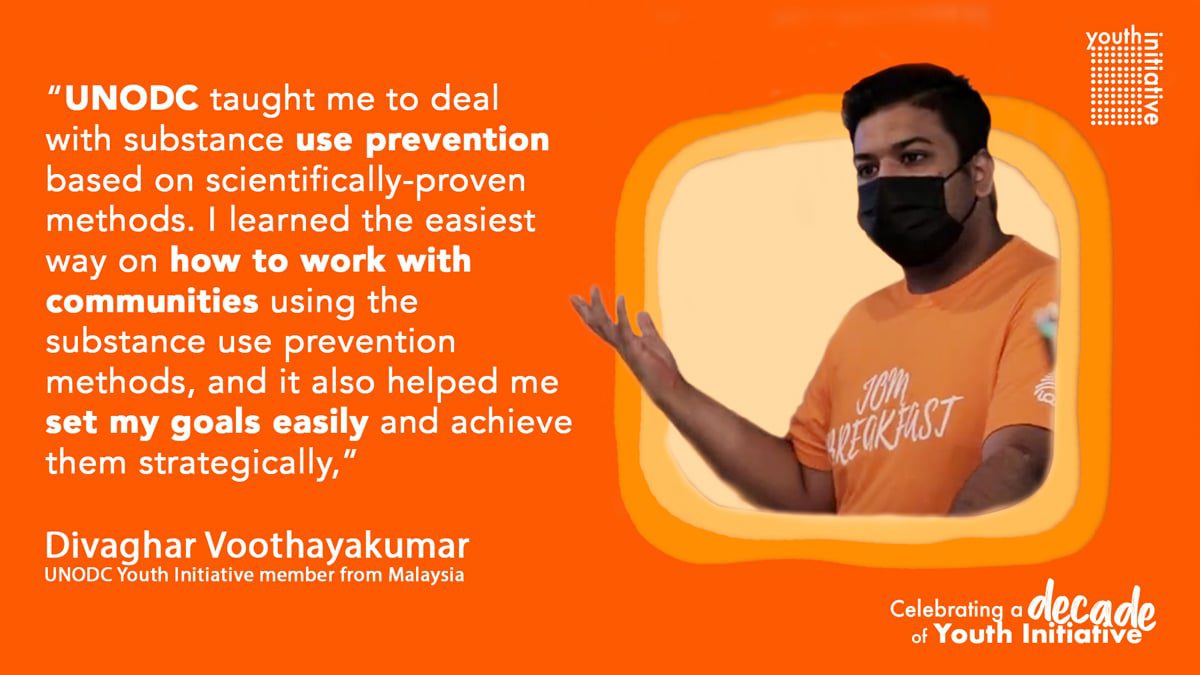
Alongside this umbrella Framework, there are various initiatives working for and with youth. For instance, the UNODC Youth Initiative aims to connect young people from around the globe and empower them to become active in their schools, communities and youth groups for substance use prevention and health promotion. This year they are celebrating a decade of the youth forum on the sidelines of the Commission on Narcotic Drugs.
Additionally, the GRACE Initiative (Global Resource for Anti-Corruption Education and Youth Empowerment) brings to the international community knowledge and experience working with educators, academics, youth, and anti-corruption authorities to foster a culture of rejection of corruption. By focusing on young people, educators and academics as the epicentre of global sustainable changemaking processes, GRACE promotes education and meaningful youth empowerment as driving engines to renew and strengthen the international community’s efforts towards anti-corruption and it does so by developing materials, activities and projects for children and educators, young scholars and academics and finally targeting young people and their dedication to sustainable development, digitalization and social entrepreneurship.
In line with Our Common Agenda and the 2030 Agenda for Sustainable Development, UNODC is committed to work for, and with youth, to ensure a better future for all.
Today, the Commission published guidelines to help Member States and stakeholders apply the rules on the safe reuse of treated urban waste water for agricultural irrigation. With several Member States increasingly suffering from droughts, reusing water from urban waste water treatment plants can become an essential tool to ensure a safe and predictable source of water, whilst lowering the pressure on water bodies and enhancing the EU’s ability to adapt to climate change.
The Water Reuse Regulation, applicable from June 2023, sets out minimum water quality, risk management and monitoring requirements to ensure safe water reuse. The guidelines are complemented by several practical examples to facilitate the application of the rules.
Commissioner for the Environment, Fisheries and Oceans Virginijus Sinkevičius, said:
;;;;;;
Freshwater resources are scarce and increasingly under pressure. In times of unprecedented temperature peaks, we need to stop wasting water and use this resource more efficiently to adapt to the changing climate and ensure the security and sustainability of our agricultural supply. Today’s guidelines can help us do just that and secure the safe circulation, across the EU, of food products grown with reclaimed water.
Water reuse can limit abstractions from surface waters and groundwater and promote a more efficient management of water resources, through the multiple uses of water within the urban water cycle, in line with the EU’s goals under the European Green Deal.
This drive towards more efficient use of water is also reflected in the recent Commission proposal to revise the Industrial Emissions Directive, calling also for a more efficient use of water across all industrial processes including through water reuse. The upcoming Commission’s proposal to revise the Urban Waste Water Treatment Directive will also aim to further facilitate water reuse.
Background
In the context of the European Green Deal, both the Circular Economy Action Planand the new EU Climate Adaptation Strategy refer to wider use of treated waste water as a way to increase the EU’s ability to respond to the increasing pressures on water resources.
Water reuse could also contribute to the Farm to Fork Strategy’sgoal of reducing the environmental footprint of the EU food system and strengthen its resilience, by providing an alternative, more reliable water source for irrigation. Funding opportunities for investments in irrigation with reclaimed water as an alternative water supply exist under the Common Agricultural Policy.
The Regulation on minimum requirements for water reuse(Water Reuse Regulation) sets harmonised minimum water quality requirements for the safe reuse of treated urban wastewater in agricultural irrigation, with the aim of facilitating the uptake of this practice. The Regulation also foresees the possibility for Member States to decide to introduce this practice at a later stage, on the basis of specific criteria. Such decisions must be regularly reviewed to take into account climate change projections and national strategies, as well as the river basins management plans established under the Water Framework Directive
From Ethiopia to Chad and Palestine, Education Cannot Wait (ECW), the UN’s fund for education in emergencies and protracted crises, is helping millions of boys and girls affected by conflict around the world to pursue their dreams.
ECW offers affected children and youth an opportunity to learn free of cost – in safety and without fear – to grow and reach their full potential.
A journey and a dream
UNICEF Ethiopia/Eyerusalem Yitna
At age nine, Bchiote Moorice fled embattled Democratic Republic of the Congo (DRC) for her safety.
At only nine years old, Bchiote Moorice and her three younger brothers fled war-torn Democratic Republic of the Congo, (DRC) – without food, water or basic necessities.
After a harrowing escape, Bchiote and her siblings were reunited with their parents, and the entire family relocated to a refugee camp in western Ethiopia.
There, Bchiote and her brothers were finally able to focus on their education through an ECW funded programme delivered by UNICEF Ethiopia.
“I hope to attend university one year from now and work in a big corporate bank,” she said with a big smile.
Determination for education
Jonathan Condo/State of Palestin
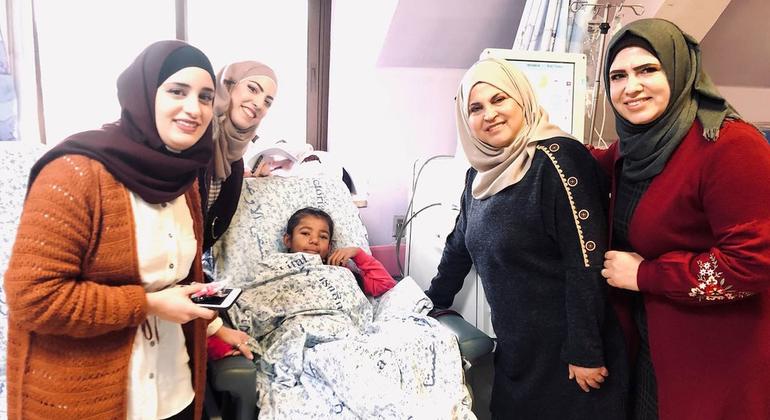
Shahd, 11, with her Determination School teachers in Augusta Victoria hospital, Palestine.
Launched to transform an aid system that neglects millions of the most vulnerable children and adolescents, ECW has been able to help many boys and girls like Bchiote.
Shahd (not her real name), like many 11-year-olds her age, has big dreams. She wants to become president, or a doctor, or even the first female Palestinian astronaut.
But, forced to spend most days receiving treatment at the Augusta Victoria Hospital, her chronic kidney illness loomed over her like a dark rain cloud.
However, Shahd has been able to continue her education at the Determination School – moving ever closer to turning her dreams into reality.
ECW funding has enabled the Palestinian Education Ministry to establish four Determination Schools, which provide flexible education to children unable to participate in regular classes because of chronic illnesses and long-term treatment.
Some 150 students in Palestine are currently being provided with individualized plans, psychosocial support, and inclusive education to ensure they are not left behind in their studies.
“I would rather go to regular school with other children, but the teachers and nurses at the hospital are very kind, and they make it okay,” said Shahd.
Perseverance, friendship, potential
UNICEF Chad/Nancy Ndallah
Hadjé, Achta and Ngoleram sit under a tree in Chad, enjoying the shade and the fresh air from the lake.
On the last day of school before vacation, three inseparable friends in Chad share a bond of displacement and resilience.
Hadje Al-Hadj, Achta Dogo, and Ngoleram Abakar, attend the Kaya Primary School in the Lac Province of Chad, and live on a site for those displaced by the ongoing violence in the Lake Chad Region.
It was created in 2015 following attacks from the Boko Haram terrorist group. Recurrent violence and threats have forced more than 450,000 internally displaced persons and refugees to the Lac Province.
Hadje was just five years old when her family moved there from a neighbouring country. Now 11, through the programme she has been able to focus on her education and thrive, alongside the 500 other students from the Kaya site.
These and other youngsters at the Kaya Primary School in the Lac Province, have been able to access safe, quality learning environments – keeping their dreams and futures alive.
For other personal accounts of ECW’s work, click here.
More on ECW
Education Cannot Wait (ECW) is the UN’s billion-dollar fund for education in emergencies and protracted crises.
The Determination Schools in Palestine are supported by ECW, the Palestinian Ministry of Educationand strategic partners including Save the Children, UNDP, UNICEF and UNRWA. The programme is implemented in the West Bank and administered by the Ministry of Education as part of ECW’s Multi-Year Resilience Programme.
At Kaya Primary School in Chad, 798 school kits and 36,831 backpacks were distributed to 36,831 students (including 16,932 girls) in Mamdi. Additionally, 452 teachers received teaching materials.
The school is supported by ECW in partnership with UNICEF, and the Jesuit Refugee Service.
UN experts on Wednesday denounced the decision by Belarus to withdraw from an international agreement that upholds people’s right to access information, as well as justice, in environmental matters.
The Aarhus Convention, adopted in 1998, also requires that individuals exercising these rights are not persecuted, penalized or harassed for doing so.
Belarus’s President Aleksandr Lukashenko signed a decree on 18 July effectively ending the country’s participation. Withdrawal is scheduled to take effect on 24 October, in line with article 21 of the Convention.
Strengthening rights, ensuring compliance
In denouncing the move, the UN experts noted that the Aarhus Convention has had considerable success in strengthening access rights, sustainable development and environmental democracy.
They said it is a leading example among international instruments on implementing human rights obligations relating to environmental protection, specifically the rights to information, public participation and justice.
“Key to the Aarhus Convention’s success has been the work of its Compliance Committee, including the ability of members of the public to bring cases of alleged non-compliance with the Convention before the Committee,” they added.
Persecution and harassment
The Compliance Committee as a non-confrontational, non-judicial and consultative mechanism, according to the experts, and its findings have considerably furthered implementation of the Convention.
They recalled that since 2014, the Committee has closely scrutinized the conduct of Belarus in respect of persecution, penalization and harassment of environmental rights defenders. Members also worked to assist the country in addressing non-compliance.
Despite this, the Committee found that Belarus had not yet addressed its recommendations, and expressed grave concern that the situation for environmental human rights defenders there was rapidly deteriorating.
Shortly thereafter, the Committee found that the August 2021 liquidation of an environmental non-government organization was a further incident of persecution, penalization and harassment.
Given the gravity of the situation, the remaining States party to the Convention moved to suspend the special rights and privileges accorded to Belarus.
Step up commitment
The UN experts stated that countries dissatisfied with the outcome of cases, decided by the Compliance Committee, should not withdraw from the Convention. Instead, they should strengthen their commitment to human rights, sustainable development and environmental democracy.
“Countries should take concrete measures to secure effective enjoyment of the rights to information, public participation and justice, and this includes securing a safe and enabling environment for environmental human rights defenders and all other representatives of civil society,” said the experts.
“Protecting environmental human rights defenders from violations committed by both State and non-state actors is crucial to the protection of the environment and the human rights that depend on it”.
About UN experts
The seven experts who issued the statement were appointed by the UN Human Rights Council, located in Geneva.
These Special Rapporteurs have been given mandates to monitor and report on specific country situations or thematic issues, such as the promotion and protection of human rights in the context of climate change.
Experts serve in their individual capacity and are neither UN staff, nor are they paid for their work.
By cmglee, Landsat, USGS – https://landsatlook.usgs.gov/explore?sat=LANDSAT_9, CC BY-SA 4.0, https://commons.wikimedia.org/w/index.php?curid=115858520
G7 Foreign Ministers’ Statement in Support of the IAEA’s Efforts to Promote Nuclear Safety and Security at the Zaporizhzhya Nuclear Power Plant in Ukraine
The text of the following statement was released by the G7 foreign ministers of Canada, France, Germany, Italy, Japan, the United Kingdom, and the United States of America, and the High Representative of the European Union.
Begin Text:
We, the G7 Foreign Ministers of Canada, France, Germany, Italy, Japan, the United Kingdom and the United States of America, and the High Representative of the European Union, reiterate our strongest condemnation of the ongoing unprovoked and unjustifiable war of aggression of the Russian Federation against Ukraine. The Russian Federation must immediately withdraw its troops from within Ukraine’s internationally recognized borders and respect Ukraine’s territory and sovereignty.
In that context, we demand that Russia immediately hand back full control to its rightful sovereign owner, Ukraine, of the Zaporizhzhya Nuclear Power Plant as well as of all nuclear facilities within Ukraine’s internationally recognized borders to ensure their safe and secure operations. Ukrainian staff operating the Zaporizhzhya Nuclear Power Plant must be able to carry out their duties without threats or pressure. It is Russia’s continued control of the plant that endangers the region.
We remain profoundly concerned by the serious threat that the seizure of Ukrainian nuclear facilities and other actions by Russian armed forces pose to the safety and security of these facilities, significantly raising the risk of a nuclear accident or incident and endangering the population of Ukraine, neighboring states, and the international community. It also undermines the IAEA’s ability to monitor Ukraine’s peaceful nuclear activities for safeguarding purposes.
We welcome and support IAEA Director General Grossi’s efforts to strengthen nuclear safety and security in Ukraine and we thank the Director General and the IAEA staff for their steadfast commitment in this regard. Against this background, we underline the importance of facilitating a mission of IAEA experts to the Zaporizhzhya Nuclear Power Plant to address nuclear safety, security, and safeguard concerns, in a manner that respects full Ukrainian sovereignty over its territory and infrastructure. We strongly endorse the importance of the Seven Pillars of Nuclear Safety and Security as outlined by Director General Grossi.
We reiterate our full and continued support for the IAEA. IAEA staff must be able to access all nuclear facilities in Ukraine safely and without impediment, and engage directly, and without interference, with the Ukrainian personnel responsible for the operation of these facilities. The safety of all individuals implementing these efforts must be addressed to strengthen nuclear safety, security, and safeguards in Ukraine.
We encourage all countries to support the IAEA’s efforts.
Rocío Muñoz, Carla’s mother, tells Europa Hoy a story that will not leave you unmoved. A young girl, 24 years old, held against her will in the HUBU, specifically in the psychiatric ward of the University Hospital of Burgos (HUBU), now two months since June 10 and under psychiatric treatment when in reality she has a physical illness and no mental disorder as confirmed again and again from the HUBU to the family.
At the moment, Rocío tells us, Carla is under psychiatric medication for no logical reason. “The real diagnosis is advanced Lyme disease, transmitted by the bite of a tick, according to diagnostic tests carried out by doctors outside the hospital.
The symptoms of this disease are very varied: from digestive, vascular, neurological, endocrine to fibromyalgia-like symptoms, as well as a drop in the immune system. The type of test necessary to detect this disease is not carried out by the Social Security because of its high rate of false negatives, and therefore it is necessary to go to external laboratories where tests such as elispot, phagos test, Galaxy nanotrap antigen test and Paldispot, among others, are carried out.
As has been documented, Carla, suffering from this infectious and multisystemic disease, comes to the health service with multiple organic symptoms: involuntary weight loss, muscle and joint pain, vascular ulcers, oedema in the lower limbs, livedo reticularis, vertebral fractures, narrowing of the mesenteric artery at the junction with the celiac trunk and recurrent infections due to her immunosuppression.
This department, unable to find the reason for the organic ailments detected and seeing the progressive and unstoppable physical deterioration she is suffering, decided, incomprehensibly for all the health professionals we asked, to transfer her to the psychiatric ward with the excuse that she was in a more aseptic place.
It does not seem logical to ignore the use of the ICU where the monitoring and treatment of her illness could be adequate.
Instead she is transferred to psychiatry, her IVs are removed (Carla is also diabetic), she is isolated from the outside world, she is prevented from having a telephone, from receiving the necessary visits and not even from communicating freely with her loved ones (which violates everything that the UN and the World Health Organisation are pushing for in their “Quality and Rights” programme). In the meantime Carla sees her colleagues on that floor interacting with each other and with the outside world, doing activities with the occupational therapist, socialising and even being able to receive phone calls which she is denied so that she cannot contact the press “as there is an open judicial process against that hospital”, forced to be alone 24 hours a day staring at the four walls of her white and sad room.
In addition, in recent weeks, according to information provided by Rocío to Europa Hoy, she has been expropriated by the hospital staff. She is given unnecessary treatment with counterproductive side effects and “which not only does not help to improve Carla’s physical pathologies, but can also cause irreversible damage by preventing her from receiving the correct medical attention or masking important symptoms that should be treated”. All this without Carla’s consent and in complete violation of Carla’s rights as a patient, as the Junta de Castilla y León explains on its website:
“It is the right to choose freely, after receiving adequate information, between the different options for the application of a diagnostic, prognostic or therapeutic procedure presented to me by the professional responsible, and to not have any action affecting my health carried out without my prior consent.”
And it seems that it is not that the medical evidence of Carla’s illness has not been presented, “it is simply the negligence or inability to accept errors or corrections that prevents the medical team that attended Carla in internal medicine and now in psychiatry, from listening; listening to other health professionals or the calls for help from Carla and her family”.
The HUBU management, continues Rocío, is aware of the legal proceedings and orders the doctors to restrict all the rights of the young woman and the patient’s autonomy, while Carla languishes in the prime of her youth, defenceless, suffering, fading away.
Links between HUBU management and Justice in Brugos?
Who is interested in Carla’s continued admission to psychiatry when what she wants is to be transferred to another hospital she trusts in order to receive the appropriate treatment for her pathologies? wonders Rocío.
What hidden interests are there in this case in which other people are deciding for Carla without letting her participate in the decision-making process in relation to her health, completely disregarding her human rights?
How is it possible that we find ourselves with a legal defencelessness of such magnitude in a State governed by the rule of law as Spain is supposed to be? Does it have anything to do with the fact that the judge investigating Carla’s case is the sister of the Head of Pneumology at the HUBU?
Who is going to take responsibility for this if a fatal outcome such as the one documented below occurs?
All these questions are constantly on the minds of Carla’s mother and relatives, as they feel the impotence typical of a David and Goliath struggle.
What Carla wants, says her mother, is to get out of psychiatry and go to a trusted hospital with professionals who are able and willing to look at her real physical medical situation without prejudice and who will do their best to restore her health.
While she is denied the correct treatment and her human rights are flagrantly violated, Rocío tells Europa Hoy, Carla is deteriorating physically and emotionally in an irreversible way. It was not so long ago that we could forget the fatal outcome of the case of Andreas Fernández, who died at the age of 26, physically ill and, like Carla, was denied proper treatment and unjustifiably admitted to psychiatry.
The four SU-25 military aircraft that RNMacedonia bought from Ukraine during the conflict with radical Albanians in 2001 for 4 million euros have been donated to Ukraine these days. On 5th of August the Ministry of Defense neither denied nor confirmed this information. It is about the planes that Macedonia planned to sell back in 2004, MKD.mk reported.
If the deal is officially confirmed, it would make Northern Macedonia the first country to donate military aircraft to Ukraine. Other countries, including Poland and Slovakia, considered how to donate their MiG-29s and other aircraft, but in return quickly and cheaply receive American aircraft.
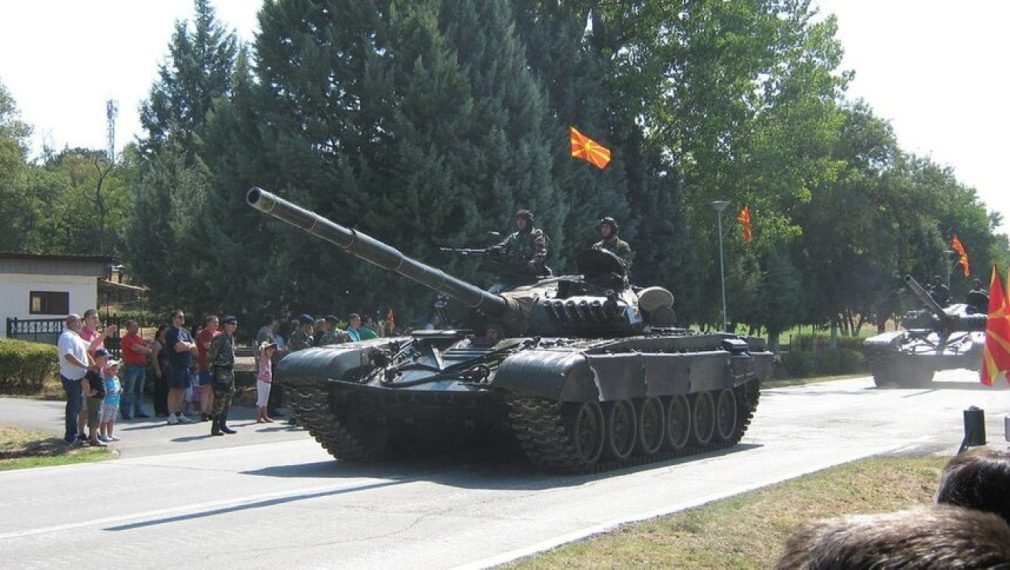
The reaction of the Ministry of Defense in Skopje when asked about the fate of the Sukhoi aircraft after T-72 tanks were donated was: “The exact details of all three decisions, their content and explanation will be declassified and transparently published. The ones taken so far decisions do not worsen the combat readiness of our army”.
During the Macedonian conflict in June 2001, RNMacedonia purchased four Sukhoi SU-25 combat aircraft, three single-seat and one two-seat, from Ukraine. The planes are intended for direct support of the infantry, and during the conflict they had several combat missions in support of the ground actions of the Macedonian security forces, the publication recalls.
In June, the Left Party announced that it had learned from informants, officers and army personnel that the Sukhoi jets were being inspected and repaired by Ukrainian military engineers.
In the spring of 2003, the Ministry of Defense of Macedonia announced that there was no longer a need for combat aircraft in the formation of the armed forces, and in 2004 the aircraft were preserved and prepared for sale.
In 2011, the Ministry of Defense began to think about modernizing them according to NATO standards, but this idea did not materialize.
North Macedonia has already decided to donate tanks to Ukraine
North Macedonia plans to donate an unspecified number of tanks to Ukraine as it seeks to modernize its own army to meet NATO standards, the Ministry of Defense announced on 29 July this year.
In a statement, the ministry in Skopje said Ukraine would receive tanks belonging to the country’s tank battalion, which is undergoing modernization.
“Taking into account this situation and the requirements of the Ukrainian Ministry of Defense, the government has decided that a certain amount of these (tank) capacities will be donated to Ukraine in accordance with its needs,” the statement said.
The ministry did not specify the number of tanks, but said they belonged to the so-called third-generation main battle tanks of the 1970s and 1980s, which have composite armor and computerized stabilization and fire control systems.
A reference to open access sources shows that the country has 31 T-72 tanks.
Northern Macedonia, a former Yugoslav republic, is a member of NATO and a candidate for joining the European Union. Like other Western countries, it has already donated military equipment to Ukraine after the Russian invasion in February, Reuters recalls.
Globalization – the involvement of the peoples and states of the Earth in common economic, cultural, information, political processes – has become the main distinguishing feature of the new era. People clearly, as never before, feel interdependence, which is served by more and more connections generated both by the growing possibilities of technology and by a changed way of thinking.
Due to the secular and materialistic tendencies that dominate modern societies, economic motives have become the most important driving force of globalization. The overcoming of borders and the formation of a single space of human activity is associated primarily with the search for new resources, the expansion of sales markets, and the optimization of the international division of labor. Therefore, understanding the opportunities and the threats that globalization brings to the world is impossible without understanding its economic background.
The Christian conscience cannot remain indifferent to phenomena of such magnitude as globalization, which are radically changing the face of the world. The Church, being a Divine-human organism, belonging both to eternity and to the present, is obliged to develop its attitude towards the ongoing changes that affect the life of every Christian and the fate of all mankind.
In the Fundamentals of the Social Concept of the Russian Orthodox Church, economic activity is seen as “co-working with God” in “fulfilling his plan for the world and man,” and only in this form does it become justified and blessed. It is also reminded that “the seduction of the blessings of civilization removes people from the Creator”, that “in the history of mankind it has always ended tragically.” This means that the core of the economy should not be the multiplication of temptations, but the transformation of the world and man through labor and creativity.
In the “Message of the Primates of the Orthodox Churches” dated October 12, 2008, it is emphasized that Orthodox Christians share the responsibility for the emergence of economic crises and troubles if “they recklessly condoned abuses of freedom or reconciled with them, not resisting them worthily with the word of faith.” Therefore, it is our duty to measure every economic activity with the immutable categories of morality and sin, contributing to the salvation and preventing the fall of mankind.
The centuries-old hope of Christians was the unity of all people in the truth, the awareness of themselves as brothers and sisters, together creating a peaceful, pious life on the earth given to us as inheritance. The unity of mankind on the moral basis of God’s commandments is fully consistent with the Christian mission. Such an embodiment of globalization, which provides opportunities for fraternal mutual assistance, free exchange of creative achievements and knowledge, respectful coexistence of different languages and cultures, joint conservation of nature, would be justified and pleasing to God.
If the essence of globalization was only overcoming the division between people, then the content of its economic processes should have been the overcoming of inequality, the prudent use of earthly wealth, and equal international cooperation. But in modern life, globalization not only removes obstacles to communication and knowledge of the truth, but also removes obstacles to the spread of sin and vice. The rapprochement of people in space is accompanied by their spiritual distance from each other and from God, aggravation of property inequality, aggravation of competition, and growing mutual misunderstanding. A process designed to unite leads to more separation.
The most important socio-psychological phenomenon accompanying globalization has become the ubiquitous spread of the cult of consumption. Thanks to modern means of communication, an excessively high standard of living, inherent only to a narrow elite circle of people and inaccessible to the vast majority, is advertised as a social benchmark for the whole society. Hedonism turns into a kind of civil religion that determines the behavior of people, excuses immoral acts, forcing them to devote all their spiritual strength and precious time to the consumer race alone. The volume of consumed material goods becomes the main criterion of social success, the main measure of values. Consumption is seen as the only meaning of life, abolishing concern for the salvation of the soul and even for the fate of future generations, in exact accordance with the cry of the Old Testament apostates: “Let’s eat and drink, for tomorrow we will die!” (1 Cor. 15:32; cf. Is. 22:13)
At the same time, the continuous growth of consumer demands is facing the limit of the natural possibilities of the Earth. For the first time in its history, mankind has encountered the finiteness of the reachable earthly limits. The pioneer will no longer discover new lands with virgin natural lands, there are no uninhabited spaces left on the planet for peaceful colonization. The limited size of the globe does not correspond to the unlimited appetites of a hedonistic society. Here is tied the main knot of economic contradictions of globalization.
Attempts to circumvent the limit set by God, usually referring to the sinful, damaged side of human nature, not only harm the spiritual condition of our contemporaries, but create acute economic problems. The Church calls to evaluate these global problems and injustices through the categories of morality and sin, and to look for ways to resolve them in accordance with the Christian conscience.
1. Despite the outwardly visible collapse of the world colonial system, the richest countries in the world, in pursuit of ever-retreating horizons of consumption, continue to enrich themselves at the expense of everyone else. It is impossible to recognize as fair the international division of labor, in which some countries are suppliers of unconditional values, primarily human labor or irreplaceable raw materials, while others are suppliers of conditional values in the form of financial resources. At the same time, money received as wages or irreplaceable natural wealth is often taken literally “out of thin air”, due to the operation of the printing press – due to the monopoly position of the issuers of world currencies. As a result, the chasm in the socio-economic situation between peoples and entire continents is becoming ever deeper. This is one-sided globalization, which gives unjustified advantages to some of its participants at the expense of others, entails a partial, and in some cases, in fact, a complete loss of sovereignty.
If humanity needs monetary units that freely circulate throughout the planet and serve as a universal measure in economic calculations, the release of such units should be under fair international control, in which all states of the globe will proportionally participate. Possible benefits from such emissions could be directed to the development of distressed regions of the planet.
2. The economic injustices of today are manifested not only in the growing gap between states and peoples, but also in the growing social stratification within individual states. If in the first decades after the Second World War, the difference in living standards between the rich and the poor, at least in developed countries, was decreasing, now the statistics show a reverse trend. The powerful of this world, carried away by the consumer race, increasingly neglect the interests of the weak – both in relation to the social protection of children and the elderly who are unable to work, and in relation to decent remuneration of able-bodied workers. An increase in property stratification contributes to the multiplication of sins, since it provokes the lust of the flesh at one pole, envy and anger at the other.
In the context of globalization, the transnational elite has become significantly stronger, capable of evading the social mission, in particular, by transferring funds abroad to offshore zones, exerting political pressure on governments, and disobeying public demands. We see that national governments are increasingly losing their independence, less and less dependent on the will of their own peoples and more and more on the will of transnational elites. These elites themselves are not constituted in the legal space, and therefore are not accountable to either the peoples or national governments, turning into a shadow regulator of socio-economic processes. The greed of the shadow rulers of the global economy leads to the fact that the thinnest layer of the “chosen ones” is becoming richer and at the same time is increasingly freed from responsibility for the well-being of those whose labor created these riches.
The Russian Orthodox Church reiterates the truth formulated in the Message of the Primates of the Orthodox Churches dated October 12, 2008: “Only such an economy is viable that combines efficiency with justice and social solidarity.” In a moral society, the gap between the rich and the poor should not grow. The strong have no moral right to use their advantages at the expense of the weak, but on the contrary, they are obliged to take care of those who are disadvantaged. People working for hire should receive decent remuneration. Since they, together with employers, participate in the creation of public goods, the standard of living of the employer cannot grow faster than the standard of living of workers. If these simple and morally justified principles cannot be implemented in a single state due to its excessive dependence on the conditions of the world market, governments and peoples need to jointly improve international rules that limit the appetites of transnational elites and do not allow the development of shadow global enrichment mechanisms.
3. Another way to artificially raise living standards is “life on loan”. Not having the desired material values in the real world today, a person strives to get them from tomorrow, consume what has not yet been created, spend what has not yet been earned – in the hope that tomorrow he will be able to earn and repay the debt. We see that in the modern economy, like a snowball, the size of borrowings is growing, not only personal, but also corporate and state. It becomes more and more aggressive, more and more tempting pictures are drawn by advertising calling for living on loan. The amounts borrowed on credit are increasing, the maturity of debts is being postponed – when the possibilities of borrowing from tomorrow have already been exhausted, they begin to borrow from the day after tomorrow. Entire countries and peoples have plunged into a debt hole, yet unborn generations are doomed to pay the bills of their ancestors.
Business on lending expectations, often illusory, becomes more profitable than the production of tangible benefits. In this regard, it is necessary to remember the moral dubiousness of the situation when money “makes” new money without the application of human labor. The announcement of the credit sector as the main engine of the economy, its predominance over the real economic sector comes into conflict with the divinely revealed moral principles that condemn usury.
If earlier the impossibility of repaying the taken debt threatened bankruptcy for one borrower, then in the context of globalization, the exorbitantly swollen “financial bubble” threatens the bankruptcy of all mankind. The interdependence between people and countries has become so great that everyone will have to pay for the greed and carelessness of some. The Orthodox Church recalls that financial activities of this kind involve severe economic and moral risks; calls on governments to develop measures to limit uncontrollably growing borrowings, and all Orthodox Christians to develop economic relations that restore the link between wealth and labor, consumption and creation.
4. A concomitant phenomenon of globalization is a permanent migration crisis, accompanied by an acute cultural conflict between migrants and citizens of the host countries. And in this case, the openness of borders does not lead to rapprochement and unification, but to the division and embitterment of people.
The roots of the migration crisis also have a sinful nature, to a large extent, it is generated by the unfair distribution of earthly goods. Attempts by the indigenous inhabitants of wealthy countries to stop the migration flow remain futile, because they come into conflict with the greed of their own elites, who are interested in low-paid labor. But an even more inexorable factor in migration was the spread of a hedonistic quasi-religion, which captured not only the elites, but also the broadest masses of citizens in countries with a high standard of living. A sign of the times is the refusal to procreate for the sake of the most carefree, self-satisfied and secure personal existence. The popularization of the child-free ideology, the cult of childless and familyless life for its own sake lead to a reduction in the population in the most prosperous societies at first glance.
In a traditional society, selfish refusal to have children threatened poverty and starvation in old age. The modern pension system allows you to count on the savings made during your life, and creates the illusion that a person provides for his old age himself. But who will work if each next generation is numerically smaller than the previous one? So there is a need to constantly attract workers from abroad, in fact, exploiting the parental labor of those peoples who have preserved traditional values and value the birth of children above career and entertainment.
Thus, the economies of entire countries are addicted to the “migration needle”, they cannot develop without an influx of foreign workers.
Such an international “division of labor”, in which some national communities give birth to children, while others use their parental labor for free to escalate their own well-being, cannot be recognized as fair. It is based on the departure of millions of people from traditional religious values. We must not forget that the commandment given to all the descendants of Adam and Eve says: “Fill the earth and subdue it.” The acute migration crisis that has engulfed Europe today and threatens other prosperous regions is a direct consequence of forgetting this commandment. Those who do not want to continue their race will inevitably have to cede the land to those who prefer the birth of children to material well-being.
Thus, globalization, which has offered whole societies the tempting opportunity to do without parental efforts by exporting new people from outside, may turn out to be a fatal trap for these societies.
5. The Church is alarmed by the fact that every year the pressure created by man on the natural environment increases: irreplaceable sources of raw materials are depleted, water and air are polluted, natural landscapes are distorted, and the creations of God that inhabit them disappear. Scientific and technological progress, designed to teach us to live in harmony with God’s world, conserve natural energy and materials, make do with little to create more, cannot yet balance the growing appetites of the consumer society.
Globalization has accelerated the consumer race, disproportionate to the earthly resources provided to mankind. The volumes of consumption of goods in those countries that are recognized as world standards and which are equal to billions of people have long gone beyond the resource capabilities of these “exemplary” countries. There is no doubt that if all of humanity absorbs natural resources with the intensity of countries that are leaders in terms of consumption, an ecological catastrophe will occur on the planet.
In a traditional society where cultivation or grazing served as a source of subsistence, the scale of consumption was strictly limited by the natural limit. A person could not be content with more than the allotted land gave him. He who rapaciously depleted his plot, not caring about the future, suffered a quick punishment from his own greed. Natural consumption limits also existed in the self-sufficient states of the recent past, where excessive consumption, disproportionate to the country’s resources, turned into a deficit of its own natural resources and quickly threatened the existence of such a state. But globalization has opened up the possibility of “exporting your greed” in exchange for imported resources. Thus, relying on the depletion of foreign lands, importing countries create the appearance of inexhaustible opportunities for consumer growth.
We must not forget that water and atmosphere, forests and animals, ores and combustible materials, all other types of natural resources were created by God. The relative cheapness of many resources is deceptive, since it reflects only the cost of their extraction and delivery, because a person uses what has already been given to him by the Creator. Having consumed mineral resources, we can no longer replenish their supply on the planet. In the same way, a person is not able to recreate the species of living beings that have disappeared due to his negligence. And the purification of often polluted water and air costs many times more than those products for the production of which pollution occurred.
Mankind needs to build a world economy, mindful of the pricelessness of many resources that are now sold at symbolic prices. Initiatives such as the Kyoto Protocol should be developed, providing for compensation from countries – excessive consumers in favor of countries – sources of resources. When implementing industrial and other technogenic projects, it is necessary to measure the value of the products they create with the value of natural resources spent for their activities, including natural landscapes, water and atmosphere.
6. It is regrettable that globalization has spurred the commercialization of cultural life, its transformation from free art to business. The global scope of competition between cultural works has meant that only the largest projects survive, attracting an audience large enough to pay off with the help of multimillion-dollar advertising investments.
The fact that culture has become part of the global economy threatens to level the world’s cultural diversity, the impoverishment of the language environment, the imminent death of the cultures of small peoples and even peoples with a significant number. Movies, books, songs in languages that are not familiar to millions of audiences turn out to be uncompetitive, unprofitable, and do not have the possibility of replication. In the not too distant future, a global culture driven only by economic motives may become monolingual, built on a meager set of typical clichés that produce the maximum impact on the most primitive instincts. Opportunities for its development and enrichment due to ethno-cultural and linguistic diversity may be irretrievably lost. This is facilitated by international “prestigious” competitions and awards in the field of cinematography, popular music, etc., which create globalized standards of imitation, which at the national level reformat the artistic tastes, first of all, of young people, and then of a significant part of viewers and listeners.
The Church considers it necessary to bring cultural life to the maximum extent possible from the sphere of commercial relations, to consider spiritual values as the main criterion of its quality. The efforts of governments and the public must be made to preserve the world’s ethno-cultural diversity, as the greatest wealth of mankind created by God.
7. The abundance of material goods at the disposal of the wealthiest countries leads to the idealization of their way of life by less wealthy communities, to the creation of a social idol. This often ignores the morality of the methods by which the world’s economic leaders have reached their peaks, and hold them. The role that the colonial exploitation of surrounding peoples, lending at unjustifiably high interest rates, the monopoly emission of world currencies, and so on, played in the enrichment of world economic centers is overlooked. Regardless of the circumstances, their way of life, their economic and social structure are declared exemplary.
Their imitators consider their countries and societies “backward”, “inferior”, choose a “catching up” model of modernization, blindly copying their idols or, even worse, compiled in strict accordance with their “gracious” recommendations. At the same time, neither differences in historical circumstances, nor the difference in natural conditions, nor the peculiarities of the national worldview, traditions, and way of life are taken into account.
In the reckless pursuit of material wealth, you can lose much more important values without acquiring the desired wealth. The “catching up model of modernization”, which has an uncritically perceived external model before one’s eyes, not only destroys the social structure and spiritual life of the “catching up” societies, but often does not allow one to approach the idol in the material sphere either, imposing unacceptable and ruinous economic decisions.
The Church calls on the peoples of countries that are not at the top of the world economic ratings, and above all the intellectual class of these nations, not to let envy into their hearts and not to indulge in idols. Carefully studying and using the successful world experience, we must carefully treat the heritage of our ancestors, honoring the ancestors who had their own unique experience and their own reasons for building just such a way of life. In contrast to the immutability and universalism of moral precepts, in the economy there cannot be a single solution for all peoples and times. The diversity of the peoples created by God on Earth reminds us that each nation has its own task from the Creator, each is valuable in the eyes of the Lord, and each is able to contribute to the creation of our world.