A bill was introduced in the State Duma of Russia, which prohibits citizens of “enemy countries” from adopting Russians, Reuters reported.
Russia’s list of enemy states has expanded after many countries imposed sanctions on Russia over its invasion of Ukraine in February. This list currently includes the US, UK, all of the EU, South Korea and Japan.
Beginning of April 2022 a series of constitutional amendments signed by President Vladimir Putin intensified Russia’s years-long crackdown on LGBTQ+ rights. The wide-ranging amendments formally outlaw same-sex marriages and ban transgender people from adopting children. Marriage equality had been long treated as illegal in Russia, where LGBTQ+ people commonly face persecution from governmental authorities, but as local activists told the Washington Blade, the definition of a family unit as “exclusively… a union of a man and a woman” was absent from the country’s constitution prior to this week.
Other amendments signed by Putin include new presidential term limits allowing him to remain in power until 2036 and grant him total immunity from prosecution for the remainder of his lifetime, as the Associated Press reports. The president also approved language specifying “a belief in God” as central to Russian values along with vaguely worded restrictions on “negative foreign interference in the educational process.”
The latter measure has proven highly controversial, with more than 1,000 artists, academics, and leading Russian cultural figures warning that it stands to impact virtually “any public activity” in which “knowledge and expertise are disseminated” in a March open letter.
The targeting of queer and trans people follows a continued campaign of scapegoating vulnerable minorities in Russia. In 2013, Putin signed a law forbidding the spread of pro-LGBTQ+ “propaganda” to minors under the age of 18 — which has, in practice, served to target everything from Pride parades to carrying a pink iPhone case in school.
In the eight years since that law passed, hate crimes targeting people due to their perceived sexual orientation or gender identity have doubled. The semi-independent Russian territory of Chechnya recently marked the four-year anniversary of its infamous “gay purge,” in which individuals suspected of being LGBTQ+ are rounded up, beaten, tortured, and sometimes killed. Over 200 people are estimated to have been detained while at least three have died.
Putin, who oversees the Muslim majority region, has yet to speak out about the anti-LGBTQ+ campaign, which is ongoing. Russian leaders, meanwhile, have dismissed reports of violence, with a spokesperson for the Kremlin telling reporters in 2017 that there is no “reliable information about any problems in this area.”
Russia’s human rights commissioner Tatyana Moskalkova further claimed that the reports were fabricated by people who “plan to capitalize on this,” calling allegations of human rights abuses a “provocation.”
Even despite sanctions on Chechen leaders from the United States and European Union, Putin has defended his country’s record on LGBTQ+ rights. After singer Elton John slammed Russia’s censorship of gay scenes in the 2019 biopic Rocketman, Putin claimed that the singer’s characterization that he is hostile to “policies that embrace multicultural and sexual diversity” is a “mistake.”
“We [in Russia] have a very neutral attitude to members of the LGBT community,” the president said at the time.
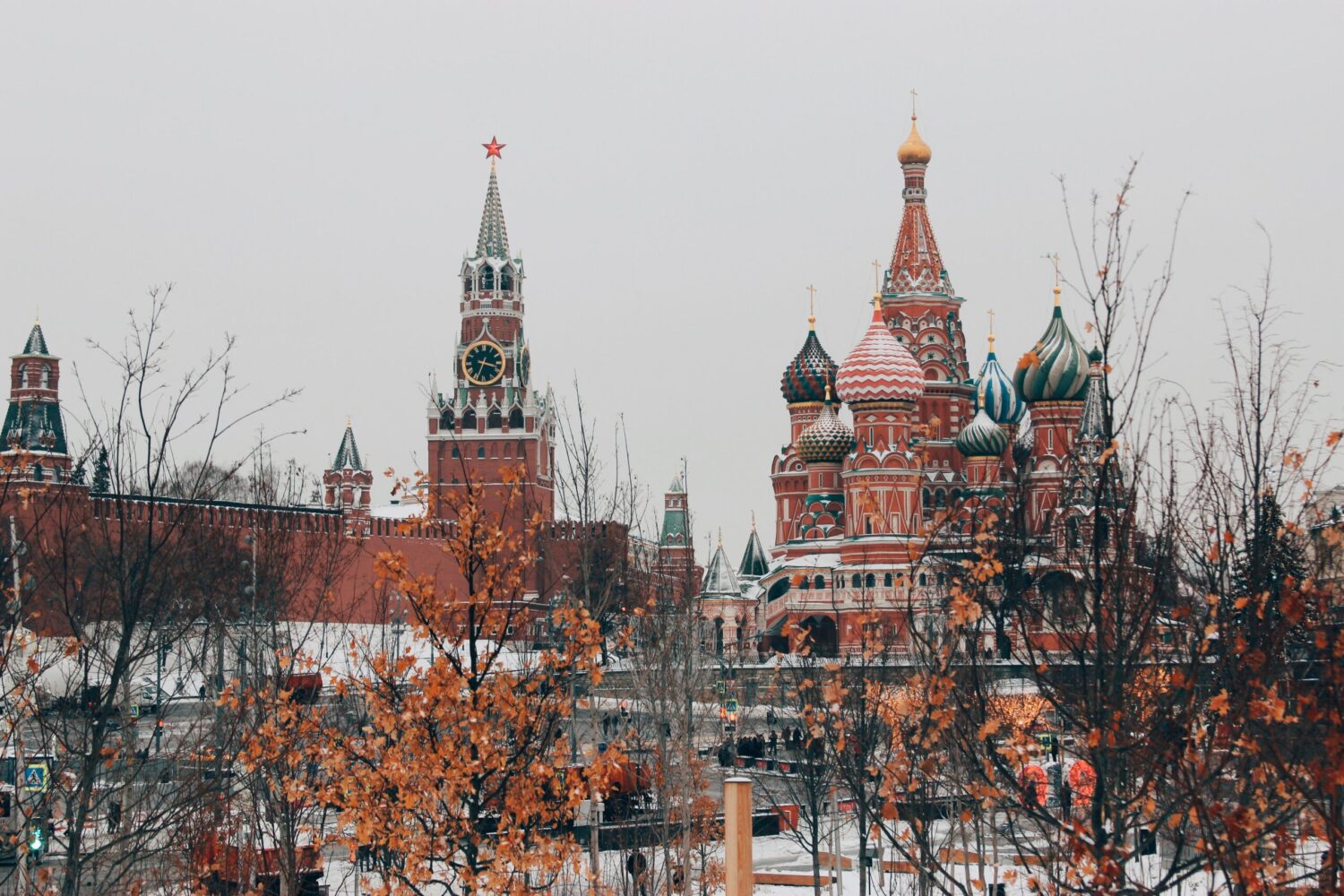
Description photo: View of the Moscow Kremlin and St. Basil’s Cathedral from Zaryadye Park in Moscow by Michael Parulava /unsplash.com
The Russian pop star gave Philip Kirkorov the first place among the most influential musicians in the country
Not only Philip Kirkorov, but also his ex-wife Alla Pugacheva follows in the footsteps and follows the eccentricities of Michael Jackson. The Russian pop star bought a barometer to improve her health, StarHit reported. The device, under the influence of whose pressure the body absorbs oxygen several times faster than usual, was ordered in Israel, where the singer spent the last few months after the start of the war in Ukraine. Its value is 3 million rubles, or over 48,000 euros.
At the time of the order, the star was in the Israeli city of Caesarea, but then she rented a villa in Latvia and moved there with her husband Maxim Galkin and their twins Lisa and Gary, which is why she could not receive the delivery, the publication revealed. “Since Alla Borisovna herself is listed in the “client” column in the contract, she must personally accept the pressure chamber. But at one point, when it became clear that there were problems with the international delivery, her manager stopped answering the phones. So in the end it turned out that the capsule was paid for, but still waiting for its owner in the warehouse. Maybe in September he will finally get it if he returns to Russia, “says a representative of the seller company.
It will soon be 6 months since the diva left Russia with her family. She explained the departure with the intention to rest and take care of her health. The 73-year-old star was repeatedly criticized on social networks for her decision. The queen of the Russian stage responded succinctly to the attacks that “vacation, leave and treatment are not emigration.” Currently, the family is in the villa in the resort of Jurmala, which they have been renting every summer for the past few years. Meanwhile, it became clear that for the first time in several years, Pugacheva is not at the top of the list of the most influential musicians in the country. According to the poll, Philip Kirkorov is in the lead, reports KP.RU. Despite the confusing statements of Kirkorov, who called the Russian military in Ukraine “heroes”, it appears that his rating among fans has increased. Research holding Romir polls a wide audience of Russian citizens four times a year to determine the main influencers in various fields. In the sphere of the music industry, Kirkorov, who was born in Bulgaria, climbed to the top of the list for the first time, and Alla Pugachova was in fourth place. She was also overtaken by the vocalist of the group “Eskadron” Oleg Gazmanov and the TV presenter, singer and actress Olga Buzova. The musicians Yuri Shevchuk, Sergey Shnurov, Nikolai Baskov, Grigoriy Leps, Nikolai Rastorguev and Andrey Makarevich are also in the Top 10.
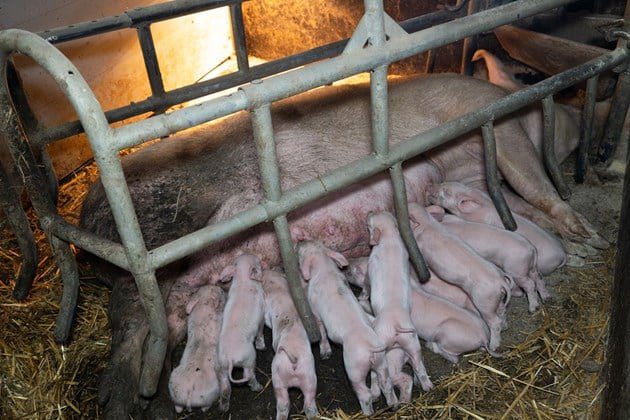
A major investigation reveals the cruelty suffered by sows in the EU. The organization Compassion in world farming, or CIWF, is conducting an undercover investigation in which shocking footage has been collected from 16 pig farms in Italy, Spain, France and Poland. It reveals the suffering of over 85% of sows on farms with cell rearing systems in the EU – incl. the producers of premium ham brands such as Parma and Bayonne.
As the promised ban on keeping animals in cages in the EU has not yet entered into force, approximately 9 million pigs are forced to live in cramped quarters and cages. Pigs spend almost half their adult lives in cramped cages that don’t even fit them. As long as they are capable of giving birth, they are artificially inseminated, and during the pregnancies, and not only then, they live lying in their own excrement. The size of the cells limits them in maternal instincts and proper care of the young. The conditions are miserable and the births also take place in cages. The smell of ammonia and the inability to move freaks the animals out and causes them to chew the air and bite the metal bars in agony.
In response to these shocking revelations, the non-governmental organization for the welfare of animals and the protection of the environment, sent the summarized results of the investigation to the ministers of agriculture throughout Europe. An appeal has been made to every active citizen and supporter of the cause to send letters and emails insisting to the ministers for an immediate ban on cage farming in the territory of the union. This change has been expected since last year, when the European Commission committed to introduce changes in the legislation in response to the “End the Cage Age” welfare initiative, which collected over 1.4 million signatures from EU citizens.
With the Parma brand, about 8 million shoes are produced annually, 36% of which are exported. The largest importer is the USA, where 757,000 packages were sold last year. In France, about a million packages of Bayon brand ham are produced every year, which are exported to the market in the USA, Germany, Belgium, Japan and Great Britain. There is no data available on the quantities of exported production
“Consumers who pay a higher price for ham than Parma and Bayonne brands will probably be shocked to discover that products from the so-called ‘high-end’ come from farms with such cruel production conditions,” says Ina Müller-Arnke, an expert from the organization Four Paws. According to the investigation data, the farms of these premium brands are no better than ordinary ones – the animals there spend a significant part of their lives locked in cages and deprived of basic needs and hygiene.
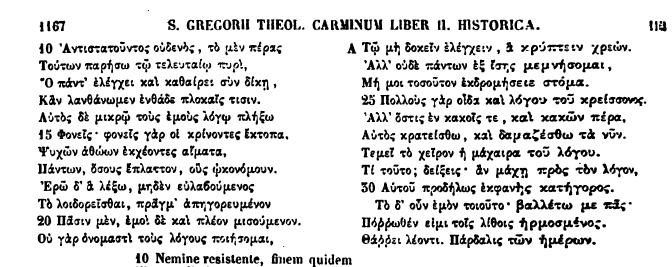
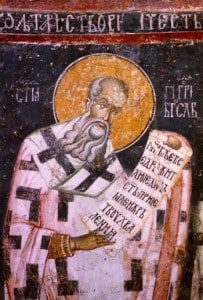
The work of St. Gregory the Theologian For myself and for the bishops is one of the most censored patristic works, although it was created in the so-called “Golden Age” of the Orthodox Church – the time of the ecumenical councils, when the Cappadocian fathers made a decisive contribution to formulate the dogmas of faith. It was written under the influence of the saint’s impressions of church life in the capital, Constantinople, whose department he headed. St. Gregory the Theologian comes face to face with the constant intrigues, with the inner life of the bishopric. Distraught, he left his chair after the end of the Second Ecumenical Council in 381.
The coordinates of the text in Patrologia graeca are: 37:1166-1227.
For myself and for the bishops
Surely I should, inspired by the commands of the One,
Whoever suffered may bear the insult caused by me
Whoever suffered may bear the insult caused by me
and in suffering I must hold my tongue.
Thus, if the battle is brought to an end,
5. I could hope for a fuller reward.
Indeed, the reward is fuller with those who toil the most,
and scarcer in those who cannot bear toil.
But not to make it seem like the bad guys are ruling the roost
above all and that their path is smooth
10. and yet no one opposes them, yet I
I consign their deeds to the last fire,
who conquers all and cleanses righteously.
Even if we did not learn about everything due to some tricks,
yet I will smite the murderers with my humble speech,
15. for indeed those who judge wrongly are murderers,
shedding the blood of innocent souls:
all whom I have raised and led forward.
But I will say what I will, not at all afraid of reproach,
of what is forbidden to all,
20 and which I hate more than anything.
I, of course, will not start naming names,
lest it appear that I reveal what should remain hidden
(besides, I don't remember everyone equally) –
lest my mouth dare go too far.

25. It is true, I know many worthy of great praise,
but whoever dwells among the wicked (and even worse than the wicked),
he must be caught and tamed at once.
My verbal sword will cut through vice.
If you speak against my speech,

30. you will openly accuse yourself.
So this is my way: anyone can hit me,
I learned long ago to bear the blows of the stones.
You can trust a lion, a leopard can be trained
and even the snake may flee, though you fear it,
35. But beware of only one thing – bad bishops,
disregarding "the dignity of their throne."
Everyone can get a high position, but not everyone - grace.
Turn your gaze to the sheepskin, examine the wolf behind it!
Convince me not with words, but with your deeds.

40. I detest the doctrines to which life itself appears to be opposed,
praising the beauty of the grave, I am disgusted
from the stench of the rotting corpses inside.
- How so? What does that mean? Why do you, ever brilliant orator,
don't you say something nice this time too?

45. For it is characteristic of the sufferer to pour out his grief:
before God, before friends, before parents, before neighbors, before guests,
or in the last case – before the future times and the coming generations.
But I will begin my speech a little further,
no one can say that the laborer

50. receives a reward for his labor in this life: anyone who says so is joking.
Everything ends its course in night and darkness,
God tests some with fire, and covers others in darkness,
until the fire lights up everything.
A man lived a hard life,

55. moaned, spent sleepless nights, shed tears,
confined himself even to simple bed and food,
cared for the study of the inspired Scriptures,
he constantly whipped himself and tore his soul.
What else have I missed? What did I do that I shouldn't?

60. Some other man plucked the fruits of his youth,
laughed, sang, indulged in gluttony,
of all pleasures, of feelings.
He did not impose prohibitions on himself, he was like a stallion without a bridle.
Then misfortunes began to happen to the first man,

65. (indeed hardly exactly miseries, since none of this here concerns the sages,
what most people think they are
and the other man, successful in everything, was also successful in this,
to be considered highly virtuous.

70. I, uttering these words, am a witness to the above written,
I was above the things visible to sensual eyes,
and my mind was directed only to the immaterial.
I left my fame, my estate, my hopes, my literary work,
I felt luxury in being delivered from luxury,

75. and I enjoyed my life with the little piece of bread. I was freed from insults
(however, you must expect everything, even if you are a sage).
But someone, tearing me away from the blessings, led me directly to my expectations
in foreign lands. Who it was I will not name.
Was it the Spirit of God, were my sins the cause of this,

80. that I received recompense for my exaltation.
But the formal reason was this: the assembly of the shepherds and the Orthodox people, although they were not yet numerous.[1]
Finally a faint ray of light was seen:
people already had the opportunity relatively freely
to profess the Orthodox faith;

85. little by little they began to breathe again
peacefully amidst the evils that surround them.
[For formerly,] amid chattering tongues and many delusions,
they suffered but had no protection.
Is it even possible for a rose to enjoy growing among thorns,
or of the ripe grape among the sour ones?

90. So this is [how things stood when] I, the pious stranger, came,
yielding to exhortations and many pleas,
the refusal of which would have been a display of excessive pride.
But when I came, leaving the land of Cappadocia,
which for all is a pillar of true faith,

95. (but I have not abandoned the people or any of my duties,
all these are, in their essence, tricks of the enemies, their lying speeches -
a clumsily contrived cover for their envy).
Now I want you to say what happened next,
since you are witnesses of my labor.

100. There is nothing unfavorable, rude or harmful
said or done during these more than two years?
Except for one thing, that I spared the bad people,
who from the beginning pelted me with stones for bearing this patiently.
It is true, at least a little was truly pious,

105. because thus I became empathetic with Christ's sufferings.
You see what the poor offer as a gift to God.[2]
But we can even impute this to ourselves as guilt if we wish:[3]
Someone had said that the sensual mind is like rot,
bone corrosive. I was convinced of this
from my own experience:

110. my body, formerly strong as copper, but now weary of care,
already bending to the ground. But nothing more than myself I can give,
though even if I give all, I shall still have to give more.
And what else can happen to one who has become attached to a weak friend.
However, the time has come for me to return again to the speech I had begun.

115. They called me, and I gathered the people,
who was among wolves,
I watered the thirsty flock with the word, I sowed the faith rooted in God,
I spread the light of the Trinity to those who were previously in darkness.
I was like leaven in milk and like medicine

120. because of the strength of his convictions. Some had already joined [the true faith],
others were near, and still others were coming.
Everyone's mood, which was previously furious, changed,
And true teaching in response produced love:
this moderate favor could be developed to full success.

125. They know about this in Happy Rome[4] (here I
I mainly mean those who are in charge) –
these people unexpectedly honored me with some respect[5]
and they think that one should have at least a small part of the glory,
to be first in honor instead

130. indeed, they are far more powerful than all!
When I was with them, I was honored,
and even today, when I left them, they condemn the wicked.
Well, they can't do anything more than that either,
and I myself have not asked them to do anything, "O city, city!"

135. (if we exclaim in the spirit of the tragedy.[6]
But my "honorable and well-behaved" co-pastors,
bursting with envy, (don't you know the Frasonides look-alikes,[7]
indolence does not tolerate culture)
they chose as an ally my bodily infirmity, which accompanies my monastic labors

140. and which must be respected by all,
who have labored at least a little in the name of God,
they pleaded, among other things, that I did not aspire to the power of such a great throne,
at that time when the whole world was torn by strife.[8]
And so, incited by the demon, they made this charge,

145. loved ones gladly drove me away,
throwing me out like excess cargo from an overloaded ship.
Well, in the eyes of the bad guys, I was a burden because I reasoned soberly.
Then they will raise their hands up as if they are clean,
and they will offer God "from the heart" the cleansing Gifts,

150. in order to sanctify the people with the words of the sacrament.
These are the same people who treacherously drove me out of there
(though not quite against my will, as it would be a great disgrace to me
to be one of those who sell their faith).
One of them, being descendants of publicans,

155. they can think of nothing else but collecting illegal taxes,
the others come from money exchange shops
the third - from the field, blackened by the sun,
the fourth - from his occupation with the pick and hoe,
others - leaving the sea craft and the army,

160. still smelling of ship holds or with body marks.
They imagine that they are the helmsmen of the people
and they don't want to give up even a little bit.
At the same time, others, even with
unwashed soot from the forge,

165. are ready to be flogged or ready to be sent to turn the millstones.
If, before they repay their masters,
have the opportunity to interrupt their work, they are immediately proud
and seduced some of the people,
sometimes with conviction, sometimes with coercion.

170. They aspire to the heights, like a dung beetle to the sky,
rolling a ball no longer made of manure
and without bowing their heads as before.
They think they have power over heaven,
even though they talk all kinds of nonsense

175. and they cannot even count how many their hands and feet are.
But is this not a great evil, unworthy of the episcopal office,
oh dear? Let's not think primitively
and for such great [deeds] to judge wrongly
(although I prefer being in the position of being humiliated).

180. Episcopacy, indeed, is not the worst thing. [On the contrary]
it is absolutely necessary that the bishop should be chosen from among the most worthy, I myself choose
the most worthy, if not the most worthy, at any rate not the worst
(if of course my opinion counts for anything).
And this is important, especially now, when chatter is raging like a hurricane

185. and enters into great cities and assemblies.
And if they abide [in the true faith] steadfastly, then this
can be of great benefit to them,
and if they do not reside - too much harm.
Therefore, you must choose the most worthy people.
Well, people of mediocre ability,

190. even if they prove themselves diligently, they cannot overcome the best.
This is the judge's opinion, far from lying in the highest degree.
But tax collectors and fishermen will stand before me,
as the evangelists were. Well, you
were also weak in their eloquence,
but they caught the whole world as with a net with their simple words.

195. Even the wise men caught in their fishing nets,
so that in this way the miracle of the Word becomes even more evident.
This opinion is supported by many people,
against whom mine is directed,
a short but extremely clear speech.
Give me the faith of at least one of the apostles,

200. [so] to give up my money, my traveling bag and staff, to be half-dressed, to have no sandals,
to live day by day, to be rich only in my hope,
to be inexperienced in verbal mastery,
to be the one for whom it is impossible to think that
rather speaks flattery [than tells the truth],

205. not to delve into the study of foreign teachings.
If someone comes along who has these qualities, I'll take it all in too:
the man without the gift of speech, the dishonest, the ignorant, the shepherd of the oxen.
After all, the righteous way of life hides the external flaws.
Be one of them, and even if you were a frog-catcher [not a fisherman],

210. we will exalt you to the angelic choirs. So show me at least
one thing. But can you deliver from demons,
to cure leprosy? Raise the dead from the grave?
Can you stop paralysis?
Give your hand to the sufferer and end his illness!

215. Only in this way can you convince me to ignore knowledge.
If something consists of two parts, a praiseworthy part and a blameworthy part,
and you only consider the first part,
and the other you surround with your silence,
then you insidiously distort the truth about things.

220. Matthew was a publican, but he is
deserved respect not as a publican, but as a man filled with the Spirit.
Peter was the leader of the disciples, but he was "Peter" [hard as a rock!].
Not as a fisherman, but because he was filled with zeal,
his way of life makes me respect his fishing net too.
[1] In 378, the Council of Antioch invited St. Gregory to become Archbishop of Constantinople (note trans.).
[2] The poor can only give their bodies (note trans.).
[3] In the sense, we cannot offer even our body, because we have ruined it; see: Prov. 14:30: “A meek heart is life to the body, but envy is rot to the bones” (note trans.).
[4] Constantinople – The New Rome (note trans.).
[5] At the end of 380, imp. Theodosius granted to St. Gregory the temple “St. Apostles” (note trans.).
[6] “Oedipus Rex” by Sophocles (note trans.).
[7] Character from Menander’s “Invisible” (note trans.).
[8] The so-called “Antiochian” schism, which arose in the Nicaean camp (note trans.).
The Mediterranean region is currently one of the hotspots of the climate crisis
Against the background of the drought in Italy, humanity may face a shortage of Parmesan cheese, predict scientists quoted by the world media. The reason is that the amount of water in the Po River, which supplies 30% of the country’s farms, has greatly decreased, threatening the production of the popular cheese.
According to Massimiliano Fazzini, head of the Climate Risks Unit at the Italian Society of Geoecology, the water shortage in the river basin is 45-70%. The specialist explains that the Po is fed by the snow in the Alps and by the rains in the spring. Since May this year, however, rainfall has been low, so people who live and work thanks to the river are at risk.
According to him, the situation is critical and can only continue to worsen.
The expert reports that the water of the Po is necessary for raising dairy cows. Normally, cows give 30 liters of milk per day to produce real Parmigiano-Reggiano – for this purpose each animal must consume 100-150 liters of water.
Moisture is also needed to grow juicy fodder for the herds. The shortage of water in the Po River threatens to lead to the closure of agricultural holdings.
According to scientists, the Mediterranean region is one of the hotspots of the climate crisis. Forecasts are that temperatures there will be 20-50% higher than the global average, and droughts will increase by mid-century.
Scientists from the State University of New York at Binghampton have found a new application for old CDs, using them to make flexible wearable biosensors, reports the New Atlas site. As digital music files became more popular, CDs fell out of favor. However, some of them can “resurrect” for a new life.
Although CDs are primarily made of polycarbonate, they contain a thin layer of reflective foil, usually aluminum. At the so-called gold compact discs it is of the precious metal.
Usually, when these CDs are disposed of, the gold foil goes to landfill. But thin layers of gold are also used in flexible biosensors that stick to the skin. Therefore, the scientists asked themselves the question whether they could not use the gold from the CDs for this purpose.
They developed a technique where gold CDs are initially soaked in acetone for 90 seconds. In this way, the polycarbonate is destroyed, which leads to the loosening of the connection between it and the foil.
The engineers then applied polyamide tape to the gold layer and peeled it off the polycarbonate. Flexible circuits are cut from this layer to produce sensors that stick to human skin and can be used repeatedly.
In combination with other electronics, they can be used to monitor the electrical activity of a person’s heart and muscles, to measure lactose, glucose, pH and oxygen levels. All data can be transmitted to a smartphone via Bluetooth.
The entire recycling process takes only 20 to 30 minutes, requires no expensive equipment, and costs approximately $1.50 per sensor. And although acetone is used in the process, no toxic chemicals are released into the waste stream.
Word one: Life in Christ is realized through the sacraments of divine baptism, holy anointing and communion
1. The life in Christ is planted in this present life [φύεται μὲν ἐν τῷδε τῷ βίῳ], begins here and continues into the future [ἐπὶ τοῦ μελλέντος] until we reach the last day. Neither the present life is able to fully bring the life in Christ to the souls of men, nor the life to come, if the beginning is not made from now, because at present the carnal [τὸ σαρκίον] is covered with shadow, here are clouds and corruption, which cannot inherit incorruption. That is why Paul asked above all to be freed by being with Christ: I desire to be freed and be with Christ, because this is much better (Phil. 1:23). If the future life were to receive those who have not the necessary powers and senses [τὰς δυνάμεις καὶ τὰς αἰσθήσεις] for it, it would be of no use to them, for they would pass into that blessed world where there is no corruption, being dead and miserable. The reason is that when the light has already dawned and the sun is shining its pure radiance, the eye is not yet created. The fragrance of the Spirit abundantly already fills and covers everything, so that only he who has no sense of smell could not feel it.
2. And so the purpose of the sacraments is to bring the devoted Christians [τοὺς Αφημείου] to communion with the Son of God [κοινωνῆσαι τῷ Υἱῷ τοῦ Θεοῦ], and what He has learned from His Father, from Him to teach them. It is necessary, therefore, that they, after being devoted to Him, should welcome Him with ears open to listen, because it is impossible to first have a devotional commitment [φιλίαν συστῆναι] and only then to open the ears to listen, to prepare the marriage clothing and to prepare all the other things that are necessary to welcome the Bridegroom. The present life is precisely a workshop for the preparation of all this, and those who fail before the Bridegroom comes will have nothing to do with that life. And witnesses to this are the five virgins and those invited to the wedding, who came unprepared and did not have enough oil, nor were they able to prepare clothes for the Bridegroom[1]. This world is in labor pains because of the renewed inner man, created according to God (Eph. 4:24). Thus created and sculpted, man is born perfect for that perfect world where there is no aging.
3. As with the embryo, while it is in the dark and gloomy womb of its mother, nature prepares it for the life of light, and forms it, as it were, according to some pattern fitted for the life to come, so it happens with the saints. This is exactly what the Apostle Paul is talking about to the Galatians, saying: My children, for whom I am again in labor pains (Gal. 4:19). Unborn children, however, until they come into this world, have no sense knowledge [αἴσθησιν] of life, whereas to the blessed saints even in the present many things of the future life are revealed to them. The reason for this is that for them this life is no longer the present, but entirely the future. In that place light is not contemplated, nor any of the other things that we know of this life. However, it is not so with us, but that future life seems to be connected and mixed with the present one, because that Sun has already risen for us in a human-loving way, and the heavenly myrrh has been poured out on the foul-smelling world, and the angelic bread has been distributed to people as well[2].
4. The saints live the life in Christ already in the present. Therefore, therefore, not only a setting [διατεθῆναι] and preparation for life is necessary, but it is characteristic of the saints to live and perform it [ἐνεργεῖν] even in the present. Lay hold on eternal life (1 Tim. 6:12), Paul wrote to Timothy. Elsewhere he says: and it is no longer I who live, but Christ who lives in me (Gal. 2:20). The divine Ignatius also: There is living water that speaks in me…[3] and with many such testimonies Scripture abounds.
5. Besides all this, Life itself is fully present in the promise to the saints. Behold, he says, I am with you always, even to the end of the age (Matt. 28:20). What else could this mean? This means that after he had sown the seeds of life in the earth, and cast down fire and knife, he did not go away, leaving the people to plant, eat, light fire, and serve themselves with knife, but Sam was present as says the blessed Paul, make in you both to will and to act (Phil. 2:13). He alone kindles and brings the fire. He is the one who holds the ax, and is the ax even greater than he who cuts with it (Is. 10:15)? With whom the good God is not present, nothing good could come of them.
6. Moreover, the Lord has promised not only to be with the saints, but also to remain with them and – what is greater – to make a dwelling in them. In general, I say that the Lord so philanthropically unites with the saints that he also becomes one Spirit with them. The voice of the apostle Paul: he who is joined to the Lord is one spirit with Him (1 Cor. 6:17); you are one body and one spirit, just as you were called (Eph. 4:4).
7. For just as the love of mankind is unspeakable [ἡ φιλανθρωπία ἄρρητος], so the love of God to our race surpasses human reason [τὸν λόγον τὸν ἀνθρώπινον ὑπερβαίνει] and is suitable only to divine goodness, since it is the peace of God, which surpasses all understanding (Phil. 4: 7), likewise His union with those who love Him [τὴν πρὸς τοὺς φιλουμένους ἕνωσιν] is above all union that any one can think of, and of which no example can be found.
8. Therefore Scripture needed so many examples to be able to show this unity, since one example is not enough. On the one hand, the example of the inhabitant and the dwelling is used, on the other – of the vine and the rod; for the marriage, for the members and the chapter. Of these examples, however, none is completely similar [οὐδέν ἐστιν ἴσον] to this union, because by means of them the truth cannot be fully arrived at. Mainly because it is necessary for devotion to be followed by the conjunction [τὴν συνάφειαν]. And what can be compared to divine love?
9. That which seems best to show union and unity [συνάφειαν καὶ ἑνότητα] is the marriage and harmonious relationship between the members of the body and the head [ἡ τῶν μελῶν πρὸς τὴν κεφαλὴν ἁρμονία], but nevertheless it is far from showing the completeness of the whole union. , because on the one hand marriage could not combine so that the two may be and live in each other [ἐν ἀλλήλοις εἶναι καὶ ζῆν τοὺς συναπτομένους], as happens with Christ and the Church. Hence the divine apostle, speaking of marriage as a great mystery, adds, but I speak of Christ and of the church (Eph. 5:32), indicating not this, but that marriage, which is accomplished by a miracle. On the other hand, the members of the body are joined to the head and live through this union, but being separated they die. Hence it is clear that that body, which is united to Christ more than to its own head, lives more by virtue of Him than by reason of harmonious union with it.
10. This is evident from the lives of the blessed martyrs, who gladly endured the first, but did not even want to hear about the second. They gladly allowed their heads to be cut off from their bodies, but there was no question of giving up on Christ. I’m not saying yet which is the latest. What could be more united to anything else than to itself? But the very unity of the combination is more insignificant than that unity.
11. The saints are united more to Christ than to themselves. Each of the blessed spirits is one and the same with itself [ἓν καὶ ταὐτὸ ἑαυτῷ]. However, he is united to Christ more than to himself, because he loves Him more than himself. Paul testifies to this verbatim when he prays: to be excommunicated from Christ (Rom. 9:3) for the sake of the salvation of the Jews, so that all glory may be given to Him. But if the human affection [τὸ τῶν ἀνθρώπων πιτόρον] is such, the divine cannot be thought of at all. If even wicked men could show such favor [τὴν εὐγνωμοσύνην], what can be said of that divine goodness? Thus, since this love is supernatural [ὑπερφυοῦς ὄντος τοῦ ἔρωτος], and necessarily surpasses the union to which it has brought the lovers, human reason stands too low to be able to describe it by example. Let’s look at it this way.
12. There are many things which necessarily accompany us in this life: air, light, food, clothing, the very forces of nature, and the members of the body, but it does not happen to anyone to take advantage of all these things and to strive for them all at the same time, but now he uses one thing, then another, using different things according to the available need. When, for example, we put on a garment, it could not be food. However, when we need a table, it is necessary to look for something else. On the one hand, light does not allow us to breathe, on the other hand, air cannot be a substitute for lighting. Since we cannot always dispose of the operations of the senses [τῶν αἰσθησεων δὲ ταῖς ἐνεργείαις] and the bodily members, nor use them, sometimes both the eye and the hand prove unfit to hear. The hand will prove useful when we want to touch something, but to smell, hear or see will not do us any good, and leaving it, we look for another faculty.
13. And so, the Savior is so unchangingly and in every way present to those who live in Him that He provides every means and is everything for them, not allowing them to look for anything other than all that, nor to look for anything different, because for the saints there is no nothing that they need and that He Himself is not for them: He gives birth, nurtures and feeds, He is light and air. He makes them an eye with Himself, gives them light again with Himself and offers them Himself to look at Him. He is the One who feeds and is food, because He is the One who offers the bread of life, He is also the One who offers. He is life to those who live, fragrance to those who breathe, clothing to those who want to be clothed. He alone is indeed the One with whom we can walk. He is the way, but also the end and end of the way. We are the members, He is the head. Should we fight? Fight with us. Are we celebrating? Becomes an arbitrator. Are we winning? It immediately becomes a crown of victory.
14. And so He everywhere turns everything to Himself, and allows no one to turn his mind to anything else, or to beget love for any of the existing things. If our aspirations are directed there, He restrains and calms them. If they turn this way, it’s opposite again. If we deviate from the path, He also surrounds this, the other path, to guide those who walk on it. If he ascended to heaven – You are there, he says, if he descended into the underworld – and there You are. Do I take the wings of the dawn and move to the seashore – and there Your right hand will hold me (Ps. 138: 8-10). As if at the cost of coercion and in a state of some strange and philanthropic tyranny [ἀνάγκῃ τινὶ θαυμαστῇ καὶ φιλανθρώπῳ τυραννίδι] He draws only to Himself and only with Himself binds Himself. I consider this to be the same compulsion with which he gathered into his house those whom he called to the feast, saying to the slave: make them come in, that my house may be filled (Luke 14:23).
15. Let it be! For, therefore, the life in Christ is not only in the future, but for the saints and for those who live and act in this way [καὶ ζῶσι κατ’ ἐκείνην καὶ ἐνεργοῦσι] is already present also in the present, which becomes clear from what has been said so far. What does it mean to live, which Paul also says, to walk in the renewed life (Rom. 6:4), I mean what the saints do so that Christ is united and united with them and I don’t know what to call it yet, for that is to come to talk further.
16. In what way is life in Christ established in us: through initiation into the holy sacraments of baptism, anointing and the Eucharist. So, on the one hand it depends on God, on the other – on our own zeal [σπουδῆς]. On the one hand it is entirely His work, on the other – the work of our endurance [φιλοτιμίαν]. Our contribution in this is mostly as much as receiving the grace, not squandering our treasure and not extinguishing the already lit lamp. I mean: let us not allow anything contrary to life that begets death, for—comparatively—every human good and every human virtue [πᾶν ἀνθρώπειον ἀγαθὸν καὶ πᾶσα ἀρετὴ] comes down to never drawing a sword against ourselves, yes let us not run away from our happiness, and let us not cast the crowns of glory from our heads.
17. Since Christ transcends the very essence of life [τήν γε οὐσίαν αὐτὴν τὴς περασία], in an unspeakable way He plants it in our souls. Indeed, He attends and assists the beginnings of life which Himself, in settling, brings forth. He is indeed present, but not as the first time, to call, gather, and converse by communicating with us, but in another better and more perfect way, in which we become consubstantial [σύσσωμοι] and quickened [σύζωοι] with Him, we become Its members and all that pertains to it [εἴ τι πρὸς τοῦτο φέρει]. As, therefore, the love of mankind is unspeakable, in respect of which he so loved the most hated, as to honor them with exceeding gifts, and also the union in which he bound those who love him, surpasses every image and every name, so the manner, by which he attends and benefices, is wondrous and befits only Onomuva, Who works miracles.
18. Briefly of what is the power of the divine sacraments. Those who imitate with symbols – as if in a drawing – His death, by which He really died for our life, these indeed He renews, regenerates them and makes them partakers of His life. By depicting through the sacraments His burial and by proclaiming His death, we are born, regenerated, and supernaturally united with the Savior. This is what Paul says that through Him we live and move and have our being (Acts 17:28).
19. And so baptism gives being [τὸ εἶναι] and complete existence according to Christ [ὅλως ὑποστῆναι κατὰ Χριστόν], since it, receiving the dead and decaying, first brings them into life. Anointing, for its part, perfects the newborn, putting in him the power corresponding to the new life [τῇ τοιᾷδε ζωῇ προσήκουσαν ἐνέργειαν]. The Divine Eucharist already preserves and sustains this life and this health, for in order to preserve what has been acquired and to support the living, it gives the bread of life. Therefore, with this bread we live, with the ointment we move, and we have received our being from the font.
20. In this way, we live in God, having transferred life from this visible to the invisible world, changing not the place, but our life and life. For it was not we who ascended and reached God, but He Himself came and descended to us; we did not seek, but we were sought; it was not the sheep that sought the shepherd, nor the drachma – its owner, but God himself bent over the earth, found our image, appeared in those places where the sheep wandered, and brought it home, delivering it from its wanderings, and without moved people from here, and leaving them on earth, made them heavenly; put the heavenly life into them, not by lifting them up to heaven, but by bending heaven towards us and coming down. That is why the prophet says: He bowed down the heavens and came down (Ps. 17:10).
21. And so, through these holy sacraments, as through a door, the Sun of righteousness penetrates into this dark world, on the one hand mortifying the life fused with it, and on the other – resurrecting the peaceful life, and the Light of the world overcomes the world, saying: I have overcome the world (John 16:13), putting in the mortal and changeable body eternal and immortal life.
22. As in the house, when the light of day penetrates, the lamp no longer attracts the gaze of the beholders to it, but they are attracted by the all-conquering brightness of the ray, in the same way, entering into this life through the sacraments, the light of the future life, which dwells in our souls, defeats the life according to the flesh by hiding the beauty and splendor of this world.
23. This is also the life in the Spirit, which overcomes every carnal desire [ἐπιθυμία πᾶσα σαρκὸς], as Paul says: live by the Spirit, and you will not fulfill the desires of the flesh (Gal. 5:16). This road the Lord built, coming to us; this door he opened when he came into the world, and after he ascended to the Father, he did not allow it to be closed, but through it he comes from himself to men. Most of all, He is always present and with us, and will be forever, keeping those promises.
24. And so, this is nothing else, the Patriarch would say, but the house of God, these are the gates of heaven (Gen. 28:17), through which not only angels descend to earth, since they are present to everyone who has received Baptism, but also Sam the Lord of the Angels. Therefore, when, as if describing the baptism in His name, the Savior Himself ascended to be baptized with the baptism of John, the heavens were opened, showing that this is by which we perceive the heavenly country.
25. And indeed, by this it is shown that he cannot enter into life who is not baptized in this font, which is a sort of entrance and door. Open to me the gates of righteousness (Ps. 117:19), says David, wanting – as I think – precisely these gates to be opened. Because this is what many prophets and kings wanted to see – that the very artist who made these doors should come to earth. Therefore, if it should happen to him, he says, to enter through the entrance and through these doors, he would confess to God that he split the wall. I will enter them, I will glorify the Lord (Ps. 117:19). Thus, especially through these doors, he could reach the most perfect knowledge – the knowledge of God’s goodness and humanity towards the human race.
26. For what greater sign of kindness and human love than that He, washing the soul with water, cleanses it of defilement; anointing her with ointment, enthroning her in the heavenly kingdom, and finally satiating her, offering her His Body and His Blood? That men become gods and sons of God, and that our nature is honored with the dignity of God, and the dust is raised to such a glory, becoming something subservient and even like the nature of God [ὁμοτιμον καὶ ὁμόθεον ἤδη τῇ θείᾳ φύσει], what can compare to this? What else is missing from this abundance of renewal?
27. This is, I think, the virtue of God, which has covered the heavens, has covered every creation and work of God, surpassing them with its majesty and beauty. For of all the works of God, which are so many, which are so wonderful and great, there is not one which more clearly shows the wisdom and skill of the Creator, and it could not at all be said that of all that exists there is anything more wonderful and greater. If, then, it is possible for the work of God to be so wonderful, so good, as to compete with that wisdom and art, and—as they say—to equal the immensity, and—like a footprint—to display all the majesty of God’s goodness, such a thing – I think – must be able to overcome everything. If this is God’s work—to always bestow good, that is what He does all things for, and that is the purpose of all that is analogously in past time and that which is to come[4] (for it is said that the good was poured out and was leading), then doing all this, God distributed the greatest good – greater than which he cannot gave This should be the greatest and most wonderful good of goodness, the ultimate limit of goodness.
28. Such is the work of house-building, which was done for the sake of the people. For here God no longer merely bestows upon human nature some good, reserving the greater part to Himself, but bestows the whole fulness of divinity, having invested His whole riches in nature. That is why Paul says that God’s righteousness is especially revealed in the Gospel.[5] If there is any virtue and justice of God, it should be this, that God should give generously to all His goods and fellowship in bliss.
29. Thanks to this, the sacraments could clearly be called the door of righteousness, because God’s humanity and kindness to the human race, which is the divine virtue and righteousness, has made them an entrance to heaven.
30. In another way, as if for some judgment and justice, the Lord has placed before us this victorious trophy and granted us this door and this path. For He did not lead captives, but gave a ransom for them and bound them tightly, not because He had great power, but by judging in a righteous judgment. He has reigned in the house of Jacob, abolishing slavery in the souls of men, not because he has the power to do it, but because it is just to abolish it. This is exactly what David showed with the words: Justice and righteousness are the foundation of Your throne (Ps. 88:15).
31. Righteousness not only opened these doors, but also through them it reached our race. Since in former times, when God had not yet come to men, righteousness could not be found on earth, therefore he sent her from heaven and sought God Himself, from whom she could not hide, but at the same time He did not found her: All, – it is said – all turned aside, became equally corrupt; there is no one who does good, not even one (Ps. 13:3).
32. Then, after the truth had overshadowed those lying in the shadow of false darkness, then righteousness was sent from heaven, first appearing truly and perfectly to men. Then we were justified, freed from bonds and shame, when He who had done no wrong, defended us by the death of the Cross, by which He bore the punishment for what we had dared to do. In this way we became friends of God, and through this death we were justified. Because the Savior, dying, not only freed us and reconciled us to the Father, but also gave us the power to become children of God, uniting with Himself our nature through the flesh He took, uniting each of us with His flesh through the sacraments. Thus He sent into our souls His righteousness and His life.
33. Thus, by means of the holy sacraments, it became possible for men to know true righteousness and to do it. For even if, according to the Scriptures, there were many righteous and friends of God, even before the Justifier and Reconciler came, we must now understand this in another way, especially with regard to his origin, and finally to the future, namely, that they are became such, and prepared to meet the justice that was to come, to be freed by the ransom [τοῦ λύτρου καταβληθέντος], to see the dawning light, and shake off the images when the truth was revealed. By this also the righteous are distinguished from the wicked, with whom they were bound by the same bonds and with whom they were subjected to the same slavery, namely, that the one bore the enslavement and all the slavery grievously, prayed that the prison might be overthrown, and that those fetters to be loosed, and they desired that the head of the tyrant should be trodden under foot by the captives themselves, while to the others nothing at present seemed terrible to them, and they wished to remain enslaved.
Such became those who, in those blessed times, did not receive the sun that rose upon them, and tried to extinguish it as far as they were able, doing everything to dim its brightness; and therefore some were freed from the hell of slavery when the King appeared, and others remained in chains.
34. As those sick, who strive by all means to find a cure for their disease, and welcome the physician with joy, generally prove better and more patient than those who do not know that they are sick and run away from medicine, and therefore such, – I think – even if he has not yet begun to heal them, the physician already calls healers, unless he realizes that his skills are powerless before their disease, in the same way even in those times God called some righteous and His friends . They bore everything upon themselves and showed that righteousness was possible, which made them worthy to be set free when He who was able to set them free appeared, but that in itself did not make them free. Although, if this were true righteousness, then they themselves, leaving their bodies, should be in peace and in the hands of God, as Solomon said.[6] Now, however, hell receives those who leave this world.
35. Now the true righteousness and the friendship of God were not accepted by our Lord as coming from a foreign country, but He Himself introduced them into the world, and as leading to heaven He did not seek them here, but He Himself established them. Because if they existed before, someone else would have discovered them even then. Now, however, no one has ascended to heaven, except the Son of God who came down from heaven, [7] Who dwells in heaven (John 3:13).
________________________________________
[1] Matt. 22:25.
[2] Ps. 77:25.
[3] St. Ignatius the God-bearer, Epistle to the Romans, 7.
[4] Dionysius the Areopagite, On the Divine Names, 4.
[5] Rom. 1:17.
[6] Trans. 13:3.
[7] The Synodal translation reads “Son of Man” (note trans.).
Eunomians – 1. Against those who are so skilled in speeches is my word. And to begin from the Scripture: “I am against thee, O pride” (Jer. 50:31) – in teaching, in hearing and in thought. Because there are, yes – there are those whose ears are “tickled” by our words (2 Tim. 4:3) and their tongues itch, and as I see, their hands also itch;[1] to whom “filthy vanity, … the objections of false science” (1 Tim. 6:20) and to useless “talking” (1 Tim. 6:4). This is what Paul calls excess and excessive sophistication in speeches – the herald and guarantor of the “short word” (cf. Rom. 9:28, Is. 10:23), the disciple and teacher of the fishermen. Would that those of whom I speak could strive in the same way in their actions,[2] as their tongue is flexible and skilful, choosing ever lofty and wonderful words. In such a case few, perhaps fewer than now, would indulge in this ridiculous and strange sophistry, and, to put a funny word for something really ridiculous, acrobatics with words.
2. Destroying all the ways of godliness,[3] they are concerned only with “binding” or “loosing” (Dan. 5:12) some matter, like the participants in theatrical demonstrations, presenting not such a struggle as to resulted in a victory according to the laws of actual combat, and such as to catch the eye and draw praise from men, who had never before seen anything like it. Every square must be resounding with their reasonings, at every feast the vexation of their idle chatter, every feast be joyless and filled with gloom, at every funeral the sorrow be consoled with thoughts containing even greater evil, and at the women’s chambers – this bosom of simplicity – to take away the rest, by snatching the flower of shame with a twist of the word.
When it has come to that, and the destruction has become so unstoppable and unbearable, that even the “great mystery” (1 Tim. 3:16) of our faith risks being reduced to some work of artifice, and the father’s “womb” is stirred, and the heart , in the words of the divine Jeremiah, is tormented by feelings (cf. Jer. 4:19), let them show a little patience, receive our word without bitterness, and, holding their tongues, if at all possible, for a moment, give ear to what we are going to say.
In any case, it will not harm you! For my words will either reach the “ears of those who hear” (Sir. 25:12) and bear fruit for your benefit (as the sower sows (Matt. 13:3, etc.) his word in everyone’s soul, but “bringeth forth fruit” (Matt. 13:23) only that which is good and fruitful), or you will laugh at us and withdraw, having obtained new material for objections and blasphemies, and this will bring you new delight. Do not be surprised if you hear something contrary to your custom, which seems strange to you, though with such youthful impudence and boldness (not to offend anyone by saying ignorant and bold) you declare that you know all things, and pretend that you learn everything.
3. Not to everyone – eh, you! – not everyone is given to reason about God.[4] It is not something that is easily acquired and not by the creeps of the earth. I will also add – not at all times, not in front of everyone and not for everything, but one must know when, in front of whom and how much.
Not to everyone, because people who have tested themselves and advanced in reasoning [5] are capable of this, who have purified (or are purifying) their soul and body. It is not even safe for the impure to come into contact with the Pure, as it is for the weak-sighted with the rays of the sun.[6]
When it will be possible? – When we have found rest from the external “mud” and confusion, and the guiding principle in us[7] does not get mixed up with unworthy and wandering images, as the beauty of some scriptures mixed with others that are ugly suffers, or the fragrance of the ointment mixed with mud It is necessary that we have actually reached rest (Ps. 45:11), that we have known God and, choosing the moment, to judge (Ps. 74:3) of the truth of theology.
In front of whom? – To those who look upon this seriously, and do not occupy themselves by the way, so much as to chatter with delight after the horse-races, the shows, the songs, after the indulgence of the bowels, or of anything still below and of it, because part of the pleasure it is for them to argue and excel in the sophistication of their arguments.
Finally, what can be “philosophized about” and to what extent? – For what is stronger for us and to the extent that the listener has an attitude towards it and the ability to perceive it. Otherwise, oppressed and oppressed (let me so express it) by the intractability of difficult teachings, they would lose their original powers, just as those who overdo the force of sounds and quantity of food damage their hearing and body, or, if you will, as those who reach for burdens beyond their strength injure their bodies, or as heavy rains do evil to the soil.
4. I do not at all mean that one should not always remember God. Let those who are always ready and quick in their answers not be in a hurry to oppose us! To remember God is more important even than to breathe, and, it may be said, nothing else should and should not be done. I am one of those who adhere to the word that commands me to “meditate day and night” (Ps. 1:2), “evening and morning and at noon to pray” (Ps. 54:18), to “bless the Lord in at all times” (Ps. 33:2). If necessary, we will also add the words of Moses: “when you sit at home and when you are on the road, when you lie down and when you get up” (Deuteronomy 6:7); whatever else is done so that this remembrance guides us to purity. Therefore I forbid, not this constant remembrance of God, but theology, and not theology at all as impious, but that which is out of place; nor the doctrine of Him at all, but only a doctrine which knows no measure. Honey, be it honey, taken in excess and to the point of straining, causes vomiting (cf. Prov. 25:27). Reasoning like Solomon: “… for everything there is a time” (Eccl. 3:1). Even the beautiful is not beautiful if it is out of place, just as a winter flower is completely untimely, a woman does not suit men’s clothes at all (nor a man women’s), geometry does not work in times of sorrow and tears in times of drinking.[8] ] Are we not going to respect timeliness exactly where it should be emphasized the most?
5. Not in the least, my friends and brethren! I still call you brothers, though you do not behave like brothers. We will not think so, nor, like heated and unrestrained horses (cf. Ps. 31:9), throw our rider, reason, and, loosening the trusty “reins” (Ps. 31:9) of reverence, flee beyond the appointed posts, but we will “philosophize”[9] within our appointed limits, and neither move to Egypt, nor allow ourselves to be dragged to the Assyrians, so that we “sing the Lord’s song in a foreign land” (Ps. 136:4) – we will said in the hearing of every one, be he foreign or ours, hostile or friendly, benevolent or unbenevolent, who will watch us closely, and would wish the spark of evil in us to become a flame, will kindle and fan it, and, however hidden it may be , with his efforts he will raise her to heaven and make her higher than the all-burning flame of Babylon (Dan. 3:22). Unable to derive strength from their own teachings, they seek to obtain it at the expense of our weakness. Therefore, like flies that have settled on a wound, they add, I do not know which more precisely, whether to our failures or to our sins.
No, we will no longer be ignorant of ourselves, nor cease to respect propriety. If it turns out to be impossible to overcome the enmity, at the very least we will agree to speak mystically about the mystical, about the holy – holy, and also not to bring to ungodly ears that which cannot be publicized.[10] We will not show ourselves less worthy than the worshipers of demons and the ministers of hideous lore and practices, ready to shed their blood rather than betray their teachings to the uninitiated. And we will know that in speech and silence, as in clothes, food, laughter and gait, there is a certain propriety. Moreover, among other names and powers in God we worship “word”. And let our love of controversy remain within the ordinary.
6. Why should the harsh judge of our words hear about the birth of God, about [His] creation, about “God from nothing”, about the dissection, division and decomposition? [11] Why do we make the accusers judges? Why do we put the sword into the hands of the enemy? How do you think he will receive our word for all this, and with what thoughts a man who approves of adultery and the corruption of children, who worships the passions, and can imagine nothing that exceeds the body; a man who until recently made gods for himself, distinguished by the most shameful deeds? Is it not material? Or in an outrageous way? Or ignorant? Won’t it be business as usual for him? And will he not turn your theology into a guarantor for his own gods and passions? Because if we use these words for evil, it will be difficult to convince them to “philosophize” with them, as it would behoove us,[12] if they themselves are the inventors of evil (Rom. 1:30), how can refuse the opportunity that is given to them? Here are the consequences of the war between us! That is what those who fight for the Word more diligently than is pleasing to the Word itself come to. They suffer the same fate as madmen who set fire to their own homes, molest their children, or drive away their parents as strangers.
7. Now that we have removed everything extraneous from our word, and sent the “numerous legion” heading for the abyss into the herd of swine (Mark 5:9-13, Luke 8:30-33), let us turn to ourselves and like a statue we polish theology to its true beauty.
First, however, let us discuss this worship of speech and harmful prattle. What is this new infirmity and gluttony? Why, by tying our hands, have we armed the tongue? Don’t we praise hospitality? Do we not value brotherly love, conjugal affection, virginity, care for the poor, psalms, all-night vigils, tears? Do we not exhaust our bodies with fasting (cf. 1 Cor. 9:27)? Do we not ascend in prayer to God? Do we not subject the worse to the better, I mean the “dust of the earth” (Gen. 2:7) – to the spirit, judging rightly of our composition? Do we not make our lives a “care for death”?[13] Do we not make ourselves masters of the passions, remembering the honor from above? Do we not tame the anger that causes us to go beyond ourselves and to go wild? Does not this also apply to humiliating exaltation (cf. Luke 18:14, Ps. 72:8), to foolish sorrow, to unrestrained pleasures, to shameless laughter, to insolent looks, to insatiable hearing, to talk without measure, to the inappropriate thoughts, about all that is of the Evil One (which, according to the Scriptures, brings destruction “through the windows” [that is, through the senses]) – occupied by us and directed against us?
Everything is just the opposite. We give freedom to the passions of others, as kings spare the vanquished, only if they are useful to us and are directed as boldly and “godly” as possible against God, giving a bad occasion also a bad recompense – self-will in exchange for impiety.
8. But, dialectician and chatterbox, I will ask you more, and “you explain to Me” (Job 38:3), as the Prophet through the storm and clouds says to Job. What do you think, are there many abodes of God or one? – No doubt you will say: “Many, not one.” – In that case, must all be fulfilled, or some yes and some not, so that they are empty and created in vain (cf. John 14:2)? – “Obviously everyone, because nothing created by God is in vain.” – And would you say what you think the abode is: peace and glory in the hereafter, reserved for the blessed, or something else? – “Yes, that’s it, it’s nothing else.” – We agree here. Now let us pay attention to the following: Is there, as I think, something that shelters in these cloisters, or is there no such thing? – “There certainly is.” – And what is it? – “There are different ways of life and different choices, which, according to the degree of faith (cf. Rom. 12:6), also lead in different directions, and for this reason we call them “roads”. – But should all paths be followed or only some? – “If it is possible for one person, let it be possible for all. If he can’t go on all of them, let him go on as many as possible.
If that too is impossible, let at least some follow. However, since even this is impossible, as it seems to me, it would be a great thing to follow one.” – You got that right. And when you hear the words that the way is one and narrow (Matt. 7:14), what do you think their meaning is? – “He is one with regard to virtue, because it is one, although it is divided into many kinds. It is narrow because it is difficult to follow and because it is impassable to its multitude of adversaries who have chosen the path of vice.’ – I am of the same opinion.
In that case, my dear friends, since you think that you have found our teaching to be meagre, why have you abandoned all other ways, and rush headlong into that which seems to you to be the way of reason and reasoning, but , as I think, is a path of gossip and nonsense. Let Paul judge you, who, enumerating the gifts, harshly condemns precisely this with the words: “Are they all apostles? Are all prophets?” etc. (1 Cor. 12:29).[14]
9. May you be exalted, may you be above the exalted, may you be, if you will, even above the clouds, you – beholder of the invisible, hearer of “unspoken words” (2 Cor. 12:4), ascended like Elijah (4 Kings 2 :11), honored with an epiphany like Moses (Ex. 2:3, 19:20, 33:18-23), heavenly like Paul (2 Cor.12:2)! But why, in one day, do you also make other saints and ordain them theologians, as if infusing them with learning, and thus make numerous congregations of ignorant scribes? Why do you wrap the weak in cobwebs, luring them that this is supposedly something wise and great? Why do you direct the wasps against the faith?[15] Why do you see the dialecticians set against us multiplying, as the ancient myths fertilized the giants? Why do you heap together like garbage in a pit such men as you find worthless and devoid of manhood, and by flattery make them still more effeminate, thus creating a new litter for dishonor, and reaping their folly without skill?
And are you going to dispute that? Don’t you have another job? Must your tongue necessarily rule, so that you cannot restrain the fruitfulness of speech? There are many other items worthy of your attention. Thither, with advantage to himself, he directed his infirmity.
Struck the silence of Pythagoras,[16] the beans of the Orphics,[17] that unheard-of arrogance which we find in the words “He said,”[18] the ideas of Plato,[19] the transmigrations and detours of our souls,[20] the anamnesis,[ 21] not at all the beautiful erotic ascent to the soul, which passes through the beautiful bodies, [22] the impiety of Epicurus, the atoms and the pleasure unworthy of a philosopher; [23] in Aristotle – the limited doctrine of providence, the artificiality of the word, judgments about the mortality of the soul and the human baseness of his teachings,[24] the arrogance of the Stoa,[25] the greed and ostentatiousness of the Cynics.[26] Smite the “empty” and the “full”,[27] the bratveges for the gods and the sacrifices, for the idols, for the good and for the evil demons; smite the wonders that speak of divination, of the summoning of the gods and souls, of the power of the heavenly luminaries.[28] And if you do not consider all this worthy of discussion, as something insignificant, and about which a lot has already been said, but you want to follow your own path, here too I will indicate to you a wide field for expression. Philosophize about the world (or about the worlds), about matter, about the soul, about good or evil rational natures, about the resurrection, judgment, retribution, about the sufferings of Christ. To succeed in these subjects is not useless, and to make mistakes is not dangerous. About God now we can communicate less, but after time, in a perhaps more perfect way, we will speak about Jesus Christ himself, our Lord, to whom “glory forever and ever” (Rev. 1:6). Amen.
Translation: Prof. Dr. Ivan Hristov
* For the first time, this translation was published in: Grigoriy Nazianski, Pet bogoslovski slova, predav i studiya Ivan Hristov, S.: “GAL-IKO” 1994, pp. 25-33; the text published here has been refined by the translator, and a new edition of the entire book is forthcoming, which is expected to be carried out by “Iztok-Zapad” publishing house (ed. note).
[1] The composition of the five theological words refers to the time July-November 380, when St. Gregory consolidated his position as bishop of Constantinople, after the failure of the intrigues of Maximus Cynicus (De seipso – PG 37, 728-1112; see 56.12-14). During this period (Ibid., col. 1130-1272) many of the heretics went over to the side of Orthodoxy. Along with them, however, those who seek discord and behave defiantly come to the temple. The threat of physical violence was not unrealistic. It was almost reached once.
[2] In the Greek text – “πράξεις”. The active efforts of the believer constitute one of the “paths of piety”, following which a person ascends to God (here – note 3). According to the commentary of St. Maximus the Confessor (Ambigua ad Joannem – PG 91, 1240AB), the elevation of man follows the path of “active wisdom”, “natural contemplation” and “the pious and ineffable initiation into true theological wisdom (theological mystery)”.
[3] True piety consists in the unity of contemplation (θεωρία) and action (πράξεις) – Eliae metropolitae Cretae commentarii in S. Gregorii Nazianzeni orationes – PG 36, 760A.
[4] The purification of the soul from the passions of the body is a necessary precondition for the knowledge of God. In them, like the pagan Platonists, St. Gregory sees the main obstacle to the elevation of reason (see: Orationes 28, 12 – SC 250, 41AB; Orationes 28, 13 – SC 250, 44B; Orationes 30, 6 – SC 250, 112B ).
[5] In the Greek text “θεωρία”. Gregory does not associate man’s finitude solely with his bodily composition. Ignorance is also such a manifestation of the obscurity of human nature (Orationes 30, 20 – col. 129C). Therefore, reaching a certain level in mental contemplation is a condition for knowing God.
[6] Cf. Plato, Phaedo 67b.
[7] By “mud” (ἴλυς) St. Gregory understands the body and corporeality (Eliae metropolitae Cretae commentarii in S. Gregorii Nazianzeni orationes – col. 761CD, cf. Iamblichus, De Mysteriis Aegyptiorum 8, 2).
The “guiding principle” (τὸ ἡγεμονικόν) in man is reason. According to the teachings of the Stoics, the soul is composed of eight parts, chief among which is the rational faculty Stoicorum Veterum Fragmenta 2 fr. 826-849.
[8] “The beautiful is not beautiful…” – a saying widely used at the time and used by St. Clement of Rome in the apocryphal book about the travels of St. Ap. Peter (PG 2, 53B; Eliae metropolitae Cretae commentarii in S. Gregorii Nazianzeni orationes – col. 762A).
“Geometry… while drinking” – cf. Eccl. 22:6.
[9] We should not be surprised that St. Gregory uses the words “philosophy” and “philosophize” also when he speaks of theology. On the one hand, like St. Athanasius of Alexandria and the rest of the Cappadocian fathers, for him the word “philosophy” has a changed content and means above all man’s aspiration to God. On the other hand, as a positive moment in theology in a number of cases, he perceives one or other forms of philosophical thinking. In the dialectic of these forms, which reach their self-denial, the theologian rises to the knowledge of his ignorance in the face of God and is confirmed in the contemplation of His being. At the same time, when he speaks of theology as “philosophy”, St. Gregory challenges pagan Greek culture, showing that its highest product is nothing more than a subordinate and “disappearing” moment in theology. Therefore, I have preferred to keep the translation of the Greek word as “philosophy” instead of rendering it as “wisdom”, placing it in quotation marks to prevent the reader from taking it literally.
[10] This is the so-called “disciplina arcani” (keeping the secret). The inner (“intimate”) life of the early Church and its sacraments were accessible only to the initiated (25, 132).
[11] Cf. Orationes 29, 8 – col. 84C. According to the Arians, the Son is a creature and was brought into being “out of nothing” (ἐξ οὐκ ὄντων). In this way the birth of the Son is thought in time and represented in images borrowed from the visible world.
[12] See here, note 9.
[13] Cf. Plato, Phaedo 67d, 81a.
[14] Without faith, without the assistance of grace and its acceptance, theology becomes a formal technique.
[15] In the autobiographical poem On His Life, St. Gregory applies this image to his opponents at the Second Ecumenical Council (PG 37, 1147A).
[16] Approx. 532 Pythagoras founded in Croton (Southern Italy) a philosophical-religious brotherhood, which became famous for its rituals. According to the testimony of Diogenes Laertius, his disciples, having passed a rigorous three-year examination, spent another five years in silence, being able only to listen to his speeches without seeing him. Only then were they admitted to his dwelling and could see him (DL 8, 10).
[17] The Orphics and Pythagoreans abstained from using beans for religious reasons.
[18] Pythagoras’ authority in the brotherhood was unchallenged. Those who doubted the teaching were answered with these words, which have become proverbial.
[19] Plato identifies ideas as principles of things (see, for example, De Respublica 6, 507b). In his commentary on the given place, Elias of Crete clarifies St. Gregory’s position, pointing out that Christians accept the ideas, thus thinking the creative logos of God, but do not accept their derivation outside of Him as archetypes into which He looks (cf. Plato, Timaeus 30c-31a) when he created the world (Eliae metropolitae Cretae commentarii in S. Gregorii Nazianzeni orationes – col. 764BC).
[20] “Transmigration” (μετενσωμάτωσις) is not a Platonic term (cf. παλιγγενεσία). It occurs in Plotinus (Enneades 2, 9, 6; 4, 3, 9). On the cycle and incarnation of souls in Plato see: De Republica 614b-621b, Phaedo 70c-72e, Phaedrus 249a, Timaeus 42b-c.
[21] “Anamnesis” in Plato – “recalling” by the soul of what it saw in the afterlife, where, before its entry into the body, it has the opportunity to contemplate the “true being”. See Menexenus 80e-86c, Phaedo 72e-77a, Timaeus 41e-42b, Phaedrus 247c-250d.
[22] See: Plato, Symposium 210a-212a. The “erotic” ascent of the soul to the beautiful in itself begins with the desire for beautiful bodies. This aspiration to a bodily union also excludes manhood (cf. Eliae metropolitae Cretae commentarii in S. Gregorii Nazianzeni orationes – col. 765A).
[23] In his ethical teaching, Epicurus considers pleasure (understood as painlessness of the body – ἀπονία and imperturbability of the soul – ἀταραξία) as the highest good for man (DL 10, 131). Along with this, he does not neglect physical pleasures. For the Christian, “enjoyment” is also supreme happiness, but it represents another enjoyment – dispassionate and true: in this life such is the enjoyment of virtue, and in the next the enjoyment of worship (Eliae metropolitae Cretae commentarii in S. Gregorii Nazianzeni orationes – col. 765A).
[24] St. Gregory has in mind the ideas of the treatise On the World attributed to Aristotle, where the industrial action of God weakens until it reaches the earth and is effectively limited to the region of the extralunar world (De mundo 6).
According to Aristotle, insofar as the soul is an embodiment (ἐντελέχεια) of the body, it is inseparable from it (De anima 2, 1 – 412a19-b9). However, this does not apply to the whole soul (3, 5 – 430a14-25).
[25] The Stoic school of philosophy takes its name from the portico in Athens (στοά), where it was founded in the third century BC. According to this teaching, unyielding adherence to “natural law” (“destiny”) leads the sage to a state of dispassion (ἀπάθεια – Stoicorum Veterum Fragmenta 3 fr. 204) and self-sufficiency (αὐτάρκεια – Stoicorum Veterum Fragmenta 3 fr. 276). Hence the pride of the Stoic, his consciousness of not being subject to external circumstances.
[26] The Cynic school of philosophy, like Socrates, renounces the natural-philosophical conception of being and directs the thought of its ultimate foundations to the inner world of man. Unlike Socrates, however, the Cynics present in a very primitive and abstract way the general that is given in thought and constitutes the substantial content of the human subject. Defending the common nature of man, they contrast it with moral norms, conventions in society and obligations to the polis, which they see as artificial restrictions narrowing the freedom of the individual and which they demonstratively do not respect. Diogenes of Sinop (400-325 BC) especially distinguished himself in the practical implementation of this teaching.
[27] The “empty” (τὸ πλῆρες) and the “full” (τὸ κενόν) in the teaching of the atomists are fundamental principles of the world (De generatione et corruptione 325a, Metaphysica 985b6).
[28] According to the view of the ancients, the celestial luminaries predetermined human life. Astrology contradicts the Christian understanding of human free will.
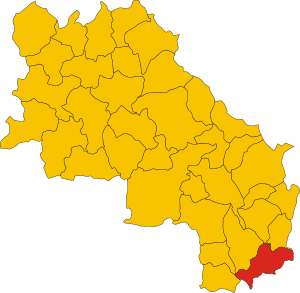
Archaeologists have excavated an ancient sanctuary located near geothermal springs in the Italian municipality of San Casciano dei Bani. Researchers managed to find more than three thousand coins, as well as sacrificial bronze artifacts in the form of various parts of the human body: ear, leg, uterus and phallus. In this way, during the Roman era, people expected to get rid of diseases, reports the Italian agency ANSA. San Casciano dei Bani is located in the Italian province of Siena. It is known for its geothermal springs, which people have been using since the time of the Etruscans.
Archaeological excavations have revealed open-air baths, remains of Roman baths, as well as a multi-layered Roman sanctuary built under Octavian Augustus on the site of an even older sanctuary dating back to Etruscan times. In the 1st century AD this cult complex was seriously damaged by fire, after which it was restored and expanded. At the beginning of the 4th century it was rebuilt again, but towards its end it was destroyed, which was obviously connected with the Christianization of the area. The research of this monument has already brought many valuable finds. For example, a large number of coins were found, three altars dedicated to Apollo, Isis and Fortuna Primigenia, a marble statue of the goddess Hygia. A large number of gifts show that the sanctuary was of great importance and was used, among other things, to perform rites of worship at the hot springs. This year, archaeologists are already conducting the sixth season of excavations at this monument. Among the new finds were more than three thousand coins, bronze objects in the shape of different parts of the body, for example legs, ears, penis and uterus. The researchers note that offerings at places associated with healing are often made in the form of objects depicting diseased body parts. For example, a sacrificial rare bronze uterus was apparently intended to aid in the birth of a child. Similar objects, but made of terracotta, have sometimes been found by scholars in Etruscan and Roman temples.
This season, archaeologists significantly expanded the excavation area, as a result of which they managed to find evidence of a major collapse that occurred at the end of the III century. Then a hole with a depth of more than two meters was formed in the ground, which damaged the surrounding buildings – pools, colonnades and buildings. The Romans then built an altar in the funnel itself to appease the displeased deities. The revealed scale of the sanctuary, according to archaeologist Jacopo Taboli, turned out to be much larger than expected. According to him, this monument has no analogues either in Italy or in the Mediterranean.
The way dogs wag their tails betrays their feelings, researchers from the Chinese Academy of Sciences have found, writes “Daily Mail”.
The authors of the study used a motion tracking system to analyze 21,000 tail movements of ten beagle dogs. During the experiment, the animals spent three days with strangers who treated them well – they petted them, fed them and played with them.
Researchers have found that when dogs meet strangers, they wag their tails to the left. However, when they see people they have interacted with before, their tail movements are mostly directed to the right.
According to experts, dogs wag their tails on the right side due to the activation of the left hemisphere of the brain, which processes positive emotions. This means that if the tail wags to the right, a pet is happy and content. If his tail turns more to the left, it can be assumed that the dog is nervous or scared.