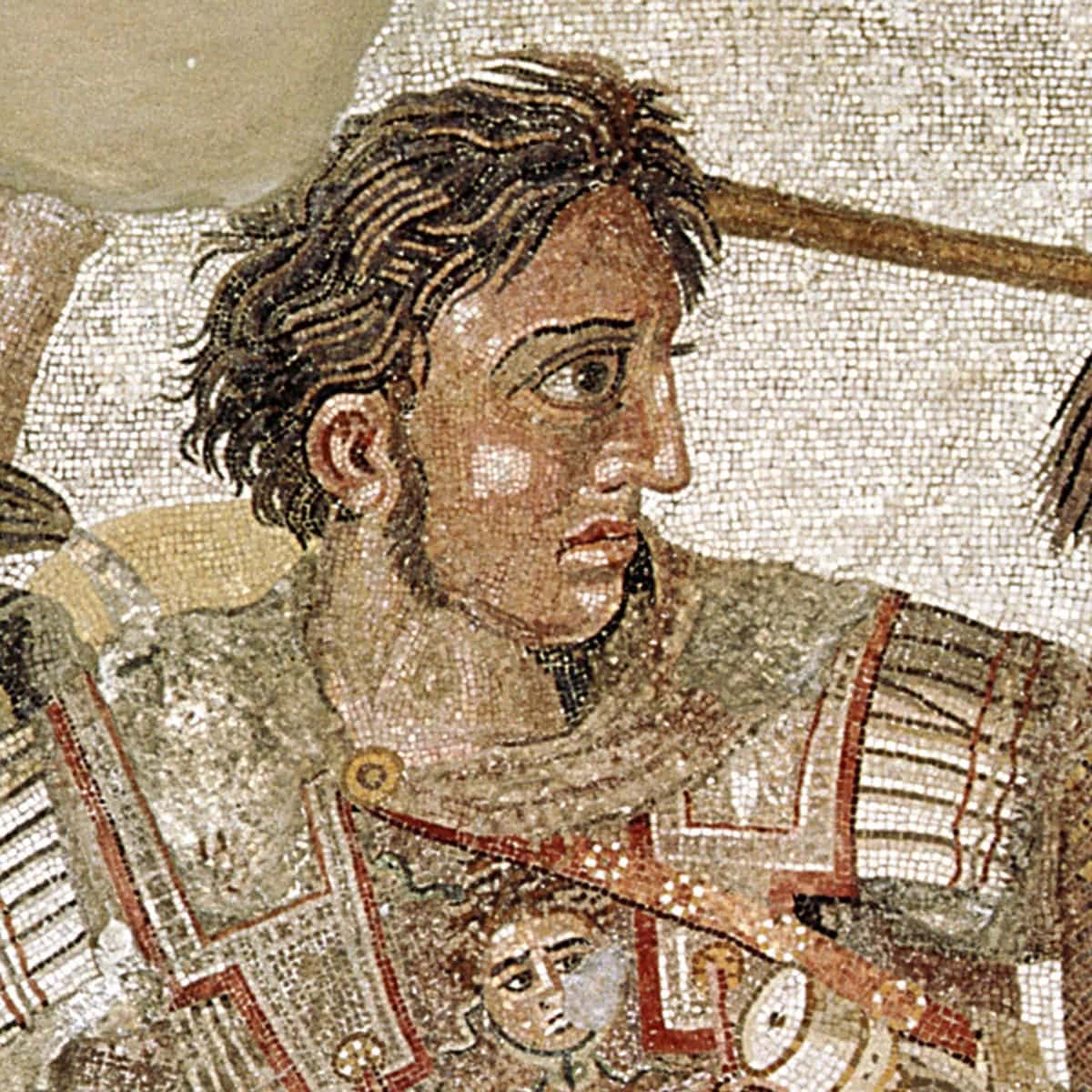
Why Ireland failed to accept the Bolshevik revolution – although on paper it tried to do so
On January 30, 1972, British soldiers shot 26 civilians during a protest march in Northern Ireland. Of these, 14 people died and the rest were injured. The soldiers don’t even show mercy as the protesters run away and keep the pressure on. Some of the people have returned to help the wounded, but as thanks they also receive a bullet. Other victims were cut by rubber bullets, batons and kicks with military clubs. The British Army is simply on a roll and clearly has no mercy.
With a tribunal of inquiry set up with accusations that it was yet another abuse of rights, the judges concluded that the soldiers were innocent because they only used force against provocateurs and people who were carrying weapons – weapons such as oil bombs. The jury selected does not have a single Irishman. Bloody Sunday, as the day will be remembered, has caused some countries to think much more seriously about their influence on the island.
Ireland is the nest of spies who are always working to destabilize and increase tension. Favorites among all cadres are precisely the residents of the KGB, whose aspirations are to directly influence the West. After Dublin is shaken by the chaos and effect of the protests, Soviet agents rush to develop another interesting story – the officialization of the spy ring.
At the same time, institutions such as the CIA, MI6 and J2 – Irish military intelligence – began to report very serious activity in the Eastern Bloc.
In late 1972, the KGB organized the so-called Operation Splash. The purpose of the occupation is to supply weapons to the Irish Revolutionary Army, which professes to some extent Marxist ideas. In case you’re wondering if this could even be credible information, it’s described in considerable detail in Mitrokhin’s archives, who tells the secret history of the KGB in a long and not-so-romantic book.
The vessel sent is named Gearbox and is to pass through the fishing grounds, dropping anchor about 50 miles off Northern Ireland. The military organization must wait for the arsenal of 70 automatic rifles, two light machine guns, 10 Walthers and about 41,600 magazines covered in special containers to be handed over. The Russians throw the weapon into the fishing nets and in this way the same will reach the fishing boats.
Yuri Andropov has given permission for this mission, but officially does not want to have any connection with the USSR. The weapon sent was collected from West Germany, while military experts took pains to lubricate the old guns with special German oil, removing any doubt from them.
A few hours after the ship’s departure, a fishing boat will pass by to collect everything needed and start the little revolution. This is the first documented delivery, but it certainly won’t be the last. The IRA will get many more tools for waging war.
The KGB is making every effort to open a Soviet embassy somewhere in Ireland. Paddy Donegan – Foreign Secretary – would repeatedly refuse such an invitation. The first talks were documented as early as 1973. The informal ones continued for decades, but there is always a reason why diplomacy fails. Whenever the press asks him why he refuses, he explains very simply:
“If the USSR sends 22 diplomats to Dublin, they will come with at least 22 more partners. Of their total number, about 30 will be spies.’
Paddy’s connection to the USSR is Mr. No, or Andrei Gromyko, who has often demonstrated how he can twist the arms of the Western powers and find loopholes in every respect. Moscow’s dream is to get closer to London and he is the only man for this mission. Gromyko also once served as ambassador to the US, so opening a new consulate in Dublin is a no-brainer at this stage.
The battle between David and Goliath can be screened in the negotiations of the two with the search for an option in which no one gets hurt. The problem is that the Kremlin really wants to send at least 20-30 people. Paddy disagrees and against the backdrop of Moscow’s wishes, he proposes to open an Irish embassy in the USSR.
The Russians are ready to compromise and allow the entire diplomatic team to be a maximum of 6 people. Meanwhile, 17 people will fly to Dublin. The deal is signed at the UN headquarters in New York and marks the beginning of one of the newest and most advanced KGB spy bases in Western Europe. Even if we don’t want to admit it, it’s a small and unofficial holiday.
Anatoly Caplin will go to Dublin as the first ambassador to Ireland. Gennady Salin will be appointed first secretary and press secretary, while Viktor Lipasov arrives to fill the role of second secretary, along with his wife Irina. The USSR begins to arrange the pieces on the chessboard and everything becomes more than interesting. The Soviet delegation gets its quarters on a very special street – George Orwell.
The sum of 720,000 dollars was paid for their small complex of approximately 5 acres. After two years, the USSR claimed that the buildings were outdated and needed new ones, planning to demolish their old building and erect a new one with an additional 18 apartments, a library and even a cinema. And if the people of Dublin see nothing wrong, every intelligence begins to express dissatisfaction and look for a new way to sabotage Russian ambitions. People like Michael Quinn will point out some troubling facts:
“Irish J2 Military Intelligence is involved in the complete monitoring of people entering and exiting the estate on George Orwell Street, also known as ‘Orwell Road.’ MI6 spies, meanwhile, have been busy removing the IRA from Northern Ireland. Every opinion was considered at the table; forged letters, propaganda, sabotage of IRA weapons, even murder.
However, British Prime Minister Ted Heath wanted more. False stories were told that the IRA was involved in fraud, witchcraft and it was even claimed that Soviet grenade launchers would soon arrive on Irish shores. Another suggestion was to invent legends about bombs causing cancer.’
The Crown is slowly and surely losing its influence over Ireland, but it doesn’t mind sabotaging any flirtations with the USSR. The investment in propaganda is more than good, but the more important question: how successful is it? Of course, the CIA gets in on the fun too. The Washington Post will claim that this will be the first Russian intelligence coup that will go down in the history of the century.
Fortunately, a group of Americans and West Germans are working undercover with Crypto AG, a Swiss company run by Boris Hagelin. He is known for creating a special machine for encrypting information, which has been in the arsenal of Soviet agents since 1952.
The spies sell Hagelin’s device to all interested intelligence agencies around the world. Ireland paid the sum of $1.25 million in the early 1980s, and with the new equipment it became clear that the CIA could decipher anything sent from Dublin.
At that time, the KGB was walking in the most reliable place in the world – the pubs. Hitting the most vulnerable groups is more than enough as legends of a coup by the IRA, the movements of the British army, as well as the focus of NATO and the dispatch of American submarines begin to circulate.
More than 90 Russian intelligence agents have been able to transfer directly from Britain to Ireland so that the number of diplomats can still be maintained. Entering England may be considered a more difficult task, but in the meantime we must not forget that Ireland is open to anyone who wants to live there.
Often people make excuses or make excuses, but they don’t recognize their fear of marriage
Gamophobia is an excessive fear of commitment or marriage. In this case, it is not about the temporary nervousness that comes over someone when he is about to connect his life with another person. It consists of excessive anxiety that can be accompanied by panic attacks.
Like other phobias, there is a fear that goes beyond the limits of the rational. And although it seems unfounded, it becomes so intense that it can be paralyzing. A person may even experience a panic attack.
The main characteristic of gamophobia is the irrational fear of marriage. This is accompanied by another series of traits that are typical of people with this disorder.
Such manifestations are the following:
• Intense emotional response
It is common for the symptoms of gamophobia to manifest themselves when the affected person is faced with a situation where they are asked to consider marriage as an option. This can also happen at the very idea of getting married or seeing another couple that does. This leads to chaotic or unusual behavior that is incomprehensible to others.
• Lack of justification
Those who suffer from this disorder lack the ability to explain why. If asked, they do not find reasons for their behavior or try to minimize it. They often claim that this is a personality trait, but it doesn’t really cause them any problems.
• Avoidance
They also often try to avoid any situations and even conversations related to marriage. If they are forced to undergo this, they may have a panic attack. Their fear provokes feelings of guilt and shame.
• Physical manifestations
The anguish and anxiety they experience when faced with marital situations usually manifests itself in a series of physical reactions, such as the following:
• Difficulty breathing
• Excessive sweating
• Sensation of suffocation
• Chest pain
• Vertigo
• Digestive problems
• Increase in blood pressure
• Muscle strain
• Nausea
To overcome gamophobia, the first thing you need to do is recognize that you have a problem. Often people make excuses or make excuses, but they don’t recognize their fear of marriage. Therefore, this step is not so easy to take.
Once you have determined that you do have a psychological problem, you should get the help of a professional. There are different types of therapy that can help in these cases.
• Exposure therapy
It is a behavioral psychotherapy that is usually very effective in treating gamophobia.
• Cognitive therapy
This type of psychotherapy focuses more on identifying, analyzing, and correcting misconceptions about marriage.
• Psychodynamic therapy
This type of therapy is based on an open and free conversation about the person’s feelings.
• Medicines
In general, medication does not serve to overcome the phobia as such. However, in some extreme cases they can help mitigate the reactions caused by gamophobia and partially stabilize the mood.
Scientists conducted an interdisciplinary study of materials from the city of Mayapan, the largest political capital of the Maya of the postclassic period. They found that as long as rainfall in the region remained at a sufficient level, the population of the city continued to grow. But prolonged droughts have led to increased social tensions and violence. Mayapan was eventually abandoned in the middle of the 15th century. It is noteworthy that, it seems, the researchers managed to find a collective burial of representatives of the Kokom dynasty, who were killed as a result of an uprising around 1441. This is reported in an article published in the journal Nature Communications.
At the turn of the 1st and 2nd millennia of our era, the crisis of the classical Mayan society occurred. Many territories were practically depopulated, state associations collapsed, many cities disappeared, and the social structure and economy collapsed. A number of scientists see climate change as the cause of this process, while others defend the idea that internal structural problems in Mayan society were to blame. At the initial stage of the postclassic period, around the second half of the 10th – mid-11th centuries, the city of Chichen Itza flourished, which controlled most of the northern Yucatan. However, soon he and several other cities fall into decay, and Mayapan establishes dominance over the peninsula at the end of the 12th century.
Mayapan is the largest political capital of the Maya of the postclassic period. It was inhabited from about 1100 to 1450 and exceeded the size of any city located in the lowlands of the Maya of Belize, Guatemala and Mexico, acting as the center of political, economic and religious life. Since the second half of the 13th century, Mayapan was ruled by the Kokom dynasty, whose power was largely based on control over trade with other regions. However, in 1441, the Kokoms were overthrown as a result of an uprising led by the Shiu dynasty, and Yucatan, as a result, was divided into a dozen and a half states that were at war with each other, but were closely connected by trade. Today Mayapan is the ruins of an ancient city. Archaeologists have discovered in it the remains of a city wall, several thousand buildings, including monumental temples, a sacred cenote (natural well), numerous art objects, burials and other things associated with the Mayan civilization.
Douglas Kennett of the University of California at Santa Barbara, together with colleagues from Australia, the UK, Germany, Canada, Mexico and the US, combined archaeological, historical, osteological and paleoclimatic data to test the link between climate change, civil conflict and political collapse. Mayapana in the XIV-XV centuries. Scientists also conducted radiocarbon analysis of the remains of 205 people to confirm or refute the information from written sources about a number of significant events in the history of the Mayapan, recorded using the Mayan calendar: from the period of “terror and war” (1302-1323) to the murder of representatives of the Kokom dynasty ( 1440-1461), as well as the political decline and abandonment of the city (after 1450).
To find out the climatic conditions in which the Maya lived during the studied period, scientists conducted an analysis of stable oxygen isotopes in speleothems, and also studied changes in the salinity level of water in a small lake located about 27 kilometers from Mayapan. As a result of this work, scientists found that around 1100–1340, a sufficient amount of precipitation fell in the region. This was accompanied by an increase in population that peaked around 1200–1350, after which the population began to decline, reaching a trough around 1450. This conclusion is confirmed by written sources.
Radiocarbon analysis of the remains from a collective burial excavated near the temple showed that 25 individuals died around 1302-1362. In three of them, scientists found post-mortem traumatic brain injuries, cuts on the bones, indicating dismemberment and deliberate desecration.
According to the researchers, this burial may correspond to historical evidence of conflicts in the Yucatan (possibly, these are sacrificed prisoners of war). Another type of collective burials are two objects from 1360-1400, excavated near ceremonial structures, which contained desecrated human remains with ritual pottery. A number of remains demonstrate that people died a violent death (wounds with stone knives in different parts of the skeleton), in addition, some of the remains were dismembered and burned. According to scientists, this is consistent with historical data on the struggle within the ruling factions. Notably, this event coincided with a major drought in Central Mexico. Historical evidence of Mayapan massacres is also consistent with evidence of population decline and architectural construction.
Another collective burial was found near the temple of Kukulkan. Scientists have suggested that it may correspond to the burial of representatives of the Kokom dynasty, who were killed by Shiu. The skulls and bones of the postcranial skeleton belonged to at least nine individuals, seven of whom were children. Scientists found traces of stab wounds in two people. Based on radiocarbon analysis, this event occurred between 1440–1460. Moreover, paleogenetic analysis confirmed that the buried were genetically close to each other on the maternal line.
The researchers concluded that Mayapan’s population decline coincided with a period of extreme drought (around 1350-1430). As a result, famine followed, trade was disrupted, and Mayapan was eventually abandoned, and its inhabitants founded many small states throughout the Yucatan. The scientists also concluded that the prolonged hardship caused by climate change led to social tensions fueled by politicians. This eventually led to more and more violence. In addition, they confirmed the written data about the decline of this city between 1441-1461.
Photo: Location of the city of Mayapan on the map and the plan of this monument. The letters MB indicate the places where collective burials were discovered.
Douglas Kennett et al. / Nature Communications, 2022
We have all heard the name Howard Carter and know that he is the discoverer of the famous tomb of Tutankhamun in Egypt. However, history knows no less colorful ladies who left an important scientific legacy in Egyptology. I personally have a special sentiment and interest in two of them, with whom I feel connected in a special way.
We have all heard the name Howard Carter and know that he is the discoverer of the famous tomb of Tutankhamun in Egypt. However, history knows no less colorful ladies who left an important scientific legacy in Egyptology. I personally have a special sentiment and interest in two of them, with whom I feel connected in a special way.
Natasha Rambova
she is like a heroine from a movie. Her birth name was Winifred Kimball Shawhennessy. In the 1920s, she was a student of the Russian ballet master and choreographer Teodor Kozlov, and in his honor, when she was 17, she adopted the artistic pseudonym Natasha Rambova, which gradually became her official name. Later, she became one of the most extravagant designers of costumes for theater productions and film productions, and created her own fashion line. Her name is constantly mixed up in love affairs with both men and women.
They say that her mentor Teodor Kozlov and the actress and film producer Alla Nazimova, with whom they created the classic “Salome” in 1922, were also madly in love with her. Natasha Rambova played many roles in Hollywood, created costumes that are emblematic of the spirit of the time. She also went down in history with her stormy two-year marriage, followed by an equally stormy divorce from Hollywood’s sex symbol at the time, Rudolph Valentino. Spicy, passionate and uncontrollable, Rambova is fascinated by all forms of art, but also by esotericism and spiritualism, and more than once declares to the sweet and melodramatic
Valentino that it is completely impossible for her to stay at home, look after children and set the table for afternoon tea. A few years after her divorce from Valentino in 1925, she married the aristocrat Alvaro de Urzaiz, and in 1936 she visited Egypt for the first time – the country that enchanted her forever and with which she would connect her life. He is then 39 years old.
Natasha spends nearly a month in Luxor. It was there that she met Howard Carter – a fateful meeting, because from that moment she decided that she would devote the rest of her life, all her means, energy, strength and emotions to the science of Egyptology. At that time he wrote in his personal diary: “I felt as if at last, after a long journey and wandering, I had returned home. The first days I was in Thebes, I couldn’t stop my tears, they just flowed from my eyes. But no!… these weren’t tears of sadness, but some kind of emotional release, some kind of impact from the past – a return to yourself and to the place you’ve loved for too long and you’re finally back, where it’s always been. your heart I’m home, I’m finally home!!!’
Natasha Rambova’s research and contribution to the development of Egyptology is truly remarkable. He began collecting and studying various religious texts, until one afternoon, looking for information in the Cairo library, he met the director of the Institute at the time, the Russian-born Egyptologist Alexander Piankov. This acquaintance would lead to some of the most serious research and the publication of valuable books related to the sacred religious texts of Ancient Egypt – the pyramid texts from the pyramid of King Unas of the Fifth Dynasty of Egypt at Saqqara. Rambova took up research and editorial work and actively helped Piankov in his studies. Finds solid funding from foundations, helps field research in Luxor. The team obtained permission to photograph and study the inscriptions from the golden shrines that surround the sarcophagus of Tutankhamun in his tomb in the Valley. He worked as an editor on the first three volumes of the series “Egyptian religious texts” by Alexander Piankov and continued to deal with Egyptology until his last breath.
Nina McPherson Davis
She is the wife of another very talented and famous Egyptologist – Norman de Garris Davis. A true lady, a talented artist, copyist and Egyptologist, she is also known for her impeccable personal style – her long dark hair is always braided and smells of jasmine, her dress is unfailingly elegant and she always welcomes guests for afternoon tea at her house in Kurna, on The West Bank of Luxor, with fine china cups on a white linen tablecloth.
A fateful trip in 1906 to Alexandria linked her life to Egyptology. Then Nina was 25 years old and with a group of friends toured the sights of Ancient Egypt. Over a cup of tea, she meets Norman de Garris Davies, who is 16 years older than her. By this time, Norman was already an established Egyptologist, clearly stating his serious work and dedication to science. Behind him was work as an Egyptologist and copyist, and together with Sir William Matthew Flinders Petrie worked at Dendera (1897-1898).
He then headed the Egypt Exploration Fund mission, resulting in 11 volumes of copies of tombs from Saqqara, Amarna, Sheikh Said and Deir el-Gebrawi. Between 1905 and 1907 he worked with George Reisner on the Giza Plateau, as well as with James Henry Breasted, describing and studying the monuments in Nubia. Love between the two ignited at first sight, and upon returning from her trip, Nina was already engaged to Norman, and a year later, in 1907, they were married in London. In the same year, Norman headed the epigraphic mission to Egypt of major ancient Egyptian necropolises. He and his wife, Nina, settled in Luxor, where Norman began his work at Sheikh ab del-Qurna. Almost their entire life together was spent there studying the texts and images from the tombs of several major ancient Egyptian necropolises. This will become their life’s work.
From 1913, Nina began working as a copyist for the Metropolitan Mission, just like her husband. This job requires extreme precision, an accurate eye and a talented hand. It is often dark and uncomfortable to work in the tombs. There is a lack of natural light in which to see the true colors. Texts and reliefs are destroyed, parts are missing, images are covered with layers of dust and dirt. Nina started using mirrors in her work to provide more light in the rooms.
Together with Norman, they began to use a new technique in their repaintings – instead of watercolor paints, they used tempera paints, with which they gave volume and density to the images. Nina mastered the technique, style and form of ancient Egyptian hieroglyphics and imagery to such an extent that her renderings can still easily fool even the professional eye today. They live in a small house in Luxor, where in the evening they like to listen to music on their old gramophone, drink tea, and after dinner continue to work until the early hours of the next day.
Sir Alan Gardiner, one of the most famous British Egyptologists, was impressed by Nina’s talent and managed to organize several solo exhibitions of her in London and Oxford, and Rockefeller himself was included as a donor. With his help, two volumes of her works were published.
For the first edition of his Egyptian grammar, Sir Alan Gardiner asked Nina and Norman to produce a hieroglyphic character pool. They do, and in fact the grammar that all Egyptologists use today is based on the hieroglyphs written by Nina and Norman de Garris Davies.
In 1939, because of the complicated political situation immediately before the Second World War, the two left their house in Kurna and returned to England. Half of their belongings remain in Egypt, clearly indicating their intention to return and continue their work. However, on November 5, 1941, Norman died in his sleep of heart failure. Left alone, Nina never returned to Egypt and devoted her entire life to arranging, editing and publishing her husband’s unfinished works.
A conversation about spiritual mentorship with Father Georgi Chistyakov (August 4, 1953 – June 22, 2007) — priest, philologist, historian, human rights defender. He is considered a follower of Prot. Alexander Men. Like him, he is a highly erudite priest, pastor, historian, philologist, connoisseur of classical and several European languages. He is engaged in charity work, takes active public positions, in 2003 he opposed the Russian Federation’s war in Chechnya.
The interview was taken in 2003, but is still completely relevant today because of the observations and conclusions of Fr. George.
– Father George, from your point of view as an Orthodox priest, how sick is Russian society?
“It’s sick.” And it’s seriously sick. After all, after the fall of the Soviet regime, we found ourselves free, but in sufficiently harsh conditions of penury and unemployment, it was impossible for us to avoid the disadvantages. The problems associated with making independent decisions on many of the most important life issues faced people in all their fullness. We were used to the state solving all problems for us. That is why society is sick with asthenia – weakness. And the new Russian state simply abandoned us.
Although… I don’t know if that’s a good thing or a bad thing. It might be for the better. Because a person must be able to decide too many things independently, without relying on the state. However, as of now, this is still not happening. How then can we help society, you will ask. Civil society structures will help you answer this question. I have been involved in the activities of non-governmental organizations for many years. Fortunately, now they are already working not only in Moscow and St. Petersburg, or let’s say, in Nizhny Novgorod, but also in many other cities of the country. The only problem is that often these organizations are still weak and need financial support from the side. Otherwise, they – so necessary to people – cannot work.
I am talking about the cases when people come together and with joint efforts solve a common problem; for such associations as, for example, associations of parents of children suffering from Down syndrome or diabetes, organizations of relatives of alcoholics, associations of pensioners and people with disabilities… There are many!
And the Church is also one of the elements of civil society. Sobriety groups, groups to help the poor, the homeless can be created at the temples. There they feed and clothe the wanderers. The people who are engaged in this work without any reward. It is a public work requiring a high degree of personal feeling. A feeling that you are doing important work, a sense of responsibility towards that work. A significant element of the church’s charitable activity is the work with disadvantaged elderly people living at the border or below the poverty line. For them, it is necessary to look for clothes, medicines, glasses, to collect money to buy the necessary things.
However, people turn to the temple not only for material, but of course also for spiritual help. And it is very important that the priest and the layman, who meet the person with his problems at the threshold of the church, should really be able to give him this spiritual help. When someone starts believing in God, he becomes stronger. Helping him to grow spiritually to confront the trouble he has fallen into is the most important task.
– What, in your opinion, is the most serious handicap destroying Russian society?
“I don’t even know where to start.” Everything is very serious: poverty, drug addiction, alcoholism… Facing people living below the poverty line, you can’t help but say that the main Russian problem is poverty. But when you meet relatives of alcoholics and parents of drug addicts, who sold everything to save their children, and what they couldn’t sell, their children stole to buy a dose, it becomes clear: the main problems for Russia it is drug addiction and alcoholism.
But there are quite a few other cruel handicaps. One of them – the high prices of good medical care. People don’t have enough money for her. Therefore, often, instead of turning to doctors, they go to magicians and psychics. Instead of taking medicines, they use folk remedies, nutritional supplements, etc.
I cannot help talking about such a dangerous disease as the terrible bitterness of the population… To the rich, to migrants, to refugees, to representatives of other nationalities, religions and confessions. For example, to Catholics. All that we call xenophobia. This disease also absolutely needs to be treated. It’s scary when a person is bitter against everyone and everything.
– Can this bitterness be eradicated somehow?
– First, you need to talk to people. All too often resentment stems from ignorance. From the fact that a person lives, operating not with facts, but with ancient mythologies of hatred for everything foreign. He fishes them in his unconscious and they begin to develop and bear very terrible fruit. In fact, it turns out that people are very poorly informed about the given problem. They simply hate, for example, Caucasians without knowing them. When you start talking to a person who feels hatred, it already gives a positive result.
Secondly, as a priest, I cannot help but say that prayer heals a person, that depth that is discovered in him heals him. When our self lacks depth, when we are superficial, when we turn to mythology, we are all very aggressive. When the person begins to approach the problem at least a little deeper, this aggressiveness drops quickly enough. And then she just disappears.
Finally, true faith in God heals a person. Superficial religiosity, in which a person makes a cross, buys an icon or, on January 6, the Feast of the Epiphany, takes holy water from the temple, does not change him. But when a person experiences something great related to God, he becomes another, the aggressiveness leaves his heart. This is a very difficult process. We don’t get rid of anything else with as much effort as aggressiveness. Moreover, it is constantly fueled by material difficulties and the conditions in which we live.
– How do we acquire this true faith? Through suffering?
– Of course, it is easy to say, as Dostoevsky did, that suffering purifies the soul. In practice, this does not always happen. Today, we see the opposite result: suffering embitters a person, makes him more aggressive.
I think that the meeting plays a very big role. When someone on his life path meets a person who sincerely believes in God, who carries this pure, joyful, bright faith, then he can really change very quickly. That is, the meeting with the true believer is something very significant. Another issue is that many newly converted Christians do not believe brightly and joyfully, but carry some dark aggressive faith within themselves. For many of them, putting a cross around their neck, boots on their feet, growing a longer beard and starting to profess aggressive views and hatred towards Catholics, Protestants, Jews – this is precisely what it means to convert to Orthodoxy. In fact, all this horror has nothing to do with Orthodoxy, and even less with faith in God.
We are in dire need of bright teachers who lead us to the Truth and to God. Such was, for example, the recently deceased Metropolitan Antony Surozhki. He was 89 years old. He was an old, very sick man, he lived in London. He has not returned to Russia for many years, but his books are published here. Numerous recordings of his talks, videotapes, and audiotapes exist.
Once the TV presenter Vladimir Pozner asked me not without irony: “What would you do to improve the situation with faith in God, so that it would start helping people in Russia?” I answered that I would show Metropolitan Anthony on TV more often . “Another metropolitan,” Posner, who does not particularly like the clergy, retorts me with some irritation. “Not another one, but Antony. He is like that – the only one.”
A representative of the first emigration, Metropolitan Anthony during the years of the war in France was a participant in the Resistance. As a doctor surgeon. He did not receive any theological education, he became a saint during his lifetime, one might say, because he was extremely simple, ascetic in life and absolutely accessible to everyone and everyone; he didn’t even like to be addressed as ‘you’, he preferred the friendly ‘you’, including by people who were 30 or more years his junior.
It was a true bearer of Christ’s light, which truly enlightens all. For Bishop Anthony, each person was, to use the evangelical expression, a “pearl of great price” for which everything in the world could be sacrificed. He knew how to comfort and strengthen a person, but most importantly, to show what you need to do with yourself to become better. In his presence, not only the desire to change themselves for the better, but also the practical vision of what is needed for this appeared in people. And everything described happened because he knew how to love. He knew how to press to his heart, he knew how, if we may say so, to take everyone somewhere in the depths of his own “I” and keep him there. Like a child. At the same time, there was no pampering and no sentimentality in his attitude towards people.
“… Be merciful, just as your Father is merciful,” says Jesus in the Gospel of Luke. If we try to understand what the word “merciful” (in Greek “oiktirmon”) means, it will turn out that it comes from the Greek word “oiktos”, that is, “pain”; thus, he who accepts another’s pain as his own is merciful. It is in the indicated sense of the word that Metropolitan Antony was merciful. Communicating with such bright people gives a lot. But the trouble is that they are always infinitesimal. Dmitri Sergeevich Likhachev was also like that, and in India – Mother Teresa. Who else? I do not know. Our task as believers is to develop in people a sense of God, to teach them with the help of books, personal conversations and moments of trust in life. Sometimes this happens at confession in the church, sometimes – on the train on the way to the villa. In these moments, you can convey something to the person face to face, sow the seed that God, who is invisibly present in our lives, heals our hearts.
I wish people in Russia would read the Gospel more. Today, Orthodoxy begins with the fact that, for some unknown reason, people are given crosses. I would distribute the Gospel. This is an amazing book. When you start reading it, you really become someone else. During the August coup in 1991, we, together with my friend Father Alexander Borisov, distributed Gospels in front of the White House. The young people who were then standing around the building were infinitely grateful. At some point I took my Bible out of my pocket and we read aloud. For the people this was a huge discovery as they had never heard anything like it. They were literally transforming before our eyes.
The word of Jesus changes the person. Therefore, if we talk about spiritual help for the country, then this is evangelization. I know how much she gives from her experience in meetings with drug addicts and alcoholics, with young people and with sick children.
For more than 11 years now, my friends from the parish of St. Kozma and Damyan” in Shubino and I work at the Republican Children’s Clinical Hospital. We have to look for money for medicine, for clothes, for children’s books and, alas, for funerals. Let’s organize their free time, set up a small theater, musical meetings, draw… They love to draw. During these years we managed to hold several wonderful exhibitions of children’s drawings. Their authors are seriously ill children for whom spiritual help is needed no less than medical help. We read the Gospel, and we see how much it gives them. When you start reading it aloud, in some mystical way a real encounter with the living Jesus takes place. Jesus himself from the pages of the Gospel comes down to us. And invisibly he finds himself among us. Such is the effect produced by this one-of-a-kind book. Of course, children feel the presence of Christ in their lives thanks to the fact that together with them we pray and read the Gospel. It is a family prayer meeting like no other. Children with disabilities feel like full-fledged people, precisely because God is with them, precisely because they live with the joyful feeling of God’s presence in their lives.
Of course, there is another problem – that is the adoption of sick children. Children with vision problems, hearing problems, with severe diseases that need to be treated over the course of years through numerous operations. Initially, such children were adopted mostly in the USA, Italy and other countries. Now many Muscovites have adopted such children. To adopt a child with health problems, which you will have to “carry in your arms” for the rest of your life – this is a feat. That such children began to be taken in Russia, and not only abroad, is a very important sign! A sign that society is coming out of the dead end, from the state of crisis. A sign that we will not perish.
Iran’s parliament is considering a bill that could introduce a virtual ban on keeping pets in the country, reports the BBC. If it is adopted, it will be possible to own animals only with special permission from the government commission. For the importation into Iran of any animals, up to rabbits and turtles, a fine of about $ 800 will be provided. They are considered a “symbol of Westernization” unacceptable for an eastern country.
According to the President of the Iranian Association of Veterinarians and an opponent of the bill, Dr. Payam Mohebi, the debate on this issue began more than a decade ago. Then the bill was not approved, although it was periodically returned to its discussion. However, against the background of the current strengthening of conservative sentiments in Iran, the bill may be approved in the near future.
The list of animals affected by the bill includes not only dogs, but also cats and many other species.
The BBC correspondent in Tehran also reports that cases of arrests for walking dogs in parks and other public places have increased in Iranian cities. Animals are confiscated from those arrested.
• Contrary to popular stereotype, the Qur’an does not forbid Muslims from keeping dogs if they are useful – for example, as guards or assistants in hunting. Muslim theologians consider dog saliva and hair ritually unclean and recommend keeping dogs not in the home, but in the yard. There is no ban on keeping other animals – cats, birds, hamsters, rabbits – in Islam. According to Muslim tradition, cats were the favorite animals of the Prophet Muhammad.
• Before the “Islamic revolution” in 1979, Iran was one of the most progressive countries in the east in terms of keeping pets. He was the first in the Middle East to pass animal protection laws; in 1948, the first state organization to monitor compliance with them appeared here. Even members of the royal family had dogs. One of the most popular cat breeds in the world – Persian – was bred in Iran (Persia). There is a museum in Tehran dedicated to the history of this breed.
Photo: Police officer in Iran issues a fine for transporting a dog in a car
Switzerland is considering moving to rolling blackouts due to energy shortages.
This was announced on Wednesday by the director of the Association of Swiss Electricity Companies (VSE) Michael Frank, tass.ru reports.
“We plan, if necessary, to gradually introduce ever more stringent measures to save electricity,” Reuters quotes him as saying. % electricity”.
Frank estimates that these measures will help reduce the country’s electricity consumption by a quarter.
As a last resort, “individual regions will go offline in rotation for periods of four hours,” he added.
The source of the energy crisis in the country, the official considers the shortage of gas after the reduction of Russian supplies and the shutdown of nuclear power plants in France for maintenance.
On June 14, Gazprom announced that it was forced to reduce gas supplies via Nord Stream compared to the plan due to the untimely return of gas pumping units by Siemens from Canada. As a result, the gas flow to Germany was reduced to 40% of the pipeline’s capacity. As a result, Berlin agreed with Ottawa, as an exception to the sanctions, to return the unit to Europe.
When we compare the first century of Christian history even with the fourth, we cannot help but note the magnitude of the spiritual catastrophe of the Christian project as such.
The evaluation of the success or failure of a project is determined by the ratio of intention and results. So, what did the first Christians believe and dream about?
Above all: they believe they hold the keys to immortality in their hands. Death is not for those who have partaken of the Body of the Risen Christ and themselves become part of Him. They will never see death again.
But still, Christians began to die, not only those who were executed, but also those who were remembered in a natural way – from diseases and old age.[1] The question arises “How so?”. And here comes the answer of the apostle Paul – in the sense that death returns to them through their fault: “He who eats and drinks unworthily eats and drinks his condemnation, because he does not discern the body of the Lord. Therefore there are many weak and sick among you, and many are dying” (1 Cor. 11:29-30).
Ask any churchman today what it means to receive communion unworthily and he will tell you that it is receiving communion “without preparation”, i.e. without a three-day fast and reading the rule.
But the apostle Paul writes about something else. Sin committed during or after taking the antidote neutralizes its effect.[2] People lose the immortality they were just gifted with. But today we are not bothered or traumatized by the stories about the saint, who, staying in a blessed state of prayer, nevertheless died (see the legend about the kneeling death of Rev. Seraphim Sarovsky).
The second unfulfilled dream of the first Christians was about the imminent return of Christ.
They think that Christ will soon return (“you will not reach the cities of Israel”[3]) and therefore it is not worth staying here for a long time.
There is a modern word “call center”, but hardly anyone, even among the employees of these centers, guesses that their name has a common root with the Greek word “church”. In Greek, Church is “ecclesia” (from here comes the Italian chiesa, the French eglise, the Spanish Iglesia). This word is usually translated as “assembly”. This is somewhat correct historically, but not quite true, philologically speaking. It is historically correct, because the word “ecclesia” refers to the assembly of citizens, for example the assembly of the Athenians. The Greek translation of the Old Testament with this word conveys the Hebrew “kagal” – the assembly of Israel (hence Ecclesiastes – Kogelet).
The word ἐκκλησία derives from the verb ἐκκαλείν (“to call”), as in Ancient Greece members of the ἐκκλησίας were called by heralds who went around the city calling for an assembly.[4]
“Many are called, few are chosen” (Matt. 22:14). Call – kliti (κληtoί); chosen ones – eklikti (ἐκκλητοί).
So, the ecclesia is an assembly of the called, of the plucked up. In fact, we are torn from our usual order of life by this otherworldly call that comes from afar, from the Transcendent God. And people respond to this call and come.
So the Christian is defined not so much by his past as by his future; his identity is in his vocation, not his background.
Accordingly, the Church is a gathering of people who have felt themselves wanderers in this world. This idea of wandering is very important to mystics and neophytes. Even from the night voice that calls Abraham on his way,[5] to the Gnostic “Hymn to the Pearl” the theme of the voice that calls to the Exodus passes. Let’s remember, for example, the epitaph that Grigoriy Skovoroda ordered to be carved on his grave: “The world hunted me, but it did not catch me.” Or text the message to Mr. Anderson: “Wake up Neo, the Matrix is holding you!”.
The Christian is a foreigner and a stranger in this world, and according to Christian ideas, one should not completely overlap with the local order of things. At least with something he should distance himself from it, separate himself from this world, feeling the pull of the Supreme.
The people who experience this feeling of their foreignness in this world, hear the voice of the Heavenly Father, respond to it together and thus form the Church – the Ecclesia.
But behold, the apostles go through all the cities of Israel and even a little more, and Christ does not return. Instead of passing quickly through the world, the Church has to settle for a long time “in this world” and accordingly absorb its miasma and tricks.
The third dream of the first Christians is the dream of mystical anarchism. Living by grace, not by law. Live theocratically, not hierarchically. They dream that each person will hear the will of God in his heart without seeking the advice of elders or superiors.
The Apostle Peter expresses this dream of the Church on the very birthday of the Church – on the day of Pentecost, with a quote from the Book of the prophet Joel:
“… and behold, in the last days, says God, I will pour out of My Spirit upon all flesh; your sons and your daughters will prophesy; your young men shall see visions, and your old men shall dream dreams; and in those days I will pour out My Spirit on My servants and My servants, and they will prophesy… And then everyone who calls on the name of the Lord will be saved” (Acts 2:17-21).
“And behold, afterward I will pour out of My Spirit upon all flesh, and your sons and your daughters shall prophesy; your old men shall dream dreams, and your young men shall see visions. I will also pour out my Spirit on male and female slaves in those days. And I will show omens in heaven and earth: blood, fire, and pillars of smoke. The sun will turn into darkness, and the moon into blood, before the great and terrible day of the Lord comes. And then everyone who calls on the name of the Lord will be saved; because salvation will be on Mount Zion and in Jerusalem, as the Lord says, and among the rest whom the Lord will call” (Joel. 2:28-32).
The essence of this dream is religion without intermediaries. For every person to have direct access to God, at that – two-way, online. May God directly address you, hear you and you hear Him. You don’t need to look for a postman priest. As such, a promise is unilateral, without conditions. It does not say that only chaste virgins or youths will be given prophecy.
For the ancient prophet, this is not asceticism, nor is it ecclesiology. This is eschatological sotiriology: the end of the known order of things is coming (“The sun will turn into darkness and the moon into blood”); it is obvious to all (“signs of heaven and earth: blood, fire, and pillars of smoke”). But there is a “portal” for evacuation, and it is Mount Zion in Jerusalem.
By quoting this most vivid apocalyptic text, the apostle shows us that the “last day” is coming right now. The evacuation is announced (with a slight change in the password: “the name of the Lord” is now the name of Jesus Christ, not Yahweh).
Has this come true in the history of the Christian Church? Well, go to the temple with your dream or prophecy and tell about it to a priest or to the whole congregation, or write to the Synod about it… Besides, the Synod does not make any decisions based on visions at all.
So there is a dream of a mystical anarchism, where God will directly give visions and counsels to every heart, without the involvement of priests, hierarchs and elders. But it is necessary to build a church with iron discipline and a complex hierarchy.
The main problem of the Church is also expressed in the words of the Apostle Paul: “You were going well: who prevented you from obeying the truth?” (see Gal. 5:7, translation note). In the centuries-long marathon, the Christian idea is visibly expiring.
The phenomenon that Max Weber calls masters, heroes, “virtuosos of religiosity” can also be considered a symptom of the disease. If there are “virtuosos”, then there are also “mediocres”, which are obviously more numerous.
Today it is clear to us – not all Christians are saints. But at first they thought it wouldn’t be like that.
One of the unique features of the Gospel, which also manifests itself in the Pentecostal faith, is the abolition of the division of the world into a profane and a sacred zone, fundamental to religious culture.
The basis of traditional culture is the system of taboos, the main of which separates the sacred from the profane. This is the holy spring, and this is an ordinary watering hole. This is the sacred grove, and this is just the taiga… In the Gospel, however, these divisions are removed. Everything is God’s.
And there is no longer any separate holy temple mountain: every place is holy.
There is no holy nation. Where two or three are gathered together in the name of Christ, there He is also. And in general, the Kingdom of God is in the heart of even the solitary believer.
There is no Sabbath: God is always with us. Every minute and day is holy, i.e. God’s. If the heathen thought that he had the right to freely dispose of profane recreation as his right, now it turns out that this too is not his, but God’s.
“Always rejoice. Pray without ceasing. In everything give thanks” (1 Thessalonians 5:16-18). In Valeria Alfeeva’s short story “Jvari”, the Georgian monk says to the heroine: “This is not right at all – to have a separate time for prayer and a separate time for life, which does not resemble prayer at all. There should be no interruption. All life must be addressed to God as a prayer.”
Now there is no longer anything that is separate and opposed to the rest of God’s creation. A person can do something significant for God not when he does some manipulations with His idol or image, but when he treats another person in some way. An ordinary person, not a saint either, and sometimes even extremely unpleasant in every respect. But if you did something for him, you did it to Me. Now every poor man is Job and even Christ. The Law of Insulting Imperial Majesty can be applied to insulting any bum. Because he is also an icon of God. It is better to leave the temple, leaving the prepared sacrifice unoffered, but to make peace with your domestic “enemy”.
The whole Gospel story is a series of scandals: God – the Holy of Holies – enters something impure by definition (from the woman’s womb to the heathen judgment on Himself, the Cross, the grave of another and the hell of another).
However, according to the laws of dialectics, the word “everything” is treacherous. The words “holy” and “profane” are related. If there is nothing to relate to, then the meaning of this word is at least greatly weakened.
“All is sanctified” is the same as “all is profane.” Because there is no border.
Christians eat the object of their cult. They eagerly devour like a dog (τρώγων – John 6:54) and gather for their Sacrament like vultures (ἀετος) over a corpse (Matt. 24:28). Indeed, the Gospel is the greatest profane project in history.
The Holy Gifts are offered by us to God, and then they return to us again and are taken outside the altar – fanum – and distributed to the people.
We eat what God did not burn, so it is the Holy Communion with us that is profane… The waste from the ritual is profane. And it is with them that Christ is identified. At the Last Supper as His Body, He consecrates precisely the afikoman – the bitter bread of the Exodus (from Egypt, note trans.), the bread of the homeless.
Afikoman is the dedication of the holiday. Eating the leftovers. Translated into the words of modern liturgical practice, Christ performs the Sacrament by what we call “the consumption of the Gifts.” This is reaching the very border between the holiday and the everyday, between the sacred and the secular.
In addition, the afikoman is that part of the Passover unleavened bread that was proper to leave until the end of the festive meal – in case a poor person or a traveler came, in accordance with the commandment: “and rejoice before the Lord your God, you … and the stranger , the orphan” (Deut. 16:11). It is this afikoman who breaks Christ as His Body.[6] The Eucharist is the bread of the stranger and the poor, the bread of the homeless.
“In every tree is the crucified Christ. In every class is the Body of Christ”.[7] Everything is sacred. And all Saturdays are for man. And “the mystery of our salvation” is “for us men.” Putting the Body of Christ into the mouth of a leper – isn’t this both profanation and sacralization?
To give up all to gain all. In fact, this is the “law of the grain”. To dissolve in the other, to let it inside you – so that the other becomes a part of you.
The ethos of the Gospel is an ethos of total profanation. A sacrament not of the altar, but a sacrament of my neighbor. Already with the apostle John the Theologian, we see this redirection of the religious vector from the God-Who-is-not-seen in the direction of man and the small circumstances of his life. The apostle, who begins his speech with “In the beginning was the Word,” ends it with the simple “children, love one another.”
Hence: “The brother asked the old man: there were two brothers; one kept silence in his cell, continued his fast even up to six days a week, and assigned himself many labors. The other ministered to the sick. Whose work is more pleasing to God? The old man answered him: that brother who fasts for six days, even if he hangs on his nostrils, and then he will not be able to compare with the one who serves the sick” (From the Ancient Crutches).
This is one of the main and vital paradoxes of Christianity.
However, in the history of the Church, a division between secular and profane arises again (instead of “do everything for the glory of God”). And the more time passes, the more distinct these boundaries become.
In 2017, St. Petersburg Metropolitan Varsanufy (Sudakov) clarified what profanation is: “Many temples have not yet been returned to us. And they tell us: serve in them, in these museums that we have. We, of course, can and do serve in them. But I do not know how the praise to God amounts to these temples. Because the sanctity of the temple is being violated. Who enters there after our service, who walks there and what they do there…”[8]
Indeed, this conclusion is difficult to reconcile with the Gospel account: the Sacrament of Salvation takes place on Calvary – in that place where, both before and after the Sacrifice of the Redeemer, quite ungodly things happen.
Nor have I come across any record of Christ ordering the burning of the inn where He administered the Last Supper. Or at least the table and the mats on which He and the apostles rested.
The first Christians dreamed of many things.
They believe that all social barriers will collapse and there will be neither slaves nor masters.
They think that those cold words “mine” and “yours” will disappear and there will be common ownership.
But Christ is not coming back.
Our expedition to planet Earth turns out to be “forgotten”. Instead of a portal to the Otherworld, the “Stargate” becomes a gathering place for the neighbors. Money becomes “neighbors”. Dreams of a holy life become an ordinary parish life, and for some – a source of income.
The Parousia does not happen. Death remains. Human quarrels – too. And it becomes imperative that they learn to live in the mud of earth’s history. It will say: with whom you get together – that is who you become.
As a result, the early history of the Church looks like a series of catastrophes, that is, of catastrophic failure of dreams.
This catastrophe of expectations is described by the later formula: the first Christians await the return of Christ, and to them comes the Church. And they have to start church-party construction.
The new religion gained mass and became institutional.
Again a division between pastors and parishioners arises.
Again, a hierarchical pyramid is built with the corresponding career aspirations. And even “ecclesiastical-administrative mechanism”.[9]
A calendar of fasts, holidays and prayers appears again. In other words, enforced discipline takes the place of voluntary thirst for prayer and aspiration (“Typical” instead of “pray without ceasing”).
Again a division of secular and profane appears (instead of “do everything for the glory of God”).
Church real estate and those who dispose of it and profit from it appear again. “Heaven-goers” get hemorrhoids in the form of earthly real estate and struggle to preserve and expand it, corporate and national interests arise. This politicization is actually the inevitable path of any religion in its serious propagation.
Again, instead of “don’t worry about tomorrow” comes high-minded calculation in the style of “realpolitik” and the fight for the “interests of the Church”.
The apostles from the beginning dream of living in a world where everything is guided by love and by the Spirit, where the heavy burden of law and instructions do not exist. The first decree of the apostolic council was “it is forbidden to forbid”.[10] Because Christ abolished “the law of commandments” (Eph. 2:15).
The subsequent church statutes, however, are not at all lighter than the Pharisaic “traditions”.
Suddenly we find ourselves stuck in the world of the law, the world of the covenant that is declared old. The balance of centuries of spiritual selection can be likened to the publican who is proud that he is not a Pharisee.
Resurrection of the dead does not happen. No one can turn water into wine. And the Second Coming does not come after the missionary sweep of all the lands and inventories of the “canonical territories”. They have to deal with the earthly, although, as before, they call themselves the “heavenly host”. Something about this transformation of the group of refugees from the world into a corporation of earthly power turns out to be successful, even human. But the Miracle of the awakened conscience, the Miracle of the direct Epiphany somehow gets lost. And that is why those who enter church life because they seek God and not some ideology are discouraged.
The church becomes like everyone else. She becomes the subject of property-legal relations, quarrels and envy. And even “ecclesiastical law gives way to church politics”.[11]
The world tames the “citizens of heaven.”
The grounding of the Church, with her own consent, is proceeding successfully and applies for centuries to come. The monks, the sectarians, the reformers, the Protestants are pulling a little… But the “Union of the Sword and the Plow” (the union of the imperial sword and the bishop’s plow) stops them. Grounding is an absence of our unworldliness. The church many centuries ago ceases to be an institution that is “not of this world”, it turns out to be very firmly anchored to various oligarchic strata and plunder. That is why the speech of its hierarchs sounds self-interested, partisan and lobbyist.
The Church is an ancient legal institution. There is a hint of bitterness in this statement. Ancient… So already a long time ago, even at our very sources, we are stuck in the world of the law, in the world of the illusory overcome Old Testament. We still need some external regulatory discipline.
The dream of the first generation of Christians is a dream of the death of both the state and the law. The end of the time of the Jewish law and of the Roman law has come; now we live by grace. Our consciences, our hearts are renewed. The power of love, not the law of love, but the power of love reigns through Christ in our hearts. And therefore we need no courts, no outward forms even of piety, much less any regulation of complex social relations. The grace of Christ will change everyone.
But the preaching of “freedom in Christ” even during the lifetime of the apostles gave rise to a number of excesses. And they have to switch to reminding of simple “rules of decency”. For example, to call on women to wear towels (1 Cor. 11 ch.). And in general to ask everyone not to indulge in such sexual intemperance, about which “not even among the heathens a word is spoken”.[12]
Christians begin to come into conflict with each other. Even the apostles had to make concessions because of the imperfection of their disciples. The Christians from the Jews began to scandalize the Christians from the Hellenes. The question of how to deal with the money that people bring into the general treasury turns out to be “eternal”. It turns out that these pennies are just looking to stick to someone’s particular little hands.
This is how deacons appear. So that the apostles do not interfere in financial matters and are not distracted from the sermon. The deacons were supposed to listen to the complaints of the parishioners against each other, to “tend the tables” and be in charge of the treasury. And in this regard, gradually everything becomes as with men, and not as with the holy angels. And the conflict between love and harsh law by coercion is resolved in favor of the latter.
It turns out that Christians lack neither a grace-enhancing reason, nor simply an inner voice of conscience to resolve the completely non-theological disputes between them. Courts appear to be necessary. And the courts found that written collections of ecclesiastical laws were necessary.
Gradually everything becomes as with men, and not as with the holy angels. And as a result, it turns out that the Church has not freed itself from this conflict between love and harsh law. And although the Church considers itself a moral society, at the same time it turns out that we cannot live simply by morality.
The reason is simple. It turns out that in the same person, the ecclesiastical-hierarchical height and the moral-moral height may not coincide. And even religious giftedness (responsiveness to the Call, a sense of Him) may not be accompanied by giftedness in moral sense. It turns out that Pharisaism is not at all a private episode of Jewish history, it becomes a disease of the Christian community itself, and especially of its leaders. A person can pray a lot, sincerely, with tears, and at the same time not feel the pain of another at all, he can be a merciless tyrant or a merchant. A virtuoso in religion may be a total fool in ethics.
This is where the need for a law comes from. If I cannot be sure that the bishop will always judge according to the highest Christian criteria; that his words, deeds, actions will always coincide with the mercy and selflessness of Christ, then I need a law. The law at least somehow protects me – the little one, in front of the big boss. The conflict between morality and law turns out to be unlived: law is still needed and “law” passes into “our age.”
The creed professes faith in “one, holy, conciliar and apostolic church.” Alas, we have to put the emphasis on the word “faith”, that is, the church (community of people) with such qualities is not obvious, but an object of faith.
Patr. Cyril has the following beautiful statement: “We must understand very clearly that the power in the Church is not the secular power. Power in the Church is not shouting, it is not scolding, it is not dismissal, it is not furrowed brows, it is not stomping the foot, it is not loud words, but it is love”.[13]
However, it is better to specify: “I believe in the one holy Church, in which the power is not the power of shouting and not the stamping of the foot, but the power of love.” And we believe in what is not obvious. We believe in what contradicts everyday experience. I also believe in the patriarch’s words, I believe…but I don’t see. More precisely: the power of love is too rarely and timidly manifested sometimes through the crudely obvious System of stomping, shouting and scolding.
It seems to Christians, shaken by the Sermon on the Mount, that it is not at all appropriate for them to clarify their relations with each other through legal means. And “with the outsiders” (1 Cor. 6:5-6; trans. note) it is not fitting to judge one another, but to yield to one another until sunset.
A modern specialist in ecclesiastical law assures us: “The canons serve to preserve that original image of the Church which appears on the day of Pentecost”.[14]
But the “image of the Church” in the biblical account of Pentecost is altogether radically incompatible with canon law. In that day, no one could even think about canonical boundaries, about ecclesiastical court, about penances, hierarchies and money. Could anyone have imagined on the day of Pentecost that Christians would need an ecclesiastical court and “doctors of ecclesiastical law”?
That “image of the Church” is in tongues of fire, prophecies and miracles. Where is the fire, where are the prophecies and miracles in the canonical collections?
“Your young men shall see visions” (Acts 2:17). And what do the canons say about the dreams of young people? On that day, the apostle Peter said: “You now see and hear the Holy Spirit.” Who has learned from the canons to see and hear the Spirit? Which canon law professor?
And the account of that day: “And all the believers were together, and they had everything in common; they sold property and goods and divided them among all, to each according to his need” (Acts 2:44-45). Are the canons true to this communism? Do they punish for deviation from it?
No, church canons were not born at Pentecost at all. They are its antipode and substitute. These are bishops who realized church life in the categories of power and consolidated their authority with canons created on the model of Roman law.
The gifts of Pentecost are given to the weak. And canons protect the strong. There are many canons that protect the rights of the bishop in relation to his colleagues and subordinates. And there is not a single canon that protects the lower clergy and laity from the arbitrariness of the bishop.
Of course, this transformation doesn’t happen overnight. That is why canons exist, truly filled with love. But the canonists, who serve the ambitions of the bishopric, declare precisely these canons obsolete.
We can only believe in the Church, which is holy, as one believes in the unseen and in spite of the seen. Some people see the holy essence of the Church. For them are the words of Nikolay Zabolotski: “The soul wanders in the invisible, overwhelmed by its stories. With an unseeing gaze she sends nature to the outer world.”
However, those who do not have such insight see in the Church only the outer gilding, which looks like mud to them from above…
But my biggest pain is not about who and what we look like, but about how Christians themselves have changed since the Gospel era.
Was it possible for the apostles on the first day of this era to set about regulating the question of the inheritance of their personal property? And in the Orthodox canon law there are quite a few decrees on how to try to distinguish the personal property of the bishop from the church wealth.[15] So, such a problem also appears in the life of the “successors of the apostles”.
Here is a description of the Church by the Apostle Paul: “we are considered… strangers, but we are well known; we are thought to be dying, and behold, we are alive; they punish us, but they cannot kill us; they grieve us, and we are always joyful; we are poor, but we make many rich; we have nothing, but we possess everything” (2 Cor. 6:8-10).
As long as the Church is apostolically poor, as long as there is neither luxury nor grandeur in it, it is invisible to the competitive-predatory gaze. If she is hated, it is precisely because of her faith, not because of political alliances and ambitions or because of material possessions.
But then it is covered with the heavy crimson robes of imperialism, the wet snow of real estate clings to it, the mud of gold and the fog of compromising but “useful” connections makes it noticeable to those who want to see in it not the Church of God, but an ordinary participant in ordinary contests for purely earthly prizes.[16]
Much of the history of the Church’s illness is understood by the formula: big congregations need big buildings. Large buildings require large maintenance costs. And big money needs big security. Who can provide this security? The prince. So great care must be taken so that the prince does not take away the real estates and incomes of the bishops and does not trouble the “parishioners”.
The imp gave us too fat a gift. Constantine in the 4th century and we suffocated with him. The church acquires a lot of church property and the center of the church’s cares and activities shifts sharply…St. John Chrysostom has a magnificent simile: “As too large shoes injure the feet; so also too large a dwelling wounds the soul”.[17] And again, his words are: “All collected church property should be immediately distributed to the poor” (Six words about the priesthood 3, 16).
History shows that small religious groups that can meet in homes are less vulnerable to collaborationism and repression than those whose lives are built around huge and lavish cathedrals and services.
Everything is logical. However, as a result we look like this:
“Money has gravity. At an amount that exceeds ‘N’, they begin to distort the space and reality around them. And they begin to guide their owner. According to Maslow’s pyramid, the first need is safety. And if we own at least one billion, we already have to pay negative interest so that they don’t take that billion from us. The billion gains consciousness, teeths, and begins to lunge at passers-by, defending itself. He spends some part of himself on the protection of his body, as the state spends on an army. “One hundred billion” in the same hands means that the concern is only about one thing – how to survive.
It can only survive in one way – by buying an army and police to guard the financially gravitational object. That is precisely why, from the time of the baptism of the Kyiv residents in Pochayna, the church actively interfered in politics and administration. If you want to keep your tithe, one way or another you will have to negotiate with the prosecutor, the police chief, the minister, etc. This is inevitable. Otherwise, you will have to live like the barefoot monks and rely only on alms. Because nothing really threatens them.
Therefore, the interests of the ROC-MP will always be political. They cannot leave their pasture unattended, or it will be torn up and plundered by revelers of the Sunday kind[18] or strict Roman Catholics with their shish-kebab picnics. The billion requires protection from the administration and the ROC is simply doomed to invest in the protection of its financial pasture at the level of power.
Money has ruled the ROC for a long time. They naturally become disinterested in the surrounding reality, paying no attention to their patriarchs and metropolitans. No prayer helps here, because the laws of physics, including financial laws, are stronger than miracles. It’s impossible because it’s… impossible. I will remind you that at the beginning of his career, Kiril Gundyaev was considered a too progressive and liberal hierarch, hardly a young reformer. Check it out now.
The power and authority of the church in the days of the Russian Empire were unimaginable. Its authorities, of course, were obedient to the tsar-father, but they did whatever they wanted with the common people, including issuing sex licenses and drawing up the monthly menu. They imposed penances, deprived children of inheritance and organized deliberate public obstructions. They could not allow them to study, to work and in general they were arbitrarily as they wanted.
Therefore, as soon as the Bolsheviks pushed the formation, the delighted parishioners ran to throw their batyushkas from the belfries, and the Chekists, who were about to come after them, noticed with disappointment that they were too late and there was no one in particular to shoot. Note the flying revolutionary calls calling for the shooting of the White Guard, the kulak and the pop. Well, let’s assume that for the first two it is more or less understandable for military and economic reasons. But why pop? Why not conductors or carriage drivers for example? Or some shaggy futurists out there? Why the poor monk?
Well, that’s exactly why. The Russian Orthodox Church has constantly invested in power a negative interest from the revenues, obtaining a license to oppress ordinary residents, simple people, guilds, in every sense. She returned the investment from them, collected the profit, paid the negative interest to the authorities and started the new season according to her church calendar.
And today, a hundred years later, the situation has not changed. The money sack requires mercenaries to guard it. That is why the issue is not even that the ROC is losing electoral and fiscal share. At the same time, he lost it through his own fault, because for centuries he was engaged in proselytizing and robbing his own flock – instead of evangelization and missionary work.
Without the tsar-father, as a guarantor of the integrity and integrity of the accumulated billion, the Russian Orthodox Church is not good at all.
In Russia, the Church arose as a puppy taken from the street, completely dependent on the owner and the evening pan of milk. And although during these years the puppy has grown and reached the size of a fat guarded shepherd, it is still so touchingly pressed to the chest of another prince, it feels good in his arms and tries devotedly to lick daddy on the nose. In general terms, there is nothing special about the financing of confessions by the state – it is enough to recall the “Constantine gift”. After that, though, you will – you won’t, you have to get back on your feet and learn to walk on your own. But the church of the Muscovites turned out to be too homely, born, like slippers with pompoms, unwilling to let go of the pacifier and get off the master’s lap, and even received the decrees for the collection of the tithe due to it from the hands of its master. Can you imagine such a thing in Europe, where Philip the Fourth of France waged veritable trade and customs wars with Pope Boniface? Over time, however, it becomes clear that you will not raise a hunting or shepherd dog from this Moscow puppy, only the career of a yard guard dog remains. Home church. From all exits on a common platform, from all these unions, intercommunions and all other ecumenisms, the frightened priests refuse, swinging the censer above their heads – no one should approach. We are not coming to you – and you are not coming to us. The puppy has become a yard dog and will not go farther than the length of the chain. Therefore he snarled at anyone who approached the court, accusing everyone of proselytizing. One gets the feeling that the ROC-MP perceives even the unbaptized in Russia as its property, only with a deferred right of use. Like unripe apples in your own garden. He tolerates the Muslims because the owner let Uncle Abdullah sniff him, sternly said “No!” and threatened him with a finger. So the watchdog of Russian spirituality squints suspiciously from his hut with a cross and a bell at the unpleasant uncle in a turban and slippers, but he is not ordered to descend on the “friend of the house”. For now. The Moscow guard dog does not care who he serves, as long as there is something in the pan. It is known that the owner will put it. Even if suddenly the relations worsen and they start sending the priests to Solovki, not to the monastery, but to a concentration camp – you just have to be patient and wait. The dog knows that he will be forgiven sooner than some cyberneticians, geneticists and other saxophonists out there. The Hound knows that it will prove more useful to the Master than the Cybernetics.[19]
Christianity has gone too far in its rigor. Because his main thesis is irreconcilable: all humanity is progressing towards hell. The ship of salvation is one – the Church… Whoever is outside of it is doomed to destruction.[20] But whoever is in the Church also sins every day and is excommunicated from it with his sins.
On October 29, 2017, ep. Pitirim (Tvorogov), who was rector of the MDA for a short time, delighted his parishioners with the message that only three percent of Orthodox Christians would escape hell.[21] Not just from the inhabitants of the Earth, namely three percent of the Orthodox.
That’s logical. The last times will therefore be the last, because the flow of those being saved will become scarce. But to name precisely our time “the last” and precisely to apply these three percent to your flock – this is theological hooliganism.
Now let’s bring these eschatological statistics to the level of personal shepherding. “Abba Isaac of Tivey saw a brother who had fallen into sin and condemned him. When he returned to the desert, an Angel of the Lord appeared, standing in front of his door, and said: I will not let you out. Abba begged him, saying: what is the reason? – The angel answered him: God sent me to you with the words: ask him, where will he order Me to throw the fallen brother? – Abba Isaac immediately threw himself on the ground, saying: I have sinned before You, – forgive me!” (Ancient Paterik 9, 5).
Suppose I am a bishop and a man stands before me. He claims to be a Christian, but he breaks both the commandments and the church rules. According to church law I must remove this ungodly man from church communion. But I believe that by doing so I am condemning him to eternal torment. I recall the case of Isaac of Tyvei…
In general, the Church had to make a choice: either to be a tiny “community of saints”, or to become a mass, popular, state religion, in practice with the liquidation of its requirements to the parishioners.
In Christianity, a certain duality was originally laid down: the path of the lonely Saul, called and called to hunt for the Pearl and became Paul. Or the path of common, joint wandering. This is the way of the “twelve”, headed by Jacob, the brother of the Lord. The two motives sounded simultaneously in the hearts of the apostles and the first ones who continued their work: the motive for the personal exit and the motive for the responsibility for the congregation.
And here in this second motive there is a turning point: “caring for the flock” becomes a justification for any personal compromises of the shepherds. “For the good of the Church.” And insofar as the ultimate good is thought of as infinite (“eternal salvation”), it turns out to be out of proportion to anything else on earth. In avoiding the greatest evil (“eternal destruction”) and striving for the greatest good, it is easy to lose sight of the commensurability between ends and means.
One of the reasons for the victory of the Bolsheviks (perhaps not the main reason for the historian) lies in the fact that they set for themselves and for society an impossible goal – happiness for all mankind. According to Karl Marx, everything past and present is now only prehistory. The real history of mankind will begin only when we (Bolsheviks) come to power. When the end is so great, in its splendor and in its grandeur the means somehow dim, fade, and die out.
Bolshevism is often referred to as the secularization of Christianity (of messianism). That is to say, the working class is here in the role of “collective messiah”. In practice, church ideologues long before the Bolsheviks provided the recipe for justifying the most mass terror “in the name of”.
But mass terror, the “pole of evil,” does not equal simply evil. That which serves to justify the extermination of the bourgeois or the heretics may also justify lesser meannesses. To waste a destiny. To eliminate one person. Not to hear someone’s cry of pain.
The declared goal is great: it is the salvation of souls in eternity. And again, in the splendor and majesty of such a goal, all the shortcomings of the means attracted (as bait) to the realization of the Great Project pale and dim. That is why it is so easy to accept the “wise decision”: the survival of the Church is more important than a few broken destinies and betrayals. You can transgress, break the law, you can do business with folk-pagan quackery, giving it a Christian color. And to consider all this as “service to God”. Along the dry, the wet also burns. Our end will justify our means. Or to put it in modern terms: the image of the Church is more important than children’s tears.
Alas, it is not so much the end that justifies (sanctifies) the means as the means that demonize the end. Should you have spoken unrighteousness for God’s sake and lied for his sake… He will punish you severely, even if you are hypocrites in secret (Job 13:7, 10).
The apparatchik, inclined to compromise for the sake of his personal career, has his logic. The minister, who is ready for anything for the sake of the Church, also has his logic. The two models can be intertwined.
It is difficult to constantly have in mind the “eternal salvation of mankind” as a guide for daily administration. However, the bishop acts easily: he equates the Church with himself, and the good of the Church with his own interests. The bishop ceases to distinguish between “state interest and personal interest”. He begins to think that his interests are the interests of the Church, and accordingly, what is profitable for him is profitable and useful for the Church as well.
And all this is added to the set of banal worn-out wisdom: “If I don’t sign it, someone else will, and if I sign it and stay in my post, I will do a lot of good for people”; “One Swallow Spring Doesn’t Make”; “I have obligations above all to my family”; “We in the party will gradually change the situation from within”…
When it comes to compromises and concessions, that is, a conflict of values, it is important to understand how the hierarchy of these values is constructed. And therefore it is also a matter of self-esteem for some people. The egocentrism inherent in all of us can sometimes multiply the ideological race. I, therefore, my function, my competences are unique and irreplaceable, they elevate me above other people, therefore preserving my life and potential is important for everyone. And therefore these “all” must guard me as the apple of their eye, and I can sacrifice them for myself (for my “service”).
This moral mutation is greatly aided by the identification of the VIP-managers, the rulers, with the very process from which they derive profit, i.e., the identification of the episcopate itself with the Church as such.[22]
And here is Patr. Cyril justifies the compromises of patr. Sergius: “In order to preserve the apostolic succession itself, so that even in prisons, in camps, priests can be secretly ordained and monks can be ordained – for all this the most blessed miter. Sergius undertook this…”.[23]
And in order to secretly ordain priests in the camps, it seems that what was undertaken by Sergius was not necessary at all. This is precisely what the confessors who disagreed with him did, and ended up in prisons not without his consent.
“Therefore, in order to save the Church, the most blessed Mitr. Sergius undertook…” – this is the ecclesiology of today’s Patriarch Cyril.
The same can be said when it comes to saving a library collection or a museum. But in general, wasn’t it accepted in our country to say that the Church is headed by the Savior and that she saves us (us, including the patriarchs), and not we – her…
It has a noticeable patristic distinction. Cyril of Patr. Alexius II.
Alexius felt not exactly shame, but some internal sense of discomfort at Mitr’s Declaration. Sergius of 1927 and the subsequent political servility of patriarchal figures. He, of course, could not call Sergius a traitor or a heretic. But even if he considered Sergius a “God-wise saint” and a model of a church leader, he also did not want to. Alexius’ position is: it’s over, forget it. We are already different.
And here, Patr. Cyril, on the other hand, sincerely and with conviction not only repeats, but also multiplies the dithyrambs about Sergius. And even canonized it as a holy prayer book.
We cannot call Cyril’s appeal to the clergy otherwise: “Let us remember, brothers, that by the prayers of St. Sergius…”.[24] “We believe that Saint Sergius is still praying to God for his earthly fatherland, for the Church. Through his prayers, may God protect the Russian land. Amen”.[25]
If the Russian land is protected by the prayers of Reverend Sergius Stragorodsky, you are worried about it. However, if the patriarch seriously proposed this canonization – at the synod of bishops, hardly anyone would object…
The political context of such a radical justification is also worrying. “The All-Russian Saint Sergius of Stragorod”… And who elevated him to such a general church luminary? The God-given leader Joseph the Terrible and his God-moved right hand. And it is time to count him among the saints. Tremble, liberals!
Are we going in this direction, or am I wrong and Sergius’ furious apology from today’s patriarch is just a psychological search for self-justifications? Hiding behind tradition? Could this be a defense not only from external criticism, but also from internal one? And this is to some extent a remorseful remorse, more precisely a reaction to her, but also a testimony to her persistent and living call? Or is this a personal gratitude: without the Sergianism, the lightning-fast career of Nikodim (Rotov) would not have taken place, and without Nikodim Volodya Gundyaev would still be sitting in front of the geological desk as narrow as analog? Or is the motive for such self-defeating apologia in the desire to endorse and reinforce the dogma of patriarchal infallibility? In other words, the people must believe that the patriarchs cannot be wrong.
But it is a fact that the 21st century patriarch’s protection of the most controversial of the Soviet-era church leaders is not mandatory. “The life feat of St. Sergius led to the emergence of a new generation of episcopate, of clergy capable of protecting the Church and strengthening the faith of Christ. None of this would exist, nor would the employees of my generation and the next generation, if Patr. Sergius, sacrificing his authors, had not done what he did by restraining the hand of the persecutors”.[26]
It turns out that the generation of confessors and martyrs failed to “protect the church”, unlike the collaborators… The moral and human cost (“in the world’s hardest currency”) is not important. The main, important thing is “the new generation of episcopate”.
It is no longer a defense of the weak man’s dangerous and wholly worthless choices, a defense against moral rebukes now delivered from a safe zone. It is the creation of an image, of a sacred precedent, of a norm. You see, this means that one must serve – even the ungodly authorities. No moral distancing from them. Their satisfaction and joys are forever ours too. If they have to chase and kill their own because of goals set by the pursuers – we will help. Because of staying in power, and because of being likened to the “new generation of episcopate”.
Sergius and his followers have honestly kept their promise: henceforth they take all their “moral” assessments of current events from the pages of the Pravda newspaper, rejoicing and mourning together, by order and for the pleasure of their persecutors. More precisely, not to their own, but to the persecutors of people who were actually in chains, and not in the confiscated and handed over to them ambassadorial estates.
The moral reprehensibility of “Sergianism” is not only in false declarations. The declarations are meant for export, for the outside, for the ears of the executioners. It is worse that Sergius and his followers implement in the internal church life a cadre church policy originating from the enemies of the Church. The canons affirm that a new bishop cannot be appointed during the lifetime of the previous one, if he has not expressed his consent to it. But with his decrees, Sergius deprived the arrested bishops of their cathedrals, i.e. he aggravated their harsh punishment by the secular authorities with ecclesiastical punishment. And in the place of those arrested, he appointed new bishops. With this, in fact, he canonized Soviet repression.
In 1929, the chief liquidator and anti-churchman Tuchkov[27] boasted: “Mitr. Sergius, as before, is completely under our influence and fulfills all our instructions. By the Synod of Sergius, a circular was issued to the diocesan bishops assigning them responsibility for the political trustworthiness of the cult’s officials and with a prescription for repression along church lines for a[nti]s[soviet] activity. Sergius himself also undertook repression, dismissing offending priests”.[28]
The circular mentioned by Tuchkov to Mitr. Sergius of April 2, 1929 states: “To spiritual persons, unwilling or unable to quickly acquire a correct attitude to the state and public order, it is necessary to apply one or other church measures of influence.”
In December 1927, Tuchkov ordered an aide to convey to the Leningrad Chekists: “Report that we will influence Sergius to ban the ministry of several opposition[ion] bishops, and then Yerushevich (referring to Peterhofsky, then head of the Leningrad Diocese Ep. Nicholas) to forbid certain priests”.
The former manager of the affairs of the Synod of Sergius, archbishop. Pitirim (Krylov), in his testimony at an interrogation in 1937: “Mitr. Sergius (Stragorodsky) himself gave orders to the bishops not only not to give up secret cooperation with the NKVD, but even to seek this cooperation”.[29]
According to the canons of St. Gregory of Neocaesarea, all Christians who have fallen into sin are those who, although they have not apostatized from the faith, but for one reason or another have assisted the pagans against the Christians by directing them to the homes of Christians (Gregory of Neocaesarea , rules 8 and 9).
He who helps the enemies of the Church by pointing out and removing zealous Christians should be deprived of the priesthood. And what to do with the patriarchs and synod composition from Soviet times? As what to perceive miter. Sergius?
What kind of person is he who sent an archbishop into exile? Ermogen (Golubev). And among the signatories of this synodal decree was the future patriarch Alexius (Riediger)? Macarius (Shistun), who bought his elevation to the episcopate by denunciation of his fellow student Pavel Adelheim?[31]
As for the “Declaration” – I will not blame Sergiy for it. There is no “sergeism” and there never was. This is the usual and centuries-old servility of the Orthodox bishops, which was very clearly manifested in the Ottoman Empire.
Such definitions were given to this phenomenon: “sergianism, i.e. conscious trampling of the ideal of the holy Church for the sake of preserving external decorum and personal well-being” (svmchk ep. Damascene (Cedric), 1934). “Giving up ecclesiastical freedom, you at the same time preserve the fiction of canonicity and orthodoxy. This is more than a violation of individual canons” (prot. Valentin Sventsitsky, 1928).
That’s right. But what’s new here? All this has happened before.
For the “feat of Mitr. Sergius, I can’t speak at all. And here, however, there is nothing new, nothing modern. He is not a demon and he has not made the Church worse. Because there is nowhere worse. Targeting rubbish like “your hierarchs welcomed Stalin” – “therefore yours applauded Hitler” speaks only of the fraternity of the accusers. They share genetics.
If a person is not a hero, it does not mean that he is complete garbage… He is just a person spoiled by the housing problem and who was persistently told in seminary that obedience to authority is the most important thing in the world. But elevating such devices to moral authorities and beacons is not your job either. All the more worth rejecting the claims of moral leadership and superhuman wisdom emanating from their epigones.
All contemporary hierarchs of Sergius were “lave”. And Patr. Tikhon, and Metropolitans Peter and Joseph. None of them told the Bolsheviks the truth about them to their face. No one called for “lithium marches.” However, there are varying degrees of allowable trade-offs. To depose bishops at the will of atheists and to impose ecclesiastical punishments for political reasons – this is precisely Sergius’s choice.
Did Sergius really manage to feel the limit where the pressure weakened and the church structure – with a creak, but withstood? Perhaps the same results by 1941 would have happened if the church had resisted the “Solovetsky line” of resistance?
It was not the “wise Sergius” who stayed the hand of the persecutors. The War stopped them. All the time between the Declaration[32] and the War was filled with a progressive suffocation of church life.[33]
Was it even worth it to fight so fiercely to preserve the “unity of the Church” around you? Perhaps scattering, dispersing the church structures, uniting them around the pastors and not around the diocesan administrations, would have helped the people more?
“The unity of church government preserved at a colossal cost – by allowing the ungodly into the personnel policy of the church – only made it easier for the atheistic authorities to carry out their tasks, since they had to deal with a strictly centralized system. Practice has shown that the unified church government in the Soviet totalitarian society from the late 1920s and 1930s more suited the secular authorities than it helped the church hierarchs to resist their pressure”.[34]
When the hawk pounces, the flock scatters, but gathers back together after the attack. God has ordained it so for the birds. Are we less valuable to Him and will He not find a way to gather His people after the persecution ends? This is the survival distraction model. Perhaps, under the extraordinary conditions, the actions of the beloved canonical rules of our bishops should have been simply suspended: to forget about all “canonical restrictions” and to give the right to every pastor to minister at any point where he is approached and where he found himself – without any internal church “registration”. To forget about all the administrative and financial powers of the bishop, leaving for him one thing: the right to ordain, moreover, outside the boundaries of his diocese. Simply to trust the promise of the Head of the Church: where two or three are gathered in My name, there I am.
Before patr. Cyril was faced with a choice: to convince or to obey. In both internal church relations and “external relations” he chooses the latter. A sermon with the intonation of a “dominant”, which does not bestow, but compels, forces. And cleaves the air with the fist of his right hand, in time with his words.
The main error of this style is forgetting that both in its essence and in relation to the circumstances of this century, the twenty-first, the faith of Christ can only be optional, voluntary, freely chosen.
Defining who “we” are is important to church self-awareness. And to understand that the church “we” is far from equal to the national and civil “we”. To understand that “we” as Orthodox will never be universal again, that “we” will no longer be able to achieve complete agreement among ourselves and submission of everyone to our views. Therefore, we must learn to live in a diverse world and find our audience. And, of course, this audience can be consciously conservative. For example, Amish or Old Believers live in the USA according to their own charters. It is their right. However, they do not impose their way of life and their opinion on the entire American society, they do not consider themselves the “voice of the nation”. And in Russia and Ukraine (and in the entire Orthodox world) there is an obvious dissonance: the Orthodox try to distance themselves from modern civilization at the same time, and at the same time claim the role of its moral and even political leader.
Attempts to regain the status of the leader and to prove the universal usefulness of oneself become a caricature reproduction of the saddest catastrophes of church history – a total replacement of the Main with the secondary. Everywhere and for quite a long time in church life (and in mine) this substitution has been going on: instead of the experience of the Kingdom – “Russian hockey championship”: “Field hockey is the only type of sport that is under the patronage of the Russian Orthodox Church, and the final tournament for the Patriarch’s Cup, held on Red Square, has long become one of the most remarkable events in the sporting life of Russia”.[35]
The replacement of the Main with the secondary is a leitmotif in the speeches of military chaplains (regardless of position, rank and place of service), shamelessly crying that their “church serves Russia”.[36] In response, they heard from the Deputy Minister of Defense of the Russian Federation, the head of the Main Military-Political Department of the army, Andrey Kargapolov: “The Orthodox faith rests on love for the fatherland”.[37]
And in the end – the Orthodox faith will not rely on the foreign agent Yeshua. In the same interview, another general “wisdom” sounds: “The military is Orthodox, in the sense that it fights for justice.”
This reduction of Christianity to the level of a tribal religion and an imperial ideology is not simply a desire to please the superiors. I would very much like to say that this is someone’s personal bad taste or personal sin. Unfortunately, it can no longer be said that “we were oppressed, therefore under the pressure of the authorities…”. No – we ourselves. And with pleasure.
In the supposedly free year of 2017, it suddenly turned out that foreigners could not enter the church-theological graduate school, “because foreign citizens and stateless persons are not accepted to study in the educational program for the church-theological graduate school.
Once spoken, the gospel word should sear the conscience once and for all… No shock breakthrough? Nothing, then we will proceed to a long-term siege or preparation of “groups of influence”…
St. John Chrysostom begins his talks on the Gospel according to Matthew as follows: “Truly, we should not need the help of the Scriptures, but we should have a life so pure that instead of books, the grace of the Spirit serves our souls and as they are written with ink, even so our hearts may be written by the Spirit. However, since we have rejected such a grace, let us at least make use of the second way.”
So there are Christians of the first kind—whose “hearts are written by the Spirit.”
There are also Christians of the second type – they are those who do not listen to God within themselves, but hope to know His will through Scripture and its study (they are the ideal audience for the ideal missionary).
There is a third type of Christian – those who do not want to do theology seriously and devote a whole life to the study of the Scriptures or to prayer, but who do not mind devoting even a part of their time to religion. Icons, calendars, canons, typicons, church books appeared for such spiritually disabled people… It is because of them that the “special clothes” of priests and monks appeared, so that professional Christians could be recognized by the lamps and epaulettes, and not because “you have love among themselves”.
Well, what if religion isn’t inherently very interesting to people? These will be Christians of the fourth variety – in name only. And then there is one hope for the missionary: in a conversation about non-religious topics, to arouse interest and confidence in himself, so that he can then answer a religious question that happened to arise on his own.
Indeed, to turn the religious life of mankind into a zone of total profound wise silence about the Main and the Unattainable is not the way either. We should not neglect the little ones. We must also consecrate the cabbage garden, and the well the mole fell into, and the new car. We must keep the conversation going both about the weather and about feeding the geese…[39] “Are you not interested in knowing about Golgotha and the empty tomb? Well, nothing, then let’s talk about the education of children, about the horrors on television, about the harm of drug addiction…”.
This is inevitable. However, we should not present the palliative economy as the very essence. Christ has long since disappeared from the agenda of the “Christmas Readings” (there is more and more talk of “The Great Victory”). On the occasion of the second millennium of the Nativity of Christ, our church was unable to publish a single book about the Jubilee.
That is why such missionary projects appear:
“In the state circus of Udmurtia, there was a performance in which animals took part in clothes with Nazi symbols. The circus stated that the event was ordered by the Izhevsk and Udmurt Diocese. Trainers dressed as Red Army men bring on stage a monkey in a Nazi-like uniform and goats with swastikas on their sacks. The performance of trainers in Soviet military uniform, together with animals bearing Nazi symbols, is used not simply as an image of the victory over fascism, but in itself is a trampling and worldwide condemnation of the ideals of Nazi Germany,” the diocese comments. “. [40]
Well, yes, at Christmas there is nothing else to talk about with the children… And Whose Christmas is it? Maybe on “The Great Victory”?
Indeed, over the years, the words “church” and “circus” have become more and more synonymous…
Of almost all church activity it can be said, “It is not for Him.” And how can a conference be held on the topic that we are representatives of the Kingdom of God on the wrong earth? If we were the ones – it would be obvious even without conferences. The same can be said for missionary conferences. And for the lectures on asceticism and spirituality in the seminaries. Those who know are silent. And those who speak…
* For the first time, this translation was published in the journal Christianity and Culture, no. 5 (172), 2022, pp. 21-47; the text is part of the not yet published book Paradoxes of Church Law, which the author has provided in advance especially for his Bulgarian readers to dveri.bg (ed. note).
[1] The thanatology of the early Christians seems to be close to Tolkien’s ideas about the mortality of elves: an elf can be killed in battle, but he himself is immortal (more precisely, elves are conditionally immortal: they live as long the world lives, and Christians, of course, believe that they will outlive this world).
[2] Below – see St. Petersburg biblical scholar Archim. January (Ivliev):
“The apostle Paul throughout the First Epistle to the Corinthians seeks to correct the disorder in the church he addresses. The apostle openly and sharply writes that the services of the Corinthians do not at all deserve to be called the Lord’s Table. They take place in the private homes of wealthy Christians and are associated with the common dinner. The wealthy members of the Church come early, and eat and drink with what they have brought with them. The poorer Christians, slaves and laborers came later and found only pitiful remnants. The apostle is outraged by this situation. That poor people, even during the feast of the Lord’s Supper, should feel their dependence and subordination means humiliation of those who are brothers and sisters. The Apostle Paul reminds the Corinthians that their behavior is strikingly contrary to the essence of the Table. The apostle is indignant that rich Christians are not tormented by remorse at all. Yet they provide the Church with their homes! They supply the bread and the wine! In their circles, it was accepted, for example, during professional holidays, that those who have more merit to society should receive more. Obviously, they have not yet grasped the basic truth of the Christian faith: people from different walks of life gather in the Church and they all have equal dignity, all deserve equal respect. When the apostle asks the rich whether they have no houses where they can eat and drink, he wants to tell them: in their houses they can behave according to their social position. But during the Lord’s Supper, the rules of the Church apply.
The close relationship with Christ also binds the celebrants themselves in a close fellowship. They become one Body. The apostle distanced himself from the Corinthian dreamers who thought that at that moment they were already living in the new reality of “perfection” and resurrection. They seem to transgress beyond the Cross. Because of them, the apostle adds his own interpretation to the text about the Last Supper: The Lord’s Supper is a proclamation of the Lord’s Death “until He comes” (1 Cor. 11:26). Perfection is yet to come!
By the unworthy reception of the Lord’s Supper, the apostle does not understand the individual unworthiness of the individual Christian: this place is often so understood in later pastoral care. The Apostle Paul writes about specific things, about carelessness, about the lack of a sense of solidarity among the rich in Corinth, about their selfishness. He who offends the poor sins against the Lord Himself, for they are the brothers and sisters for whom Christ died. Also, the examination of oneself in v. 28 is directed not to one’s own moral dignity in general, but very specifically to the love and respect of the poor. All this derives with inner necessity from the celebration of the Lord’s Supper, because this celebration is a memory of Jesus’ Sacrifice for people. To celebrate God’s solidarity with people and at the same time to behave in a non-solidarity way is an impossible contradiction, an absurdity and an insult to God (v. 27).
In v. 29, the Body of the Lord means not only the Eucharist, but also the Body of the Church. This shows that the situation in Corinth was absolutely intolerable and contradicted the essence of the Church by definition. Therefore, the apostle Paul thinks that the society of the Corinthian Christians is sick. They are not living as the Body of Christ as they should be. In v. 31 the apostle calls for critical self-examination. If the Church critically examines its behavior, it can avoid the condemnation of the Judgment of God. In v. 32, the apostle understands the cases of sickness and death as signs of the Lord’s judgment, which is already taking place in the present time. This judgment is intended to enlighten the Corinthians and call them to repentance so that they can be saved from condemnation at the Last Judgment of God (cf. 1 Cor. 5:5). In the Church there is no place for “pious selfishness” (From: Iannuariy (Ivliev), archim. New Testament roots of orthodox teaching about sacraments – here).
[3] “… you will not enter the cities of Israel until the Son of Man comes” (Mat. 10:23).
[4] Bolotov, V. V. Lectures on the history of the Ancient Church, item 1, St. Petersburg. 1907, pp. 11-13.
[5] “… now get up, get out of this land…” (Genesis 31:13).
[6] See: Uspensky, N. “Anaphora” – In: Bogoslovskie trudy, 13, 1975, pp. 46 and 49.
[7] Poem by Anna Akhmatova from 1946 (trans. note).
[9] Statement of Mitr. Hilarion (Alfeev) – https://www.patriarchia.ru/db/text/2251597.html.
[10] “For it pleased the Holy Spirit and us not to impose any more burden on you, except these necessary things: to abstain from idol sacrifices and from blood, from drowning and from fornication, and not to do to others what which is not pleasing to you. By guarding against this, you will do well. Hail!” (Acts 15:28-29). This forbids the Jews to oblige the Greeks to be circumcised, and to keep the Sabbath and the kosher rule.
[11] Verkhovsky, P. V. “Politics and law in church affairs” – In: Tserkovnaya Pravda, 1913, 18, p. 531. Prof. Pavel Vladimirovich Verkhovsky (1879-1932) was a historian and jurist, a teacher at the Warsaw University, and then at the University of Don. In 1917 he was a member of the Pre-parliamentary Council.
[12] 1 Cor. 5:1: “Everywhere it is heard that there is fornication among you, and such fornication as is not spoken of even among the Gentiles, namely, that someone keeps his father’s wife.”
[13] Word of March 30, 2014: https://www.patriarchia.ru/db/text/3614762.html.
[14] Prot. Dmitry Pashkov, lecturer at the Department of General and Russian Church History and Canon Law of PSTGU: https://web.archive.org/web/20220515140106/https://dysha.info/public/azbuka/6838-chto-takoe-cerkovnye-kanony-obyasnyaem-na-palcah-fomaru.html.
[15] See: Episcopal Succession in the Orthodox Church (Canonical Norm) by Prof. S. Troitsky. Prof. Dr. S. Troitsky is a lecturer at the University of Subotica: https://azbyka.ru/nasledstvo-episkopa-v-pravoslavnoj-cerkvi-kanonicheskaya-norma.
[16] “In the face of the Church, the state sees a reliable social partner, but at the same time considers that funds are needed to finance this cooperation, and we are trying to properly build our relations with the state in order to receive support from it” – Smolensk Miter . Isidor, https://smoleparh.ru/novosti/novosti-vazhnoe/2017/03/seminar-grantovyie-proektyi-kak-resursyi-razvitiya-initsiativ-pravoslavnyih-organizatsiy/.
[17] “Shoes that are bigger than your feet hinder you because they prevent you from walking. It is the same with the house, which is bigger than necessary – it prevents you from going to heaven” (Creations, 2, 1, SPb. 1896, p. 35).
[18] Sunday Adelaja (b. 1967) is a Ukrainian preacher of Nigerian origin, founder of the charismatic church “Embassy of God”. He has been repeatedly accused of financial and sexual crimes (ed. note).
[22] On 19.11.2020, Mitr. Hilarion, in an interview with the Not Yet Posner YouTube channel, said: “We have about four hundred thousand priests and over thirty-nine thousand of them have no problem with the church”: https://www.youtube.com/watch?v=KuHIwVK6eds&feature =emb_logo, 70th minute. From what has been said, it appears that the four hundred thousand are not the church, but something external to it. This formula can only be understood if by “church” we understand the “ruling class.”
[27] Tuchkov is the head of the Sixth Department of the State GPU-OGPU, whose competence was the fight against religious organizations in the USSR. In the fall of 1923, he stopped by Hilarion’s (Troitsky) cell and offered him freedom in return for “certain favors.” Hilarion replies: “Though I am an archpastor, I am a hot-tempered man. Please come out. I might lose control of myself.” He never goes free. Another dialogue: after the death of Patr. Tikhon is brought miter. Cyril from exile in Moscow. Tuchkov kindly calls him a future patriarch and offers him “legalization”. “Evgeniy Aleksandrovich,” Kirill said calmly. “You are not a cannon, and I am not a projectile, so that you can shoot the Orthodox Church with me.” And until his death in 1944, he did not go free.
[28] Cited by: Safonov, D.V. “Testamentary Epistle” of Patriarch Tikhon and “Declaration” of the Deputy Patriarchal Custodian Mitr. Sergius: https://www.pravoslavie.ru/archiv/patrtikhon-zaveschanie3.htm.
[29] CA FSB RF, d. R-49429, l. 151-152.
[30] “I can speak with open condemnation of anti-religious persecutions. I don’t even think they would throw me in jail. I would just end my days somewhere in a monastery, as happened to one of my fellow bishops. To this day, I think with horror of what would happen to my flock if by my “decisive” actions I would leave them without communion, without the opportunity to visit the temple” (Patr. Alexius, Speech at Georgetown University on November 15, 1991) . By the way, miter. Alexius, in his capacity of managing the affairs of the sick patr. Alexius the First, quite helped that same “a fellow of mine” to end up in a monastery and fall from the chair. It is about an archbishop. Ermogen (Golubev). “Mitr. Alexius reports based on documentary data in the case of Archbishop. Hermogenes and on the basis of his statements, pointing out the damage he is causing to the Church with his activities, and in civil terms he is putting himself in a very uncomfortable position, in connection with which the members of St. The Synod feels a sense of deep sorrow”. Transcript of the hearing of the Archbishop’s case. Ermogen (Golubev) at a meeting of St. Synod of July 30, 1968 https://web.archive.org/web/20211102002307/https://portal-credo.ru/site/?act=lib&id=2199).
[31] “It was Filaret (Denisenko) who forced Lonya to write a denunciation to me in 1970. This denunciation is included in my sentence: “In the seminary where I studied together with Adelheim, he spoke out against the performance of the anthem of the Soviet Union and to songs praising the Soviet state. The persons who performed the hymn and the songs, Adelgeim called chameleons bowing to the power” (Case sheet 178, item 2)”: https://www.pravmir.ru/protoierej-pavel-adelgejm-iz-seminarii-menya -vygonyal-lichno-filaret-denisenko/. And the seminarian was sent to a camp for three years.
[32] In the Declaration of Mitr. Sergius of 1927 regarding “your joys [satisfactions] are our joys” has a clarification: “Any blow to the Union, be it a war, a boycott, some public calamity, or just a murder from around the corner, like that of Warsaw, is regarded by us as a blow aimed at us’. The Warsaw murder – this is the murder of Pinchus Lazarewicz Weiner (pseudonym of Piotr Lazarewicz Vojkov), the murderer of the royal family. “The verb ‘to shoot’ was his favorite word. He used it on the spot and off the spot, on every occasion. He always remembered the period of War Communism with a heavy sigh, speaking of it as an era that “…gave space to energy, determination, initiative.” Isn’t the loss of such a valuable staff a problem for the church? And the “successes of collectivization”, storytelling and dispossession – are all these successes, or are they precisely the “social disasters”? Against this background, the call of the patriarch to the clergy is especially touching and touching: “I call you to be honest!”.
[33] There is a lot of material here: https://pstgu.ru/download/1430915885.7_mazyrin_84-98.pdf.
[34] Firsov, S. L. Time in destiny. About the genesis of “sergianism”, St. Petersburg. 2005, p. 255.
[35] See: https://www.rusbandy.ru/news/7266/.
[36] More honest is the anti-gospel of Nepal. The state motto of the Federal Democratic Republic of Nepal is clearly against the gospel: “Mother and country are more valuable than the kingdom of heaven.” It remains only to reach the finale of the Magic Compass trilogy: “… the kingdom of heaven is done. We will build a heavenly republic.”
[39] One story from the 19th century is unforgettable for me: A woman stopped the Optina elder Ambrosius and said that she was hired by the landlady to herd the turkeys. The turkeys did not last, they died and the mistress wanted to fire her. “Father,” cried the poor woman through tears, “at least you help me.” I have no more strength left, I struggle with them myself, I see them more than my eyes, and they are dying. Mistress will kick me out. Take pity on me, darling.’ Those present there laughed at her stupidity – for such a thing to come to the old man. And the old man talked to her flatteringly, asked her how she fed them and, having advised her how and otherwise to raise them, blessed her and sent her away. To those who laughed at the woman, he said that her whole life consists of these turkeys” (Poselyanin, E. Starets Amvrosii. Pravednik nasheho vremne, SPb. 1907).
I will also note that the distance from the Trinity Council to the metropolitan chambers (thirty meters) in the Lavra of St. Mitr. Filaret (Drozdov) traveled in two hours. The people who came for his blessing did not allow him to go faster. And the Bishop was in no hurry.
Author: Epiphanius Metropolitan of Kyiv and all Ukraine
The idea of the “Russian World” is a heresy, and Moscow Patriarch Kirill has adopted a pagan and anti-Orthodox imperialist and nationalist ideology, which is why he must be condemned by the Orthodox world and removed from his post. This is what Epiphanius, Metropolitan of Kyiv and All Ukraine and Primate of the Orthodox Church of Ukraine, called for in a letter to Ecumenical Patriarch Bartholomew dated July 28. (The full text of the letter – below here.)
The first reaction of Vakhtang Kipshidze, deputy spokesman of the Moscow Patriarchate, was that this appeal came from something that is not even a church, but a schismatic structure whose claims should not be taken seriously. (The Orthodox Church of Ukraine was established in December 2018, and a month later Patriarch Bartholomew gave it a tomos granting autocephaly. The Russian Orthodox Church did not recognize this decision – note ed.) The OCU is trying to please the Ukrainian authorities and participate in the campaign against the entire Russian people, including against the head of the Russian Orthodox Church, he added.
The Moscow Patriarch then said that the claim of “malicious people” that the Russian Orthodox Church exists only for Russians, for Muscovites, does not correspond to reality. The explanation was that it is in more than 60 countries around the world and for him the Orthodox, wherever they live, are part of the Russian Orthodox Church.
Cyril made the comment in the “Christ the Savior” church in Moscow at a meeting with children from Ukraine – from the so-called Donetsk and Luhansk People’s Republics and from Kharkiv Oblast. For him, this meeting was “a great joy”, “because everything affecting Donbas, Luhansk region, Kharkiv region – where people are suffering today – worries me a lot and hurts my heart, because all the Orthodox people who live there – these are children of the Moscow Patriarchate”.
After Vladimir Putin’s attack on Ukraine, the patriarch touched on the topic several times in his sermons. According to him, the peoples of Russia and Ukraine are one whole, which external forces tried to separate, and Russia has never attacked other countries, but “only defends its borders”.
Kirill has been sanctioned by Canada and Great Britain, and the intervention of Hungarian Prime Minister Viktor Orbán prevented the European Union from doing the same at Lithuania’s proposal.
Here is the letter that the Ukrainian Metropolitan sent to Ecumenical Patriarch Bartholomew.
Your Holiness,
In accordance with the decision of the Council of Bishops of May 24 of this year I call on you to initiate examination and condemnation on a pan-Orthodox level of the activities of the Moscow Patriarch Kirill Gundyaev and the ethnophyletic and racist doctrine of the “Russian World” preached by him.
On February 24, 2022, the Russian Federation insidiously, without an official declaration of war, launched a full-scale military aggression against Ukraine. The war launched by Russia in the center of Europe as early as February 2014 is being waged with the aim of destroying Ukrainian statehood and striking with extreme cruelty. A true genocide is being committed against the Ukrainian people before the eyes of the whole world. The aggressor is destroying peaceful Ukrainian cities, shelling hospitals and schools, raping and torturing women and minors, killing and maiming children. Among those killed by the Russian troops are the clergy of the Orthodox Church of Ukraine, religious teachers from other faiths. About 200 religious buildings, mostly Orthodox churches, were completely or partially destroyed as a result of the Russian shelling.
Russia is a country that has linked its identity with Orthodoxy for centuries. But in recent decades, the Christian faith in Russia has been subjected to paganism – insidiously replaced by a civil religion that rests on the Orthodox tradition, but is alien to the spirit of the Gospel and the content of the Orthodox faith of the Holy Fathers. Many Russian soldiers who invaded our country identify with Orthodoxy. But the deeds done by the invaders testify to them as criminals who have lost their living connection with Christ and His Church.
Each murdered child, each raped woman, each destroyed residential building and temple is not only a war crime, but also an act of denying Christ, as a result of which the criminal finds himself outside the fertile fence of the Church. But the moral responsibility for the committed crimes is borne not only by the direct perpetrators, but also by their ideological inspirers – Moscow Patriarch Kirill and like-minded hierarchs, who for decades propagated, and now blessed, the ethnophyletic and racist doctrine of the “Russian World”.
Many of the elections for the patriarchal chair of Metropolitan Kirill (2009) connect certain hopes for the revival of church life. But today, when twelve and a half years have passed since Cyril occupied the Moscow see, it is obvious that the announced reforms did not take place and the only real achievements of the 16th Moscow patriarch were the concentration of power in the hands of one man with a complete degradation of the real church council and complete dependence of the Church on the Russian state.
Metropolitan, and later Patriarch Kirill, was never a standard for professing the Orthodox faith. Some theological statements of Bishop Cyril – for example, the identification of the Third Hypostasis of the Holy Trinity with the “Divine energy eternally originating from God the Father” – even caused controversy and temptations among the clergy of the Russian Church. Cyril’s almost complete indifference to theological problems kept him from completely falling into the realm of heresy. The situation changed when the hierarch, whose attention had long been focused on geopolitical problems, decided to participate in the creation of the doctrine of the “Russian World” – a nationalist ethnophyletic theory of the special role of the Russian nation and state in the world and in the Church.
On Orthodox Sunday, March 15 this year, the Declaration on the “Russian World” was promulgated, which was initially signed by more than 340 Orthodox theologians from around the world, whose number has now increased to a thousand. As noted in this Declaration, the “Russian World” is an unorthodox heretical doctrine, close to the teaching of ethnophiletism, condemned at the Council of Constantinople in 1872. “We reject the heresy of the “Russian World” and the shameful actions of the Russian authorities in allowing the war against Ukraine, caused by this vile doctrine, which has no justification – for the complicity of the Russian Orthodox Church, as actions deeply non-Orthodox, non-Christian,” noted the Orthodox theologians who signed the Declaration. Similar assessments were expressed in another public document – Open Address to the Heads of the Orthodox Churches.
While sharing most of the statements contained in the above Appeals, we also wish to draw Your Holiness’ attention to another heretical aspect of the “Russian World” doctrine that significantly distorts Orthodox anthropology. It is about denying the rights of peoples to historical self-determination or historical fatalism inherent in the doctrine of the “Russian world” in the interpretation of Patriarch Kirill. According to the latter’s mythological historical concept, Russians, Ukrainians and Belarusians supposedly belong to the common civilization of the “Russian World” and as such have no moral right to further historical self-determination. Their choice, made in the past, supposedly obligates them to be a part of the Russian world or the Russian state for the rest of their lives.
The denial of the freedom of entire peoples is combined in the worldview of Patriarch Kirill and his like-minded people with a racist theory in spirit, according to which Russia and the “Russian world” are something fundamentally better and higher than other nations, and Russia’s historical neighbors – Ukrainians and Belarusians – have the right to exist and have a future only as part of the Russian reality. Within this racist concept, which divides peoples and states into “real” and “artificial”, it is also quite logical in principle to deny the right of the people of Ukraine to full canonical church independence (autocephaly) and statehood.
At the same time, it is important to understand that the ideology of the modern Russian Orthodox Church poses a threat not only to Ukraine, but also to the entire Orthodox world. “Just as Russia invaded Ukraine, so the Moscow Patriarchate, headed by Patriarch Kirill, became an invader in the Orthodox Church, for example in Africa, causing division and discord,” noted the Orthodox theologians in the aforementioned Declaration.
It is important to realize the connection between the doctrine of the “Russian World” and the specific church decisions initiated by Patriarch Kirill in recent years – from the severance of Eucharistic communion with the Ecumenical Patriarchate (October 15, 2018) to the creation of the “Patriarchal Exarchy of Africa” . Armed aggression of the Russian Federation against Ukraine (2022). At least since October 2018, all actions of Patriarch Kirill have been subordinated to a specific political goal. He seeks to radically increase the presence of the Russian Orthodox Church outside of Russia, to weaken the Ecumenical Patriarchate and the Greek-speaking local churches as much as possible, and thus impose on the Orthodox world the hegemony and dictates of the Moscow Patriarch.
In the current situation, it is extremely important that the Catholic Church responds properly to the challenges arising from pagan Russian Orthodoxy. As the Gospel testifies, “every good tree bears good fruit, but a bad tree bears bad fruit” (Matthew 7:18). Acting according to this principle commanded by our Savior, the Church must collectively recognize that the tree that today bears the “fruits of war” is poisonous, that is, condemn the doctrine of the “Russian world” as heretical.
We call on Your Holiness and the Superiors of the Local Orthodox Churches to also look into the activities of Patriarch Cyril as soon as possible, related to his opposition to the Ecumenical Patriarchate and many Local Orthodox Churches, and if this activity is recognized as containing signs of schism, to bring the Patriarch to justice to canonical responsibility.
In view of the above, we ask Your Holiness and His Beatitude the Heads of the Local Orthodox Churches to canonically qualify several decisions of the Holy Synod of the Russian Orthodox Church, adopted in 2018 – 2021, which, in our opinion, do not correspond to the principles of Orthodox ecclesiology:
• a decision to interrupt (unilaterally) the Eucharistic communion with the Ecumenical Patriarchate, the Patriarchate of Alexandria, the Church of Cyprus and the Church of Greece;
• the decision to create – contrary to the canonical tradition and the sixth rule of the First Ecumenical Council – the church structures of the Moscow Patriarchate on the canonical territory of the ancient Patriarchate of Alexandria.
On behalf of the bishops of our Church and the numerous victims of Russia’s war against Ukraine, which the Patriarch of Moscow openly and unequivocally publicly approves and supports, we appeal to Your Holiness and the Heads of the Local Orthodox Churches with a request:
• to condemn the doctrine of the “Russian World” and recognize it as heretical;
• to qualify the actions of Patriarch Kirill in the canonical territory of the Patriarchate of Alexandria as schismatic;
• to deprive Kiril Gundyaev of the right to occupy the Moscow Patriarchate.
With sincere brotherly love in Christ, we ask Your Holiness and His Beatitude the Heads of the Local Orthodox Churches to continue offering their prayers for the suffering people of Ukraine and to grant the request expressed in this letter – objectively, in accordance with the teachings and sacred canons of the Church, to examine the activities of the current heads of the Russian Church.
On behalf of the Synod of Bishops of the Orthodox Church of Ukraine
One of the unsolved mysteries of antiquity is the time-worn tomb of Alexander the Great. His biographer Arrian / Arrian of Nicomedia, or Flavius Arrian, is a Greek who lived in the Roman Empire, historian, politician and philosopher. It is considered the most reliable source for the life of Alexander the Great. He does not mention funeral preparations, but Diodorus Siculus/Siculus (90 BC – c. 30 BC) ancient Greek historian, author of the Bibliotheca historica (“Library of History”) consisting of 40 books , divided into three parts, takes up the challenge in its “library”. Diodorus recounts that Alexander’s body was mummified in Egyptian fashion (he was, after all, the previous pharaoh of Egypt) and placed in a massive golden anthropoid sarcophagus (similar to Tutankhamun’s sarcophagus), which was then placed in another golden coffin , covered with porphyry. Alexander’s tomb is placed in a huge and richly decorated carriage. She departs, drawn by 64 mules from Persia for the long journey to Alexander’s final resting place. The motorcade even has its own team of road builders to level the road. The final destination is said to be Egypt, specifically the temple of Amun Ra in the oasis of Siwa, in the Western Desert. However, Ptolemy Soter, one of Alexander’s generals who would eventually discover the Greco-Egyptian lineage of Egypt’s Ptolemaic pharaohs, marched his army into Syria to meet the cortege. Ptolemy suggests Alexandria (instead of Siva) as the endpoint of Alexander’s sarcophagus.
Others claim that Perdiccas, another of Alexander’s generals, actually escorted the cortege back to Aigai in Macedonia—the place where Alexander’s ancestors were buried. Perdiccas was named regent for Alexander IV, the infant son of Alexander the Great, and so it is often assumed, as Aelian writes, that Ptolemy Soter forcibly appropriated the sarcophagus of Alexander the Great from the general Perdiccas and took it to Alexandria for propaganda purposes.
It would be logical for Alexander’s tomb to be in Egypt: thus the claims to the throne of the underage Alexander IV, of Ptolemy himself, would be legitimized. Alexander IV was the rightful heir to the empire, and the only circumstance which negated his inheritance was the fact that he was not pure Greek; as the son of Roxana, Alexander’s Persian (Bactrian) wife. So what would Ptolemy really have done with Alexander’s sarcophagus to further his claim to the throne of Egypt?
It is entirely possible that Ptolemy hid the sarcophagus in Levan, Phoenicia, as a method of minimizing the influence of the Alexandrian royal dynasty. When he met the cortege, Ptolemy is said to have taken the sarcophagus to Syria, an area that included the entire Levantine coast.
The problem is that Alexander the Great’s tomb is completely missing from history. Its location is one of the greatest mysteries of the archaeological world. So where does Alexander’s ornate sarcophagus finally rest?
And the great search begins. Archaeologists, historians, writer-researchers over the years have been “discovering” the tomb of Alexander the Great.
In 1887, Osman Hamdi Bey, director of the Ottoman Imperial Museum in Istanbul, reported a major find in Sidon, Lebanon. Two sets of underground chambers have been discovered and opened. There are a large number of sarcophagi. One of these is a magnificent sarcophagus carved from Greek Pentelian marble (the same used as the Acropolis), which is surrounded by some of the finest classical Greek sculpture ever discovered. The sarcophagus is of the right age and context to be associated with Alexander; but this “discovery” also brings several problems, as the descriptions of the sarcophagus in Diodorus’ “Library of History” do not match this marble sarcophagus, and the location where it was found also seems unlikely. Faced with these difficulties, the sarcophagus was attributed to Abdalonim, a Phoenician king of Sidon appointed by Alexander himself.
After millennia of searching, archaeologists believe they have found the tomb of Alexander the Great. Now at least two researchers are confident they have solved the mystery.
Two modern experts may have finally solved this age-old mystery. Author and researcher Dr. Andrew Michael Chugg (“The Lost Tomb of Alexander the Great”) and archaeologist Liana Suvaltsi, each in their own way, believe they are getting closer to the truth…
There are many more questions about Alexander’s burial than – clear answers. According to National Geographic, modern historians largely agree that the ancient king was buried in Alexandria, Egypt.
When he died at the age of 32, his advisers initially buried him in Memphis, Egypt, before deciding on Alexandria. His tomb becomes a place of worship. A period of earthquakes and rising sea levels begins, threatening the city.
Suvaltsi believes that the tomb of Alexander is located in the ruins of ancient stronghold in Siwa, Egypt. In 2019, Calliope Limneos-Papakosta, director of the Hellenic Research Institute of the Alexandrian Civilization, succeeded in excavating under present-day Alexandria and made a huge breakthrough in finding the ruler’s tomb.
“This is the first time that the original foundations have been discovered,” says archaeologist Fredrik Hibbert. “It gave me goosebumps when I saw it.”
Although a promising leap forward, Alexander’s tomb has yet to be found. History says that his body disappeared when the Roman emperor Theodosius banned pagan worship in 392. The two competing theories of Chug and Suvaltsi nevertheless converge.
According to the Express, Suvaltsi believes Alexander’s wish was to be buried in the temple of the Egyptian god Amun Ra. This led her to request a permit to excavate the oasis of Siwa in 1984, which the Egyptian authorities granted her in 1989. They discovered lion statues, an entrance, and a 5,651 sq. ft. Hellenistic royal tomb. Suvaltsi believes that the carvings and inscriptions that refer to the transportation of a body were written by Alexander’s famous companion, Ptolemy.
At the time Suvaltsi said: “I have no doubts that this is Alexander’s tomb… I want every [fellow Greek] to feel proud because Greek hands have found this very important monument.”
Although in 1995 it was announced that the tomb of the ancient king had finally been discovered, the Greek government called on the Egyptian government to stop the excavations – as tensions between the two archaeologists grew. Suvaltsi continues to fight to resume excavations as Chug’s latest discoveries become promising.
Dr. Andrew Chugg believes that the sarcophagus of Nectaneb II in the British Museum in London contains the real clues to the true location of Alexander’s remains.
Chug has a different theory when it comes to Alexander the Great’s tomb. He explains in his book that the original temple of Alexander, near Memphis in Egypt, in the Serapeum complex, was built by Pharaoh Nectaneb II. Now, 16 years after the publication of his book, new evidence appears to support this thesis. A piece of masonry found in the foundations of St. Mark’s Cathedral in Venice exactly matches the dimensions of Nectaneb II’s sarcophagus in the British Museum – which may confirm the location of Alexander’s tomb.
Since his body disappeared in 392 and the tomb of St. Mark appeared at the same time, Chug believes that Alexander’s body was stolen from Alexandria by Venetian merchants who mistook it for St. Mark. He was then sent to Venice and has been venerated as Saint Mark in the cathedral ever since.
For Chugg, who says the fragment found in Venice is “just the right height and length” to form the outer shell of a sarcophagus in Britain, this means the remains, in Venice, are of Alexander the Great.
Even the British Museum is now convinced, having changed some of its Curator’s Comments sections to reflect this new evidence:
“This object was wrongly thought to be associated with Alexander the Great when it entered the collection in 1803,” it still reads…but! – missing the important word “wrong”.
The “discoveries” will continue. Archaeologists will argue. But perhaps the lost tomb of Alexander the Great will never be found.