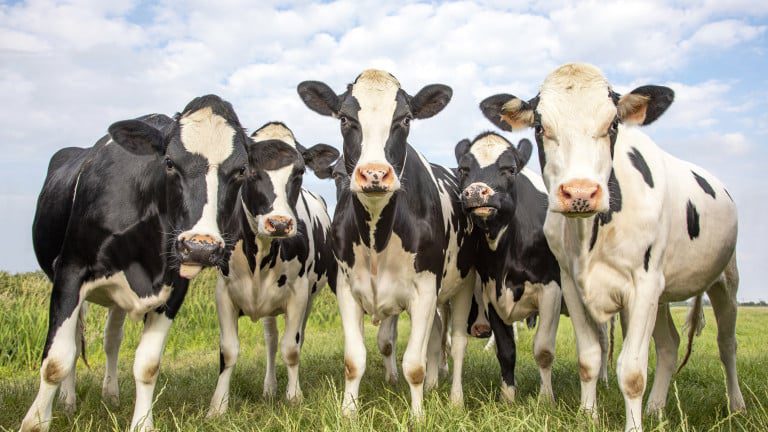
Cows together gathering in the pasture, funny and joyful and a blue cloudy sky.
The New Zealand government intends to introduce a greenhouse gas tax on fertilizer and livestock production. The National Association of Farmers welcomed the project, but warned that farmers should not be burdened too strictly, writes agrarheute.com.
New Zealand wants to become carbon neutral by 2050. Achieving this goal is impossible without a significant contribution from the agricultural sector, as its share is almost 50% of all greenhouse gases generated in the country. The government is currently developing an “Action Plan for Reducing Greenhouse Emissions in Agriculture” together with farmers’ associations.
Officials and representatives of the agricultural sector have agreed in principle that from 2025, at the level of farms, the amount of greenhouse gases will be registered, and livestock farmers will pay for the right to pollute the atmosphere. When the new tax is introduced, the government will initially provide 95% of the pollution allowance for free.
According to the New Zealand Department of the Environment, at the current level of the greenhouse gas tax equivalent to €16.50/ton CO2, the equivalent tax for farmers would be just €0.6 cents per kilogram of beef or milk powder produced and less than 1 cent for mutton.
In addition, the administrative costs and costs of farmers to reduce greenhouse emissions will be considered. For example, if emissions are below the established norm or farmers implement environmental measures such as planting trees, they will receive compensation from the budget.
By 2025, a system for controlling greenhouse emissions is planned to be introduced in every livestock farm and processing plant for meat and milk.
New Zealand’s Agriculture Minister Damien O’Connor praised the cooperation between the government and the agricultural sector in the field of climate protection.
For his part, Andrew Hoggard, the National Farmers Union’s climate policy representative, welcomed the plan, but warned that overburdening the agricultural sector should be avoided.
That price should create incentives to cut methane production, similar to the transition to electric cars, he says.
Unfortunately, “electric sheep” do not exist, so livestock owners will have to look for other options to lower emissions.
Zoologists have discovered that foxes living in the Scottish Highlands regularly eat the excrement of domestic dogs. They feed most actively on them during periods with a low number of voles, their main prey. At the same time, only 300-600 grams of dog droppings is enough to provide the fox with energy for the whole day. As noted in an article for the journal Ecology and Evolution, foxes have not previously been observed to feed on dog feces.
Some animals do not disdain to eat the excrement of other species. For example, for the larvae of dung beetles (Scarabaeinae), the main source of food is the dung of mammals. Many sea birds occasionally eat the feces of whales, pinnipeds and polar bears, and stray dogs in India and Africa willingly feed on human excrement. In addition, scientists recently found that black-lipped pikas (Ochotona curzoniae) from the Tibetan highlands include more yak droppings in their diet in winter. This easily available and energy-rich food helps them get through the harshest months of the year without hibernating or stockpiling.
A similar example was described by a team of zoologists led by Xavier Lambin from the University of Aberdeen. In 2018-2019, researchers studied the diet of predatory mammals in the Cairngorms National Park in the Scottish Highlands. To do this, they collected animal feces and analyzed the vertebrate DNA they contained using metabarcoding. In total, the sample included more than 2,000 litter samples from common foxes (Vulpes vulpes), badgers (Meles meles), pine martens (Martes martes), as well as stoats (Mustela erminea) and weasels (M. nivalis).
In a study of 647 fox specimens, the authors found that 55.2 percent of the specimens contained the genetic material of the field voles (Microtus agrestis), a widespread and abundant rodent that feeds many predators in the Scottish Highlands. However, 39.1 percent of the samples unexpectedly contained domestic dog DNA. For comparison, in a study of 1,060 samples of pine martens droppings, the researchers found traces of vole DNA in 56.51 percent of them, and dog DNA in 0.85 percent.
The occurrence of dog and vole DNA in fox droppings varied from season to season. So, in the winter of 2018, the average chances of detecting canine DNA in the collected samples were 0.24. In the spring of 2018, winter 2019 and spring 2019, this probability was much higher – 0.39; 0.49; and 0.48, respectively. (p<0.01). The average probability of detecting vole DNA in fox droppings in the winter of 2018 was 0.93. After that, it significantly decreased and in the spring of 2018 it was 0.68, in the winter of 2019 – 0.19, and in the spring of 2019 – 0.36. Moreover, the more often vole DNA was found in fox droppings, the lower were the chances of detecting dog DNA in it.
The presence of canine DNA in almost half of the fox droppings is most easily explained by the fact that foxes eat the excrement of dogs that are walked by numerous visitors to the national park. It should be noted that previously zoologists have never recorded such behavior. However, alternative hypotheses seem much less plausible. For example, foxes clearly do not prey on dogs. In theory, they could get canine DNA from carrion, but in that case, an unbelievably large number of dogs would die in the study area. Some of the dog DNA probably got into the fox droppings from dogs urinating on it or rolling around in it while walking. However, this does not explain why the likelihood of finding dog genetic material in fox feces varies from season to season and is negatively correlated with the chance of detecting vole DNA in them.
The number of field voles, like many other small rodents, varies greatly from year to year. The researchers hypothesized that during periods when voles are scarce, such as spring 2018, winter 2019, and spring 2019, foxes switch to feeding on dog feces. However, it remained unclear how energetically valuable such a source of food was. To test this, the authors analyzed the faeces of six domestic dogs in a calorimeter. It turned out that on average, dog litter contains 135 kilocalories per 100 grams of wet weight. This is comparable to the energy value of small rodents, which is 137-170 kilocalories per 100 grams. According to scientists, to provide the average fox with sufficient energy, 300-600 grams of dog feces per day is enough.
The results of the study suggest that many cases of interspecies coprophagia go unnoticed. It is possible that this phenomenon is much more widespread in nature than is commonly believed. However, it should be noted that, unlike foxes, other Scottish predators did not eat dog droppings. Thus, coprophagy is perhaps most likely between species with close trophic niches.
Plastic behavior and ecological flexibility allow foxes to develop very unusual food sources. For example, in London they willingly eat dead cats. And at the Washington Zoo, a wild fox broke into a waterfowl enclosure and killed twenty-five red flamingos (Phoenicopterus ruber) and one duck.
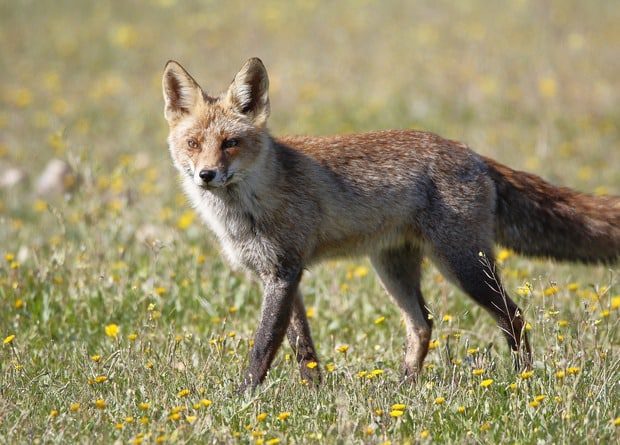
Photo: Common fox (Vulpes vulpes) / Wikimedia Commons
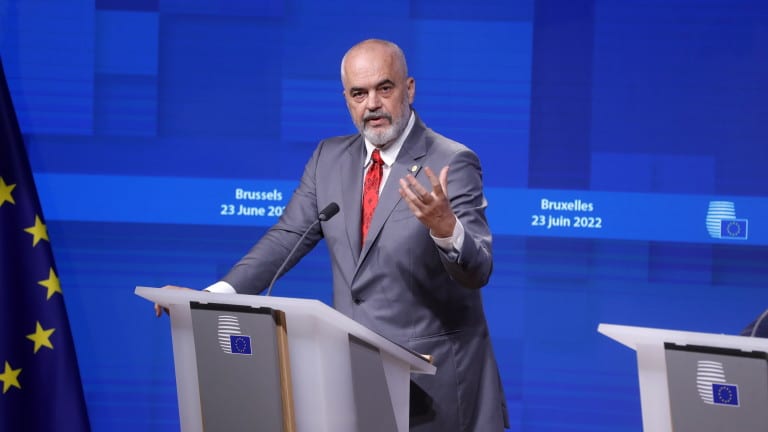
epa10029736 Albanian Prime Minister Edi Rama attends a press conference following an EU-Western Balkans leaders' meeting in Brussels, Belgium, 23 June 2022. The progress on EU integration and the challenges which the Western Balkans countries face in connection to the Russian invasion of Ukraine are topping the agenda when EU and Western Balkan leaders meet prior a European Council meeting. EPA/STEPHANIE LECOCQ
The absurd situation with the “hostage” of Albania is over. The negotiations for Albania’s membership in the European Union (EU) have no obstacles! This is what Albanian Prime Minister Edi Rama wrote on Facebook today. The reason for his statement was the vote in the Macedonian assembly on the French proposal for EU membership.
3 hard years have passed since the decision of the European Council to open the way for negotiations to completely remove the set of artificial obstacles that were placed before Albania, Rama also wrote. However, he is confident that Tirana is on its way to overcoming the challenges of recent years.
But let’s not forget, this is not the end of our journey, but only the beginning of a new part of the road to Albania, which we love, he stated.
The Macedonian Parliament today approved the so-called “French proposal” to start negotiations for the country’s membership in the European Union. The proposal was supported by 68 people’s representatives. 69 out of a total of 120 deputies were present in the plenary hall.
Deputies from the ruling coalition voted “yes”, as did the people’s representatives from the opposition Albanian formations.
The vote took place during the third day of plenary debates. The EU ambassador in Skopje, David Geer, was also present in the parliament today.
The vote also came amid weeks of ongoing opposition protests across the country that have turned violent. According to her, the actions of the EU are pro-Bulgarian.
At today’s meeting, MP from VMRO-DPMNE Igor Janushev pointed out that the SDSM will henceforth be called SDS-Bulgaria and threatened the Prime Minister and everyone in power that “they will lie in prison for treason, they will lie and answer, because the Macedonian people are patient, the Macedonian people have shown it throughout history, the Macedonian people are also meek, Macedonians know how to forgive, but for some things there is no forgiveness,” the Macedonian electronic edition “Kurir” quoted him as saying.
At the end of June, the Bulgarian parliament gave its approval, which was also confirmed by a decision of the government.
We remind you that at the end of June, Rama made harsh statements towards Bulgaria regarding the veto that our country imposed on Skopje’s EU membership.
Bulgaria could have behaved more European, he said then. He also accused the Bulgarian authorities of holding North Macedonia hostage.
To the criticism of our authorities after his remarks, he replied:
“You have a problem with my way of expressing myself, I have a problem with the way Bulgaria wants to solve bilateral issues. Either lift the veto or you will tolerate me”.
Then the leader of the opposition Democratic Party of Albania and former prime minister of Albania, Sali Berisha, apologized to the Bulgarian people for the prime minister’s remarks.
Berisha told a press conference that Rama does not represent the opinion of the Albanians, because, as he said, he does not know any principles of friendship between the countries.
During the meeting of the Committee of Permanent Representatives (KOREPER) in Brussels, Bulgaria presented a unilateral declaration, reports the Ministry of Foreign Affairs. The conclusion of it should be that Bulgaria do not recognize the Macedonian language in Skopje. But judge for yourself:
“”Referring to paragraph 7 of the Council Conclusions on [Enlargement – North Macedonia and Albania] of [July 2022],
Referring to paragraph 22 of the Negotiating Framework for the Accession of the Republic of North Macedonia to the EU and its reference to the official language of the Republic of North Macedonia, according to its Constitution, as the language for the translation of EU legislation,
With this declaration, Bulgaria confirms the following:
The Bulgarian literary language has six regional written norms (codifications). Three of them are based on dialects, and three on the literary Bulgarian language. The creation of the “Macedonian language” in 1944-1945 in the former Yugoslavia was an act of secondary codification (re-codification) based on the Bulgarian literary language, further “enriched” with local forms, thus simulating a “natural” process based on dialectal form.
Any reference to the official language of the Republic of North Macedonia in official/unofficial documents/positions/statements and others of the EU and its institutions, bodies, offices and agencies must be understood strictly in accordance with the Constitution of this country and must in no way is interpreted as recognition by the Republic of Bulgaria of the “Macedonian language”.
Bulgaria continues to adhere to the language clause contained in the Treaty of Friendship, Good Neighborliness and Cooperation, signed in Skopje on August 1, 2017 between the Republic of Bulgaria and the Republic of Macedonia, for the purposes of bilateral treaties/agreements/memorandums and others between the two countries” , the statement said.
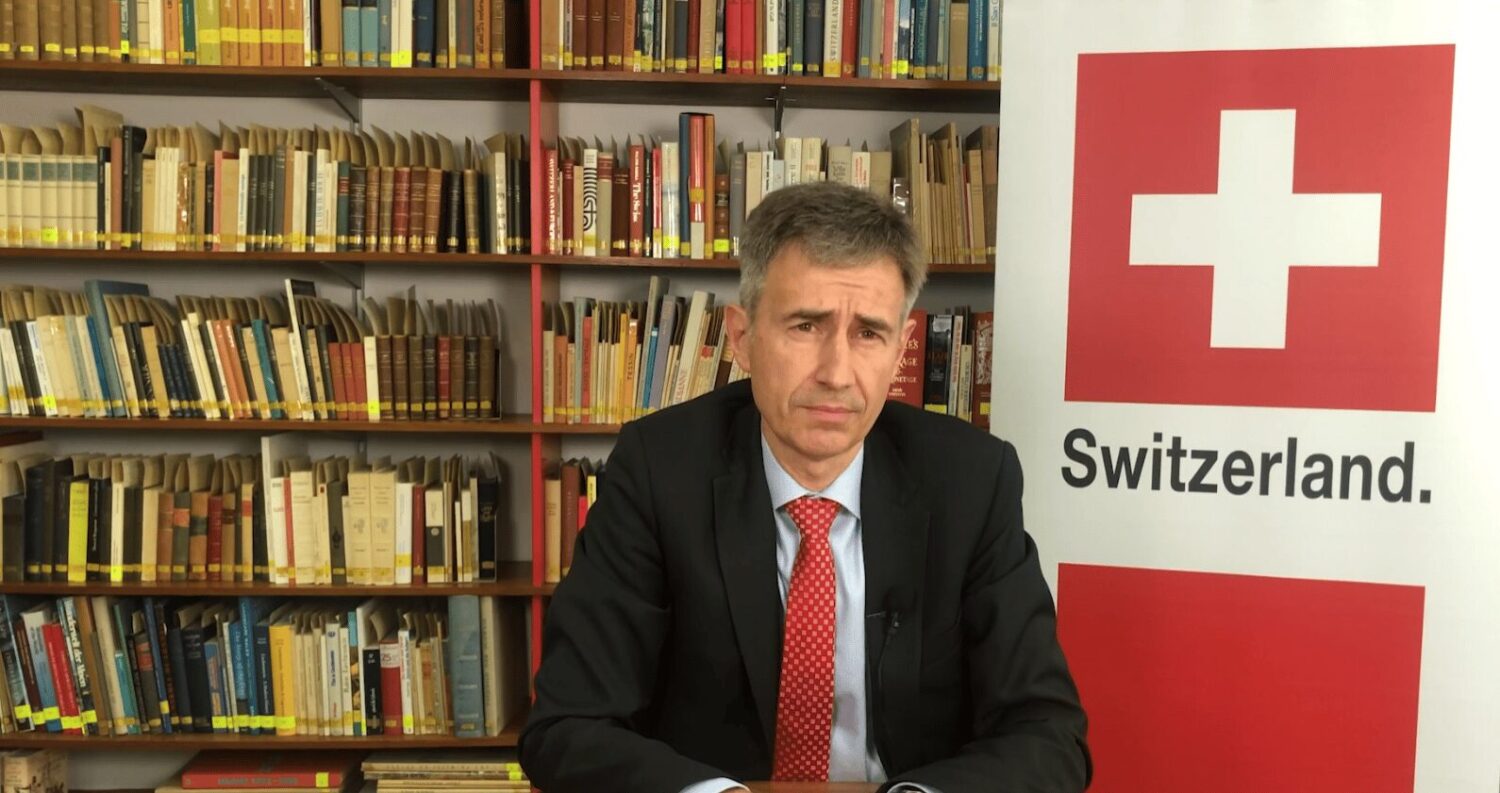
Switzerland Ambassador to the UK, H.E. Markus Leitner
Message from Switzerlands’s Ambassador to the UK, H.E. Ambassador Markus Leitner on 5th July 2022 to the International Ministerial on Freedom of Religion or Belief (FoRB Ministerial) hosted by the Foreign and Commonwealth and Development Office of the United Kingdom.
Full message (original transcript by The European Times):
Ministers, Excellencies, ladies and gentlemen.
Switzerland thanks the United Kingdom for convening and hosting this important conference.
The peaceful coexistence of and respect between different religious, linguistic and cultural groups are core values of Switzerland.
As a multicultural and multilingual society, Switzerland is particularly committed to promoting inclusive societies based on respect for differences and the protection of minorities contributing to a country’s stability and well-being.
My country stays convinced that no one should be discriminated, disadvantaged or treated differently based on their religion or the way to express their belief.
Freedom of thought, conscience, religion or belief for all is firmly established in the Swiss Constitution and forms an integral part of the Swiss international human rights policy.
Serious violations of freedom of religion, violence, persecution, discrimination, domination and hatred against religious, linguistic and cultural minorities continue to occur across the world and pose a threat to democracies and durable peace.
Switzerland is particularly concerned about the increasing number of hate crimes and violent attacks on discriminatory motives offline and online.
Racism and hate speech are spreading today, mostly through Internet and social media, fueled during the COVID pandemic, and conspiracy theories, especially anti-Semitic ones, are proliferating.
The promotion and protection of the right to freedom of thought, conscience, religion and or belief is also a key element of Switzerland’s international peace-building policies.
Social and political exclusions are part of society and lead either to resignation or violence, both of which are detrimental to the development of lasting peace and security.
There is a strong correlation between inequality, less economic development, more political instability, and increased violence.
The political participation of religious or belief communities on the basis of the principle of citizenship is, therefore, a necessary precondition for a peaceful resolution of conflicts. Switzerland addresses violations against ethnic and religious minorities on the bilateral and multilateral levels and encourages a mutual understanding by means of dialogue.
We are convinced that it is primarily through experience and knowledge and through contacts and dialogue in everyday situations that the coexistence of different cultures and religions can be successful.
Every citizen can and must contribute to non-discrimination.
Finally, it is up to policymakers to provide adequate conditions in order to effectively and sustainably combat all forms and manifestations of discrimination.
We have to get used to the idea that we don’t necessarily have to open the windows for ventilation and air purification, explains Prof. Bojan Milovanovic, head of the department at the University of Civil Engineering and Architecture in Zagreb
An interview of Raya Lecheva, 3e-news.net/ Бизнес.dir.bg, with Boyan Milovanovic we talk about the principles of nZEB almost zero-energy buildings and the possibilities for popularizing the new methods for designing and building carbon-neutral homes. If for 4000 years we have built our homes in one way, in the last 20 years we are starting to totally change our way of life and realize that we can make our homes more efficient and sustainable. What problems and challenges do we face to achieve carbon neutral housing by 2050. The most serious problems in all EU countries are related to the lack of construction personnel and materials.
The University of Civil Engineering and Architecture in Zagreb, Croatia is one of the project partners of the Horizon 2020 nZEB Roadshow together with the Center for Energy Efficiency EnEfect, Bulgaria; Chamber of Builders, Bulgaria; Hellenic Passive House Institute – Greece; Cluster Pro nZEB-Romania, Institute for Zero Energy and Passive Buildings- Italy (ZEPHIR), Pro-Academy (Poland), LNEC (Portugal), etc.
In Croatia, you have a traveling highly energy-efficient mobile home as part of the nZEb Roadshow project, how does it differ from other buildings?
It is the first demonstration mobile home under the nZEB Roadshow project and is a pilot project that demonstrates the benefits of passive and carbon neutral homes to ordinary people, as well as to engineers, architects and other professionals. The aim is to show that the system works and meets the principles of almost zero energy buildings. First of all, the house is energy independent, with mechanical ventilation, high air tightness and energy efficient doors and windows. It produces energy in two ways – from photovoltaics on the roof and from a heat pump that uses the heat from the outside air to heat or cool the entire building and actually saves a lot of energy. We tried to make it as independent as possible by mechanical ventilation with heat recovery to supply fresh air without wasting energy. We measure CO2 in the building and in the outdoor environment, we measure the levels of pollutants that would be harmful to the occupants, such as carcinogenic elements and other dust particles, in order to have maximum information about the impact of the indoor environment. We have used eco-friendly alternatives for all furniture and interior elements.
Why don’t people in Croatia, and the same in Bulgaria, build similar passive houses? What do you think are the problems?
In my opinion, people do not believe that such buildings exist and that this is possible. They are used to opening the windows to let in fresh air. If the window is closed, people do not believe that they can get fresh air. With mechanical ventilation systems this can happen. After 4000 years we are used to opening the windows to have fresh air, in the last 20-25 years we have to get used to the thought that we don’t necessarily have to open the windows to ventilate and purify the air. It is difficult to switch to this new understanding. Even the professionals have their doubts that this is possible. That’s why we piloted this mobile home to show on a smaller scale that this is possible and works. All the principles of the almost zero-energy building can be transferred to the construction of your own home. If it has good exposure to the south, efficient appliances and options for electricity production such as photovoltaics and for heating such as heat pumps, this building will not need additional energy. The house has televisions, tablets, a refrigerator, lighting, and they all work thanks to the energy that the building itself produces from the sun and air.
Will you make your own home this way?
Yes, I would like to and I think it is quite possible.
How much is such an investment worth?
For the Croatian market, the calculations are from a few years ago, which is not comparable to the market today, because the prices are many times higher. The data then showed that for a family house the investment is up to 15% higher than for a similar house that does not meet the principles of a nearly zero-energy building, but in the long term, considering the 30-50 year life of a home, it it is definitely cheaper and pays off very quickly.
Is there support for families building similar houses in Croatia for example under the Recovery and Resilience Plan or other programs?
The nZEB standard for the construction of near-zero energy buildings in Croatia is now mandatory and has no subsidies. There are subsidies and incentives for the construction of RES installations, for example photovoltaics, for the renovation of existing buildings. But at the government level, there are no subsidies for the construction of nZEB buildings. But there are incentives at the local level, for example not paying local taxes and fees if you build an nZEB building. The investment is not small, so incentives like this one related to tax relief are good and effective. This is a saving of €10-15,000 per family home on local taxes and charges. This is enough money to buy a ventilation system or windows that insulate well, but each family can decide what to buy with this saving.
What do you think, as the head of the department at the University of Construction and Architecture in Zagreb, is the problem related to personnel and the availability of professionals in the industry?
It’s a huge problem and it has to do with people not believing it’s possible. Why? Because they are not trained, they do not know, the same applies to professionals, they have been trained in universities in one way for millennia. They are trained that you need a 25 kW gas boiler in a 55 sq m apartment. They cannot switch that 1 kW is enough to heat the same room. In Croatia we train 30% of engineers and they get knowledge about nZEB. If all multi-family and single-family residential buildings are to be renovated, which is mandatory by 2050, we must have 15,000 engineers, builders, etc. It is about 2.5 million apartments and 60,000 buildings that need renovation after the earthquakes of recent years. We need so many specialists who do not have the necessary knowledge, qualification, experience.
Why, what are the causes and what are the solutions?
The system is not very flexible. It doesn’t allow much change. We have been working to these standards for 20 years. The problem in Bulgaria with personnel is similar. There is funding, but there are no people, no engineers who can implement the renovation. We need 15,000 additional workers, given that the sector consists of 60,000 employees. We need at least 25-30% additional personnel in this sector to renew the building stock in the country, which is extremely large. We hire people from other countries – from Nepal, Ukraine, all over Eastern Europe, from Egypt, it’s crazy. A complete change in the education system is needed.
We have to meet the requirements like all EU member states, we have to achieve 100% carbon neutral buildings by 2050. We in Croatia are renovating below 1% per year, and the European targets are 3% per year, but almost all member countries move in this order of 1-1.5% per year. It is very difficult to fulfill the set goals. Many of the problems are due to the lack of construction materials to renovate the buildings. Maybe we could, but there are no materials, if we have materials, maybe we will succeed, but there are no workers. It’s a vicious circle that we have to get out of somehow. There is interest from owners, from investors, because it is profitable and makes sense. There is a huge difference between paying 20 or 120 euros per month for electricity.
Do energy cooperatives work in Croatia? And have you introduced the RES Directive in Croatia?
They are units. There is a lot of interest in building RES, but most are large photovoltaic systems. There are incentives to build small solar installations, but we are still a long way off. In Croatia, legislation still allows you to produce as much energy as you use from the grid. If you take 1 kWh per year from the grid, you have to produce that much. If you produce more, you have no alternative – there is no way to put it back on the grid and win. Therefore, it is difficult to develop this market sufficiently.
What initiatives are you planning with the mobile home in the coming months?
We organize nZEB Roadshows, engineer and builder trainings, organize open doors for children and students, participate in events and festivals across the country to show the benefits of near-zero energy buildings. More than 1,500 people visited the mobile home in May alone.
British archaeologist Adrian Marsden reported on the results of a study of a treasure found several years ago in Norfolk County. The most valuable finds were ten Roman gold coins – aureus, minted during the reign of Octavian Augustus. The researcher believes that the treasure was buried at the beginning of the first century AD, a couple of decades before the start of the Roman conquest of Britain. According to his estimates, this amount is equivalent to a two-year salary of a legionnaire. This is reported in an article published in The Searcher magazine.
In many countries, it is forbidden to conduct field archaeological research without special permission – an open sheet. Moreover, for the use of technical means of search, for example, metal detectors or radars, the violator will face more severe punishment. This restriction seems necessary, since not only the artifact itself is important to archaeologists (even if it eventually ends up with them, and does not remain in a private collection), but also the context in which it was found. Amateur searches are fraught with the irretrievable destruction of monuments and cultural layers, which, by the way, can lie just a few centimeters from the modern surface. But such a ban is not in all countries. Thus, amateur archeology flourishes in Denmark, where a significant part of the valuable finds belongs to the Viking Age (1, 2, 3). Engaged in the search for antiquities and residents of the UK. For example, last year it was reported that Briton Kat Giles found the fourth Viking Age treasure on the Isle of Man in three years.
Adrian Marsden from the University of Oxford presented the results of a study of a treasure found several years ago in the English county of Norfolk. In 2017, near the city of Norwich, Damon and Denise Pye discovered an ancient coin, followed by new artifacts: more than a hundred Roman copper coins minted in the first three centuries of our era, two denarii, several Roman brooches and an old stater. Aerial photography at the site of the finds showed that a mound was probably built on this site in the Bronze Age, which was later used to make a cache of coins.
The main finds are coins that were scattered over a small area. According to Marsden, there is no doubt that they were originally a single hoard. It consisted of aureus – ancient Roman gold coins issued during the reign of the first Roman emperor Octavian Augustus (27 BC – 14 AD). All coins were minted in the city of Lungdum (now French Lyon). To date, ten such artifacts have been discovered and Marsden believes that there will be more finds. Perhaps the container in which these coins were originally stored is somewhere under the plowed soil.
The archaeologist suggests that the treasure was buried in the early years of the 1st century AD, about a generation before the start of the Roman conquest of Britain (43 AD). At that time, the Celtic Iceni tribe lived in Norfolk, whose leader at the beginning of the 1st century was an ally of Rome. The scholar noted that Roman gold coins rarely made their way to East Anglia, even after the island was conquered. In his opinion, the ten aureses discovered are comparable to the nine aureses that a legionnaire received as an annual salary in the middle of the 1st century. But the latter, due to interruptions in supply, were forced to spend about five coins on food, equipment and other things. Thus, the discovered treasure is approximately equal to a two-year salary of a soldier.
The number of people who crossed the Russian-Finnish land border on the day Russia lifted the restrictions reached pre-coronavirus levels of more than 5,000 people, Yle TV reported, citing Southeast Finland’s Border Service chief Kimmo Gromov.
“This roughly corresponds to the usual day when there were no restrictions,” said Kimmo Gromov.
According to him, about 60% of the passengers traveled from Russia to Finland, and the rest – from Finland to Russia. The head of the border guard said that Russians most often travel to Finland for tourism, shopping or checking their properties, while Finns travel to Russia for cheap gasoline.
From June 30, Finland lifted restrictions on the entry of foreigners related to the fight against the coronavirus. As of July 15, Russia lifted land border restrictions that had been in place since March 2020 due to the coronavirus pandemic.
In the first week of July, the Consulate General of Finland in St. Petersburg received about 2.7 thousand visa applications. At the same time, for the whole of June this year, about 10,000 applications were submitted. Before the pandemic, Finland was the leader in the number of Schengen visas issued in Russia and was in the top three most popular destinations for Russian tourists. Turkey and Abkhazia were in first and second place.
In 2019, Finnish missions in Russia issued a total of 790,000 Schengen visas. In the same year, Russians made 3.7 million trips to the Scandinavian country.
Meanwhile, Finland is strengthening its border with Russia
Finland has adopted laws to strengthen security along its border with Russia, Reuters reports.
Parliament today approved legislation that would allow fences to be erected as well as the closure of the 1,300km shared border with Russia to asylum seekers in the event of “extraordinary circumstances”.
Finland fought two wars in the 1940s against its eastern neighbor.
After years of military neutrality, the country is now applying to join NATO amid fears that Russia could invade, as it did in Ukraine on February 24.
Since World War II, Helsinki has maintained a high level of military preparedness.
The country of 5.5 million has about 280,000 conscripts and 870,000 trained reservists. Finland did not abolish conscription for men, as many other Western countries did after the end of the Cold War.
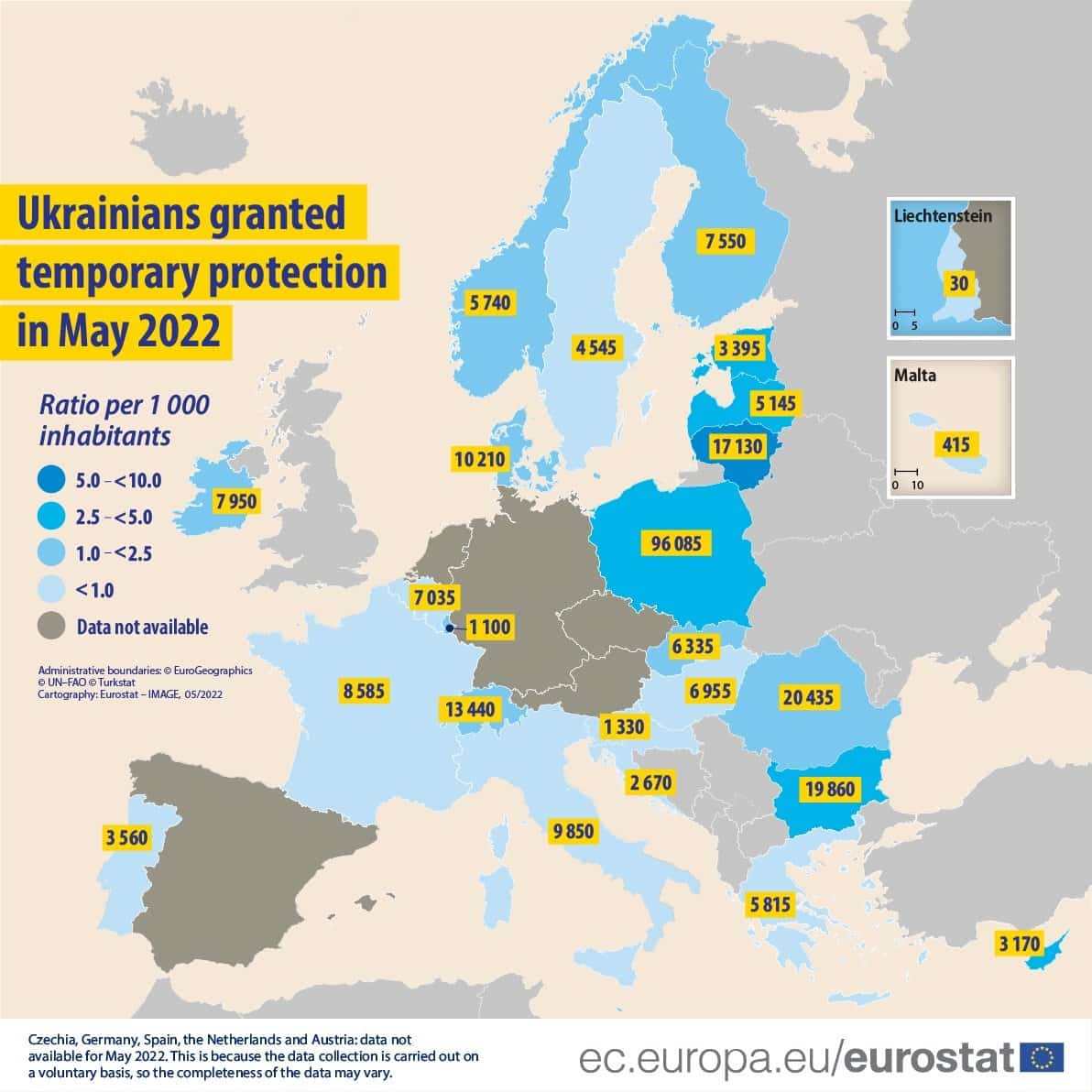
As of May 31, 2022, Poland ranked first and Bulgaria ranked second among the EU countries in which the most Ukrainians were granted the right to asylum, according to Eurostat data.
In total, as of May 31, 2022, the largest number of Ukrainians who received the right to asylum in the EU countries were registered in Poland – 1,142,375 people, according to Eurostat data.
Bulgaria is after Poland with 111,895 registered Ukrainians entitled to asylum. In third place is Slovakia, which has granted this right to 76,510 people.
In the month of May alone, Romania overtakes Bulgaria in this indicator and ranks second again after Poland, having sheltered 20,435 people.
On a per capita basis, among the EU countries, the largest number of Ukrainians were granted the right to asylum in Lithuania in May (an average of 6.1 people per 1,000 of the population).
Cyprus (average 3.5 people per 1000) and Bulgaria (average 2.9 people per 1000) follow.
Less than half of Ukrainians seeking protection in EU member states are children, according to Eurostat data.
The largest number of Ukrainian children (under 18) granted temporary protection was registered in Poland (30,170 children, or 31% of Ukrainians granted protection in Poland in May), followed by Romania (8,235, or 40% ) and Bulgaria (7,175, or 36%).
In the EU Member States for which data are available, the majority of Ukrainians granted temporary protection are women, including girls. The largest number of women granted temporary protection were reported from Poland (67,465, or 70% of Ukrainians granted protection in Poland in May), Romania (13,785, or 67%) and Bulgaria (13,475, or 68%). ).
Among men granted temporary protection in EU Member States, at least a third are boys under 18.
Very quickly the brewery manages to get 230 liters of sunflower oil, but the goal is at least 500 liters
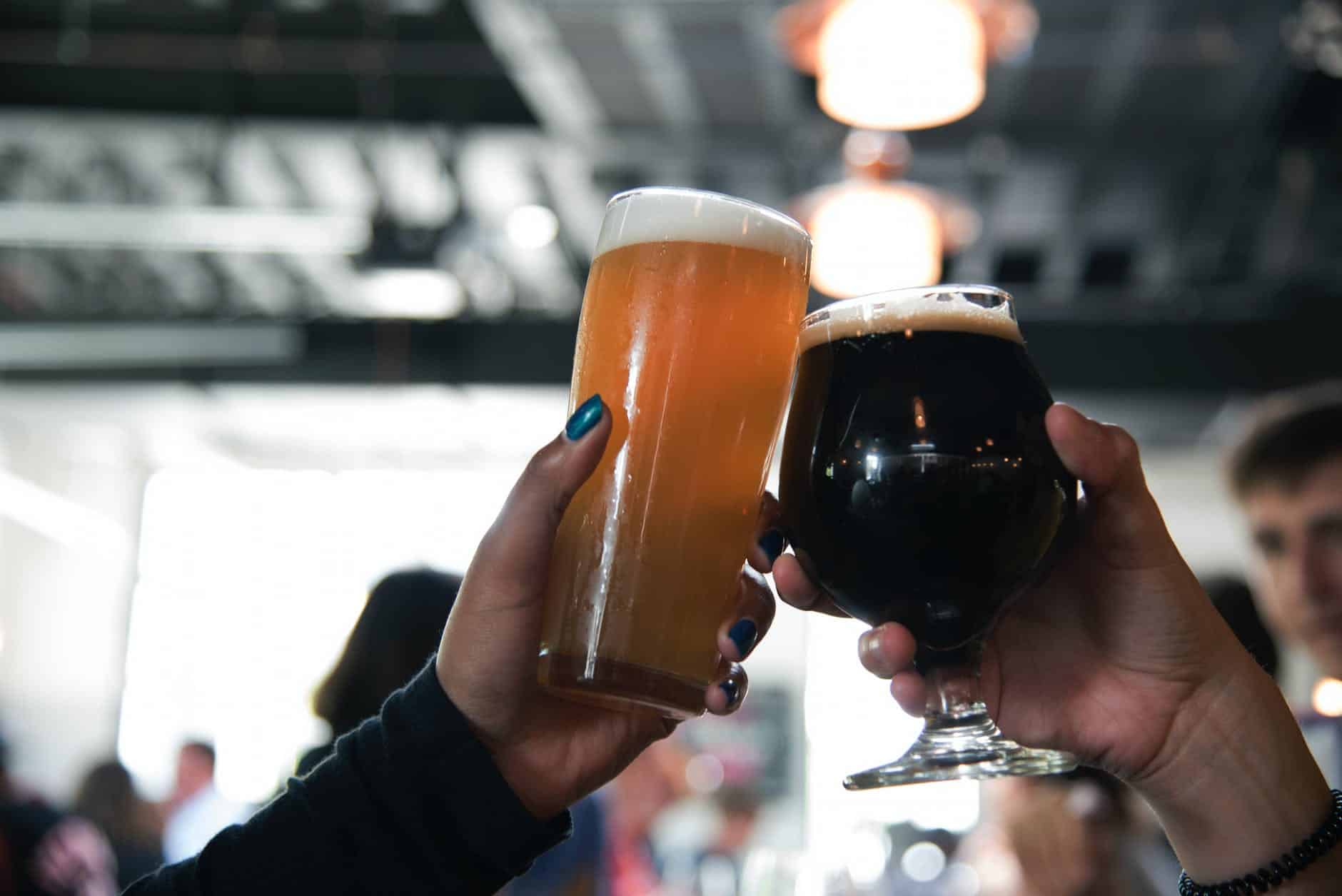
You drink beer and pay with oil – the invention is implemented in a beer hall in Munich, which has found a way to cope with the problematic supply of sunflower oil after the start of the war in Ukraine.
The management of the Munich beer hall offers beer lovers a liter of their favorite drink for the same amount of sunflower oil.
Beer for sunflower oil. The exchange takes place in a Munich beer hall. The idea was born after the restaurant began to experience difficulties in obtaining cooking oil, which put into question the food offering, such as the beloved schnitzels.
“Only small quantities can be bought in the shops. When we need 30 liters of sunflower oil per week, and we only have 15, we cannot prepare schnitzels for a long time,” says the manager of the brewery, Eric Hoffman, reported on July 17, BNT.
The suppliers fail to provide the necessary quantities, since, in addition to establishments, they also supply restaurants and wholesalers.
“The campaign is cute. Great idea. And we get cheap beer,” said Moritz Baller, a customer of the restaurant.
This brewery customer bought 80 liters of oil in Ukraine during a humanitarian mission, which he now trades for eight cases of beer on occasion for his birthday party.
A liter of beer in German pubs costs about 7 euros, while a liter of sunflower oil is priced at 4.5 euros.
Very quickly, the brewery managed to procure 230 liters of sunflower oil, but the goal is at least 500 liters to be able to ensure the normal functioning of the kitchen until the end of the year.