The news ends the long-standing feud between the heirs of the Italian composer
The house where composer Giuseppe Verdi lived for 50 years is for sale. The news ends the long-standing feud between the Italian composer’s heirs, the Guardian newspaper reports.
The creator lived in Villa Verdi, near the Italian city of Busseto, for half a century. While the owners disputed the heritage, it was run as a museum.
The composer of the operas “La Traviata”, “Aida” and “Otello”, built the Villa Verdi on a property near his hometown of Busseto in 1848.
Before Giuseppe Verdi (1813 -1901) moved into the house with his second wife Giuseppina Strepponi in 1851, it was home to his parents.
Verdi and Giuseppina stayed in the villa until the composer’s death in 1901.
The home is now owned by the four heirs of Maria Filomena Verdi, the composer’s younger cousin, who was raised by him and Strepponi as their daughter.
For the past 20 years, the Carrara Verdi family has been fighting for the right of each of the heirs to the house. However, none of them can afford to buy out the shares of the others.
The heirs decide to sell the villa, which also houses some of Verdi’s works, books, paintings and other belongings.
The apartment will probably be put up for auction.
Since 2010, Villa Verdi has been managed by Angiolo Carrara Verdi and is partly managed as a museum. Visitors can explore the rooms, including the one containing the bed and other furniture from the Milan hotel room where Verdi died.
“We are very sorry. It was only a matter of time,” Angiolo Carrara Verdi told the newspaper Liberta.
Embed from Getty Images
Verdi had two children with his first wife, Margherita Barezzi, but they also died a few years after their birth. Baretsi herself has been deceased since 1840.
Carrara Verdi adds that the composer wanted the home to remain lively and inhabited. “I respected the maestro’s wishes. I hope whoever buys it will treat it the same way as a home. It can’t just turn into a museum.”
Photo: The entry to the garden of Villa Saint Agata, last Verdi’s home in Busseto, Italy in November 2010. (Photo by Eric VANDEVILLE/Gamma-Rapho via Getty Images)
Whether by coincidence or as a trend, in recent times Orthodox patristic studies have shown an increased interest in the nature of patristics – as such, as well as in the question of how it should unfold in the future. The conference organized by the Volos Academy for Theological Studies in June 2010 on the topic “Neopatristic synthesis or postpatristic theology: can theology be contextual?” was indicative in this sense. It resonated widely in the Orthodox world and started discussions – sometimes heated ones – on Patristicism, Neopatristicism, Post-Neopatristicism and Postpatristicism. These discussions have become particularly heated in Greece, where many – from metropolitans to lay bloggers – have begun to express their views on the role of fathers in the life of the Church today. Although some of the participants in the discussions ended up condemning “post-patristics” and even the “neo-patristic synthesis”,[1] these discussions showed that patristics continues to be relevant to the Orthodox and that they are deeply concerned about its future.
In other words, the relationship between the Orthodox and the Fathers is complex and multifaceted. All Orthodox, without exception, treat the fathers as an essential identity of their faith. Among the theological disciplines, patristics is their favorite. At the same time, few of the Orthodox really read the Fathers. Wherein what most of these few prefer are moral lessons or entertaining stories of the apophthegm type. Some use the Fathers for ideological purposes or for what has been called “patristic fundamentalism.” And only a small group of Orthodox read the Fathers to know their theology. Finally, a very microscopic group of Orthodox are those who study the Fathers in the appropriate academic way. All this directs our attention to the question of the method of reading the Fathers.
The method in patristics
The question of method should be seen as one of the key questions in patristics. Can we even speak of a method that would be applicable to patristics? Is there a specific method for studying the Fathers of the Church? Most modern Greek theologians will say that the method as such is inapplicable to theology in general and to patristics in particular. This is how they are taught in Greek universities. In Greek theological faculties there is a tradition of speaking with suspicion of method in theology. This suspicion seems to have been brought in by those Greek theologians who had been trained in Germany, and who were probably crowded there with methods. Returning to Greece, they simply discarded the methods on the grounds that in theology the method could replace theology itself. It may be so. It is also possible that a methodless approach to theology becomes itself a kind of method, which is not useful for theology. A theology without method is rather an illusion that can make theology vulnerable to abuse and unsystematic speculation. It can open the way for theology to become an ideology. That is why the method is applicable to theology, as well as, in particular, to patristics.
Neopatristic synthesis is one possible method for the study of the Fathers. This method gained striking popularity among Orthodox scholars. It gained the upper hand over another method, called by the Metropolitan of Diocleia Callistos “Russian religious renaissance”. One of the fathers of the “neopatristic synthesis” was Prot. George Florovski. He coined the term itself and brought it into circulation. At the same time, he does not offer any clear and comprehensive definition of the Neopatristic synthesis. What’s more: there is no definition on which the signatories to this method can unanimously agree. The hermeneutical key to it is its very name: “neopatristic synthesis.” The peculiar slogan associated with it reads: “Back to the fathers!”.
The neopatristic synthesis and personalism
It seems that a minimalist definition of the neopatristic synthesis contributed to this method gaining the consent of researchers. This definition proves comprehensive enough to satisfy researchers of different schools and persuasions. Because of this, I would also correct my own attitude towards the neopatristic synthesis as a method. It is more of a successful formula or even a charm than a method in the proper sense of the word. As such, it covers multiple methods and directions. In this sense, the neopatristic synthesis is similar to personalism. Indeed, personalism became extremely popular among Orthodox theologians of the twentieth century. It is characterized by the following distinctive features:
– was proclaimed traditional, and yet it is not;
– was used to identify what is truly Orthodox – compared to “Western”;
– was a broadly interpretable concept that covered multiple strands of thought.
The same distinctive features are found in the concept of neopatristic synthesis:
– was perceived as traditional, although it is not, because it was “neo-” and it was “synthesis”;
– claimed to be an example of liberation from the “Western captivity” of Orthodox theology;
– allows for many, many interpretations, and can cover a vast number of ideas, methods and concepts.
Neither personalism nor the neopatristic synthesis is associated with any specific teaching. Both were intended to be exhaustive. Both work more as beacons than thought systems or beliefs. Finally, both imitate things that are dear to individual groups and their followers. Thus, Orthodox traditionalists see in personalism an “ancient personalistic concept of personality”. Liberal humanists, on the other hand, see in it a satisfactory anthropocentrism. So is the Neopatristic synthesis. Traditionalists see there fidelity to the Tradition of the Fathers, while liberals prefer the words “neo” and “synthesis.”
Personalism is dialectical. On the one hand, by identifying the person with the hypostases, it claims to be traditional and patristic. On the other hand, as a result, it unfolds around modern ideas about human personality. The same dialectic is the formula of the neopatristic synthesis. On the one hand, it includes a basic identifier that no Orthodox, whether conservative or liberal, can deny – the Fathers of the Church. On the other hand, adding to “synthesis” the prefix “neo-“, the neopatristic synthesis leaves ample room for interpretations, inclusions and further developments. It is clear that methodologically the neopatristic synthesis arises from the same intellectual climate from which personalism arises. Both show striking similarities.
However, there are also some important differences between them. Personalism seems more capable of making connections between traditional theology and modern thought. In practice, it is a mixture of broader philosophical insights and traditional theological axioms. Personalism is an extrovert. Contrary to it, the neopatristic synthesis is introverted. He does not go too far beyond patristic texts and contexts, he does not show openness to the world of modern ideas, he does not open himself to the world – as such. Which is not to say that it wasn’t originally intended to be more open. At least that’s what the word “synthesis” in his formula suggests. If this is so, then it simply has not been able to become as open as its brother, personalism, has managed to become.
The dialectic of neopatristic synthesis and the Russian religious renaissance
As already mentioned above, the neopatristic synthesis is a movement that developed in parallel with the Russian religious renaissance. To put it more precisely, these two movements were antagonistic. Fr. Georgi Florovski, for example, as is well known, was a staunch opponent of Fr. Sergius Bulgakov – one of the key figures of the Russian religious renaissance. Fr. Florovsky develops many of the ideas of Fr. Bulgakov – including those who were associated with the neopatristic synthesis – contrary to the thinking of Fr. Sergius.
The use of the Church Fathers was not a specific distinguishing feature of the Neopatristic synthesis alone. Proponents of the Russian religious renaissance, including Fr. Sergius Bulgakov, also actively use the fathers. Therefore, the distinction between the two currents – the neo-patristic synthesis and the Russian religious renaissance – lies not in the acceptance or non-acceptance of the Fathers. It’s somewhere else.
A common distinguishing feature of those associated with the Russian religious renaissance is their philosophical training. This is the distinguishing feature that probably determines their method in theology. At the same time, the majority of those we refer to the neopatristic synthesis received their training in the field of history. Father himself. Florovsky was a historian who widely applied the methods of historical research in his patristic studies. Of course, this is not the historical positivism of the nineteenth century. Florovsky developed a different type of historicism, which he applied to patristics. This type of historicism should be studied more thoroughly. This is synthetic historicism of the type that was being developed around the same time by historians such as Arnold Toynbee and Lev Gumilyov. The Neopatristic synthesis of Fr. Georgi Florovski contains a new synthesis of historicism and theology. Roughly speaking, the difference between these two methods – the Russian religious renaissance and the neopatristic synthesis – is largely determined by two different paradigms of thought: philosophical and historical. Of course, this is not the only difference between the two methods. However, it is one of the key differences between them.
The relationship between the Russian religious renaissance and the neopatristic synthesis is dialectical. In this dialectical process, the Russian religious renaissance is something of a thesis. The neopatristic synthesis is an antithesis. And indeed, it is noted that Fr. Florovsky built his method largely on the denial of the approaches of Fr. Bulgakov. He was in a constant internal dialogue or, to put it even more precisely, a dispute with Fr. Bulgakov. At the same time, the neopatristic synthesis itself plays, at least in part, the role of synthesis in the dialectical process that was initiated by the Russian religious renaissance. Indeed, it includes quite a few philosophical elements that were dear to the Russian religious renaissance. For example, in deconstructing the “mind of the fathers” Fr. Florovsky relied heavily on intuition. In this he seems to have benefited from the intuitionism of Nikolay Lossky, the father of another important figure of the neopatristic synthesis – Vladimir Lossky.
The neopatristic synthesis was only partly a synthesis in the dialectical development of patristics. It remained rather as an antithesis of the Russian religious renaissance. The question is therefore whether there is any approach at all that could be considered synthetic for the pair “Russian religious renaissance – neopatristic synthesis”? Should such a synthesis be a continuation of the Neopatristic synthesis? Or should we consider the deployment of a new synthetic approach that would be detached from the neopatristic synthesis? Is there really a need to go beyond the neopatristic synthesis? In fact, these questions have a bearing on the very future of patristic studies.
The Future of Patristic Studies
If the neopatristic synthesis is not to be replaced by an entirely new approach, it should be further developed. What would be the principles upon which the neopatristic or new synthesis might unfold? If we follow the concept of identifying the various bases behind theological methods, we should bear in mind that for many of the modern Orthodox theologians and patristics, the basis of their training is in the exact sciences – mainly in mathematics and in physics. And science has its own thought matrix. This matrix seems universally applicable in other fields as well. In our time, it plays the role that philosophy played in Antiquity. But philosophy no longer plays this role. Today it is played by science, and scientific approaches are fully applicable to the humanities, social sciences, and even theology. Today, men of the exact sciences easily gain fame in the field of theology as well. There are not many theologians who come from philosophy or other humanities. Thus, the matrix of scientific thinking – this new “meta-physics” – will also determine the further development of theology and patristic studies. It is “meta-physics” in several respects.
First of all, it is metaphysical because it works with problems that are not physical. Secondly, it is also literally metaphysical – for many theologians, their theological works follow their studies in the field of physics.
As soon as the matrix of the exact sciences has entered into theological thinking, patristics has wider opportunities to interact with these sciences. It can and should contribute to the dialogue that goes beyond the religion-science opposition. This will open up patristics, make them more extroverted. More generally, patristic studies will become more interdisciplinary. They definitely feel the need for interactions with other disciplines, including ethics, social sciences, philosophy, exact sciences, etc.
An interaction with the theories of analytic philosophy and modern language would be of particular interest for the future of patristic studies. The importance of these theories is conditioned by the increasing trans-cultural interactions in which theology is also involved. These interactions prompt us to look for ways to translate traditional theologies to different contemporary contexts, among them African, Asian, etc. When we talk about translating theology to different contexts, we should undoubtedly also assume a deconstruction of the traditional languages of theology expressing and reconstructing theological meanings in the new languages. These languages are not just linguistic phenomena. They are also predominantly cultural and contextual phenomena. They include a complexity of personal thinking, expression and understanding of the other.
In order to “deconstruct” the language of the Fathers in order to convey their message to other contexts, we must distinguish the truth the Fathers contemplated from the language they used to express that truth. The concept of the consent of the fathers (consensus patrum) would be useful in such a distinction, but it should also be fundamentally renewed. In the second half of the nineteenth century, Vasily V. Bolotov (1954-1900) introduced the idea of consensus patrum as a tool to facilitate rapprochement with Anglicans and Old Catholics. In Bolotov’s understanding, fathers’ consent can be calculated as an arithmetic mean. In its original conception it was something static, too algebraic. I doubt it can be used in the same way today. The thought of the Fathers of the Church cannot be reduced to some arithmetical “average”. It is too dynamic, too complex. To describe this complexity, we need at least the tools of higher mathematics.
The language of the Fathers of the Church
The distinction between language and meaning in the thought of the Fathers of the Church can help us to further develop the idea of synthesis proposed by Fr. George Florovski. Can the language of the fathers be used to express ideas that have come into theology from outside? It is certainly possible and it is something that has already been achieved. An eloquent example of this is the aforementioned personalism, which was a set of new ideas expressed in quasi-patristic language. Can the success of personalism be repeated (now, of course, without the pretense that it will be a traditional patristic doctrine)? This is possible and even necessary in order to secure the vital link between the sphere of patristic thought and the sphere of modern thought. Modern ideas, clothed in the traditional patristic language, enrich Orthodox theology. In the past, this sometimes looked like smuggling. Now we can freely explore and accept in Orthodox theology ideas coming from outside, making them comprehensible and digestible in our context, renewing them through the language of traditional patristics.
The opposite approach is also possible – when we derive the ideas of the fathers and then dress them up in various new languages. It is imperative that we transfer these ideas to different contexts that are not related to the patristic one. An example would be China. It would be a fascinating task to clothe the ideas of the Fathers in the language of, for example, traditional Chinese philosophy. The ideas of the Church Fathers can and should be translated to many different contexts. This task and others like it take patristic studies far beyond the neopatristic synthesis and even beyond patristics itself.
The complexity of the patriarchal voices
In the future, theology and patristic studies will have to contain within themselves a complexity not only of the languages in which the Fathers of the Church will be able to be re-articulated. Future patristics will also need to take seriously the thinking of the fathers and their writings. Today it is clear that the fathers did not speak in unison – of the type that Byzantine music presents us. In fact, their voices sound polyphonic. Sometimes they don’t necessarily sound in agreement. Dissonances similar to those found in Monteverdi, or even in Scriabin and Stravinsky, can also be found in the writings of the Fathers. Which does not weaken the harmony and aesthetics in the works of the Holy Fathers, but only hints at the existence of this harmony and aesthetics on different levels. Or, to use another analogy, classical patristic studies present the Church Fathers in a style of academic art, preserving such proportions and perspective that the figures are arranged in harmony and Raphaelite order. Modern scholarship realizes that fathers can also be depicted in a Pre-Raphaelite or Impressionist manner. One might even insist that the criteria of modern art also apply to the fathers. Thus, the Fathers of the Church present a kind of aesthetics that is sometimes not obvious and does not bring immediate visual satisfaction. Sometimes we have to look carefully through the dots and lines to see the meaning and beauty to which the Fathers testify and which they want to share with us.
Author: Cyril (Hovorun), archim. “Patristics after Neo-Patristics” – In: A Celebration of Living Theology: A Festschrift in Honor of Andrew Louth, ed. by Justin A. Mihoc & Leonard Aldea, London – New Delhi – New York – Sydney: “Bloomsbury” 2014, p. 205-213 (trans. notes).
[1] On 15.2.2012, the Piraeus Mitr. Seraphim of the Greek Church organized a one-day conference on the topic of “Patrist Theology and Post-Patrist Heresy” (Πατερική Θεολογία και μεταπατερική ερείσει). At this conference, another Greek hierarch – the Navpaktish miter. Hierotei (Vlachos) – delivered a report that was subsequently widely circulated in the Greek media. In this report he said: “Thus I believe that the terms neo-patristic and post-patristic were born out of this spirit. At first the first term appeared – neopatristics, expressing the idea that the texts of the fathers should not simply be repeated. That what is to be established and transmitted to our age is their spirit. Which means that what needs to be explored is how the fathers would talk about contemporary issues. Regardless of the good will of some [who have proposed this approach], it is extremely dangerous because as a result it undermines the whole of patristic theology… Then the term post-patristic theology came into being. “Post-patristic” theology means that we no longer need the fathers, since they lived in other eras, solved other problems, faced other ontological and cosmological questions, had “an entirely different perception of the world.” That is why they cannot help us in our time… Such views are like a mine laid in the foundations of Orthodox theology”.
This text has been published on numerous blogs. Here is one of them: https://paterikakeimena.blogspot.com/2011/01/blog-post_5419.html (accessed 6/23/2012).
There is one particular blog in the Greek blogosphere that is dedicated specifically to post-patristic theology – https://metapaterikiairesi.wordpress.com (accessed 6/22/2012).
Albanian Prime Minister Edi Rama expressed hope that North Macedonia will support in the parliament the “French” proposal to end the dispute with Bulgaria, because otherwise he will demand “the very next day” that his country be separated on the way to the EU from “Bulgarian – the Macedonian file”.
“We are definitely convinced that Albania should start the negotiations this year without discussion,” Rama said at a press conference with EU enlargement commissioner Oliver Varhei, quoted by Channel 5.
Rama, who a few weeks ago sharply attacked Bulgaria because of North Macedonia’s veto, yesterday asked the Macedonian parliament to “pave the way for the proposal of France and the two countries to enter into negotiations”.
Tirana is “in a package” with Skopje in the course of negotiations with the European Union, which is why it has not been able to start them in the last year and a half after Bulgaria blocked the approval of North Macedonia’s negotiating framework in November 2020. With the adoption of the “French ” proposal the de facto veto will be able to be withdrawn.
According to the Bulgarian Foreign Ministry, the way in which the proposal is formulated suggests that Albania and North Macedonia will actually separate on the path of European integration, as Skopje will have an additional intergovernmental conference, at which it will be presented with the framework together with the request that the Bulgarians be written into the constitution, and only after completing the process will he negotiate on the merits.
In the EU, there was no consensus on the separation of Albania and North Macedonia, and some leaders and experts described it as dangerous because, in the context of an ongoing dispute, it could deepen Macedonian isolation.
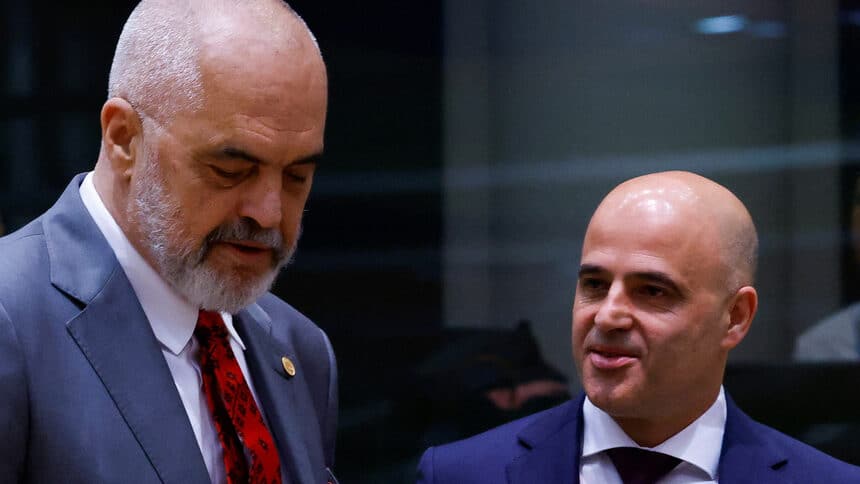
Photo: Albanian Prime Minister Edi Rama with his Macedonian colleague Dimitar Kovachevski / Reuters
In 1194, King Assen I defeated the Byzantine army in the Battle of Arkadiopol (Lozengrad) in “Macedonia” – Eastern Thrace
The episode with the Georgian Liparites completes our knowledge of the Bulgarian-Byzantine military conflicts under the first Asenevites
During the Middle Ages, regardless of the geographical distance and the large-scale water obstacle, such as the Black Sea, there were lasting ties between Bulgarians and Georgians. The main connecting element is the common Orthodox faith, and a kind of “crown” of these relationships is the famous monastery “St. Mother of God Petritsionisa” – the Bachkovo Monastery, founded in 1083 by the Armenian-Georgian noble Grigory Pakuryan/Bakuriani. Georgian monks lived in the monastery for centuries, and at the end of the 11th century, Ioan Petritsi (c. 1050-1130) worked there. The nickname with which the medieval Georgian philosopher remains in history is from the Bulgarian name “Petrich” – today’s Asen fortress. The Georgian literary school established in Bachkovo was called “Petritsionska”. The spiritual ties between Bulgaria and Georgia can be talked about for a long time, but today we will dwell on another, more “attractive” episode of our history, in which there is Georgian participation.
In 1194, five brothers from the Lipariti family fell into the whirlwind of the Bulgarian-Byzantine war, which began with the uprising of Peter and Assen. The “house” of the Liparites is the “leader” of the aristocracy against the royal authority. The role of the Liparits reached its apogee in the middle of the 11th century, and in 1047 its leader Liparit IV even managed to temporarily drive King Bagrat IV out of the country… To pacify the family, the Georgian kings gave it estates, high titles, etc. .n. Eventually, in 1093, King David IV annexed the ancestral principality. A number of representatives of the rebellious “clan” sought refuge in Byzantium, receiving high titles and positions in the army and state administration.
The recently departed Prof. Ivan Yordanov (1949-2021), a leading specialist in numismatics and sphragistics, published a stamp of Mihail Liparit. In the 70s or 80s of the 11th century, he received the high title of “proeder”, and his seal was discovered in Anchialo/Pomorie. Here we will briefly tell about the participation of five Liparites in the Byzantine army a century later, which we learn about in the Life of the Queen of Queens Tamar.
The noted Georgian queen Tamar (1184-1213) was in serious trouble with the rest of Georgia’s Liparities. Five brothers, “… the sons of Kehaber from the rotten roots of the Liparitus family…”, create intrigues that lead to political assassinations. The determined and energetic Tamar ordered that each of the brothers be imprisoned and isolated in a separate fortress, but this form of house arrest did not work. Ultimately, the rioters were driven “… into exile in Greek Macedonia (Byzantine Eastern/Odrina Thrace), where they were subsequently slaughtered by the Kipchaks (Cumans), as we have heard, in battle like glorious braves…”
The expulsion of the Lipariti brothers is attributed to the first years of Tamar’s reign – before 1191, when Emperor Isaac II Angelus (1185-1195, 1203-1204) was in power in Byzantium, under whom relations with Georgia were seriously strained. As is known, Tamar gave political asylum and later actively supported Alexius and David Mega-Comnenius, grandsons of the former Roman emperor Andronicus I Comnenus (1183-1185) and founders of the Trebizond Empire. The Lipariti brothers went to Byzantium with their armed bands, counting on the support of their relatives in Constantinople – for example, the judge Basili Liparit, mentioned in 1177. Given their military experience, the Georgian aristocrats were enrolled in the Byzantine army at the front with the renewed by the brothers Peter and Asen Bulgarian kingdom.
When and under what specific circumstances did the five Liparites die? Unfortunately, there are no exact data, but the answer to this question is not at all impossible. The picture of the Bulgarian-Byzantine military confrontation under the first Asenevs is rich enough in events, about which the curious reader can learn more from the newly published book by Dr. Anelia Markova “The Second Bulgarian Kingdom in War and Peace” (Sofia, 2022). Until 1202, when a truce was reached between Emperor Alexius III Angel (1195-1203) and King Kaloyan (1197-1207), mutual blows followed one after another.
Bulgarian military actions, including Cuman raids in “Macedonia” (Eastern Thrace), occurred throughout the period. The five Liparites died relatively soon after their expulsion from Georgia, apparently in some larger battle. It is most likely that the demise of the Georgian aristocrats was attributed to the military actions in the spring of 1194, when King Assen inflicted a catastrophic defeat on the combined forces of the Byzantine generals Alexius Gid and Basil Vatsi at Arcadiopol (Luleburgas). In the decisive battle, the soldiers of the “domestic of the East” (the commander-in-chief of the troops from Asia Minor) Alexius the Guide bowed before the Bulgarian attack, embarking on a disorderly escape. The troops under the command of Vasili Vatsi, “domestic of the West” (the Balkans) were almost completely destroyed by Bulgarians and Cumans.
The heavy defeat was perceived by Isaac II Angel as a real military disaster… For this reason, the emperor looked for an ally in the rear of the Bulgarians and planned a joint military strike together with his father-in-law, the Hungarian king Béla III. Fortunately, this ambitious and dangerous design was thwarted by the coup of Alexius III Angelus against Isaac Angelus in 1195.
The participation of the Lipariti brothers in the war between the Roma and the Bulgarians can be connected precisely with the “western” troops led by Vasili Vatsi. A lead seal of this prominent Roman aristocrat was found in the Kardjali region and republished by Prof. Ivan Yordanov. The high title “sevast” is inscribed on it. From information about events close in time, we learn that in the composition of the Balkan troops of the empire there were detachments of Alans (the ancestors of today’s Ossetians), placed under the command of the Roman military leader Theodore Vrana. The military organization and tactics of the Georgians was almost or completely identical to that of their northern neighbors, the Alans, themselves an invariable mercenary or allied element in the Georgian army. In traditional Georgian-Alani relations, this is not surprising – Queen Tamar herself is Alan by mother, and her second husband, David Soslan, is an Alan prince. Alan mercenaries came to Byzantium, it seems, mainly through Georgia. All this gives us reason to suppose that the Georgian military detachment was probably also filled with Alans in Byzantine service. As we have already noted in “Trud” (December 17, 2021), there were also Alan allies in the Asenevtsi army – however, they came to Bulgarian service not from the state of Alania (now North and South Ossetia) in the Caucasus, from the Alan ” enclaves’ in the ‘Cuman steppe’ (present-day Ukraine).
Georgia’s active ties with the Cuman “steppe empire” probably influenced the unknown author to emphasize precisely the “Kipchaks” (Cumans). It is quite possible that the Georgian nobles died in battle precisely with the Cumans, and not with the Bulgarians themselves. In the traditional military tactics of the era, the light cavalry (Cumans, Georgians and Alans respectively) often played an independent role in the course of major battles. This is the case, for example, with the famous battle of Adrien (April 14, 1204), in which King Kaloyan, with the help of the Cumans, defeated the Latin knights. In the end, the episode with the Lipariti brothers appropriately complements our knowledge about the nature and peculiarities of the Bulgarian-Byzantine clashes at the time of the first Asenevs.
And a few words about the place of the battle – “Macedonia”, as Eastern Thrace was called in the Middle Ages. The Georgian author knew this, because at the time he lived, the lands of today’s historical-geographic region of Macedonia were called … Bulgaria due to the nationality of its inhabitants!
Photo: The medieval Georgian fortress Hertvisi from the time of Queen Tamar
In 1979, an old DC-3 transport plane landed at a Marine Corps base near Beaufort, South Carolina. On board was an extremely unusual cargo, which even the military who served at the base came to see the unloading. Many boxes filled with screaming monkeys were carried out of the plane. The next morning they were loaded onto boats and sent to the uninhabited island of Morgan, located off the coast of the state. Now it is completely closed to outsiders, because animals that have arrived and founded a large colony here can be deadly to humans. At the same time, they are also consumables for biological experiments and play an important role in the multibillion-dollar pharmaceutical business. We explain why visiting Monkey Island is strictly prohibited.
transatlantic journey
Monkeys are completely atypical animals for both Americas (unless, of course, you count individuals kept in zoos and people). Apart from humans, this part of the world is inhabited by only one species of primate, the so-called broad-nosed monkeys, who apparently got there by making an incredible journey from Africa across the Atlantic Ocean on rafts of plants or, possibly, logs, and managed to establish a viable population. At the same time, the northern border of their habitat is in the jungles of southern Mexico, that is, for example, in the United States, colonies of monkeys in the wild are not found at all (with a couple of exceptions).
In the 1930s, Colonel S. Tui, the owner of a pleasure boat that took tourists along the small Silver River in central Florida, decided to add impressions to his guests and arbitrarily landed several monkeys on one of the river islands. The emotions of tourists remained unknown, but the monkeys liked the new place so much that they began to multiply rapidly and eventually fled from the island. The enterprising shipowner did not take into account one factor: rhesus monkeys can swim.
What kind of macaques are they and what does Rhesus have to do with it?
Rhesus macaques, or Bengal macaques, are one of the most famous and numerous species of monkeys. If you have seen monkeys occupying Thai temples or even some Asian cities, then you are most likely familiar with Rhesus. They are unpretentious, live in large flocks, willingly give birth to offspring, protect their families, and in general are quite prosperous as an animal species. In the second half of the 18th century, the French naturalist Jean-Baptiste Odbert named them Rhesus in honor of the Thracian king Res, who fought on the side of Troy during the Trojan War. In Latin, the main language of animal systematization, the king’s name was written as Rhesus.
As it turned out later, Rhesus turned out to be very suitable heroes for a variety of medical and biological experiments – from vaccine testing to organ transplantation. They also participated in the research of blood serum, thanks to which the Rh factor system was discovered. But in general, the unfortunate macaques have become one of the most popular experimental animals, which even required them to be bred on an industrial scale.
Daring Escapes
Of course, it was always possible to bring the required number of macaques from their natural range, but this increased the cost of each individual, moreover, at some point, exporting countries (for example, India) began to impose restrictions on the purchase of monkeys. Therefore, sometimes Rhesus colonies were created where it was possible to resettle them in more or less familiar conditions, but outside the original habitats. This appeared, for example, on the island of Puerto Rico, a territory dependent on the United States in the Caribbean.
However, the close coexistence of macaques and humans became a problem. So, from the same Caribbean primate research center in Puerto Rico, rhesus constantly escaped, as a result of which it was decided to transfer the research laboratory somewhere to a desert island: these monkeys were able to infect people with a dangerous disease, which prompted the final transfer of the local colony off the coast of South Carolina, on Morgan Island.
Monkey herpes
Probably the only drawback of Rhesus is that a significant part of their population is a carrier of its own variety of the herpes virus. In the macaques themselves, Macacine alphaherpesvirus 1, or herpes virus B (after the first letter of the name of the first victim, who was bitten by a monkey and died from the consequences), causes symptoms similar to ordinary human herpes. However, if it enters the bloodstream of a person as a result of a bite (or if the rhesus saliva enters the human body in any other way), this variation of monkey herpes can cause severe disorders of the central nervous system – for example, encephalitis.
It should be noted that the risk of infection is low. For example, in the natural habitats of animals, cases of infection have not been recorded at all. Virtually all macaques have antibodies to their disease, and only a small percentage shed viruses at any given time. Even a bite does not imply an indispensable infection. In the entire history of the Florida rhesus colony, 18 cases of bites were recorded, and in none of them did human infection with monkey herpes occur. True, there is another “but”. If infection does occur, the consequences are likely to be severe. The lethality of monkey herpes among humans in the absence of timely treatment is 80%. That is why measures are being taken to reduce the Florida rhesus colony (through trapping and sterilization of animals), and it was decided to isolate the former Puerto Rican group during the resettlement.
“Monkey Island”
The area of the island exceeds 1800 hectares, but most of this territory is occupied by swampy meadows and channels. In one part of the Morgan there is a 250-hectare forested hill, and this area is quite enough to accommodate the population. Rhesus quickly settled in South Carolina. In 1979, approximately 1,400 individuals were resettled here, by now their number exceeds 4,000. On average, 750 cubs are born here every year, so Charles Rivers Laboratories, which received from the State Department of Natural Resources the right to lease this area. Despite the protests of wildlife advocates, rhesus are still used for biomedical purposes, albeit not on the same scale as before.
However, otherwise the monkeys feel at home in places where they have never lived. They feed on acorns, insects, mollusks, and plants, although there are not enough natural resources for the entire population. The island has a special building for the caretakers of the laboratory, who feed the animals as needed. Only they and scientists who have received the appropriate permission, evaluating the development of the colony and its impact on the vegetation of the island, are allowed to land on the Morgan coast – naturally, after taking all security measures, because the chance of contracting herpes B, although small, still exists, which means there is and mortal risk. Ordinary people are only allowed to view the monkeys from the water, passing by on a boat. On sunny days, rhesus willingly go ashore, doing everything that wild monkeys are supposed to do, and delighting outside spectators. By the way, despite the fact that monkeys can swim, only single shoots to the “mainland” have been recorded. Apparently, the macaques are still happy with everything in the place, which, as they think, belongs only to them.
The breathtaking landscape with blue rivers and high peaks is combined with the rich traditions, fresh and unique cuisine of the northern Albanian villages
The Valbona National Park and the Valbona River Valley, the pearl of the Albanian Alps – The Cursed Mountains, is a top tourist destination in the northern part of Albania, attracting more and more local and foreign visitors and hikers. This was reported specially for BTA by the Albanian agency ATA.
The Director of the Administration of Protected Areas in Kukus, North-Eastern Albania, stated today to the Albanian Telegraph Agency (ATA) that during the first six months of the year Valbona National Park was visited by more than 20,571 tourists, of which 14,250 were foreign nationals.
The director of the protected area, Lefter Gianna, said that foreign tourists and hiking enthusiasts travel along the tourist trail between Valbona and Tet.
While Albanian summer heat drives many tourists to head for the coast, the Valbona Valley and the Albanian Alps offer an adrenaline-filled and scenic alternative for active hikers.
The breathtaking landscape with blue rivers and high peaks is combined with the rich traditions, fresh and unique cuisine of the northern Albanian villages.
Valbona Valley is one of the unique wonders of Albanian nature. One of the most visited areas in the Tropoja region and the Albanian Alps together with the Tete National Park. A top destination, attracting not only local but also foreign visitors who want to learn more about the traditions in the northernmost villages of the country.
The journey from Koman to Firza is also another tourist attraction, declared as one of the best tourist experiences in Albania. The canoe ride also offers the most wonderful rolling panorama of the pristine landscape around the lake.
The editor-in-chief of the Orthodox encyclopedia Drevo, Alexander Ivanov, will be tried under the new law for “discrediting the Russian armed forces”, which represses anyone who publicly disagrees with the Russian war in Ukraine. This is clear from his announcement on the encyclopedia forum of July 1:
“Dear participants in the project “Tree”/”Drevo”! Next week I will stand trial on an article for discrediting the armed forces of the Russian Federation. For now, this is an administrative violation and a fine. I don’t consider myself guilty and I don’t regret anything. They heard me and that’s the most important thing. However, the second charge threatens me with a criminal case and imprisonment. I am not ready for this because my family is totally dependent on me. For this reason, I will be forced to delete my statement regarding the events in Ukraine.
We regret to announce the temporary suspension of the news section of our site. For fifteen years, we have been trying to collect the most important religious news in one newscast, trying to be objective, not glossing over issues and not passing over sensitive topics. However, under the current circumstances, reprinting information that is “wrong” from the authorities’ point of view can have unfortunate consequences for me as the site owner, and I do not want and will not maintain a smooth, polished flow of “correct” news. Therefore, I am forced to temporarily suspend the work of the news section until better times come. The encyclopedia itself continues to operate as usual.”
The Tree Orthodox Encyclopedia team was one of the first to respond to the Russian invasion of Ukraine as early as February 25. Here is the statement that is about to be taken down:
“No to war!” Statement by the Editorial Board of the Tree Encyclopedia. On February 24, 2022, Russia begins a full-scale invasion of the territory of Ukraine under a fictitious pretext. This is not a “special operation”, this is war. The battles are fought by the regular armies of Russia and Ukraine. Since President Putin has declared that he has the support of the people, and the Russian church clergy is fearfully silent or content with general phrases (“to do everything possible to avoid civilian casualties”), the editors of the encyclopedia “Tree” consider it their duty to state the following.
We are categorically against the Russian invasion of Ukraine. There is no war in which civilians do not suffer. War is always blood, destruction, death and many broken human lives. The consequences of this madness, our disgrace, will be borne for a long time by our children and grandchildren.
Serbian Patriarch Pavle says: “The Serbian Church and I are accused of inciting war for the preservation of Greater Serbia. I declare that if a crime were required to preserve Greater Serbia, I would never consent to it. Then let Greater Serbia disappear. If it is necessary to save little Serbia in this way, I would not give my consent either. Let little Serbia also disappear, but let there be no blood! No, not at that price! If this price had to be paid for the last Serb, and if I myself were the last Serb, I could not give my consent. Let us disappear, but in this disappearance we will remain Christ’s people. Otherwise, we do not agree to live. This is the point, because we know that our ancestors, through many centuries of troubles and wars, have persevered in the truth, and we have all been preserved by Almighty God, Who is always on the side of good. And if we must suffer, it is better to bow our heads than to become inhuman.”
We demand that our authorities immediately cease hostilities and withdraw the army from the territory of Ukraine. It’s never too late to stop war. Freedom and peace for Ukraine!”.
On June 21, at the Klondike gold mines near Eureka Creek in Canada, workers found the body of a baby mammoth in the permafrost that had died about 30,000 years ago. This is the best-preserved body of a woolly mammoth (Mammuthus primigenius) ever found in North America.
The find was made in the traditional territory of the Heng Indian people. Therefore, the name for the mammoth was chosen by the elders of this people. The young female mammoth was named Nun-cho-ga, which can be translated as “big cub.”
“As an Ice Age paleontologist, my lifelong dream was to come face to face with a real woolly mammoth. That dream has come true today,” said paleontologist Grant Zazula of the University of Calgary and the Geological Survey of Canada. “Nun-cho-ga is beautiful and one of the most incredible Ice Age animal mummies ever discovered in the world. I would be very happy to learn more about her.”
Professor Dan Sugar of the University of Calgary, who participated in the Noon-cho-ga study, said: “This discovery was the most exciting scientific work I have ever been involved in.” He described how immaculately preserved the mammoth was, saying that he still had intact hooves on his legs, skin, hair, ears, trunk right down to the tip and even intestines, which still contains the remnants of grass eaten by Nun-cho-ga. The length of the body of Nun-cho-ga is 140 centimeters, a little more than that of the mammoth Lyuba, found in Yamal in 2007.
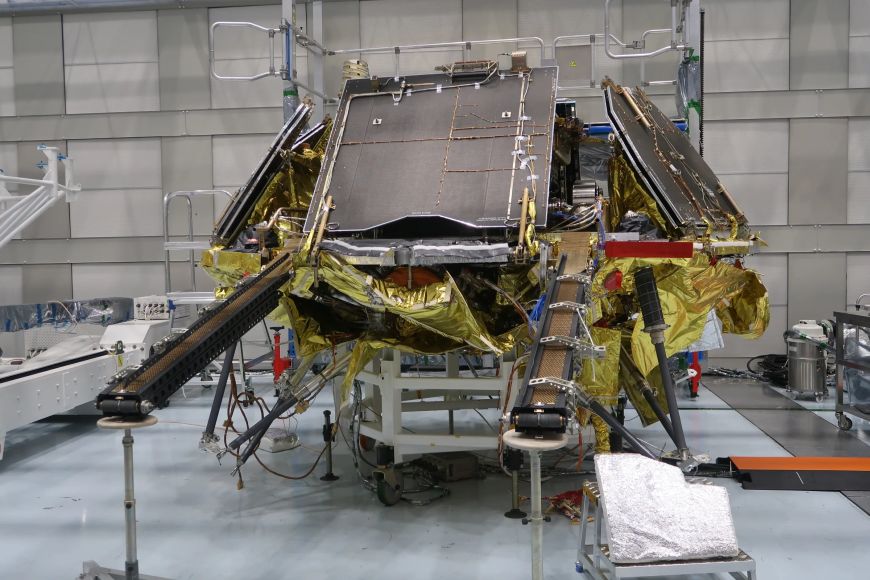
The European Space Agency (ESA) has decided to permanently end cooperation with Roscosmos on the second part of the ExoMars project, which involved sending a Russian landing platform and a European rover to Mars, said agency director Josef Aschbacher. Earlier, in connection with the military actions of Russia on the territory of Ukraine, this cooperation was frozen, but now it has been finally terminated.
The ExoMars program started at ESA in 2005, when it was assumed that the rover and landing platform would be sent to Mars with the help of the Russian Soyuz. In 2009, a variant with the participation of NASA began to be worked out, and the American Atlas was planned as a launch vehicle. However, in 2012, due to a budgetary crisis associated in particular with the high costs of the James Webb telescope, NASA withdrew from the project and was replaced by Roscosmos, which promised to provide two Proton rockets for two launches in 2016. year (orbiter) and in 2018 (landing platform and rover).
In 2016, the Trace Gas Orbiter with Russian and European scientific instruments went into space, which successfully entered orbit around Mars and is working safely, as well as the Schiaparelli demonstration descent module, which crashed during landing. We wrote more about this mission in the material “Looking for you”.
The launch of the second mission was first delayed to 2020 due to problems with the landing parachute, and then pushed back for another two years due to the pandemic. By the summer of 2022, when the launch was planned, both the Russian landing module Kazachok and the Rosalind Franklin rover were already ready, but after Russian troops entered the territory of Ukraine, ESA said that the launch of the rover in 2022 is unlikely. The head of Roskosmos, Dmitry Rogozin, after that, nevertheless, said that Proton-M was ready to be sent to Baikonur.
Now, according to Aschbacher, the ESA board has come to the conclusion that the circumstances that led to the suspension of cooperation with Roskosmos (the hostilities in Ukraine and the sanctions caused by them) persist. In this regard, the board instructed the director to officially terminate cooperation with the Russian space agency on the ExoMars mission. Details about the further fate of the project are expected to be made public on July 20.
The Europeans have previously said they will look for other partners for the ExoMars mission.
Require businesses to provide goods and services to the military when requested by the Russian government, and require workers to work nights and weekends without annual leave
Russian lawmakers approved two bills on first reading today that would allow the government to compel businesses to supply goods to the military and their workers to work extra hours to support Russia’s invasion of Ukraine, Reuters reported.
Deputy Prime Minister Yuriy Borisov told the State Duma (the lower house of the Russian parliament) that these initiatives were motivated by the need to support the army at a time when the Russian economy is suffering “colossal pressure” from the West, more than four months after the start of the so-called called “special military operation” in Ukraine.
“The burden on the defense industry has grown significantly. In order to guarantee the supply of weapons and ammunition, it is necessary to optimize the work of the military-industrial complex,” he pointed out.
One of the draft laws stipulates that the state can impose “special economic measures” during military operations, obliging businesses to provide goods and services to the military at the request of the Russian government.
An explanatory note to the draft law states that the army needs new materials and repair weapons to continue its campaign in Ukraine.
The second draft law would amend the Labor Code to give the government the right to regulate working hours, which could mean Moscow would be able to oblige workers at enterprises supplying goods to the military to work at night, on weekends and on holidays , without annual leave.
The two bills must pass second and third readings, be considered in the upper house of parliament and promulgated by President Vladimir Putin to become law.