Forest fires: EU mobilises its firefighting fleet to help Portugal
For the third day in a row, peacekeepers have had to deal with more than 100 fire starts across the country and the peak temperatures are still to come. About 1,500 firefighters have been mobilised to put out three forest fires that have been raging for more than 48 hours in central and northern Portugal, as the country is hit by a heat wave that has prompted the government to declare a state of emergency.
Portugal has activated the EU Civil Protection Mechanism to request emergency assistance for the current wildfires in the central part of the country. In an immediate response, the European Commission has mobilised this morning 2 Canadair firefighting airplanes from its rescEU fleet positioned in Spain. The planes are supporting Portuguese first responders in the affected regions.
Commissioner for Crisis Management Janez Lenarčič said: “With our quick response to the Portuguese request for assistance, the EU demonstrates its full solidarity in facing the destructive forest fires in central Portugal. I thank Spain for swiftly mobilising two firefighting planes via the RescEU this morning. Our thoughts are with those affected, and with the fire fighters and other first responders on the ground. We stand ready to provide further assistance.”
In addition, the EU’s Copernicus Emergency Mapping Service was activated by Portugal on 8 July for the forest fires affecting Leiria and Santarem districts in Ourém municipality. These maps support first responders with an assessment of the impact and damage of the fires.
Background
The EU Civil Protection Mechanism strengthens cooperation between and among Member States and Participating States in the field of civil protection, with a view to improving prevention, preparedness and response to disasters. Through the Mechanism, the European Commission plays a key role in coordinating the response to disasters in Europe and beyond.
When the scale of an emergency overwhelms the response capabilities of a country, it can request assistance via the Mechanism. Once activated, the Emergency Response Coordination Centre coordinates assistance made available by its Participating States through spontaneous offers. Should the emergency require additional assistance, the rescEU reserve can be activated.
To date, all EU Member States participate in the Mechanism, as well as Iceland, Norway, Serbia, North Macedonia, Montenegro and Turkey. Since its inception in 2001, the EU Civil Protection Mechanism has responded to over 600 requests for assistance inside and outside the EU.
Message from Ambassador of Greece to the UK, H.E. Mr Ioannis Raptakis on 5th July 2022 to the International Ministerial on Freedom of Religion or Belief hosted by the Foreign and Commonwealth and Development Office of the United Kingdom.
Raptakis stressed that:
“Religion and faith are such unifying factors, and when not politicized, they help us tap into our humanity.”
Watch the full video below
Full message (original transcript by The European Times):
The last three years may have been extremely challenging, but they have also provided us with time for reflection, time to see what brings us closer, and time to appreciate the things that unite us.
Religion and faith are such unifying factors, and when not politicized, they help us tap into our humanity, our better elements as people, and into a spirit of peace and shared values.
Greece fully respects, protects and promotes the inalienable right enshrined in the 1948 Universal Declaration of Human Rights.
Throughout our history and civilization, we have steadfastly manifested a rights-based approach to sustaining such a universally recognized necessity.
And we are joining our voice here today with our host, our partners in the International Religious Freedom of Belief Alliance, and other participants in advocating for freedom of religion or belief.
The Greek constitution stipulates that freedom of religious conscience is invaluable. It also places freedom of worship under the protection of the law.
Greece is an adamant supporter of the effort to combat anti-Semitism. During its presidency of the Holocaust International Remembrance Alliance, the Greek Minister for Foreign Affairs Minister Dendias stated that we do not want to see the memory of the Holocaust as an echo of the past. We see it as a living reality and a force for the preservation and advancement of our freedom and our way of life.
Moreover, the quality of life of the Muslim minority and thrice offers undeniable evidence that human rights and religious freedom rights are fully respected.
Greece has the highest number of mosques per citizen of Islamic faith than any other country in Europe. This is respect for freedom of religion or belief in action.
Freedom of religion is also closely connected with the implementation of the 1972 World Heritage Convention of UNESCO’s. There are World Heritage monuments which have existed as places of religious expression linking history, religion and culture.
One should not use for political or other purposes, monuments that transmit an image of universality, interfaith coexistence and peace in the modern world. The example of Hagia Sophia, the world-known museum transformed into an active mosque is concrete proof that diminishing a monument’s universal value can result in cultural and religious polarization.
Such actions not only run counter to religious freedom and the enjoyment of diverse cultural richness but also do not allow for the opportunity of better understanding, coexistence and respect among future generations of Christians, Muslims or other denominations.
In the same vein, the work of the Ecumenical Patriarchate should be supported by us all. Just a few days ago, we worked together with a current IHRA presidency, and other delegations in Geneva on the presentation of the action plan to combat anti-Semitism.
We believe that through education policies of tolerance and understanding and respect for international human rights law, we can convey the message that freedom of religion or belief is a prerequisite for peace, solidarity and tolerance. Thank you.
“The role of religion in the ongoing conflict in Ukraine” was a theme in focus at a virtual seminar hosted by the Conference of European Churches (CEC) on 30 June. Speakers representing Ukrainian churches addressed pertinent topics related to global church response, religious diplomacy and the responsibility of European churches in promoting ecumenical dialogue, while safeguarding justice and truth.
Speakers in the seminar were H.E Archbishop Yevstratiy of Chernihiv and Nizhyn, Deputy Head of the External Church Relations Department of the Orthodox Church of Ukraine, spokesperson for the Orthodox Church of Ukraine, and Professor at the Kiev Theological Academy, Prof. Sergii Bortnyk, member of the Department for External Church relations of the Ukrainian Orthodox Church and Professor at the Kiev theological academy (UOC), and Dr Christine Schliesser, Director of Studies at the Center for Faith and Society at the University of Fribourg. CEC President Rev. Christian Krieger opened the seminar.
Since the outbreak of the war in Ukraine in February this year, CEC has engaged deeply with its Member Churches, and churches beyond its fellowship, advocating for peace in Ukraine.
CEC has been closely following developments in Ukraine and the neighbouring countries, highlighting experiences of the churches in Ukraine, discussing their responses to the war and hopes for the future. CEC through its events, statements and official messages, has highlighted religious voices in Ukraine, especially voices from the churches in the country, raising awareness about the war in Ukraine.
Presentations from the speakers will be made available in due time.
On July 4, Pope Francis announced that he had the intention to visit Moscow and Kyiv as soon as possible. The head of the Vatican is regularly speaking to Ukrainian President Zelensky but would like to visit Putin before heading toward Kyiv. He believes that he might be the neutral agent that could convince Putin to put an end to the war.
On the other side of the line, in Moscow, there are different reactions to this idea. In the Russian Ministry of Foreign Affairs, most are in favour of such a visit. Even in the Presidential administration, the reaction is pretty positive, and they view this controversial proposal favourably. But that is not the case within the FSB and the military. There, it is another story, and the intervention of Francis is viewed with at least suspicion and more usually with complete reluctance.
The main actor of this diplomatic move is the head of the World Union of Old Believers Leonid Sevastianov. Sevastianov has access to the Pope and is highly considered by him, and is the one whom the Supreme Pontiff would listen to when it comes to Russia. He is also the one lobbying the Presidential administration in Russia, pushing the idea that the Vatican is the only “neutral” State and then the only one in a position to act as a genuine mediator. Leonid Sevastianov is a strong Christian, who strongly believes that his spiritual mission is to do all in his power to put an end to the war.
But the fiercer opposition is coming from the Russian Orthodox Church (ROC) Moscow Patriarch Kirill. Kirill is a strong supporter of the war, and justifies it, as several religious leaders in Russia, by the need of protecting the Christian world from the decadent West corrupted by cults and pagans, a message that is embraced by the Kremlin. His biggest fear is to see the Pope coming into his “territory”, preaching for peace. Even before the war, Kirill opposed the coming of the Vatican’s head, and the reason was then clear: Kirill is poorly considered by the believers, and barely attracts none (or very few) when he publicly appears. If Pope Francis would come to Russia, it’s likely that he attracts thousands of Christians to greet him, which would definitely undermine Kirill’s image in the country.
So Kirill is activating his network behind the scene to prevent Sevastianov to succeed, which is not without risk for the latter. Kirill is a former agent of the KGB and does not back off from dirty tricks to reach his goals. Sevastianov, who in fact is a former colleague of Kirill, and worked for years as the director of the St. Gregory the Theologian’s Charity Foundation, the biggest Orthodox Foundation in Moscow founded by Kirill and Metropolitan Hilarion, has recently declared that the support of the Moscow Patriarch to the war was to be considered as heresy, from a religious point of view. That’s no shy statement by far.
Hilarion himself, who was considered the number 2 of the ROC and was the chairman of the Department for External Church Relations of the Moscow Patriarchate, has recently been demoted and sent to a small diocese in Hungary. There is no clear interpretation of this demotion: some say that Hilarion was opposed to the war and was punished for that. Others say that Kirill saw him as a threat as he was in a position to replace him as Patriarch, and some say that it is to have him in a better position to lobby for the ROC on the international scene after Kirill has been sanctioned by the UK, and barely avoided the EU sanctions thanks to the last-minute intervention of Viktor Orban, the Prime Minister of Hungary.
Nevertheless, if Sevastianov’s diplomacy is a risky one for himself, it is also a steady one. Sevastianov has kept pushing for it since February, gained the support of the Supreme Pontiff and is now making progress in Moscow. Of course, even if he would succeed in getting Francis to Moscow, the big question is will it have any impact on Vladimir Putin? History will tell.
As an entrepreneur, you can pursue a wide range of endeavours. Entrepreneurs come in many different varieties. Others are so dedicated to it that they work only on it. Some people have a side job in addition to their regular job. They are constantly looking for novel ways to operate their own company and create an empire.
Any country needs entrepreneurs because they have the skills and motivation to spot opportunities and bring incredibly innovative ideas to life. Successful entrepreneurship that successfully takes on the startup risks is rewarded with profits, notoriety, and opportunities for future growth. Failure of an entrepreneur has negative consequences for the individuals involved, including losses and a weaker position in the market.
While not always a compulsory first step, this is strongly suggested. Even professional athletes start side businesses with their own money. Starting with a sufficient cash source and securing ongoing financial support can only help an aspiring entrepreneurs, expanding their window of opportunity and giving them more time to focus on running a business rather than worrying about bringing in money. Remember Mark Zuckerberg, the founder of Facebook, now Meta.
Learning new ideas and putting them into practice in actual situations are two ways to create a set of abilities. An ambitious businessperson with a marketing degree, for instance, can work in the industry at their current employer to develop the transferrable skills they’ll need to succeed. An entrepreneur with a diverse skill set has a toolbox at their disposal for unforeseen adversity. If you are going to be in control of others, you might want to try a group or course for assistance with managing others. You can also get the all-inclusive package includes everything you will need to form a company.
The majority of business owners struggle to be successful alone. Given how competitive the business world is, you will frequently benefit from and accelerate the construction of a successful firm with whatever help you can get. For each ambitious business owner, networking is vital. Meeting the right individuals who can put you in touch with industry contacts like suppliers, financiers, and even mentors could spell the difference between success and failure. Attending events, reaching out to contacts in the business via email and phone, and running into your former roommate who works in a related industry are all ways to get out there and meet talented individuals who can help you. If you can draw a crowd and have the chance to make a good impression with the right individuals, selling items becomes a lot simpler.
As a result, only think about beginning if you just want to start a side business selling your handmade goods or look for retail spaces for sale and accomplish your aim by starting your own thing. You can look for opportunities anywhere like one start-up business that used left over fish for dog treats.
According to successful entrepreneurs, everyone’s entrepreneurial journey starts with a great business idea. However, a fantastic idea by itself won’t turn a would-be businessperson into a prosperous one. If you’re an aspiring entrepreneur who wants to start a new business but is unsure about where to start, you’re not alone. You may start right away, whether you want to be your own boss because you’re tired of your job or because you want to follow your passions.
Acknowledge your dissatisfaction with your current circumstances and the fact that no one else can change them for you. It is worthless to point the finger at your boss, spouse, the economy, or your family. Change can only be brought about when you intentionally want to do it.
Give yourself permission to learn more. Consider all facets of who you are, including your age, personality, and social preferences. Also, pay heed to your instincts. Even though we frequently have a gut feeling that something is correct, we frequently discount intuition. What keeps you going when you’re worn out? How do you know which business opportunity is “suitable” for you?
There are three common ways to launch a business:
Use your expertise: Do you want a change or have you lost your job?
Think about the work you’ve already done for others and how you might be able to package your skill set and sell it as your own services or products.
Observe what others do: Learn more about the industries you are interested in.
Fix a frequent problem: Is there a gap in the market? Would you be interested in launching a service or product? (Note: This strategy entails the highest level of risk out of the three.) Do some market research first, and if you decide to move forward with it, make sure to enrol in classes and learn as much as you can before investing any money.
Most people don’t make plans, yet doing so will speed up your time to market. By developing a business strategy, you could gain more clarity, concentration, and confidence. A strategy only needs to be one page long. When you put your goals, intentions, and next steps in writing, your company model comes to life.
Ask yourself the following questions:
What am I building?
Whom shall I serve?
What oath am I taking, both to myself and to my consumers or clients?
What are the objectives, tactics, and action plans (steps) I have in relation to my goals?
Before spending any money, ascertain whether people will actually buy your products or services. This might be the most important thing you do. You can do this by verifying your market. Or, to put it another way, who else will buy your products or services other than your family and friends? (Also, refrain from asserting that “everyone will want my product,” as they won’t.) How big is the market you’re targeting? Who exactly are your clients? Are your products or services useful in their day-to-day lives? Why would they need that, exactly?
The only way to begin is to take action. Until you’re ready to leap, you can take baby steps, like studying and getting an education. Significant advancements and successes can be achieved by making small adjustments and performing everyday tasks over an extended period of time. Being an entrepreneur requires adopting an entrepreneurial lifestyle. Take better care of yourself, increase your knowledge, and forge closer bonds with others. When it comes time to start and expand your business, all of these elements will help you succeed.
Over 340 cities are included in the European city air quality viewer. Cities are ranked from the cleanest to the most polluted based on average levels of fine particulate matter (PM2.5). The data behind the ranking was collected from over 400 monitoring stations across EEA member countries over the past two calendar years.
From 2020 to 2021, air quality was good in only 11 cities, meaning that levels of PM2.5 were below the World Health Organization’s (WHO) health-based guideline for long-term exposure to PM2.5 of 5 micrograms per cubic meter of air (5 μg/m3). The guideline was exceeded in 97% of the 343 European cities included in the viewer.
In contrast, the European Union’s (EU) annual limit value for PM2.5 of 25 µg/m3 was only exceeded in the three most polluted cities, including Nowy Sacz, Poland, and Cremona and Padova in Italy, highlighting the difference between the WHO guideline and the EU standard.
The European city air viewer can be used to check how the air quality was in European cities over the past two years. The viewer focuses on long-term concentrations of PM2.5, as long-term exposure to air pollution causes the most serious health effects, and PM2.5 is the air pollutant with the highest impact on health in terms of premature death and disease.
Mixed progress in meeting EU emission reduction commitments
Under the National Emission reduction Commitments (NEC) directive, EU Member States are required to meet national commitments to reduce emissions for five air pollutants in order to deliver clean air for human health and the environment. Under the Directive, the year 2020 saw a transition to a new, more ambitious set of national emission reduction commitments.
In 2020 (latest available information), just under half of Member States met all their national emission reduction commitments according to annual EEA report released today, which looks at Member State progress in cutting key air pollutant emissions.
Based on the analysis of the data provided by Member States and not yet fully checked by the Commission, the report found that the biggest challenge remains reducing emissions of ammonia from agriculture, with 11 Member States needing to cut their emissions levels. Only 13 Member States met their commitments for each of the five main pollutants (nitrogen oxides, non-methane volatile organic compounds, ammonia, sulphur dioxide and PM2.5). Fourteen Member States failed to meet their emission reduction commitments for at least one of the five main air pollutants.
The EEA analysis is based on the latest air pollutant emission inventory data, as reported by Member States in February 2022. It constituted the first opportunity to assess emission reduction performance against the 2020-29 emission reduction commitments.
Along with the EEA briefing on the NEC Directive, the EEA also publishedthe annual EU emission inventory report 1990-2020, which looks at air pollutant emissions reported by the EU under the UNECE Air Convention. The report showed a continued, albeit recently slowing, downward trend in emissions from 1990-2020 of six key air pollutants: carbon monoxide, ammonia, nitrogen oxides, non-methane volatile organic compounds, sulphur oxides and particulate matter. Ammonia emissions have shown the least decline since 1990.
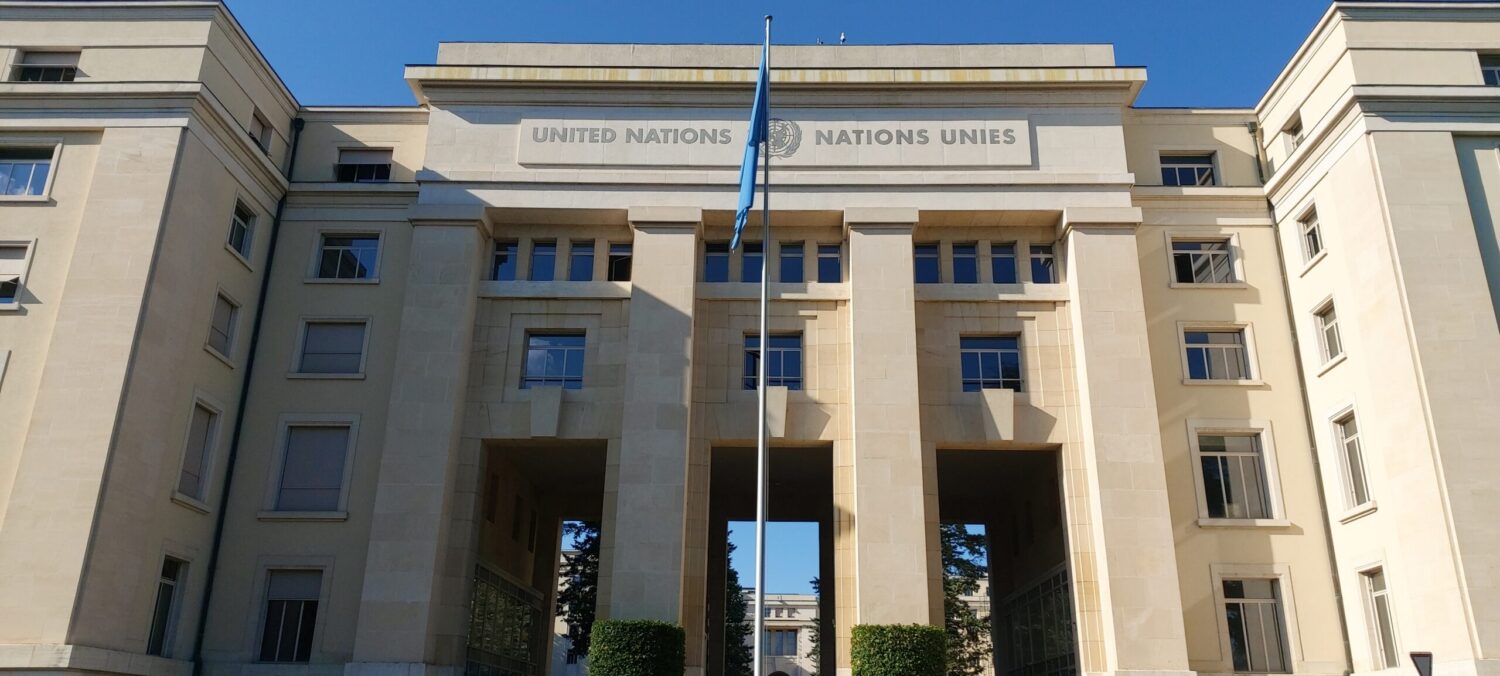
On June 30, 2022, in Geneva, the United Nations Human Rights Council held an Interactive dialogue on the oral briefing of the International Commission of Human Rights Experts on Ethiopia.
source : www.ethiovisit.com
Ms. Kaari Betty Murungi, Chairperson of the UN Commission of Human Rights Experts on Ethiopia exposed the work progress of the Commission on the human rights situation in Ethiopia.
Ms. Murungi presented the mission of this Commission as being « an independent and impartial entity mandated to conduct investigations to establish the facts and the circumstances surrounding alleged violations and abuses of International Human Rights Law, International Humanitarian Law and International Refugee Law, committed by all parties to the conflict in Ethiopia since 3 November 2020. The Commission is also mandated to provide guidance and technical support on transitional justice including accountability, national reconciliation, healing and make recommendations to the Government of Ethiopia on these measures ».
She added that “The Commission is alarmed that violations and abuses of international human rights, humanitarian and refugee law – the subject matter of our inquiry – appear to be perpetrated with impunity even now by various parties to the conflict in Ethiopia. This spread of violence and the dire humanitarian crisis made worse by lack of access in some areas by the civilian population to humanitarian assistance including medical and food aid, obstruction of aid workers and persistent drought, exacerbates the suffering of millions of people in Ethiopia and the region. The commission emphasizes the responsibility of the Government of Ethiopia to bring to an end such violations on its territory and, bring those responsible to justice. In this context, the Commission’s work is absolutely central to the Council’s response to the violence.”
Ms. Murungi also drew the attention of the Human Rights Council to the difficulty for her team to conduct this mission due to « the Commission was not allocated sufficient resources to fill the number of staff position it needs and still requires additional resources. » and that « we still lack the staff needed to carry out our mandate. That mandate includes the collection and preservation of evidence to support accountability efforts, and for this, we require adequate resources.”
Ms. Murungi also calls on the Ethiopian government to have « access to Ethiopia».
She also stressed that it is important for an impartial and comprehensive investigation « to meet and engage with victims and witnesses in conflict-affected areas, as well as with the Government, and other stakeholders. We also wish to meet with regional institutions based in Ethiopia.”
The Permanent Representative of the Ethiopian government has assured his willingness to resolve the conflict and to collaborate in this investigation by allowing access to Ethiopian territory to the Commission’s Experts.
Finally, Ms. Murungi stated on behalf of the Commission’s Experts: “We are hopeful that the consultations in Addis Ababa will result in access for our investigators to sites of violations to be identified, and to survivors, victims and witnesses.”
In conclusion, she called on the President of the Council to express her concern about the deteriorating situation in Ethiopia and urged the Council as follows: « Despite other crises that the council must deal with, Member States must not look away from the situation in Ethiopia. As stated earlier, we are extremely alarmed by ongoing atrocities against civilians, including events reported in the Oromia Region. Any spread of violence against civilians, fuelled by hate speech and incitement to ethnic-based and gender-based violence, are early warning indicators and a precursor for further atrocity crimes. These and the protracted humanitarian crisis including blockades to food and medical aid, supplies and services poses grave risk to the Ethiopian civilian population and the region.”
To highlight the need to extend the mandate of the UNHRC to Wellega, Benishangul Gumuz and Shewa where mass killing of Amharas is taking place. Ms Murungi also said :
“Despite this progress, and as noted earlier, we still lack the staff needed to carry out our mandate. That mandate includes the collection and preservation of evidence to support accountability efforts, and for this, we require adequate resources. For example, the most recent events in Western Oromia, clearly fall within the mandate of the Commission and require immediate, urgent and thorough investigations, yet we lack the capacity to do so. I will be frank and say that if this Council expects us to achieve what it requested last December, we need more resources. We appeal to member states for technical (including individuals with relevant expertise), logistical and financial support.“
« The gravity and scale of human rights violations and abuses perpetrated by all parties during this conflict remains appalling. This includes widespread sexual and gender-based violence. Extrajudicial killings and arbitrary detentions must stop. There will be no peace without full accountability and justice for victims.”
The EU delegation has also made a “call on all involved parties to the conflict to cooperate with the mandate of the International Human Rights Experts and allow for comprehensive, independent and transparent investigations and accountability mechanisms, complementary to ongoing national efforts. This international mechanism contributes to building trust and to preventing further atrocities.”
Other European Union countries have expressed their concern about the situation in Ethiopia, particularly in the regions of Tigray, Afar and Amhara.
Here after are given the statements of some EU countries that have expressed their deep concern about the deterioration of the situation in these regions:
UN Permanent Representative of France:
“It is essential that an independent and impartial process to fight impunity for perpetrators of abuses be implemented. There will be no peace without accountability for the perpetrators and justice for the victims. This is an essential condition for sustainable stabilization and the prevention of new cycles of violence.”
UN Permanent Representative of Lichtenstein:
“Numerous cases of serious and wide-scale human rights violations and abuses have been reported, including enforced disappearances, forced displacements, sexual violence, torture, as well as arbitrary and mass killings. We strongly condemn any such acts.
The lack of information about and the hindrance of access to immediate crisis situations within the conflict area further aggravate the humanitarian situation. The withholding of humanitarian assistance and services further magnifies the suffering of civilians.
We call on all parties to the conflict to hold thorough and impartial investigations into all allegations of serious violations and abuses of international human rights law and international humanitarian law, in particular of recent killings in Western Ethiopia as reported by the High Commissioner for Human Rights”
UN Permanent Representative of Germany:
“The killings of hundreds of people in the West Wollega zone last week, forcing thousands to flee and some having reportedly been abducted was a horrific act. Reports like these remind us, that armed conflicts in Ethiopia must end and accountability for victims must be ensured.”
UN Permanent Representative of Netherlands:
“Recent outbursts of violence in the Oromia region, as well as in Benishangul-Gumuz and Gambella, have unfortunately again resulted in various grave human rights abuses and violations and violations of international humanitarian law by different parties. They are a tragic reminder that violence driven by political marginalization and the urge for transitional justice, national reconciliation and healing are not just limited to Ethiopia’s Northern parts.”
UN Permanent Representative of Luxembourg:
“13 million people are in need of urgent food aid in northern Ethiopia. My country condemns the use of hunger as a weapon of war and we call on all parties to the conflict – first and foremost the governments of Ethiopia and Eritrea – to remove all obstacles to humanitarian access to the regions of Tigray, Afar, and Amhara.
Recent reports of ethnic cleansing, as well as other war crimes and crimes against humanity, are extremely disturbing.
We urge the Ethiopian government to seize the opportunity to cooperate fully with the International Commission of Human Rights Experts and conduct independent and credible investigations into all human rights violations and abuses.”
A few NGOs were able to express themselves on the situation in Ethiopia and alert the Council, the Member States and the Commission’s Experts on the serious human rights violations and atrocities that are being committed there.
Some shared their reports on what is occurring on the ground, alerting to what is going on for certain ethnic groups such as the Amharas, who need to have the atrocities they are suffering focused on and included in the Commission’s investigation.
As Christian Solidarity Worldwide (CSW) which informed that « On 18 June at least 200 people, mostly Amhara, were killed amid disputes regarding responsibility” and CIVICUS that is “seriously alarmed by reports of crimes against humanity amidst a wide range of human rights violations, including mass killings, sexual violence, and military targeting of civilians. On 18 June more than 200 people, mostly from the Amhara ethnic community, were reportedly killed in an attack in the country’s Oromia region. About 12 journalists were arrested and detained incommunicado. Two have been reported murdered.”
And it was CAP Liberté de Conscience together with Human Rights Without Frontiers that alerted the Council, the Member States and the Commission’s Experts on this specific issue suffered by Amharas civilians, by submitting an oral statement about Ethiopia’s mass arrests of Amharas:
“CAP Liberté de Conscience along with Human Rights Without Frontiers and other international NGOs, we are very concerned about a recent wave of mass arrests and disappearances of Amhara activists, journalists and other critics by the Ethiopian federal government.
More than four thousand five hundred people were arrested in the Amhara region by the end of May, officials said.
Amongst them:
a four-year old boy Ashenafi Abebe Enyew
a seventy six year old historianTadios Tantu
academician Meskerem Abera
journalists. Temesgen Desalegn and Meaza Mohammed
By mid-June, the little boy, the academician, and journalist Meaza were released after spending some time in detention.
The Amharas, the second-largest ethnic group in Ethiopia, have repeatedly complained about the lack of protection of the federal government when Tigray and Oromo forces invaded their region and attacked civilians.
We recommend that the International Commission of Human Rights Experts on Ethiopia investigate the recent mass arrests of Amharas, locate their places of detention and the way they are treated.”
Today 12 000 Amharas are in detention.
Amongst them :
journalist Temesgen Desalegn. The court has decided that he should be liberated but the government refused to release him. He is still in prison with false accusations of the federal government.
Mr. Sintayehu Chekol from Balderas Party detained in Behar Dar and released from prison by Amhara regional authorities on the June 30, 2022 but hijacked right at the door of the prison by federal forces and imprisoned in Addis Ababa.
Other journalist like Mr. Wogderes Tenaw Zewdie arrested on the 2nd of July 2022.
Other journalist from Ashara Media also are still in detention.
By Christopher Wells. The US Bishops’ point man on pro-life activities, Archbishop William Lori of Baltimore, has denounced President Joe Biden’s decision “to use his power as President of the United States to promote and facilitate abortion in our country, seeking every possible avenue to deny unborn children their most basic human and civil right, the right to life.”
Archbishop Lori made the statement in response to an executive order on abortion access – euphemistically and misleadingly described as “reproductive healthcare services” – that was issued by President Biden on Friday. The president’s order covers a range of issues, including morally objectionable practices such as abortion “care” and contraceptive services, as well as genuine healthcare issues such as ensuring women have access to emergency medical services in cases of miscarriages and ectopic pregnancies.
Lori to Biden: ‘Choose life’
“Rather than using the power of the executive branch to increase support and care to mothers and babies,” said Archbishop Lori, “the president’s executive order seeks only to facilitate the destruction of defenseless, voiceless human beings.”
“I implore the president to abandon this path that leads to death and destruction and to choose life.”
He implored President Biden “to abandon this path that leads to death and destruction and to choose life,” while adding that “the Catholic Church stands ready to work with this Administration and all elected officials to protect the right to life of every human being and to ensure that pregnant and parenting mothers are fully supported in the care of their children before and after birth.”
President Biden’s executive order follows the United States Supreme Court decision last month in the case of Dobbs v. Jackson Women’s Health Organization, which overturned two previous rulings that had effectively made abortion on demand legal throughout the country. The Court ruled that the previous cases had been wrongly decided, and restored power to regulate abortion to the people and their elected representatives.
Serving God’s great plan of love
In his statement on Saturday, Archbishop Lori noted the USCCB’s earlier call “for the healing of wounds and repairing of social divisions, for reasoned reflection and civil dialogue, and for coming together to build a society and economy that supports marriages and families, and where every woman has the support and resources she needs to bring her child into this world in love,” in a statement issued in the wake of the Dobbs ruling.
With that statement, the Archbishop said, “as religious leaders, we pledged ourselves to continue our service to God’s great plan of love for the human person, and to work with our fellow citizens to fulfill America’s promise to guarantee the right to life, liberty, and the pursuit of happiness for all people.”
We hope to establish examples of best practices to promote FoRB, said Daniel Holtgen
Message from Daniel Holtgen as Council of Europe’s Spokesperson and Special Representative on antisemitic, anti-Muslim and other forms of religious intolerance and hate crimes, when attending on 5th July 2022, to the International Ministerial on Freedom of Religion or Belief hosted by the Foreign and Commonwealth and Development Office of the United Kingdom.
Daniel Holtgen said in a Twitter post:
“Delighted to attend Freedom of Religion or Belief #FoRBMinisterial in London and to represent the Council of Europe. Excellent initiative of @UK_FoRBEnvoy Fiona Bruce. Wishing you and all participants a successful conference.”
Watch the full video below
Full message (original transcript by The European Times):
Excellences, ladies and gentlemen. Good morning.
The Council of Europe was founded in the aftermath of the Holocaust as the first European organization to promote democracy, the rule of law and human rights.
Freedom of religion or belief and the prohibition of discrimination are protected by the European Convention on Human Rights, signed by all of our 46 member states, and some have spoken today.
The fight against discrimination, including on grounds of religion or belief, is a key objective of the Council of Europe today. No one should be targeted for what they believe or do not believe.
In response to rising anti-Semitism and other forms of anti-religious discrimination, our Secretary-General, Marija Pejčinović Buric, decided to promote the council work the Council of Europe’s work in these areas with a special representative on anti-Semitic, anti-Muslim and other forms of religious intolerance, which does include human rights violations against Christians too.
I was appointed to this position at the end of 2020. Last year, our discrimination anti-discrimination body ECRI put forward a recommendation on preventing and combating antisemitism. And among other things, we urge governments to punish anti-Semitic crimes online, just as crimes offline.
This year, the Council of Europe’s Committee of Ministers, so the 46 member states, adopted a recommendation to governments on passing on remembrance of the Holocaust and preventing crimes against humanity.
It represents the most detailed and up-to-date guidance on how to ensure remembrance through history, teaching, education, music, art, civic education, and public policy at a time when there are fewer and fewer survivors to bear direct witness.
We see Holocaust remembrance as an essential contribution to the fight against antisemitism. As regards anti-Muslim racism, ECRI has now issued a recommendation on preventing and combating anti-Muslim racism, and I think it’s the most comprehensive international guidance on the issue since the report of the UN special rapporteur, Ahmed Shaheed, who is a good colleague and we have worked well with him.
The recommendation includes the finding of a survey by my office on the nature and dimension of anti-Muslim abuse on the Internet. The results indicate that online hate speech against Muslims in Europe is increasing rapidly and is criminally relevant because it includes incitement to violence and death threats.
Ensuring freedom of religious practice is a growing challenge as new restrictions regarding Jewish and Muslim religious slaughter are being introduced in different parts of Europe today. We believe UK legislation and practice can be a positive example in our efforts to find urgently needed solutions.
And in the next months, we also intend to examine the contribution that interfaith groups and dialogue and cross-community groups can make to prevent hate speech and promote tolerance, especially among young people. By comparing promising initiatives in our Member States, we hope to establish examples of best practices which can help to promote freedom of religion or belief in our increasingly diverse societies.
Central Tibetan Administration (CTA) led Tibetans in Dharamshala Celebrate 87th Birthday of His Holiness the Dalai Lama
The 14th Dalai Lama Tenzin Gyatso, known as Gyalwa Rinpoche to the Tibetan people, is the current Dalai Lama, the highest spiritual leader and former head of state of Tibet. Born on 6 July 1935, or in the Tibetan calendar, in the Wood-Pig Year, 5th month, 5th day. He is considered a living Bodhisattva; specifically, an emanation of Avalokiteśvara in Sanskrit and Chenrezig in Tibetan. He is also the leader and an ordained monk of the Gelug school, the newest school of Tibetan Buddhism.
Dharamshala: Tibetans, followers and friends of Tibet celebrated the auspicious occasion of the 87th birth anniversary of His Holiness the great 14th Dalai Lama across the globe on 6 July with grand festivities and great hopes. The official commemoration of the omnipresent celebration was also observed by the CTA-led Tibetans in the hills of Dharamshala at the courtyard of Tsuglagkhang earlier today.
Chief Minister Shri Jai Ram Thakur of the state of Himachal Pradesh virtually attended the celebration as chief guest, along with the staunch supporter of Tibet Richard Gere, Chairman of International Campaign for Tibet, and the 104th Gaden Tripa Jetsun Lobsang Tenzin attended the event as special guest and guest of honour, respectively.
The other guests of the official celebration include Jonang Gyaltsab Rinpoche, Shri Rakesh Pathania (Forest Minister of HP), Shri Vishal Nehria (MLA from Dharamshala), Gianni Vernetti (former Senator and Under Secretary of State for Foreign Affair, Italy), heads of the three democratic pillars of Central Tibetan Administration, Kalons, Tibetan Parliamentarians, heads of the CTA’s autonomous bodies and others.
Chief Minister Shri Jai Ram Thakur of the state of Himachal Pradesh virtually attended the celebration as chief guest, along with the staunch supporter of Tibet Richard Gere, Chairman of International Campaign for Tibet, and the 104th Gaden Tripa Jetsun Lobsang Tenzin attended the event as special guest and guest of honour, respectively.
The other guests of the official celebration include Jonang Gyaltsab Rinpoche, Shri Rakesh Pathania (Forest Minister of HP), Shri Vishal Nehria (MLA from Dharamshala), Gianni Vernetti (former Senator and Under Secretary of State for Foreign Affair, Italy), heads of the three democratic pillars of Central Tibetan Administration, Kalons, Tibetan Parliamentarians, heads of the CTA’s autonomous bodies and others.
Following the ritual ceremonies at Lhagyari, the chief guest CM Jai Ram Thakur, who has a pre-scheduled programme to personally attend His Holiness the Dalai Lama’s birthday celebrations at Dharamshala, virtually addressed the guests and Tibetan attendees amassed at the Tibetan main temple due to the unfavourable weather conditions. The Chief Minister disclosed his phone-call conversation with His Holiness to the gathering and expressed his admiration for the latter, given His Holiness’ efforts in promoting non-violence and compassion. He further lauded His Holiness’ contributions in making Dharamshala known to the wide world through preservation of Tibetan religion and cultural heritage in the host state.
The guests of the event jointly cut the ceremonial cake after the chief guest’s address.
Acknowledging the celebration of the birthday with His Holiness the Dalai Lama and the inaugural of the new Dalai Lama Library & Archive prior to the official ceremony, Sikyong Penpa Tsering of the Central Tibetan Administration highlighted the inability to celebrate His Holiness’ birthday inside Tibet despite Tibetan in Tibet’s wishes due to unabated restrictions by the Chinese government.
Thereafter, Sikyong and the Speaker Khenpo Sonam Tenphel of the Tibetan Parliament in Exile read the statements of Kashag and TPiE, respectively, at the ceremony.
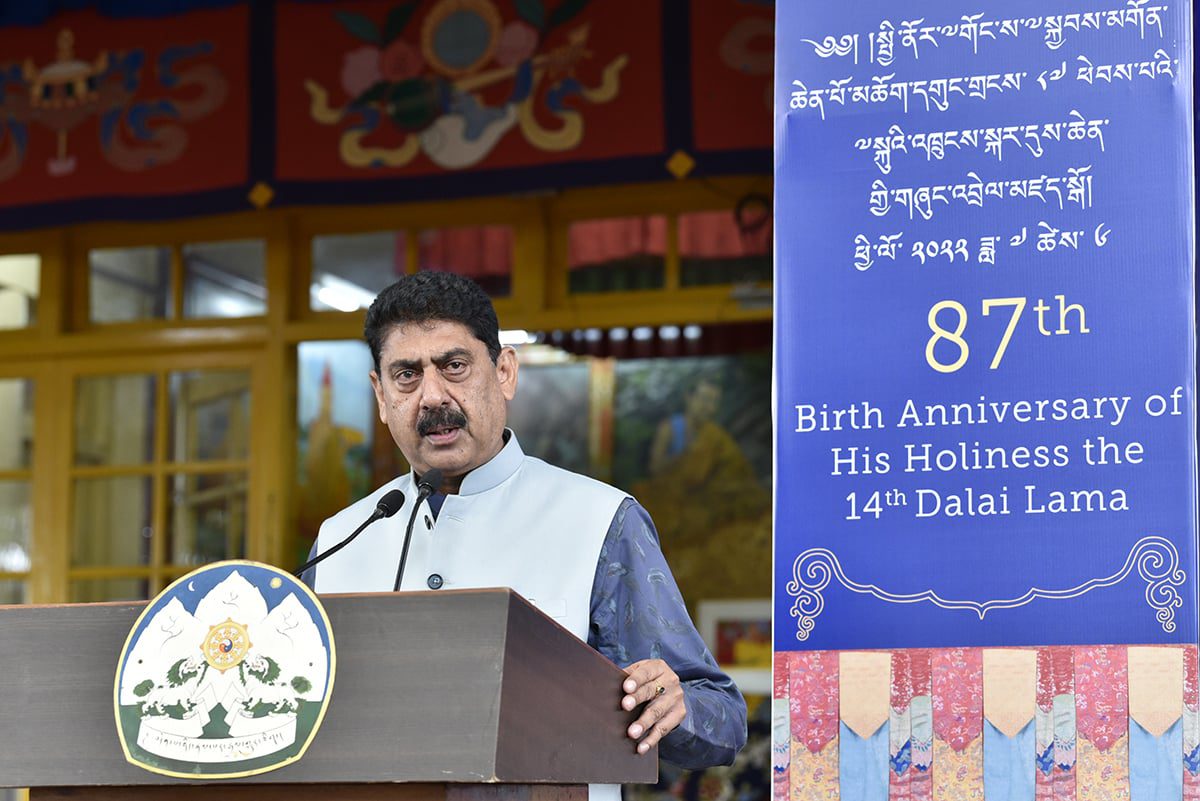
Forest Minister Shri Rakesh Pathania addressing the gathering. Photo / Tenzin Phende / CTA
In his addressing, Forest Minister Rakesh Pathania of Himachal Pradesh – who attended the celebration on behalf of the Chief Minister – underscored contributions of His Holiness the Dalai Lama in transforming Dharamshala into an international tourist destination through his presence and mentioned the inclusion of the latter’s life-story in Himachal school’s syllabus. In addition, he said, “We stand with you on this fight for independence, and we will always stand with you in this fight of independence”, at the event.
Furthermore, Dr Vijay Jolli, senior BJP leader, bestowed a framed birthday message of senior RSS leader Indresh Kumar to the Sikyong Penpa Tsering during the celebration.
Senior BJP leader Dr Vijay Jolly and Shri Rishi Walia presenting a framed birthday message to Sikyong Penpa Tsering. Photo / Tenzin Phende / CTA
The special guest Richard Gere also spoke to the gathering, saying, “Tibetans, you should be proud” since “once, not in a lifetime, once in a millennium, maybe in two millennia, such a person, such a human being as the Dalai Lama emerges and he is a Tibetan”, he continues, however, “His Holiness is not going to be here forever, he is going to leave this body at some point” therefore “we can’t rely on the Dalai Lama to carry all of us. We have to carry each other, and it’s going to happen soon enough that that reality hits us. It’s up to the Tibetan people to carry the weight of your freedom, the weight of your truth, the weight of your possibilities, and the weight of your vision.” Hence, “in that context of knowing, we all have to step up”, said actor Richard Gere while recollecting his first visit to Dharamshala 40 years before as well as his experiences during the conferment of Noble Peace Prize to His Holiness the Dalai Lama in 1989 where His Holiness talked about the mankind’s responsibilities towards the earth and its environment.
Friend of His Holiness the Dalai Lama and staunch Tibet supporter Richard Gere addressing the gathering. Photo / Tenzin Phende / CTA
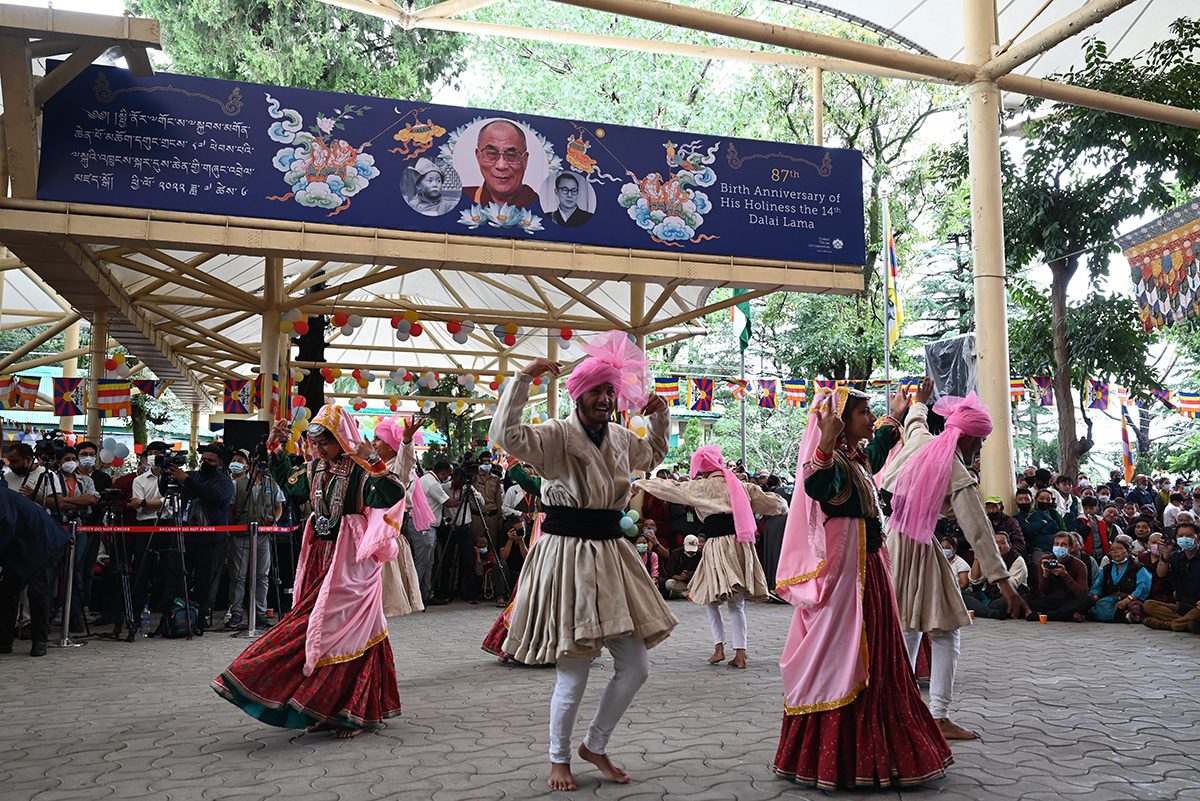
The 87th birthday celebration of His Holiness at the Tibetan main temple also saw a wide variety of folk dance performances from various communities. At the same time, several awards were presented to the recipients during the event, namely the Department of education’s non-formal research program award, community health care award from the Health Department, service completion award and service excellence award of CTA.
Apart from these, many prominent leaders and high-profile personalities across the globe have also wished long and healthy life to His Holiness the Dalai Lama on his birthday through different mediums and platforms.
Cultural dance performance at the official celebration. Photo / Tenzin Phende / CTACultural dance performance at the official celebration. Photo / Tenzin Phende / CTA