CEC Executive Secretary for Theological Dialogue Katerina Pekridou reflected on “Reforming the vision of Christian unity” a topic in focus at the Fifth International Conference on Receptive Ecumenism, held at the Sigtuna Foundation, Sweden, from 27 to 30 June.
“The abiding ecumenical goal of full structural and sacramental unity will be assisted, if each tradition focuses on what it is that it has to learn and needs to learn from the other traditions,” said Pekridou. “This reflects a move away from ideal theorized, purely doctrinally driven ecclesiological constructs in ecumenical dialogue and a significant progress.”
The Conference was hosted by the Christian Council of Sweden, University College Stockholm and the Sigtuna Foundation. The event explored fresh ecumenical methodology of receptive ecumenism under the theme “Transforming Ecumenism – listen to what the Spirit is saying to the churches”.
Rev. Dr Olle Kristenson, member of CEC thematic group on ecclesiology and mission, from the Christian Council of Sweden, coordinated organisation of the conference.
The UN Secretary-General’s final day in Suriname began on a small plane and ended at a podium. A 90-minute flyover from Paramaribo into the Central Suriname Nature Reserve revealed to António Guterres the astounding beauty of the Amazon but also spotlighted the threats the rainforest is facing from mining and logging activities, and climate change.
The Reserve, a UNESCO World Heritage Site, is an immense protected area covering around 11 percent of the national territory, is recognized for its tabletop mountains and endless biodiversity – some believed to be undiscovered – and remains for the most part inaccessible and unaffected by human activity.
From above, the rainforest canopy was painted with countless shades of green, with some treetops covered in waves of orange or even purple flowers. Along the way, the mighty Coppename River, as well as the upstream parts of the Lucie, Saramacca, and Suriname Rivers flowed by the trees in what looked like a landscape painting.
UN News/Laura Quiñones
The Central Suriname Nature Reserve, pictured here, comprises 1.6 million ha of primary tropical forest of west-central Suriname.
However, before reaching the protected area, the UN chief could see that Suriname’s forests are seriously threatened by the activities of the mining sector and timber production, both fuelled by incentives to boost economic activities. Strikingly visible above the deep green canopy, the brownish patches of deforestation, evidence of destructive gold mining and flooding were difficult to miss.
UN News/Laura Quiñones – Suriname is the most forested country in the world, but its pristine rainforests are being threatened, among others, by mining for gold, bauxite and kaolin.
A moment of ‘maximum peril’
Although Suriname is part of the South American continent, it is considered a Caribbean nation due to its history, culture, and the similar challenges it faces with the small island nations.
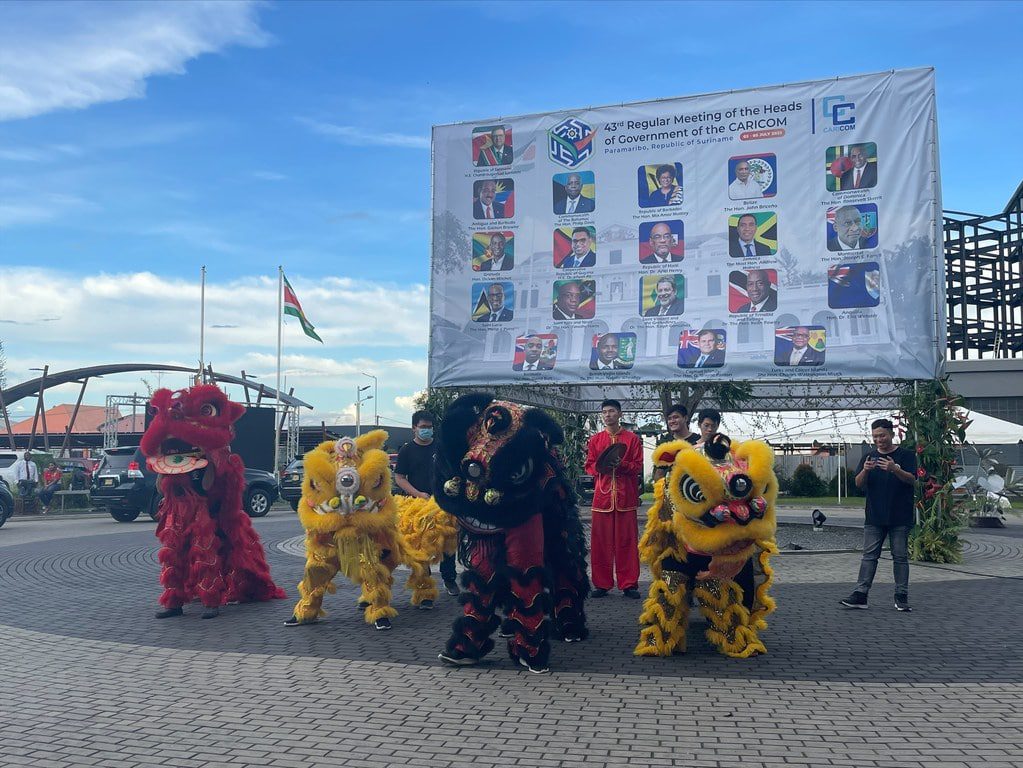
Later on Sunday, the UN chief arrived at the Assuria Event Centre in Paramaribo, to attend the opening of the 43rd Caribbean Community and Common Market (CARICOM) Conference.
Mr. Guterres’s arrival was met with four distinct music and cultural performances. The short walk showcased Suriname’s unique ethnic diversity, a product of its long history and Dutch colonization. Afro-Surinamese, East Indian, Indigenous natives, Chinese and Javanese descendants presented their traditional dances and folkloric sounds
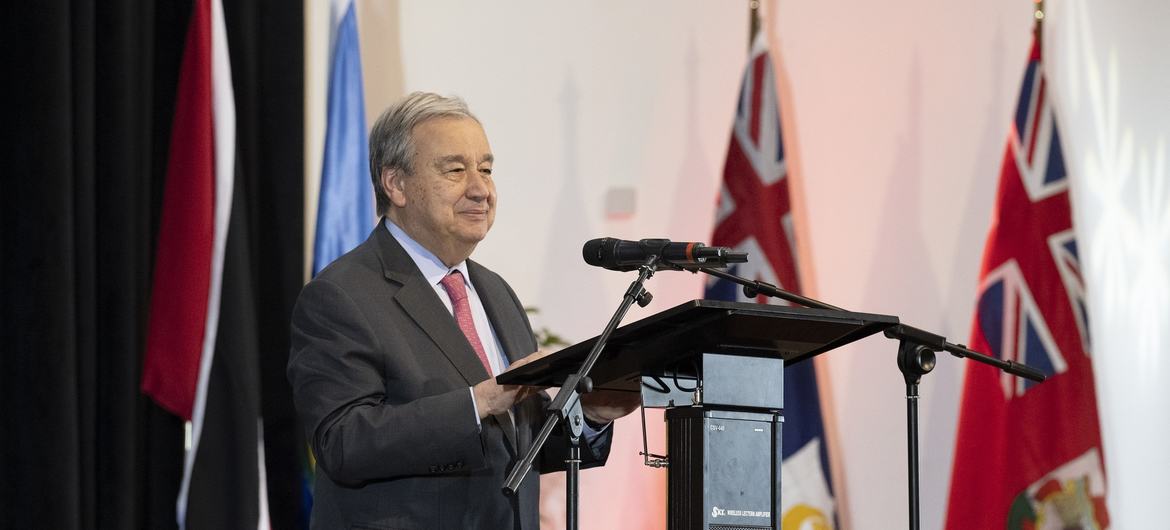
At the podium, the Secretary-General highlighted the region’s diversity and climate action leadership, while outlining a series of actions to be taken in the face of the planetary crisis, the ongoing COVID-19 pandemic, and global financial challenges.
“Rich in diversity, uniting land and sea, and protecting fragile coastal ecosystems, mangroves are a fitting symbol of Caribbean nations – facing challenges, seizing opportunities, preserving natural gifts,” the UN chief told the region’s Heads of State and Government on Sunday, inspired by his isit to these coastal carbon-sink wonders in Paramaribo a day before.
Mr. Guterres recognized that the small island low-lying coastal states of the Caribbean are especially vulnerable to what he called “the biggest challenge facing our world today” — the climate crisis.
“The Caribbean is ground zero for the global climate emergency,” he said, underlining that unfortunately, it is not the only challenge that the region is facing.
“This year’s CARICOM summit comes at a moment of maximum peril – for people and planet alike,” he added, referring to the devastating effect of the COVID-19 pandemic on health systems and tourism, as well as on economic growth and foreign investment, now exacerbated by the war in Ukraine.
UN News/Laura Quiñones – A group of Chinese-Surinamese dance and sing while Heads of State and Government arrive to the 43rd CARICOM Conference in Paramaribo, Suriname.
Bold solutions
The Secretary-General told the CARICOM leaders that bold solutions were necessary to tackle these issues, highlighting three.
1. Match climate action to the scale and urgency of the crisis
Mr. Guterres called for urgent and transformative emissions reduction to halt global warming at a 1.5C, support for adaptation from climate impacts, and financial assistance to secure resilience.
“I thank Caribbean leaders for helping to show the way. I am inspired by your many efforts to safeguard your incredible biodiversity and natural gifts, including by the efforts of the indigenous communities,” he said.
He added that more ambition and climate action are needed by all, but specially the G20 who account for 80 per cent of global emissions.
“The war in Ukraine cannot lead to short-sighted decisions that shut the door on 1.5C. With the commitments presently registered, emissions are still predicted to grow by 14 per cent through 2030. This is simply suicide – and it must be reversed.”
The UN chief stressed that wealthier countries need to lead the way in a just and equitable “ renewables revolution ”, and they need to fulfil their promise to deliver $100 billion in climate finance for adaptation starting this year.
“And it is time for a frank discussion and space for decision-making regarding the loss and damage that your countries are already experiencing,” he emphasised.
UN News/Evan Schneider – UN Secretary-General António addresses the opening ceremony of the 43rd regular meeting of the Conference of Heads of Government of the Caribbean Community (CARICOM), which is taking place from July 3-5 in Paramaribo, Suriname.
2. Reform ‘morally bankrupt’ global financial system and spur sustainable recovery
The Secretary General underlined that developing economies need access to financing at no or low costs, as well as debt relief and restructuring.
“On the debt side, we need immediate relief for developing countries whose debt is about to become due,” he said.
The UN chief added that he fully supports the creation of a Caribbean Resilience Fund and the reform of the international financial system to help the region better respond and prevent massive vulnerability to external shocks.
“Clearly, our old metrics have failed us. It’s time to change them,” Mr. Guterres said, proposing to move beyond the financial system’s preoccupation with per capita income, and establishing a ‘multidimensional vulnerability index’ to determine access to financial support.
“For your countries, this would mean ensuring that the complex and interdependent factors of debt and climate change impact are captured in any eligibility analysis for debt relief and financing,” he told the Caribbean Heads of State and Government.
3. Keep up the combat against the COVID-19 pandemic
The Secretary-General made a push for governments, organizations and pharmaceutical companies to work better together to locally produce tests, vaccines and treatments.
“We’re not out of the woods yet… And we need to continue working closely together to stop the spread of the virus across the Caribbean through proven public health measures and prepare for future pandemics through bold investments in preparedness and training,” he stated, and stressed that countries must never again be so unprepared.
Finally, Mr. Guterres reaffirmed the support of the United Nations to the Caribbean to work towards these solutions.
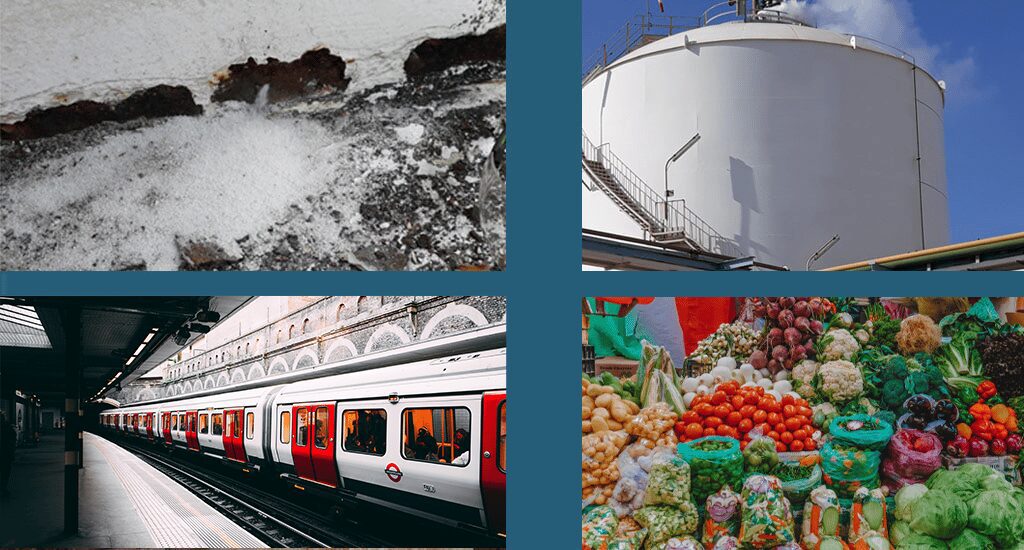
Critical entities, such as energy, transport, health, drinking water, waste water and space
The Council presidency and the European Parliament reached a political agreement on the directive on the resilience of critical entities.
Work will now continue at technical level to finalise the provisional agreement on the full legal text. This agreement is subject to approval by the Council and the European Parliament before going through the formal adoption procedure.
This directive aims to reduce the vulnerabilities and strengthen the physical resilience of critical entities. These are entities providing vital services on which the livelihoods of EU citizens and the proper functioning of the internal market depend. They need to be able to prepare for, cope with, protect against, respond to and recover from natural disasters, terrorist threats, health emergencies or hybrid attacks.
The text agreed today covers critical entities in a number of sectors, such as energy, transport, health, drinking water, waste water and space. Central public administrations will also be covered by some of the provisions of the draft directive.
Member states will need to have a national strategy to enhance the resilience of critical entities, carry out a risk assessment at least every four years and identify the critical entities that provide essential services. Critical entities will need to identify the relevant risks that may significantly disrupt the provision of essential services, take appropriate measures to ensure their resilience and notify disruptive incidents to the competent authorities.
The proposal for a directive also establishes rules for the identification of critical entities of particular European significance. A critical entity is considered of particular European significance if it provides an essential service to six or more member states. In this case, the Commission may be requested by the member states to organise an advisory mission or it may itself propose, with the agreement of the member state concerned, to assess the measures the entity concerned has put in place to meet the obligations related to the directive.
Background
The European Commission presented a proposal for a directive on the resilience of critical entities in December 2020. Once adopted, the proposed directive will replace the current directive on the identification and designation of European critical infrastructure, adopted in 2008.
A 2019 evaluation of that directive highlighted the need to update and further strengthen the existing rules in light of the new challenges facing the EU, such as the rise of the digital economy, the growing impacts of climate change, and terrorist threats. The current COVID-19 pandemic has shown in particular how exposed critical infrastructures and societies can be to a pandemic and the high level of interdependence that exists among EU member states as well as globally.
Together with the proposed directive on critical entities, the Commission also presented a proposal for a directive on measures for a high common level of cybersecurity across the EU (NIS 2), which aims to respond to the same concerns for the cyber dimension. The Council and the Parliament reached an agreement on this proposal in May 2022.
In September 2020, the Commission presented a proposal for a Digital Operational Resilience Act (DORA), which will strengthen the IT security of financial entities such as banks, insurance companies and investment firms. It aims to make sure the financial sector in Europe is able to maintain resilient operations through a severe operational disruption. The Council and the Parliament reached an agreement on this proposal in May 2022.
Member states will need to ensure a coordinated implementation of all three legislative texts.
The Council today adopted its negotiating position (general approach) on a proposal to limit the consumption of products contributing to deforestation or forest degradation.
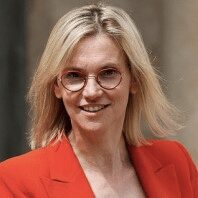
We must ensure that the products we consume at home do not contribute to depleting the planet’s forest reserves. The innovative text that we have adopted will make it possible to combat deforestation, within the European Union but also outside of it. This is a major step forward which also illustrates our ambition for the climate and for biodiversity. – Agnès Pannier-Runacher, French minister for the energy transition
The Council agreed to set mandatory due diligence rules for all operators and traders who place, make available or export the following products from the EU market: palm oil, beef, timber, coffee, cocoa and soy. The rules also apply to a number of derived products such as leather, chocolate and furniture.
The Council simplified and clarified the due diligence system, while preserving a strong level of environmental ambition. The general approach avoids duplication of obligations and reduces administrative burden for operators and member states’ authorities. It also adds the possibility for small operators to rely on larger operators to prepare due diligence declarations.
The Council agreed to set up a benchmarking system, which assigns to third and EU countries a level of risk related to deforestation (low, standard or high). The risk category would determine the level of specific obligations for operators and member states’ authorities to carry out inspections and controls. This would mean an enhanced monitoring for high-risk countries and simplified due diligence for low-risk countries. The Council clarified the control obligations and set quantified objectives of minimum control levels for standard- and high-risk countries. The purpose is to set effective and targeted measures.
The Council maintained provisions regarding effective, proportionate and dissuasive penalties and enhanced cooperation with partner countries, as proposed by the Commission.
The Council modified the definition of ‘forest degradation’ to mean structural changes to forest cover, taking the form of the conversion of primary forests into plantation forests or into other wooded land.
Lastly, the Council strengthened the human rights aspects of the text, notably by adding several references to the United Nations Declaration on the Rights of Indigenous Peoples.
Background and next steps
The Commission published its proposal for a regulation on 17 November 2021. The main driver of global deforestation and forest degradation is the expansion of agricultural land, which is linked to the production of those commodities included in the scope of the regulation. As a major consumer of such commodities, the EU can reduce its impact on global deforestation and forest degradation by adopting new rules to regulate the entry into the EU market and the export from the EU of these commodities in a way that makes sure these products and supply chains are ‘deforestation-free’.
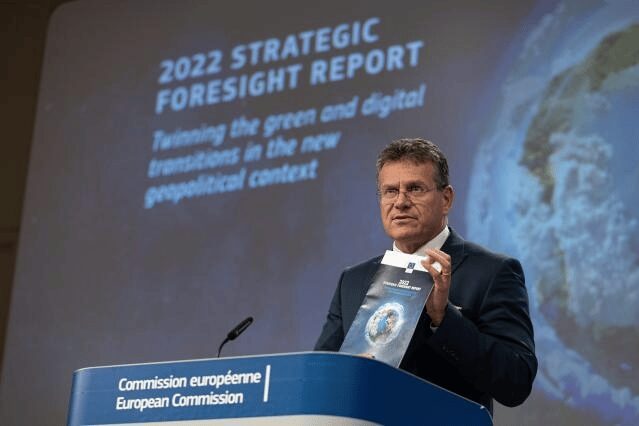
2022 Strategic Foresight Report: twinning the green and digital transitions in the new geopolitical context
The Commission has today adopted the 2022 Strategic Foresight Report – “Twinning the green and digital transitions in the new geopolitical context”. As we prepare to accelerate both transitions, the report identifies ten key areas of action with the objective of maximising synergies and consistency between our climate and digital ambitions. By doing so, the EU will strengthen its cross-sector resilience and open strategic autonomy, and be better prepared to face new global challenges between now and 2050.
Maroš Šefčovič, Vice-President for interinstitutional Relations and Foresight said: “To reach climate neutrality by 2050, we need to unleash the power of digitalisation. At the same time, sustainability must be at the heart of the digital transformation. That is why this Strategic Foresight Report takes a deeper look at how to best align our twin objectives, especially as they take on a significant security dimension due to the current geopolitical shifts. For instance, from 2040, recycling could be a major source of metals and minerals, inevitable for new technologies, if Europe fixes its shortcomings in the area of raw materials. Understanding this interplay between the twin transitions, while striving for open strategic autonomy, is the right way forward.”
The green and digital transitions are at the top of the Commission’s political agenda set out by President von der Leyen in 2019. In light of Russia’s aggression against Ukraine, Europe is accelerating its embrace of climate and digital global leadership, with eyes firmly on key challenges, from energy and food, to defence and cutting-edge technologies.From this perspective, the 2022 Strategic Foresight Report puts forward a future-oriented and holistic analysis of the interactions between the twin transitions, taking into account the role of new and emerging technologies as well as key geopolitical, social, economic and regulatory factors shaping their twinning – i.e. their capacity to reinforce each other.
Technologies essential for the twinning towards 2050
On one hand, digital technologies help the EU achieve climate neutrality, reduce pollution and restore biodiversity. On the other hand, their widespread use is increasing energy consumption, while also leading to more electronic waste and bigger environmental footprint.
Energy, transport, industry, construction, and agriculture – the five biggest greenhouse gas emitters in the EU – are key for a successful twinning of the green and digital transitions. Technologies will play a key role in reducing these sector’s carbon footprint. By 2030, most reductions in CO2 emissions will come from technologies available today. However, achieving climate neutrality and circularity by 2050 will be enabled by new technologies currently at the experimental, demonstration or prototype phase.
For example:
In the energy sector, novel sensors, satellite data and blockchain could help strengthen the EU’s energy security, by improving the forecasting of energy production and demand, by preventing weather-related disruptions or by facilitating cross-border exchanges.
In the transport sector, a new generation of batteries or digital technologies, like artificial intelligence and internet of things will enable major shifts towards sustainability and multimodal mobility across different modes of transport, even short–distance aviation.
Across industrial sectors, digital twins – a virtual counterpart of a physical object or process, using real-time data and machine learning, – could help improve design, production and maintenance.
In the construction sector, building information modelling could improve energy and water efficiency, affecting design choices and use of buildings.
Finally, in the agriculture sector, quantum computing, in combination with bioinformatics, can enhance understanding of the biological and chemical processes needed to reduce pesticides and fertilisers.
Geopolitical, social, economic and regulatory factors affecting the twinning
The current geopolitical instability confirms the need to not only accelerate the twin transitions but to also reduce our strategic dependencies. In the short-term, this will continue affecting energy and food prices, with the significant social fallout. In the medium- and long-term, for instance, sustainable access to rawmaterials critical for the twin transitions will remain of paramount importance, adding pressure to move to shorter and less vulnerable supply chains and to friend-shoring wherever possible.
The twinning will also require hinging the EU’s economic modelon wellbeing, sustainability and circularity. The EU’s position in shaping global standards will play an important part, while social fairness and the skills agenda will be amongst the conditions for success, alongside the mobilisation of public and private investment. It is expected that almost €650 billion will be needed in additional future-proof investment annually until 2030.
Ten key areas of action
The report identifies areas where a policy response is needed to maximise opportunities and minimise potential risks stemming from the twinning:
Strengthening resilience and open strategic autonomy in sectors critical for the twin transitions via, for instance, the work of the EU Observatory of Critical Technologies, or the Common Agricultural Policy in ensuring food security.
Stepping up green and digital diplomacy, by leveraging the EU’s regulatory and standardisation power, while promoting EU values and fostering partnerships.
Strategicallymanagingsupply of critical materials and commodities, by adopting a long-term systemic approach to avoid a new dependency trap.
Strengthening economic and social cohesion, by for instance, reinforcing social protection and the welfare state, with regional development strategies and investment also playing an important role.
Adapting education and training systems to match a rapidly transforming technological and socio-economic reality as well as supporting labour mobility across sectors.
Mobilising additional future-proof investment into new technologies and infrastructures – and particularly into R&I and synergies between human capital and tech –with cross-country projects key to pooling EU, national and private resources.
Developing monitoring frameworks for measuring wellbeing beyond GDP and assessing the enabling effects of digitalisation and its overall carbon, energy and environmental footprint.
Ensuring a future-proof regulatory framework for the Single Market, conducive to sustainable business models and consumer patterns, for instance, by constantly reducing administrative burdens, updating our state aid policy toolbox or by applying artificial intelligence to support policymaking and citizens’ engagement.
Stepping up a global approach to standard-setting and benefitting from the EU’s first mover advantage in competitive sustainability, centred around a ‘reduce, repair, reuse and recycle’ principle.
Promoting robust cybersecurity and secure data sharing framework to ensure, among other things, that critical entities can prevent, resists and recover from disruptions, and ultimately, to build trust in technologies linked to the twin transitions.
Next steps
The Commission will continue to advance its Strategic Foresight Agenda, while informing the Commission Work Programme initiatives for next year.
On 17-18 November 2022, the Commission will co-organise the annual European Strategy and Political Analysis System (ESPAS) conference to discuss the conclusions of the 2022 Strategic Foresight Report and prepare the ground for the 2023 edition.
Background
Strategic foresight supports the Commission on its forward-looking and ambitious path towards achieving President von der Leyen’s six headline ambitions. As of 2020, based on full foresight cycles, annual Strategic Foresight Reports are prepared to inform the Commission’s priorities defined in the annual State of the Union address, the Commission Work Programme and multi-annual programming.
This year’s report builds on the 2020 and 2021 Strategic Foresight Reports, which focused on resilience as a new compass for EU policymaking and on the EU’s open strategic autonomy, respectively.
2. “Half Homemade, Fully Delicious” • David Venable
3. “The Power of One More” • Ed Mylett
4. “An Immense World” • Ed Yong
5. “Killing the Killers” • O’Reilly/Dugard
6. “James Patterson” • James Patterson
7. “The Game Master’s Book of Traps, Puzzles and Dungeons” • Jeff Ashworth
8. “Happy-Go-Lucky” • David Sedaris
9. “Leading With Heart” • Baird/Sullivan
10. “I’d Like to Play Alone, Please” • Tom Segura
MASS MARKET
1. “Complications” • Danielle Steel
2. “The Return” • Nicholas Sparks
3. “Summer Shadows” • Nora Roberts
4. “No Way Out” • Fern Michaels
5. “Better Off Dead” • Child/Child
6. “Deadly Cross” • James Patterson
7. “Autopsy” • Patricia Cornwell
8. “When the Shooting Starts” • Johnstone/Johnstone
9. “Montana” • Debbie Macomber
10. “Taming a Texan” • Diana Palmer
TRADE PAPERBACK
1. “Verity” • Colleen Hoover
2. “Reminders of Him” • Colleen Hoover
3. “Jujutsu Kaisen, Vol. 16” • Gege Akutami
4. “Book Lovers” • Emily Henry
5. “Every Summer After” • Carley Fortune
6. “Malibu Rising” • Taylor Jenkins
7. “The Judge’s List” • John Grisham
8. “The Love Hypothesis” • Ali Hazelwood
9. “Wish You Were Here” • Jodi Picoult
10. “Chainsaw Man, Vol. 11” • Tatsuki Fujimoto
{!–BriefBoldBulletStop–}
Here are the bestsellers at area independent stores for the week that ended June 26. Stores reporting: the Book House, Left Bank Books, Main Street Books, the Novel Neighbor, Subterranean Books.
1. “Book Lovers” • Emily Henry
2. “Happy-Go-Lucky” • David Sedaris
3. “How to Raise an Antiracist” • Ibram X. Kendi
4. “Last Summer on State Street” • Toya Wolfe
5. “The Final Girl Support Group” • Grady Hendrix
6. “Crying in H Mart” • Michelle Zauner
7. “The House Across the Lake” • Riley Sager
8. “The Song of Achilles” • Madeline Miller
9. “The Twilight World” • Werner Herzog
10. “It All Comes Down to This” • Therese Anne Fowler
CHILDREN/YOUNG ADULTS
1. “Meet Cute Diary” • Emery Lee
2. “This Wicked Fate” • Kalynn Bayron
3. “Goodnight Racism” • Kendi/Bayoc
4. “A Court of Mist and Fury” • Sarah J. Maas
5. “Stamped (For Kids): Racism, Antiracism, and You” • Jason Reynolds
6. “I Kissed Shara Wheeler” • Casey McQuiston
7. “The Mysterious Benedict Society” • Trenton Lee Stewart
The study authors hope to use their discovery to one day develop new cellular therapies.
Processes in the human body transform harmless immune cells into ruthless killers
According to a recent study, the human body has the capability to change normally harmless immune cell clusters into merciless killers that can attack tumor cells and other cells harboring viruses or parasites.
Gamma delta T cells were formerly believed to be “pre-programmed” to identify and eliminate other rogue cells, but it now seems that certain types of the cells have a lot in common with well-known “adaptive” subsets of conventional T cells.
In a recent publication in Cell Reports, an international team of scientists from the UK, Australia, China, the Netherlands, and the USA—led by the University of Birmingham—noted striking parallels to typical adaptive “killer” T cells.
Senior co-author Professor Ben Willcox, from the University of Birmingham, commented: “Human gamma delta T cells have typically been assumed to be pre-programmed, however, our study shows that at least in blood, some types mirror the behavior of conventional T cells – suggesting they can be ‘trained’ to become extremely potent killers once they recognize aberrant target cells – including those infected with viruses, parasites, or possibly tumor cells.
“Our discovery has implications for efforts to develop gamma delta T cells as novel cellular therapies. We hope that it will change the way scientists think about these cells and how they might contribute to the treatment of cancer and infectious disease.”
Funded substantially by a Wellcome Trust Investigator Award, the group examined the profile of gene expression in human gamma delta T cells – showing the cells in a much more ‘adaptive’ light.
Gamma delta cells exist alongside alpha beta T cells and B cells in vertebrates. Researchers have discovered that select human gamma delta T cells appear to transform their pattern of gene expression to activate a ‘killer’ program – dependent on their exposure to abnormal target cells, with successful recognition of such targets likely a key factor triggering this transformation and subsequent attack.
An extremely strong similarity to conventional adaptive killer T cells suggests that the unique contribution of gamma delta T cells is not the type of response they ultimately mount – such as killing a target cell – but that they are able to recognize abnormal target cells in a very different way.
This suggests that they can mount unconventional adaptive responses in situations when conventional adaptive T cells cannot:
Lead author Jack McMurray, from the University of Birmingham, commented: “There are a number of scenarios in which gamma delta T cells may be uniquely suited to respond, due to their unconventional recognition capabilities. These include particular microbial, parasitic, and viral infections, and potentially some cancers.
“Our research provides a basis for ongoing studies to understand how such unconventional adaptive gamma delta T cell responses are triggered, and also for efforts to harness such responses to develop new and more effective treatments for infections and cancer.”
Reference: “Transcriptional profiling of human Vδ1 T cells reveals a pathogen-driven adaptive differentiation program” by Jack L. McMurray, Anouk von Borstel, Taher E. Taher, Eleni Syrimi, Graham S. Taylor, Maria Sharif, Jamie Rossjohn, Ester B.M. Remmerswaal, Frederike J. Bemelman, Felipe A. Vieira Braga, Xi Chen, Sarah A. Teichmann, Fiyaz Mohammed, Andrea A. Berry, Kirsten E. Lyke, Kim C. Williamson, Michael J.T. Stubbington, Martin S. Davey and Carrie R. Willcox, 24 May 2022, Cell Reports. DOI: 10.1016/j.celrep.2022.110858
What are the health ramifications, especially related to cancer, of BBQ grilling meat over an open flame?
Barbecue is sometimes promoted as a healthier style of cooking. When compared to cooking methods like frying which have long been considered extremely unhealthy, grilling appears to be less fatty. Along with reducing fat intake, barbecue may limit exposure to dangerous compounds created when cooking oil is heated. Usually, barbecuing takes place outdoors, which means it won’t normally affect indoor air quality. Even with all those benefits, there are some serious concerns about cooking foods — especially meat — over an open flame. The main concern is cancer.
How Barbecue Might Increase Cancer Risk
When meat is heated over an open flame, there is the potential for two sets of carcinogenic compounds to form. Creatine is an organic acid in meat prized by bodybuilders and that may have various health benefits and one major downside. The downside is that it turns into cancer-causing heterocyclic amines (HCAs) when heated. The other carcinogenic compound shows up when the fat from cooking meat drips down onto hot coals. The burning fat rises as polycyclic aromatic hydrocarbons (PAHs) in the smoke and sticks to the meat.
At this point, it is important to note that neither of the above chemicals has been proven to cause cancer in humans. They have caused cancer in lab animals at higher doses than humans are likely to consume. There is also an association between grilled meat intake and a precursor of colon cancer known as colorectal adenoma.
How to Lower the Cancer Risk of Barbecued Meat
The first step that some experts suggest is to avoid charcoal as a cooking fuel given the risk of PAHs being created. Given that there is no proof of charcoal being more likely to cause cancer than any other cooking fuel, grill cooks may want to try one of two other suggested methods for lowering cancer risk:
Marination
Marinating meat is good for more than just tenderness and flavor. Marination appears to lower the cancer risk from grilled meats. Researchers found that marinating meat for at least 20 minutes before grilling lowered the concentration of carcinogenic compounds by 72 percent according to one study. One contributing factor to the health benefits of marinades may be the presence of herbs that contain powerful antioxidants.
Microwaving
By microwaving meat before grilling it, it is possible to release some of the fat. The fat is what causes the barbecue flare-ups and generates the PAHs. Microwaving also lessens the time the meat has to spend over the flame. Less time means less exposure to carcinogens.
Leaner Cuts
The cancer risk from consuming grilled meat may be reduced with leaner cuts. There isn’t as much fat in the leaner meat, so there will be less to melt and drip onto the coals and produce the PAHs.
Clean The Grill
The accumulation of charred gunk on grill grates may lead to some of the compounds being transferred to food. The danger can be limited by a thorough cleaning of grates with each cooking session.
Line the Grill
Protecting meat from carcinogens in burning fat makes it safer to eat. A cook can reduce the amount of fat that gets to the coals by lining grill grates with foil. To ensure that the meat does get some flavor benefits from the smoke and for better ventilation, the cook can poke some holes in the foil.
Whether or not cooking over an open flame increases cancer risk, it makes sense to be aware of the danger and take precautions just in case. The simple steps above may help to keep exposure low.
Gifts of Islam – 1.5 to 2 billion of the world’s people identify as Muslim. That means that nearly 1 out of 4 people in the world believe in the Quran as the Holy Scripture, the Oneness of Allah and Muhammed as the Prophet of Allah. Threatened by capture and death for daring to preach the worship of one God who treats all people equally in a land divided strictly by class, Muhammed fled Mecca in 622 C.E. to the town of Medina, where, destitute and starving, his first teaching was: Spread peace, feed the hungry, maintain ties with your family and pray while others sleep.
What are the current gifts of Islam? To answer that question, one need look only to the gifts given us by Muslims, especially in light of the increased suspicion and bigotry born of ignorance and falsehoods generated by media and politicians that have been directed at them in recent years to the point where a recent survey revealed that 48% of American Muslims said they had personally experienced some form of discrimination because of their religion in the previous year.
Consequently, an American Muslim today, as one of about 3.5 million, or barely one percent of the total inhabitants of the U.S., must sometimes feel the way Muhammed must have felt so long ago in Mecca: the object of suspicion, dislike, and ridicule, often the target of hate and abuse.
Muslims have responded to that hate with love and affirmation of their faith. A hate murder of three Muslim students in North Carolina resulted not in condemnation, but in a grassroots coast-to-coast campaign to feed the hungry. Within a month, over 300 Muslim groups sprang up across the U.S., giving canned food and meals to the needy.
In Detroit, Muslims helped over 30,000 people regain clean water. In a two-year period Muslims fed over 90,000 meals to the hungry. Muslims raised a quarter of a million dollars for Hurricane Katrina relief, have donated over half a million dollars to the Salvation Army in Washington, D.C., organized over 900 blood drives in three years and raised over 100,000 dollars for black churches targeted by arson.
There are over 20,000 Muslim doctors in the U.S. operating over 100 free medical clinics, open to everyone, regardless of race or creed.
Muslim-Americans gave more to charity in 2020 than any other group in the U.S. And this from a group that comprises just slightly over one percent of the U.S. population.
Muhammed arrived in Medina, barely alive, having escaped persecution, humiliation and death in Mecca.
American Muslims, despite everything that’s been thrown at them, continue to heed his words—those he delivered after arriving, starving and weak, to his new homeland: Spread peace, feed the hungry, and pray while other people are sleeping and you will enter Paradise in peace.
A series of MEPs travelled to Istanbul and met with Patriarch Bartholomew I of Constantinople, where they discussed about real orthodoxy and war.
“We must work for peace in Europe in every possible way. The churches have a key role to play in these efforts”, stressed MEP György Hölvényi after meeting with the Universal Patriarch Bartholomew I of Constantinople in Istanbul on 30 June. The co-chairman of the EPP Group’s Interreligious Dialogue Working Group visited the Ecumenical Patriarchate of Constantinople with his colleagues at the invitation of Patriarch Bartholomew I, the most eminent personality of Eastern Orthodox Christianity.
“We must work for peace in Europe in every possible way. The churches have a key role to play in these efforts”, stressed MEP György Hölvényi after meeting with the Universal Patriarch Bartholomew I of Constantinople in Istanbul on 30 June. The co-chairman of the EPP Group’s Interreligious Dialogue Working Group visited the Ecumenical Patriarchate of Constantinople with his colleagues at the invitation of Patriarch Bartholomew I, the most eminent personality of Eastern Orthodox Christianity.
“The visit comes in the midst of Russian aggression in Ukraine”, MEP György Hölvényi stressed in the context of the meetings in Istanbul. Orthodoxy has always been an important part of European history and cultural heritage. European decision-makers need to keep these foundations in mind and engage much more closely with religious leaders now, during the war.
Patriarch Bartholomew I stressed at the meeting that “There is no holy war. The present one is also a vicious war, which can only end with the establishment of peace as soon as possible.” In these difficult times, the Archbishop said, cooperation between different churches and denominations is more important than ever.
Commenting on the increasingly extreme European secularisation, he said that in Europe, despite the continent’s many assets, anti-religious phenomena can have a high cost, as threats to freedom of expression imply restrictions on religious freedom.
During the visit, the MEPs, including former EP President Antonio Tajani, also met Metropolitan Emmanuel of Chalcedon, one of the EPP Group’s longest-standing partners on European issues on behalf of the Ecumenical Patriarchate.
MEP György Hölvényi recalled that the EPP has been working with the Orthodox Church since 1996, a unique cooperation among the political groups in the European Parliament. The politician also recalled the particularly close relations between Hungary and Patriarch Bartholomew I. For example, as Secretary of State for Church Relations, he was involved in the conclusion of the international agreement with the Ecumenical Patriarchate of Constantinople in March 2014.