Good evening every one. First of all let me thank you, dear Prime Minister, dear Petr, for your warm welcome. It’s a great pleasure for me to be back in Prague, and to be back for an important moment, because in a few hours it will be the official start, the formal start of your rotating Presidency. You are taking the reins at a turning point for Europe: never has our Union faced such great challenges.
I welcome the priorities of your Presidency. We have many challenges ahead: the war in Ukraine, security and defence, energy, and the resilience of our economies. And I confirm that on October 6th and 7th, you will host the 27 European leaders for the informal meeting of the European Council. Thank you very much for that.
The EU’s unwavering support for Ukraine will be at the heart of your Presidency. I would like to thank you for your support on sanctions and for hosting Ukrainian refugees fleeing the war.
The EU will continue to provide robust support to Ukraine: financial, humanitarian and political. We have already mobilised 2 billion euros to provide military equipment.
But Ukraine needs more. And we are committed to providing more: more military support and more financial support. We are also ready to play an important role for the reconstruction of Ukraine: the destruction is massive and so are the needs.
Another important element: the war is also reshaping the European Union. Just last week, at our European Council meeting, we agreed to give Ukraine and Moldova candidate status. This is a historic moment for those countries, but also for the future of our European Union.
We will also work together to bolster Europe’s defence and security capabilities and your work to quickly develop the Hybrid Toolbox will be key to counter hybrid threats such as foreign interference, disinformation and disruptions in cyberspace.
We will of course also cooperate with partners in NATO. We were together a few hours ago and yesterday, and we participated in the NATO Summit, in Madrid. It was the occasion to reaffirm the strong ties, the strong strategic partnership between the EU and NATO.
Energy security is another example of the destructive impact of Russia’s war, and together, we must live up to our goal of phasing out Russian gas, oil and coal. We will also work together to reinforce our energy security by diversifying our energy sources, bolstering energy efficiency and speeding up renewable and low-energy sources.
And you will have the important task of leading the negotiations on the different topics related to this important common challenge. And I know how you are personally committed on the table of the European Council to make sure that the European Union will take the right decisions, because we do understand the serious consequences for the businesses, for the families, for the households, because of the inflation, because of those prices, and it’s the responsibility of the EU to take the right decisions; we will cooperate, we will coordinate, we will work together, and I’m confident that we will be able to make progress on that important topic.
Finally, I welcome your strong focus on strengthening the values of democracy and the rule of law.
We also want to work, and you mentioned it, with you on this new idea to strengthen security and stability on our European continent: it’s this idea of a European Political Community. And a few days ago, when we were together in Brussels, we had over the dinner an in-depth exchange of views on this important question, this important topic. The goal would be to foster dialogue at the highest political level and to boost cooperation between European countries that share common interests.
We will work together with you, with President Macron, who proposed this idea, and we agreed to propose to have the first meeting of this European Political Community in Prague, under your rotating presidency. The best would be to have this meeting on the 6th and the 7th of October. But we will try to do everything, to consult the countries that are supposed to participate in such a European platform, and we’ll see if it’s possible in October. If not, at least we will do everything to have this meeting in Prague, by the end of the year, and by the end of your rotating Presidency. But I repeat it, what we prefer is the possibility to organise this meeting in October, in parallel with the European Council meeting that will take place here in Prague.
Finally, I had the occasion, just before our meeting, to visit the memorial of Milada Horakova. And In these dark times in Europe, her fight to preserve democratic institutions is a powerful symbol. Her legacy, together with the bravery of Czechs and Slovaks who protested the 1968 Russian invasion of Czechoslovakia, is more important than ever.
Dear Petr, dear friends, rotating presidencies have the power to drive forward our priorities and to address urgent challenges. I know we can count on your leadership and on the people of the Czech Republic, just as you can count on the EU, on me, on the full support and cooperation of the European Union.
I look forward to our close cooperation to make Europe safer and more prosperous, inspired by our common strong values. Thank you.
“Today’s meeting…is a key opportunity and platform for us to make the changes needed: To strengthen political will, scale up investment, and draw on lessons learned,” said Abdulla Shahid.
After observing a moment of silence for those killed or seriously injured on roads around the world, Mr. Shahid spelled out that “daunting and disturbing” statistics on road safety “can…[and] must change,” describing the meeting as “one step” towards that end.
He said he had five key messages on the issue, first, that “no deaths on our streets are acceptable”.
“Road safety falls under the umbrella of the universal right to health,” for which “safety is paramount”.
Secondly the Assembly President said the Global Plan was “key to reducing deaths and boosting development,” adding that safe systems must be “front and centre” in organizing, designing and building good road systems.
He said the High-Level Meeting itself on road safety, had the potential to “mark a critical juncture” in reducing deaths, and added that it was crucial for governments to implement the Global Plan’s recommendations, including by setting national and sub-national reduction targets; outlining detailed plans for action; and ensuring sustainable financing.
Stressing the significance of transformative leadership, his fourth point was to stress that road safety should be made a political priority “at the highest levels of government”.
Finally, he said, “everyone has a role to play”.
“From urban planners, to engineers, and academia, to civil society,” each person must accept their responsibilities. And mechanisms should be put in place to support them, such as in designing and maintaining roads, manufacturing vehicles, and administering safety programmes.
“The time for action from governments, societies and communities is now”, he said.
“Safe mobility systems offer the promise of a safer, healthier and better future for everyone, everywhere. Let us seize this opportunity”, he concluded.
At the same time, unsafe roads are a key obstacle to development.
“Traffic accidents can push entire families into poverty through either the loss of a breadwinner or the costs associated with lost income and prolonged medical care,” he said.
A man wears a helmet and reflective vest while cycling in Manhattan, New York.
Clear-cut goals
The UN chief underscored the goals of a political declaration adopted at the meeting, namely to halve road traffic deaths and injuries by 2030 and promote sustainable mobility “with safety at its core”.
“We need more ambitious and urgent action to reduce the biggest risks – such as speeding; driving under the influence of alcohol or any psychoactive substance or drug; failure to use seatbelts, helmets and child restraints; unsafe road infrastructure and unsafe vehicles: poor pedestrian safety, and inadequate enforcement of traffic laws,” he said.
Mr. Guterres emphasized the need for increased financing for “sustainable and safe infrastructure” and investments in cleaner mobility and greener urban planning, “especially in low and middle-income countries”.
Holistic approach to road safety
From education, health, and transport to climate mitigation, land-use planning, and disaster response, road safety must be integrated in national policies.
The UN chief encouraged all Member States to accede to UN road safety conventions and implement “whole-of-society action plans,” with a “strong prevention approach”.
He also urged donors to scale up much-needed financial and technical contributions through the UN Road Safety Fund.
“Together, we can save lives, support development, and steer our world to safer roads ahead, leaving no one behind,” said the UN chief.
Unsplash/Robert Bye
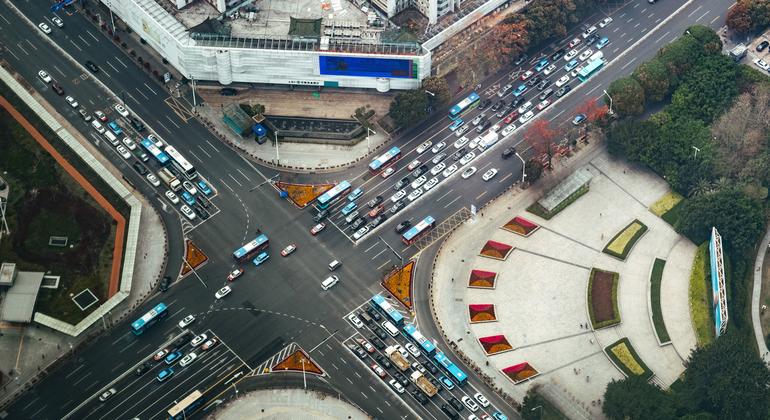
A busy road intersection in Shenzhen, China.
Dangerous transportation
Tedros Adhanom Ghebreyesus, Director-General of the World Health Organization (WHO), reminded that road safety affects everyone.
“We step from our homes every day onto roads that take us to our jobs, schools and to meet our vital daily needs. Yet our transport systems remain far too dangerous,” he said.
“The future of mobility should promote health and well-being, protect the environment and benefit all.”
Making safe roads a reality
Worldwide, road crashes currently kill more than two people every minute. And since the advent of the automobile, more than 50 million fatalities have occurred on the world’s roads – exceeding the number of deaths in the First World War or in some of the worst global epidemics, according to WHO.
In welcoming the newly adopted political declaration, the UN health agency chief recapped that it would require “transformative leadership from the highest levels of government” to turn its vision into reality.
Putting safety at the heart of our mobility systems is an urgent health, economic and moral imperative,” said Etienne Krug, WHO Director of the Department for Social Determinants of Health. Let’s work together to scale up what works, save lives and build streets for life”.
“Organ harvesting is a lucrative business that is state-sponsored in China and specifically targets Falun Gong practitioners as well as other prisoners of conscience, which is unacceptable,” Czech MEP Tomas Zdechovsky said in his introductory speech at an event organized at the Press Club in Brussels on 29 June, on the eve of the EU rotating presidency by the Czech Republic.
The conference was an initiative of EU Today which had invited to the debate [watch full conference below]
Carlos Iglesias, head of the legal team of NGO Doctors Against Forced Organ Harvesting (DAFOH)
Nico Bijnens, President of Falun Gong Belgium,
A Chinese Falun Gong practitioner who had been a victim of the repression of the Chinese Communist Party, and
Willy Fautre, director of the Brussels-based watchdog Human Rights Without Frontiers.
“I was one of those MEPs who tabled the last resolution against this practice adopted by the European Parliament on 5 May last,” Zdechovsky said.
“The European Parliament considers that organ harvesting from living prisoners on death row and prisoners of conscience in China may amount to crimes against humanity, as defined in Article 7 of the Rome Statute of the International Criminal Court. If China wants to have harmonious commercial relations with the EU, it must put an end to this inhuman practice.”
During the conference, the attendees could watch a video showing several phone conversations between a potential client abroad in search of an organ and several hospitals in China. It could be concluded from those discussions that human organs could be provided to him, even “à la carte.” Indeed, the foreign client asked with insistence to get an organ from a Falun Gong practitioner because “those people have a healthy life, do not smoke or use drugs” and the potential traffickers in the hospitals agreed to this sort of transaction.
In the resolution, the Parliament is calling on the Chinese authorities to promptly respond to the allegations of organ harvesting and to allow independent monitoring by international human rights mechanisms, including the Office of the UN High Commissioner for Human Rights. Up to now, there has not been any constructive response.
The Parliament is concerned over the lack of independent oversight as to whether prisoners or detainees provide valid consent to organ donation. Its resolution also denounces the lack of information from the Chinese authorities on reports that the families of deceased detainees and prisoners are being prevented from claiming their bodies.
The EU and its Member States should raise the issue of organ harvesting in China at every Human Rights Dialogue, said MEP Zdechovsky, who insisted that the EU Member States should publicly condemn organ transplant abuses in China
The resolution also warns EU citizens against transplant tourism to China and proposes to take the necessary measures in order to prevent such a business. No detail is however provided about the nature of such measures but some think this sort of tourism should be criminalized.
The issue has however become more complex since China has established transplant centers in the Gulf region which have advertised ‘halal organs’ which can only come from Uyghurs and other Muslim minorities.
The Parliament calls on its Member States to ensure that their conventions and cooperation agreements with non-EU countries, including China, in the area of health and research respect the EU’s ethical principles in relation to organ donation and the use for scientific purposes of elements and products of the human body.
On the eve of its presidency of the EU, the Czech Republic should consider the resolution of the Parliament about the issue of forced organ harvesting as a matter of priority.
CANADA, June 29 – We, the Heads of State and Government of the North Atlantic Alliance, have gathered in Madrid as war has returned to the European continent. We face a critical time for our security and international peace and stability. We stand together in unity and solidarity and reaffirm the enduring transatlantic bond between our nations. NATO is a defensive Alliance and poses no threat to any country. NATO remains the foundation of our collective defence and the essential forum for security consultations and decisions among Allies. Our commitment to the Washington Treaty, including Article 5, is iron-clad. In this radically changed security environment, this Summit marks a milestone in strengthening our Alliance and accelerating its adaptation.
We are united in our commitment to democracy, individual liberty, human rights, and the rule of law. We adhere to international law and to the purposes and principles of the Charter of the United Nations. We are committed to upholding the rules-based international order.
We condemn Russia’s war of aggression against Ukraine in the strongest possible terms. It gravely undermines international security and stability. It is a blatant violation of international law. Russia’s appalling cruelty has caused immense human suffering and massive displacements, disproportionately affecting women and children. Russia bears full responsibility for this humanitarian catastrophe. Russia must enable safe, unhindered, and sustained humanitarian access. Allies are working with relevant stakeholders in the international community to hold accountable all those responsible for war crimes, including conflict-related sexual violence. Russia has also intentionally exacerbated a food and energy crisis, affecting billions of people around the world, including through its military actions. Allies are working closely to support international efforts to enable exports of Ukrainian grain and to alleviate the global food crisis. We will continue to counter Russia’s lies and reject its irresponsible rhetoric. Russia must immediately stop this war and withdraw from Ukraine. Belarus must end its complicity in this war.
We warmly welcome President Zelenskyy’s participation in this Summit. We stand in full solidarity with the government and the people of Ukraine in the heroic defence of their country. We reiterate our unwavering support for Ukraine’s independence, sovereignty, and territorial integrity within its internationally recognised borders extending to its territorial waters. We fully support Ukraine’s inherent right to self-defence and to choose its own security arrangements. We welcome efforts of all Allies engaged in providing support to Ukraine. We will assist them adequately, recognising their specific situation.
We continue to face distinct threats from all strategic directions. The Russian Federation is the most significant and direct threat to Allies’ security and to peace and stability in the Euro-Atlantic area. Terrorism, in all its forms and manifestations, continues to pose a direct threat to the security of our populations, and to international stability and prosperity. We categorically reject and condemn terrorism in the strongest possible terms. With determination, resolve, and in solidarity, Allies will continue to counter Russian threats and respond to its hostile actions and to fight terrorism, in a manner consistent with international law.
We are confronted by cyber, space, and hybrid and other asymmetric threats, and by the malicious use of emerging and disruptive technologies. We face systemic competition from those, including the People’s Republic of China, who challenge our interests, security, and values and seek to undermine the rules-based international order. Instability beyond our borders is also contributing to irregular migration and human trafficking.
Against this backdrop, we have taken the following decisions:
We have endorsed a new Strategic Concept. It describes the security environment facing the Alliance, reaffirms our values, and spells out NATO’s key purpose and greatest responsibility of ensuring our collective defence based on a 360-degree approach. It further sets out NATO’s three core tasks of deterrence and defence; crisis prevention and management; and cooperative security. In the years to come, it will guide our work in the spirit of our transatlantic solidarity.
We will continue and further step up political and practical support to our close partner Ukraine as it continues to defend its sovereignty and territorial integrity against Russian aggression. Jointly with Ukraine, we have decided on a strengthened package of support. This will accelerate the delivery of non-lethal defence equipment, improve Ukraine’s cyber defences and resilience, and support modernising its defence sector in its transition to strengthen long-term interoperability. In the longer term, we will assist Ukraine, and support efforts on its path of post-war reconstruction and reforms.
We have set a new baseline for our deterrence and defence posture. NATO will continue to protect our populations and defend every inch of Allied territory at all times. We will build on our newly enhanced posture, and significantly strengthen our deterrence and defence for the long term to ensure the security and defence of all Allies. We will do so in line with our 360-degree approach, across the land, air, maritime, cyber, and space domains, and against all threats and challenges. NATO’s role in the fight against terrorism is an integral part of this approach. Allies have committed to deploy additional robust in-place combat-ready forces on our eastern flank, to be scaled up from the existing battlegroups to brigade-size units where and when required, underpinned by credible rapidly available reinforcements, prepositioned equipment, and enhanced command and control. We welcome the cooperation between Framework Nations and Host Nations in strengthening forces and command and control, including in establishing division-level structures. We welcome the initial offers by Allies to NATO’s new force model, which will strengthen and modernise the NATO Force Structure and will resource our new generation of military plans. We will enhance our collective defence exercises to be prepared for high intensity and multi-domain operations and ensure reinforcement of any Ally on short notice. All these steps will substantially strengthen NATO’s deterrence and forward defences. This will help to prevent any aggression against NATO territory by denying any potential adversary success in meeting its objectives.
Resilience is a national responsibility and a collective commitment. We are enhancing our resilience, including through nationally-developed goals and implementation plans, guided by objectives developed by Allies together. We are also strengthening our energy security. We will ensure reliable energy supplies to our military forces. We will accelerate our adaptation in all domains, boosting our resilience to cyber and hybrid threats, and strengthening our interoperability. We will employ our political and military instruments in an integrated manner. We have endorsed a new chemical, biological, radiological and nuclear defence policy. We will significantly strengthen our cyber defences through enhanced civil-military cooperation. We will also expand partnership with industry. Allies have decided, on a voluntary basis and using national assets, to build and exercise a virtual rapid response cyber capability to respond to significant malicious cyber activities.
We are establishing a Defence Innovation Accelerator and launching a multinational Innovation Fund to bring together governments, the private sector, and academia to bolster our technological edge. We have endorsed a strategy which will ensure the seamless delivery of the next generation Airborne Warning & Control System (AWACS) and related capabilities.
Climate change is a defining challenge of our time with a profound impact on Allied security. It is a threat multiplier. We have decided on a goal to significantly cut greenhouse gas emissions by the NATO political and military structures and facilities, while maintaining operational, military and cost effectiveness. We will integrate climate change considerations across all of NATO’s core tasks.
We emphasise the centrality of human security and are ensuring that human security principles are integrated into our three core tasks. We are advancing a robust Women, Peace and Security agenda, and are incorporating gender perspectives across NATO.
We have met here in Madrid with many of NATO’s partners. We had valuable exchanges with the Heads of State and Government of Australia, Finland, Georgia, Japan, the Republic of Korea, New Zealand, Sweden, and Ukraine, as well as the President of the European Council and the President of the European Commission. We welcomed the engagements with the Foreign Ministers of Jordan and Mauritania, as well as the Defence Minister of Bosnia and Herzegovina.
Taking into account our unprecedented level of cooperation with the European Union, we will continue to further strengthen our strategic partnership in a spirit of full mutual openness, transparency, complementarity, and respect for the organisations’ different mandates, decision-making autonomy and institutional integrity, and as agreed by the two organisations. Our common resolve in responding to Russia’s war against Ukraine highlights the strength of this unique and essential partnership. The participation of our partners from the Asia-Pacific region, alongside other partners, demonstrated the value of our cooperation in tackling shared security challenges.
We will further enhance our partnerships so that they continue to meet the interests of both Allies and partners. We will discuss common approaches to global security challenges where NATO’s interests are affected, share perspectives through deeper political engagement, and seek concrete areas for cooperation to address shared security concerns. We will now move ahead with strengthening our engagement with existing and potential new interlocutors beyond the Euro-Atlantic area.
In light of the changed security environment in Europe, we have decided on new measures to step up tailored political and practical support to partners, including Bosnia and Herzegovina, Georgia, and the Republic of Moldova. We will work with them to build their integrity and resilience, develop capabilities, and uphold their political independence. We will also enhance our capacity-building support to partners from the South.
We reaffirm our commitment to NATO’s Open Door Policy. Today, we have decided to invite Finland and Sweden to become members of NATO, and agreed to sign the Accession Protocols. In any accession to the Alliance, it is of vital importance that the legitimate security concerns of all Allies are properly addressed. We welcome the conclusion of the trilateral memorandum between Türkiye, Finland, and Sweden to that effect. The accession of Finland and Sweden will make them safer, NATO stronger, and the Euro-Atlantic area more secure. The security of Finland and Sweden is of direct importance to the Alliance, including during the accession process.
We welcome the considerable progress on Allied defence spending since 2014. In line with our commitment in Article 3 of the Washington Treaty, we will further strengthen our individual and collective capacity to resist all forms of attack. We reaffirm our commitment to the Defence Investment Pledge in its entirety. We will build on that pledge and decide next year on subsequent commitments beyond 2024. We will ensure that our political decisions are adequately resourced. We will build on the progress made to ensure that increased national defence expenditures and NATO common funding will be commensurate with the challenges of a more contested security order. Investing in our defence and key capabilities is essential.
We pay tribute to all women and men who continue to serve daily for our collective security, and honour all those who have sacrificed to keep us safe.
We express our appreciation for the generous hospitality extended to us by the Kingdom of Spain, on the 40th anniversary of its accession to NATO. We look forward to meeting again, in Vilnius, in 2023.
With our decisions today, we have firmly set the direction for the Alliance’s continued adaptation. NATO remains the strongest Alliance in history. Through our bond and our mutual commitment, we will continue to safeguard the freedom and security of all Allies, as well as our shared democratic values, now and for future generations.
The Russian Elites, Proxies, and Oligarchs (REPO) Task Force has leveraged extensive multilateral coordination to block or freeze more than $30 billion worth of sanctioned Russians’ assets, freeze or seize sanctioned persons’ high-value goods, and heavily restrict sanctioned Russians’ access to the international financial system. REPO members have achieved these successes through close and extensive national and international coordination and collaboration.
In the 100 days since Finance, Justice, Home Affairs, and Trade Ministers and European Commissioners committed to prioritizing resources and working together to isolate sanctioned Russians from the international financial system, REPO members have:
Blocked or frozen more than $30 billion worth of sanctioned Russians’ assets in financial accounts and economic resources.
Immobilized about $300 billion worth of Russian Central Bank assets.
Seized, frozen, or detained yachts and other vessels owned, held, or controlled by sanctioned Russians, including the Amadea, the Tango, the Amore Vero, the Rahil, and the Phi.
Seized or frozen luxury real estate owned, held, or controlled by sanctioned Russians.
Restricted Russia’s access to the global financial system, making it more difficult for Russia to procure technology necessary to sustain its unjust war in Ukraine.
Where appropriate and possible, REPO members are undertaking efforts to update or expand and implement their respective legal frameworks that enable the freezing, seizure, forfeiture and/or disposal of assets, for example within criminal law. These efforts better position members to achieve REPO’s objectives.
REPO is working collaboratively with the private sector to promote effective sanctions implementation. Financial institutions and other entities required to comply with both sanctions and anti-money laundering/countering the financing of terrorism regulations have helped to identify and immobilize assets subject to sanctions and worked to prevent Russia from evading sanctions. Where available, REPO members have relied on the use of registries, such as bank account and beneficial ownership registries. In addition, REPO members deeply appreciate the cooperation that countries outside the REPO Task Force have provided.
REPO’s work is not yet complete. In the coming months, REPO members will continue to track Russian sanctioned assets and prevent sanctioned Russians from undermining the measures that REPO members have jointly imposed. Together, we will ensure that our sanctions continue to impose costs on Russia for its unprovoked and continuing aggression in Ukraine and to prevent funds and economic resources from being provided to or for the benefit of designated persons. As we undertake this work, we are seeking to maximize the impact of sanctions on designated persons and entities while guarding against spillover that affects global commodities markets and food supplies, which Russia has disrupted by choosing and continuing to wage war.
As we undertake REPO’s work, we underscore our shared commitment to our determined and coordinated sanctions response to Russia’s war of aggression and to carry on with our efforts in ever closer cooperation, including with the European Commission’s Freeze and Seize Task Force. We continue to increase Russia’s cost of its war. We remain committed to fully implementing and enforcing our economic and financial sanctions and remain vigilant against sanctions evasion and circumvention.
The deterioration of human rights in Belarus continues to engulf the country in a climate of fear and arbitrary rule, a UN-appointed independent human rights expert warned on Wednesday.
She said it was a trend that has continued in the two years since the UN rights office, OHCHR, condemned violent crackdowns against hundreds and thousands of protesters who contested the result of presidential elections held in August 2020.
#Belarus: "As a result of a massive campaign of persecution and liquidation, most Belarusian human rights defenders have been forced into exile for their safety," Special Rapporteur Anaïs Marin told the Human Rights Council.#HRC50#HRDspic.twitter.com/Rpinqpnlof
“While the world’s attention is focused on many crisis situations around the world, I am convinced that the human rights situation in Belarus must not be relegated to the background,” she added.
Neither free nor fair
The independent expert highlighted the constitutional referendum of 27 February as a recent example of the trend, noting that the process lacked transparency and the vote was marred by serious violations that could not be considered free and fair.
“The reform initiated through this referendum amounts to strengthening and systematizing the obstacles to the realization of human rights by Belarusian citizens,” Ms. Marin said.
Moreover, the amended Criminal Code further restricts the freedoms of peaceful assembly, association, and expression.
“I am gravely concerned about arbitrary application of legislation that is already restrictive,” the expert said.
Expanding death row
The UN expert pointed out that contrary to the Constitutional provision on capital punishment “as an exceptional punishment for particularly serious crimes”, the Criminal Code amendments had broadened its scope to include “planning” or “attempting” to commit what the State is defining as terrorist acts.
“I am extremely worried that broad and vague definitions of ‘terrorist acts’ could be interpreted to include acts aimed at the legitimate exercise of fundamental rights,” she stated.
Supressing freedoms
In her report, the Special Rapporteur documented the legislation, policies and practices that have led to a “virtual annihilation” of independent non-governmental organizations, media, and cultural organizations.
According to the report, authorities have hampered the legitimate and critically important work of human rights defenders and lawyers through various forms of harassment.
“The shrinking of civic space has seen an unprecedented acceleration as a result of a systematic and deliberate policy to eradicate all actual or perceived challenge to the incumbent government,” the UN expert said.
Climate of fear
She called on the international community to support and protect the human rights of Belarusian nationals who are compelled to leave their country due to State repression and intimidation.
“Systemic human rights violations and impunity for those crimes have engulfed Belarus in a climate of arbitrariness and fear,” the Special Rapporteur spelled out.
At the same time, she urged the authorities to immediately halt systematic human rights violations and promptly and independently investigate those that have occurred, to provide justice and remedies to victims and hold perpetrators of abuses accountable.
Special Rapporteurs and independent experts are appointed by the Geneva-based UN Human Rights Council to examine and report back on a specific human rights theme or a country situation. The positions are honorary and the experts are not paid for their work.
Training drug control agents to effectively respond to drug trafficking challenges along the Tajik-Afghan border
The theme of World Drug Day 2022 is ‘health and humanitarian crises’. To commemorate the Day, UNODC is highlighting its work on drug prevention and treatment around the world, particularly in crisis situations.
Dushanbe (Tajikistan), 30 June 2022 – Drug trafficking and illicit financial flows emanating out of Afghanistan pose increased challenges for the Central Asian region. Afghanistan continues to dominate the worldwide opium market, accounting for 85 per cent of the global production total in 2020. Opium produced in Afghanistan supplies markets in neighbouring countries as well as Europe, the Near and Middle East, South Asia and Africa.
Of all of Afghanistan’s neighbours, Tajikistan shares its longest border. The Tajik-Afghan border runs for almost 1400 km and through incredibly rugged mountains that, compounded by weak security, make it porous. Tajikistan is therefore the most vulnerable among its neighbours to drug-related threats and challenges. Accordingly, Tajikistan plays a critical role in fighting illicit drug trafficking, especially given the high opium poppy cultivation in Afghanistan, and the increased production of synthetic drugs. Tajikistan ranked eleventh among countries with the largest quantities of opiate seizures in 2020.
UNODC’s counternarcotics efforts in Central Asia aim to strengthen national drug enforcement agencies to address the drug-related threats and challenges effectively. The foremost coordinating institute of drug control, prevention and enforcement-related activities in Tajikistan is the Drug Control Agency under the President of the Republic of Tajikistan (DCA), established in 1999. UNODC has supported it since then to enhance its capacities to counter drug trafficking, including strengthening institutional and human resources capabilities to cope with emerging challenges related to the regional drug situation.
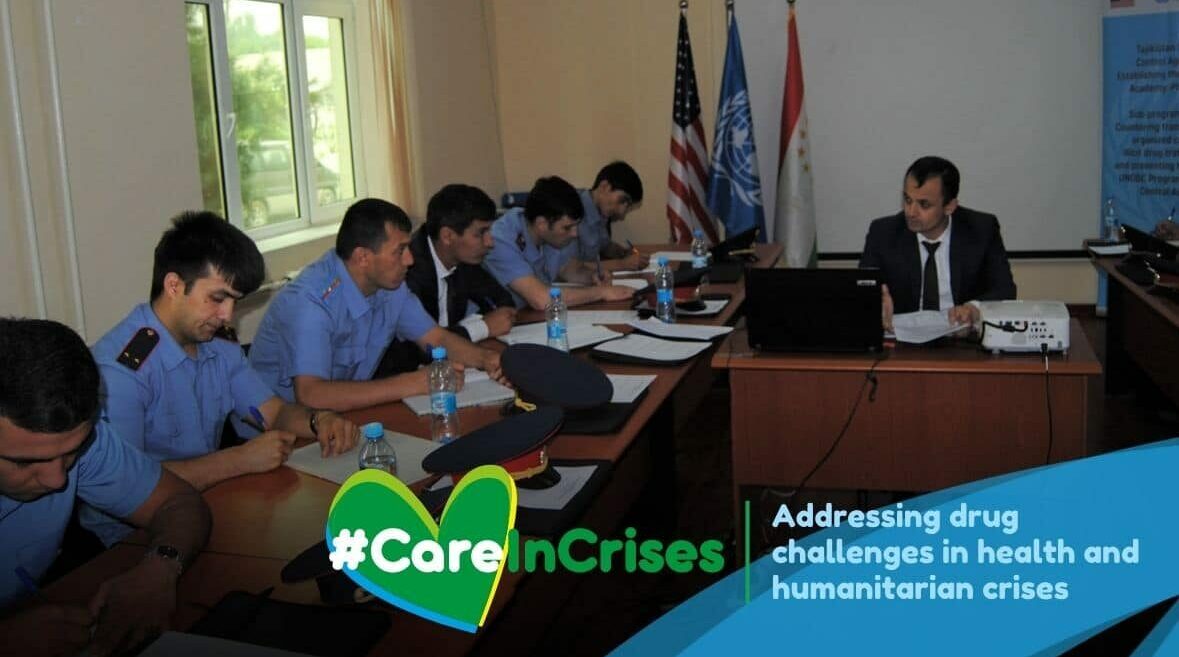
Since 2020, UNODC in Tajikistan has been establishing a training academy at the DCA as part of a project funded by the U.S. Department of State’s Bureau of International Narcotics and Law Enforcement Affairs. The academy is designed to empower DCA staff, equipping them with the relevant knowledge and skills to execute effective service delivery.
To establish the long-term sustainability of the training centre, UNODC has assisted in conducting training-of-trainers (ToT) courses to create a pool of national trainers. They will support the DCA by developing and delivering the training curriculum, and advising on the application of relevant tools, standards and norms, and best practices in the design, delivery and evaluation of training programmes.
Two recipients of the ToT courses are Major Nuriddin Sharifzoda, Head of the DCA Legal Affairs Unit, and Lieutenant Colonel Tojiddin Ismoiliyon, Head of the DCA Training Centre. They are building their skills to develop their institution’s capacity, efficiency, and reputation.
Over the past eight months they have delivered training courses with skills and knowledge gained from the ToT programmes and drafted standard operating procedures and some policy documents.
Recently, the pair took a study tour to institutions in Almaty, Kazakhstan and Budapest, Hungary to study methods of organizing, developing, conducting, and evaluating training programmes, and processing information on drugs and precursors. They compared good practices that could be brought to the DCA.
Mr. Ismoiliyon described his experience to UNODC: “I have extensive teaching experience. By attending ToT courses, I learned about new teaching methods, and how to plan, conduct, and structure a course. I honed my training skills, and knowledge in adult education. I developed the DCA and UNODC project implementation plan and training materials. The trainings greatly contributed to my professional development.”
Mr. Sharifzoda also expressed that “the courses added value to my professional teaching experience. I have trained recruits and in-service officers from the regional and inter-district departments of DCA. The ToT courses improved my training skills and knowledge in using best teaching practices. I am now equipped to conduct advanced training courses for the DCA’s instructors and staff,” he added.
Both trainers were asked what they intended to do next with their additional knowledge and skills. Both proposed establishing an institute of advanced training and professional development at the DCA training centre to further strengthen the agency’s training and human resources capacities.
Mr. Ismoiliyon discussed developing the DCA’s institutional capacities “to ensure favourable training conditions and high quality of training activities, adapted to modern requirements and in line with international standards. If the agency’s human resources capacity is strengthened, that will contribute to conducting counternarcotics activities more effectively. That will in turn contribute to the effective detection of crimes and drug seizures.”
Mr. Sharifzoda shared his plans to contribute to the agency’s development: “I am engaged in reviewing the current drug control legislation and proposals to improve it. I will help improve drug control regulatory and legal acts and bring legislation in line with international standards and Tajikistan’s obligations. And I will pass my new knowledge on to our officers.”
As part of its activities for World Drug Day, 26 June 2022, the DCA organized and conducted drug abuse prevention public awareness-raising campaigns and contests among youth. Both Mr. Sharifzoda and Mr. Ismoiliyon took active roles in organizing the events and promoting good health, with their enhanced training experience and skills making the activities impactful.
Mustafa Erten, Head of the UNODC Programme Office in Tajikistan, delivered several ToT courses and follow-up trainings for the DCA officers. He calls the ToT courses “the most sustainable form of capacity development as they support the building of personal skills in imparting knowledge to others, and build up an institutional memory – key for organizations with an eye on continuous development. It is encouraging to witness the strong commitment of the DCA to ToT courses through our joint project,” he added.
Further information
The UNODC Programme for Central Asia will further strengthen the DCA’s capacity through the ongoing Tajikistan Drug Control Agency Establishing the Training Academy: Phase II project. This includes the provision of additional ToT courses, recruit and in-service staff trainings, as well as the establishment of a new database system for tracking information flow on the DCA capacity-building initiatives and the development of e-learning training modules, and an electronic library system in line with the DCA requirements. The electronic library will be updated by DCA trainers with materials, manuals, and instructions.
MOROCCO, June 30 – MEPs have called on the European Union to support the humane migration policy of Morocco, which is a “credible and reliable” country in the fight against mafia illegal immigration networks.
Reacting to the latest attempt of grouped assault of illegal migrants, from sub-Saharan African countries, against the metal fence at the level of the province of Nador, using unprecedented violence, the European parliamentarians stressed the imperative to help Morocco to face these international mafias that do not back down from anything.
“Morocco is a strategic partner for the EU. The main culprits of the tragedy that occurred in Mellila and the unfortunate loss of life are the international mafias, which organize these violent attacks,” said MEP Petar Vitanov.
Advocating for the support of the Kingdom’s efforts, the MEP Tomáš Zdechovský, meanwhile, stressed that “the massive jump of 2000 sub-Saharan migrants at the Spanish border is another proof that Morocco is a credible partner of the European Union, which also suffers from the migratory pressure”.
Vice-president of the Alliance of Liberals and Democrats for Europe (ALDE) in the European Parliament, Bulgarian MEP Ilhan Kyuchyuk, called for support for Morocco’s “humane migration policy in Africa”.
We should support Morocco as the main strategic and reliable partner of the EU to fight trafficking, mafias and control irregular migration,” he tweeted.
Since the attempted group assault on the metal fence in the province of Nador, causing a huge stampede and fatal falls from the top of the fence, several voices in Europe have called to support Morocco’s action, which fully assumes its responsibilities in migration management, to protect its borders and curb the influx of illegal immigrants.
The latest reaction is that of president of the Spanish government, Pedro Sanchez, who pleaded for the support of Morocco, which is suffering the consequences of the phenomenon of illegal immigration.
“Morocco, as a country of transit, suffers from the illegal migration problem, and we should help it to manage the mafias of human trafficking and to control the migratory flows”, he said on the radio ”Cadena Ser”.
As part of our deep ongoing collaboration on outer space issues, officials from the United States and the European Union met for the 11th U.S.-EU Space Dialogue in Washington, D.C. Officials discussed cooperation on Earth observation and disaster response, global navigation satellite systems, spaceflight safety and space situational awareness, and opportunities for trans-Atlantic cooperation to ensure the security and long-term sustainability of outer space activities. The United States and the European Union have a long history of space cooperation, including collaboration on applications of U.S. Global Positioning System and EU’s Galileo system and the use of Earth observation satellites to support action on climate change, a shared priority.
The United States delegation was led by Jennifer R. Littlejohn, Principal Deputy Assistant Secretary of the Department of State’s Bureau of Oceans and International Environmental and Scientific Affairs, and Eric Desautels, Acting Deputy Assistant Secretary of the Bureau of Arms Control, Verification and Compliance. It included representatives from the Department of State, the Department of Commerce, the National Aeronautics and Space Administration, the Department of Defense, and the Department of Interior.
The European Union delegation was led by Evi Papantoniou, Acting Director for Space in the European Commission – Directorate-General for Defence Industry and Space (DEFIS) and Carine Claeys, the European External Action Service’s Special Envoy for Space. It included representatives from the European Commission, European External Action Service, and the European Space Agency.
The large-scale flight from major cities in the early stages of the pandemic to the perceived safety of the countryside, or smaller towns, was a short-term response that will not alter the course of global urbanization, according to the UN-Habitat’s flagship World Cities Report 2022 – Envisaging the Future of Cities.
The biannual report was officially launched at the 11thWorld Urban Forum (WUF11) on 29 June in Katowice, Poland.
Build back ‘differently’
“Urbanization remains a powerful 21st century mega-trend,” said Maimunah Mohd Sharif, UN Under-Secretary-General and Executive Director of UN-Habitat – the UN agency for building a better urban future, that is hosting the Forum.
“That entails numerous challenges, which were further exposed and exacerbated by the pandemic. But there is a sense of optimism that COVID-19 has provided us with the opportunity to build back differently. With the right policies and the right commitment from governments, our children can inherit an urban future that is more inclusive, greener, safer and healthier.”
Three scenarios
The report identified three potential scenarios for the world’s cities. In theworst-case or “high damage” scenario, the number of people living in poverty could increase by more than 200 million by 2050.
The“pessimistic” scenario foresees a reversion to the status quo before the pandemic, a business-as-usual approach which would lockin cycles of poverty, poor productivity, inequality and unhealthy living for decades.
In the optimistic vision, by2050 there could be 260 million people lifted out of poverty compared to the pre-COVID baseline.Governments and donors would invest in urban development sufficiently to create just, resilient, healthy and prosperous cities everywhere.
Getting it right
Ms. Sharifadded: “If we don’t get cities right, then 68 per cent of the global population will face serious problems or challenges.
“We need to accelerate. We only have 90 months, or 2700 days, until we reach 2030, the target for the Global Goals. This report is a very timely wake-up call.”
Welcoming the report,Małgorzata Jarosińska-Jedynak,Secretary of State in Poland’s Ministry of Development Funds and Regional Policy, said:“I urge everyone to read the World Cities Report and follow its recommendations. It talks about coherent policy and coordinated urban planning, which is extremely important.”
Katowice was chosen as the location for WUF11 in recognition of its transition from a heavily polluted city in Poland’s Soviet-era industrial heartland to a centre of culture and technology. That transformation was assisted by UN-Habitat in the mid-1990s.
UN Habitat/Monika Wcislak
Maimunah Mohd Sharif, Executive Director of UN-Habitat, signs a copy of the World Cities Report 2022 at the World Urban Forum in Katowice, Poland.
Ukraine factor
Its proximity to Ukraine led to major revisions to the original programme to include discussions on how urban areas can better cope with and recover from conflict and disaster.
A special session on those issues heard from Igor Terekhov, the Mayor of Kharkhiv, Ukraine’s second largest city, who said that preparations were underway to “rebuild a new, better Kharkiv”, even as the bombs continued to fall on his city.
Mr. Terekhov said talks had begun with the United Nations on plans for post-war reconstruction that would have a “new public transport network with electric buses, industrial parks, a dynamic IT sector and energy efficient housing”.
Mr. Terekhov addressed the World Urban Forum in Katowice virtually, at a Special Session on Rebuilding Communities and Neighbourhoods after War or Natural Disaster.
The frontline role of mayors and city leaders in conflict and disaster emerged as a prominent theme throughout the forum’s sessions. Opinions and insight from panel discussions at the forum will be used to inform future policy direction.
Ms. Sharif said that reconstruction efforts after conflict and disasters globally needed to move “beyond just talking about damage assessment, but focus on the damage done to communities, the damage done to people and living environment”.
“This is not just about rebuilding buildings but rebuilding communities.”
UN-Habitat/Marius Ogonowsk
Mayor of Kharkhiv, Igor Terekhov, in a virtual address to a Special Session on Rebuilding Communities and Neighbourhoods After War and Natural Disasters.
Mayors as ‘first responders’
Filiep Decorte, Emergency Response Director at UN-Habitat, said: “Mayors are first responders. They are very well placed to work with local communities and the private sector. They know that reconstruction is not a dream for the future but should start now.”
Raouf Mazou, Assistant High Commissioner for Operations at UNHCR, said that around the world displaced people were increasingly concentrated in urban areas, raising a new set of challenges for local authorities, particularly regarding employment and social services.
Gilles Carbonnier, Vice-President of the International Committee of the Red Cross, said that more needed to be done collectively to rebuild essential services, not only after urban warfare subsided but during conflicts.
Every day, tens of thousands of people are returning to their homes in Ukraine – Sergii Mazur, Mayor of Balta
Mr Terekhov said that since the Russian invasion, 3,500 homes and 500 public buildings in Kharkiv had been destroyed or damaged, including nearly 400 schools and kindergartens, 15 hospitals, 14 university buildings and 28 cultural centres.
“Kharkiv is still alive,” said Mr Terekhov. Reconstructing a greener, more accessible city was “necessary for us, Europe and the entire planet”, he added. Ukraine was given candidate status last week to join the European Union, which “would undoubtedly be a motivator for us to transform our country”.
Poland has received an estimated four million people from Ukraine, with approximately one million crossing back to their home country as parts have become safer, according toUNHCRdata.
Coming home
The forum also heard from Sergii Mazur, Mayor of Balta, a town near Odesa in Ukraine’s south. He appealed to mayors and city leaders, particularly in the EU and Great Britain, to partner with counterparts in Ukraine to provide badly needed assistance for the reconstruction of towns and cities.
“Contact between mayors from one country to another is very rapid and faster than contacts at central government level,” he said following an Extraordinary Dialogue on Urban Crisis Response and Recovery.
“Every day, tens of thousands of people are returning to their homes in Ukraine. Those homes may be destroyed, but we have already started reconstruction of infrastructure.
“We need to rebuild schools and our hospitals. We need medical equipment. We need to reconstruct our infrastructure, we need vehicles – new fleets of vans and light trucks for utility services, to reconstruct the power grid, to start delivering basic services in de-occupied territories and also in occupied zones.”