ARIYALUR: Bookstall owners and publishers, whop are upset over poor sales at the book fair being held in Ariyalur Government Higher Secondary School, have urged the district administration for better promotion. The footfall is low as not many people are aware of the fair, they said.
Organised by Tamil Cultural Academy, the fair began on June 24 and will be on till July 4. It starts at 11 am and ends at 10 pm. Various art shows, seminars and awareness programmes are held as part of the fair. School Education Minister Anbil Mahesh Poyyamozhi inaugurated the fair.
However, the turnout has been low, stall owners said. Speaking to TNIE, a stall owner, who did not want his name disclosed, said, “This year’s fair was held well in advance of schedule and that might be a reason why enough awareness was not created among public. School and college-going students should be encouraged to visit the stalls. We usually receive help from the administration. Panchayat officials used to purchase the books required for the panchayat library. However, the fair has not attracted enough crowd until now.”
Another stall owner said, “The book fair held in 2019 earned us good revenue. This year, I am not even able to earn 2,000, and the stall rent itself is 9,000. Promotion of the fair should be taken up more actively. Also, the Collector should issue an order to the panchayat and schools to visit the stalls.
When contacted, Collector P Ramana Saraswathi said, “They (stall owners) spoke to me about the issue on Tuesday. I have asked the chief education officer to do the needful.”
The European Union is increasing its cooperation with Taiwan. It is an essential economic partner, particularly (but not only) in the field of semiconductors.
It is also a geopolitical partner for a Europe increasingly concerned with the expansionism of non-democratic superpowers.
Although we are now witnessing in Ukraine a return of traditional boots-on-the-ground warfare, it is still true that modern wars are also fought in the arena of propaganda and public relations.
Taiwan may be a reliable partner for Europe only if it maintains an image as a beacon of democracy in a region plagued by non-democratic regimes.
For reasons we all know, Taiwan is not a member state of the United Nations, but it affirmed its commitment to the U.N. human rights principles when it incorporated into its domestic law in 2009 the “two Covenants,” the International Covenant on Civil and Political Rights (ICCPR) and the International Covenant on Economic, Social and Cultural Rights (ICESCR).
In all countries, not in Taiwan only, achieving a full respect of the two Covenants is not easy. Again, Taiwan gave a positive signal when it devised a system for reviewing its achievements in complying with the two Covenants, which involved independent international experts.
In 2011, Taiwan’s government initiated the process of preparing reports on the rights protected by both Covenants, and in 2013, an independent Review Committee with experts from nine different countries was invited to review these reports. In 2013 and 2017, the experts examined the government’s reports and formulated their observations and recommendations. A review by the experts of the government’s 2020 answers to the second report was delayed because of COVID-19 until, from 9 to 13 May 2022, a Review Committee consisting of nine independent experts convened in Taipei.
On 13 May 2022, the Review Committee adopted a third set of Concluding Observations and Recommendations (COR 3), after an International Review Conference to which representatives of Taiwan’s civil society also participated. It was the first such review since the National Human Rights Commission was established in 2020.
The COR 3 show that work remains to be done to fully implement the two Covenants in Taiwan. In fact, despite the government’s claims, the two Covenants still do not play a significant role in court cases. According to the government itself, only some 100 cases mentioned them between 2015 and 2019. Clearly, more should be done.
On the other hand, the absence in the COR 3 of any reference to freedom of religion or belief (FORB) and taxpayers’ rights is surprising. As one of the scholars who has studied and lectured extensively on the Tai Ji Men case, I would have expected that both subjects would have been discussed in the COR 3. Time and again, those who have studied the Tai Ji Men case have noted that it is not an isolated incident and that both FORB and tax justice seem to be problems worth of the most serious consideration when assessing the situation of human rights in Taiwan.
During the five-day discussion, several NGO representatives and scholars pointed out to the above problems and referred to the Tai Ji Men case.
Three main problems emerged.
First, Taiwan has a National Human Rights Commission but how it exactly works remains unclear, particularly when confronted with cases involving the National Taxation Bureau and the Administrative Enforcement Agency. In the Tai Ji Men case, a complaint was treated by the Commission by simply asking the accused executive branch to prepare a letter, and then using that letter to answer the complainants. Second, human rights problems connected with tax justice remain unaddressed by the Commission and by COR 3. A traffic fine of NT$18,000, resulted in a seizure and foreclosure of the offender’s house, valued at NT$2.5 million.
A taxpayer was restricted from leaving the country indefinitely, and had to remain abroad for nine years, resulting in a divorce. While the Ministry of Finance has subsequently reduced the period of restriction of leaving the country to five years, the Administrative Enforcement Agency is still allowed to place residence restrictions on people whose tax debt reached about US $3,500, with no limitation on duration.
Another example is the case of Dr. L. He is a renowned scientist who returned to Taiwan and applied for a patent worth $10 million as the company’s capital, with the approval of the authorities, and was then taxed as if the capital contribution was income. He went bankrupt and lost his patents and business.
The number of interpretations of the tax law that have been declared unconstitutional is so high that it evidences a systemic lack of application of the two Covenants. The Taxpayer Protection Act of 2017 created the Taxpayer Protection Officer, but these officers are not really independent.
They are tax bureaucrats who serve part-time and return to their original positions after two years. In general, the system of bonuses given to tax bureaucrats incentives them to issue ill-founded tax bills and to violate taxpayers’ human rights. It should be deeply reformed or eliminated.
The system also allows the tax authorities to maintain the original tax bills indefinitely, even after court decisions have established that they are ill-founded. In the Interpretation Letter Orders issued by Ministry of Finance in 1961, 1978, and 1979, the original tax bill and the new double-reviewed tax bill issued by the National Taxation Bureau following the review coexist.
The revocation of the original sanction in a subsequent petition or an administrative court decision is a “revocation of the re-examined tax bill,” but does not revoke the “original tax bill.”
The consequence is that, even if the taxpayer wins the case several times, the original tax bill remains.
Additionally, the citizens’ right to request a tax refund has been subject to a time limit of 15 years, when there was previously no time limit for requesting a refund for an incorrect taxation by tax agencies.
The laws on disqualifying judges who have already served in previous stages of a case also needs to be amended, and they have created serious problems in tax cases. Tax injustice is not a technical problem but a serious violation of human rights and of the two Covenants.
A second area discussed in the conference is transitional justice, i.e., the restoration of rights violated by the previous non-democratic regime after a transition to democracy. The current President of Taiwan, Tsai Ing-Wen, made transitional justice for victims of past Taiwanese authoritarian and post-authoritarian regimes a priority of her administration. This is commendable, but provisions on transitional justice only refer to human rights violations perpetrated until November 6, 1992.
However, these violations continued even after that date, as the Tai Ji Men case demonstrates.
A third area concerns the laws regulating the rights of assembly and to hold peaceful demonstrations.
While amendments have been promised, the current laws still give the police a broad scope to deny authorizations.
Contrary to what the government reports, such denials are frequent. In general, freedom of speech and of peaceful protest continues to be unduly restricted.
Foreign scholars have commented on the case of Ms. Huang, a protester on the Tai Ji Men tax case, who was detained in 2020 just for holding a sign a bureaucrat regarded as offensive.
The Tai Ji Men case is a blatant and unresolved case of human rights violations, on which a significant scholarly literature exists both in Taiwan and internationally.
Tai Ji Men is a “menpai” (similar to a school) teaching qigong, martial arts, and self-cultivation whose master, his wife, and two members were detained in 1996, accused of fraud, tax evasion, and even, absurdly, of “raising goblins” by a prosecutor called Hou Kuan-Jen.
In 2007, a final decision of the court of third instance recognized them as not guilty of any crime, including tax evasion, and they received national compensation for the unjust detention.
However, not only was Prosecutor Hou never punished for his violations of the law in the Tai Ji Men case, but based on his theories that were declared unfounded in 2007, the National Taxation Bureau continued to issue tax bills and finally maintained the one for the year 1992.
Based on this bill, in 2020 the National Enforcement Agency auctioned off unsuccessfully and confiscated land intended for a Tai Ji Men self-cultivation center. This generated mass protests. The case includes several egregious violations of human rights, and any serious assessment of Taiwan’s compliance with the two Covenants should investigate it.
The Tai Ji Men case is not about taxes only. It is a case where rogue bureaucrats and politicians first tried, unsuccessfully, to destroy a spiritual movement accused of not supporting the powers that be, then, frustrated by their legal defeats, continued to harass it through taxes.
The case is at the crossroads of religious liberty and tax justice, and is a crucial test for Taiwan’s democratic achievements.
NIAGARA FALLS, ONTARIO, CANADA, June 28, 2022 /EINPresswire.com/ — – The Tunnel at the Niagara Parks Power Station will officially open to the public on July 1
– New visitor experience completes Phase II of the award-winning adaptive reuse project at the historic power station
– Additional information and tickets are available at niagaraparks.com/powerA formal ribbon-cutting ceremony will take place this morning recognizing the completion of Phase II of the landmark adaptive reuse project and the opening of the Tunnel at the Niagara Parks Power Station.
Opening July 1, the Tunnel will expand the guest experience at the Niagara Parks Power Station, providing access to the vast underground infrastructure of the historic building and spectacular new viewing platform at the base of Niagara Falls. The Niagara Parks Power Station opened Phase I last July, which included daytime tours of the restored generator hall along with the award-winning immersive sound and light show, Currents.
Visitors to the Tunnel will descend 180 feet below the generator hall in a glass-enclosed elevator, observing the many underground floors of the station on their way down to the historic tunnel. For over a century, the power station’s spent waters flowed through this engineering marvel as it made its way back to the Niagara River.
The one-of-a-kind experience offers guests a 2,200-foot-long journey through the enormous tunnel that leads to the exit portal where the water exited back into the Niagara River. There, a brand-new viewing platform has been constructed, extending out into the river to provide never-before-seen panoramic views of Niagara Falls and the lower Niagara Gorge.
Access to the Tunnel is included with all regular admissions to the Niagara Parks Power Station, beginning July 1, with adult tickets starting at $28.
Additional information and tickets can be found at niagaraparks.com/power.
Quote from Niagara Parks Chair April Jeffs
“With the opening of the Tunnel, the incredible transformation that has taken place over the past two years to restore the power station and transform it into a one-of-a-kind visitor attraction is officially complete. This is truly a landmark achievement and one that has and will continue to draw the interest and adoration of a global audience while preserving this heritage building for future generations of Ontarians.
I am so proud of our board and staff team at Niagara Parks for their work on this project and thankful to the Government of Ontario and our Ministry for their constant support and counsel, which made this all possible.”
About the Niagara Parks Power Station The first major power station on the Canadian side of the Niagara River, the former “Canadian Niagara Power Company generating station,” harnessed the powerful energy of the Horseshoe Falls and turned it into a great source of electricity for over 100 years. Now, years after its turbines came to a halt, the wonder of this hydropower pioneer has come back to life as a must-see attraction, the Niagara Parks Power Station. Phase I of the attraction opened in July 2021 and invited guests to explore interactive and educational exhibits throughout the largely untouched 600-foot generator floor. Phase I also featured the one-of-a-kind evening sound and light show, Currents. Created by Thinkwell Studios Montreal, Currents combines interactive media, mesmerizing lights and a breathtaking musical score to take guests on an immersive adventure inside the Niagara Parks Power Station.
The Niagara Parks Power Station was honoured by the Ontario Heritage Trust with a 2021 Lieutenant Governor’s Heritage Award for Excellence in Conservation.
Beginning July 2022, phase II of the Niagara Parks Power Station will introduce an exciting new experience, allowing visitors to explore the underground portions of the station via the historic tunnel located 180 feet below the ground floor. Visitors will make their way to a spectacular new viewing platform extending into the Niagara River with panoramic views of Niagara Falls.
About Niagara Parks Since its establishment in 1885, Niagara Parks has remained a self-financed agency of the Ontario Ministry of Tourism, Culture & Sport, entrusted to preserve and protect the land surrounding Niagara Falls and the Niagara River. Today, Niagara Parks boasts gardens, a horticulture school, recreation, golf courses, restaurants, heritage and historic sites, gift shops and, of course, Niagara Falls. In short, natural landscapes, history, family fun, hiking, culinary delights, attractions and adventure.
A steady downward spiral of economic and socio-political woes compounded by corruption and economic mismanagement at government level have severely impacted the lives and livelihoods of the people of Sri Lanka who find themselves facing a daily struggle to feed their families and to look ahead with hope.
Authorities have suspended sales of fuel for non-essential vehicles as the nation faces its worst economic crisis in decades. Schools in urban areas have shut and officials have told the country’s 22 million residents to work from home.
The South Asian nation is in talks over a bailout deal as it struggles to pay for imports such as fuel and food.
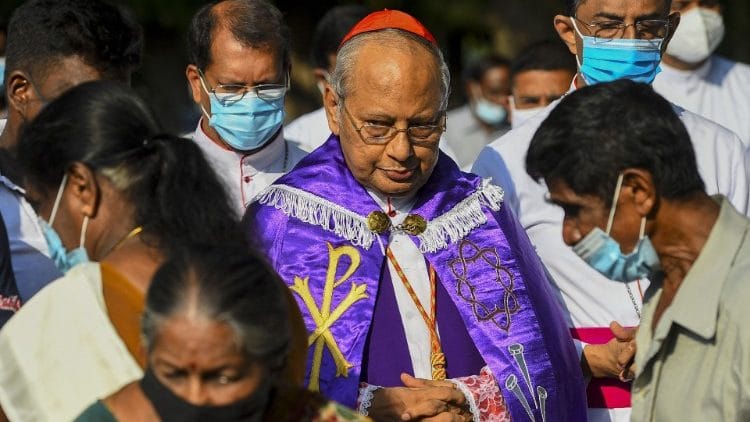
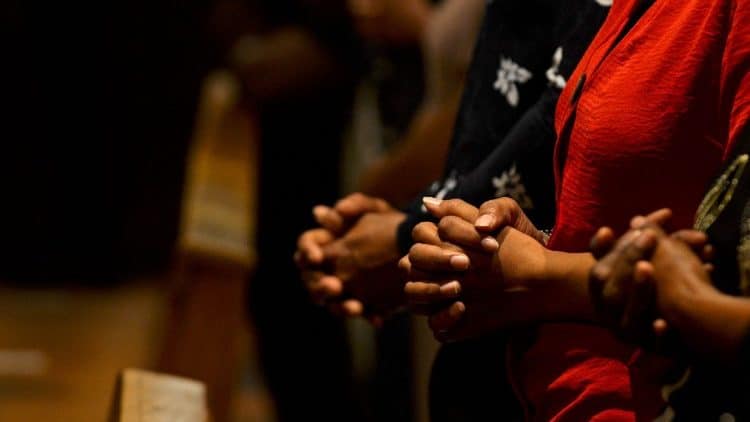
Cardinal Malcolm Ranjith of Colombo has appealed to the international community to assist in providing medicines and equipment for hospitals amid its unprecedented economic crisis.
Speaking last Sunday, Cardinal Ranjith said “We urge Pope Francis to request the international community to assist Sri Lanka” and he reiterated his condemnation of widespread government corruption that he blames for having emptied the coffers of the state, depriving Sri Lankan children of a future.
Speaking to Vatican Radio, Sri Lankan Father Shanil Jayawardena, Director of Communications for his Congregation of the Missionary Oblates of Mary Immaculate at its General House in Rome, said everyday life for ordinary people in Sri Lanka has become “hell”. He also spoke of how the Church is helping provide food to those who can no longer afford to feed themselves, and of how his faith in God and his trust in the resilience of his nation keep hope alive.
Listen to Father Shanil Jayawardena
When I asked Father Shanil to describe life today for ordinary Sri Lankans, he said “it is almost like going through hell.”
He explained that the shortages of of food, essential goods, medicine and the lack of fuel cause huge difficulties for ordinary citizens, for farmers and for all those involved in providing services as well.
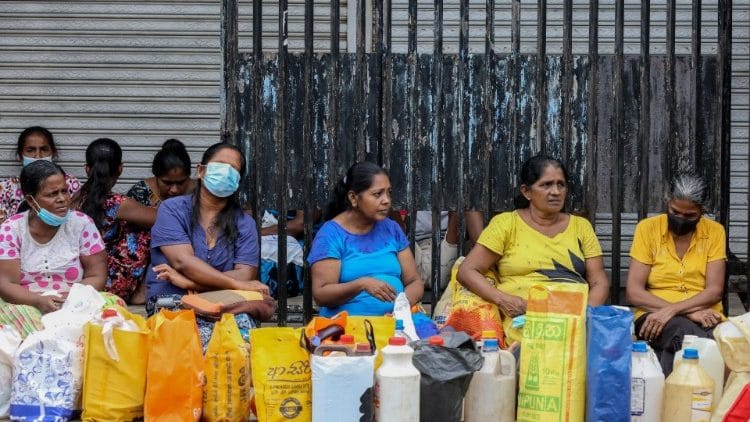
People wait for hours to buy cooking gas
The nation’s worst crisis ever
He described the current crisis as the worst experienced in Sri Lanka since its independence in 1948.
Father Shanil reflected on the fact that his country went through a decades-long civil war that lasted until 2009 noting that the country has suffered many difficulties. But this economic crisis, brought on by political mismanagement and corruption he said, has caused the greatest difficulties he has ever witnessed.
He told me the situation is so bad, the government has asked civil servants to stay home one day a week so that they can grow their own food.
“That’s how serious it is!” And not only: this situation has resulted in unprecedented levels of inflation; the near depletion of foreign exchange reserves; a shortage of fuel and cooking gas that means people wait in queues for hours and hours just to receive a tank of cooking gas; continuous power cuts.
“Today we are earmarked for sovereign default as a country and this is very serious because we don’t have the money even to pay the debts that we have taken.”
Of course, Father Shanil continued, all this means that it’s the poor people who cannot do anything but try to live hand-to-mouth as no one is offering employment.
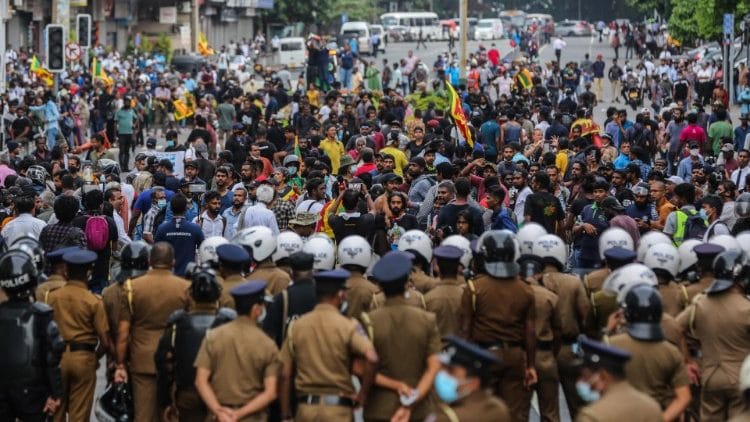
The Oblate explained that many people have taken to the streets to peacefully protest but the government is not listening.
Protesters during an anti-government rally in Colombo
Political chaos and corruption
Narrating an incredible parable of incompetence and nepotism, Fr. Shanil told me that the Prime Minister, who was the ex-President stepped down because of pressure from the people. But the President is still in power. Meanwhile, the Prime Minister – who is the President’s elder brother – had to resign following brutal attacks by security forces on peaceful protesters in Colombo.
“That led to a lot of pressure from other parties and probably even internationally for him to step down. But that did not solve matters.” In fact, he added, even since an opposition leader from another party (who was also a former Prime Minister), Mr. Ranil Wickremesinghe became the new Prime Minister and promised a lot of good things, “Nothing has changed.”
Fr. Shanil pinpointed deeply rooted corruption at the roots of the political incompetence that has poisoned the system in which politicians in Sri Lanka have repeatedly pocketed public money and mismanaged state funds.
2019 Easter Sunday bombings
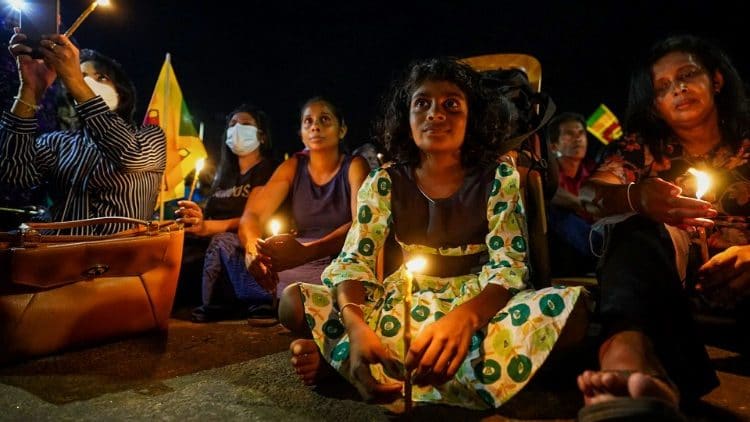
It is not possible to analyse the current situation in Sri Lanka without taking into account the tragic 2019 Easter Sunday bombings in which some 270 people were killed and about 500 injured as 3 churches and 3 hotels were hit in a series of coordinated Islamist terrorist suicide attacks.
Since then, investigations have faltered. The people and the leaders of all of the country’s faith communities have demanded clarity and justice in vain. One courageous and outspoken voice calling for accountability is that of the Catholic Cardinal of Colombo, Malcolm Ranjith, who has alleged that the government has been covering up the investigations into the attacks in order to protect the brains behind them.
Fr. Shanil said there is much disillusionment and lack of trust as more than three years from the attacks “none of the main culprits have been taken into custody.”
What everyone knows, he said, is that “there was a political hand to it. We know that there was invisible power behind the scene, behind the curtain, which was never revealed. And that is why we say the truth, the real truth will never come out.”
“In spite of Cardinal Ranjith’s appeals and the Catholic Church’s call for justice, and in spite of international requests, including that of the Holy Father, Pope Francis, nothing has changed.”
Demonstrators at a silent protest to pay respect to the victims of the 2019 attacks
A prophetic Church
Fr. Shanil recalled, with gratitude, Cardinal Ranjith’s latest appeal for international aid to help the people of Sri Lanka, especially by providing essential medicines.
And he told me that “at the ground root level, there are many priests and religious who have organized a lot of programmes to help, especially the poor people, to provide them with daily food.”
The Church is active in helping people get by, he continued, “but even the Church is helpless when it comes to the real problem, which is an economic crisis that the State has to solve together with the people who are protesting against the government.”
The Oblate reflected on how the Catholic Church “has been very prophetic over the last few years, especially after the Easter Sunday attacks.”
“The Church, the priests, the religious have joined the peaceful protesters to tell the people, to tell the government: you have to do something.”
“And we have always done our best, up to this point, as Church, but it is not enough. We have to do more. We have to organize ourselves more,” he said.
“Now that there is an international appeal, issued by the Cardinal, I hope and believe that we can do much more to uplift the people’s situation.”
Cardinal Malcolm Ranjith, Archbishop of Colombo
Interreligious harmony
Fr. Ranjith also spoke of the good and fruitful interreligious dialogue and relations in his country.
Paradoxically, he explained, the Easter Sunday attacks have promoted harmony and collaboration between all the religious leaders – Catholics, Muslims, Hindus, Buddhists – who have been working together to help bring to justice all the culprits of the attacks.
There have been some clashes over the years, he said, especially between the Muslims and some extremist Buddhist leaders, but since the Easter attacks, the relationship has been good and it’s improving.
Giving hope to the people
I asked Fr. Shanil what he hopes for his country. “We as the Catholic Church, we do our best to give hope to the people, because once you lose hope, that’s the end of the story,” he said.
This is what we have been working on a lot over the last few months, he continued, trying to give hope to people “not only in providing things for them, but also bring them back to faith.”
“There is a lot of room in a situation like this that people lose faith, not only in themselves but also in God, in religion.”
“But I believe,” he concluded, “that if we come together as a nation, if we come together as the people of Sri Lanka, in spite of our differences, in spite of our religious and racial differences, we can defeat these corrupt politicians and we can show the world that we can rise up once again as a nation.
“This is my hope and this is my prayer. Every day, each and every passing day.”
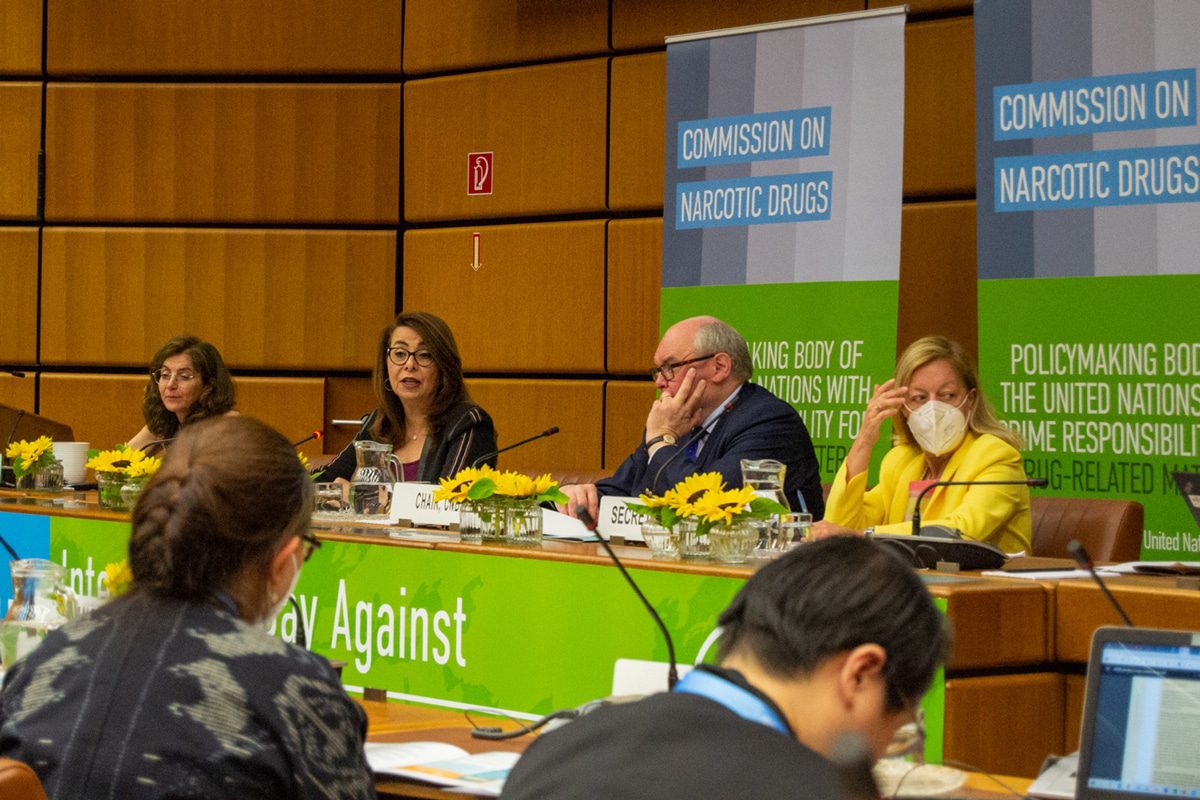
Vienna (Austria), 28 June 2022 – Each year, the United Nations Commission on Narcotic Drugs (CND) holds a special event to launch the World Drug Report and in commemoration of the International Day against Drug Abuse and Illicit Trafficking, or World Drug Day. In keeping with this longstanding tradition, a special event was held today to present to the international community the findings of the World Drug Report 2022, released yesterday by the United Nations Office on Drugs and Crime (UNODC).
This year’s special event was held under the World Drug Day 2022’s theme of “addressing drug challenges in health and humanitarian crises”. The theme reinforces the importance of protecting the right to health of the most vulnerable, including children and youth, people using drugs, and people who need access to controlled medicines, in the context of existing and emerging transnational drug challenges stemming from crisis situations.
In his remarks, H.E. Ambassador Ghislain D’Hoop, current Chair of the CND and Permanent Representative of Belgium to the United Nations in Vienna, lauded the relevance of the theme considering recent international developments, including the Covid-19 pandemic. D’Hoop highlighted the CND’s ongoing work to scale up implementation of the international drug policy commitments on improving the availability of, and access to, controlled substances for medical and scientific purposes.
In her opening remarks, Ghada Waly, Executive Director of UNODC, explained that UNODC had launched a campaign calling for better ‘Care in Crises’ for this year’s World Drug Day, as the world faced “persisting as well as new crises and conflicts”. “Care in crises means ensuring science-based services for all: for people in emergencies and humanitarian settings, those left behind in the pandemic, and those facing barriers of stigma and discrimination,” said Waly.
UNODC’s research and trend analysis chief Angela Me presented the main findings of the World Drug Report 2022, which includes current trends in the global drug market and the latest information on drug use, production and trafficking. This year’s report analyzes the gender disparity in non-medical drug use and the underrepresentation of women in treatment, considers the potential future of the global opiates market given developments in Afghanistan, examines the impact of cannabis legalization, and investigates the relationship between drugs and conflict. For the first time, it also includes a dedicated section on the impact of drugs on the environment.
Participants also heard the perspectives of two youth representatives, Malak Shaarawy and Tedi Jaho, who delivered interventions focusing on how Covid-19 has affected the world drug problem. Speaking about building a more sustainable world, Shaarawy highlighted that “youth involvement is a crucial factor in the sustainability of a healthy community”, while Jaho emphasized the importance of prevention. “It is so important to understand that there is so much that we can do to provide a better route to health and recovery to people who need it,” said Jaho.
The special event also featured a panel discussion on drugs and the environment, with interventions made by the permanent representatives to the United Nations in Vienna from Colombia (H.E. Ambassador Miguel Camilo Ruiz Blanco), Slovenia (H.E. Ambassador Barbara Zvokelj) and Thailand (H.E. Ambassador Morakot Sriswasdi); Nicolas Prisse, President of the Interministerial Mission for Combating Drugs and Addictive Behaviours of France; and Sylvia Kay of the Vienna NGO Committee on Narcotic Drugs. Following the discussion, interventions were made by over 20 Member States and three additional civil society organizations.
Further information
The 2022 World Drug Report provides a global overview of the supply and demand of opiates, cocaine, cannabis, amphetamine-type stimulants and new psychoactive substances (NPS), as well as their impact on health. This year’s edition of the report spotlights trends on cannabis post-legalization, the environmental impacts of illicit drugs, and drug use among women and youth.
At a Japanese fruit auction in Aomori Prefecture, an elite Juno Heart variety of cherries was sold for $296 – not a ton, but one piece cost so much. The buyer immediately took the box, which contained 15 pieces, according to the Japanese national newspaper The Asahi Shimbun. The whole box cost $4440.
Juno Heart cherries are considered an upscale gift in Japan. It meets certain requirements of the standard: the diameter of the berry must be more than 2.8 cm, the sugar content must be from 20%. Juno Heart berries, whose diameter is from 3.1 cm, are called “Aomori Heartbeat” and are sold especially expensive.
The exclusive berries were purchased by Nagatsuka Seika, a fruit and berry wholesaler. Representatives of the company said that the purchased berries will be sold in one of the stores.
Photo: Box of the Aomori Heartbeat cherry that fetched the highest price of 600,000 yen per box. (Kuratoshi Yokoyama) / asahi.com
Woman drying sweat using a wipe in a warm summer day
To understand this disorder, we first need to explain that people who suffer from body dysmorphia live with persistent mania.
Social media models give society an idea of what a “perfect” look should be. This raises many questions in the average person, such as “Is my stomach flat enough?”, “Aren’t my thighs too big?”, “Isn’t my nose too crooked?” And many others.
Many people begin to see defects, deformations and flaws in the mirror. This may indicate the presence of Distorted Mirror Syndrome, also known as body dysmorphia.
To understand this disorder, it is first necessary to explain that people who suffer from body dysmorphia live with persistent and persistent mania: they feel clear defects, defects or deformations in their body.
The bottom line is that for these people, what they perceive and reality are the same. They do not question their perception, but consider it an objective and indisputable truth. So much so that although the environment thinks differently or thinks they are exaggerating in the assessment they make of their defects, they remain firm in their faith.
They think that others tell them these things to comfort them or directly deceive them.
People suffering from Distorted Mirror Syndrome live in a state of great anxiety and grief. The unreal perception of their body generates an incorrect and irrational way of thinking and constant thinking. Therefore, behaviors that create conflicts with the partner, family, or workplace occur, and dangerous thoughts such as visiting a surgeon arise.
Cognitive processing distinguishes humans from other species (reptiles are not capable of this type of processing). This mechanism causes the image perceived by the retina to be processed by the brain and “processed” according to beliefs, expectations, fears, desires.
Body dysmorphia is not very common, only between 1% and 2% of the population is diagnosed with it. According to many studies, the emergence of this belief can begin in adolescence, although it can develop at any age.
Both men and women suffer from it. The most common concerns are facial defects (nose – which according to studies accounts for 45% of cases, as well as teeth, wrinkles, hair), body defects (abdomen, buttocks) and body odors.
What is being observed is that women are more concerned about the face, hair and shape or size of their breasts, and men are more focused on the appearance and size of their genitals.
Signs and symptoms include:
• Immersion in a defect in appearance that is noticeable or insignificant to others
• Strong belief that you have a defect in your appearance that makes you ugly or deformed
• Belief that others pay special attention to your appearance in a negative way or make fun of you
• Trying to hide perceived flaws with style, makeup or clothing
• Constantly comparing your appearance with that of others
• Frequently seeking opinions about your appearance from others
• Avoiding mass events with many people
Body dysmorphia usually does not improve on its own. If left untreated, it can worsen over time, leading to anxiety, severe depression, and even suicidal thoughts and behaviors.
Researchers have devised a new and improved way to levitate objects using only sound waves. The invention can lead to the emergence of a new generation of holograms.
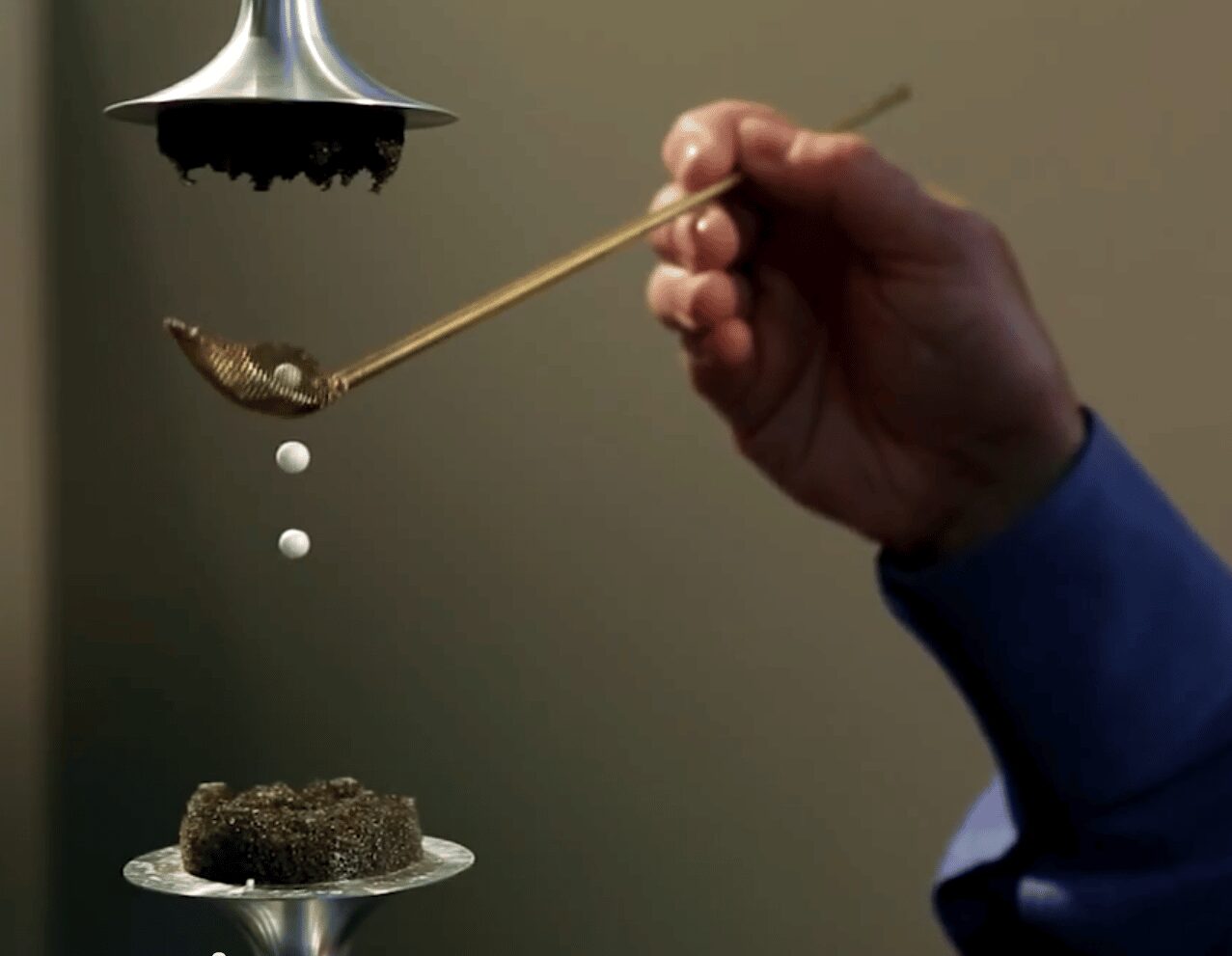
Scientists have managed to levitate individual polystyrene grains and water particles in a special enclosure. Thanks to 256 speakers, the team can move particles in three dimensions.
In one demonstration, they even managed to float in the air a small piece of cloth on which they projected a film of a jumping rabbit.
“In the past, our 3D displays had to exist in a vacuum, but now we can create 3D content right in front of you,” said Diego Martinez Placencia, a researcher at University College London and co-author of the study.
The effect obtained is quite amazing. In one experiment, the team managed to levitate a water droplet over a moving glass of water, an object that would otherwise be a huge source of interference due to its reflective surface.
“This opens up opportunities for fully immersive virtual reality experiences and interactive holograms,” said Ryuji Hirayama, lead author at University College London.
The team now hopes to create a new system that allows more than one source of interference.
“Acoustic levitation has great potential in precision manufacturing, and this work paves the way for this opportunity,” added lead researcher Sri Subramanian.
The Conference of European Churches (CEC) organised a training for its Member Churches in Italy, addressing security and safety risks, threats, and challenges in the country. The training was held on 24 June in Rome, as part of theSafer and Stronger Communities in Europe (SASCE)project, carried out by CEC, and funded by the Internal Police Fund of the European Commission.
“It is important to make the Protestant churches in Italy aware of the security of places of worship while promoting our vision of religious freedom for all,” said Rev. Daniele Garrone, president of the Federation of Protestant Churches in Italy (FCEI). “We found the presentation about SASCE’s work made by CEC Executive Secretary Dr Elizabeta Kitanovic very clear and instructive”.
Participants in the training discussed a number of topics, including security threats related to foreign soldiers returning home from North Africa, neo-Nazi extremists, and foreign fighters from the Western Balkans crossing Italy on the way to the other European countries, as identified by the authorities. They discussed the impact of such threats on Jews, LGBTQ communities and migrants, among others.
They agreed that the security and safety challenges in Italian society need to be tackled on various fronts, including political, legal, social, as well as European.
“The SASCE project has the merit to make religious leaders and the staff of local churches aware of security issues, taking into account even small threats,” said Rev. Mirella Manocchio, president of the Evangelical Methodist Churches in Italy (OPCEMI). “Also, with regard to the European authorities, the project strengthens great coordination and offers more attention to minorities or smaller religious realities, which are fragile and less protected.”
The SASCE training was also conducted with the Evangelical Methodist Church in Bologna and Modena, attended by the church leadership, including Rev. Giuseppina Bagnato and Richard Kofi Ampofo. It was noted that some Italian congregations suffered serious security and safety challenges. The CEC reporting mechanisms were therefore warmly welcomed.
Rev. Peter Ciaccio, a pastor from Trieste, engaged in extensive work on human rights and religious freedom, was nominated as Italian ambassador for SASCE Italy.
Italy’s largest trade union, FLC CGIL, has written to all of the Italian deputies in the European Parliament to highlight the ongoing discrimination against non-national university teaching staff(Lettori) in the country’s universities. The letter calls on the MEPs to denounce domestic measures which continue to impede the correct implementation of the Lettori case law of the EU Court of Justice(CJEU).
By way of a briefing on the Lettori case, FLC CGIL included in its representations a copy of Pilar Allué Day, an article by University of Sapienza Professor Henry Rodgers, recently published in The European Times. Using May 30, 1989, the date of Allué’s first victory before the CJEU as a starting point, the article recounts the Lettori’s long legal battle for parity of treatment. Despite three subsequent clear-cut victories in the line of litigation which stems from the 1989 ruling, Italy continues to deny the Lettori rights which should be automatic under the Treaty. Commission infringement proceedings to compel Italy to implement the most recent of the CJEU rulings in the enforcement case of 2006 were opened in September 2021.
The FLC CGIL lobbying of the Italian MEPs is the latest in a series of initiatives which has seen the union improve its standing among Lettori. It represents a personal victory for national FLC CGIL Lettori co-ordinator, John Gilbert, an American-born lecturer at Università di Firenze, who has worked tirelessly to keep the rights of the non-national workers before the conscience of his union and to change a mindset that in the past had tended to subordinate Lettori EU rights to domestic labour arrangements.
Using its impressive national organization for the benefit of non-nationals, FLC CGIL, together with ASSO.CEL.L, a Lettori association founded at “La Sapienza” University in Rome, organized a nationwide Census of the beneficiaries of the 2006 enforcement ruling last year. University-by-university, the Census documented to the Commission’s satisfaction that the settlements prescribed under the ruling for the reconstruction of Lettori careers had not been made. Just as important, the Census puts in place a framework by means of which eventual payments by the universities to the beneficiaries over the course of the infringement proceedings can be monitored and communicated to the Commission.
Irish MEP Clare Daly has consistently championed the Lettori case at the European level. Welcoming the FLC CGIL representations to her fellow parliamentarians, she commented to The European Times:
“Defending the rights of often vulnerable non-national workers should be a priority for all unions in the member states. The FLC CGIL representations to my Italian colleagues in the European Parliament sets a good example in this regard. I am ready to work with my fellow parliamentarians to ensure that the ongoing Commission infringement proceedings bring the battle for parity of treatment to a successful conclusion.”
Of the domestic measures which have so far impeded the correct implementation of the successive Lettori CJEU sentences, the most brazen by far is the Gelmini Law of 2010. For obvious reasons, member states introduce legislation to give effect to CJEU rulings within their domestic legal order. For equally obvious reasons legislation enacted solely to interpret a CJEU ruling should be immediately suspect.
The 2010 Gemini Law interprets the Court ruling in such a way as to greatly reduce Italy’s liability to the Lettori. Prior to the enactment of the law decisions in the local courts were largely favourable to Lettori, with settlements for the reconstruction of their career following the criteria set out in the 2006 ruling. Subsequently, they were unfavourable, with the Italian judges using the Gelmini interpretation as a reference point, rather than the CJEU ruling itself.
In response to the Commission infringement proceedings provision was made in Italy’s Finance Act of 2022 for the release of funds to the universities to co-finance the settlements due to Lettori. In the guidelines recently sent from the Ministry of Higher Education to the universities on how to calculate these settlements, the Gelmini interpretation is legitimized.
It is this reference to the Italian legislator’s interpretation of the 2006 ruling, rather than a reference to the CJEU ruling itself, which FLC CGIL addresses in its letter to the Italian MEPs. Pointing out that the 2006 ruling, like all sentences of the CJEU, stands on its own merits, the union appeals to the MEPs in the spirit of their European mandate to use their influence to ensure that self-serving interpretations of the case-law of the CJEU do not further prolong the discrimination against Lettori.
Although most infringement cases are resolved over the course of the proceedings, an outcome whereby the case goes all the way to the CJEU for a fifth ruling in the Allué line of jurisprudence cannot be ruled out. Such a scenario would place Italy’s intransigence in unprecedented and most unwelcome limelight. In the 2006 enforcement case, the 13 judges of the Grand Chamber to whom the case was assigned for decision waived the daily fine of €309,750 proposed by the Commission on the grounds that the provisions of the last-minute law introduced by Italy could end the discrimination. Thus, Italy’s defence lawyers would have the unenviable task of explaining to the Court why the law which spared Italy the fines in the 2006 ruling had never subsequently been implemented
While the documentation exchanged between the Commission and the member states in infringement proceedings is confidential, what can be gleaned from exchanges between the Ministry of Higher Education and the universities is that Italy is desperate to bring the proceedings to an end. It is evident also that there is confusion on the part of the universities as to how to value their liability to the Lettori.
Ultimately a member state is responsible for the implementation of EU law within its territory. By the deadline of August 05 Italy must now inform the Commission of the measures, it has taken to meet its liabilities to the working and retired Lettori beneficiaries of the 2006 ruling.