
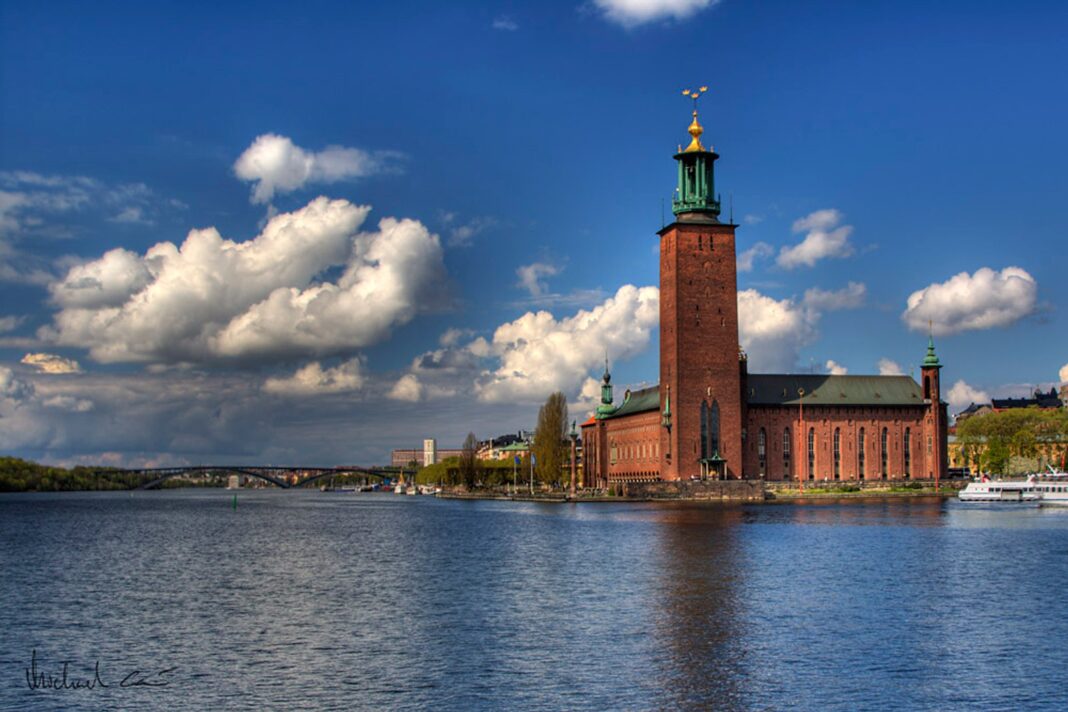

Stockholm — Foreign ministers of the OSCE’s 57 participating states gathered in Stockholm this week with one subject overshadowing everything else: the Russian military build-up along Ukraine’s borders, and whether Europe’s largest security organisation can still do the job it was built for.
The meeting, on 2 and 3 December under Sweden’s chairmanship, brought Russian Foreign Minister Sergey Lavrov and US Secretary of State Antony Blinken into the same room — their first encounter since Washington began warning publicly that some 100,000 Russian troops with heavy equipment are positioned within reach of Ukraine. Both men held bilateral talks on the margins, and both left with their positions unchanged.
Blinken warned of ‘severe consequences’ if Russia invades; Lavrov accused NATO of pulling Ukraine into its orbit and demanded legally binding guarantees against the alliance’s expansion. In the hall, minister after minister lined up behind Kyiv’s sovereignty and the principle that borders in Europe cannot be changed by force — the principle on which the organisation’s founding document, the 1975 Helsinki Final Act, rests.
Sweden’s chair, Foreign Minister Ann Linde, had hoped the ministerial would agree a new European security dialogue and revive arms control discussions hollowed out by the collapse of Cold War treaties. Consensus on a declaration proved impossible, as it has at most ministerials for a decade, though Sweden salvaged agreement on a handful of practical measures and kept the dialogue proposal alive.
Ukraine’s foreign minister, Dmytro Kuleba, used his speech to call for deterrence and sanctions packages to be prepared now, not after a possible invasion — a request some delegations privately considered premature. Few in Stockholm, diplomats said, believed war was inevitable; fewer still were willing to rule it out.
The OSCE’s most tangible asset in the crisis is already on the ground: its Special Monitoring Mission, several hundred unarmed observers reporting daily on the ceasefire violations in eastern Ukraine. As ministers flew home from Stockholm, the question hanging over the Hofburg in Vienna was whether that mission is about to become the only channel left.
Media-Society.com is a press network association based in Spain, founded in 2020. More at www.media-society.com.