
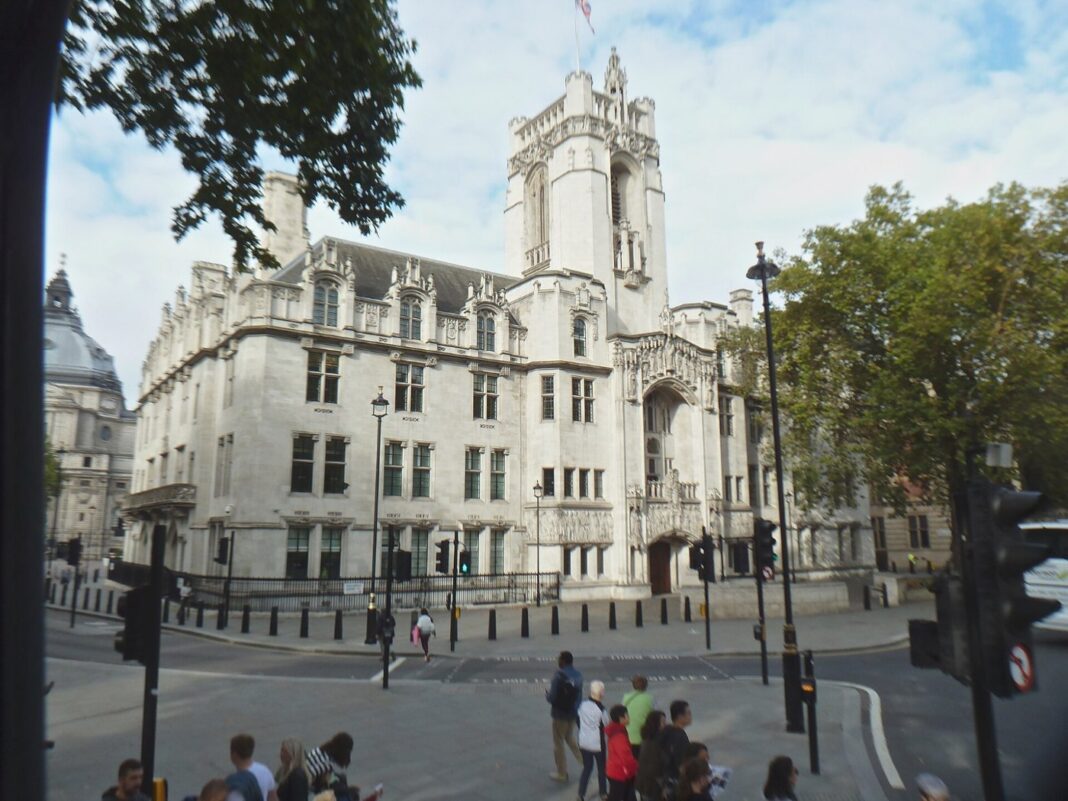

LONDON — Eight words in a statute have consumed British politics for years, and on Wednesday the Supreme Court settled their legal meaning. In For Women Scotland Ltd v The Scottish Ministers, the court ruled unanimously that “woman” and “man” in the Equality Act 2010 refer to biological sex, not to acquired gender — meaning that a transgender woman holding a gender recognition certificate is not a “woman” for the purposes of that Act.
The case began far from Westminster, with a Scottish law on gender balance on public boards and guidance that counted trans women with certificates as women. For Women Scotland, a campaign group, challenged that guidance through years of litigation, losing in Edinburgh before winning in London. The justices stressed what the ruling does not do: gender reassignment remains a protected characteristic under the same Act, and trans people keep its protections against discrimination and harassment. What changes is the architecture — sex and gender reassignment are distinct categories, and cannot be merged by guidance.
The practical consequences will be worked out for months, in workplaces, hospitals, refuges and sports clubs across the country. The ruling gives providers of single-sex services a clearer legal basis to exclude trans women; it also leaves employers navigating duties to two protected groups whose claims can collide. The Scottish government, which lost the case, has since set up a working group to align its policies with the judgment.
Campaigners on both sides claimed vindication, which is usually a sign that a court has drawn a line rather than ended an argument. Gender-critical groups called it common sense restored; trans rights organisations warned of a community pushed further to the margins of public life. Both can point to paragraphs of the judgment.
What the court could not supply is the thing the country has actually been short of: a politics capable of holding two legitimate anxieties at once without turning them into a culture war. That was never going to come from a bench of judges. It still isn’t here.